Best smart glasses 2026, in one sentence: five pairs are worth buying today, two are worth waiting for, and the gap between those columns has never been clearer. The reason is one specific week. Google I/O 2026 finally previewed the Warby Parker–and–Gentle Monster Android XR glasses with Samsung as hardware partner. Bloomberg’s Mark Gurman locked in Apple’s first smart glasses for an end-2026 reveal and 2027 retail. Meta and EssilorLuxottica rolled the prescription-first Blayzer and Scriber Optics frames into LensCrafters.
In seven days, the category stopped being a parade of one-off experiments and became a real lineup with a clear fork: buy something proven now, or hold for the platform you would rather live inside for the next five years. This guide tells you which is which, and more importantly, when waiting is the wrong call.
Why the smart glasses map finally makes sense
Google I/O was the inflection point. Google, Samsung, Warby Parker, and Gentle Monster jointly previewed the first real Android XR reference glasses, Meta and EssilorLuxottica rolled out the new prescription-first Blayzer and Scriber Optics frames across LensCrafters, and Bloomberg’s Mark Gurman locked in an end-of-2026 reveal for Apple’s first smart glasses (with retail in 2027). For the first time, the category isn’t one experiment per quarter. It’s a real lineup with clear tradeoffs.
The split that matters: AI-and-camera glasses (audio plus a Look-and-Ask assistant, no display in your eye) versus display glasses (a portable monitor floating in front of you, usually tethered to a phone or laptop). Pick the wrong half and no amount of money fixes it.
1. Ray-Ban Meta Blayzer & Scriber Optics: Smart glasses that pass for normal eyewear

Price: From $499
Where to Buy: Ray-ban
The second-gen Ray-Ban Meta line is the only AI-glass family that consistently passes as regular eyewear. The lineup now includes Oakley Meta HSTN for everyday wear, Oakley Meta Vanguard for sport, and the EssilorLuxottica-built Blayzer Optics (rectangular) and Scriber Optics (rounded) prescription-first frames that arrived back in March. The on-frame camera shoots up to 3K Ultra HD video, the Meta AI button answers questions about whatever you’re looking at, and the redesigned charging case now provides up to 48 hours of extra charging on the go (50% more than Gen 1) for genuine all-day wear.
Best for: Hands-free capture and a built-in assistant without looking like you’re cosplaying a Black Mirror episode.
Tradeoff: No in-lens display. Notifications come through the open-ear speakers, not your field of view. (If you want a display, that’s the separate Meta Ray-Ban Display at $799.)
Skip if: You need an extreme prescription the new Blayzer/Scriber range still can’t cover
2. Viture Beast: A 174-inch screen for the price of an iPhone case
Price: From $549
Where to Buy: Amazon
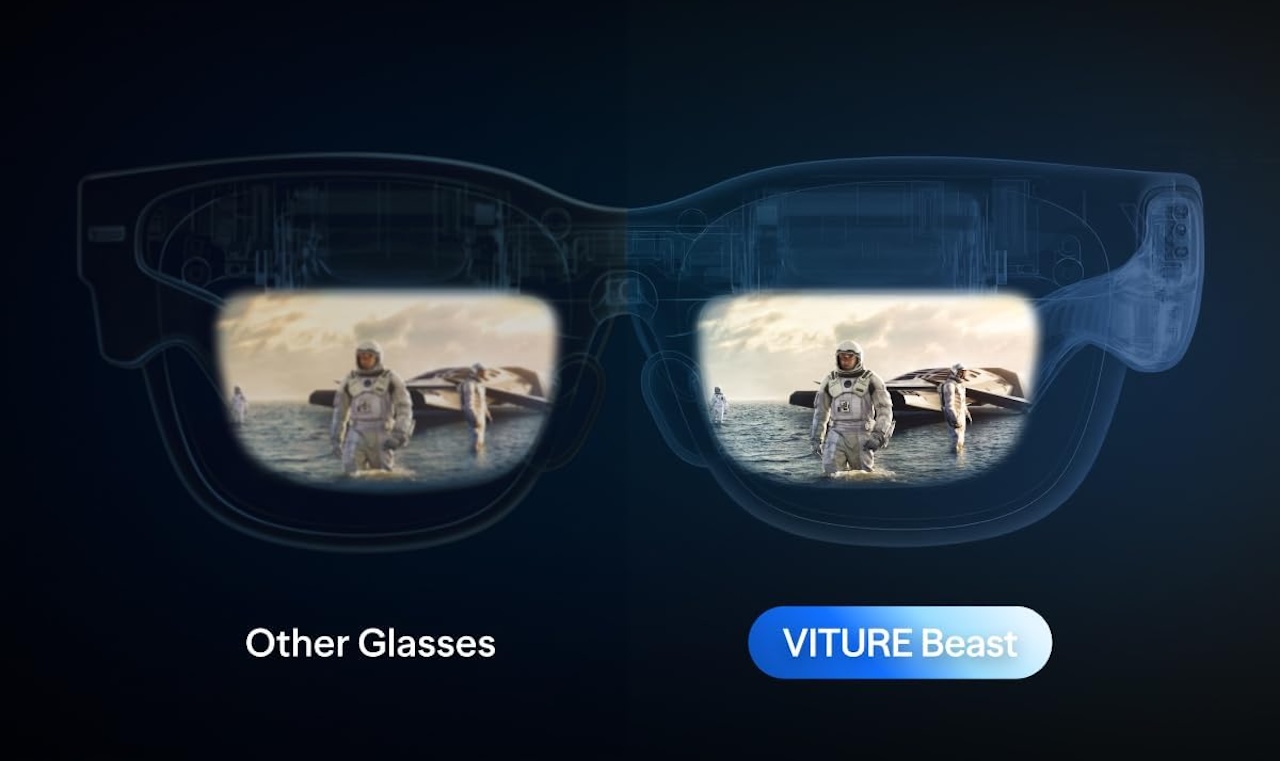
The Beast is Viture’s flagship, announced at CES 2026 and officially launched April: a perceived 174-inch virtual screen at 4m, 1200p Sony micro-OLED panels, 1250-nit peak brightness, a 58° field of view, built-in VisionPair™ 3DoF tracking, and 9-level electrochromic dimming, all in an aluminum-magnesium frame with HARMAN-tuned audio. Plug into a Steam Deck, a MacBook, an iPhone, or a Switch 2 dock and you have a workstation in your backpack.
Best for: Desk-bound users who want a big, bright micro-OLED monitor strapped to their face.
Tradeoff: They look like sunglasses indoors, and cable management is still cable management.
Skip if: You wanted untethered AR. These are a tethered display, not a standalone computer.
3. Xreal 1S: The portable monitor that fits in your carry-on

Price: From $449 ; About $648 bundled with Beam Pro ($199 standalone)
Where to Buy: Amazon
The Xreal 1S debuted just after CES 2026 and brings the One-series formula to a sharper, smarter package: 1200p per eye, a 52° FOV, a 16:10 aspect ratio that fits PC and Switch 2 modes natively, a 120Hz refresh rate, and the X1 chip’s native 3DoF so the virtual screen stays put when you turn your head mid-flight. Lighter on the bridge than the Beast and slimmer in a carry-on, and the optional Beam Pro companion ($199) adds an Android-based hub when you want to leave your phone in your bag.
Best for: Frequent flyers who watch a movie on every leg
Tradeoff: Brightness tops out around 700 nits, so anything sunlit still washes out fast.
Skip if: You want the absolute biggest, brightest picture. The Beast still wins on raw image.
4. RayNeo Air 4 Pro: 1080p HDR smart glasses for the price of AirPods Pro
Price: $299
Where to Buy: Amazon
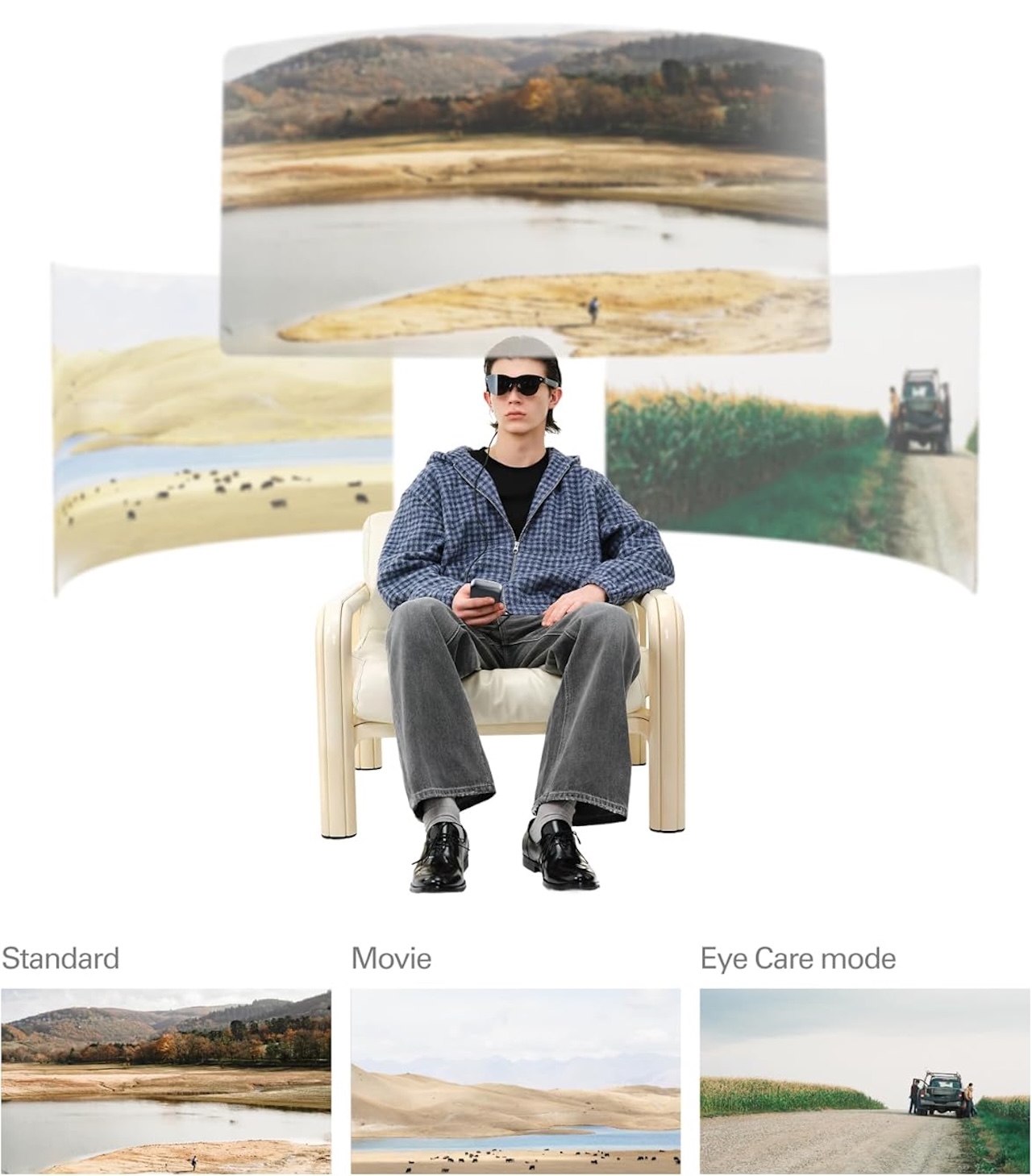
The Rayneo Air 4 Pro is the surprise of the year. 1080p SeeYa micro-OLED panels, a 120Hz refresh rate, HDR10 (a category first), up to 1200 perceived nits, a 201-inch projected screen, and a four-speaker setup tuned by Bang & Olufsen, all in a 76g frame. Phone mirroring is straightforward via USB-C, and at this price the Air 4 Pro undercuts the Xreal 1S by $150.
Best for: Anyone who wants a big, sharp AR display for around $300.
Tradeoff: No electrochromic dimming, no built-in 3DoF, and the nose-pad ergonomics divide longer-session reviewers.
Skip if: You want head-tracked screen anchoring or a wider FOV. That’s Xreal 1S or Beast territory.
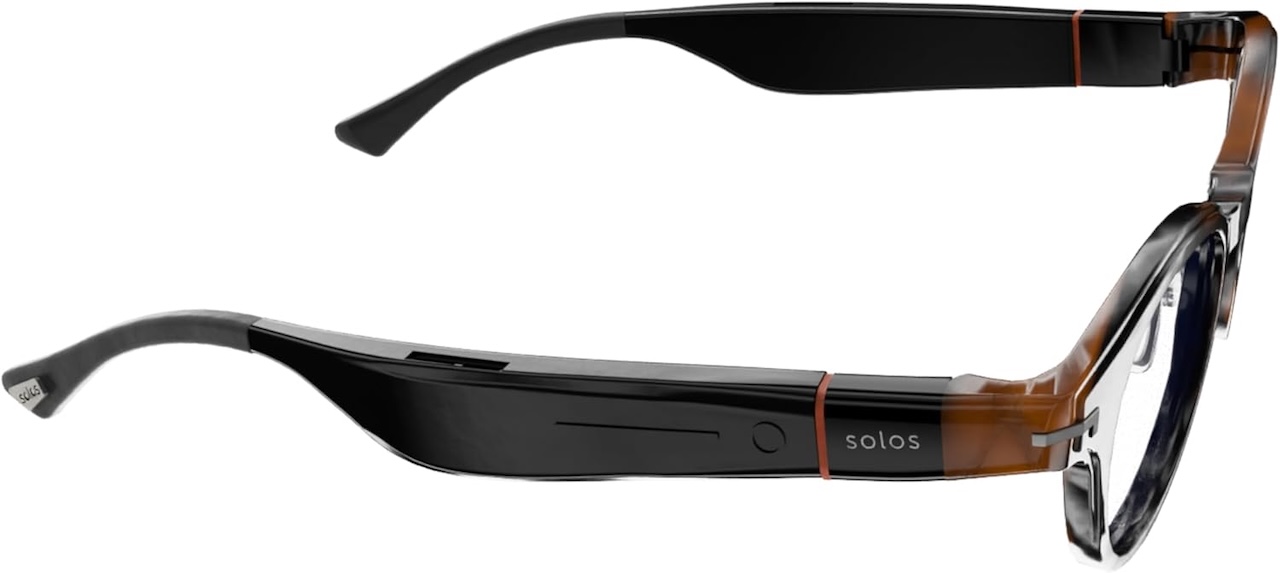
5. Solos AirGo Vision: Ray-Ban Meta’s idea, without Meta
Price: $249
Where to Buy: Amazon
Solos AirGo Vision pairs an on-board camera with GPT-4o for visual recognition, live translation, and conversational AI, plus a swappable front-frame system that lets you change the look in seconds. Open-ear audio underperforms Ray-Ban Meta. Early reviews flag muffled speakers and weak call clarity, so most buyers will want earbuds for calls. Still, the GPT-4o-driven visual Q&A and live translation are the headline draws, and the swappable-frame system gives it more style flexibility than Meta’s fixed lineup.
Best for: The Ray-Ban Meta concept without locking into Meta’s ecosystem.
Tradeoff: Smaller third-party app ecosystem; no native social-sharing pipeline.
Skip if: You specifically need Meta AI’s social integrations.
Wait for: Google and Samsung’s Android XR glasses, the platform bet
At I/O 2026, Google previewed Android XR frames co-designed with Warby Parker and Korean luxury eyewear brand Gentle Monster, with hardware engineering led by Samsung. Two variants were shown: a display-equipped pair with a single in-lens panel for Maps and translation, and an audio-only “always-on Gemini” pair. Google has confirmed the audio-only pair launches this fall (display-glass timing is still TBD) but hasn’t announced a price, exact ship date, or full compatible-phone list. If you want the platform most likely to define the next five years of smart glasses, this is the one, but don’t preorder without a price.
Wait for: Apple’s N50, the iOS-loyal pick that’s still 18 months away
Bloomberg’s Mark Gurman reports Apple is targeting an end-of-2026 reveal for its first smart glasses, with the actual retail launch expected in 2027. The product (codename N50) is Meta-style audio-plus-camera glasses with Apple Intelligence, an enhanced Siri, and Visual Intelligence, likely without an in-lens display in this first generation. Bloomberg also reports Apple is testing at least four acetate frame styles with a distinctive oval camera arrangement up front. If you live inside iOS and you’d happily buy a Ray-Ban Meta but don’t love sending frames to Meta’s servers, this is the one to wait for.
The one question that decides everything
The whole shopping decision collapses to one fork: do you want a camera, or do you want a screen? If it’s a camera, buy a Ray-Ban Meta today, or wait for Apple’s N50 if iOS loyalty outweighs a 12-plus-month wait. If it’s a screen, the Viture Beast wins on raw image quality, the Xreal 1S is the travel and head-tracking pick, and the RayNeo Air 4 Pro is the budget play when HDR matters more than FOV. And if the honest answer is both, that’s exactly what Android XR is pitching this fall, and it’s worth waiting for. Everything else is a rounding error.