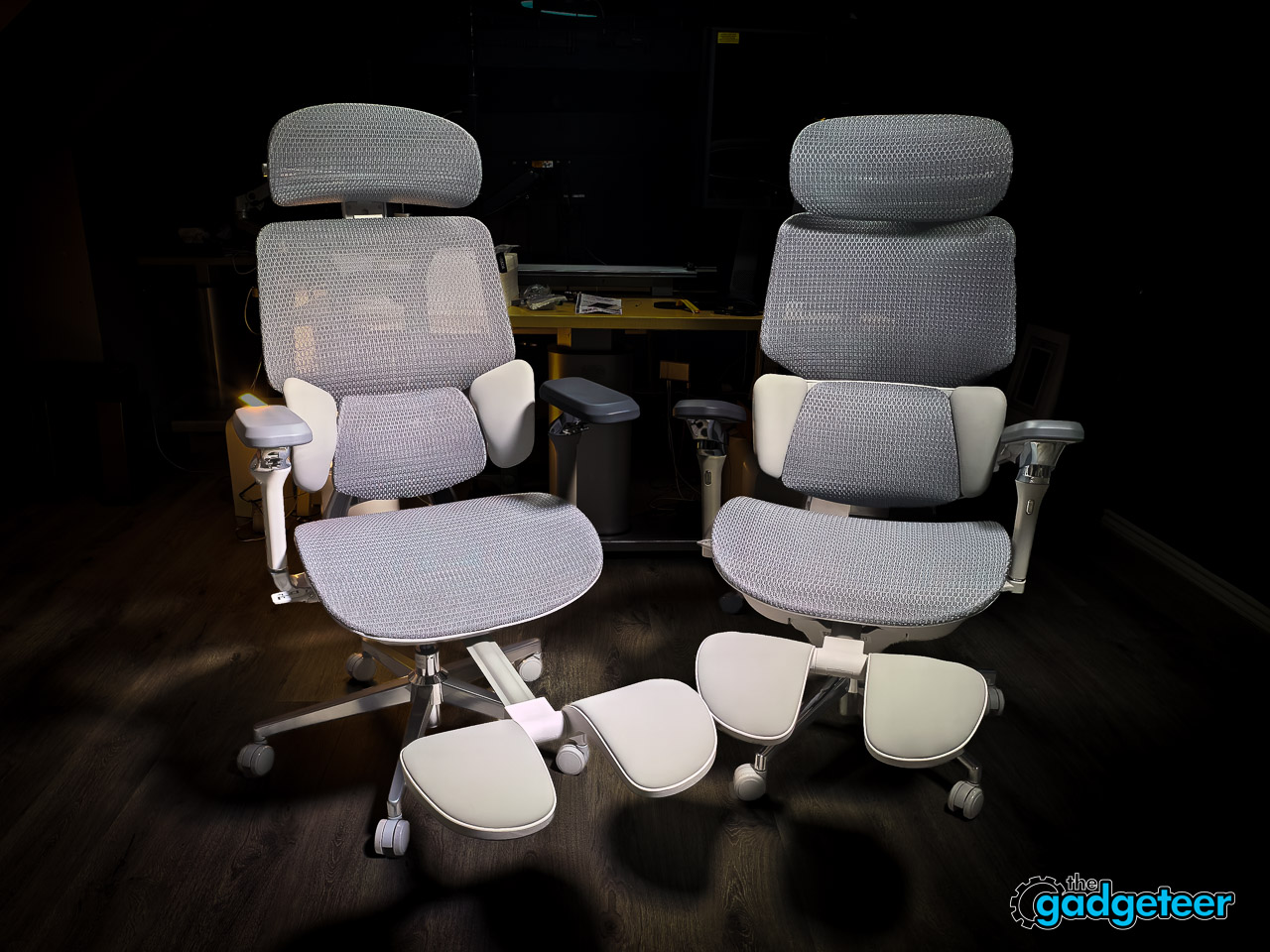
HBADA makes two chairs that sit at opposite ends of the same question: how much should an office chair cost, and what changes when you double the price. The E3 Pro 2026 Edition is the bestselling chair that put the brand on the map at $487 on sale, and the X7 is the flagship at $1,169 that adds AI lumbar tracking, massage, graphene heating, and red light therapy. I sat in both for two weeks, swapping them in and out of my desk setup, to figure out where the value curve bends and where the extra $682 buys something you can feel in your back.
🎆 4th of July Deal, with an extra Gadgeteer discount stacked on top
HBADA E3 Pro 2026 Edition
HBADA: Regular $659.00, July 4th deal $487.00, then $462.65 with code GADGETEERE3 (5% off)
Amazon: Regular $709.00, July 4th deal $539.00, then $512.05 with code GADGETEERE3 (5% off)
HBADA X7
HBADA: Regular $1,509.00, July 4th deal $1,169.00, then $1,159.00 with code GADGETEERE3 (5% off)
Amazon: Regular $1,227.00, July 4th deal $1,165.64, then $1,115.64 (grey)with code GADGETEERE3 (5% off)
The E3 Pro 2026 Edition earned its 3,351 reviews the hard way: by being the most adjustable chair under $600 for four years running. The X7 is HBADA’s bet that the same buyer will pay flagship money for a chair that thinks for you. One of those bets pays off more than the other, and the answer depends less on the spec sheet than on how you actually spend a workday.
What the HBADA X7 Does That No Chair Under $1,500 Matches
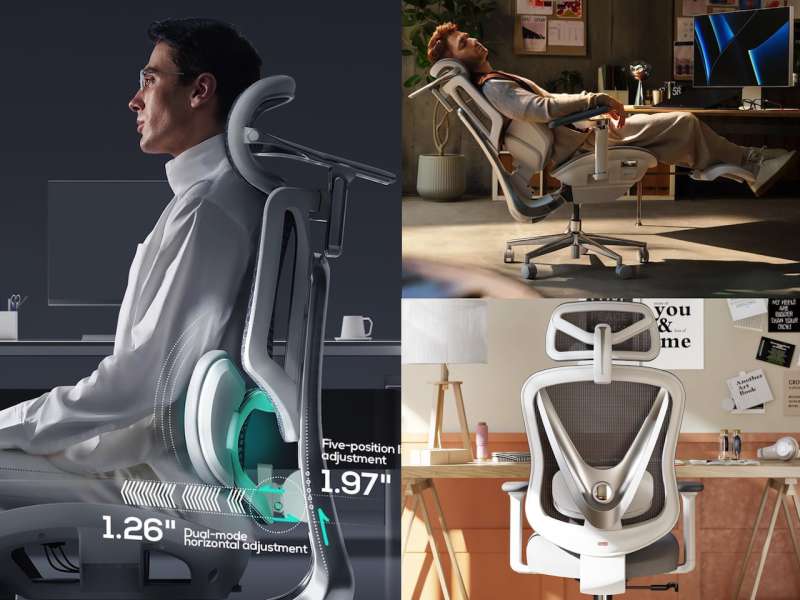
The X7 is built around an AI lumbar tracking system that uses pressure sensors in the lumbar pad, a smart chip that reads them, and small motors that physically push the lumbar support forward or pull it back as your posture shifts. That’s the headline, and it’s the first mechanism I’ve tested in this category that does what the marketing claims.
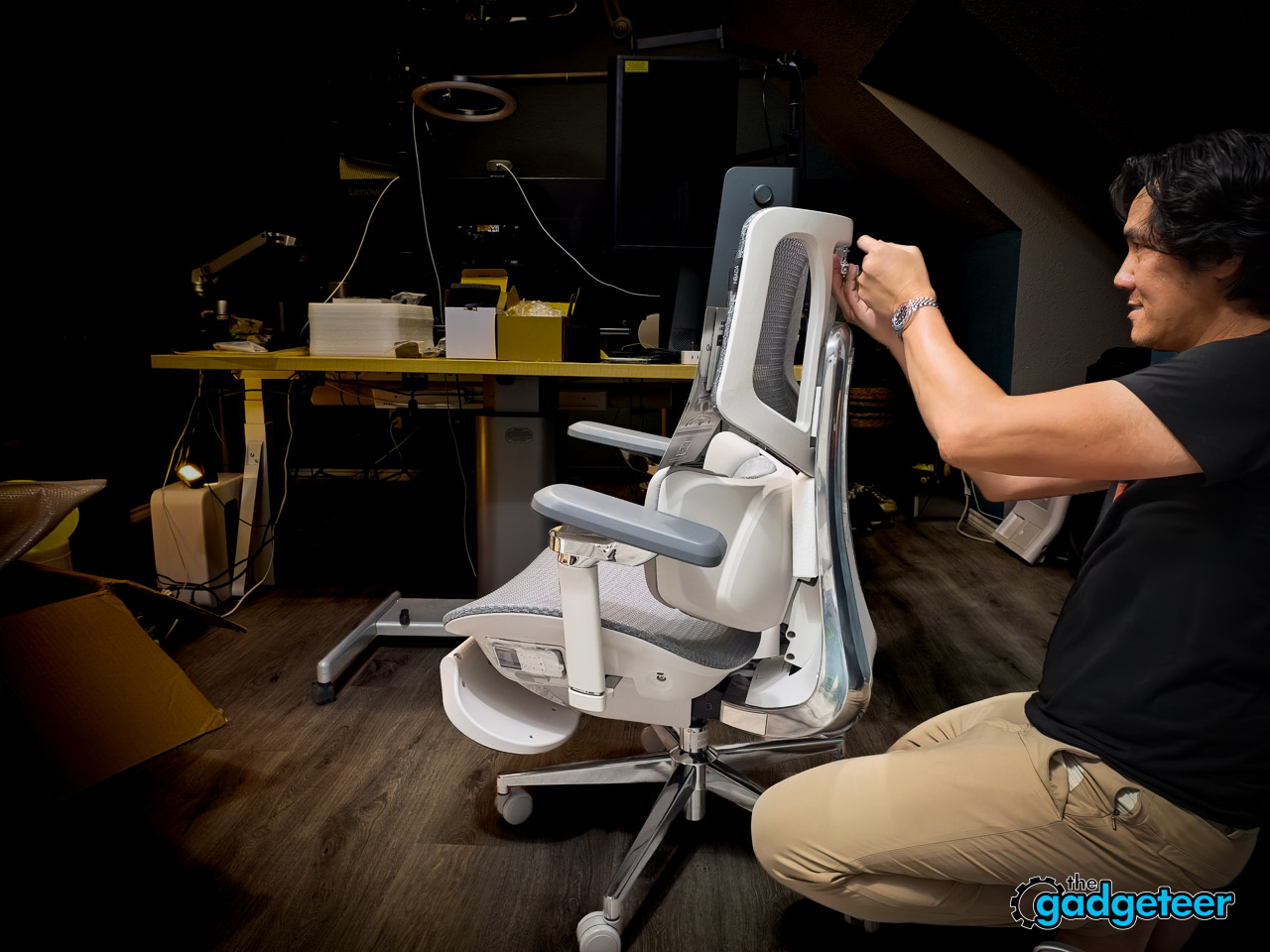
The category has been promising auto-adjusting lumbar support since 2019, and every chair I’d sat in before this one, including the Backrobo C2 Air we reviewed last year, used a timer or a single pressure sensor that inflated and deflated on a schedule. The X7 is the first that names the parts and ships 10 intensity levels so you can tune how aggressive the support feels.
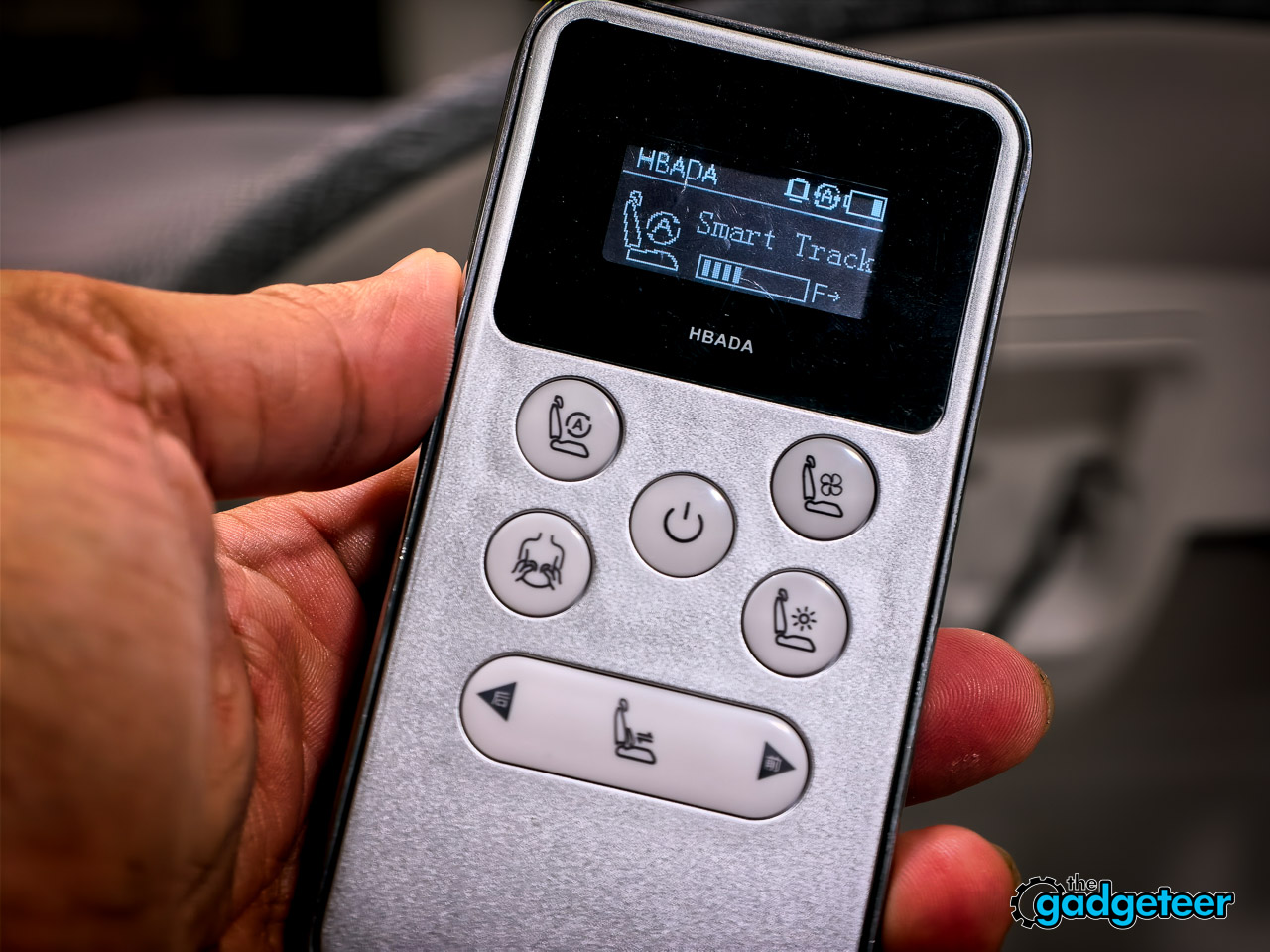
At $1,169 on sale (regular $1,509), the flagship sits between an established office chair standard and a budget office chair, and it carries features neither of those chairs offers. Around the lumbar system, HBADA wrapped a 3-level massage, graphene heating, red light therapy, a 4D dual-axis headrest, 720° armrests, and a 4-mode recline that hits 140 degrees. It’s not a minimalist chair. It’s a chair for someone who wants their seat to do more than hold them up.
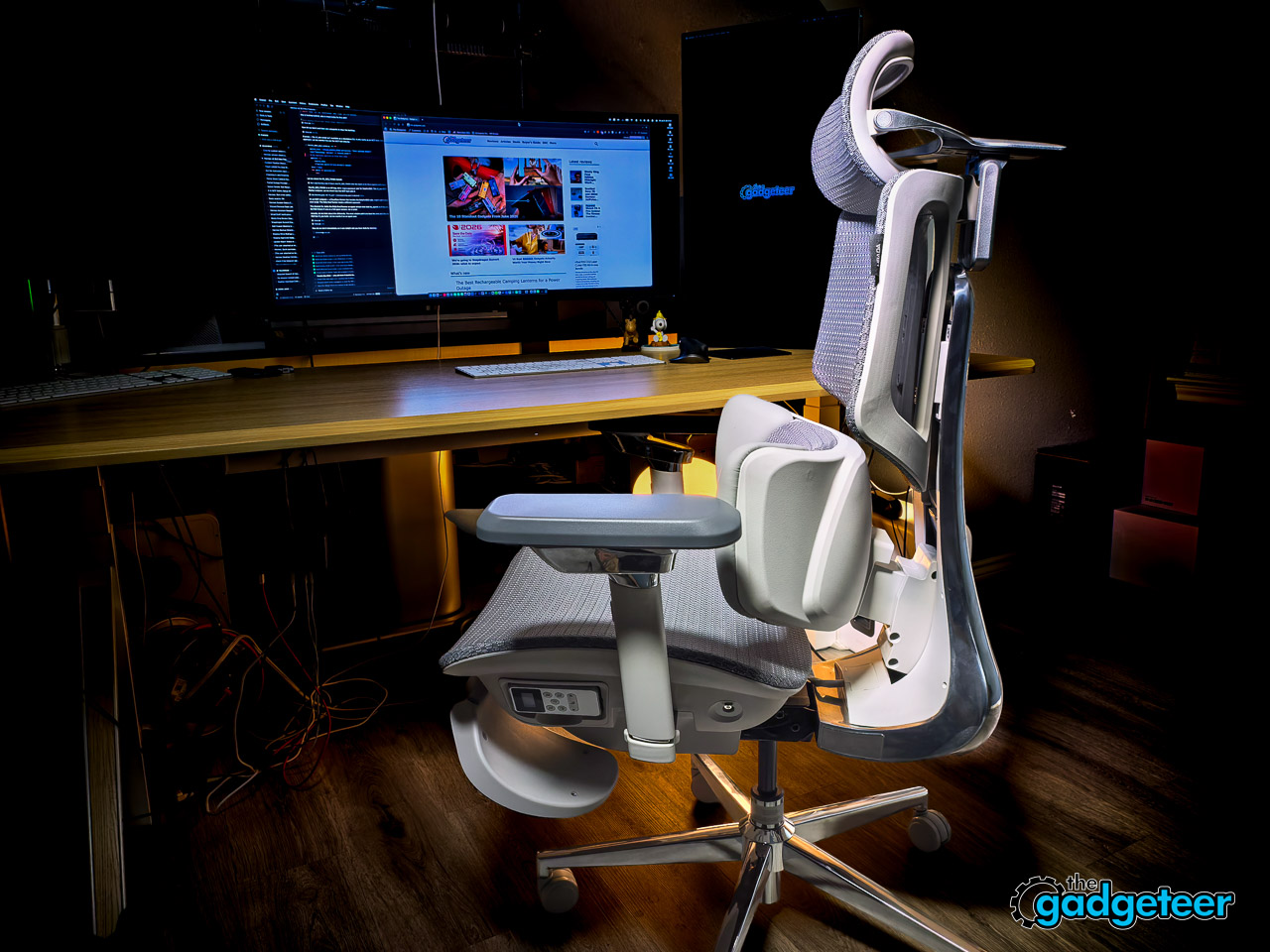
The hands-on verdict on the AI lumbar is mixed but net positive. The mechanism responds when you shift from typing to leaning back, and you can feel the lumbar pad move before you consciously register that your posture changed.
At intensity level 4, it’s subtle enough to forget about. At level 8, it’s assertive, almost pushy, and I found myself dialing it back after an hour. The 50mm of electric front-back travel is wider than any manual lumbar I’ve tested, which makes the auto-adapt useful for someone who moves between upright and reclined positions all day.
What the E3 Pro 2026 Edition Does That Earns Its Bestseller Status
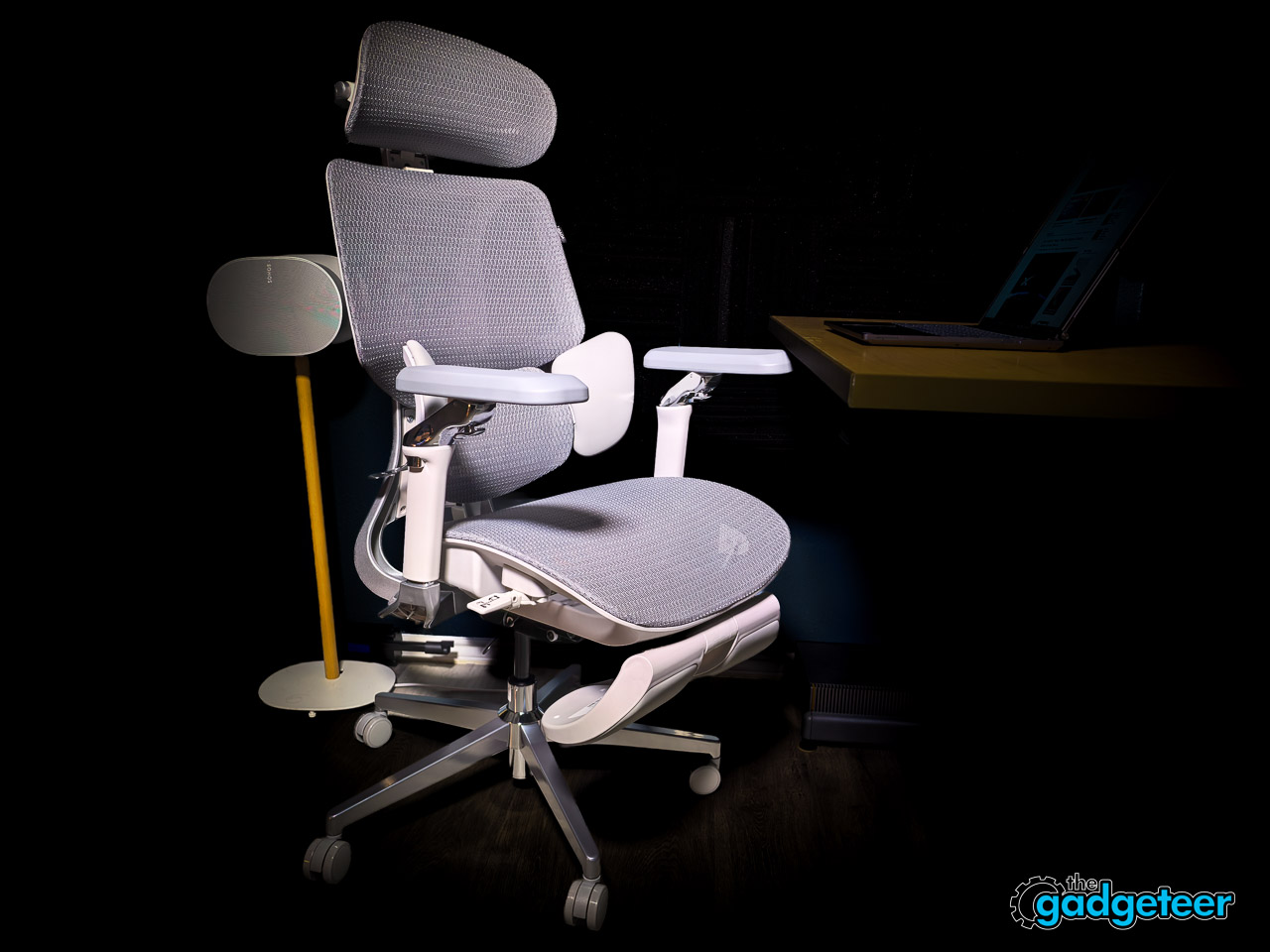
The E3 Pro 2026 Edition earned its 3,351 reviews and 98% positive rating before the X7 existed, and after two weeks in the chair I understand why it stays on the bestseller list. At $487 on sale, it delivers the adjustability that most chairs in the $400 to $600 tier don’t bother with: a 3-zone adaptive lumbar system with 1.18 inches of glide, 6cm or 2.36″ of height adjustment across 6 levels, 3.2cm or 1.26″ forward/backward adjustment with Lockin, and 40-degree side wings that hug your lower back from three angles instead of pushing at it from one.
The 3-zone lumbar is the E3 Pro 2026 Edition’s version of the X7’s AI lumbar, and it works in a different way. Instead of motors and sensors, the E3 Pro 2026 Edition uses a mechanical spring system with a 5-degree auto-response that shifts the support as you move. It’s not as responsive as the X7’s electric system, and it doesn’t track your posture in real time. What it does is hold your lower back in a position that feels supported from the moment you sit down, and it stays there without a motor running or a battery charging.
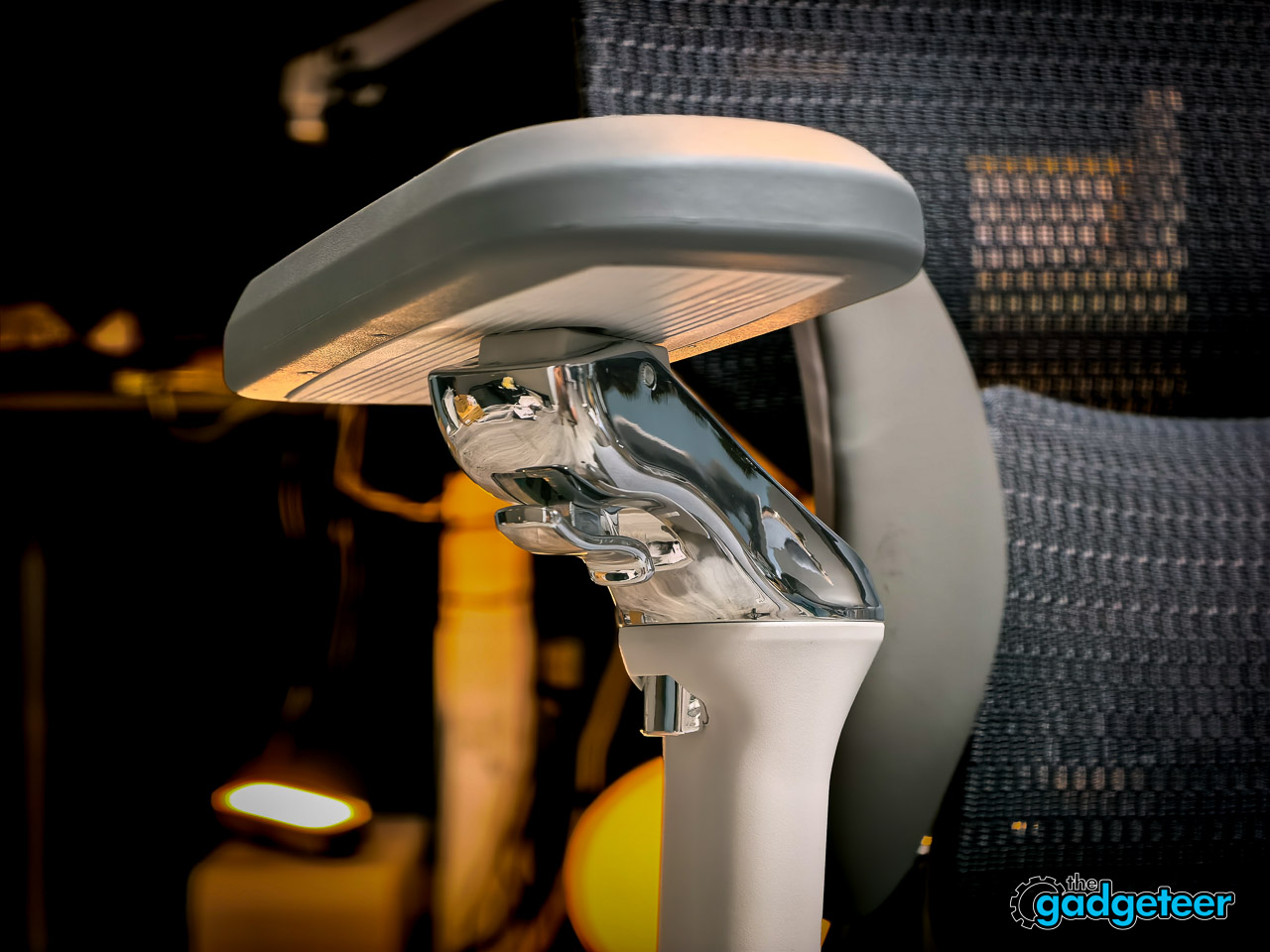
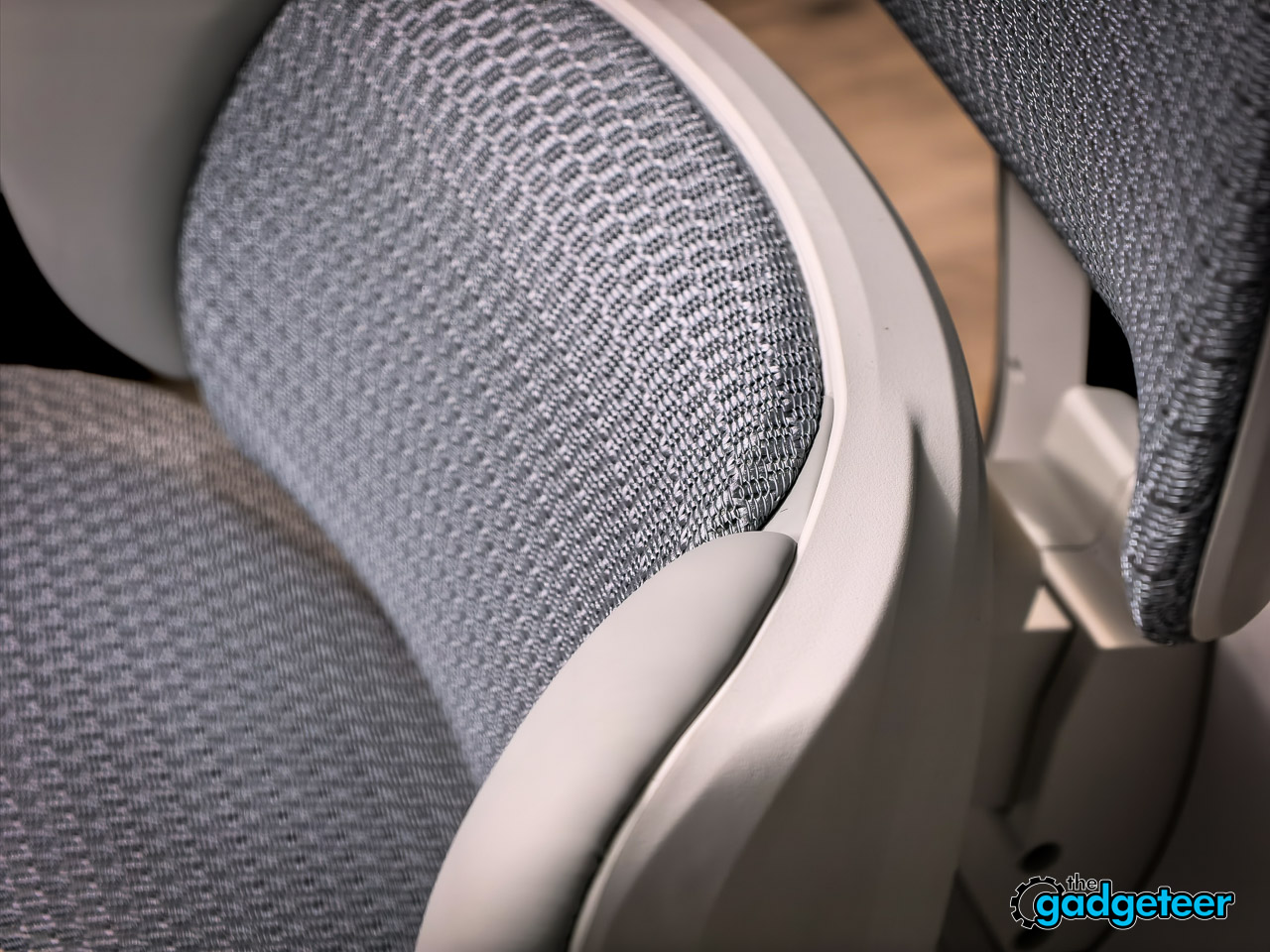
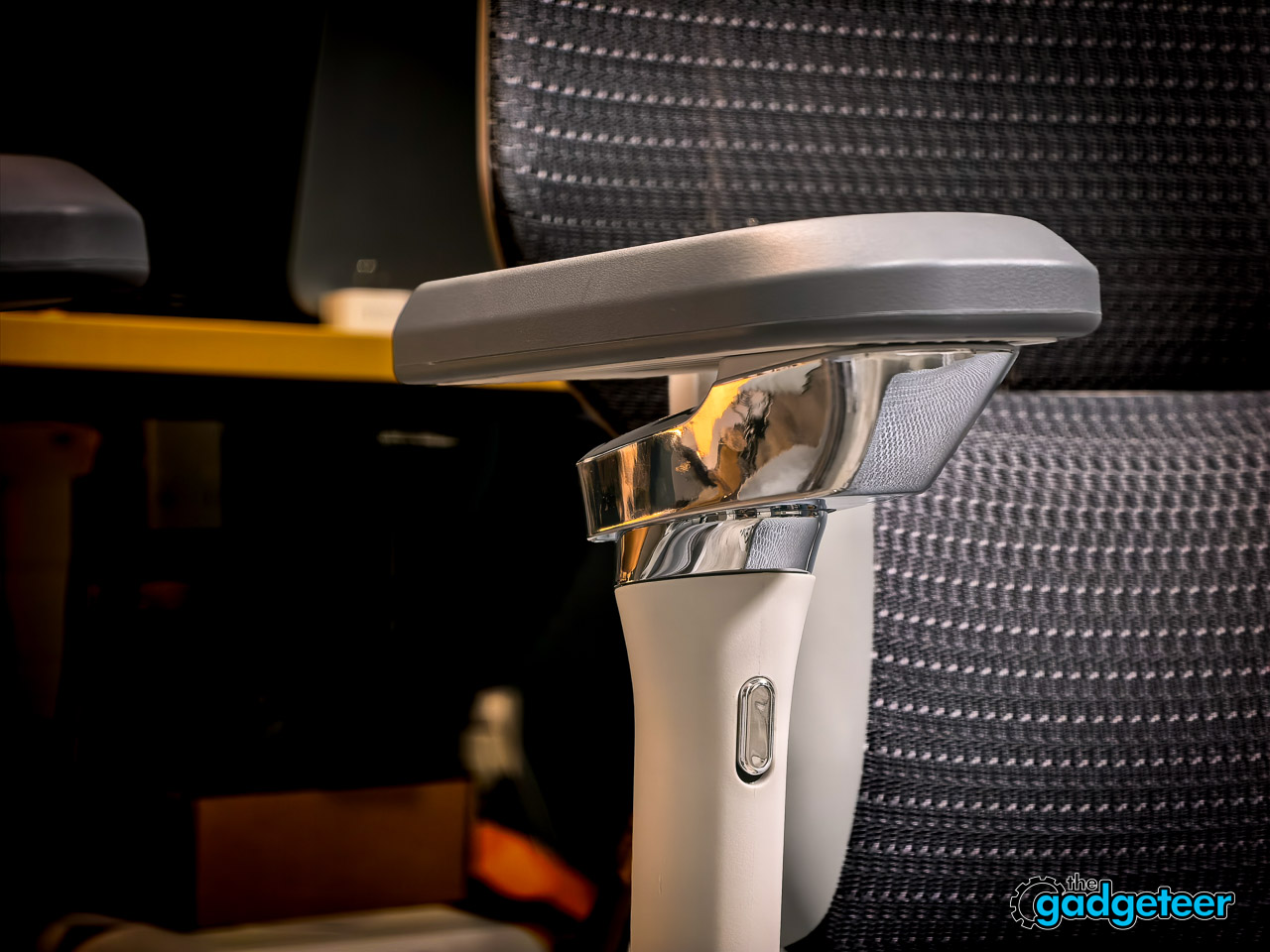
The CloudMesh seat is the feature that surprised me. The high-density polymer fabric breathes better than the foam cushions on most chairs in this price range, and in a hot office in the middle of June, that’s the difference between finishing a four-hour writing session comfortable and finishing it sweaty. The 720° armrests rotate, flip, and slide in every direction, and they recline-integrate at 40 degrees so the pads stay under your elbows when you lean back. Those are features I’d expect on a chair at twice the price.
The E3 Pro 2026 Edition doesn’t have massage, heating, or red light therapy. It doesn’t have AI anything. What it has is the best mechanical lumbar and the best mesh seat in the under-$600 tier, backed by BIFMA certification and a 5-year warranty. For a buyer who wants adjustability without paying for smart features they’ll never use, the E3 Pro 2026 Edition is the stronger value.
AI Lumbar vs 3-Zone Adaptive Lumbar: The Core Comparison
This is the section that matters, because the lumbar system is the feature that separates these two chairs and the one that justifies or fails to justify the $682 gap. The X7’s AI lumbar uses electric motors, pressure sensors, and a smart chip to track your posture and move the support forward or back automatically. The E3 Pro 2026 Edition’s 3-zone adaptive lumbar uses a mechanical spring and fixed side wings to hold your lower back in a supported position without any electronics.
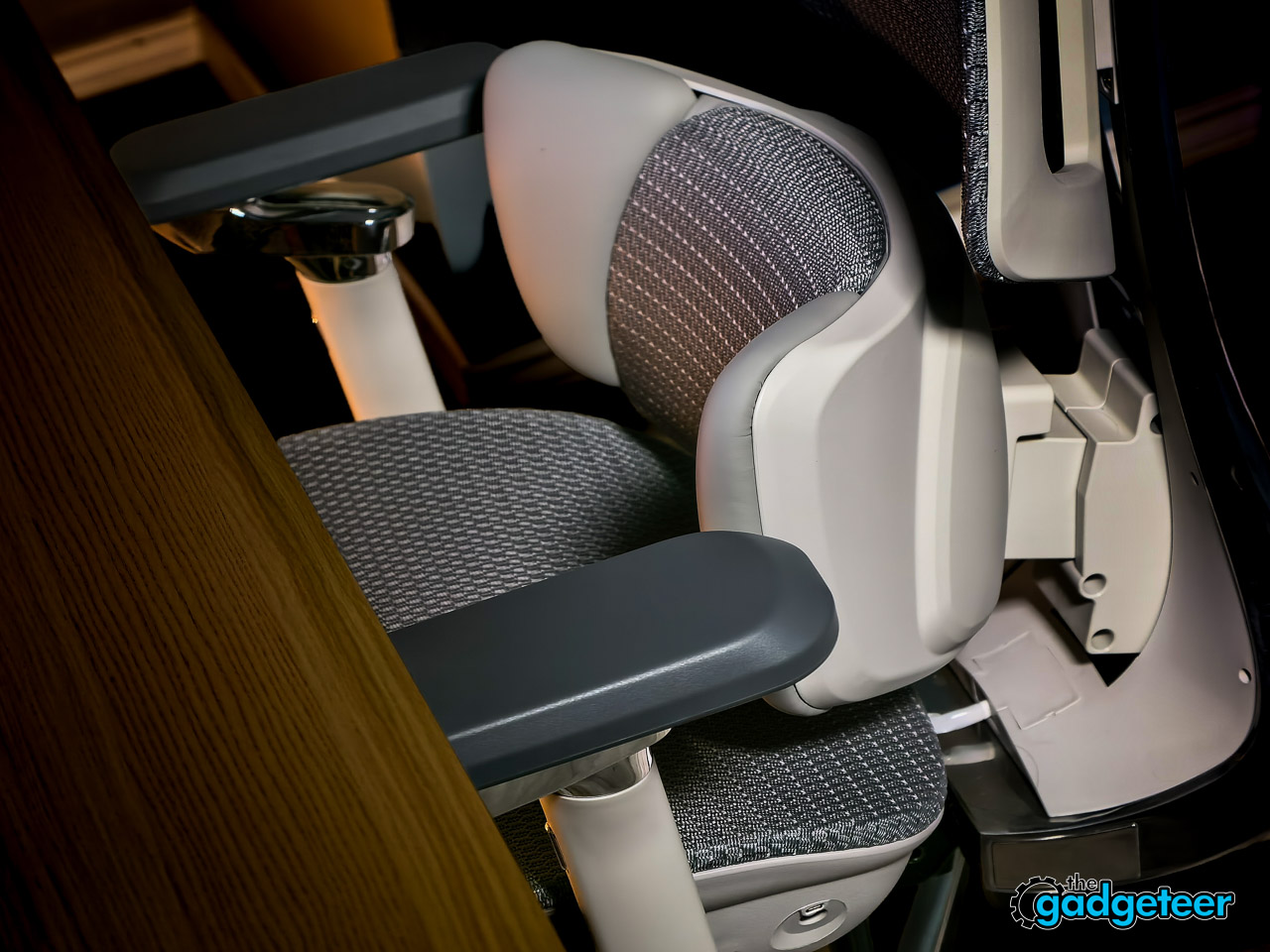
The X7’s system is more responsive. When I shift from typing to reading, the lumbar pad moves before I think about it, and the 10 intensity levels let me tune the feel from a gentle nudge to a firm push. On a long writing day, the auto-adapt reduces the mid-afternoon slump that comes from sitting in the same position for three hours.
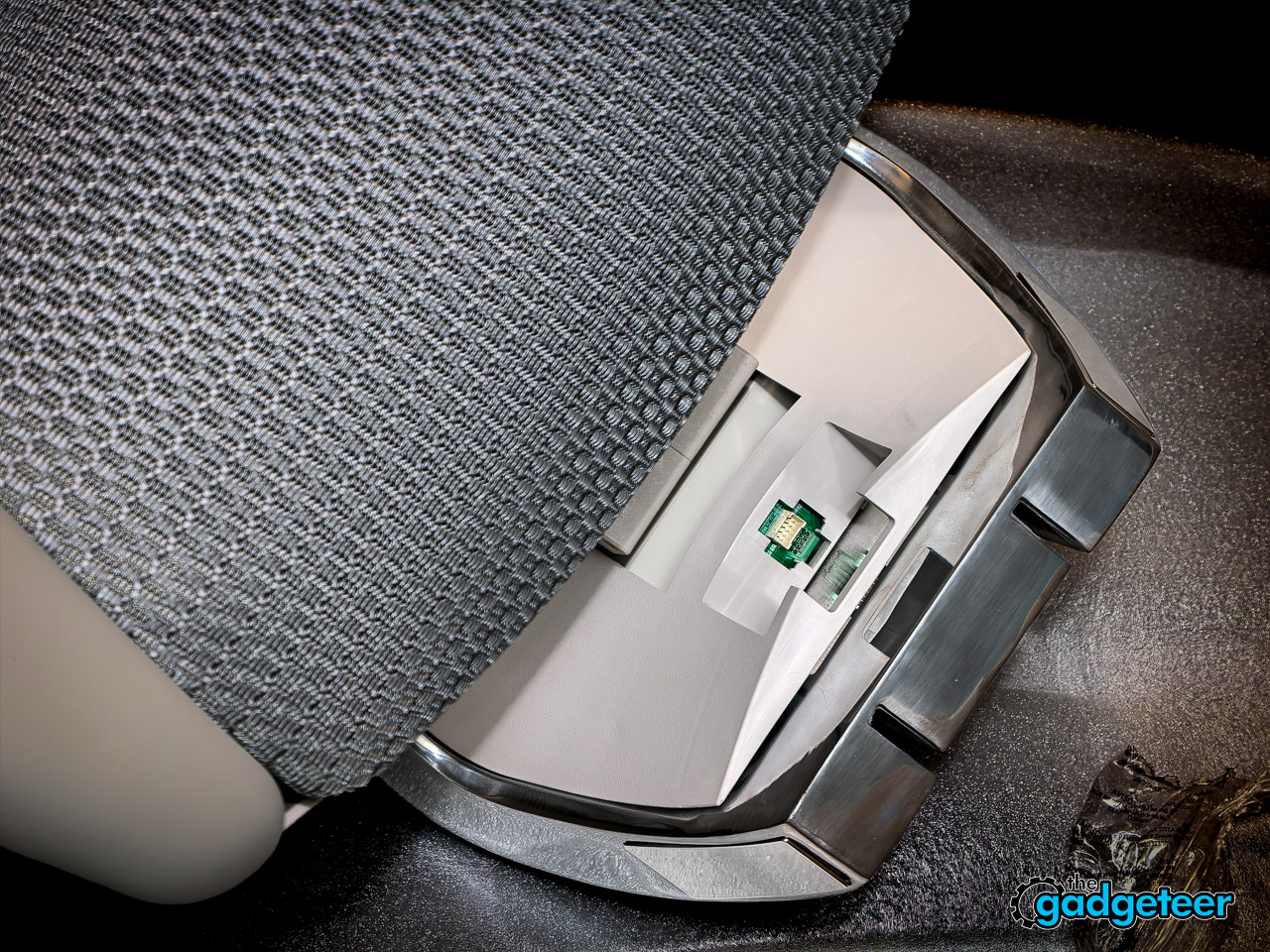
The E3 Pro 2026 Edition’s mechanical system can’t match that responsiveness, and it doesn’t try to. It holds your back in one position and trusts you to adjust the height and depth manually when you change tasks.
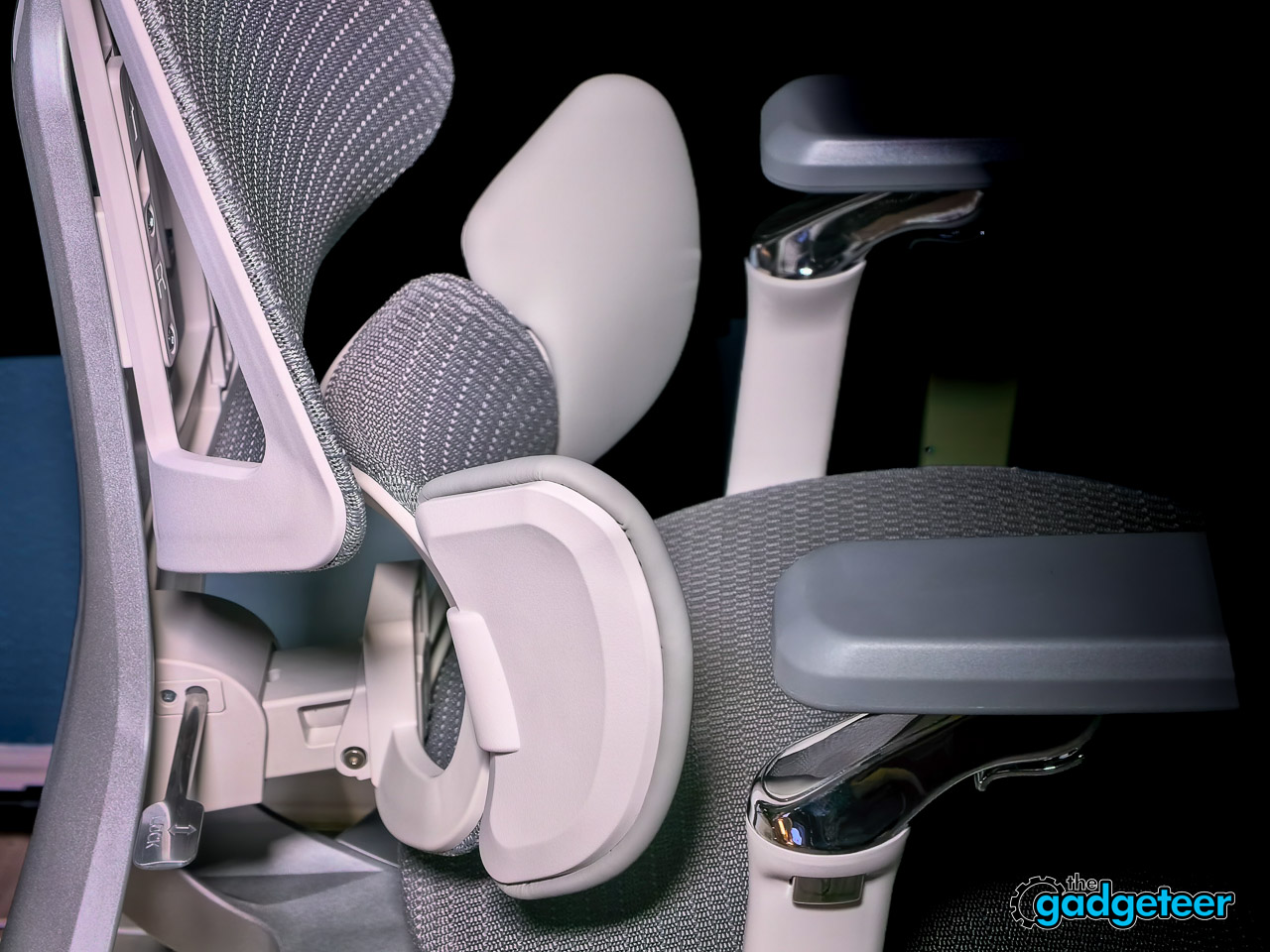
But the E3’s system has an advantage the X7 can’t match: silence. The E3 Pro 2026 Edition’s lumbar works the same way on day one as on day five, and it never makes a sound.
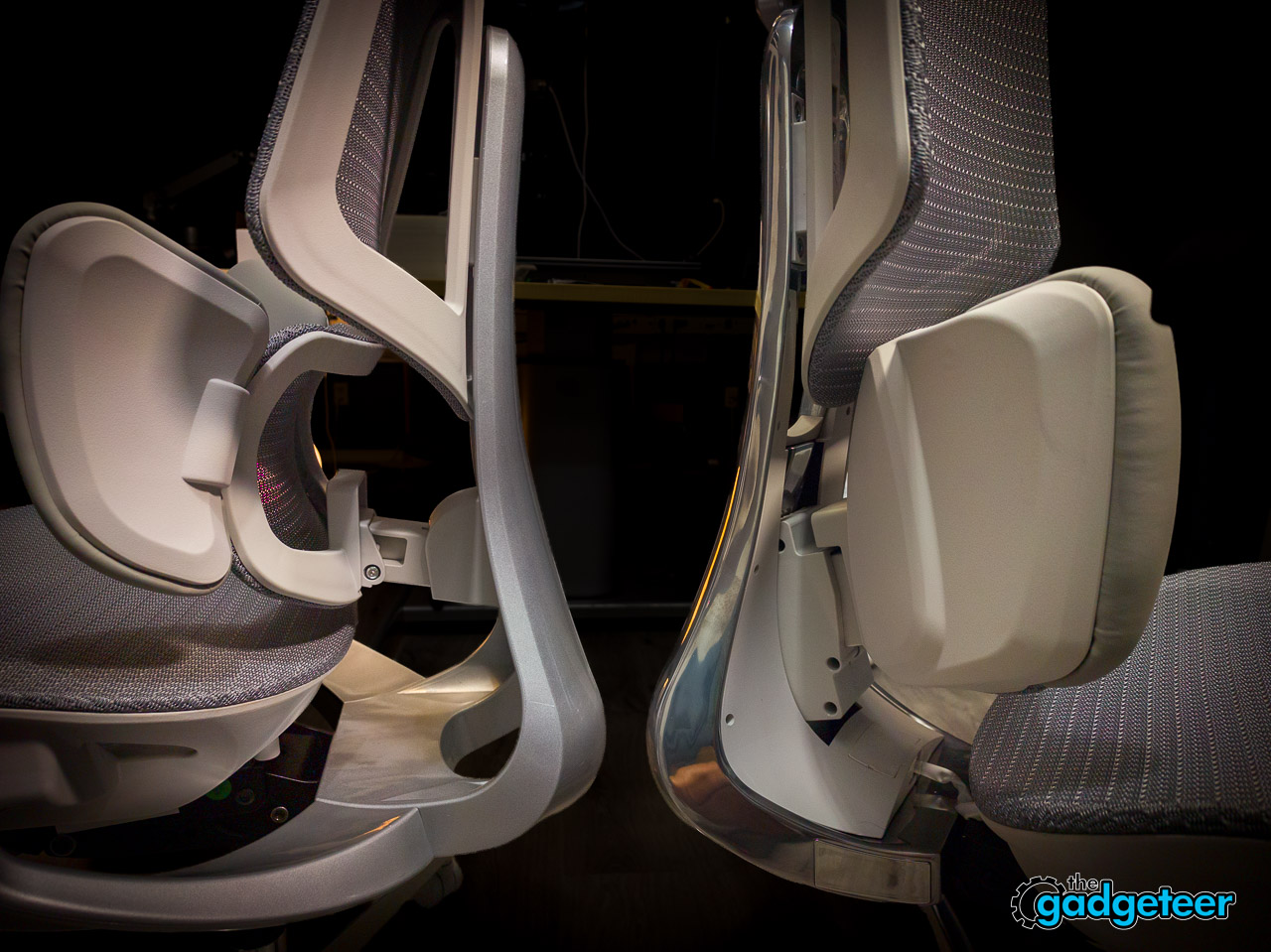
The 2 inches of electric travel on the X7 vs the 1.18 inches of mechanical glide on the E3 Pro 2026 Edition sounds like a big gap, but in practice both ranges are wide enough to cover the distance between slouched and upright. The X7’s advantage isn’t range. It’s that the chair does the moving for you, and the E3 Pro 2026 Edition makes you do it yourself.
Massage, Heat, and the Features That Aren’t Gimmicks
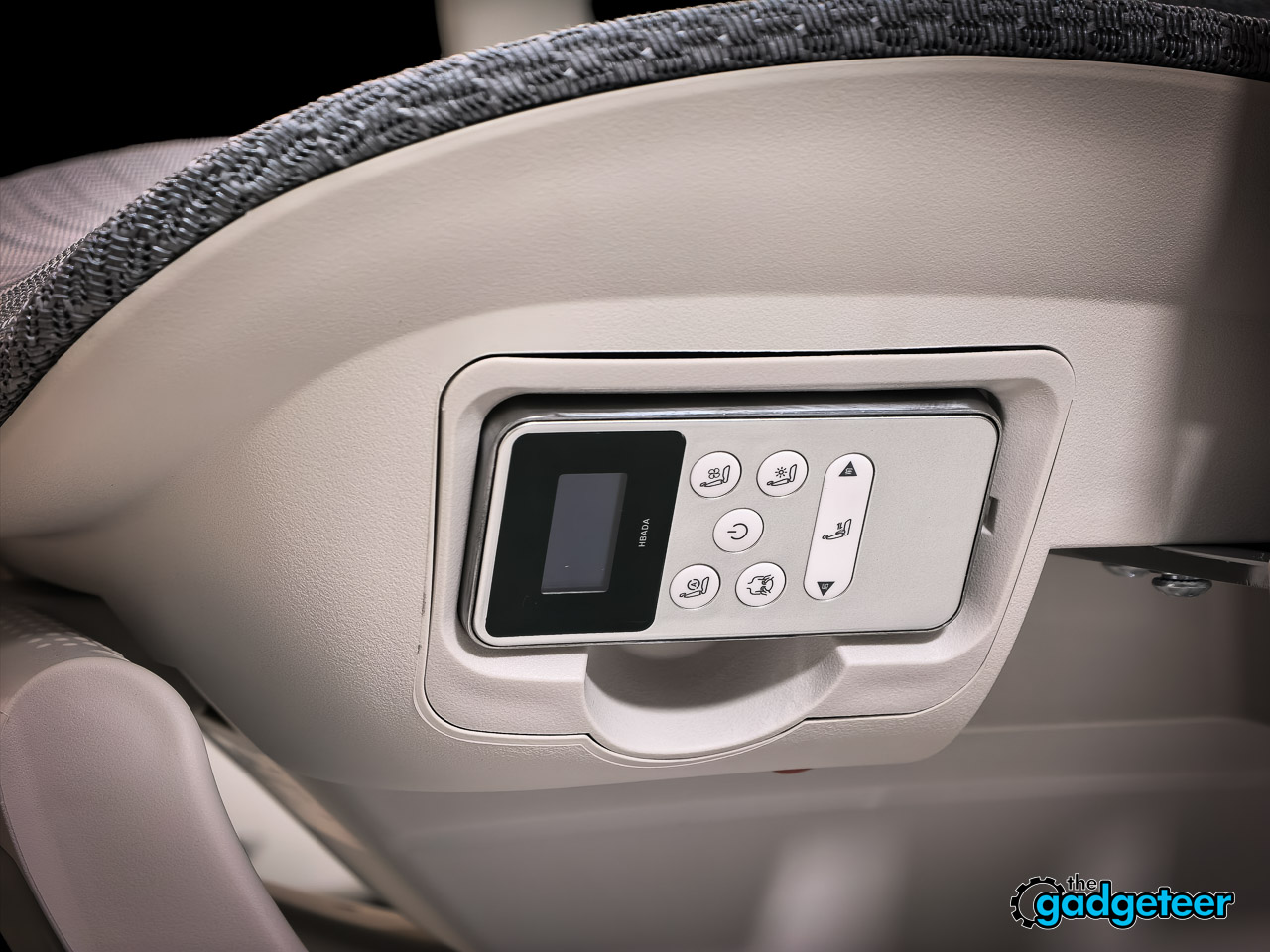
The X7’s 3-level massage is built into the lumbar pad and controlled by a small wired remote on the right side of the seat. The rolling-kneading pattern takes the edge off a long day at a desk, and the graphene heating comes up to temperature quickly and stays warm without feeling hot. Both features work without an app, which is the right call, because app-gated massage sounds good on a spec sheet and gets old fast in daily use.
HBADA also sneaks a red light mode into the lumbar pad, but in practice it feels more like background ambiance than a feature you buy the chair for. In my office it fades into the background once you settle in, and HBADA’s spec sheet calls out the red light by name without going into the kind of technical detail you’d see on a dedicated therapy device.
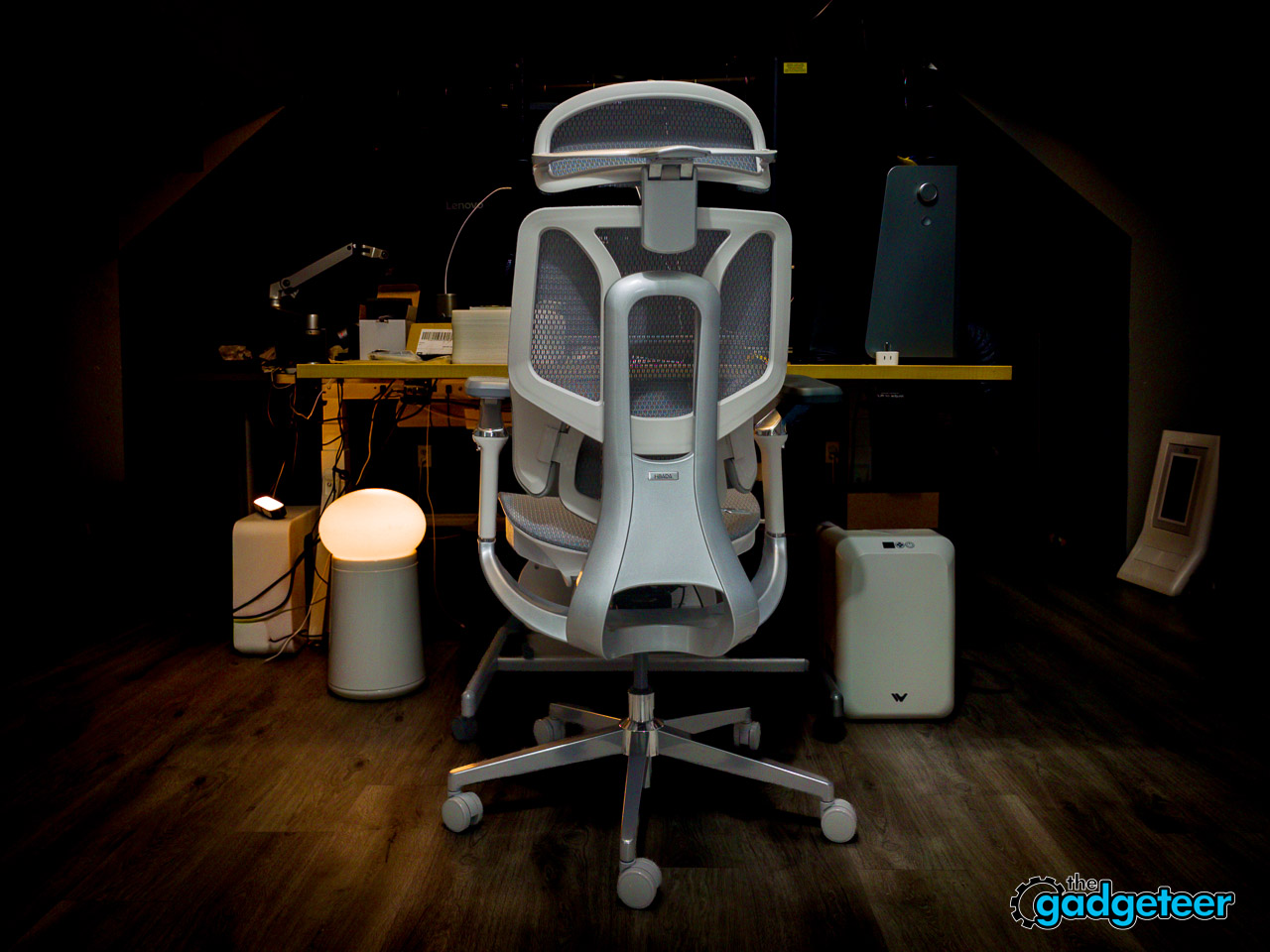
The E3 Pro 2026 Edition has none of these extras. No massage, no heat, no red light. If those features matter to you, the X7 is the only chair in this comparison that bundles them, and the question is whether $682 is a fair price for massage, heating, AI lumbar, and a 4D headrest. For some buyers, the answer is yes; for others, the E3 Pro 2026 Edition at $487 and a $30 heating pad covers their needs with money left over.
Specs That Gate the Buying Decision
Two numbers matter before anything else: max weight (330 lbs on both chairs) and recommended height (4’11 to 6’5 on the X7, 5’1 to 6’5 on the E3 Pro 2026 Edition). Both chairs fit the same body range, which means the buying decision isn’t about fit. It’s about features and budget.
The X7 weighs 83.78 lbs, which is heavy. If you move your chair between rooms or floors, that weight wears on you, and the wheels are smooth but they don’t make the chair light. The box is large enough that you should measure your doorframe before unboxing in an apartment. The E3 Pro 2026 Edition is lighter and ships in fewer pieces, which makes assembly a one-person job in 25 to 30 minutes versus the X7’s 35 to 45 minutes with a second person recommended.
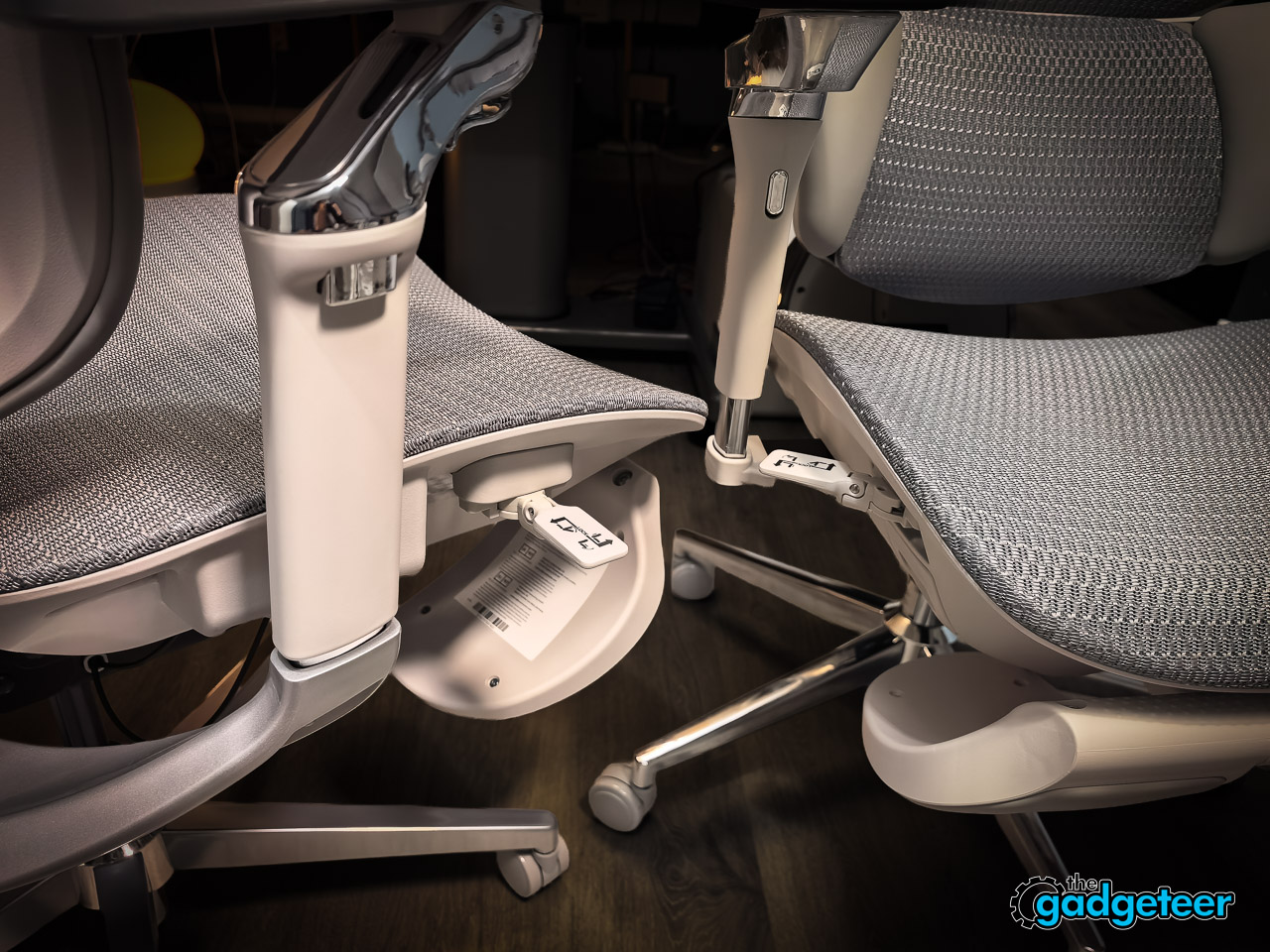
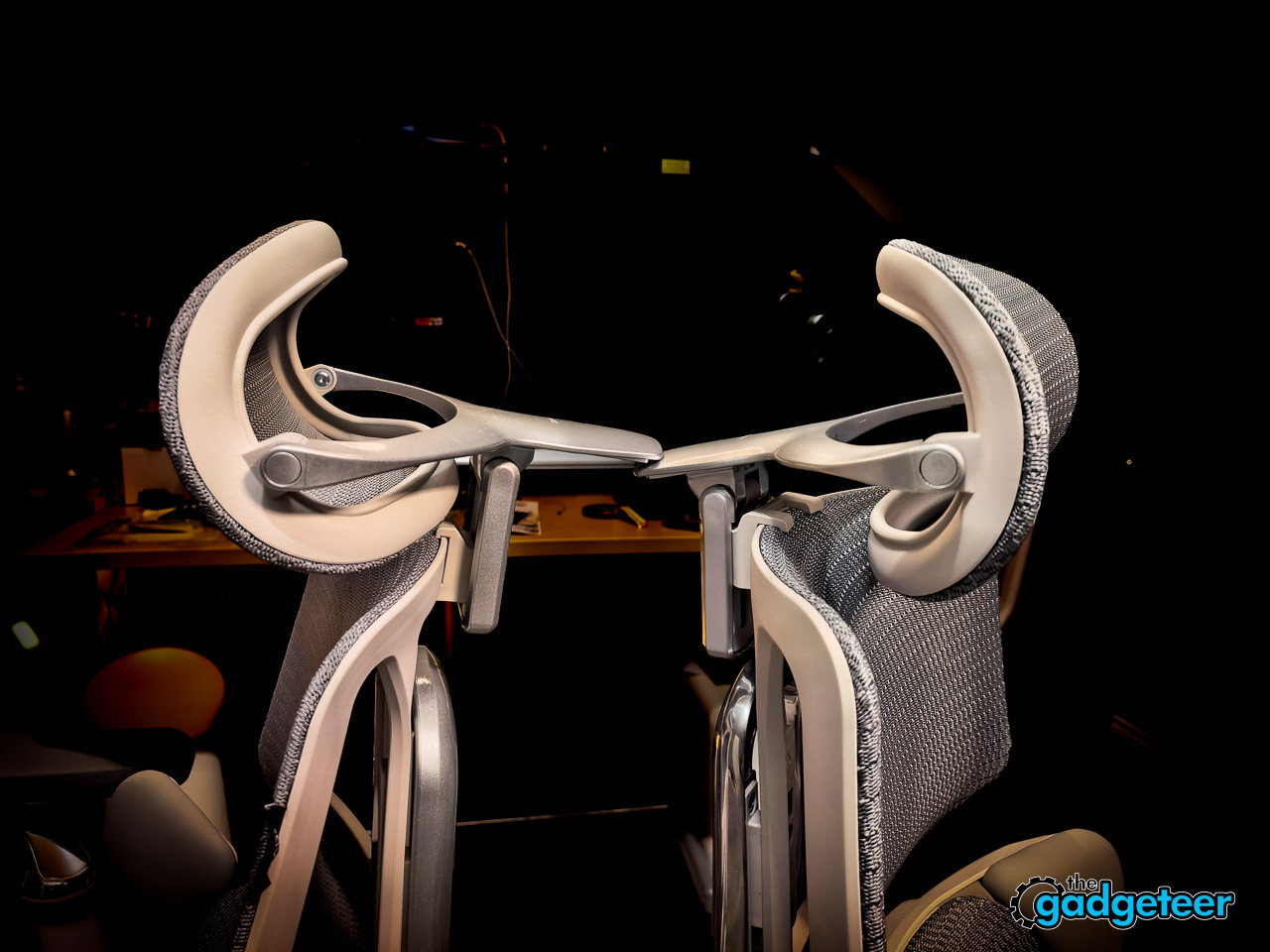
The X7’s recline hits 140 degrees across 4 positions, from 106 degrees for deep focus to 140 degrees for zero-gravity napping. The E3 Pro 2026 Edition matches the 4-position recline with the same angle range, so the recline experience is similar. The X7’s headrest does 70 degrees of rotation plus 45mm of height and 55mm of front-back, which is more headrest travel than the E3’s 4D dual-axis that does 70 degrees of rotation plus 1.57 inches up-down and 2.76 inches forward-back. In practice, both headrests are class-leading for their price tiers.
The X7 carries BIFMA X5.1 certification for 10-year service life, backed by lab cycle tests of 100,000 recline cycles, 600,000 handrail cycles, and 120,000 gas lift cycles. The E3 Pro 2026 Edition exceeds BIFMA with 120,000 cycles on recline, armrest, and rotation tests, plus IGR and ICA Chiropractic certifications. Both chairs are built to last, and neither one feels like it’ll need replacement in under five years.
Who Should Buy Which Chair
Buy the E3 Pro 2026 Edition if your budget is under $600, you want the best mechanical lumbar in that tier, and you don’t care about massage, heating, or AI features. The CloudMesh seat, the 720° armrests, and the 3-zone adaptive lumbar make it the strongest value buy in HBADA’s lineup, and for most buyers it’s the chair that solves the problem without paying for extras.
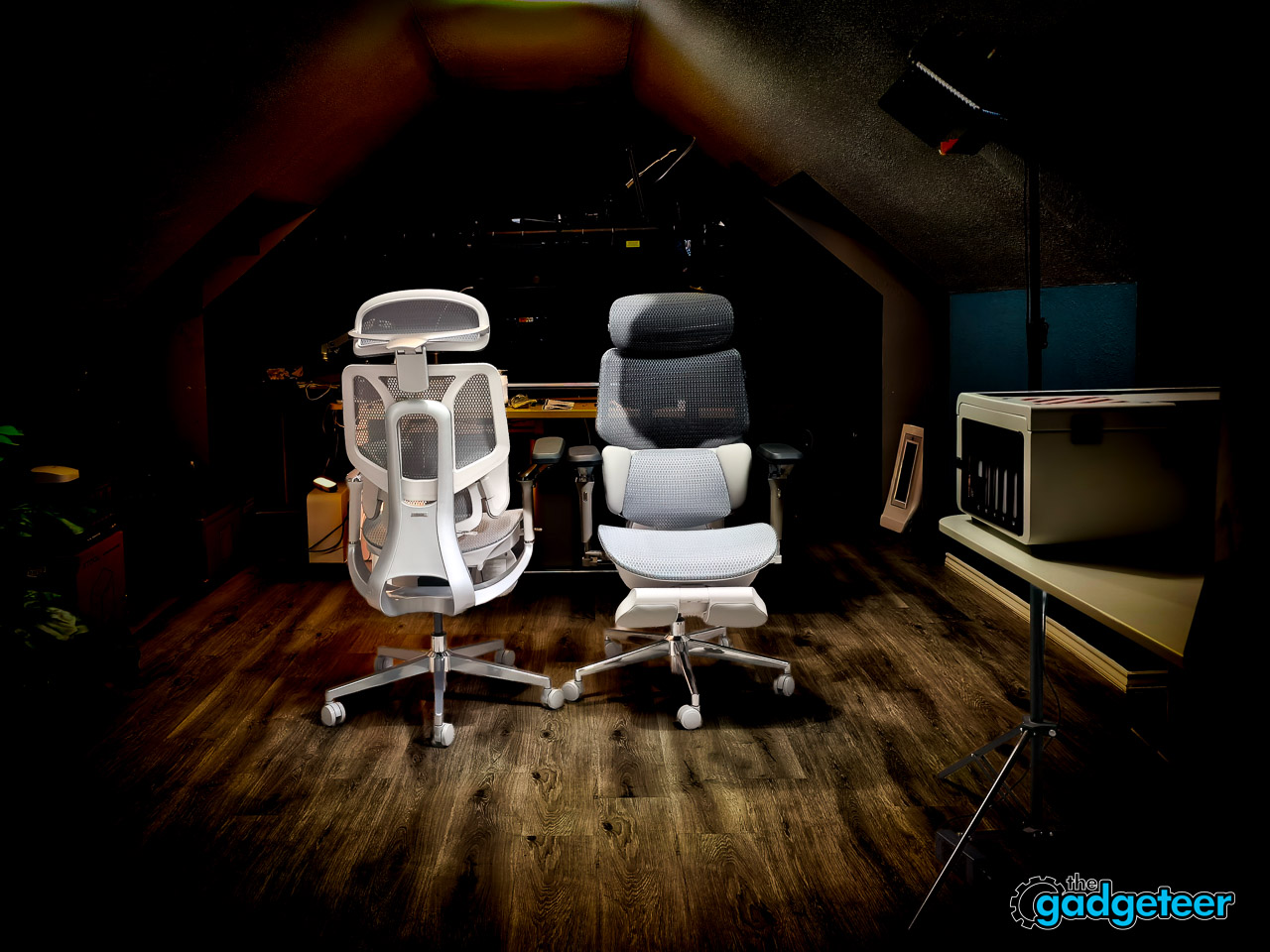
Buy the X7 if you want the AI lumbar to do the posture work for you, you’ll use the massage and heating regularly, and your office isn’t a recording studio. The auto-adapt lumbar, the 50mm of electric travel, and the 10 intensity levels are features no chair under $1,500 matches. The 30-day in-home trial makes the risk low, and the 5-year warranty protects the investment.
Skip both if you want the proven 15-year ergonomic research of a premium ergonomic flagship or an established office chair standard. The X7 is a different product at a different price, and the E3 Pro 2026 Edition is a budget chair that punches above its weight. Neither one replaces the research-backed ergonomics of the premium tier, and HBADA doesn’t claim they do. For the wider field, see our best office chairs guide.


Frequently Asked Questions
Is the HBADA X7 worth the extra money over the E3 Pro 2026 Edition?
If you’ll use the AI lumbar, massage, and heating regularly, the $682 gap earns its keep. If you just want a supportive, adjustable chair for long hours at a desk, the E3 Pro 2026 Edition at $487 does the same core job for less than half the price.
Does the X7’s AI lumbar actually work?
Yes. The pressure sensors and smart chip track your posture and move the lumbar pad forward or back as you shift. It’s the first mechanism in this category I’ve tested that does what the marketing claims. The catch is the motor whirr, which is audible in a quiet room.
How does the E3 Pro 2026 Edition compare to a budget office chair?
The E3 Pro 2026 Edition at $487 matches the adjustability of comparable chairs at roughly the same sale price and adds a 3-zone lumbar system, CloudMesh seat, and 720° armrests that most chairs in the tier don’t have. Those rivals carry an established research pedigree, but the E3 Pro 2026 Edition has more features for the same money.
Pricing and When to Buy
At regular price the HBADA X7 runs $1,509 on HBADA’s official site and $1,227 on Amazon, while the HBADA E3 Pro 2026 Edition lists at $659 official and $709 on Amazon. For the 4th of July, both drop hard. The E3 Pro 2026 Edition falls to $487 official and $539 on Amazon, and the code GADGETEERE3 takes another 5% off, landing it at $462.65 official or $512.05 on Amazon. The X7 falls to $1,169 official and $1,165.64 on Amazon, with an extra $50 off bringing it to $1,159 official or $1,115.64 on Amazon, which keeps the real-world gap between them wide even when both are discounted.
🎆 4th of July Deal, with an extra Gadgeteer discount stacked on top
HBADA E3 Pro 2026 Edition
HBADA: Regular $659.00, July 4th deal $487.00, then $462.65 with code GADGETEERE3 (5% off)
Amazon: Regular $709.00, July 4th deal $539.00, then $512.05 with code GADGETEERE3 (5% off)
HBADA X7
HBADA: Regular $1,509.00, July 4th deal $1,169.00, then $1,159.00 with code GADGETEERE3 (5% off)
Amazon: Regular $1,227.00, July 4th deal $1,165.64, then $1,115.64 (grey)with code GADGETEERE3 (5% off)
The HBADA E3 Air 2026 Edition is on sale at $359 (regular $499), which is $128 less than the HBADA E3 Pro 2026 Edition at $487. The E3 Air 2026 Edition is the better value at that price; the E3 Pro 2026 Edition is the better chair with its added 4D headrest, 720° armrests, CloudMesh seat, and gravity-sensing chassis.
For the X7, the 30-day in-home trial and 60-day price protection make the timing safe to buy now. The 5-year warranty covers the motorized components, though HBADA doesn’t publish a separate warranty period for the AI lumbar motors specifically.
For the E3 Pro 2026 Edition, the same 5-year warranty applies, and the BIFMA and IGR certifications back the build quality. Both chairs ship with free 2-business-day shipping.
What Works
The 3-zone adaptive lumbar on the E3 Pro 2026 Edition is the best mechanical lumbar in the under-$600 tier, and it holds your back in a supported position from the moment you sit down. Add the CloudMesh seat that breathes in summer heat, the 720° armrests that stay under your elbows at every recline angle, and the BIFMA-certified build, and the E3 Pro 2026 Edition is the value buy that earned its bestseller status.
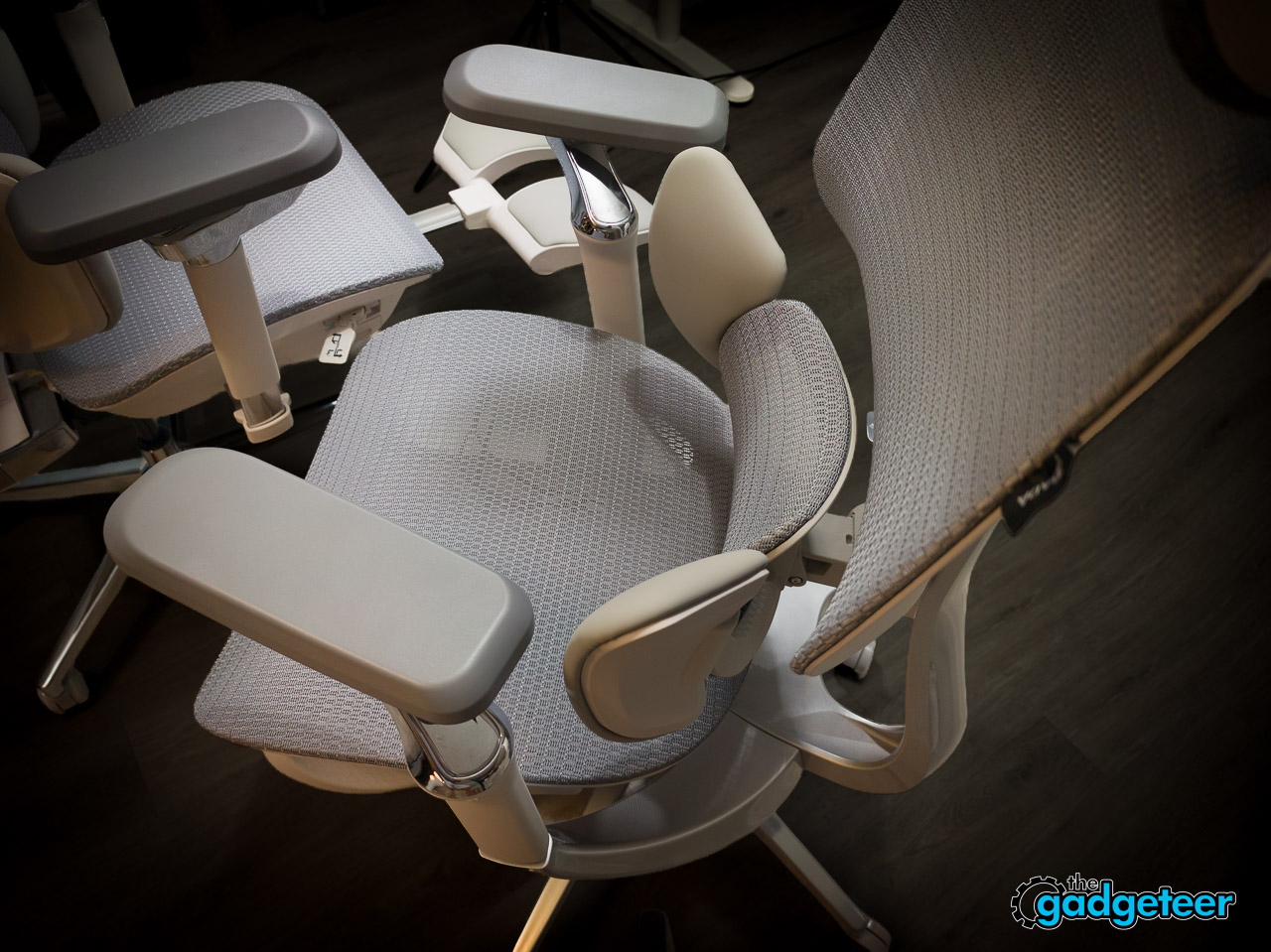
The X7’s AI lumbar tracking is the real deal, with 10 intensity levels, 50mm of electric travel, and pressure sensors that respond before you consciously register your posture changed. The 3-level massage and graphene heating work through a wired remote, not an app. The 4D headrest and 720° armrests are class-leading for a chair under $1,500.


Editor’s Take
If you want a chair that thinks for you and you don’t record audio at your desk, the X7 is the smartest chair under $1,500 I’ve sat in. If you want a chair that gets out of your way and costs less than half as much, the E3 Pro 2026 Edition is the best mechanical chair in the under-$600 tier and it’s not close. Most buyers should start with the E3 Pro 2026 Edition, and only move to the X7 if the AI lumbar, massage, and heating are features you’ll actually use every day.