
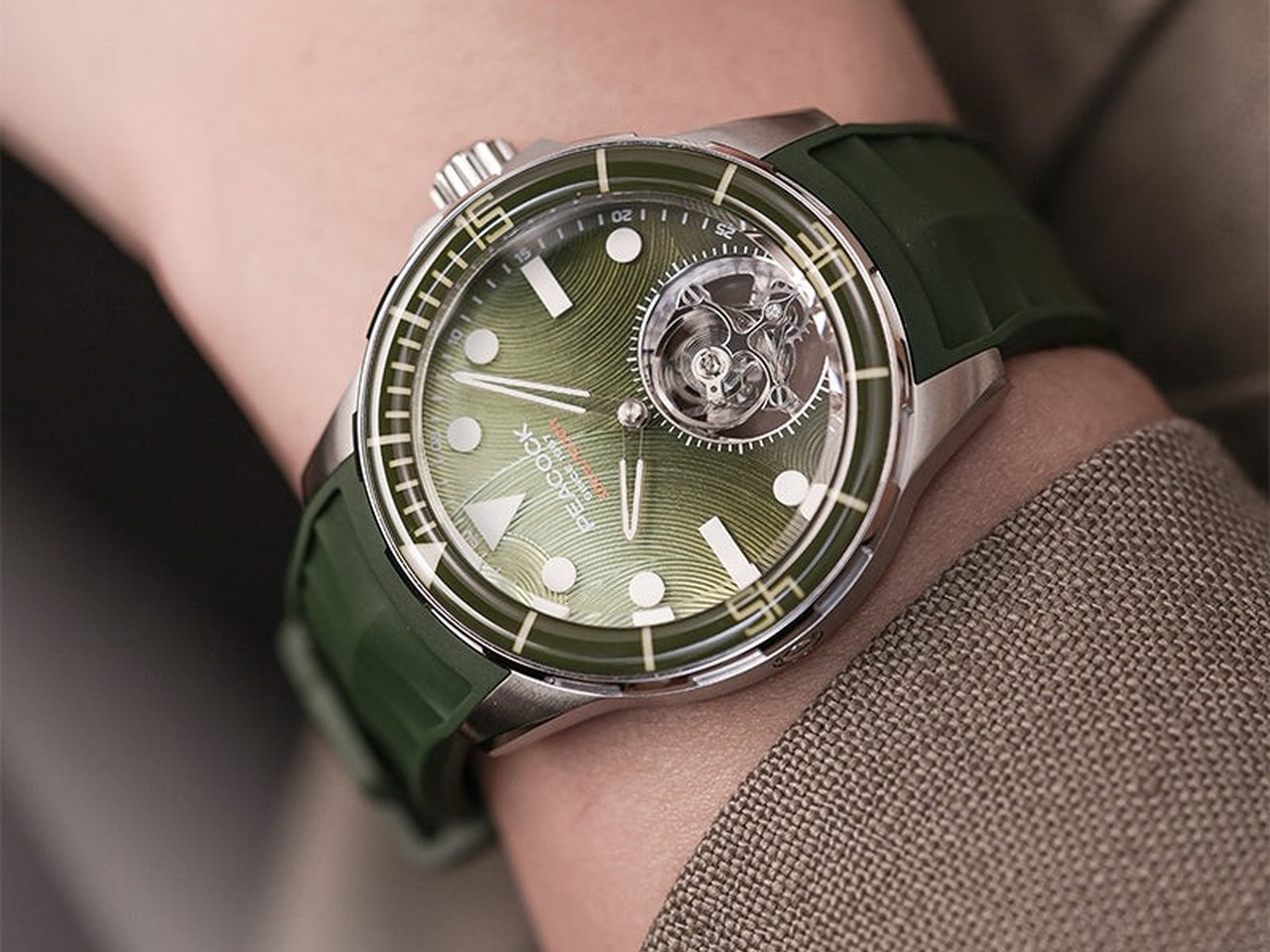
The easy answer is no. The more useful answer is that we keep judging the passport before we judge the watch.
Price: $3,499
Where to Buy: Peacock
That’s what makes the Peacock Haiyi Tourbillon Yu Limited Edition interesting. Not because it turns China into Switzerland overnight. It doesn’t. Not because every collector should suddenly forget a century of Swiss trust, service networks, and resale history. They shouldn’t.
That counts because this is a $3,499 green tourbillon diver from Dandong with a 40mm 904L steel case, 300 meters of water resistance, a hand-finished engraved enamel dial, and an in-house manual-winding flying tourbillon movement. If those details came from a tiny Swiss independent, the watch world would at least stop scrolling.
From a Chinese brand, too many people still start with suspicion. That reflex is the real story.
A $3,499 tourbillon diver should make collectors uncomfortable
A tourbillon inside a dive watch is already a strange sentence. A tourbillon inside a 40mm dive watch at this price makes it stranger.
Peacock lists the Haiyi Tourbillon with a 40mm diameter, 12.2mm thickness, 904L stainless steel case and bracelet, anti-reflective sapphire crystal, transparent caseback, 30 ATM water resistance, and the PAX9610B manual-winding movement. The movement runs at 28,800 vibrations per hour and carries a 68-hour power reserve. The Yu version is the green model, marked at 199 pieces on Peacock’s own product page.
These aren’t novelty-watch specs. They’re serious mechanical-watch specs attached to a price that creates cognitive dissonance.
That doesn’t automatically make the Haiyi a bargain. A watch isn’t only the sum of its case metal, water rating, beat rate, and complication. But it does mean the lazy version of the argument fails. This isn’t a skeletonized department-store watch borrowing the word tourbillon to sound fancy. Peacock is making a real mechanical claim.
The uncomfortable question is whether collectors are willing to evaluate that claim without first asking which country is printed on the mental invoice.
Peacock isn’t coming from nowhere
The weakest criticism of Chinese watchmaking is the one that treats it as if it appeared last Thursday.
Peacock’s own history page says its roots run through Andong, now Dandong, where watch retail and repair culture existed long before the modern Peacock name. The modern company traces its watchmaking story to 1957, when seven craftsmen at the Andong Metal Products Factory made the Qianjin watch. The Andong Watch Factory followed, and the Peacock name arrived in the 1970s.
There are big production numbers in that history too. Peacock says production passed one million units in 1979. By the mid-1980s, the factory had 12,000 employees and made more than 3.8 million watches per year. Dandong was called the Orient’s Geneva.
That nickname can sound inflated if you read it like marketing. Read it another way and it becomes more useful. Dandong wasn’t Geneva because it had Swiss prestige. It was Geneva because an industrial watchmaking ecosystem formed there.
That distinction matters. Switzerland’s advantage has never been only romance. It has been accumulated tooling, training, suppliers, repair knowledge, and collector confidence. Peacock is arguing that China has its own accumulated base, even if Western collectors haven’t been trained to see it that way.
The dial is the part that changes the conversation
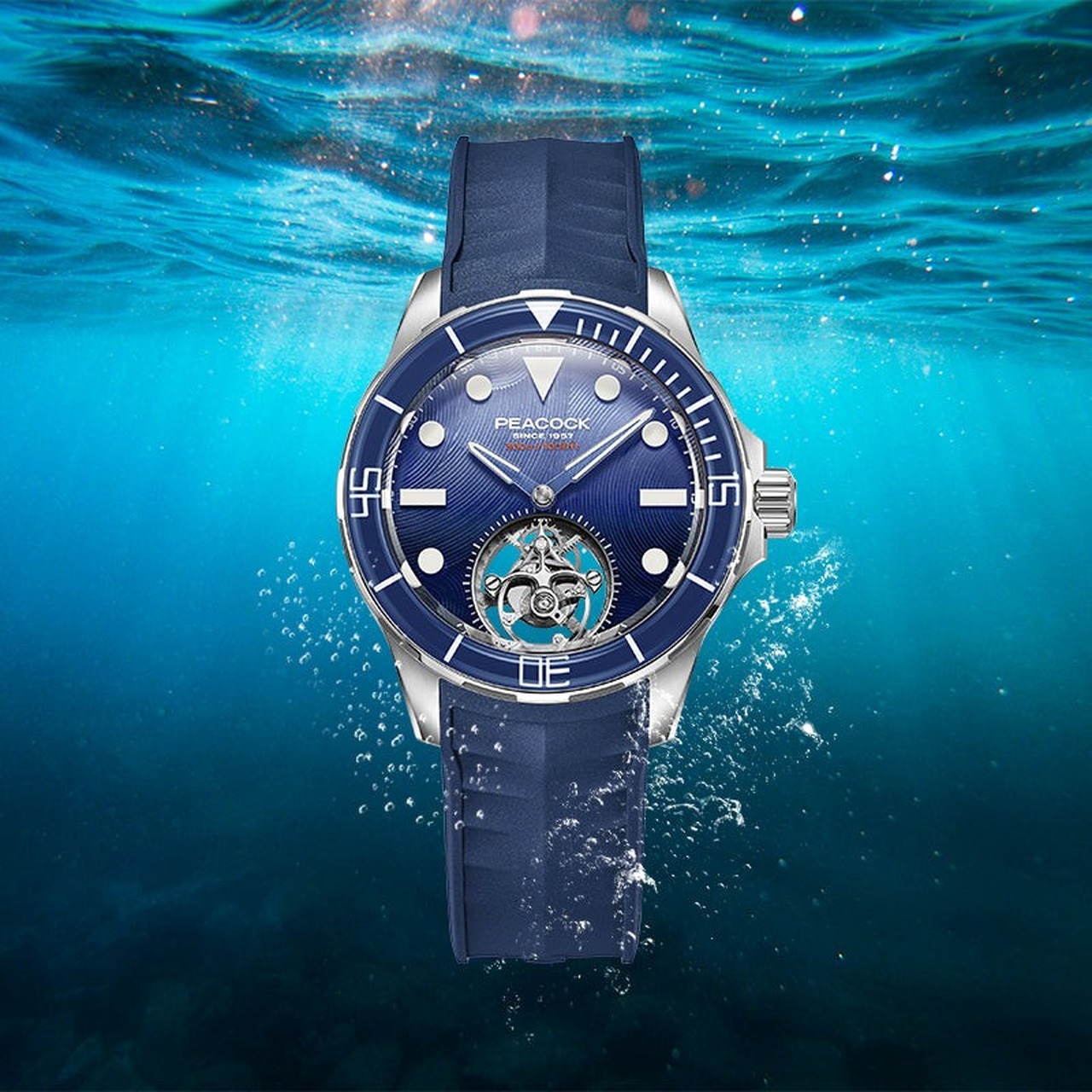
The Haiyi’s best argument is the dial.
Peacock says the dial uses hand-executed Lindsay engraving to create 190 concentric wave rings across six texture zones. It also says there are 78 knife-avoidance intersections, with grooves held to 0.15mm depth. Five translucent enamel layers, each listed at 0.03mm, sit over the engraved pattern before the surface is fired and polished down so the wave engraving still reads through the color.
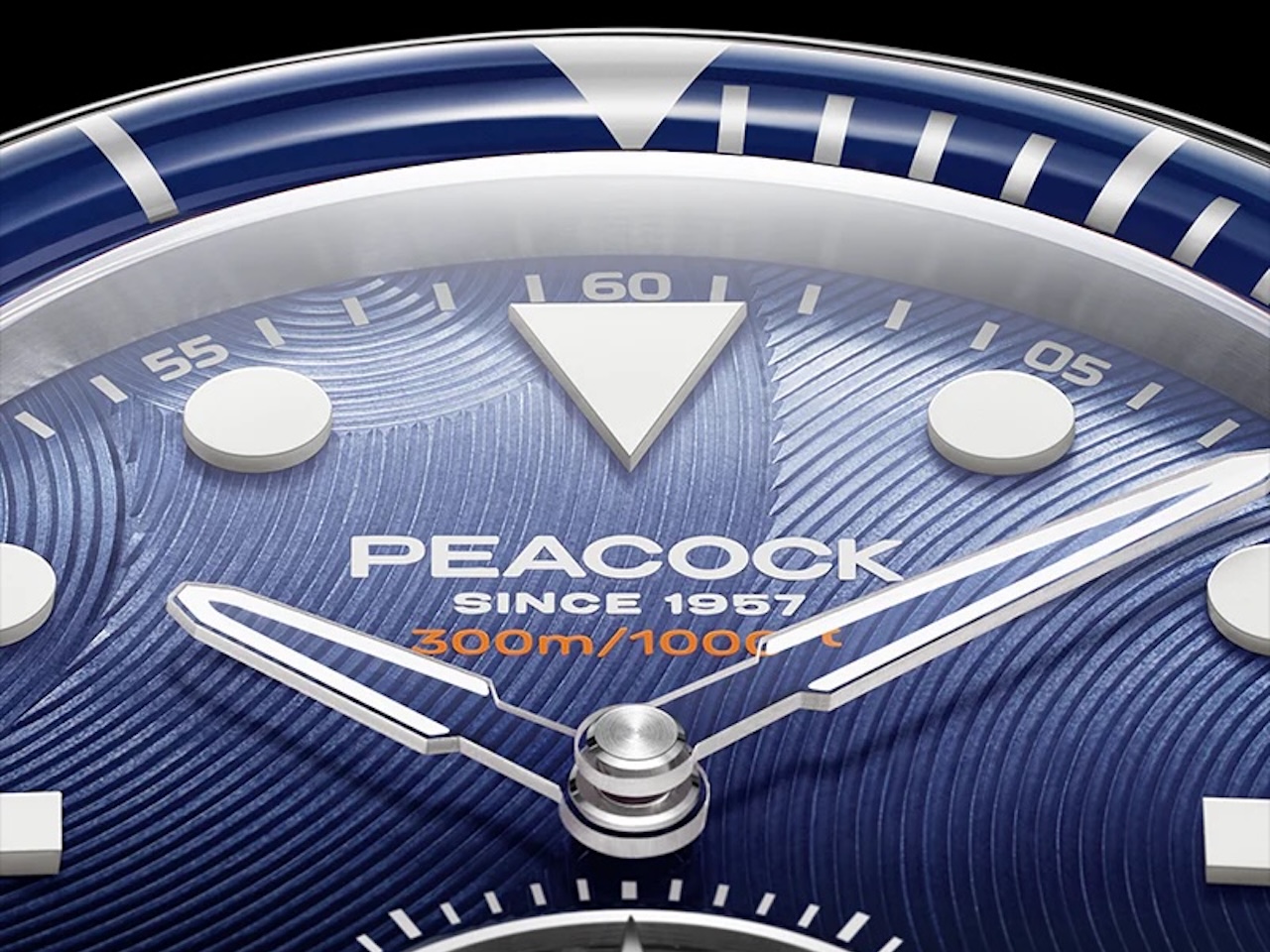
That’s exactly the kind of craft story collectors usually reward. A dial made this way has a human-risk component. A cut goes wrong and the dial is gone. The attraction isn’t only that the pattern looks like water. It’s that the pattern carries visible labor.
This is where Peacock’s country problem becomes backward. The collector world often accepts artisanal imperfection when the signature is Swiss, German, or Japanese. When the signature is Chinese, the same handmade claim gets treated like a burden of proof.
Fine. Burden of proof is fair. But the proof should be in the object.
The movement can’t be treated like decoration
A lot of affordable mechanical watches use open hearts, visible balances, and skeleton bridges to borrow the mood of high watchmaking. The Haiyi is playing a higher-risk game.
Peacock identifies the PAX9610B as an in-house manual-winding tourbillon caliber with a 68-hour power reserve and 4Hz frequency. The product page also describes an ultra-thin free-sprung tourbillon, a Gyromax-style balance regulated by four inertia weights, and movement decoration visible through the sapphire back.
Again, none of this proves long-term serviceability. It doesn’t prove regulation stability after years of wear. It doesn’t prove that the finishing will survive a loupe beside Swiss work costing ten or twenty times more.
But it does make dismissal harder.
The more honest critique isn’t, “China can’t make this.” The better critique is, “Can Peacock support this, regulate this, service this, document this, and build enough trust that collectors stop treating every purchase as a gamble?”
That’s a real question. It’s also a much more interesting question.
The diver part is both brilliant and ridiculous
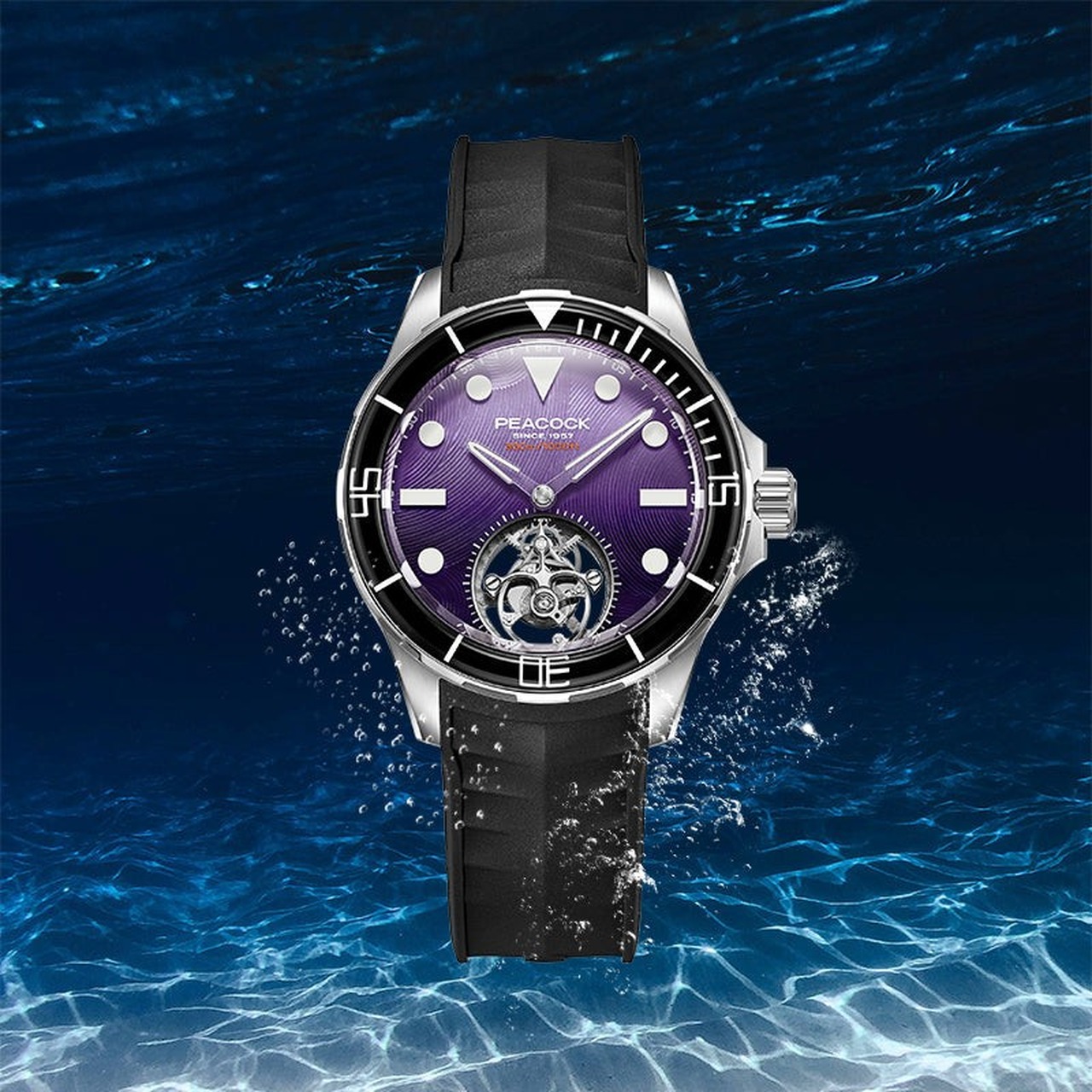
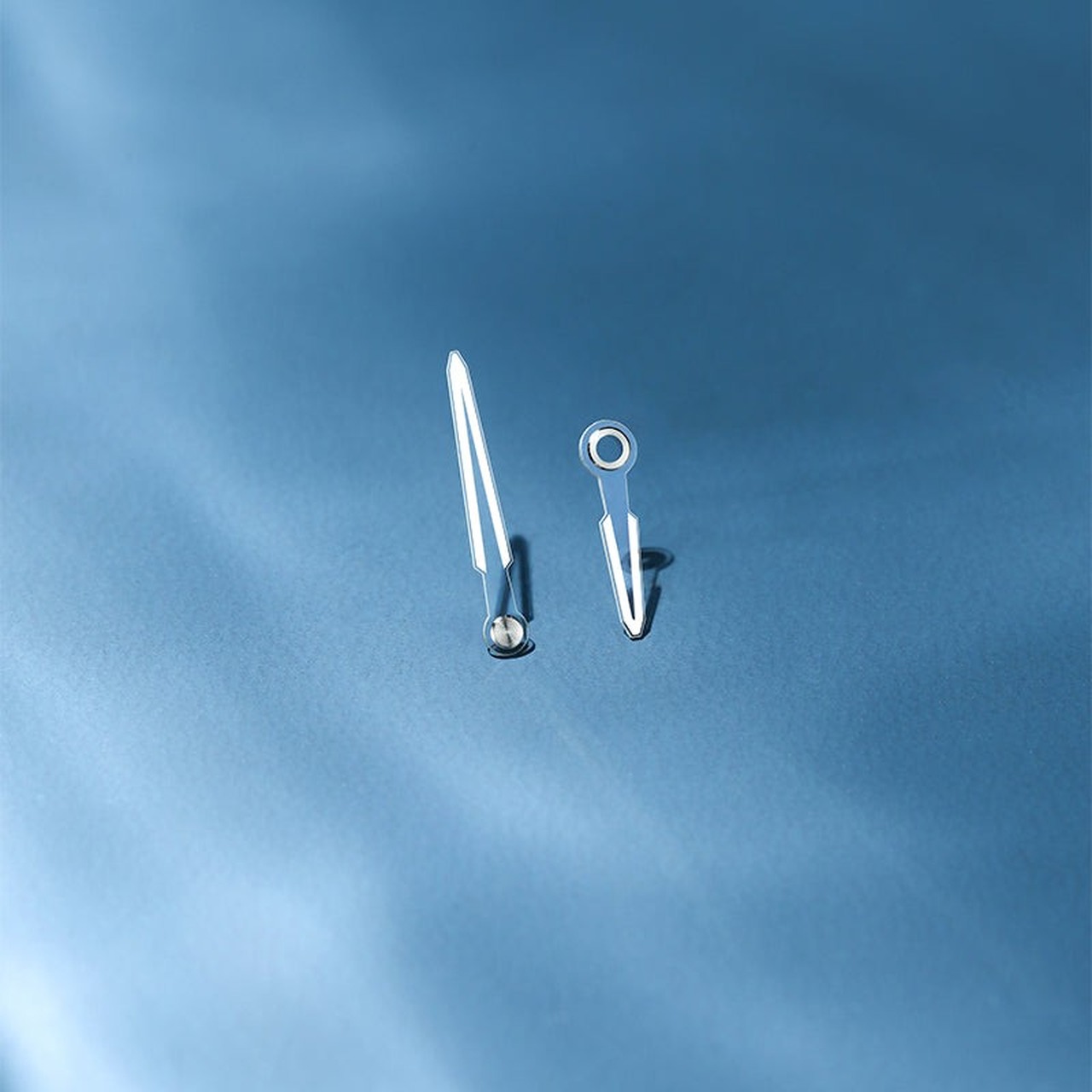
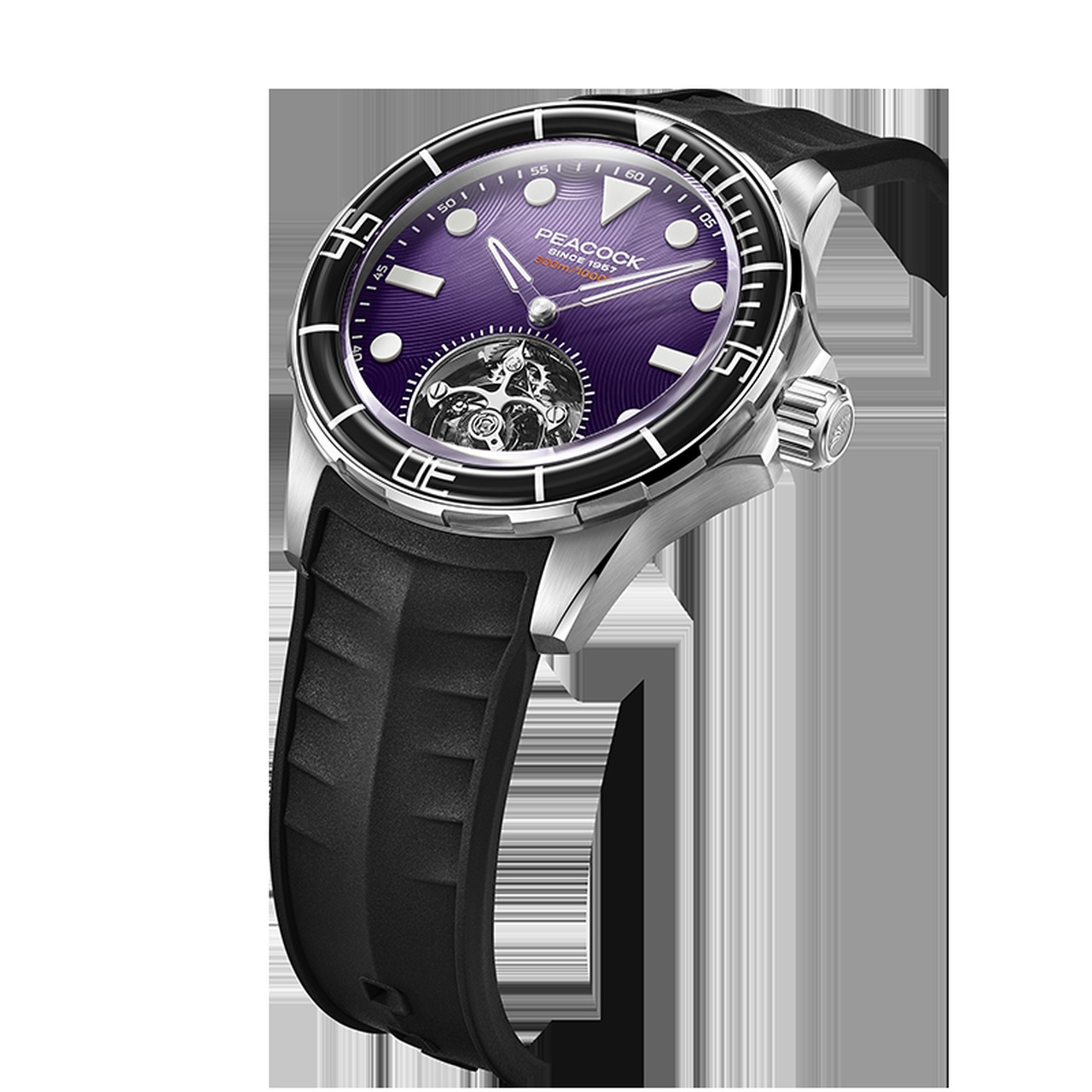
The Haiyi isn’t a pure dress watch trying to be precious. It’s a dive-styled sports watch with a tourbillon at 6 o’clock, sapphire hands, luminous markers, a lumed bezel, and 300 meters of rated water resistance.
That combination is a little absurd. It’s also the reason the watch works as an argument.
Swiss high watchmaking often asks you to protect the object from life. Peacock is trying to put a complicated movement into something with daily-wear proportions and aquatic posturing. You can call that confused. You can also call it modern. People already wear fragile luxury objects as everyday signals. A tourbillon diver simply says the quiet part out loud.
For The Gadgeteer reader, that matters. This isn’t only about whether a collector wants a traditional dress complication. It’s about whether advanced mechanical craft can live inside a thing that still feels like gear.
We’ve covered odd mechanical-watch experiments before, from the CIGA Design Eye of Horus Automatic Skeleton Watch to the CIGA Design X Series Mechanical Watch. The Haiyi sits in that same broad curiosity lane, but with a much more aggressive claim: not just visual mechanics, but national credibility.
Where It Falls Short / Who This Isn’t For
The Haiyi still has to overcome the hard parts of collecting.
First, trust. A buyer spending $3,499 on a Chinese tourbillon isn’t only buying today’s spec sheet. They’re buying tomorrow’s repair path, next year’s regulation question, and the future problem of parts availability. Peacock can publish specs. It also needs to prove ownership support outside the launch window.
Second, restraint. The Haiyi has a lot happening: wave engraving, enamel, tourbillon, transparent hands, luminous dive furniture, shark-inspired strap design, and a decorated caseback. Some collectors will see richness. Others will see too many ideas trying to win the same argument.
Third, resale. Switzerland’s collector machine doesn’t only sell watches. It sells liquidity, forums, dealer confidence, auction vocabulary, and a shared mental model for value. Peacock doesn’t have that same Western-market infrastructure yet.
If you buy watches mainly for heritage signaling, this won’t convert you. If your collection is built around safe brand equity, this is still risky. If you need a watch your local independent can service without a long email chain, you should be cautious.
Those are valid objections. They aren’t the same as saying the watch shouldn’t be taken seriously.
Where It Leaves You / The Bottom Line
Peacock’s Haiyi Tourbillon Yu doesn’t make Chinese haute horlogerie equal to Switzerland. One watch can’t do that.
What it does is more useful. It makes the old dismissal look intellectually lazy.
A green enamel tourbillon diver from Dandong with 190 engraved waves, a 4Hz manual-winding tourbillon movement, 300 meters of water resistance, and a $3,499 price is exactly the kind of object collectors claim to want when they say the watch world has become too predictable. It’s strange. It’s ambitious. It carries risk. It asks to be judged as a watch, not as a nationality test.
Swiss watchmaking has earned its place over generations. Peacock hasn’t earned the same level of trust in the West yet. But attention isn’t the same thing as trust, and the Haiyi has earned attention.
Price: $3,499
Where to Buy: Peacock
The seat beside Switzerland isn’t granted by press copy. It’s built watch by watch, owner by owner, service experience by service experience. The Haiyi doesn’t finish that work.
It starts the harder conversation.





Gadgeteer Comment Policy - Please read before commenting
Fantastic!!! This is the kind form/function mashup that has been a long time coming.
The Swiss are way too stuffy to even consider such a thing, but a perfect statement piece from makers looking to get noticed!
My favorite is the green, wow.