I just spent four days inside Xpeng’s world leading up to the 2026 Beijing Auto Show, and I’m still trying to process what I saw. Cars threading through Beijing chaos like a taxi driver who’s been on the job for thirty years. Humanoid robots in active development. A flying car with 7,000 orders on the books. And a company that, as of this week, has officially stopped calling itself a car company.
Let me back up.
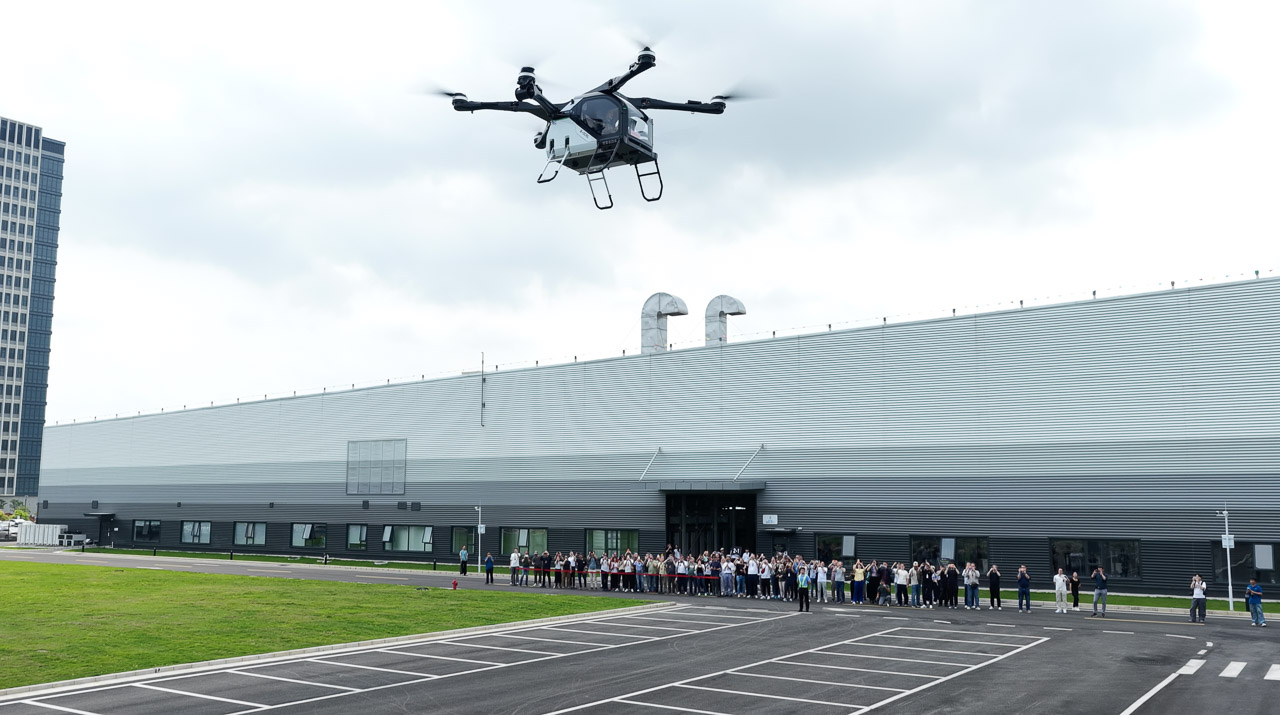
The trip ran two cities. Guangzhou first, for the AI showroom, the Weitian flying car demo, and a factory tour. Then Beijing for the VLA 2.0 test drive, the design and intelligent driving workshops, the auto show keynote, and the humanoid robot demo. Four days, every product line on the table.
Add The Gadgeteer as a preferred source to see more of our coverage on Google.
Getting to the booth was its own story
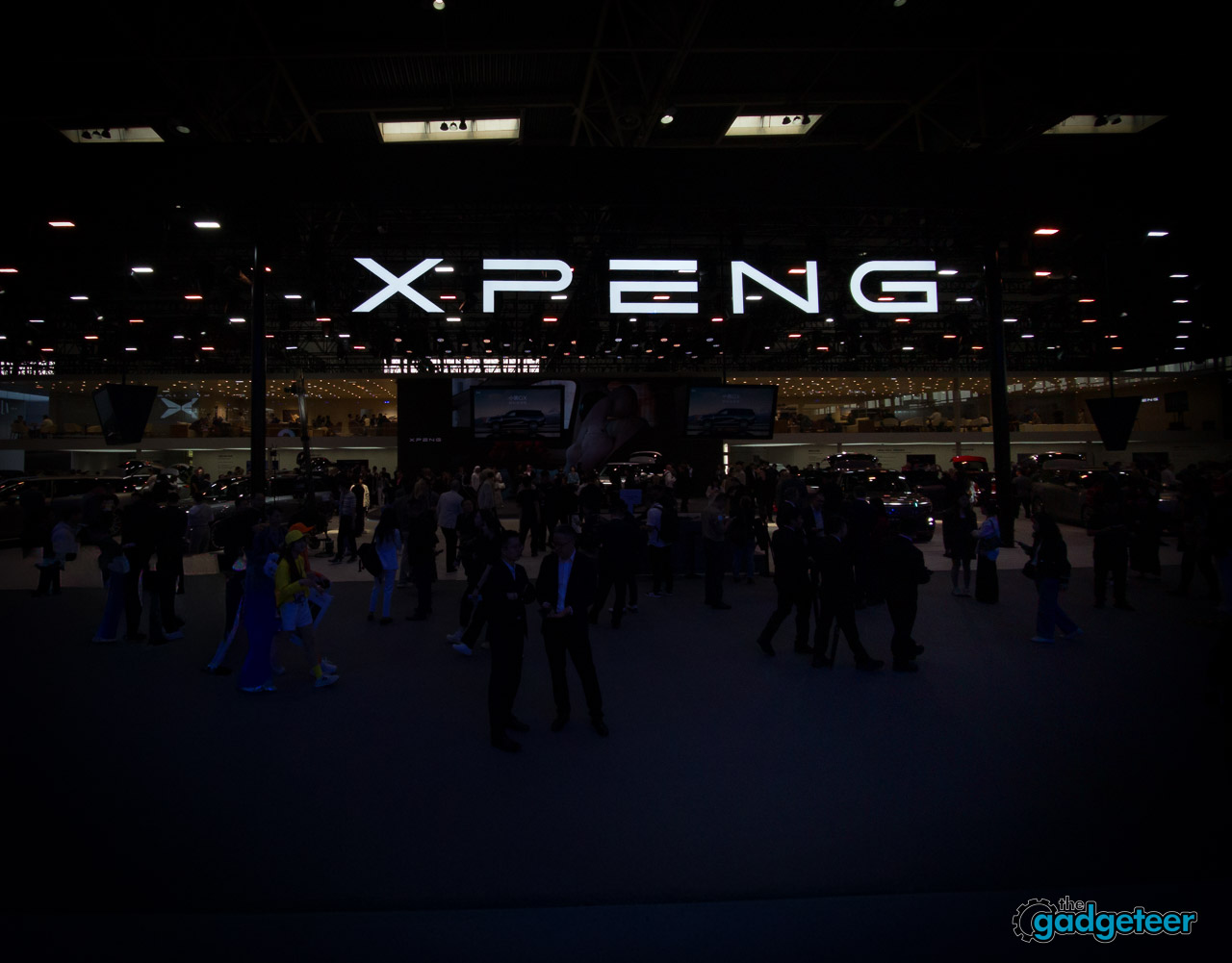
Hall E2 of the China International Exhibition Center is the biggest single show I’ve ever covered, and I’ve been to a lot of them. One wing alone felt the size of the entire New York Auto Show. We were on a tight timeline to make He Xiaopeng’s keynote, and the group hosting us moved fast enough that we lost something like 80 percent of our pack between gates B, W, and E3. By the time I caught the Xpeng booth, He Xiaopeng was minutes from going on stage. The lesson stuck with me for the rest of the trip: you do not navigate this show without a host. It is too big.
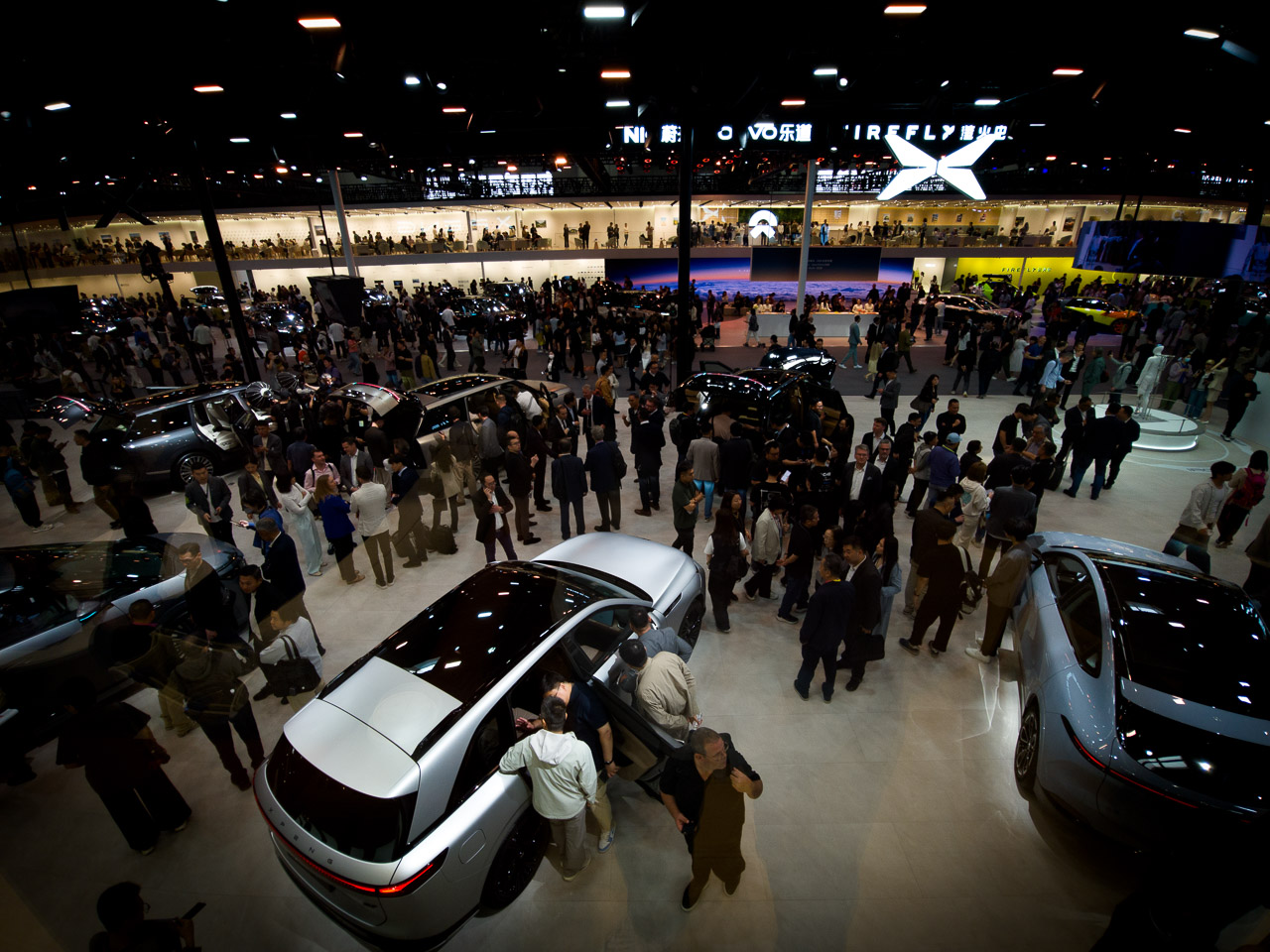
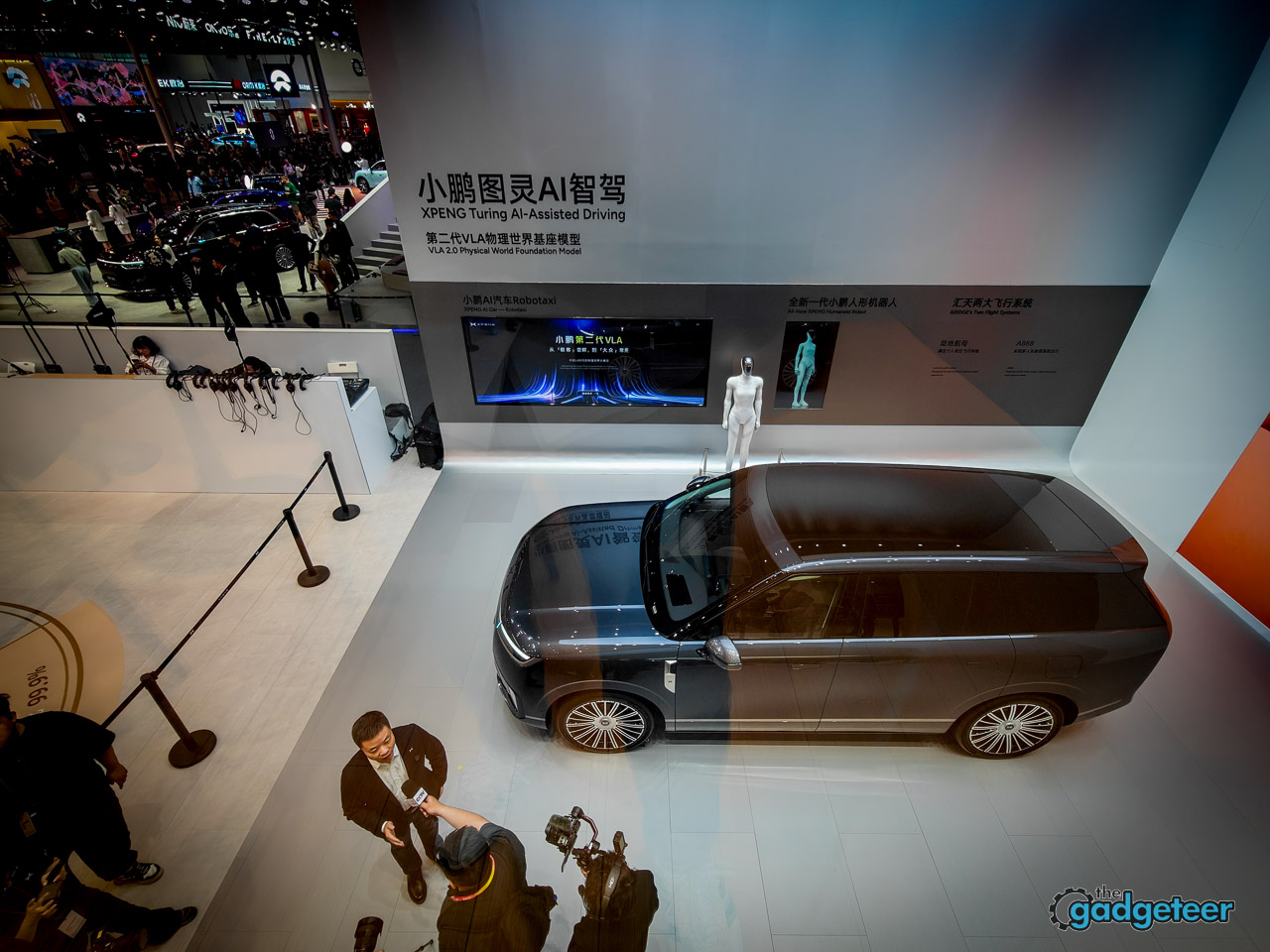
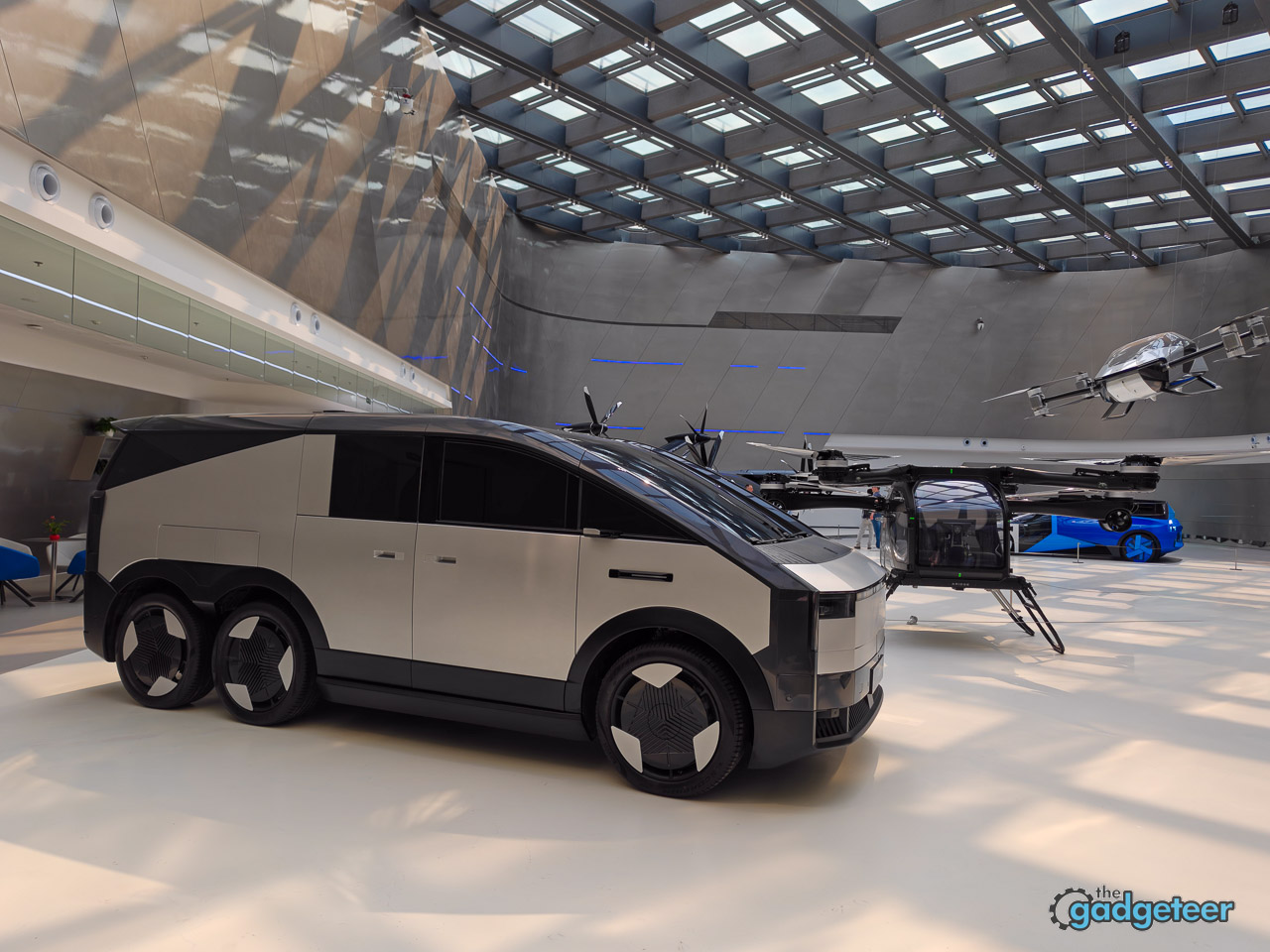
Inside the booth, the staging was the thesis. A flying car on the left. A humanoid robot on the right. Cars and a robotaxi in the middle. If you’ve been following Xpeng for a while, the message read like a confirmation rather than a pivot. They were not introducing themselves as a car company anymore.
The pitch wasn’t really about cars
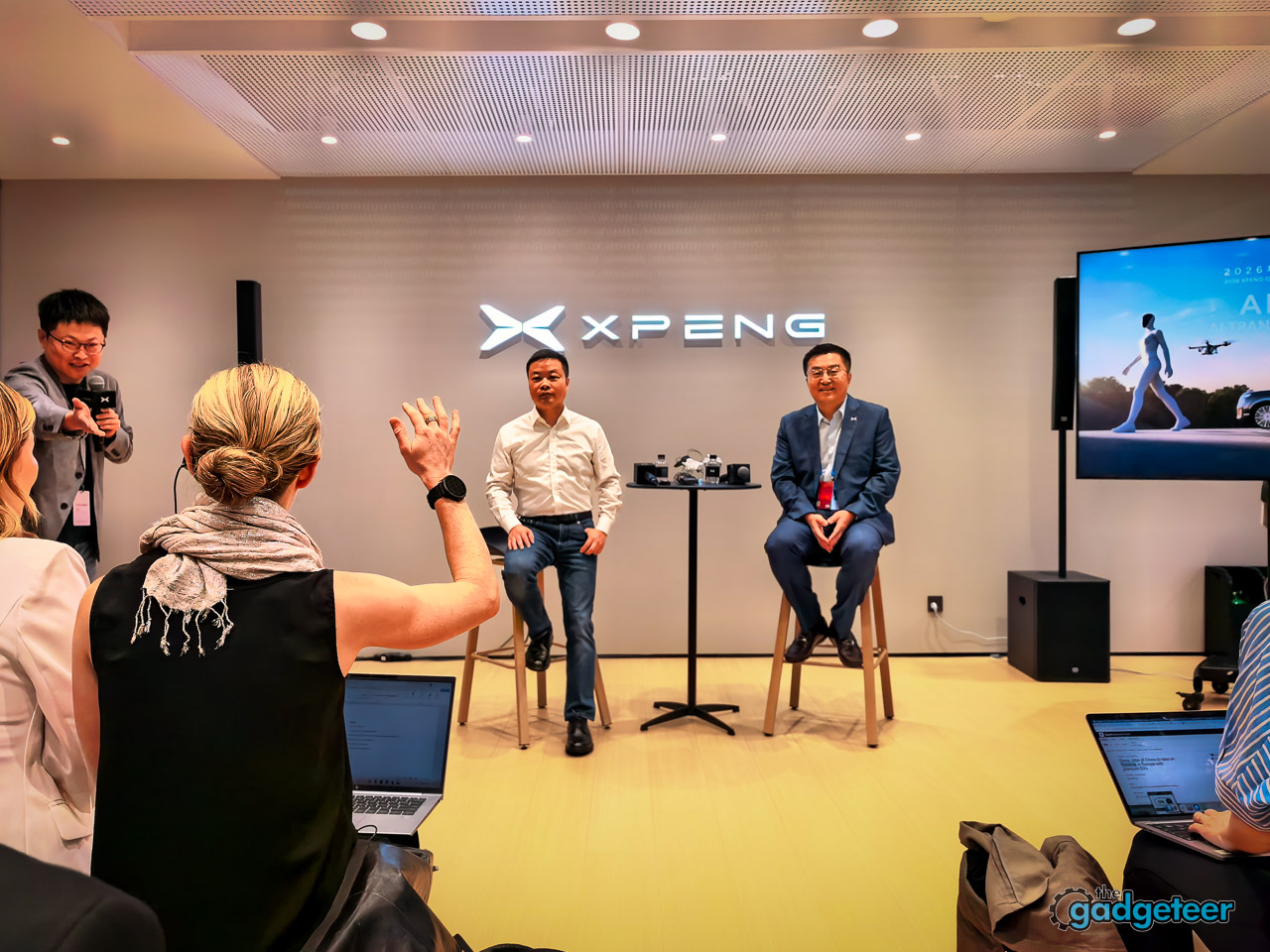
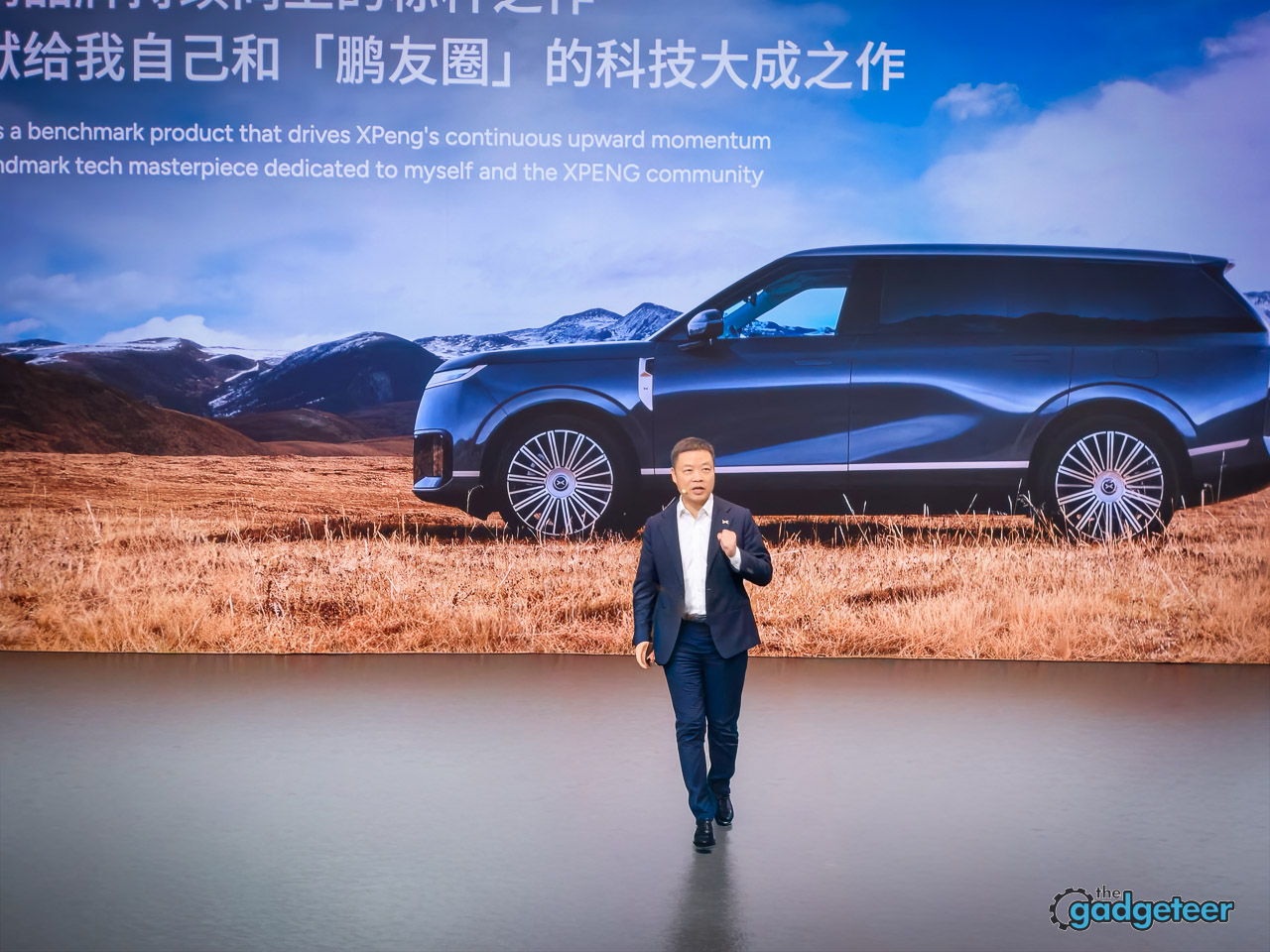
He Xiaopeng (Chairman and CEO) and Dr. Brian Wu (Vice Chairman and President) walked a roomful of international media through the company’s transformation from Xpeng Motors into Xpeng Group. The framing was tidy. A creative technology company. A global technology company. A company that makes good products that ordinary families like. That last bit kept coming back over the four days, and once you’ve sat through enough of the demos, you can see why it isn’t just marketing.
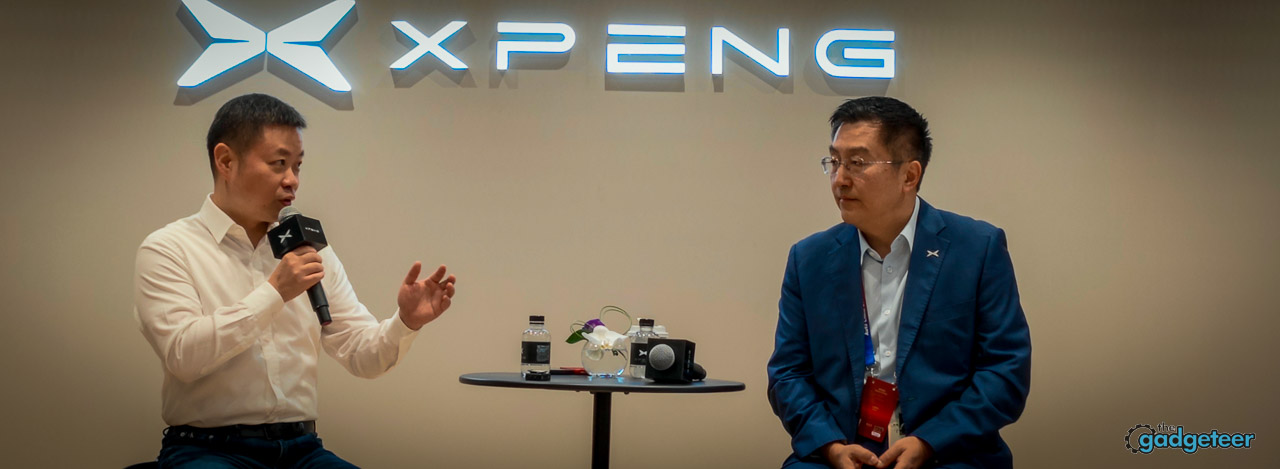
The room itself was an interesting tell. Journalists from Ireland, Germany, Qatar, Indonesia, Thailand, the UK, the UAE, and a handful of other places were stacked into the same press conference, and the questions came hard and fast. One question per journalist, self-identification required. These were not soft Q&As. People had teeth.
A piece I didn’t expect to land as cleanly as it did was the Volkswagen partnership update. Dr. Wu was direct that the joint products are designed for the Chinese market with differentiated positioning so they don’t overlap outside China, and that Volkswagen’s future China EV platform will use Xpeng’s electric and electronic architecture. That’s the kind of detail that tells you who’s actually doing the engineering. Worth flagging too: back at “The Future” VLA Media Experience Day in Guangzhou on March 2, 2026, Xpeng formally named Volkswagen as the first customer for VLA 2.0 in the Chinese market. The Beijing announcements built on that foundation rather than around it. The same software I just rode in is the software a legacy German automaker is going to ship in its next generation of China EVs.
Then they put us inside the self-driving system
Xpeng’s second-generation VLA (Vision-Language-Action) system was officially released in late March 2026. Beijing was the first big international showcase, and the company put us through a two-part evaluation that genuinely caught me off guard.
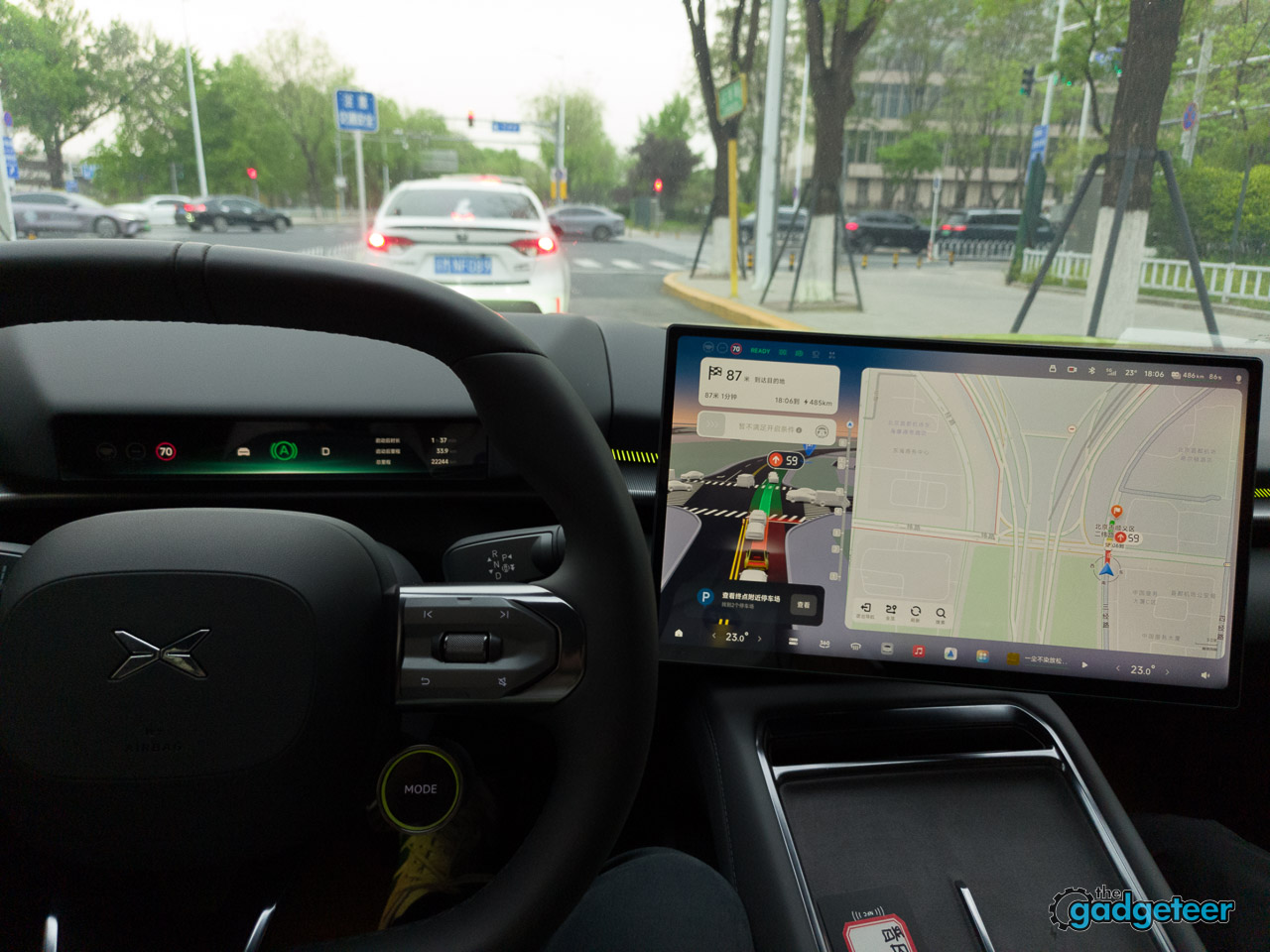
The pitch behind the system, in Xpeng’s own framing, is the move from geek-exclusive to public essential. The line that stuck was making intelligent driving as simple as using an elevator. Press a button. Arrive at your destination. That sounds like marketing until you actually ride in it. Then it sounds like a thesis the company has earned the right to make.
The first part was a blind test. Xpeng put us in the car with a coach in the front seat and asked us to identify, segment by segment, whether a human or VLA 2.0 was driving. Some segments were obvious. The middle segment broke the room. People who’d been testing autonomous vehicles for a decade were sitting there debating whether the car was driving, because the behavior was too natural, too variable, too human to be a machine.
Here’s the thing that stuck with me. Most self-driving systems I’ve ridden in have a tell. A constant throttle response. A predictable line through corners. A consistent caution level. They drive like a single person, every time, no matter the day. VLA 2.0 doesn’t. It shifts. Sometimes it’s cautious. Sometimes it’s assertive. The Xpeng rep told us nothing was changing manually. The car was reading available road space and adjusting its attitude on its own.
That’s the part that’s hard to explain unless you’ve been in the seat. When a self-driving car starts behaving like a real driver having a slightly different day, the whole experience changes.
My P7 drive, and the moment I started giggling
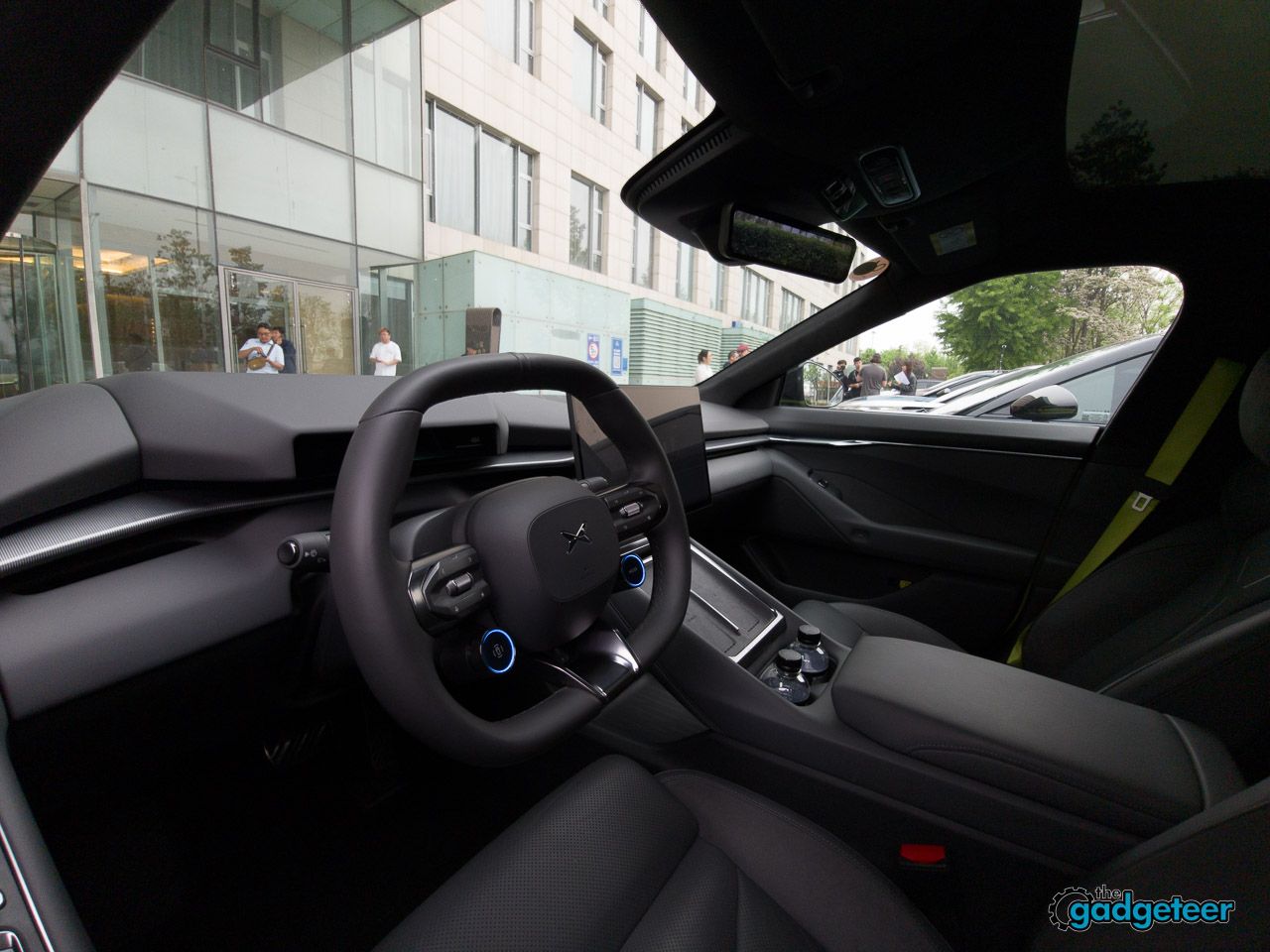
I asked specifically for the Xpeng P7. I’d already decided it was the one I liked more, and I wanted to see what VLA 2.0 felt like in the car I’d actually buy. The sports-car steering wheel took a beat to settle into. The agreement got signed. We pulled out into Beijing traffic.
VLA 2.0 engaged almost immediately. A scooter cut alongside us within the first minute, and the P7 just slid around it. A few seconds later, approaching a right turn, the car spotted a stopped vehicle, looked at the left lane, made the lane change, and finished the turn without me touching anything. I started narrating to myself, the way you do when you’re trying to make sense of something fast: the car was talking to the grid, reading the next traffic light, coordinating with its own camera system, behaving like a driver with thirty years of experience.
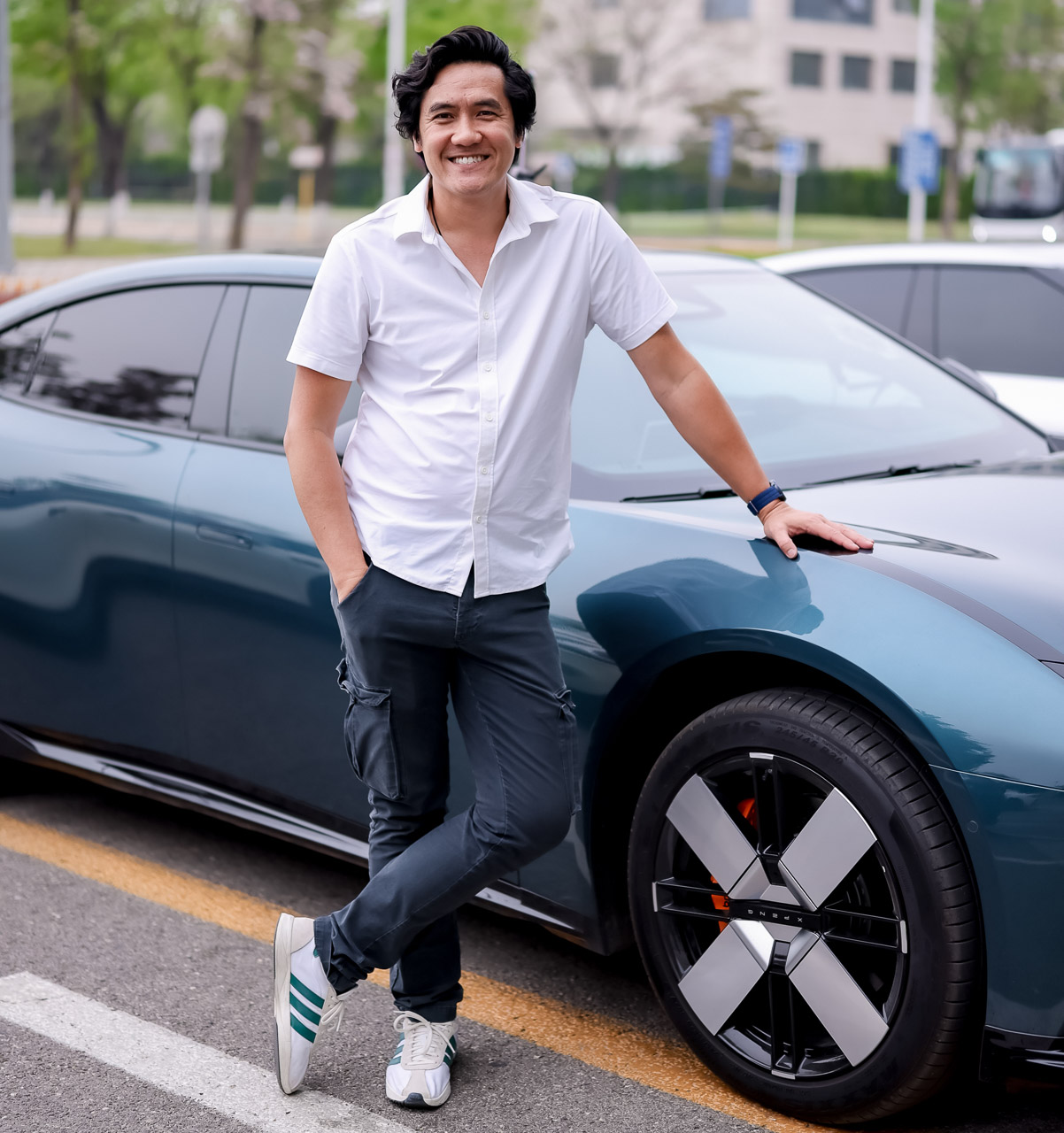
The moment that broke me was a complex urban intersection. Pedestrians on every side. Electric scooters cutting in from angles you couldn’t predict. The kind of intersection where I’d expect any self-driving system to either freeze, swerve, or hand control back to the driver. The P7 did none of that. It held its ground. Stationary but decisive. It let the chaos clear, then moved.
I literally said “holy cow” out loud. I was giggling. I’m a little embarrassed about it on video, but that intersection, in that moment, was the closest thing to true Level 4 in-city driving I’ve personally sat inside. In that one Beijing moment, I think the P7 did something FSD would not have done as cleanly.
The hour that sealed it
Quick context. I’ve been testing autonomous vehicles for roughly a decade, including being among the first to drive an FSD Audi RS7 prototype on a racetrack in Germany back in 2016. I came into this trip with every reason to be skeptical. The full loop in the P7 was about an hour through Beijing streets, and by the end I’d handled about three percent of the driving, only what was needed to get out of and back into the parking lot. Zero takeovers in between.
The drive opened with a one-lane left turn with no lane markings whatsoever. That is a brutal opening for a camera-first system, and VLA 2.0 nailed it while reading scooters at the same time. Right after, the car threaded a quick three-lane change into a tight right turn flanked by a pothole and a guardrail, again with no markings, with two-way traffic converging into the same narrow window. My mind was officially blown, and I do not throw that phrase around.
Later, the route hit three traffic cones at a green light, and the car went left without hesitation. In Beijing traffic, hesitation gets you punished. The car understood that. It also made a legal right-on-red turn that I, as a visitor, would not have known to take. The car did. The final left turn back to the hotel threaded through signposts and pedestrians without flinching. My verdict, after ten years of doing this for a living: in the scenario tested, VLA 2.0 was on par with what FSD is doing, and I have full confidence the system will keep my family safe when it launches internationally.
That is a sentence I did not expect to write on day one.
What VLA 2.0 actually changes
The single biggest detail that almost got buried in the noise: VLA 2.0 is completely free for Xpeng owners. No subscription. No one-time unlock fee. No tiered package. If you buy a compatible car, the software is included, full stop. That is the part you have to sit with for a second, because the closest comparable system in the United States is Tesla FSD at around eight to twelve thousand dollars depending on how you buy it. Xpeng is shipping what I just rode in at zero additional cost. The activation numbers later in this section make a lot more sense once you know that.
He Xiaopeng walked through the numbers on stage. April orders for V2-equipped models climbed 118 percent month over month. First-choice orders for V2 jumped 129.3 percent. User activation rate in the first week of ownership came in at 98.52 percent. Total assisted mileage doubled. Manual takeovers per trip fell 25 percent even as assisted mileage grew 115 percent. Test drive satisfaction hit 98 percent, the highest in Xpeng’s history. Time from test drive to order placement dropped 44 percent month over month. In narrow Beijing hutongs specifically, the takeover rate fell 36 percent year over year.
The stat that hit hardest, though, came from the field. Shortly after VLA 2.0 launched in March 2026, Chinese media drove an Xpeng G7 from western China all the way to Shanghai, a run of roughly 5,300 kilometers. Over 99.9 percent of the journey was handled by autonomous driving, and one uninterrupted stretch covered 1,330 kilometers with zero takeovers. The route included contour roads, Xinjiang snow, plus rain, fog, and sandstorms. That is not a controlled demo. That is one of the harder real-world drives you can throw at any system today, and a camera-first model handled it.
The number that genuinely surprised me was the female driver adoption rate. Among Xpeng owners over 50 who are women, 95.3 percent activate and regularly use V2. He Xiaopeng was visibly proud of that one, and his framing made sense. For years, the soul questions from less confident drivers have killed intelligent driving adoption. Can it handle a traffic jam? Can it work inside my community? Can it park in the office lot? The honest answer was usually no. V2 changes the answer.
The market backdrop is brutal for almost everyone else. From April 1 through April 19, 2026, China’s passenger car sales fell 26 percent year over year and 10 percent sequentially. In the same window, Xpeng’s sales rose 74 percent month over month and 56 percent year over year. The company is treating that delta as a direct V2 effect, and based on what I just sat in, I believe them.
The V2 update ships in May 2026. Three new capabilities lead the list. Underground parking lot roaming with no navigation map. Full-scene activation from a standing start, where you tell the car to drive to the office and it handles every meter from your home garage to your workplace lot, no manual input. And expanded model coverage across the P7 Plus, G9, G6, and GX. He Xiaopeng’s quiet flex on V2: there’s room for tens to two or three hundred percent of additional improvement.
The training philosophy is different from the brute-force approach you’d expect. Rather than logging millions of miles in every market to teach the model the local rules, VLA 2.0 leans on simulation. The engine is called X World, released at the end of March 2026 as a closed-loop world model that can generate driving environments with control over detail and viewpoint. The team showed footage of X World mimicking road conditions in Germany so VLA 2.0 could be evaluated virtually before international road testing kicks off. That is the part that makes the 2027 global delivery target sound less like a marketing slide and more like a plan with teeth.
The framing the team kept using for international deployment was that VLA 2.0 is a humanoid-style driver. Learn to drive in China, and the underlying skills (reading flow, spotting hazards, choosing a line) carry to any country. The car still has to learn the local rules of the road, but it does not have to relearn how to drive. That is the bet behind not collecting massive country-specific datasets before launching, and behind not relying on high-definition maps.
The iteration cadence is its own story. The first VLA shipped in November 2025. Since then, the team has built more than 500 model versions internally, with the best-performing and most-stable build pushed to customers at any given time. Even when the internal score is around 95, the team keeps iterating. Five hundred versions in roughly five months is closer to a fast-moving software product than a traditional automotive release.
Architecturally, the headline change is what Xpeng took out. Traditional VLA systems run a sequential pipeline: vision becomes language, language becomes action. Xpeng’s VLA 2.0 collapses that. The intermediate language layer is gone. Visual signals translate directly into driving decisions, end to end, which is the part that explains the response speed I felt in the P7. The team frames the resulting advantages around four pillars: reduced loss, faster response, human-like performance, and intelligence emergence. Reading those on a slide deck is one thing. Sitting in the car when the system reads a scooter, a pothole, and a converging two-way lane in the same beat is what makes them stick.
The compute is its own story. The whole stack runs on Xpeng’s proprietary Turing AI chip, which delivers up to 2,250 TOPS of effective computing power per chip, with multiple chips deployed per vehicle. That is the kind of headroom you actually need to run a foundation-scale model in a production car instead of a lab demo.
The team frames the recipe as four ingredients that have to work together: the model, the compute, the data, and the car itself. The thing they kept coming back to is that the on-paper TOPS number on a slide is mostly marketing. The real question is how much of that chip you can actually put to work. Run a generic open-source model on a Turing chip and you get a fraction of its potential. Run Xpeng’s own model, tuned to Xpeng’s own silicon, and the same chip gets used roughly three to four times more effectively, with response times that drop from the ballpark of one second to under a tenth. That is the difference between a car that thinks it is driving and a car that actually is.
The efficiency claim is one I’d normally squint at, but Xpeng put a number on it. In measured tests during Guangzhou’s evening rush hour, VLA 2.0 ran 23 percent more efficiently than traditional L2 intelligent driving systems and the robotaxi platforms it was benchmarked against. In other words, it doesn’t just drive safely. It drives faster the way an experienced human does, by reading flow instead of waiting for it.
He Xiaopeng’s framing on the timeline was unusually direct, in his own words: VLA 2.0 is the first version designed to achieve full autonomous driving, and full autonomy will arrive within the next one to three years, making autonomous driving a natural part of daily travel. Public road testing in China is already running. International road testing kicks off shortly. Global delivery is targeted for 2027. And in China specifically, Volkswagen is the first customer, which is a sentence that would have sounded absurd three years ago.
A note on the disclaimer language. VLA 2.0 is still a supervised intelligent driving system today. Xpeng has not put a specific date on fully autonomous commercial deployment, and the company is explicit that higher levels of automation will roll out as regulators around the world catch up. The capability is moving faster than the law. That gap is the story to watch.
Xpeng also showed something I didn’t expect during the powertrain workshop: a side-by-side video between VLA 2.0 and Tesla FSD version 13.2.9 on narrow Chinese streets. The team breaks takeovers into four buckets (efficiency, safety concern, regulatory, and safety case) and across the segment they ran, VLA 2.0 logged a single regulatory takeover. The smoothness gap was visible enough that it did not need narration. Tesla is on a newer FSD revision now, and Xpeng’s team was clear that the comparison was a snapshot rather than a verdict. But it was the first time I’ve watched a Chinese OEM put a head-to-head video on screen against the system everyone else dances around naming.
What the cockpit sees, and what it does about it
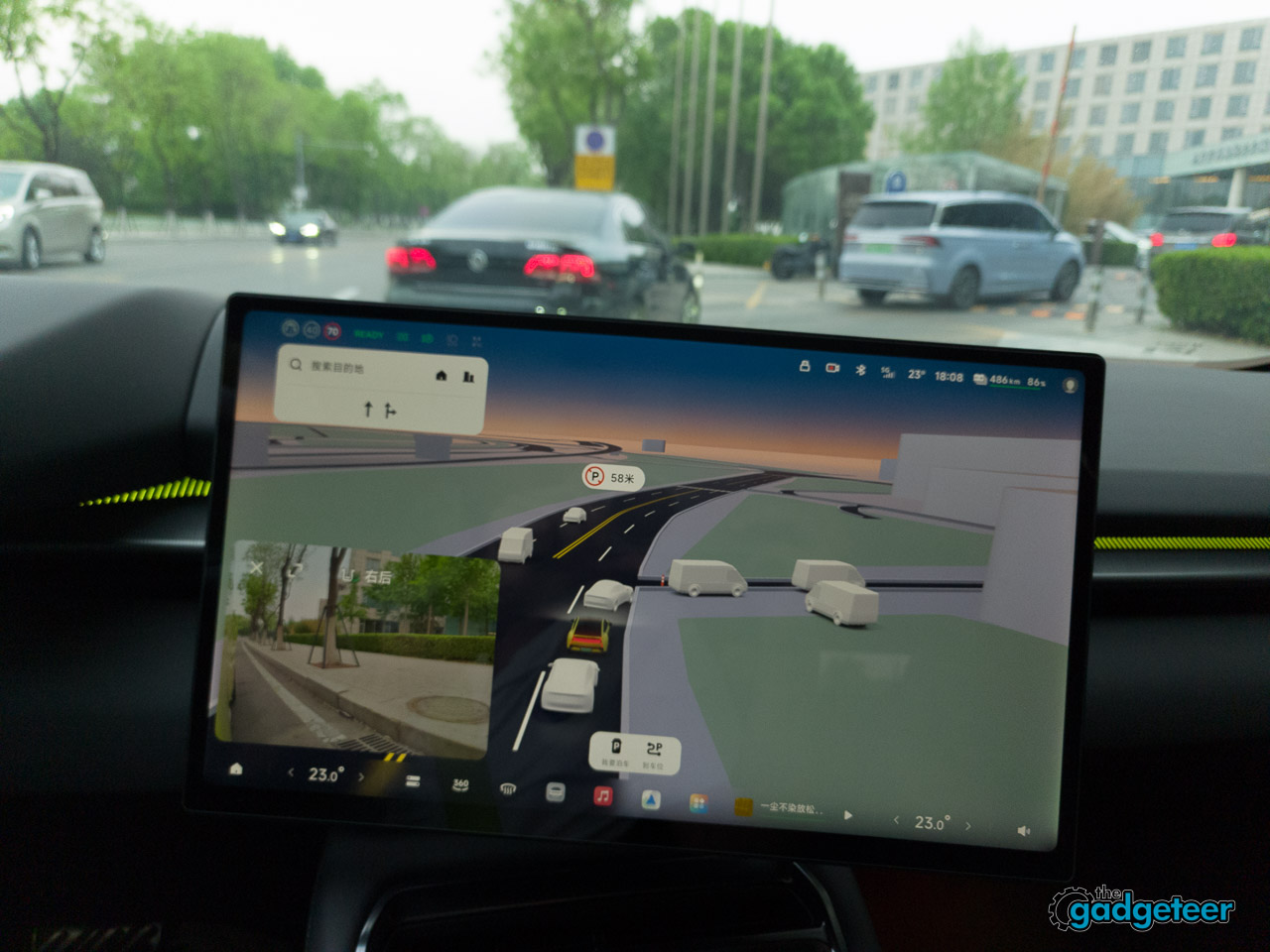
The display side of VLA 2.0 deserves its own callout. Xpeng’s SR (Surround Reality) system reads everything around the car in real time and synchronizes it onto the screen, so driver and passengers can see exactly what the model sees. Pedestrians. Electric scooters. The turn signals on the cars next to you. The countdown on the upcoming traffic light. It is the kind of feature that doesn’t sound like much until you sit in the seat and watch the world rendered back to you with the latency of a shadow.
Conversation with the in-cabin AI assistant works from any seat, not just the driver’s. Real-time navigation tweaks, air conditioning vent adjustments to a specific direction, the small stuff that adds up. Meanwhile, the in-cabin camera is reading the driver too: fatigue alerts, eyes-on-road reminders, phone-use warnings. None of it feels gimmicky in the seat. It is the safety layer that makes the autonomy layer trustworthy.
The most quietly impressive capability in this category is the emergency intervention. If the system detects from the cabin camera that the driver has lost the ability to act while on a highway, the car can take control briefly, identify a safe shoulder, and pull over on its own to keep the driver alive long enough for help to arrive. That isn’t a marketing scenario. That is the use case that justifies the whole stack.
The other capability I keep replaying is the traffic-officer edge case. VLA 2.0 reads hand gestures from a human officer and responds appropriately, including the small creep at the tail end of a traffic light countdown that experienced drivers do without thinking. Those are the corner cases that have killed competing systems for years. Xpeng is treating them as the bar.
The edge case that has been living rent-free in my head since the workshop is one Xpeng pulled from real footage. On March 8, 2026, four children in China laid down on a road imitating a speed bump. It is the kind of scenario no model is trained on and no driver expects. VLA 2.0 detected the anomaly and started reducing speed before the human driver took over. The Xpeng team was careful to say they cannot guarantee the car would have stopped on its own if the driver had not intervened, and they don’t want anyone testing it. What they could say was that an untrained edge case triggered a measured response rather than a panic stop or a continuation. That is the part you cannot fake on a slide.
The GX is the family SUV I wasn’t expecting
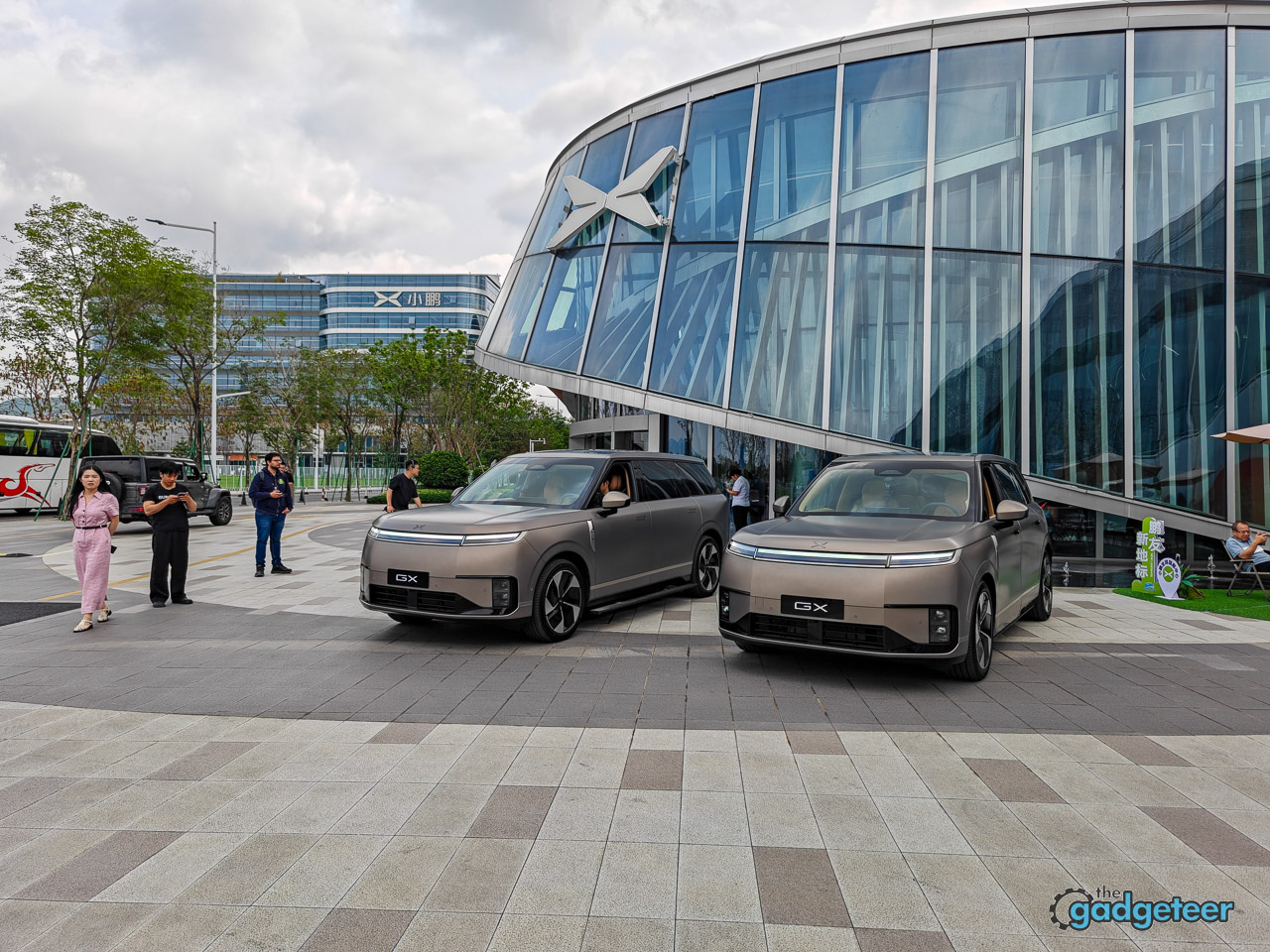
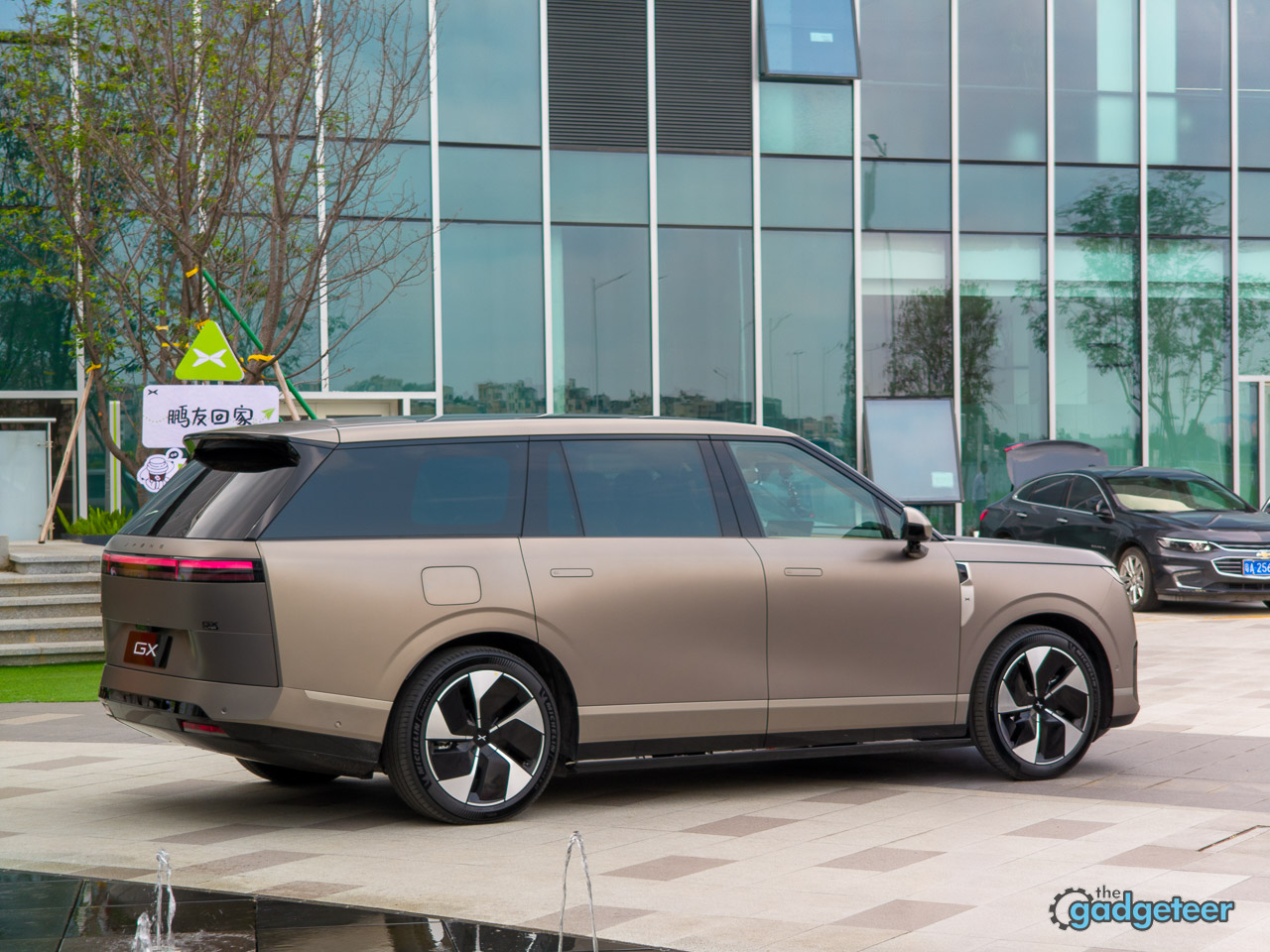
The other big reveal was the new full-size flagship SUV, the GX. The pitch boils down to six experiences. Cargo capacity that fits six 24-inch suitcases at the same time even with all six seats occupied. An electrically folding third row that switches between four, five, and six-seat layouts. A third row that reclines a full 180 degrees, which I haven’t seen in any other three-row vehicle. A dual-temperature climate system with sterilization and deodorization, developed with Midea. Overhead, windless air conditioning aimed at children and elderly passengers. And privacy glass on the second and third rows that goes opaque in 0.16 seconds.
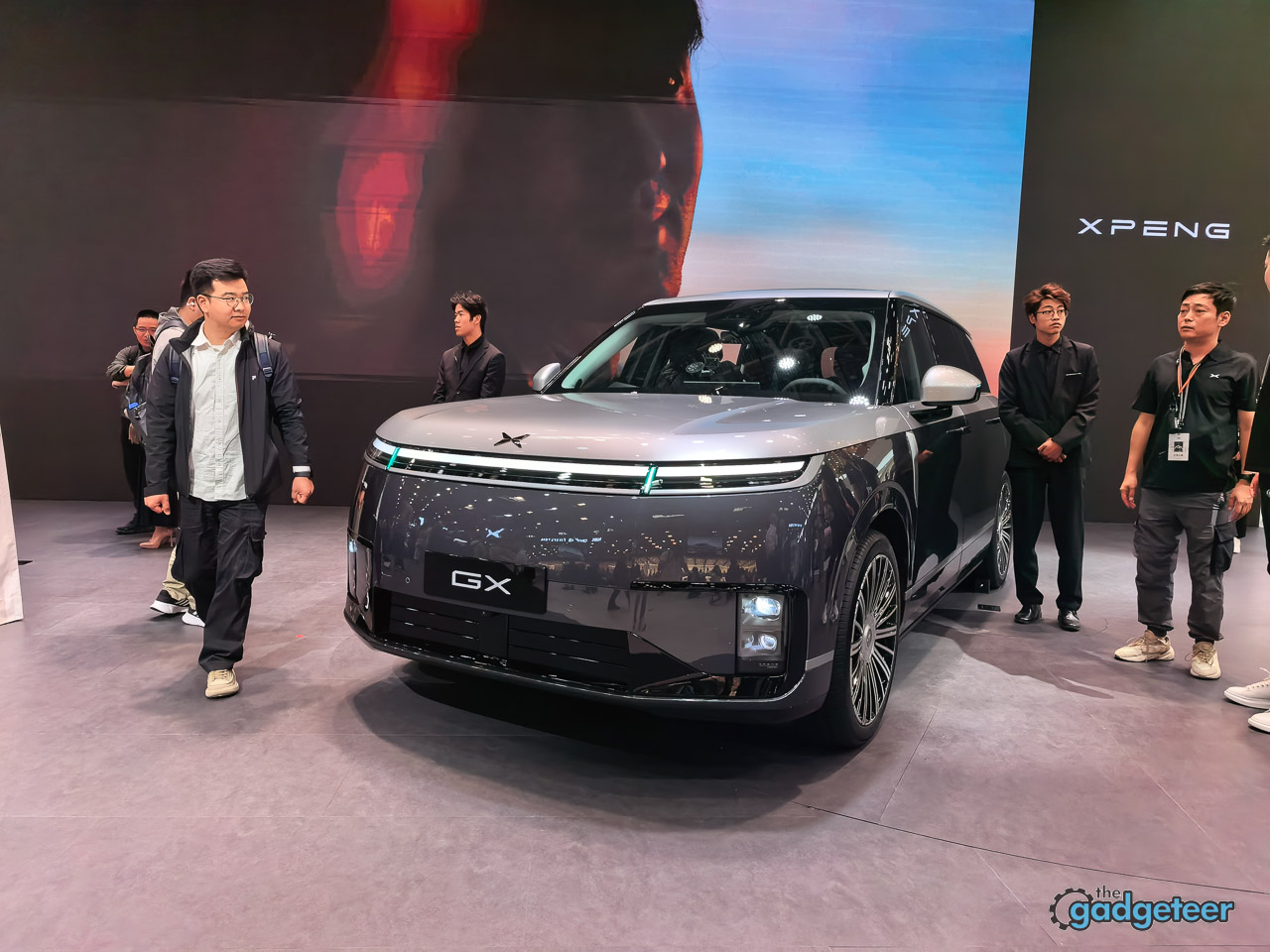
You get two powertrain options. A pure electric setup with 750 km of range and four-wheel drive. Or a super-charging extended range version with 430 km of pure electric driving and 1,500 km of total range, also with all-wheel drive.
The paint tells you what kind of car this is. Xpeng calls the new finish Kunlun Yunjing. Blue-gray base, cloud-white gradient toward the top, inspired by standing on a mountaintop. The numbers behind it are wild. 15 layers of paint. 230 microns of film thickness. 98 GU of mirror surface glossiness, which is the maximum measurable by standard instrumentation. Luxury car standard is 90 to 95 GU. Similar finishes typically cost about ¥30,000 as an option. The GX launches with a 15 percent discount on it.
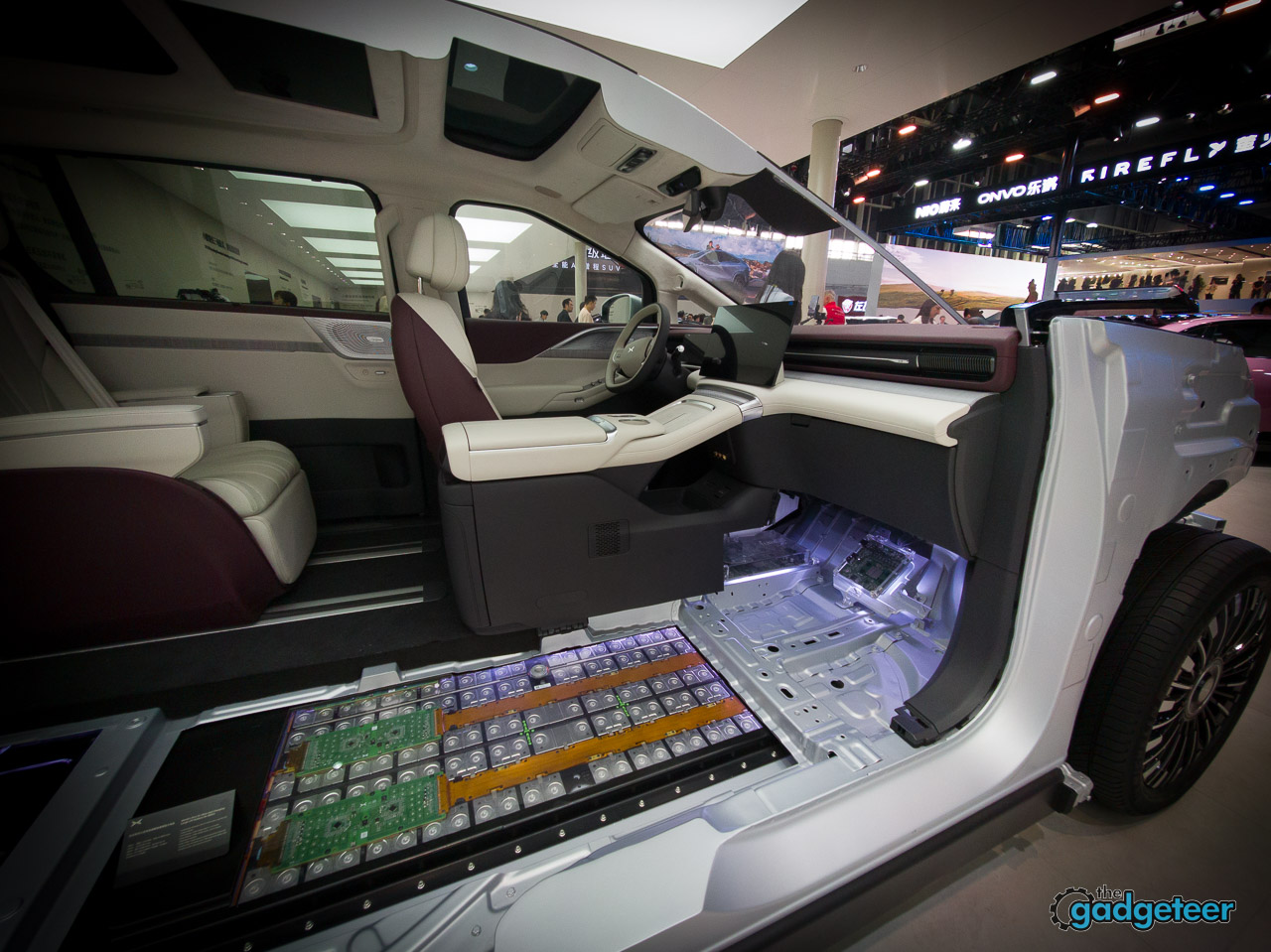
Underneath the bodywork, the GX is the first vehicle built on Xpeng’s SEPA 3.0 architecture, the platform that took the company from 4C to 5C charging. Real numbers from the powertrain workshop: 11.7 minutes from 10 to 80 percent state of charge, peak charging power between 405 and 440 kilowatts, peak charging speed up to one kilometer per second of added range, and 12 minutes of charging delivers 524 kilometers of range. SEPA 3.0 also unlocks dual-energy support, meaning the same architecture and the same battery cells run in both pure-electric and range-extender configurations. Range-extender BEV mode stretches from the old norm of about 200 kilometers to over 400, which is the number that actually changes owner behavior.
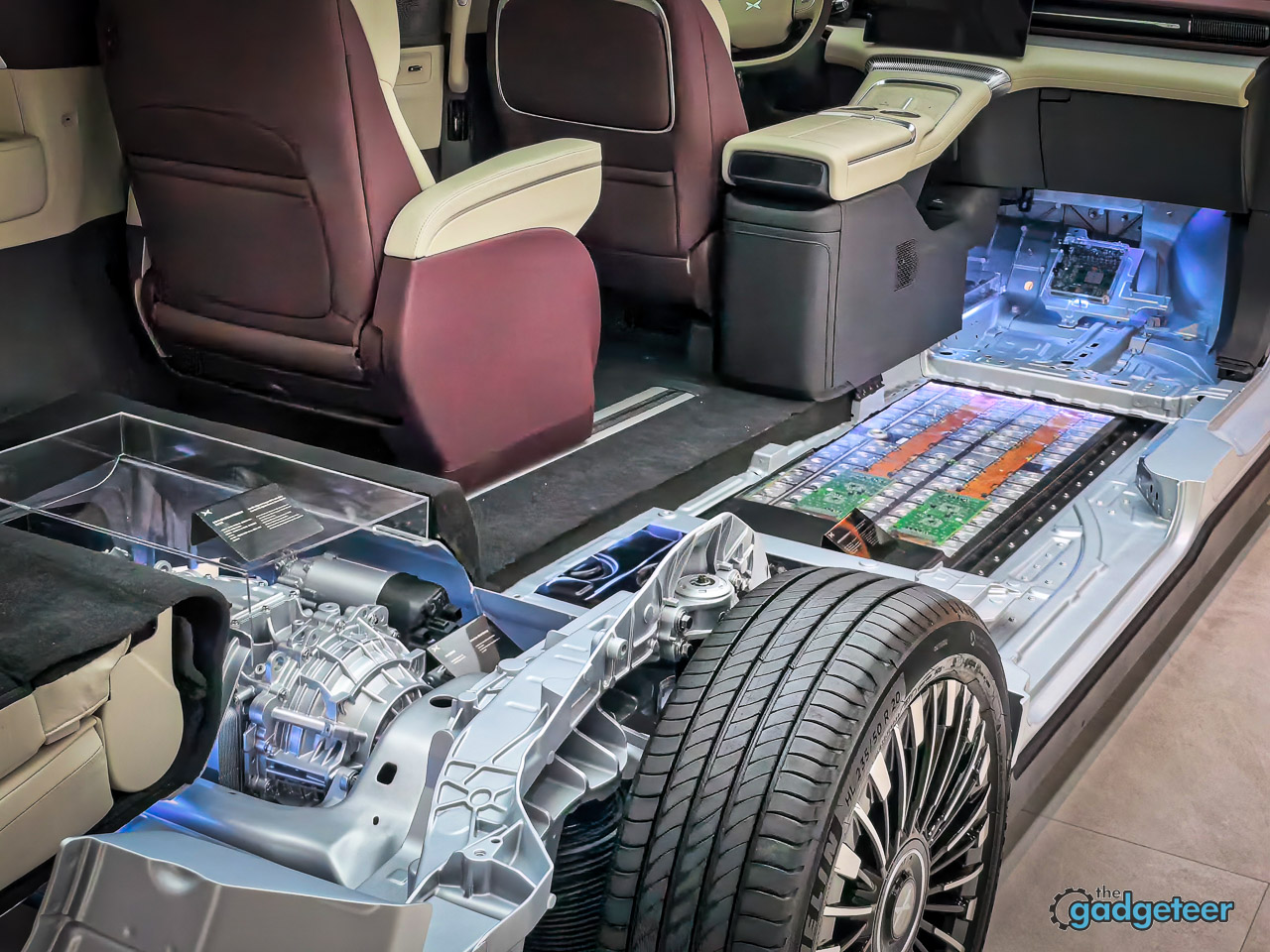
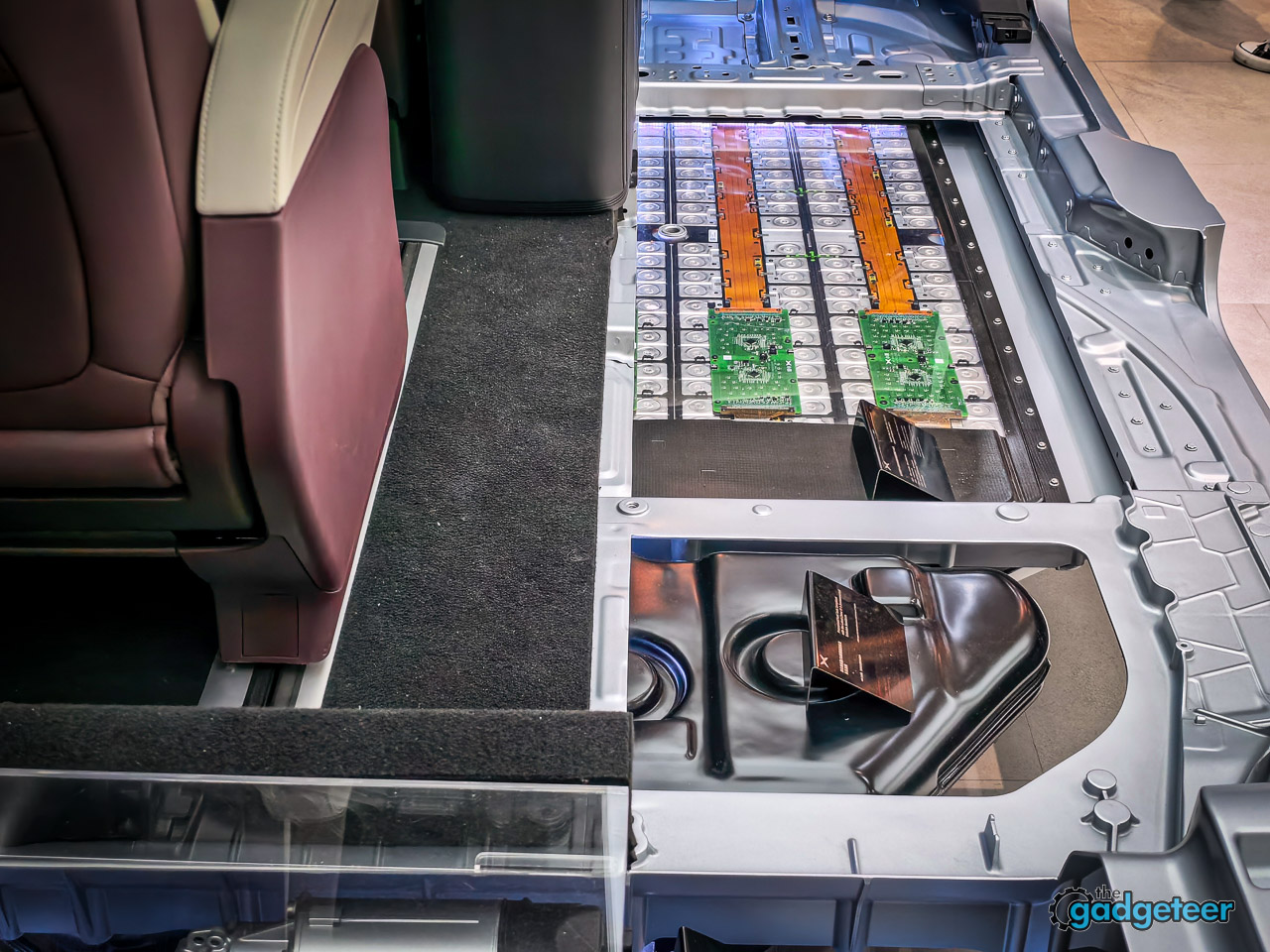
The driving unit is the part the powertrain team would not stop talking about. Xpeng has moved to a coaxial silicon-carbide drive unit using a hybrid silicon design that cuts SiC chip usage while holding the same torque, the same power, and 93.5 percent system efficiency, with a path to 94 percent. The unit is roughly 20 percent smaller than the previous generation, which is the only reason the rear seats fit the way the GX needs them to. On the safety side, the battery sits behind 1,500 MPa hot-stamping steel, an MPPO energy-absorbing middle layer, and a double-layer aluminum die-casting case rated to 2,000 joules of bottom impact, with an electric-impedance-system layer keeping maximum cell-to-cell temperature variance to about 6 degrees Celsius and flagging anomalies at what the team calls 96 percent accuracy.
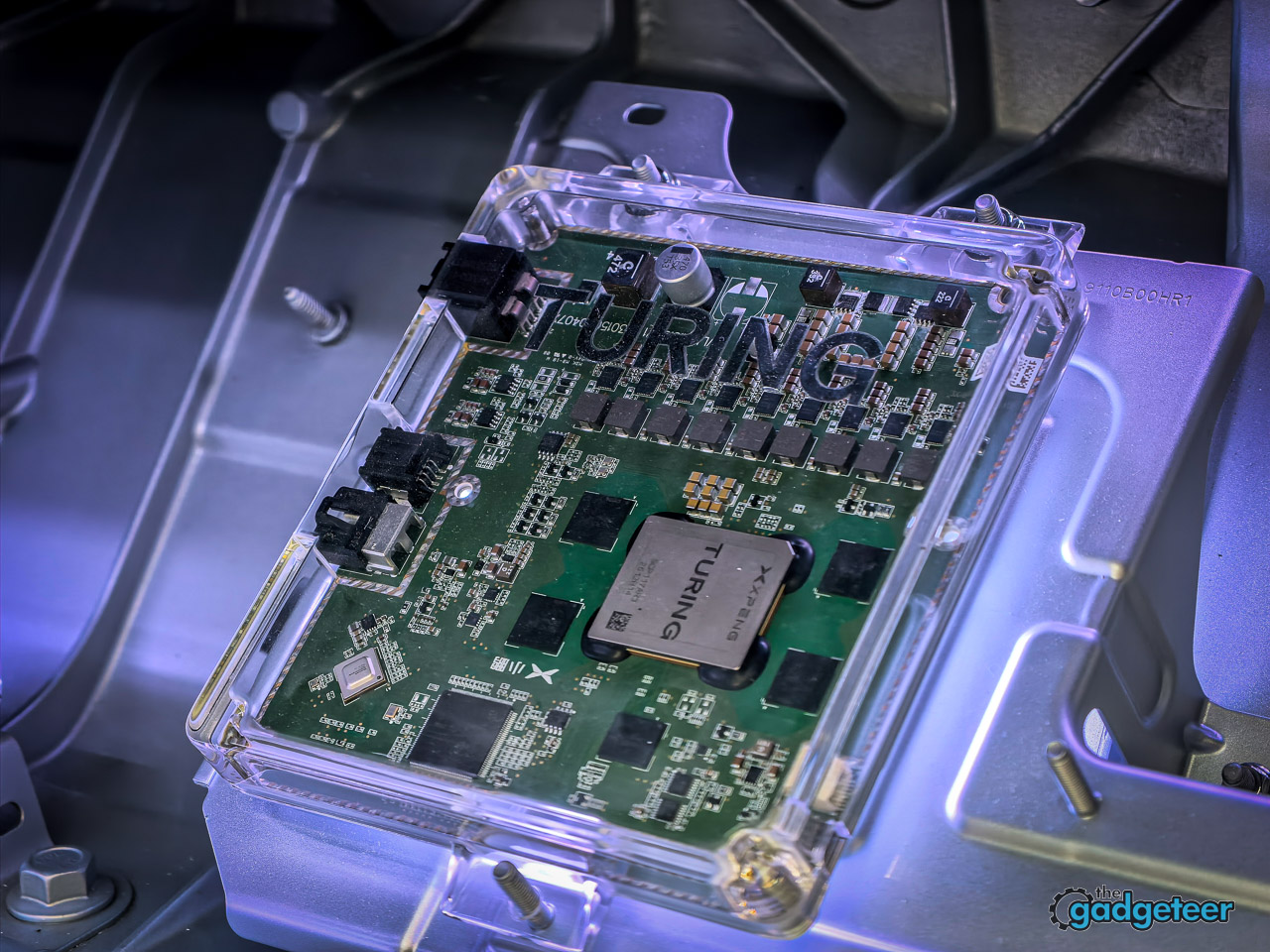
The range-extender story lands hardest for shoppers in markets with patchy charging. In the GX, the same architecture supports rear-wheel drive or all-wheel drive, and crucially, the range-extender variant uses the exact same battery cell as the pure EV. That means the same fast-charging speed in either trim. The engine is there as a backup generator, not as the primary mover, so day to day the car drives like a BEV. Owners with cheap home electricity get to run it like a BEV. Owners with a long road trip ahead get the engine as insurance. The only reason this fits at all is that the powertrain team shrank everything underneath enough to still leave room for the climate system in the engine bay, which is a layout fight that other dual-energy vehicles have visibly lost.
The humanoid robot is closer than you think
The robotics update was the part that had me leaning forward. He Xiaopeng has been applying car-grade engineering requirements to the robotics program since April 2025. The ET1 phase wrapped in Q4 2025. The ET2 phase kicked off the same week as the press conference.
The lineup is seven models, five of which have already hit functional capability milestones. The Q3 2026 target is multilingual communication with visitors. Mass production in China is expected by the end of 2026. International expansion is planned for 2027.
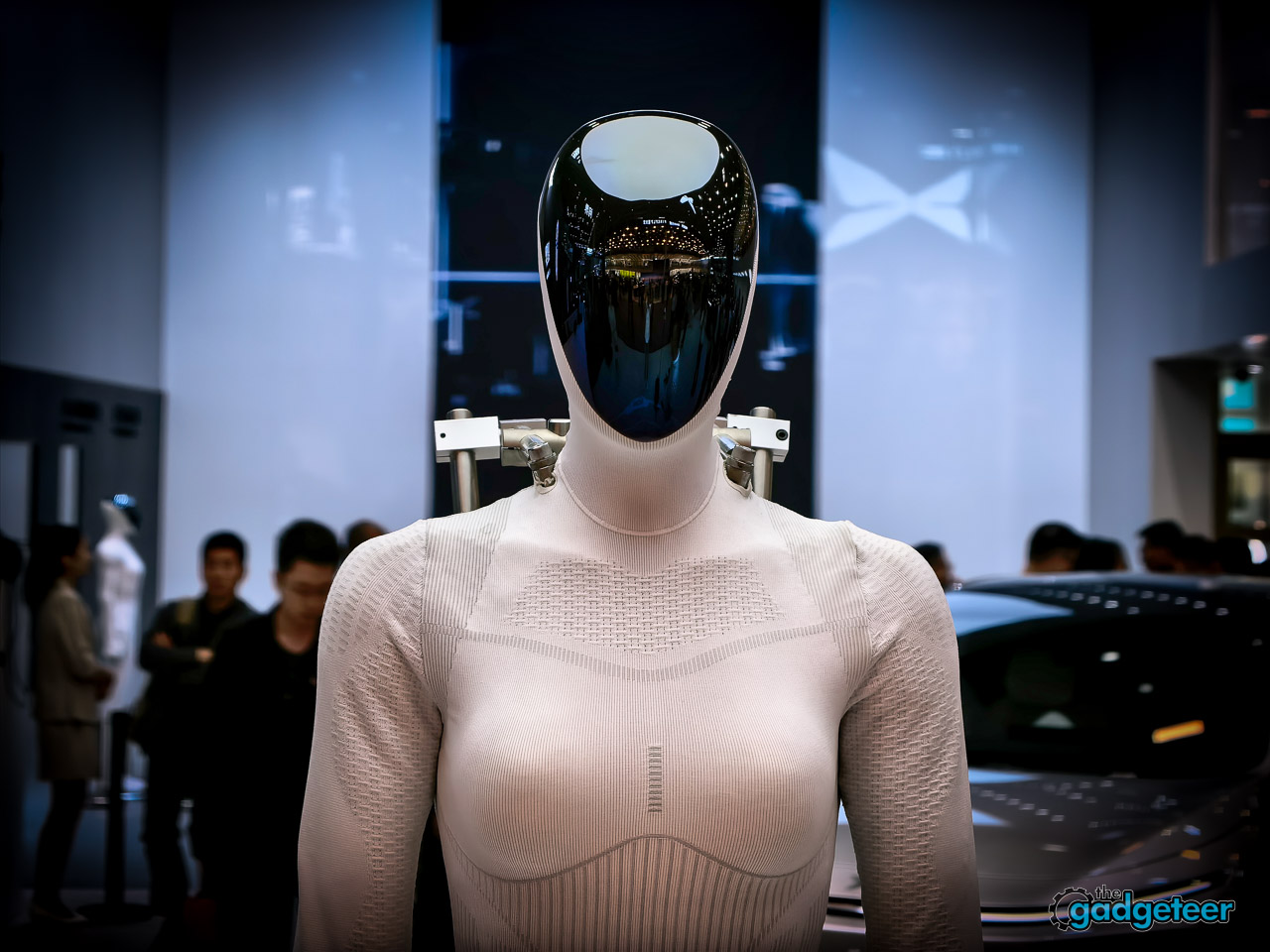
He Xiaopeng’s framing of the design philosophy is the kind of thing you remember. The robot should combine the general ability of primary school students with the specialized capability of college students. Basic locomotion, communication, and movement on the foundation, then trained skills layered on top. The whole system runs on what he called a zero-gravity motion control system, designed to let the robot do anything a human can do under Earth’s gravity.
When the inevitable bubble question came up, He Xiaopeng got personal. He talked about his father’s illness years earlier and about his own fear about aging. His view is that we’ll genuinely need a robot that’s like us, that can be a long-term companion in life and work. Three things separate Xpeng’s approach from the field. Software-first design. Full humanoid form. Automotive safety standards applied to robot manufacturing.
He also joked about the company’s Science and Technology Day reveal at the end of 2025. Even after they cut the right foot’s skin and muscles to show the mechanism, people were still wondering if the robot was a person in a suit. LC Mi, who heads the Robotics Center and the AI Technology Committee, confirmed the post-reveal data: roughly 60 to 70 percent of online viewers thought it was a person in a costume. He treats that ratio as a signal that the program is at the top of the uncanny-valley curve, and the head design is intentionally abstract to keep it there until the team can clear the valley with full facial control.
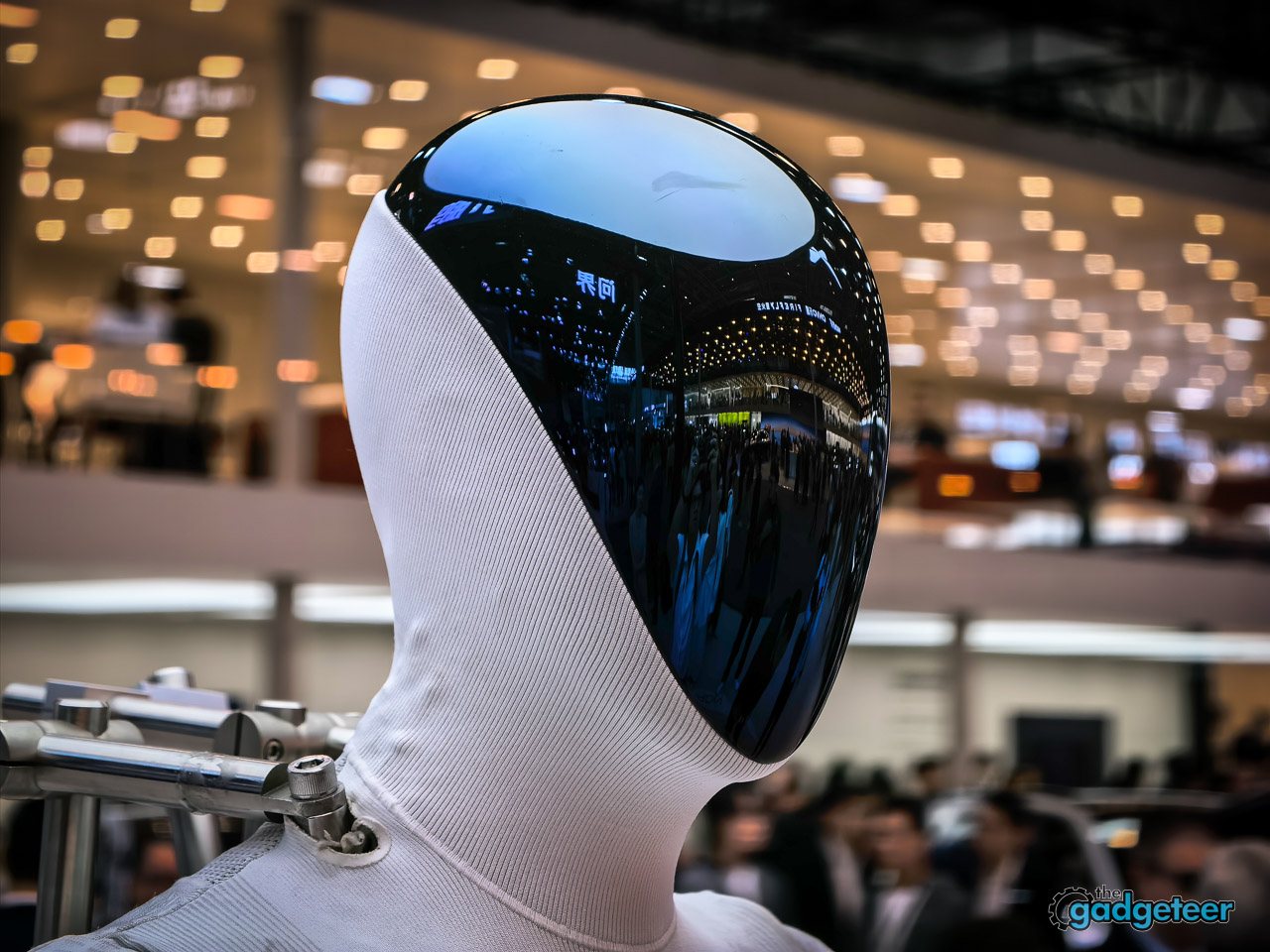
The technical depth in the robotics workshop was where the program stopped sounding like a stunt. The mass-production version of IRON runs on two Turing chips with the full AI software stack, uses the same Wheel A2 architecture as the cars for navigation, and adds a VL-syncing layer that LC described as a local OpenClaw-style controller for natural-language task commands. The body has 84 joint actuators, with five degrees of freedom in the waist alone. Xpeng leans on linear actuators rather than rotary ones, which is unusual in the field. LC’s reasoning is first-principles: a rotary actuator generates force at the joint, where space is at a premium, while a linear actuator can use the volume of the limb itself. That choice is also why liquid cooling is non-negotiable on this design.
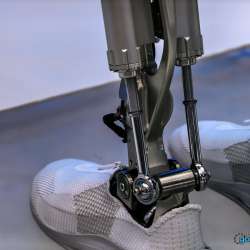
The deployment plan was the other surprise. First mass-production units are heading into Xpeng retail stores for greeting and sales work, and into Xpeng’s own factories for iteration. LC’s read on the bottleneck is that hardware is no longer the limiting factor. Data is. Cars produce data for free as soon as they are on the road. Robots do not, because nobody is yet driving them the way owners drive cars. Xpeng is exploring multiple data approaches to close that gap, and LC said he is expecting a GPT-style emergent moment in robotics around summer 2026, particularly on the language-to-action layer.
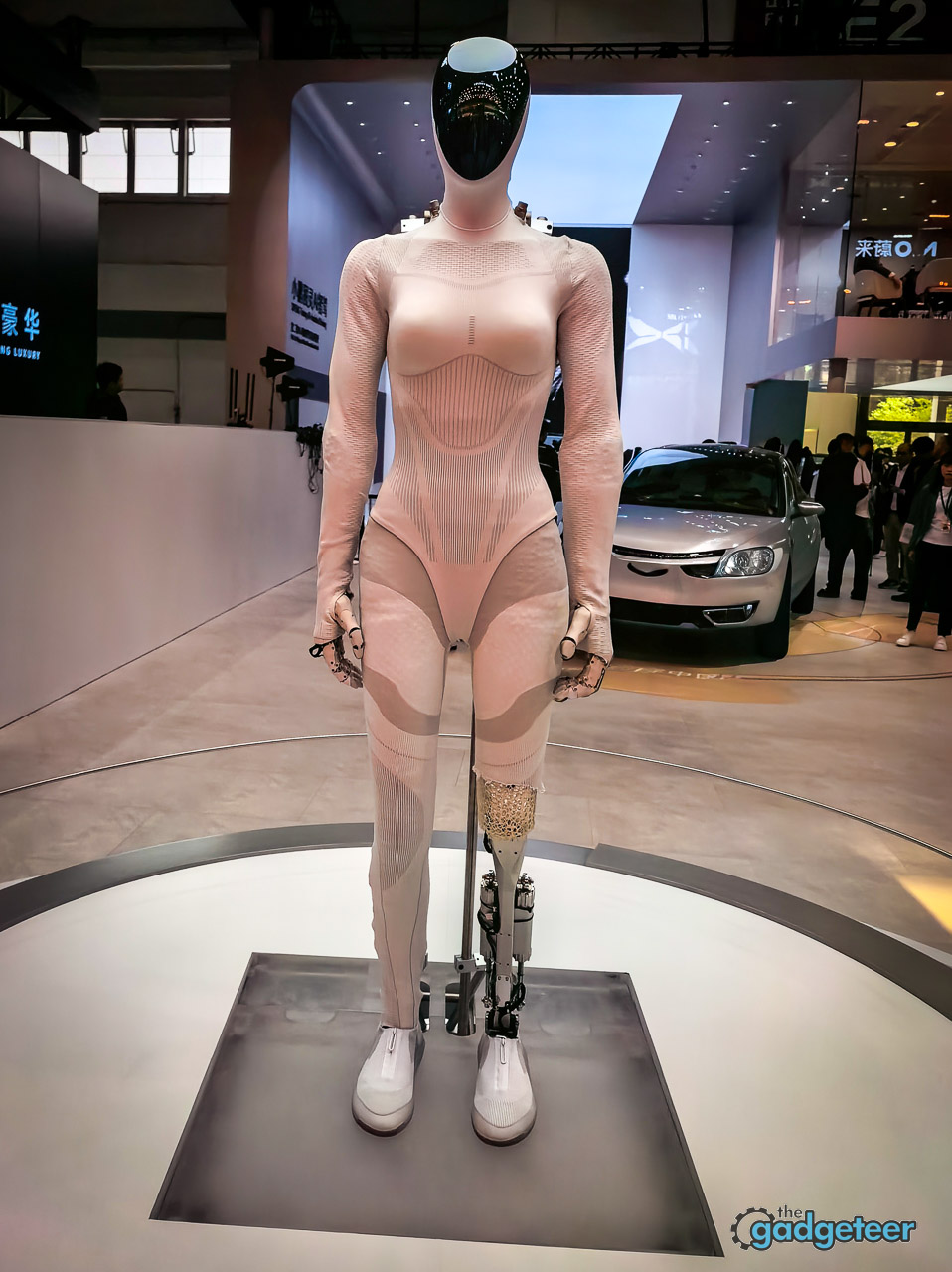
The story he ended with was the one that stayed with me. Last year, LC told a roomful of journalists about his neighbor Danny, who was sent to a special-care facility because his wife could not look after him at home. The team’s hope was that a working robot could eventually let Danny stay in his own house. Danny passed away at the end of 2025. LC didn’t get a chance to see him again. His wife Mary still lives in that house alone. The mission, in LC’s words, is unfinished, and that’s not a bullet point on a slide.
Flying cars sound silly until you stand next to one
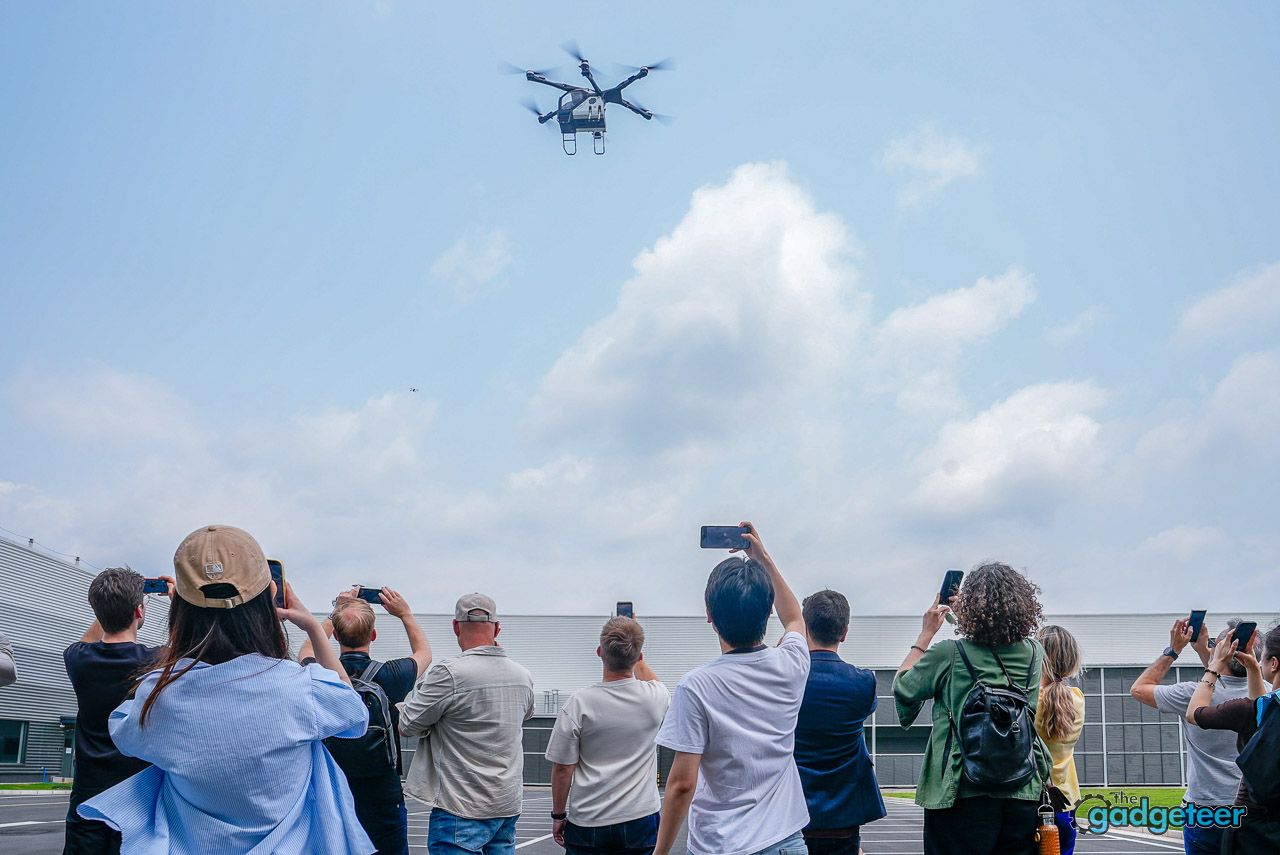
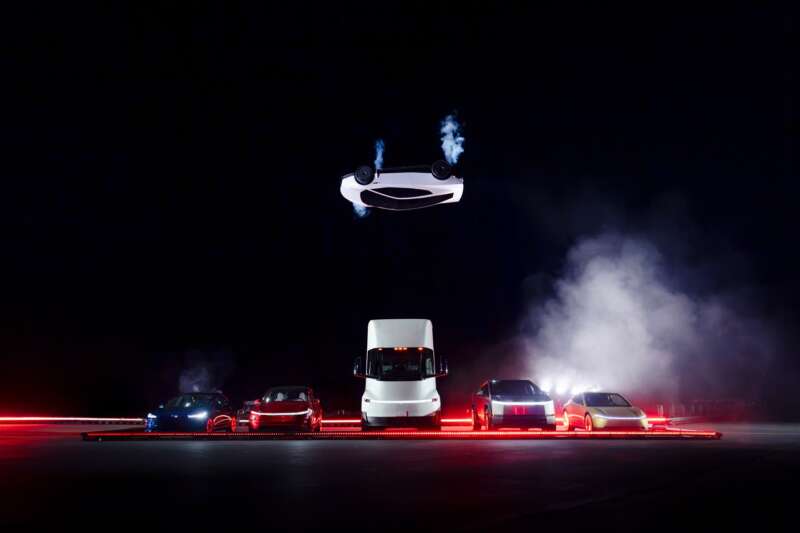
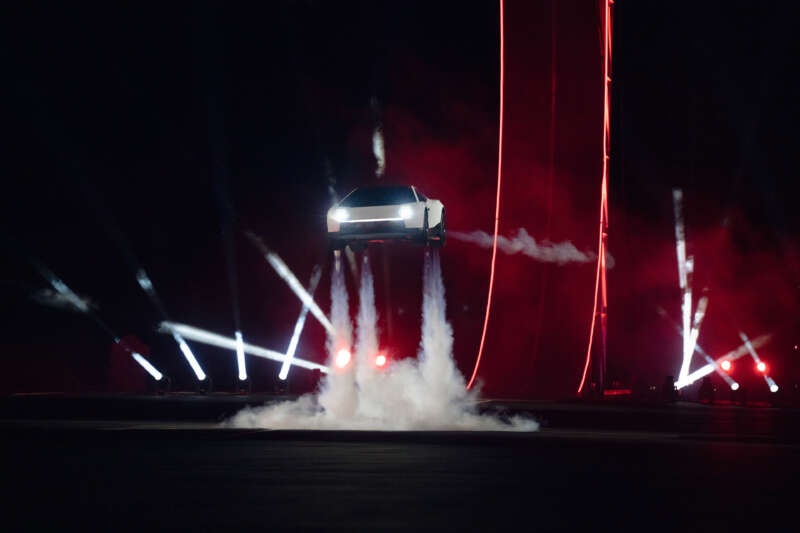
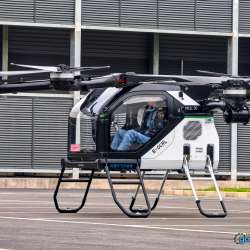
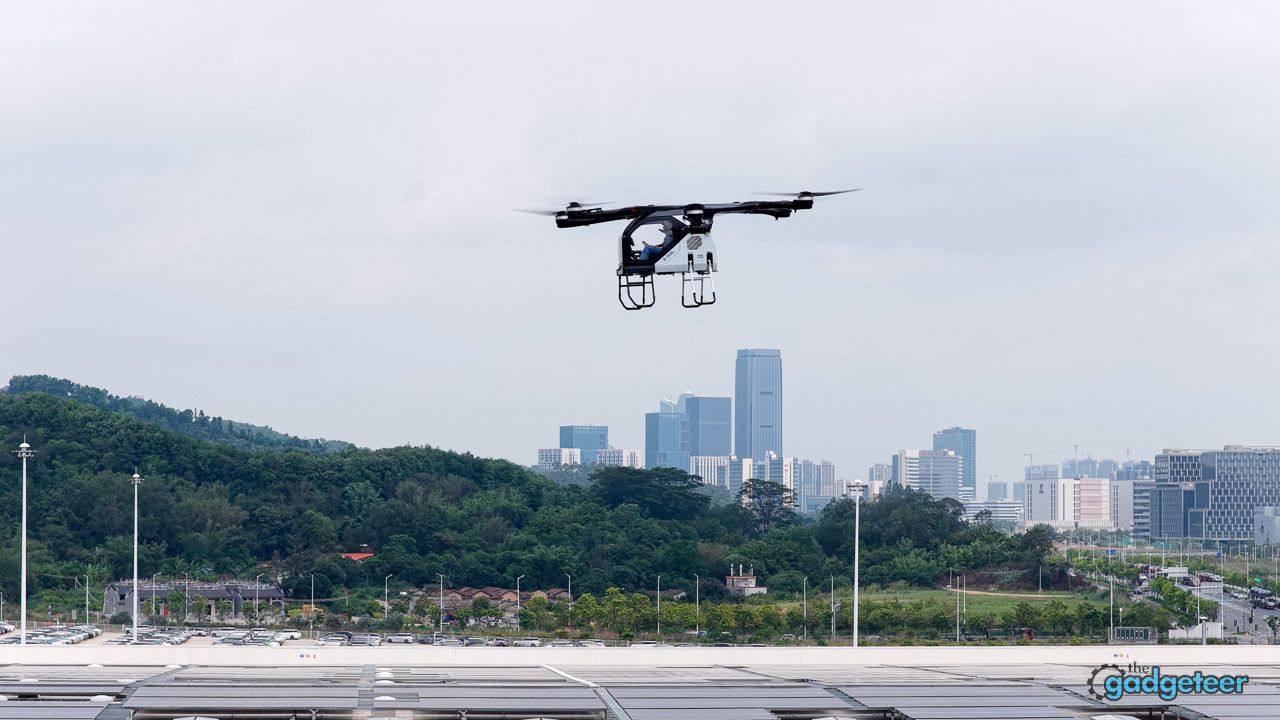
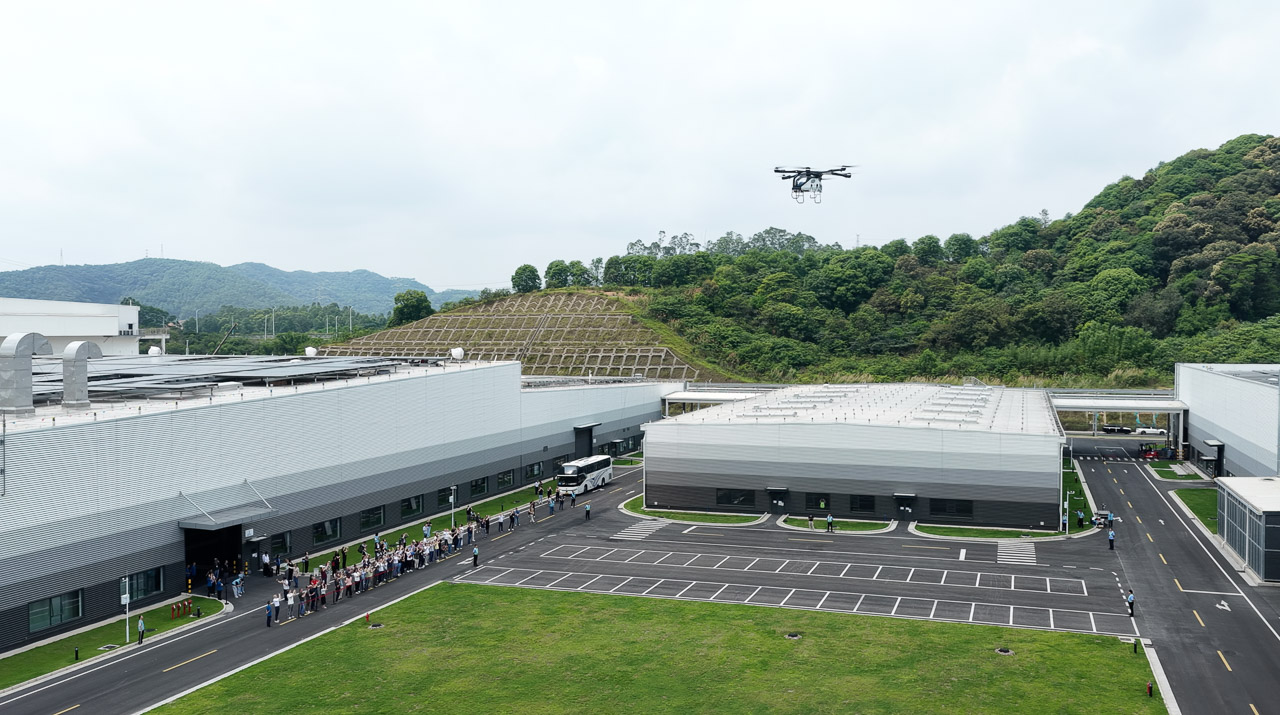
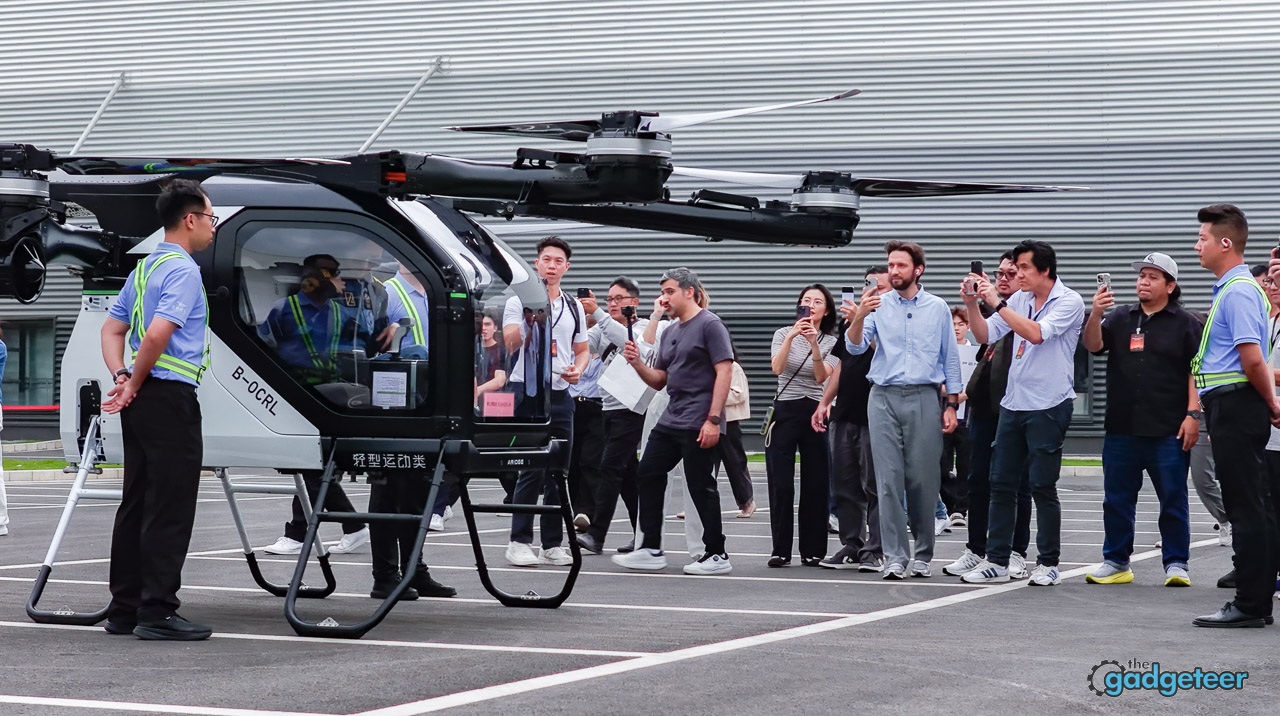
This is the one I keep going back to. Xpeng’s flying car program has 7,000 orders on the books. He Xiaopeng’s line was that no one in the history of mankind has put a car and an aircraft together this closely. The Beijing presentation was timed to a live demonstration of the Weitian flying car separation, which is exactly the kind of theater that lands when the underlying product is real.
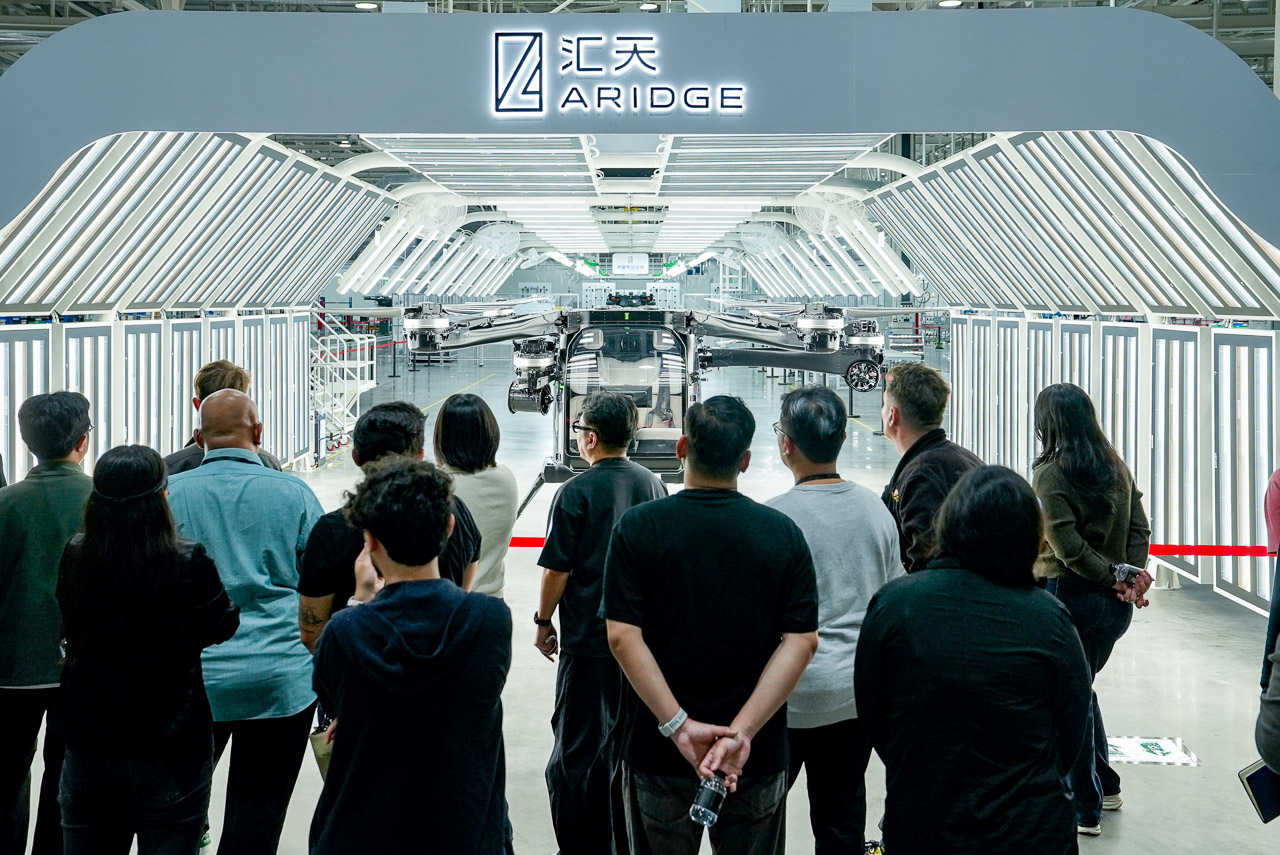
The bigger picture came from a separate roundtable, where one of the executives delivered a comparison I’m still chewing on. A car’s supply chain, he said, is 40 times more expensive than an airplane for parts of the same quality. The conclusion was that within the next 10 to 20 years, airplanes can be safe enough and cheap enough for ordinary people to actually buy.
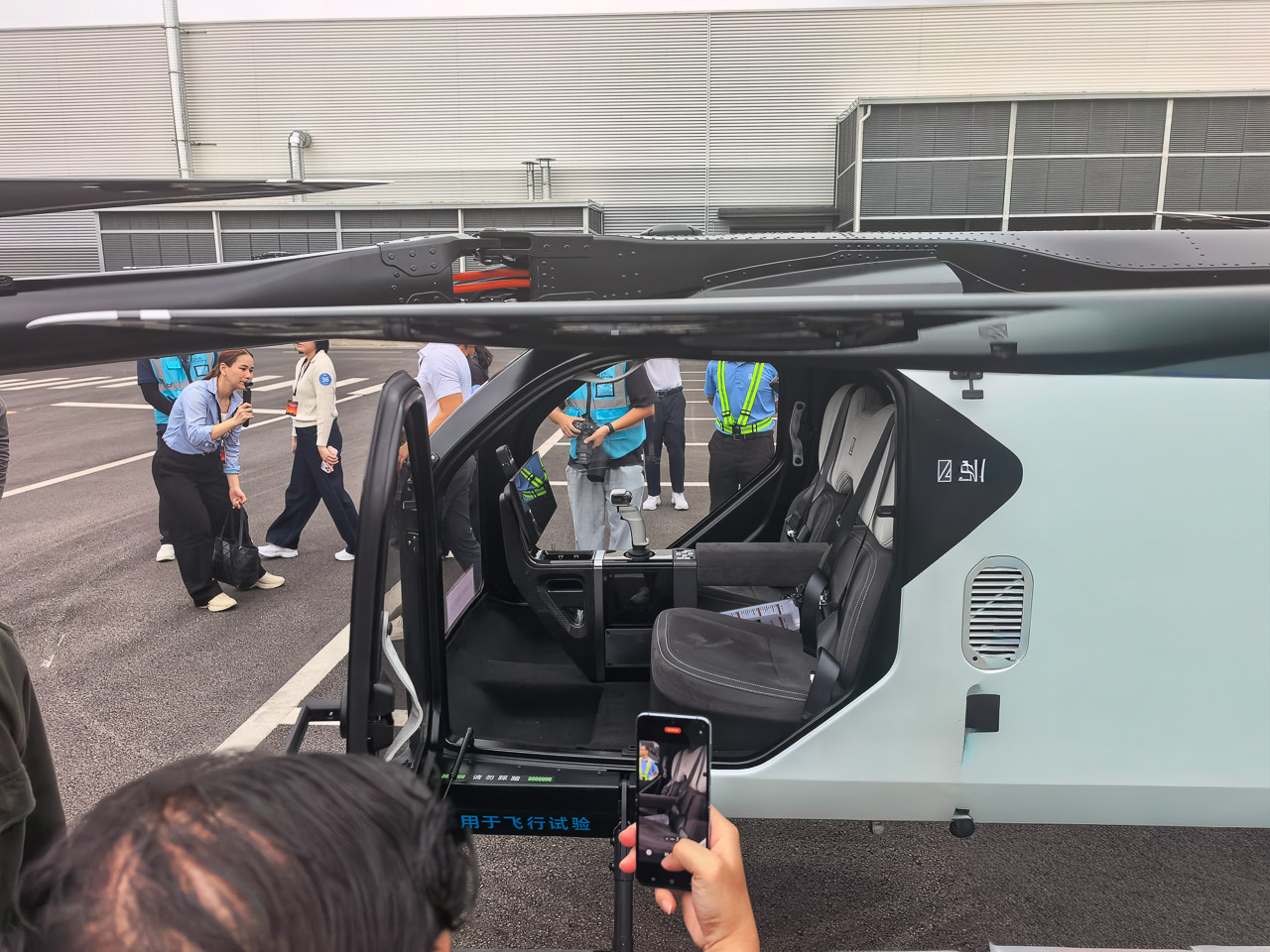
That’s a 10 to 20 year window. It’s a long runway. But Xpeng isn’t building toward it abstractly. They’re shipping orders right now.
Where this gets sold
Xpeng’s global posture came up in almost every session, in fragments. Pulled together, here’s the map.
Europe is already more than 50 percent of Xpeng’s global sales volume, and the plan is to more than double that this year. The strategy in places like the UK, France, and Germany is to deploy near-Level 4 capability under existing Level 2 regulatory frameworks, collect compliant data, and wait for the legal environment to catch up. He Xiaopeng’s read on the timeline is that European Level 3 regulations land in Q4 2026 or Q1 2027, and Xpeng’s best autonomous driving offerings should be available in those markets by 2027. The European posture isn’t just sales. It’s local manufacturing, local supply chains, a Munich R&D center, local charging infrastructure, and a hundreds-of-millions investment partnership with Magna Steyr. Xpeng is building inside the markets it sells in, not just shipping into them.
Charging infrastructure is on a similar curve. X-branded charging facilities are coming to roughly a dozen countries this year, built with local partners. He Xiaopeng floated a forward-looking idea I’d like to see succeed: humanoid robots performing simple charging tasks at stations.
The Middle East gets the GX. Robotaxi pilot testing is already running in Guangzhou on closed roads, with expansion to Middle Eastern cities possible once the regulatory side opens up. He Xiaopeng’s longer-term vision is that startups can buy the robotaxis and the operating service from Xpeng to run their own networks.
Indonesia already has the X9, and a larger SUV (smaller than the GX, but in that space) is on the way. Mexico opened this year, which is a real milestone for Latin America. Brazil and Argentina are still on the to-do list, mostly waiting on dual-motor energy format localization and a local manufacturing or supply chain solution.
The US is the complicated one. Dr. Brian Wu was direct that it’s one of the largest automotive and technology markets and definitely something Xpeng has to look at. He was also clear that the geopolitical and regulatory situation isn’t ready yet, and that long-term planning needs a stable environment they don’t currently have.
On the home front, China’s competitive picture is its own animal. He Xiaopeng’s read is that homogenized products are going to fade out within four to five years, and the survivors will compete on technology and quality. Xpeng’s positioning, by his framing, is the technology and quality side. Tesla, in the side conversations I had with people who actually live in Shenzhen and Guangzhou, has become more of a status symbol than a default choice now that the local options have caught up.
The design conversation that stuck with me
The Design Center workshop was led by JuanMa Lopez, Xpeng’s Design Vice President, with Creative Design Director Joan Melenchon walking us through the work. Xpeng’s design organization runs out of two centers in Guangzhou and Shanghai, with about 400 people across roughly twenty nationalities. They have replaced the conventional OEM design pipeline with an internal, proprietary AI toolset that lives entirely in their own database, with no outside access, and that cuts the cycle to roughly half what other OEMs run from sketch to production. The confidentiality angle is the part most coverage misses. If you prompt a public AI tool, your idea is essentially open source the moment it generates. Xpeng’s tooling is built so the visual language and proportions it learns belong to the studio and only the studio. That is a real competitive advantage. Most automakers cannot say that.
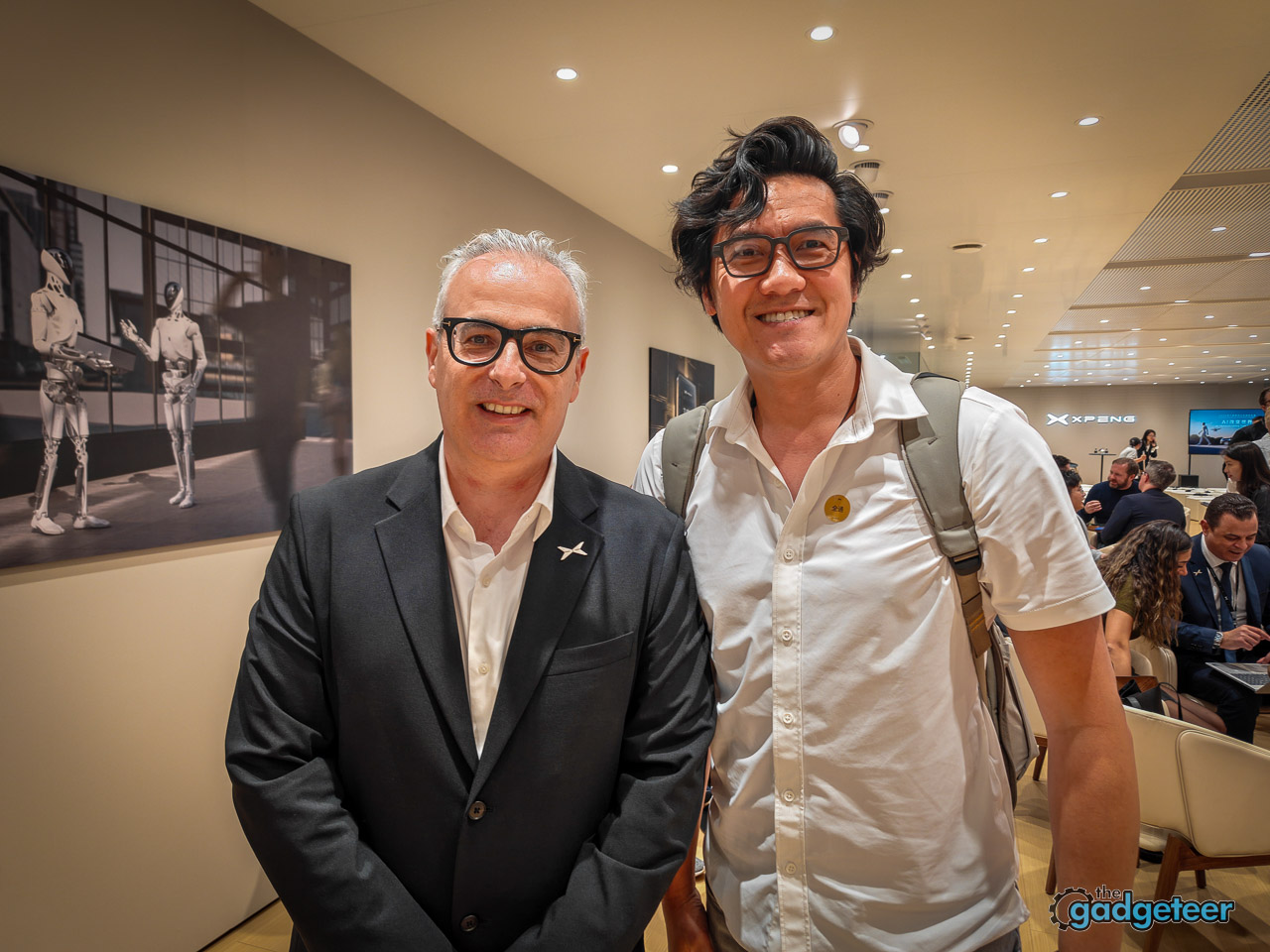
The thread that runs across every Xpeng product, from the flying car to the humanoid robot, is proportions. “All of our cars are super well proportioned” was the line, and it’s true once you start looking for it. The second layer is surface language. No big feature lines on the sides. The cars look quiet, even neutral, until you notice the belt line. The attitude lives there. It’s the difference between a sculpture and a sticker.
That carries into the robots, deliberately. They’re avoiding aggression. Simple, clean lines. When humanoid expressions become the next frontier, the starting point is the eyes. The window to the soul, in the most literal sense. I’ve heard a lot of designers talk about robots. I haven’t heard many of them talk about robots like that.
The lineup, briefly, comes in three families. The Mona series is playful, fashionable, affordable high-tech, with relaxed plasticity and a slightly playful robotic feel. The XP series balances premium and sporty: XP/F leans avant-garde luxury and effortless performance, while XP/G leans comfort, technology, and refinement. The premium tier is technologically premium without ostentation, where refinement lives in the quality of the surfaces rather than in the show of features. The P7 was cited as the landmark trendsetter, and you can see that DNA running through everything they’re doing now. The bias against the “overcharged” Chinese design language of a few years ago is intentional. They are chasing timeless and tasteful instead, and they are getting there.
What this means for the rest of us
Here’s where I land after four full days inside the program.
If you live in China, you can buy this software in a real car this year, and the data says owners are using it constantly. If you live in the UK, France, or other parts of Europe, the plan is near-Level 4 capability under Level 2 regulatory frameworks until the legal environment catches up, with full availability targeted for 2027. If you’re in the Middle East, the GX is coming. If you’re in Indonesia, the X9 is already there and a larger SUV is on the way. If you’re in Latin America, Mexico is open and Brazil and Argentina are still ahead.
If you’re in the US, the answer is more complicated, and Xpeng knows it.
The thing I keep telling friends back home is this. The story you’ve heard about Chinese EVs being cheap, fast followers is at least one full generation out of date. Xpeng is leading on autonomous driving software in ways I didn’t expect to see this year. The GX is a family vehicle that competes on features I haven’t seen anywhere else. The humanoid robot is a real product moving toward mass production. The flying car program has paying customers.
Trust, but verify. That’s still my rule for any self-driving system. After Beijing, I’d add a corollary. Sometimes the system you should trust the most is the one you didn’t see coming.