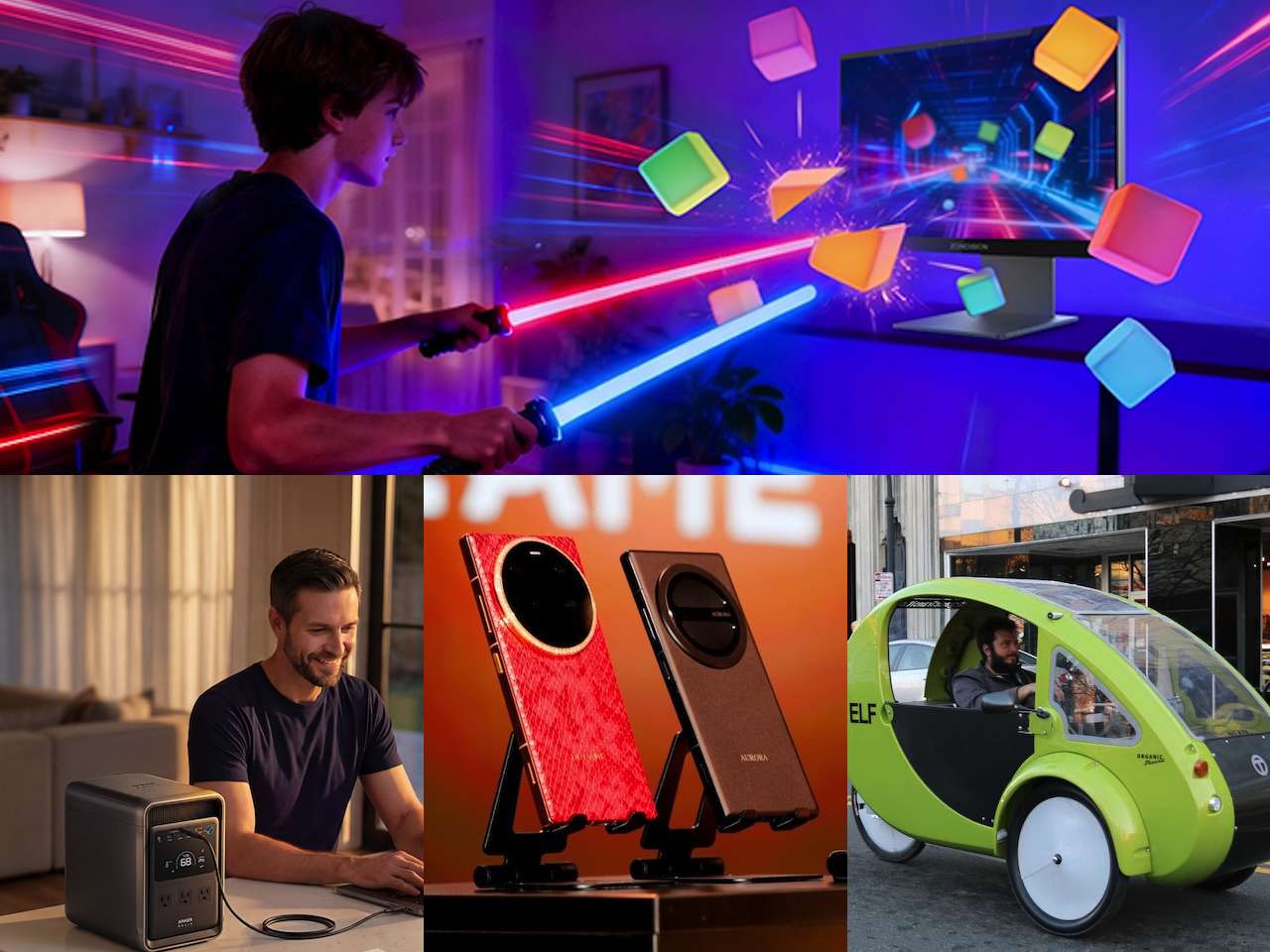
May 2026 was the kind of month where the gadget world stopped asking “what’s next?” and just started shipping it. The Fitbit Air went screenless at $99. The Anker SOLIX S2000 promised 35 hours of fridge backup. Google unveiled the Googlebook as Chromebook’s next chapter. Modular phones made a serious comeback, AI moved off your face and onto your ears, and the lower end of the e-bike market got genuinely usable. Here are 10 product launches, crowdfunded debuts, and major reveals from the past month that earned a permanent spot on our radar.
- Fitbit Air
- Soundcore Liberty 5 Pro Max
- Razer Project Motoko
- Dreame Aurora Nex
- Googlebook
- ZIMO1 27″ Glasses-Free 3D Monitor
- The Spectrum Handheld & TheC64 Handheld
- ELF 3.0 Solar Trike
- Jasion EB5
- Anker SOLIX S2000
1. Fitbit Air: Google’s Screenless $99 AI Tracker
Google’s smallest Fitbit yet is also its loudest pitch in years. The Fitbit Air ditches the display entirely, hides on your wrist for up to a week per charge, and routes everything visual into the Google Health app. Inside the tiny pebble: 24/7 heart rate, Afib alerts, SpO2, HRV, and full sleep stage tracking.

Price: From $99.99
Where to Buy: Google, Amazon
The real headline is the Google Health Coach. Point your phone camera at a treadmill panel or a whiteboard workout, and the Coach logs the session for you. A Stephen Curry Special Edition lands May 26 at $129.99, with the standard band already up for pre-order at $99.99.
Why it matters: The screenless approach plus a $99 entry price puts Fitbit back in front of people who weren’t shopping for a tracker yesterday.
2. Soundcore Liberty 5 Pro Max, Earbuds with a Touchscreen Case That Records Meetings
Anker’s audio brand showed up at Anker Day in NYC with the Liberty 5 Pro Max, and the charging case is the actual product. A 1.78-inch AMOLED touchscreen sits on top of the case, paired with an AI Note-Taker that records meetings without your phone in the room. Double-tap the back of the case and the Soundcore app spits out a transcript, identifies speakers, and pulls action items.

Price: $229.99
Where to Buy: Amazon
Both the Pro ($169.99) and Pro Max ($229.99) ride on Anker’s new THUS AI chip, a 10-sensor mic array (eight mics plus two bone-conduction sensors), Adaptive ANC 4.0, and LDAC over Bluetooth 6.1. The Liberty 5 Pro also carries a Guinness World Record for call clarity, and the Pro Max shares the same earbud hardware.
Why it matters: It’s the first pair of earbuds where the case might be the reason you buy them.
3. Razer Project Motoko, AI Vision in a Headset, Not Glasses
While the rest of the industry keeps stacking sensors onto smart glasses, Razer’s Project Motoko asks an obvious question: why are we strapping AI to people’s faces when their ears are already free?
 The wireless concept headset hides dual first-person cameras inside the ear cups, aligned roughly to your eye line, with a dual far-field and near-field mic array on top. Compute runs on Qualcomm Snapdragon, and Razer says Motoko is model-agnostic, with Grok, OpenAI, and Gemini all on the partner list. A Developer Kit signup is open now, with the kit shipping in Q2 2026.
Why it matters: If AI wearables work better on things people already wear, headphones win.
4. Dreame Aurora Nex, A Modular Phone With Wozniak on Stage
The robot vacuum maker just crashed the smartphone party. Dreame’s Aurora Nex launched in San Francisco with Steve Wozniak on stage and a magnetic modular system on the back that swaps in a steady action camera, a low-light telephoto, a satellite communicator, or a self-learning “smart module.”
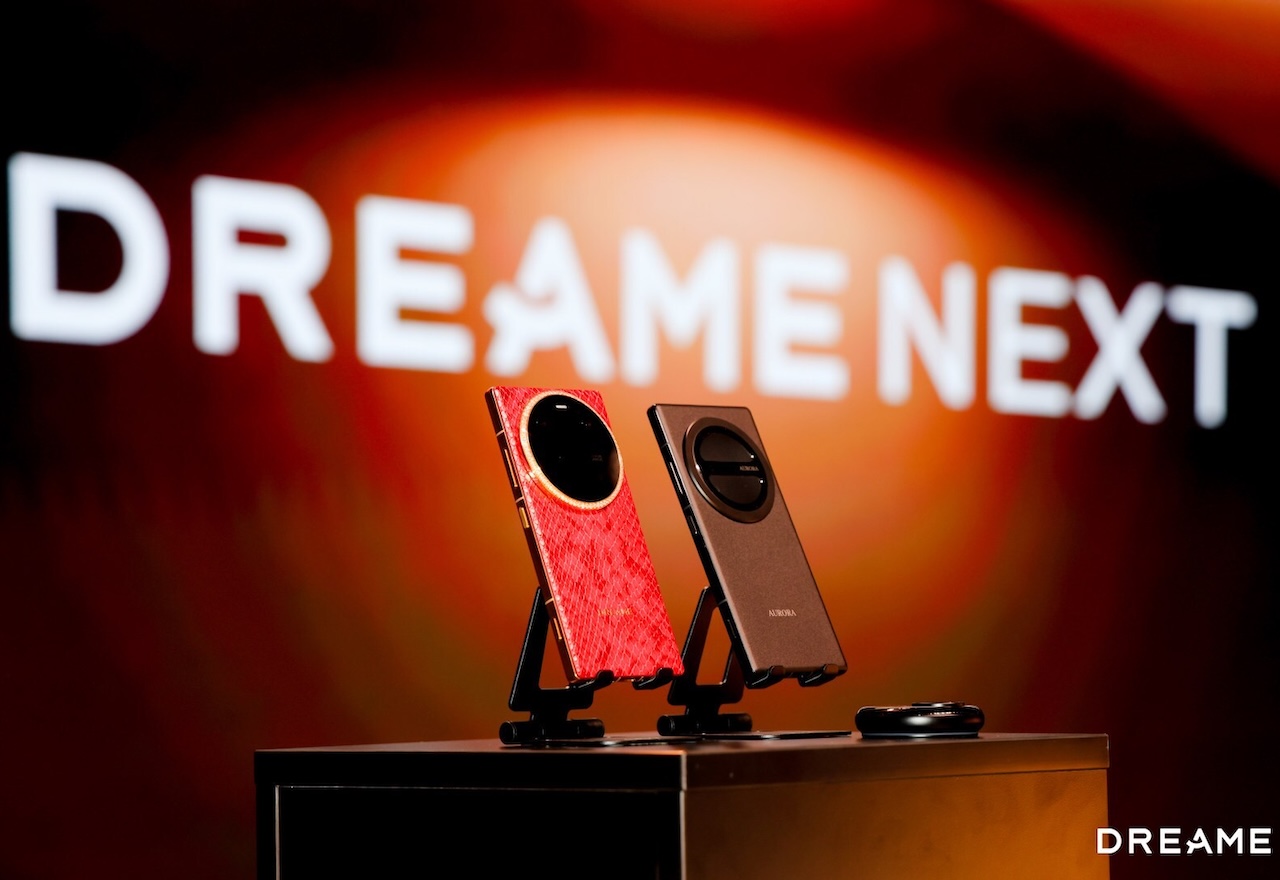
It runs Dreame’s own Aurora AIOS 1.0, claims 200MP capture at every focal length, 8K 60fps video without cropping, and sub-10-second satellite voice calls. The companion Aurora Lux skips modularity for hand-engraved, fine-jewelry-style finishes. Dreame hasn’t confirmed pricing, but Chinese-market reporting puts the Nex near $999 and the Lux anywhere from $9,600 to six figures in RMB for the top tier.
Why it matters: Modular phones have been tried and abandoned by Google, Motorola, and LG. Dreame is the first newcomer with the manufacturing scale to actually try again.
5. Googlebook, The Chromebook Successor With Gemini Baked In
Google announced the Googlebook on May 12 at the Android Show: I/O Edition, framing it as the next 15-year chapter after Chromebook. It fuses parts of the Android stack with ChromeOS, runs Google Play apps natively, and bakes Gemini in at the OS level.

New tricks include the Magic Pointer (a Gemini cursor that surfaces suggestions when you wiggle it over something), Create Your Widget (prompt Gemini to assemble a personalized dashboard from Gmail, Calendar, and the open web), and native Android phone-app casting that lets you finish a Duolingo lesson without leaving the laptop. Look for a unique “glowbar” on the chassis, and OEM partners including Acer, ASUS, Dell, HP, and Lenovo this fall.
Why it matters: Google is finally treating the laptop as a premium AI device, not a $300 student machine.
6. ZIMO1 27″ Glasses-Free 3D Monitor, Depth Without a Headset
Glasses-free 3D is creeping out of the CES demo room. The Zondision ZIMO1 pairs a 27-inch 4K panel with a 120 Hz dual-eye tracking system, a self-developed 3D ASIC, and a microlens array that steers light to each eye in real time. The result: depth on a flat screen with no glasses, no headset, and no GPU upgrade.

Price: From $1,199
Where to Buy: Kickstarter
Kickstarter tiers run from about $1,200 to $1,299 (MSRP is $1,999), well under Samsung’s Odyssey 3D G90XF and Lenovo’s ThinkVision 27 3D. Backers also get three lifetime-free apps: a Game Manager covering 10,000+ titles, a Game Modifier, and a 2D-to-3D conversion tool. Shipping is targeted for August 2026.
Why it matters: It’s the first glasses-free 3D monitor priced like a regular high-end display, not a workstation accessory.
7. The Spectrum Handheld & TheC64 Handheld, Two 1980s Icons in Your Pocket
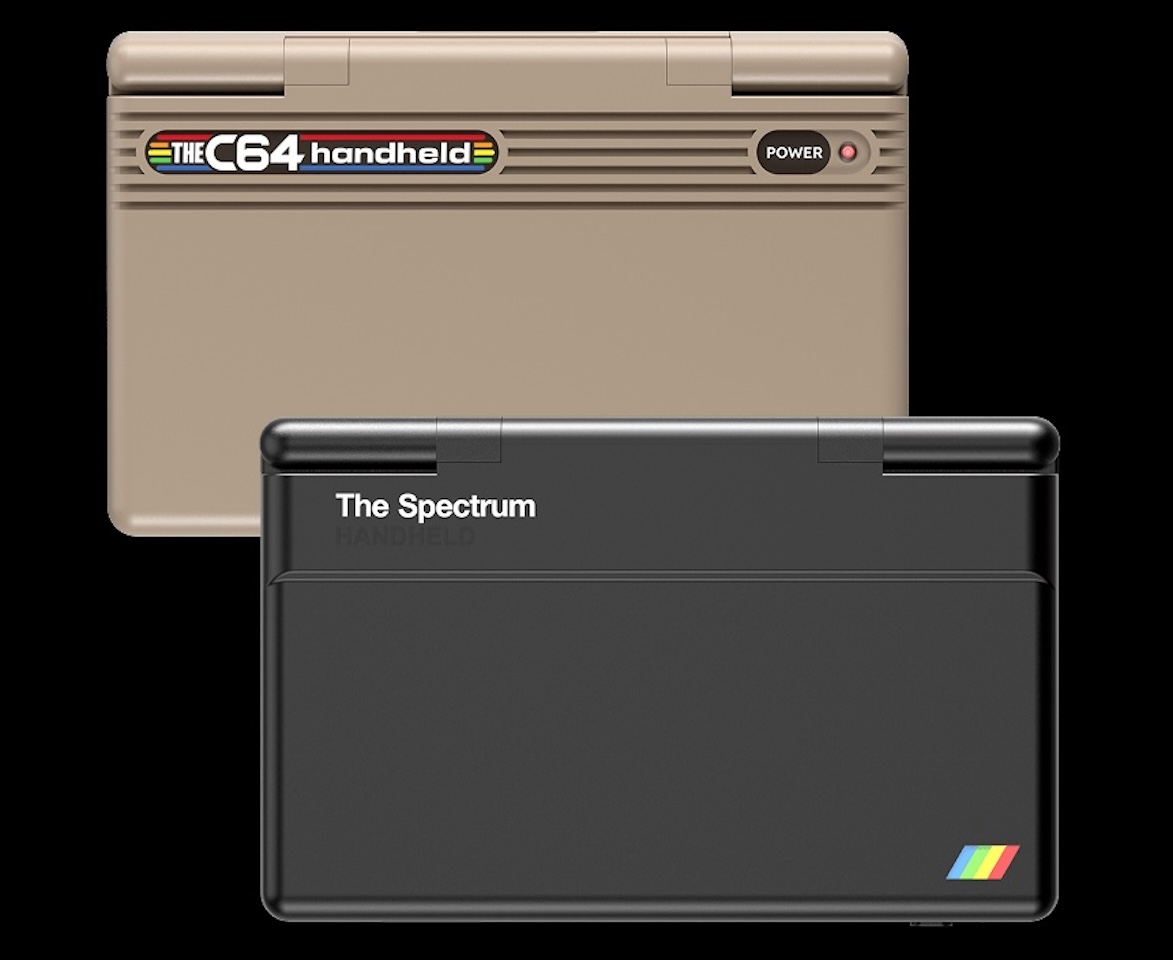
Retro computing’s revival just went pocket-sized. Hyper Mega Tech unveiled clamshell handheld versions of the ZX Spectrum and the Commodore 64, both built on the same internals: a 4.3-inch 840×480 IPS panel, a quad-core 1.2GHz chip, 256MB DDR RAM, USB-A for an external keyboard, and a MicroSD slot for ROMs and homebrew.
Price: From $129
Where to Buy: Hyper Mega Tech, Funstock USA
Each ships with 25 preloaded games (Manic Miner, Head Over Heels, Speedball 2, Paradroid, and more), plus deep format toggles on each: Spectrum 48K through +3e on the Spectrum Handheld, C64 PAL/NTSC through C64 GS on TheC64 Handheld. Pre-orders are open from $129.99, with Collector’s Editions at $149.99 (limited to 2,000 units each) and shipping October 15, 2026.
Why it matters: Retro hardware usually means a desk replica. These are the first officially licensed Spectrum and C64 machines built to live in a coat pocket.
8. ELF 3.0 Solar Trike, The Pedal-Solar-Electric Pod is Back
Organic Transit’s iconic teardrop trike returned this month with the ELF 3.0, a redesigned solar-electric three-wheeler with a fuselage-style frame, full suspension, and a single programmable drivetrain that can run as a Class 1/2/3 e-bike, a mobility device, or a low-speed neighborhood electric vehicle, all via an over-the-air setting.

Price: From $7,500
Where to Buy: Organic Transit
The roof now carries 200W of solar standard (up from 100W) with an optional 400W setup, and the battery roughly doubles in capacity with bidirectional charging that can backup a home fridge during outages. Reservations are open now, with starting pricing around $7,500 (not yet finalized) and no firm delivery date.
Why it matters: It’s a daily commuter, a fitness machine, and a home backup battery, all in one bike-lane-friendly pod.
9. Jasion EB5, A Working E-Bike for $199 on Amazon
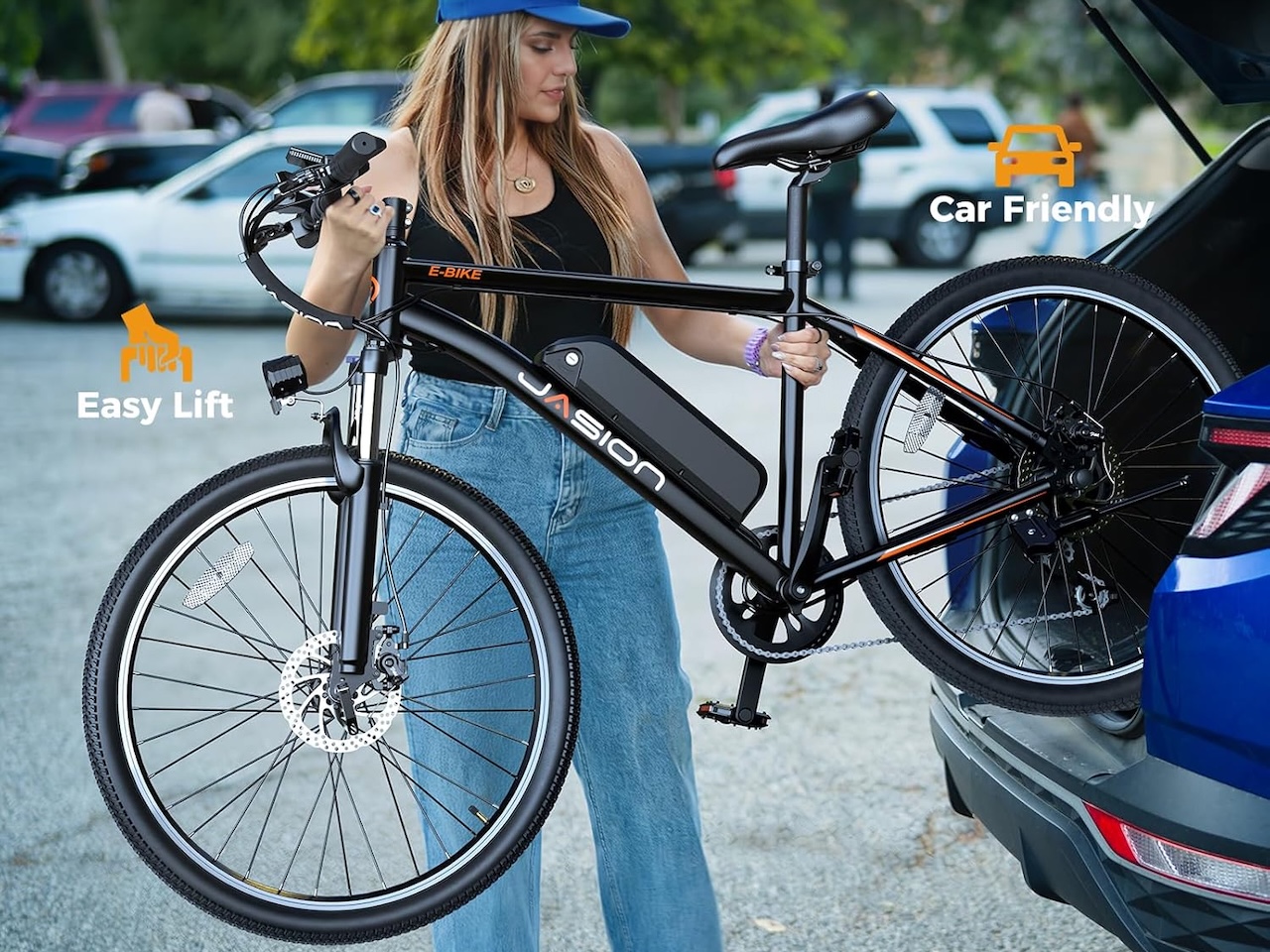
The quietest launch of the month might be the most accessible. The Jasion EB5 dropped to $199 on Amazon (down from $250) and somehow includes a removable 36V 10Ah (360Wh) battery, a 7-speed drivetrain, mountain-bike tires, a horn, and a built-in headlight. Range is rated at up to 40 miles in pedal-assist, with a 20 MPH Class 2 top speed.
Price: From $199
Where to Buy: Amazon
It’s not a luxury build, but it ships partly assembled and the removable battery makes it apartment-friendly. For anyone curious about e-bike commuting without the $1,000+ commitment, this is the cleanest entry point Amazon has offered in years.
Why it matters: Sub-$200 e-bikes used to mean sketchy specs. The EB5 is the first that actually clears the bar.
10. Anker SOLIX S2000, 35 Hours of Fridge Backup From a Counter-Friendly Power Station
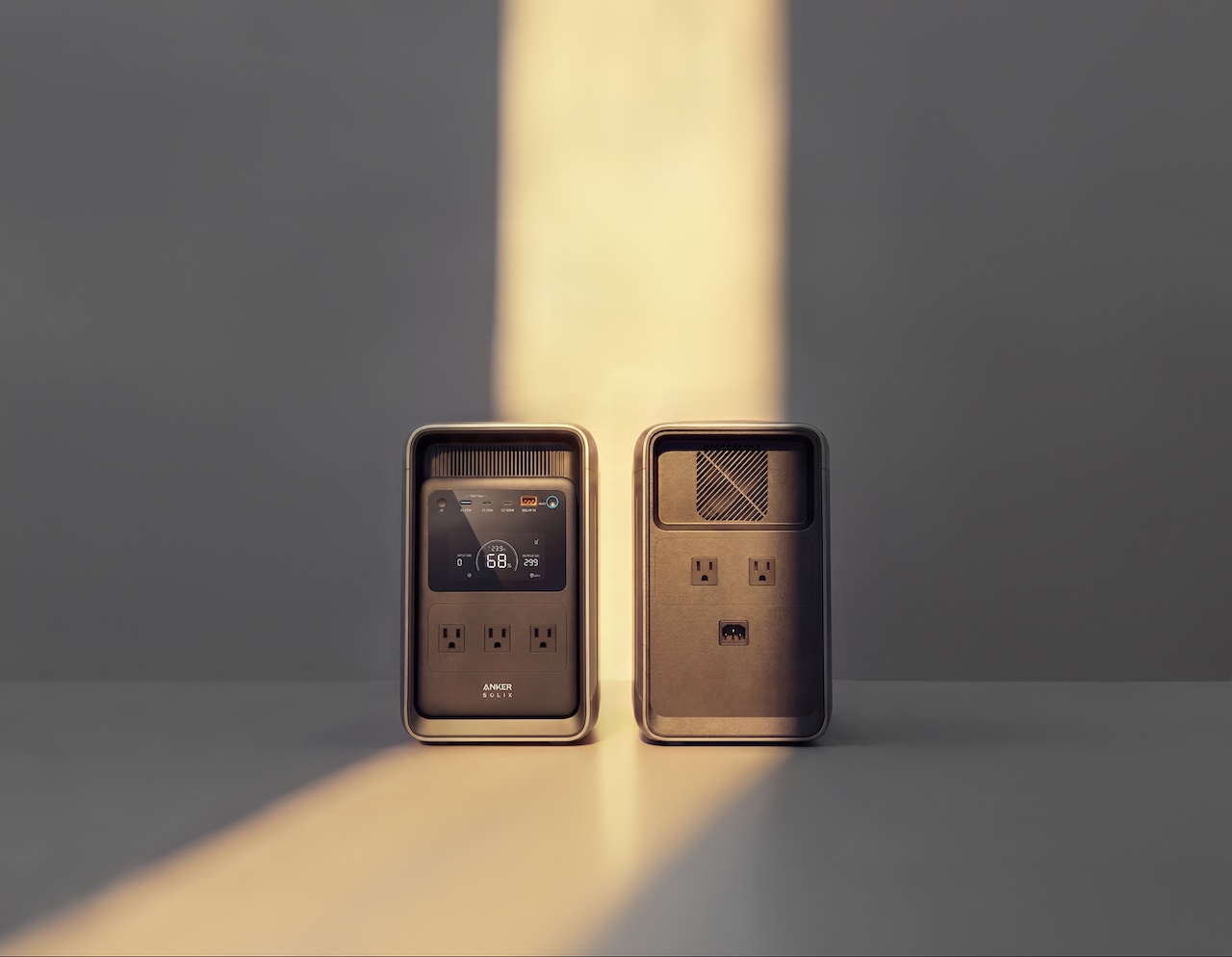
Anker SOLIX’s new S-Series debuts with the SOLIX S2000, a 2,010Wh LiFePO4 portable power station built around one promise: keep the fridge alive longer than anything else in its class. Anker’s OptiSave system cuts idle draw to roughly 6W (or 2W with outlets off), and the unit is the first ever to clear TÜV SÜD’s A+ Runtime certification, translating to up to 35 hours of refrigerator backup.
Price: $599
Where to Buy: Anker
It also lasts: 10,000 charge cycles and a 15-year service life, roughly double what most LFP competitors advertise. AC output is 1,500W continuous / 3,000W peak across five outlets, with a 400W solar input and integrated UPS. Early-bird pricing is $599 on launch day (June 2), $679.99 introductory, $1,199.99 MSRP.
Why it matters: It’s the first portable power station that markets itself by hours of fridge runtime instead of watt-hours on a spec sheet, and the certification to back it up.
The Takeaway
May’s launches sketched out a clearer picture of where consumer tech is heading. AI is finding new homes outside your phone and outside your face. Modular hardware is making another run at the smartphone. Power stations are turning into long-term home appliances. And the lower end of the e-bike market just got genuinely usable.
If you only watch a few of these closely as the year goes on, make it the Fitbit Air, the Liberty 5 Pro Max, and the SOLIX S2000. These three quietly redraw their categories without asking for permission.