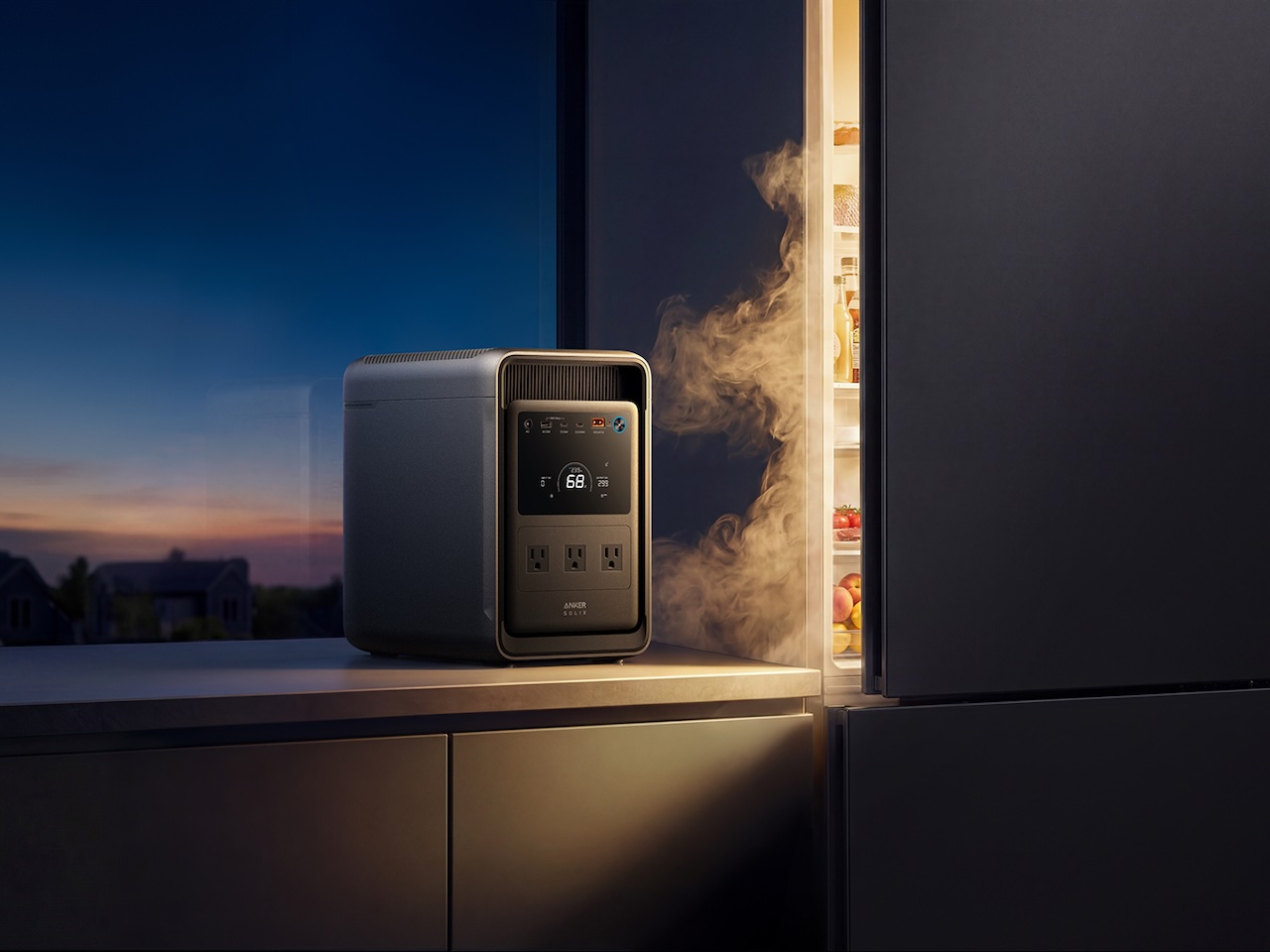
Anker SOLIX just unveiled the S-Series, a new home-backup line built around a single, very specific promise: keep the fridge running longer than any other 2kWh power station, per Anker. The debut model, the Anker SOLIX S2000, packs 2,010Wh of LiFePO4 capacity, 1,500W of continuous AC output, and the first-ever TÜV SÜD A+ Runtime certification, which Anker says translates into up to 35 hours of refrigerator backup on a single charge.
Price: $599
Where to Buy: Anker
It also lands with an aggressive launch price. Early-bird signups at Ankersolix.com unlock a $599 code for launch day on June 2, with a $679.99 introductory price after that. MSRP is $1,199.99.
Why Anker is chasing runtime, not just capacity
Most portable power stations are sold on watt-hours. Anker’s pitch with the S-Series is that watt-hours on a spec sheet rarely match watt-hours that reach your fridge, once idle drain and conversion losses take their cut.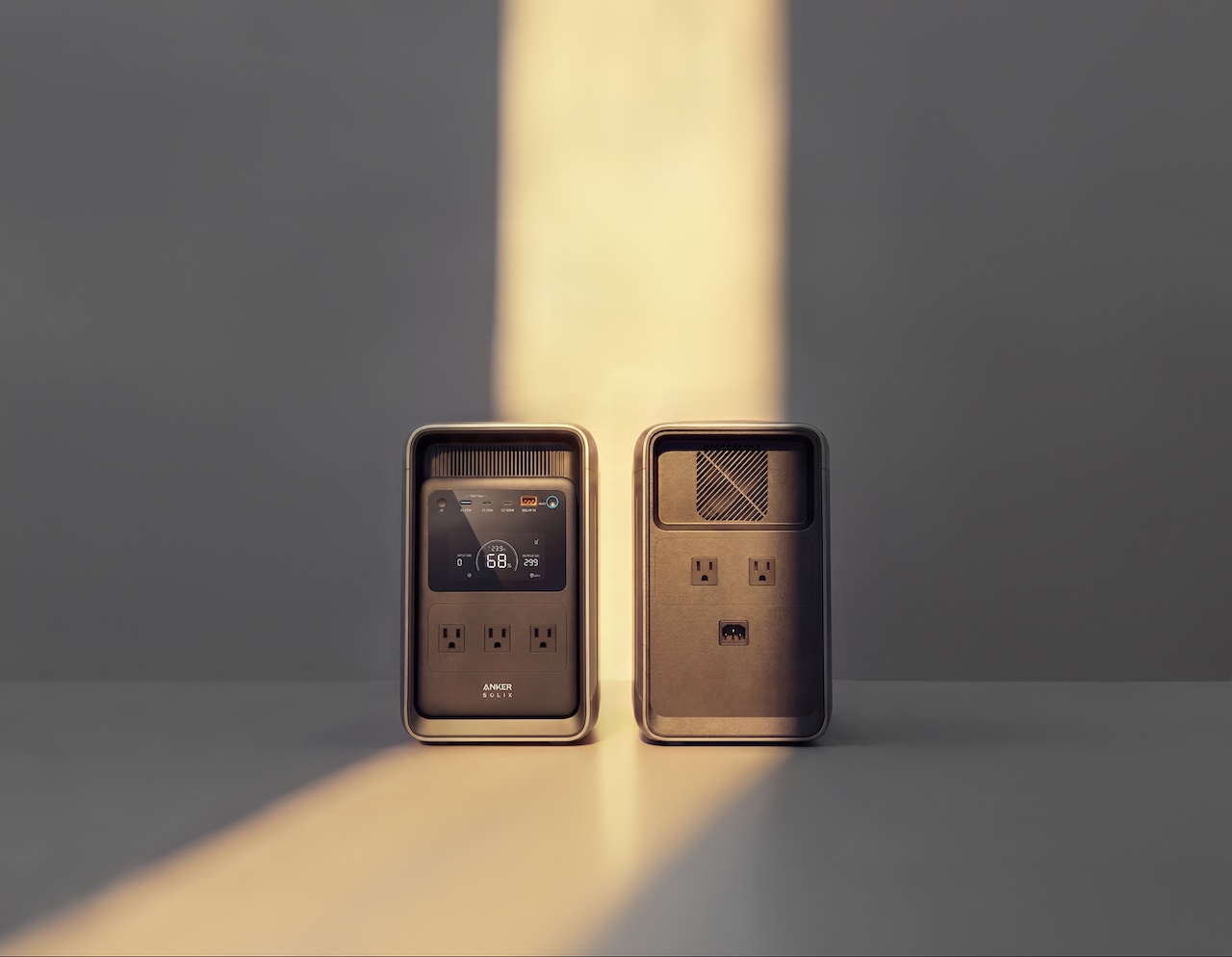
The S2000 leans on a proprietary system called OptiSave to close that gap. Per Anker’s internal benchmarking, it cuts idle power consumption by 40 to 70 percent, dropping active idle draw to under 6W with the AC on, and just 2W with all outlets disabled, compared to the 10 to 20W typical of competing units. The company also claims over 90 percent efficiency under light loads, where most backup systems waste the most energy. The net result, per Anker: about 20 percent more real-world runtime than other 2kWh stations.
That headline rating leans on a benchmark the S2000 is the first product to clear. Per Anker, TÜV SÜD’s A+ Runtime score grades backup units on real-world power delivery rather than nameplate capacity. If independent retests confirm the number, the S2000’s 35-hour figure carries more weight than the usual manufacturer-quoted runtime.
 Specs that matter for a home backup buyer
| Spec | Anker SOLIX S2000 |
|---|---|
| Capacity | 2,010Wh (314Ah LiFePO4) |
| AC output | 1,500W continuous / 3,000W peak, 5× outlets |
| USB output | 1× 100W USB-C, 1× 15W USB-C, 1× 12W USB-A |
| Cycle life | 10,000 cycles / ~15-year service life |
| Idle draw (AC on) | ~6W (2W with outlets off) |
| AC recharge | 1.2 hr to 80% / 1.7 hr to 100% |
| Solar input | 400W |
| UPS | Integrated, instant switchover |
| Size | 8.19 × 11.1 × 12.7 in |
| Weight | 35.7 lb (16.2 kg) |
What 35 hours of fridge backup actually buys you
At the household level, a 2,010Wh battery designed to deliver most of its capacity to the load changes the math on what a power station is for. Anker’s recommended-devices sheet pegs the S2000 as a fit for phones, laptops, a Wi-Fi router, a CPAP, lamps, a TV, a coffee maker, and even a microwave thanks to the 3,000W peak output.
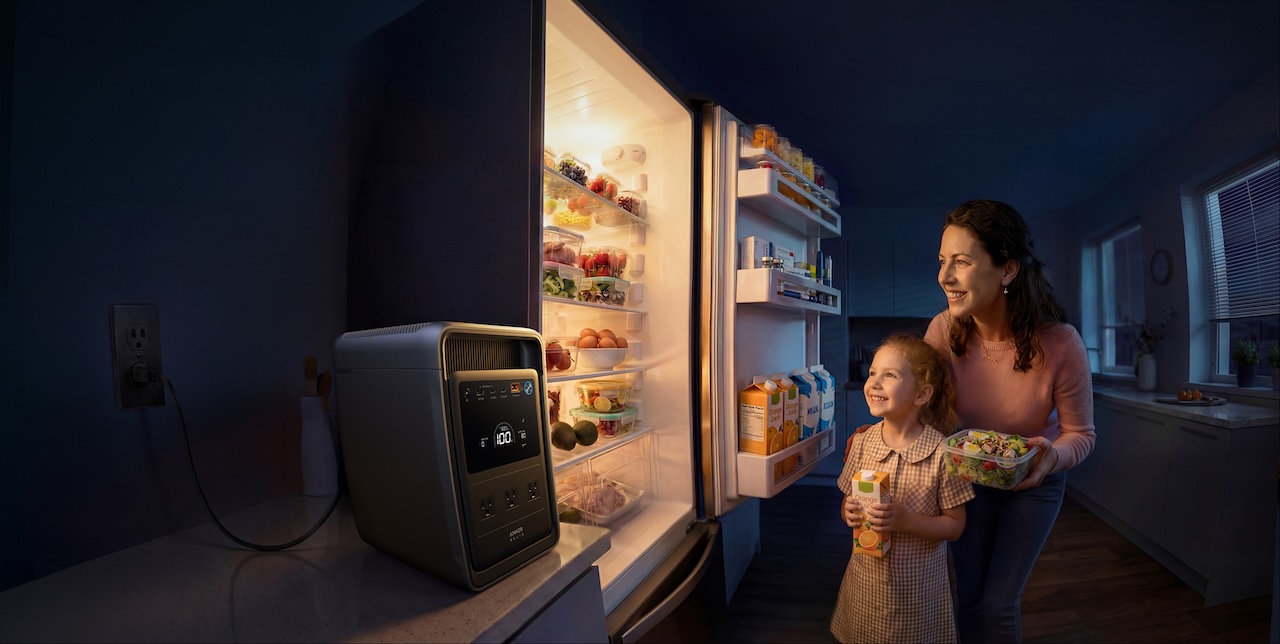 On Anker’s math, a single S2000 should cover the fridge plus rotating essential loads for more than a full day of grid-down living, the difference between throwing out a week of groceries and not noticing the lights blinked.
Built for a corner of the kitchen, not a garage shelf
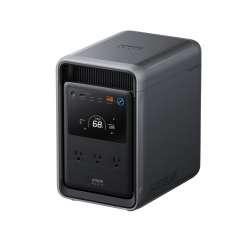
The S2000’s industrial design is unusually deliberate for a power station. At 8.19 × 11.1 × 12.7 inches, Anker says the footprint shrinks by roughly 30 percent versus typical 2kWh units, putting it in 1kWh-class territory for shelf space. The upright form factor is built to tuck flush against a kitchen wall, so it doesn’t claim a slab of counter space.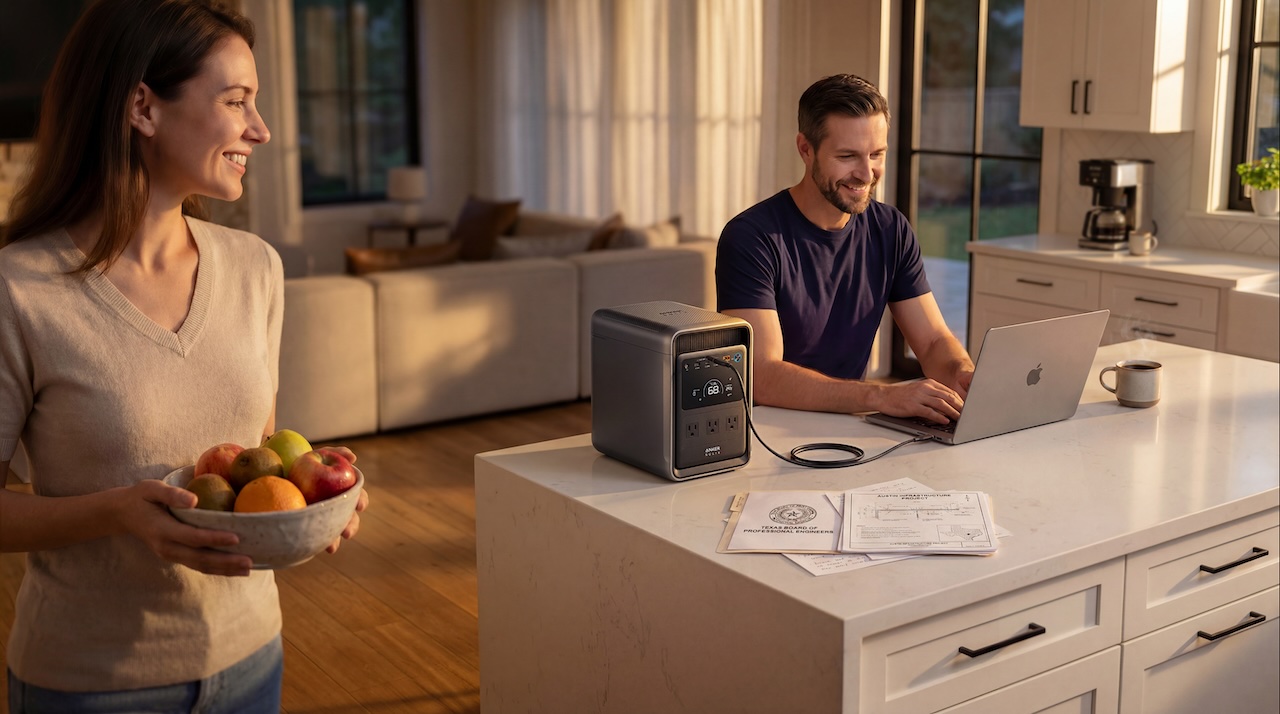
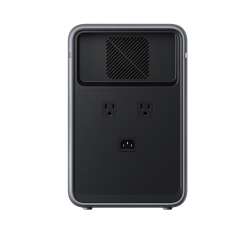
The outlet layout is the bigger tell. The S2000 puts AC outlets on both the front and the back of the chassis, so a fridge or Wi-Fi router can stay plugged in around the rear while phones, lamps, and laptops use the front ports. For an always-on backup unit, that’s a small but meaningful quality-of-life decision.
Storm-season ready
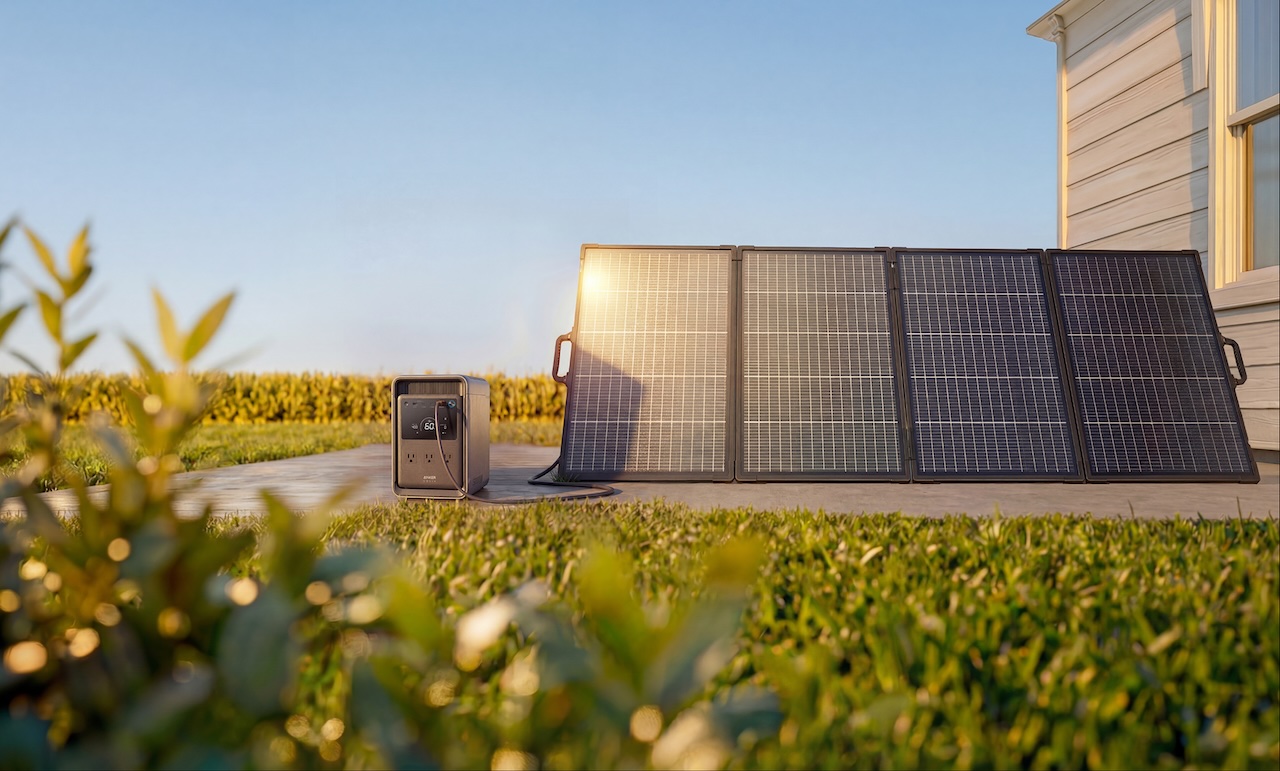
Anker says one 400W panel is enough to top the S2000 off from empty over a single day of decent sun. Pair that with the 1.2-hour AC fast charge to 80 percent, and the unit is built to recover quickly between outages. That matters when outages come in waves rather than as a single long blackout.
The integrated UPS handles the handoff when grid power drops, and the 10,000-cycle / 15-year rating on the 314Ah LFP cells is roughly double what mainstream LFP power stations advertise today.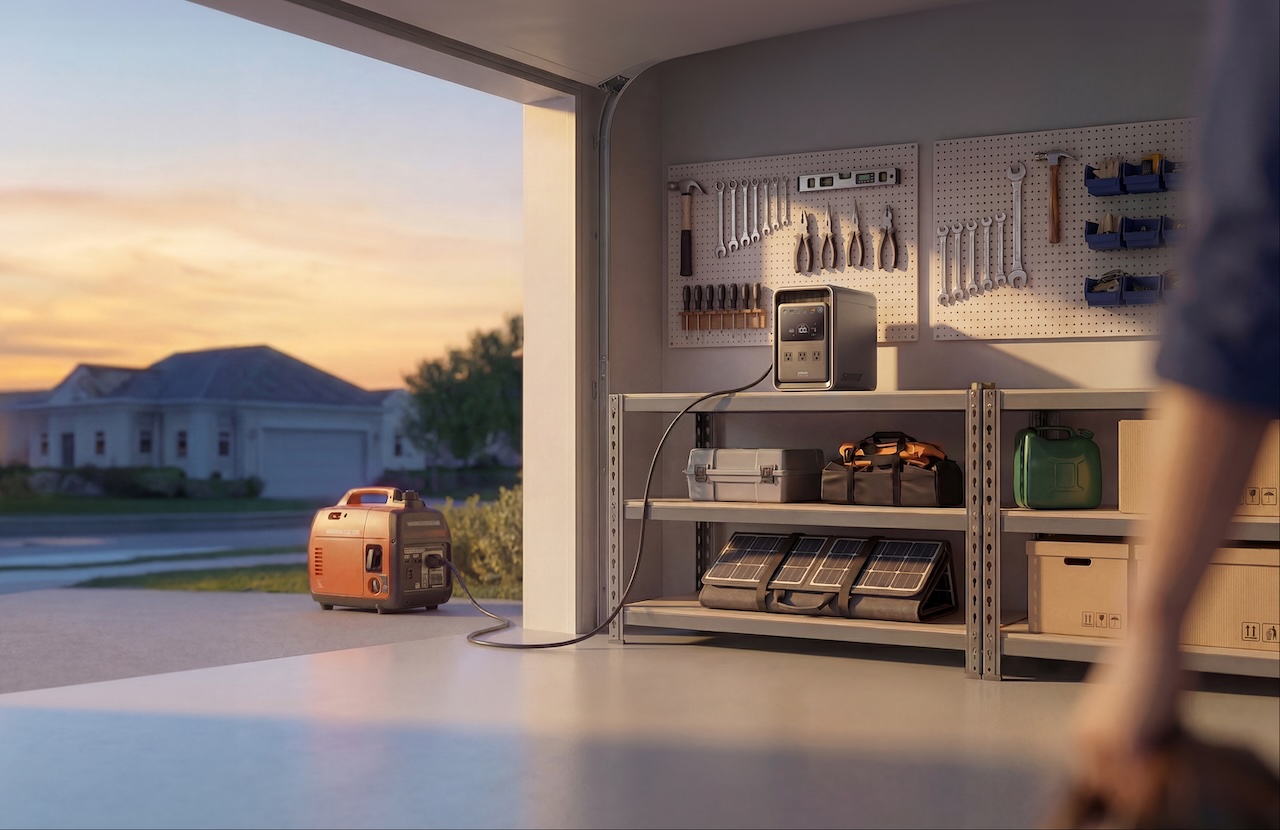
On paper, that cycle rating is where the S2000 quietly pulls away from the field. Most LFP power stations in the 2kWh class advertise 3,000 to 4,000 cycles. Pairing a 10,000-cycle, 15-year claim with 314Ah cells normally seen in utility-scale storage repositions a portable power station as a long-term home appliance, not a multi-year accessory.
How the S2000 stacks up against other 2kWh portable power stations
The S2000’s strongest paper edge against the three most-cited 2kWh competitors is cycle life. The Jackery Explorer 2000 Plus is rated for 4,000 cycles to 70 percent capacity, the EcoFlow Delta 2 Max for 3,000 cycles to 80 percent, and the Bluetti AC200L for 3,000+ cycles. The S2000’s 10,000-cycle / 15-year claim, if it holds up in independent testing, would more than double the working life of any of them at comparable capacity.
The trade-off is AC headroom. Anker’s 1,500W continuous output is lower than the 2,400W to 3,000W ratings on competing units, which matters for buyers who need to run high-draw appliances like a full-size space heater or power tools. Buyers who care most about fridge runtime, idle efficiency, and longevity get a meaningfully different proposition from the S2000.
Price: $599
Where to Buy: Anker
What’s still unclear
Anker hasn’t shared full details on app integration, firmware updates, or whether the S-Series will share an ecosystem with the existing Solarbank home batteries and balcony solar kits. Expandability is also unaddressed in the launch materials. There’s no mention of stackable battery packs or a parallel-connection option, which would be a notable gap for a unit pitched for home backup.