
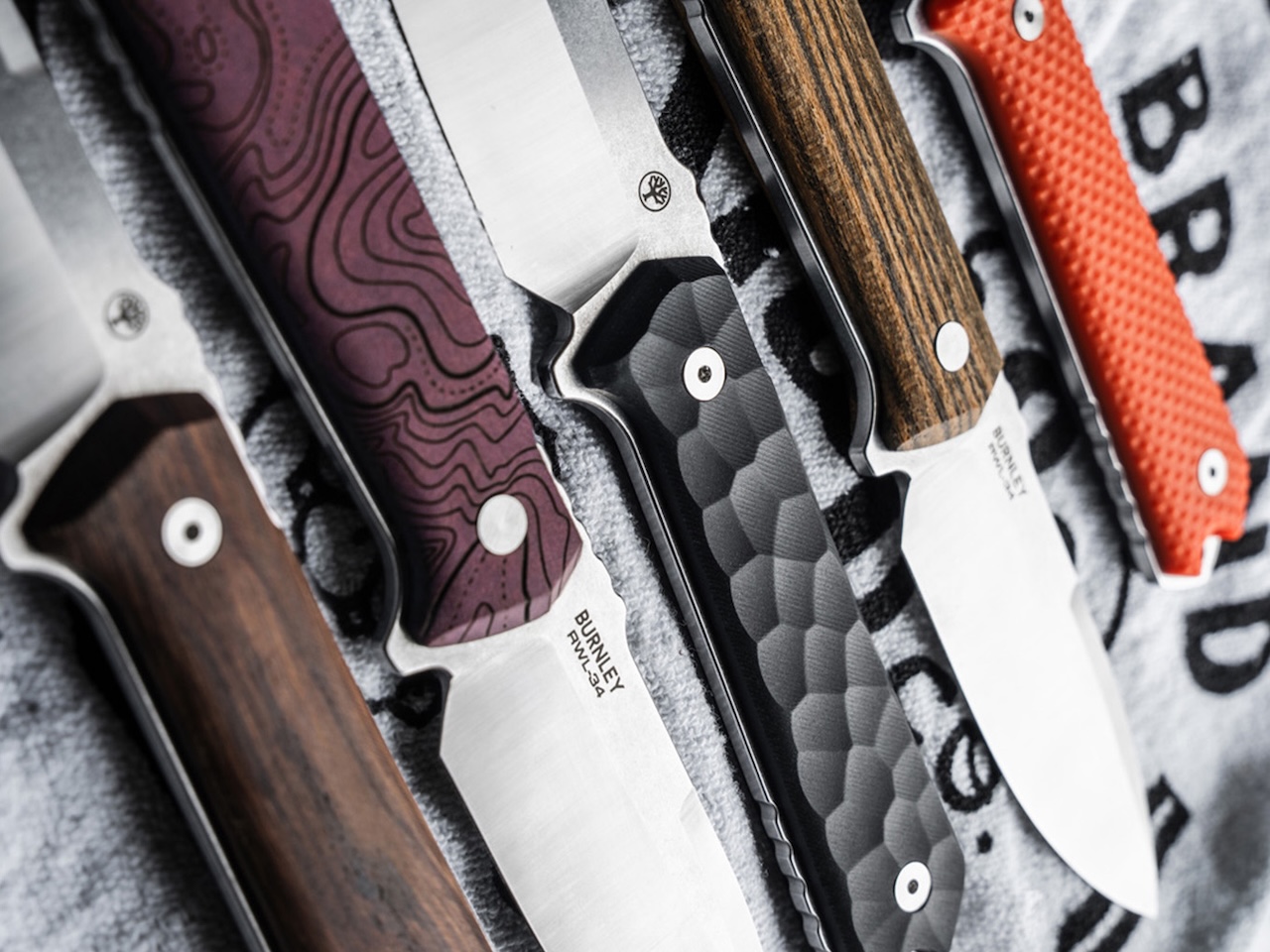
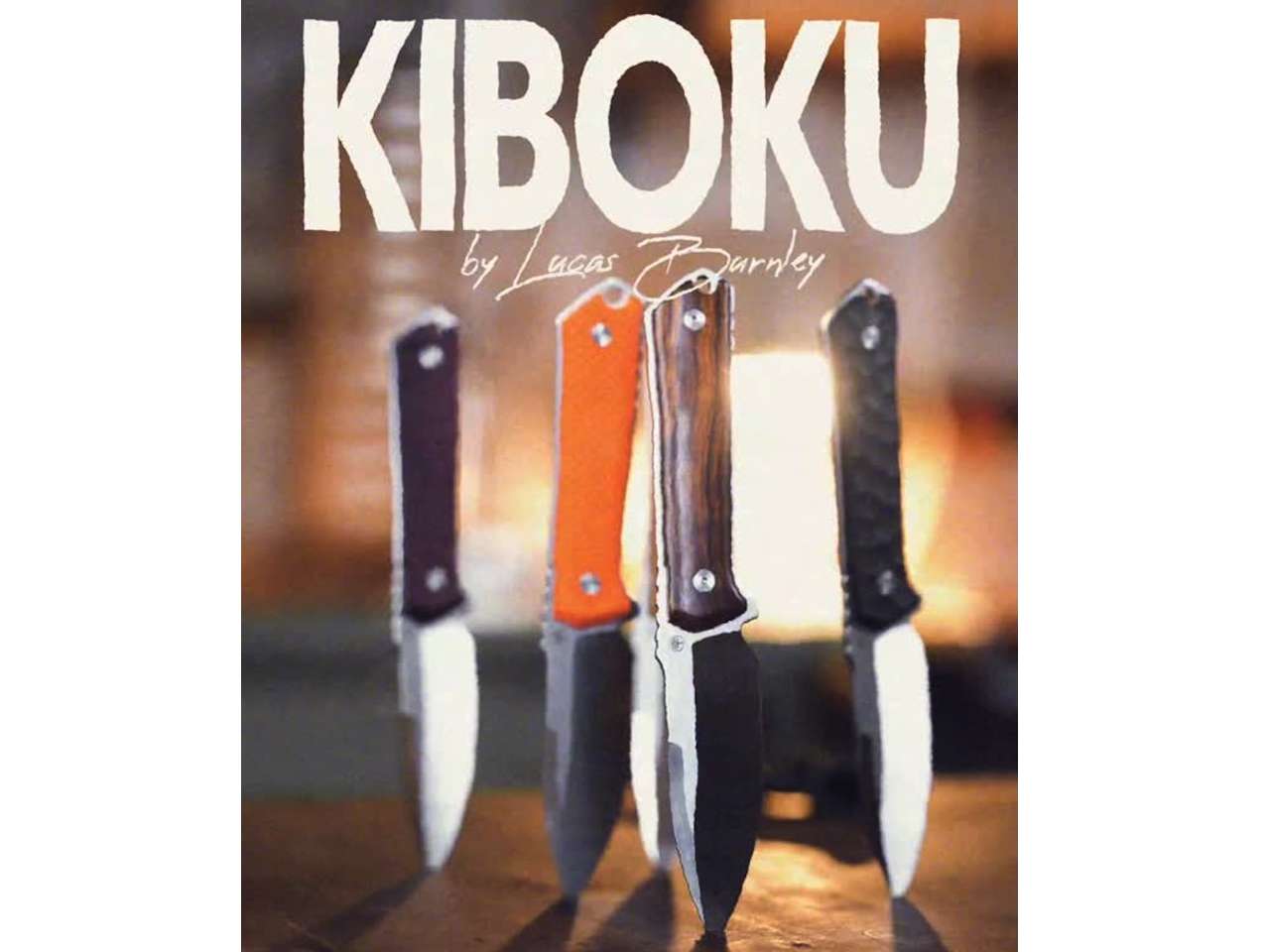
Boker (Böker) just released five new versions of Lucas Burnley’s Kiboku fixed blade. All five share the same RWL-34 blade. What changes is the handle, from bright orange G10 to Sonoran desert ironwood. The five variants are the Bocote, G10 Orange, Richlite Red Topo, Desert Iron Wood, and Richlite Black Rock Pattern. They are made at Boker’s Solingen workshop in Germany, which has been making knives since 1869. The Kiboku is the brand’s latest knife built with Burnley, a knifemaker based in Oregon.
If you know Burnley’s other Boker knives (the Kihon, the Kwaiken, or the BFF Packlite), the Kiboku will feel familiar but a bit more refined. Böker calls it “tactically inspired,” but the shape leans closer to an everyday carry, camping, or bushcraft knife than anything aggressive. The brand’s pitch shows up on every variant’s product page: “Perfection is the illusion that begins in small details and vanishes in countless nuances.”
In plain terms, it is a knife built for balance and feel first, specs second.
What every Kiboku has in common
Every Kiboku starts with the same parts. The blade is a full-tang drop point made from RWL-34, a stainless steel made by Damasteel, a Swedish company. Böker hardens it to 62 HRC ± 1. That gives you an edge that lasts, good rust resistance, and a steel that is still easy to sharpen at home.
Burnley adds a two-tone finish, a swedge (a beveled edge along the spine), and jimping (small grooves) for your thumb. A Kydex sheath comes in the box, sized to clip to a belt or drop into a pocket. The handle scales are screwed on, so they are easy to clean or swap. That last part is what Böker pushes hardest: the Kiboku is built to be used and personalized, not displayed on a shelf.
So why launch five versions instead of one or two? Because the only real change between them is the handle, and that is the whole idea.
The Five Variants
Kiboku Bocote. The most traditional pick. Bocote is a hardwood from Mexico and Central America. It has a striped, zebra-like grain and a warm gold tone that gets richer with use. Böker calls it “hard, durable, unique.” Pick this one if you want the Kiboku to feel more like a custom knife than a factory one.
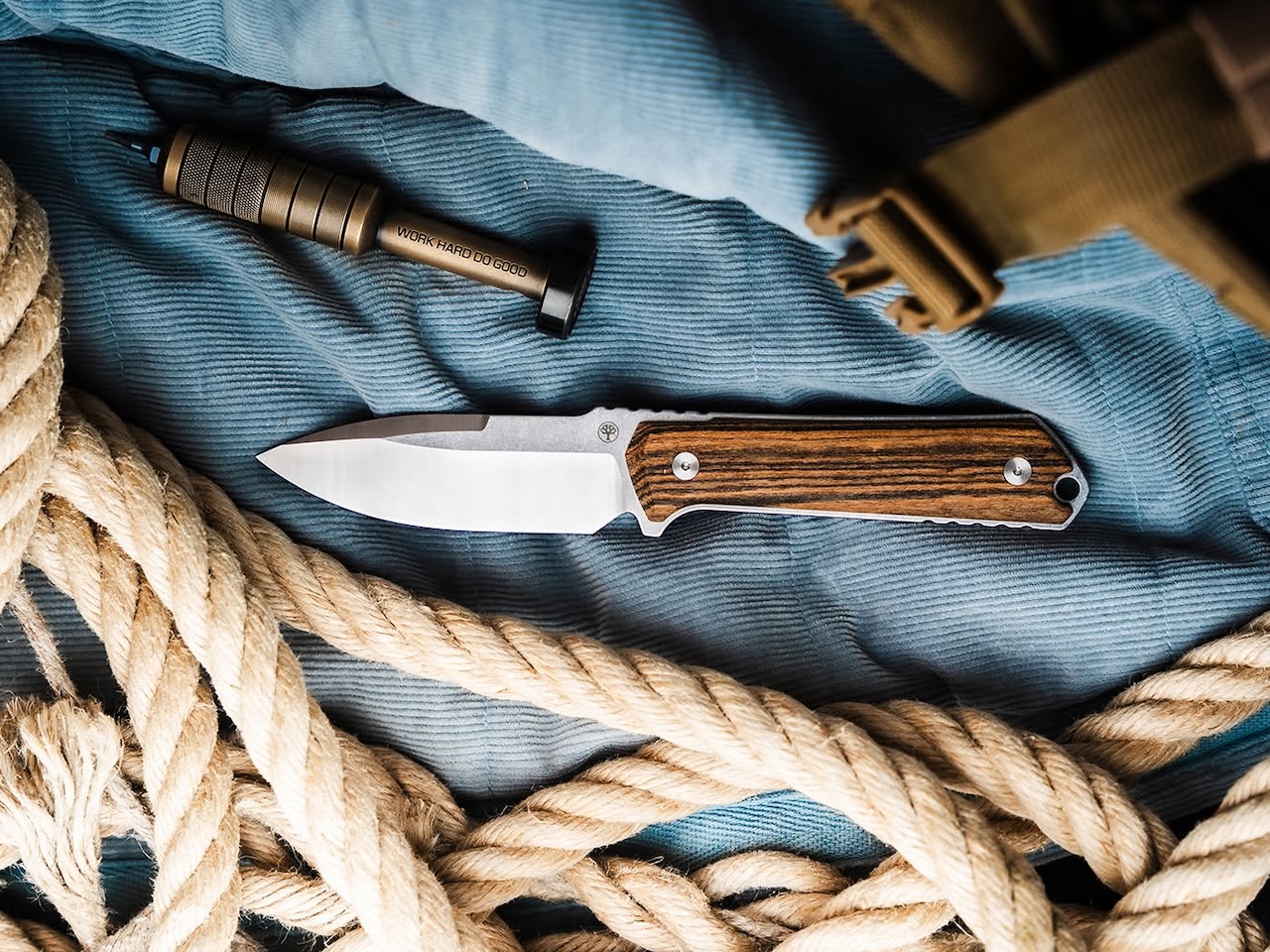
Price: $309
Where to Buy: Boker
Kiboku G10 Orange. The work-ready entry. The G10 handle is bright orange with a non-slip pyramid texture. Böker pitches it as the best mix of grip, visibility, and toughness. Drop it in leaves, snow, or a tackle box and you can still spot it. If you plan to use the Kiboku outside, this is the one to buy.
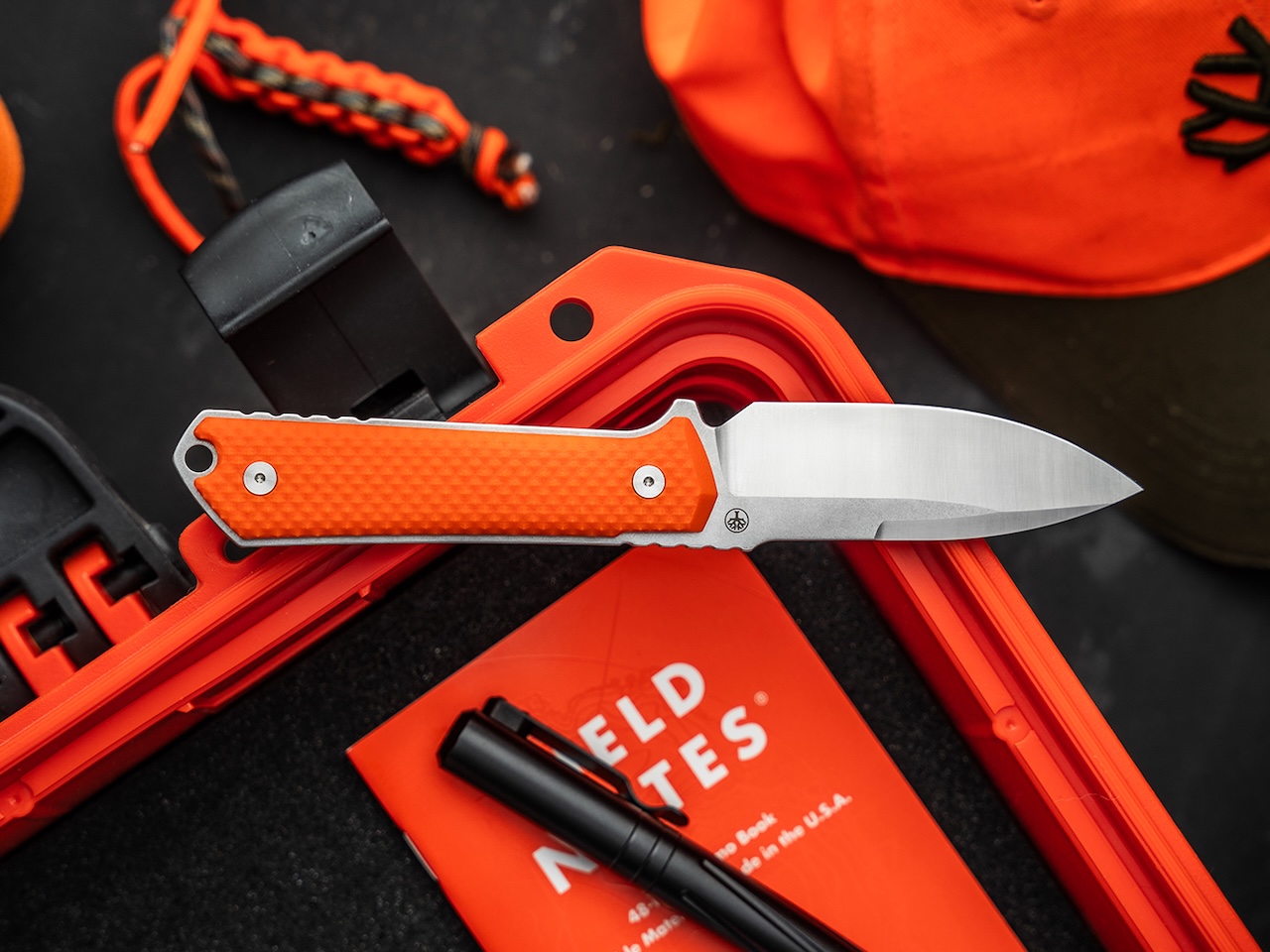
Price: $299
Where to Buy: Boker
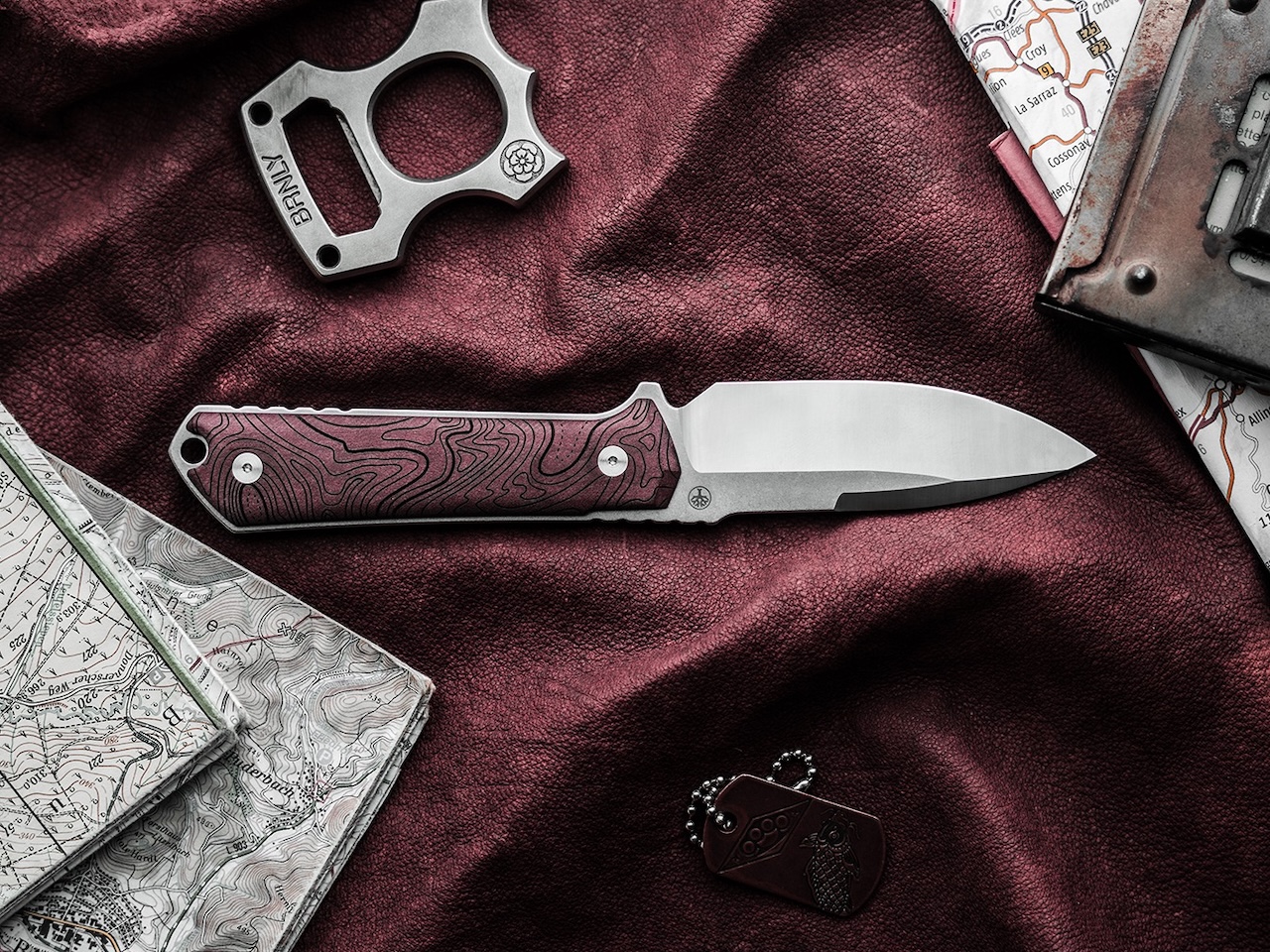
Kiboku Richlite Red Topo. The most photogenic version. Richlite is a composite made from FSC-certified or recycled paper soaked in resin. Böker also uses it on the Daily Knives AK1. Here it is cut with a 3D map-style texture and dyed deep red. It is the version most likely to take over Instagram feeds. That fits, since Böker first teased the lineup on Instagram.
Price: $309
Where to Buy: Boker
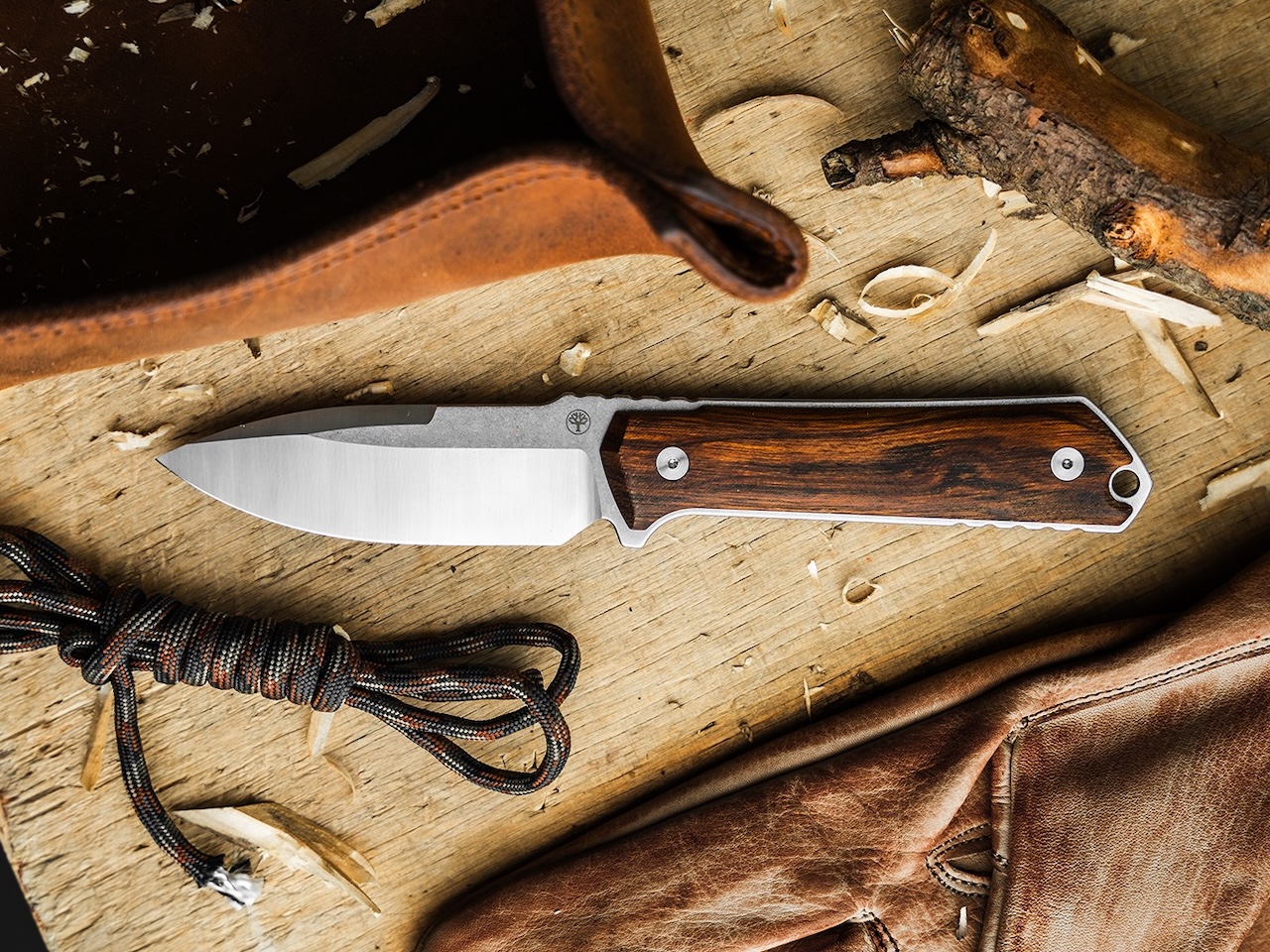
Kiboku Desert Iron Wood. Desert ironwood from the Sonoran is one of the densest, heaviest woods in the world. The grain swirls, and no two pieces look the same. Custom knifemakers have used it for years, so seeing it on a sub-€200 production knife is rare. If the Bocote is the everyday wood pick, this is the collector’s wood pick.
Price: €199.95 (About $200)
Where to Buy: Boker
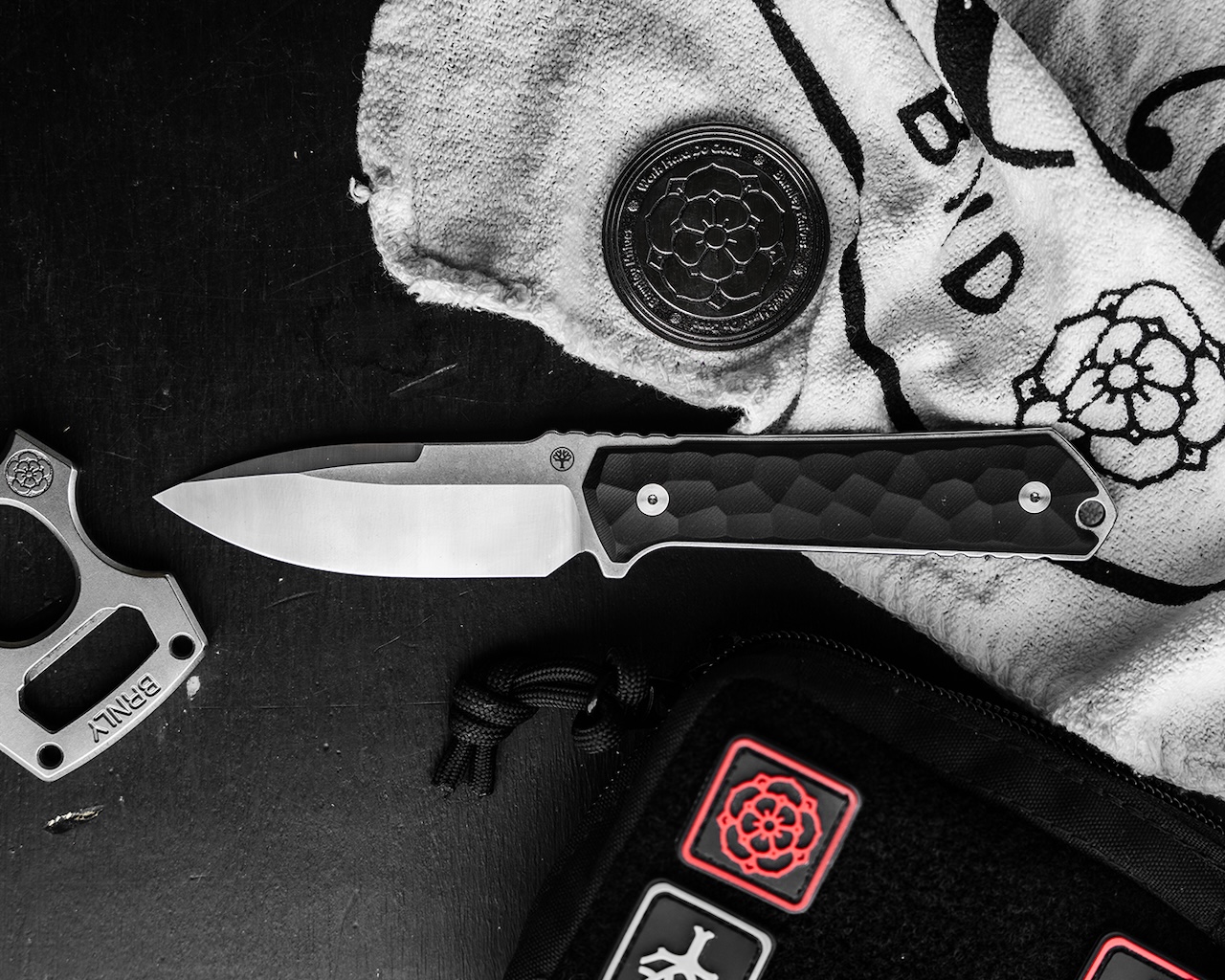
Kiboku Richlite Black Rock Pattern. The stealth pick. Black Richlite is paired with a rock-style 3D texture. The result looks quiet in low light but feels great in hand. Böker calls Richlite lightweight and moisture-resistant, which suits the Black Rock Pattern’s clean, all-conditions look.
Price: $309
Where to Buy: Boker
Prices run from €184.95 for the G10 Orange up to €199.95 for the Desert Iron Wood. The three Richlite and Bocote variants all sit at €189.95. US buyers can find the same models at Knife Center for about $254 to $280. That keeps the whole family under €200 (and under $300). It puts the Kiboku in a competitive spot. It costs more than budget fixed blades, but less than custom shops that use the same RWL-34 steel and exotic woods.
Why this lineup matters
Two things stand out about how Boker is rolling out the Kiboku.
First, the base knife is simple on purpose. A drop-point full tang in RWL-34 with a Kydex sheath is a recipe knifemakers have worked on for years. What Burnley has done is clean up the small details, like the swedge and the jimping. The result ships from Solingen with the fit and finish you usually only get from a custom maker.
Second is the modular handle plan. Every variant uses the same hardware and screw-on scales, so the Kiboku is really one knife with five personalities. Since the scales come off, the design fits with Böker’s other modular-handle families like the Daily Knives AK1 and BFF Packlite. Both have plenty of aftermarket and first-party scale options.
For Gadgeteer readers, the choice is simple. Want a do-everything outdoor blade? Pick the G10 Orange. Want a quiet EDC that looks good on a desk or in a leather sheath? Go Bocote or Desert Iron Wood. Want the Kiboku that will stop people mid-conversation? The Richlite Red Topo is hard to miss.
The full Kiboku series is up on Böker’s German store now. The Bocote variant is listed to ship from June 19, 2026.



Gadgeteer Comment Policy - Please read before commenting
I had no idea the iron wood is considered premium in Europe. I’m used to seeing it come standard on a Buck.