Bone conduction headphones don’t plug your ear canal. Instead, they transmit vibration through your cheekbones, which means you can keep more awareness of traffic, coworkers, or trail chatter while still getting your playlist. That trade-off is exactly why searches spike as summer training ramps up, but it also explains why these won’t satisfy anyone chasing “big bass” first.
In 2026, the market splits into three lanes: Shokz flagship models that push loudness, comfort, and stability (and set the price ceiling), swim-first options that prioritize onboard storage and waterproofing because Bluetooth and water still don’t mix, and cheaper Bluetooth-only alternatives that nail the open-ear idea but cut corners on fit, mics, and long-term durability.
Below are five real picks worth your money right now, a quick comparison table, the FAQs people actually ask, and the uncomfortable truths you should know before you buy.
Quick comparison
| Model | Best for | IP rating | Onboard storage | Battery (rated) | MSRP (USD) |
|---|---|---|---|---|---|
| Shokz OpenRun Pro 2 | Overall flagship, running | IP55 | No | ~12 hrs | $179.95 |
| Shokz OpenSwim Pro | Swimming | IP68 | 32 GB | ~9 hrs BT / 6 hrs MP3 | $179.95 |
| Shokz OpenMove | Budget (under $100) | IP55 | No | ~6 hrs | $79.95 |
| Shokz OpenComm 2 UC | Calls (Zoom/Teams) | IP55 | No | ~16 hrs talk | $199.95 |
| Suunto Wing | Cyclists, low-light runs | IP67 | No | ~10 hrs (+20 w/ power bank) | $199 |
1) Best overall flagship: Shokz OpenRun Pro 2 (DualPitch™)
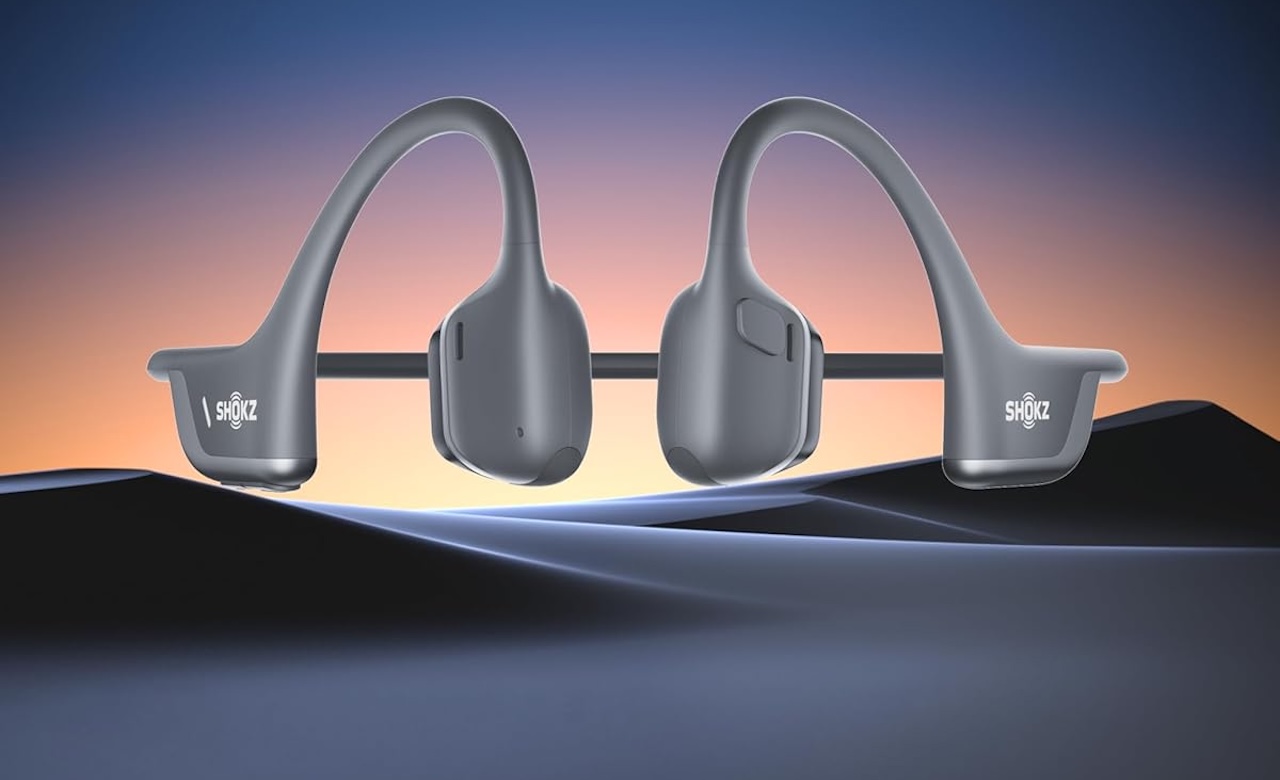
If you want the “best at nearly everything” bone conduction headset in 2026, this is it. The OpenRun Pro 2 is the model most buyer’s guides treat as the default recommendation, and for good reason: it’s the one that feels closest to a premium wireless sports headphone without closing off your ears.
Price: $179.95
Where to Buy: Amazon
Why it stands out (the DualPitch™ advantage)
Shokz’s DualPitch™ approach (officially their 10th-generation bone conduction tech combined with a DirectPitch™ air-conduction driver) is basically an admission of bone conduction’s biggest weakness: bass. By pairing a bone-conduction transducer with a small air-conduction driver, the OpenRun Pro 2 does a better job with kick drums and low-end texture than older, single-driver bone conduction sets, all without sealing your ear canal.
Who it’s for
Outdoor runners and cyclists who want awareness and the best audio you can realistically get from bone conduction, and anyone who wants the safest “spend once, cry once” pick.
The trade-off
This is the premium-price ceiling for the category. You’re paying for refinement (stability, comfort, and a sound profile that’s as “full” as bone conduction can be), not for audiophile detail.
2) Best for swimming: Shokz OpenSwim Pro (IP68 + onboard storage)
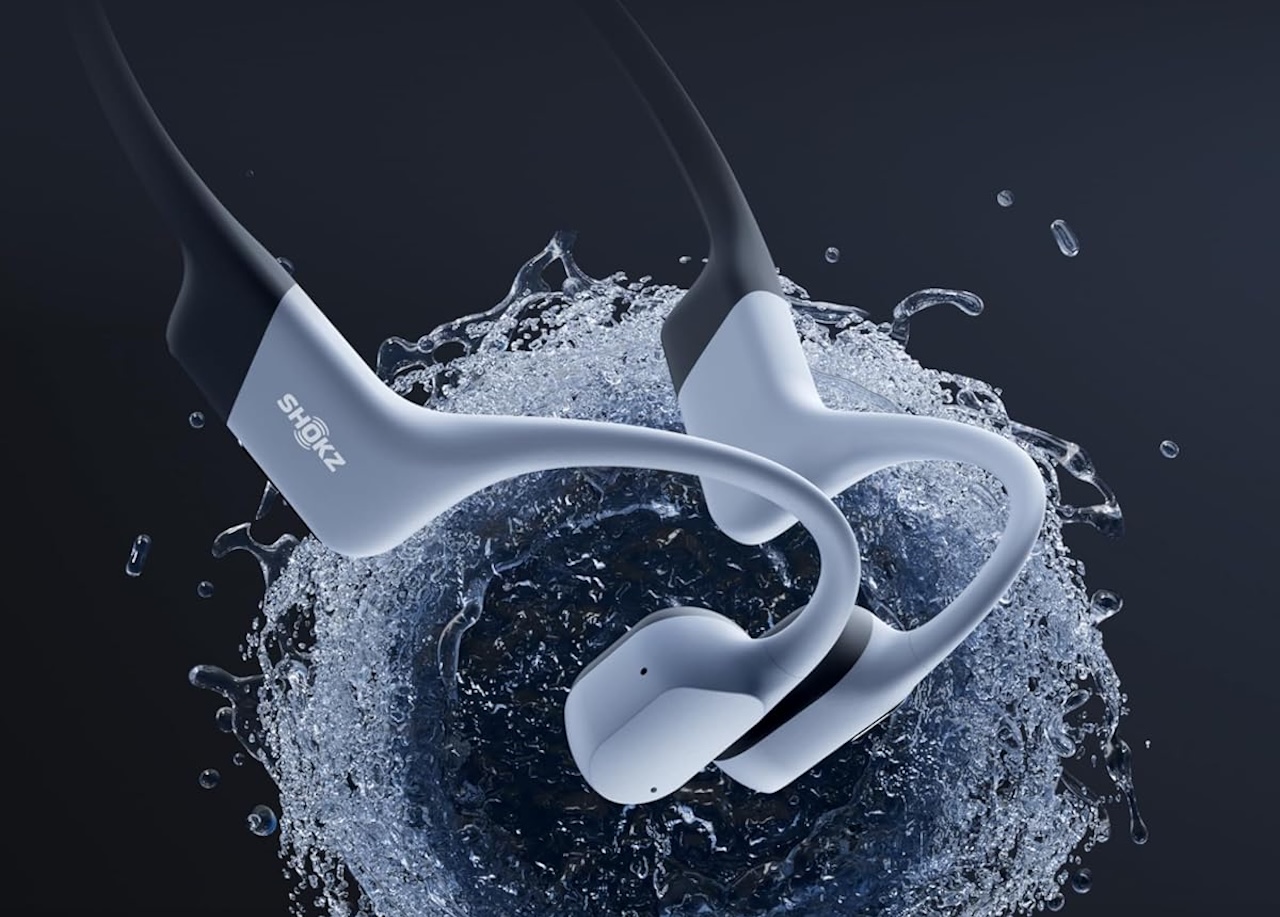
If your workouts include laps, the rules change. Bluetooth doesn’t travel through water, which is why swim-first bone conduction headphones with onboard storage still matter in 2026.
Price: $299.95
Where to Buy: Amazon
Why it’s the swim pick
- IP68 sealing, Shokz rates it for submersion up to 2 meters for up to 2 hours.
- 32 GB of onboard storage (room for about 8,000 songs) is the real feature: load audio onto the headset and leave your phone poolside.
- Dual-mode design: Bluetooth on land, MP3 mode in the water. Shokz is explicit that Bluetooth doesn’t work underwater, you must switch to MP3 mode before you dive in.
- Rated battery: 9 hours Bluetooth / 6 hours MP3.
Bluetooth limitation, explained simply
Water disrupts Bluetooth signal. Even “strong” Bluetooth can become glitchy the moment your head goes under. Swim-specific models solve that by making your music local.
Who it’s for
Swimmers, triathletes, and anyone who trains in the pool consistently, plus people who want one headset that can handle land workouts and dedicated swim sessions.
The trade-off
You’ll be managing files and playlists more than you do with pure streaming earbuds. Convenience is the price of reliable underwater playback.
For poolside listening that isn’t on your head, see 7 Best Waterproof Bluetooth Speakers for Summer 2026.
3) Best budget pick (under $100): Shokz OpenMove
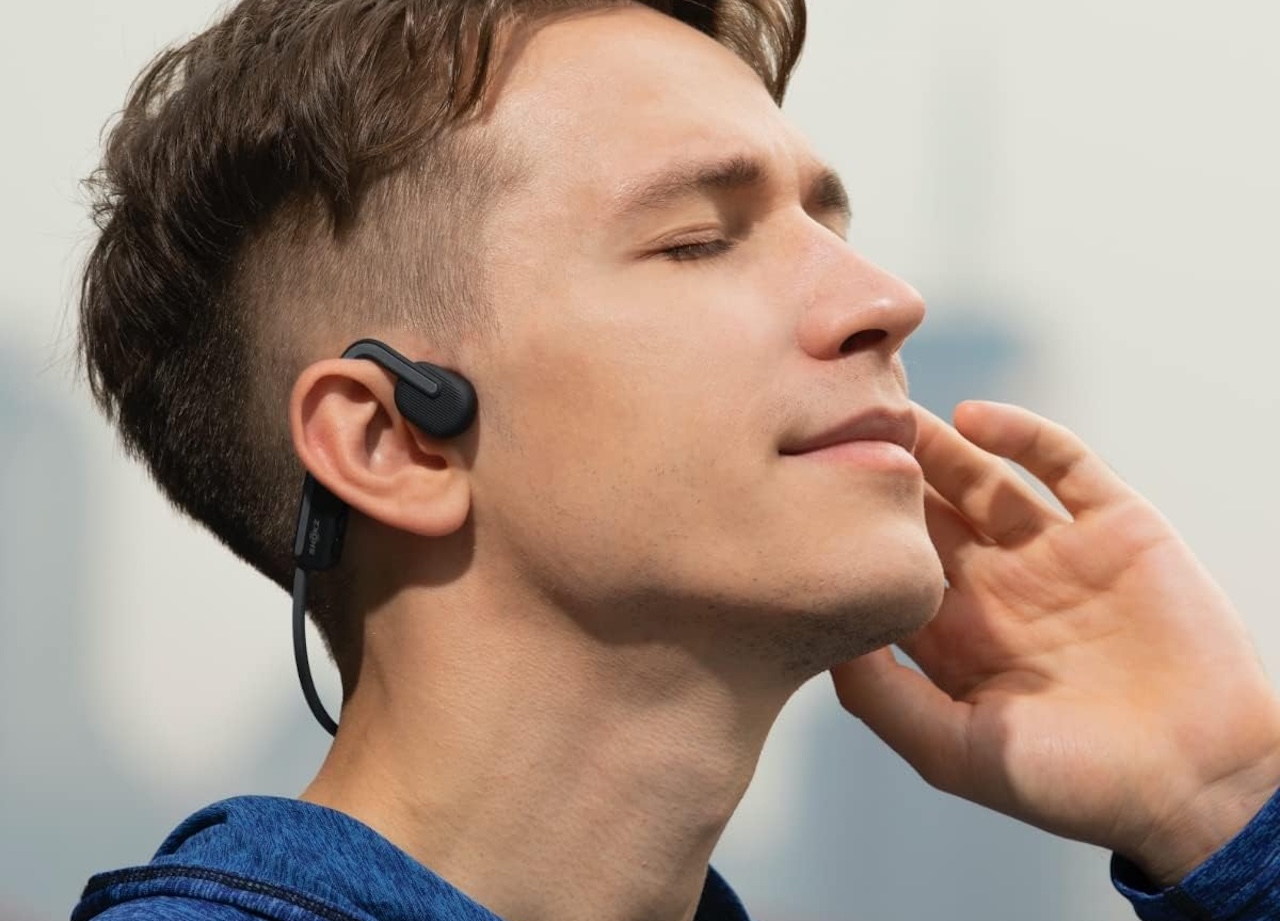
Yes, there are plenty of sub-$100 bone conduction options now. The problem is that many off-brand models are “okay” until you rely on them daily, then you notice where the savings went. The Shokz OpenMove is the rare budget pick that doesn’t feel like a downgrade for the basics.
Price: $54.95
Where to Buy: Amazon
Why it’s the budget pick
It’s the cheapest current-gen Shokz. You get the same proven titanium-band fit and the same app support as the pricier models, just with a single-driver design, USB-C charging, and a shorter rated battery life.
Where budget models (including this one) cut corners
- Fit stability, fine for runs and walks, less locked-in for sprints, jump rope, or quick head turns.
- Mic quality, usable for casual calls, thinner-sounding than the OpenComm 2.
- Bass and max volume, noticeably behind the OpenRun Pro 2’s DualPitch.
- Battery: about 6 hours vs. roughly 10–12 on the flagship.
Who it’s for
First-time buyers who want to test whether bone conduction works for their head shape, and anyone who mostly listens at moderate volume and takes calls rarely.
Buying tip
Prioritize returns and warranty over minor spec differences when shopping in this bracket. Comfort and fit matter more than “extra” features.
If you’re putting together a kit, our 10 Digital EDC Tech Essentials We’d Never Leave Behind (2026) roundup is a good companion read.
4) Best for calls (Zoom/Teams): Shokz OpenComm 2 UC
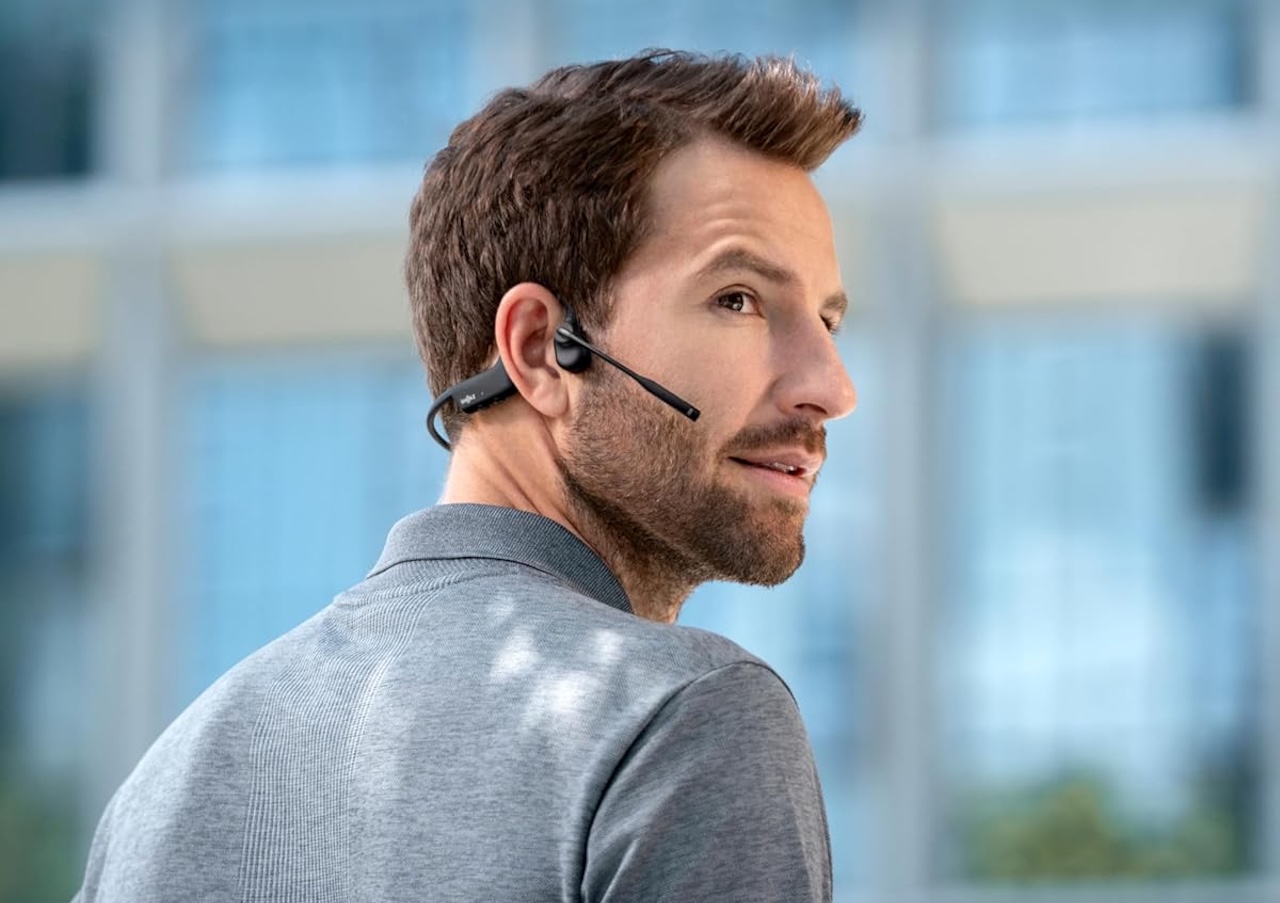
Bone conduction is great for awareness, but calls are where most consumer models fall apart. The “speakerphone” complaint usually comes from two issues: weak noise reduction and mics that over-prioritize ambient sound. The OpenComm 2 UC is the rare bone conduction headset purpose-built for calls.
Price: $159.95
Where to Buy: Amazon
Why it’s the calls pick
- A noise-cancelling boom mic that flips up out of the way when you’re not on a call, a real boom, not a hidden array.
- The bundled Loop120 USB-A/USB-C dongle (the 2025 Upgrade model ships with the new Loop120) gives plug-and-play certified compatibility with Microsoft Teams and Zoom.
- About 16 hours of rated talk time, so it survives back-to-back meeting days.
Who it’s for
Hybrid workers who walk-and-talk on Teams/Zoom, sales/support reps on calls all day, and anyone who wants an open-ear headset for commute calls.
The trade-off
The boom mic is excellent for voice but adds a visible arm that some users won’t love for outdoor runs. Music playback is fine but a step behind the OpenRun Pro 2.
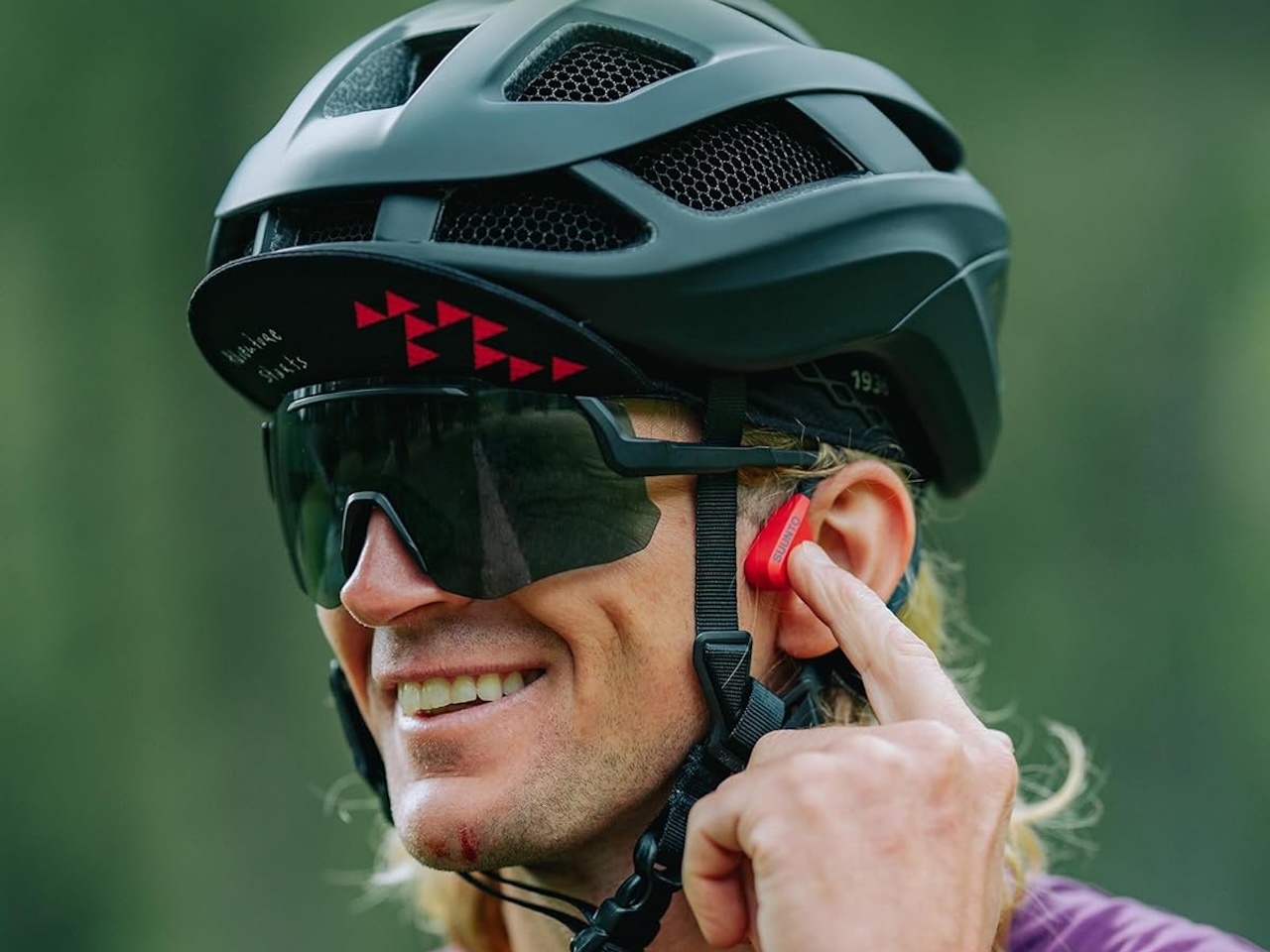
5) Best for cyclists and low-light runners: Suunto Wing
Not everyone wants a Shokz. The Suunto Wing is the most interesting non-Shokz bone conduction headset on the market right now, and it’s built specifically for the people most likely to need open-ear awareness.
Price: $99
Where to Buy: Amazon
Why it stands out
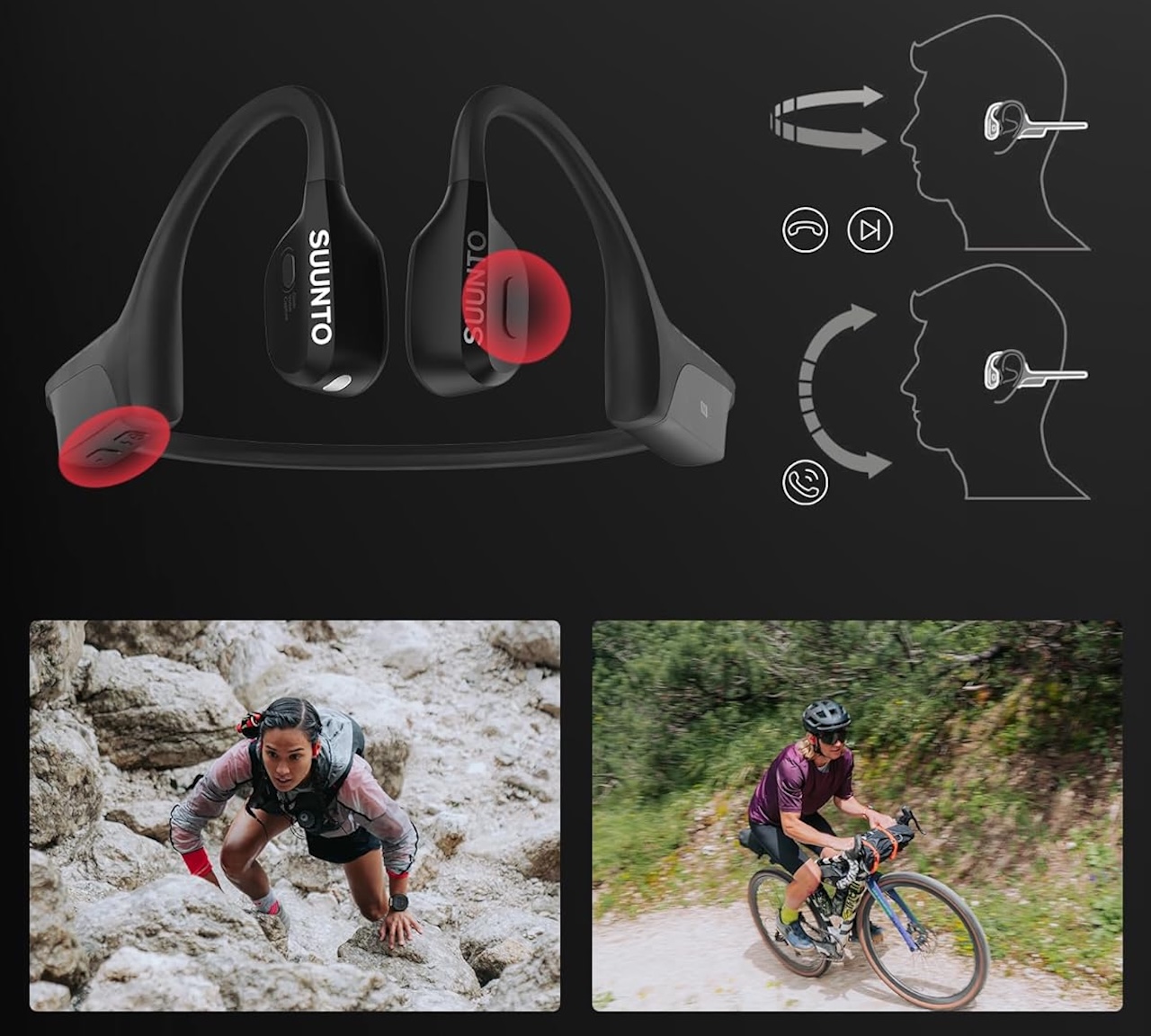
The Suunto Wing is built around features the rest of the category mostly ignores. LED safety lights sit on both arms (front and rear), with constant-on or blinking modes you can configure in the Suunto app, which makes it the obvious pick for early-morning or evening sessions. Head-gesture controls let you accept calls and skip tracks with a nod or shake, a small thing that becomes a big thing the moment your hands are on bars. It also ships with a portable power bank that adds 20 hours on top of the headset’s rated 10, with a 10-minute quick charge worth 3 hours of playback, so an overnight bikepacking trip isn’t out of reach. Durability is a step up from most Shokz models too: the IP67 rating handles rain, sweat, and short submersion (1 meter for up to 30 minutes), and Suunto rates the design for wind-noise resistance up to roughly 30 km/h, which is genuinely useful when you’re moving at cycling speeds.
Who it’s for
Road and gravel cyclists, early-morning and evening runners, and anyone who values visibility as much as audio.
The trade-off
Sound quality is solid but not at OpenRun Pro 2 level, and the price is firmly in flagship territory. You’re paying for the LEDs, the head-gesture controls, and the power bank, not for better music.
How to choose: match the headset to where you actually train
The best bone conduction headphones aren’t the ones with the highest numbers, they’re the ones that match where you train.
If you run on roads or walk in the city, prioritize stability and wind-resistant mics (flagship-tier: OpenRun Pro 2). If you’re on trails, prioritize secure fit and comfort over chasing “more bass.” For gym or treadmill sessions, midrange clarity and comfort win, and you don’t need max volume. If you ride bikes or train in low light, visibility (Suunto Wing) is the upgrade. And if you swim, waterproofing plus onboard storage (OpenSwim Pro) beats any Bluetooth spec.
Tracking recovery alongside training? Pair any of these with one of our 6 Smart Rings Worth Wearing to Bed and to the Gym.
The uncomfortable truths (read before you buy)
Bone conduction is a compromise. A smart one, but still a compromise.
Sound leakage is real: crank volume in a quiet office and people nearby can hear it. Bass also has limits; DualPitch helps, but you’re still not getting sealed-earbud low end. Fit varies by head shape, and small differences in cheekbone placement and band tension can make the same headset feel perfect or annoying. And comfort depends on volume: higher volume means stronger vibration, which can feel fatiguing over long sessions.
FAQ
Are bone conduction headphones safe for your hearing?
They can be safer than sealed earbuds at the same perceived loudness, because they don’t pressurize your ear canal, but they’re not magic. Loud is still loud, and prolonged high-volume listening can still damage hearing. The bigger safety win is situational awareness for runners and cyclists.
Do bone conduction headphones work if you have hearing loss?
They can help people with certain types of conductive hearing loss because they bypass the outer/middle ear. They generally don’t help with sensorineural (inner-ear) hearing loss. Talk to an audiologist before treating them as a hearing aid.
Do they leak sound?
Yes, especially at higher volumes. In a quiet office or library, people near you can hear what you’re listening to. Newer models reduce leakage but don’t eliminate it.
Can I use them for swimming?
Only models rated IP68 with onboard storage are a real swim option. Bluetooth signal doesn’t travel through water reliably, so streaming from a phone at the pool edge won’t work once your head is submerged.
Are they good for running?
This is the use case they’re built for. Open ears mean you hear traffic, dogs, and other runners. The Shokz OpenRun Pro 2 is the default running pick; the Suunto Wing is the better choice if you run in low light.
Do they work with glasses?
Mostly yes, the band sits behind the head and the arms rest just in front of the ear, not on top of it. Thick temple arms on sunglasses can cause minor pressure points; thin frames are a non-issue.
Final sorting decision
If you want the best “do-everything” pick, go flagship (Shokz OpenRun Pro 2). If you swim, get a swim-first model with storage (Shokz OpenSwim Pro). On a strict budget, the Shokz OpenMove is the safest sub-$100 entry. If your week is mostly calls, the Shokz OpenComm 2 UC is purpose-built. And if you ride or train in low light, the Suunto Wing earns its premium.
The win in 2026 isn’t chasing the highest spec sheet. It’s picking the open-ear headset that fits your actual training environment, so you’ll wear it consistently all summer.
For what else is launching this month, see 10 best new gadgets to buy this week (May 2026).