
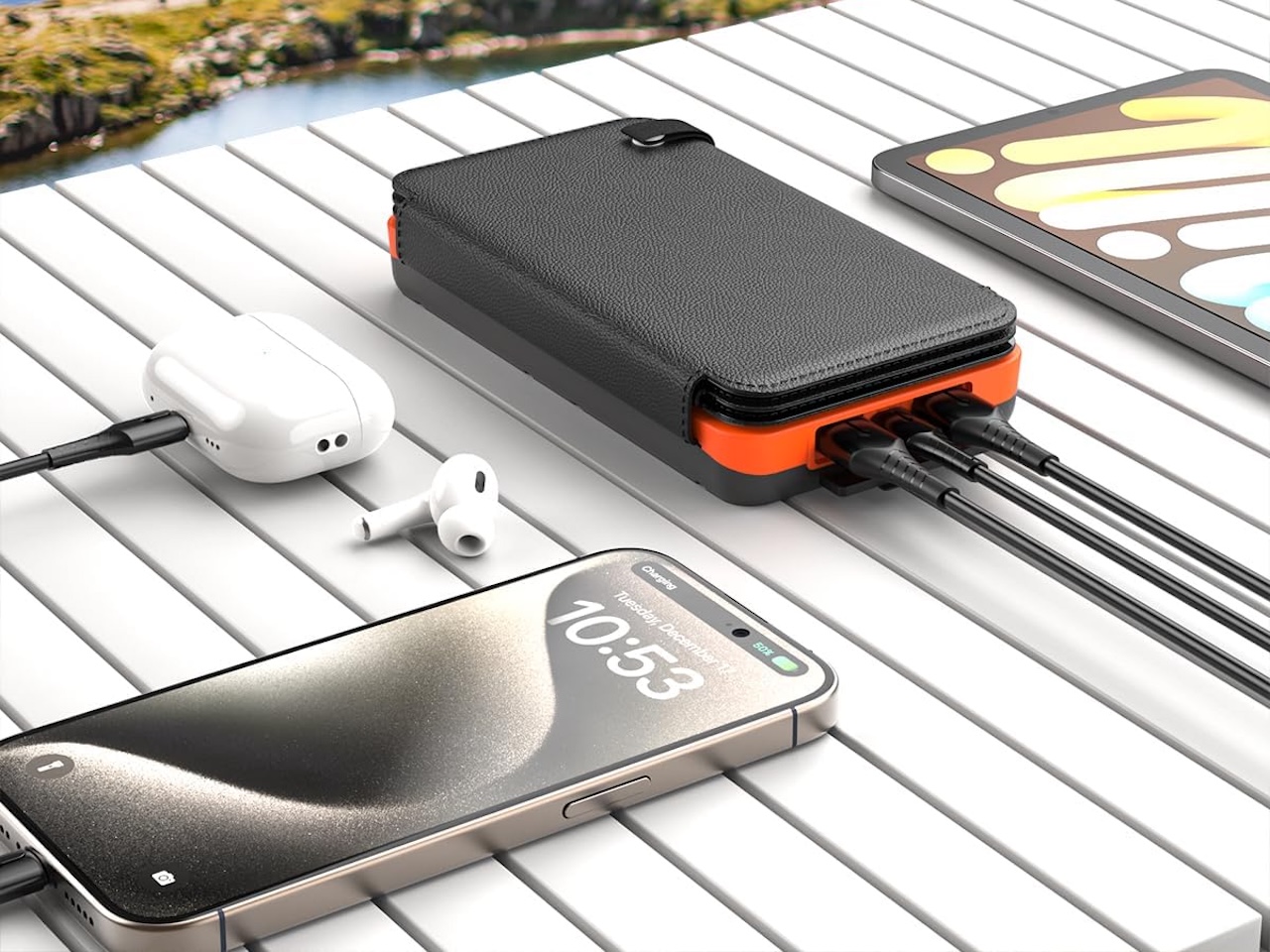
Memorial Day weekend kicks off peak outdoor season, from coastal trail runs to multi-day basecamps and weekend road trips, and the device most likely to die on you out there is still your phone. A solar power bank solves the math by stacking a usable battery and a built-in panel into a single piece of kit, so you can leave the trailhead at full charge and let the sun claw back some of what you burn through the day.
The catch is that not every solar bank does the solar part honestly. Panel wattage, real capacity in watt-hours, IP ratings, and how each unit handles USB-C all vary wildly. A cheap fold-out from a no-name brand will happily sell you four panels that deliver almost no measurable charge under a clear sky, and a 25,000 mAh sticker means very little if the battery is wrapped in a flimsy shell or paired with a single legacy micro-USB input.
This guide ranks five integrated units across day-hike, basecamp, mid-trip, budget, and premium use cases. Lock in the right one before the long weekend, top it up from the wall the night before you leave, and treat the panel as a top-up that buys you extra runtime, not a substitute for a real charging plan.
What a solar power bank actually is
A solar power bank fuses a lithium-ion battery and a small photovoltaic panel into one shell. That’s different from carrying a separate folding panel plus a battery pack, where you can size up the panel for faster charging and swap the battery for a fresh one. Integrated units trade peak wattage for convenience, which is why they’re great for emergencies and lighter trips but slower than a dedicated panel at basecamp.
How we sorted the field
The four numbers that matter most are panel wattage under direct sun, real capacity in Wh (not just headline mAh), IP rating for rain and dust, and the weight-to-charge ratio you’ll feel after mile ten. USB-C PD output and pass-through charging are the tiebreakers.
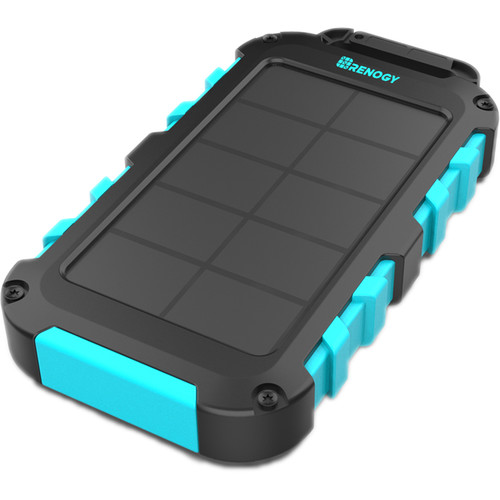
Day-hike pick: Renogy E.POWER 10,000 mAh
Confirmed Specs: 10,000 mAh / 37 Wh / IP64 splash-resistant / dual USB-A output, micro-USB input / built-in flashlight and carabiner
Price: From $34.99
Where to Buy: B&H | Ebay
The Renogy E.POWER is a longstanding integrated unit that prioritizes ruggedness over headline specs. The IP64 rating handles rain and splashes from any direction but isn’t built for submersion, so treat creek crossings with respect. The panel will claw back a useful emergency phone recharge during a lunch stop, not a full refill. No USB-C PD here, which is the main reason to look elsewhere if fast top-ups matter to you.
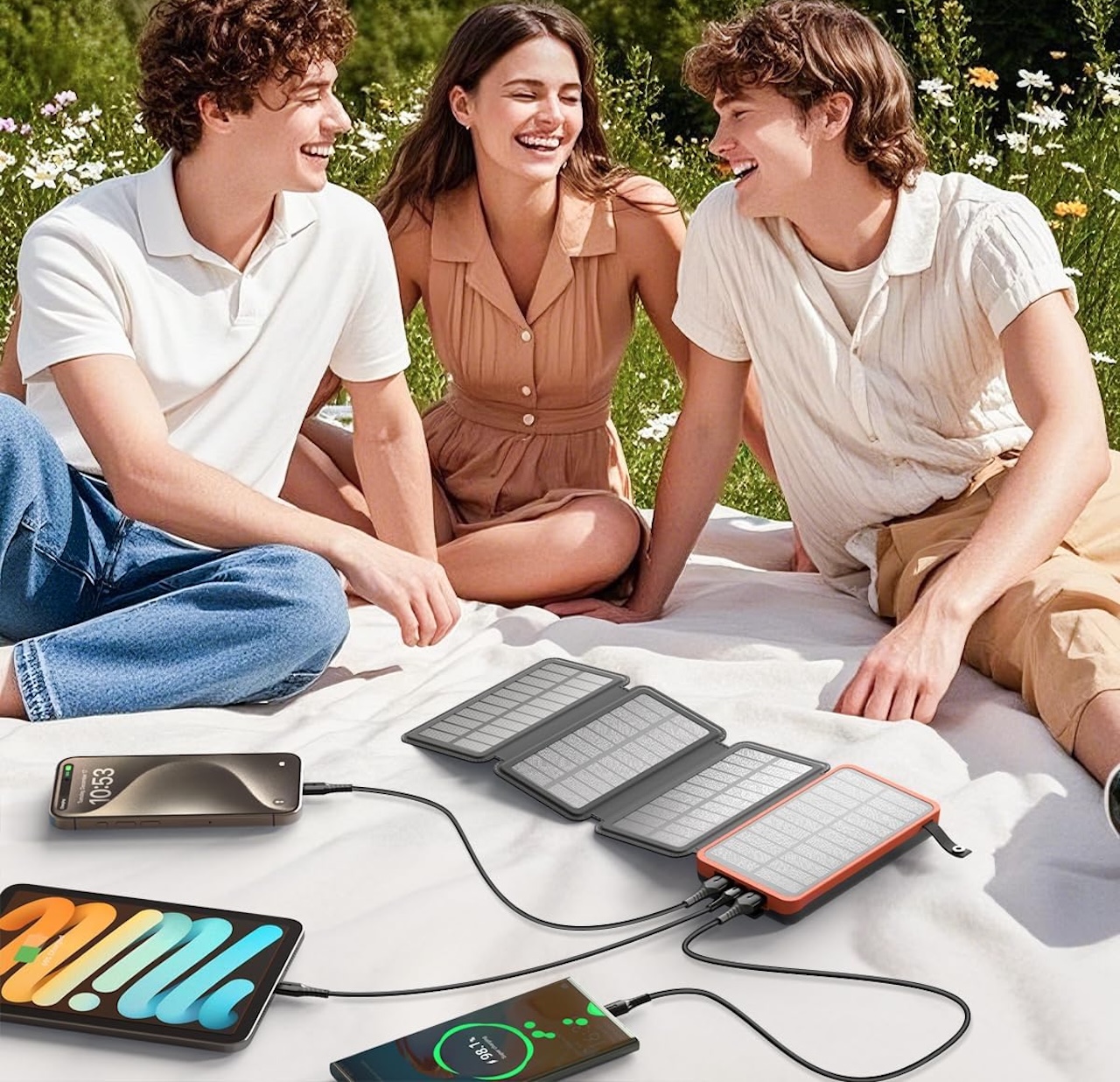
Basecamp pick: Hiluckey 25,000 mAh four-panel fold-out
Specs: 25,000 mAh (HI-S025) / 4 foldable panels rated 5W total in independent lab testing (manufacturer markets up to 6W) / 1x USB-C in/out + 2x USB-A out / QC 3.0 3A fast charging / built-in flashlight / outdoor-oriented build / MSRP $79.99
Price: From $29.99
Where to Buy: Amazon
This one stays at camp, not in your pack. The four-panel fold-out opens to roughly four times the surface area of a single-panel bank, which is the only honest way to get usable solar throughput from an integrated unit. Capacity is enough for multiple phone refills plus a headlamp or a GPS watch. Independent lab testing clocked 542 mAh of direct solar input per hour, second only to the QiSa among the integrated units in this guide. Two caveats worth knowing: there’s a documented overheating concern with this exact model when it’s left in direct sun, and the bank tends to top itself off before handing power out to your devices, which slows real-world refill times. Testers also noted that three of the five battery indicator LEDs were faint enough to make full-charge readings hard to trust. Both are real, but neither changes our recommendation for a stay-at-camp role where the bank lives flat in the sun rather than strapped to a hot pack.
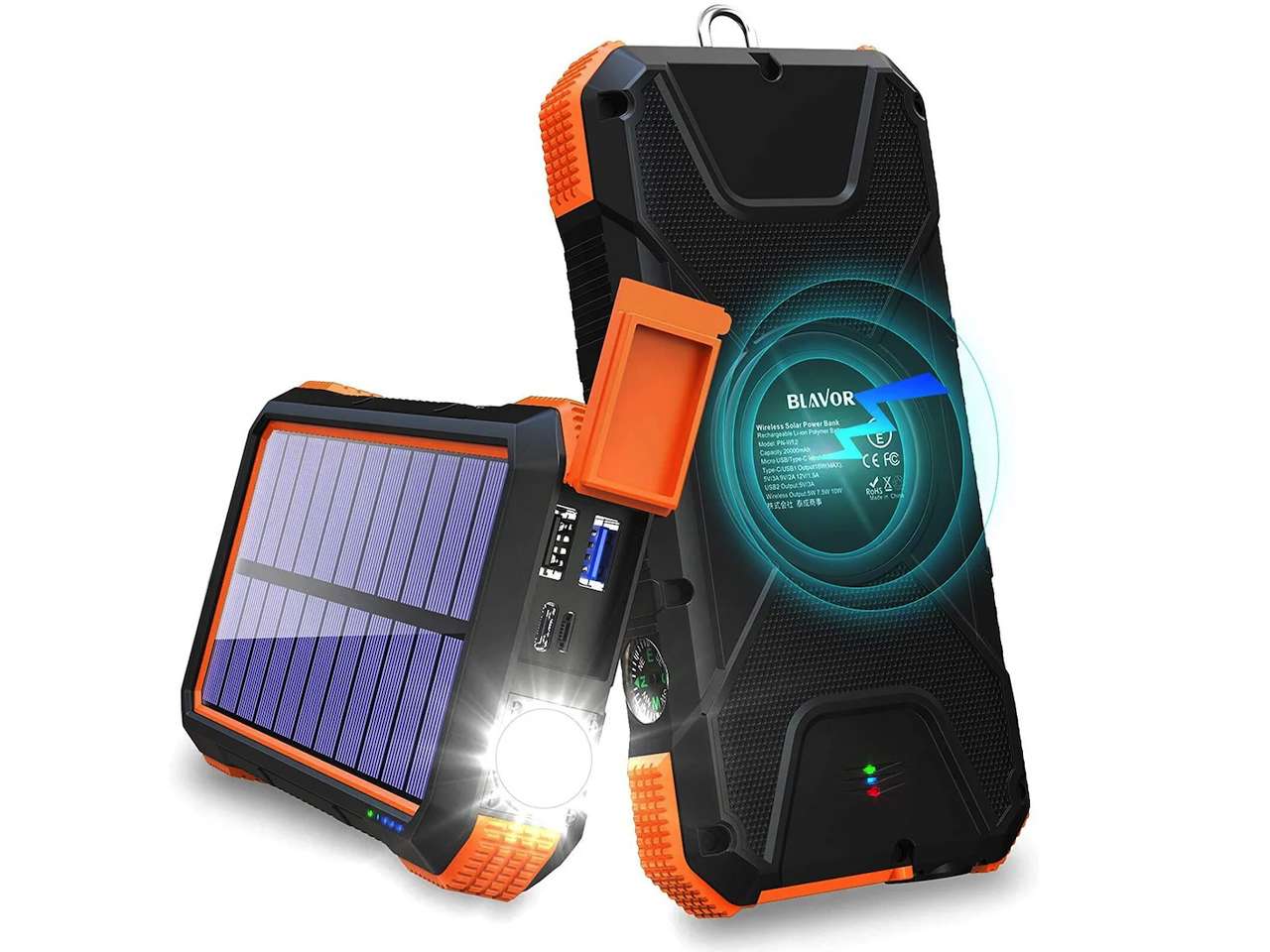
Mid-trip pick: BLAVOR PN-W12 20,000 mAh with wireless charging
Specs: 20,000 mAh / 18W PD QC3.0 fast charging output / IPX5 splash, dust, and shock resistant / Qi 10W wireless + bidirectional USB-C + 2x USB-A / single solar panel / flame-retardant ABS+PC shell / 0.5 kg (~1.1 lb)
Price: From $49.99
Where to Buy: Blavor
The PN-W12 is the higher-capacity sibling to BLAVOR’s mini PN-W05 and lands between everyday carry and trip-ready. Splash-resistant build, Qi wireless on top, and four output methods covering basically every cable scenario. The single panel won’t refill the bank from empty, but it’ll claw back enough juice during a lunch stop to keep your phone alive through dinner. Independent solar charger testing of the smaller BLAVOR Qi 10,000 found its panel generated no measurable charge under direct sun, so treat the panel here as a backup-only feature.
Budget emergency pick: ADDTOP 25,000 mAh at $49.99
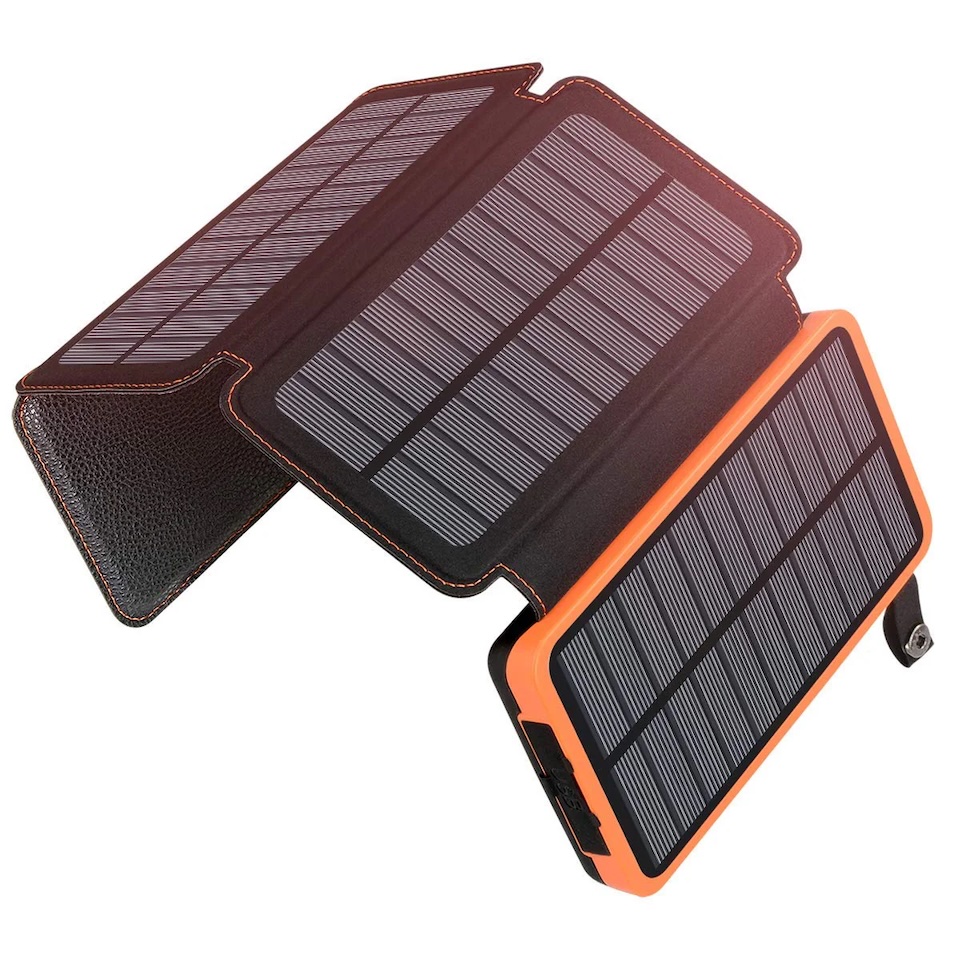
Specs: 25,000 mAh / 4 foldable panels rated up to 1A combined input in direct sun / dual USB-A output / built-in LED light / micro-USB input / MSRP $49.99 on ADDTOP’s site
Price: $49.99
Where to Buy: Addtop
If you want one drawer-friendly unit for power outages, road trips, and the occasional weekend out, ADDTOP’s 25,000 mAh bank squeaks in at $49.99 on the manufacturer site, fold-out panels included. It sacrifices fast PD output and USB-C, but it’ll get a phone back to 100% from dead with room for a second device. Treat the solar input as a backup top-up, not a primary charger.
Premium pick: QiSa 38,800 mAh with Qi wireless
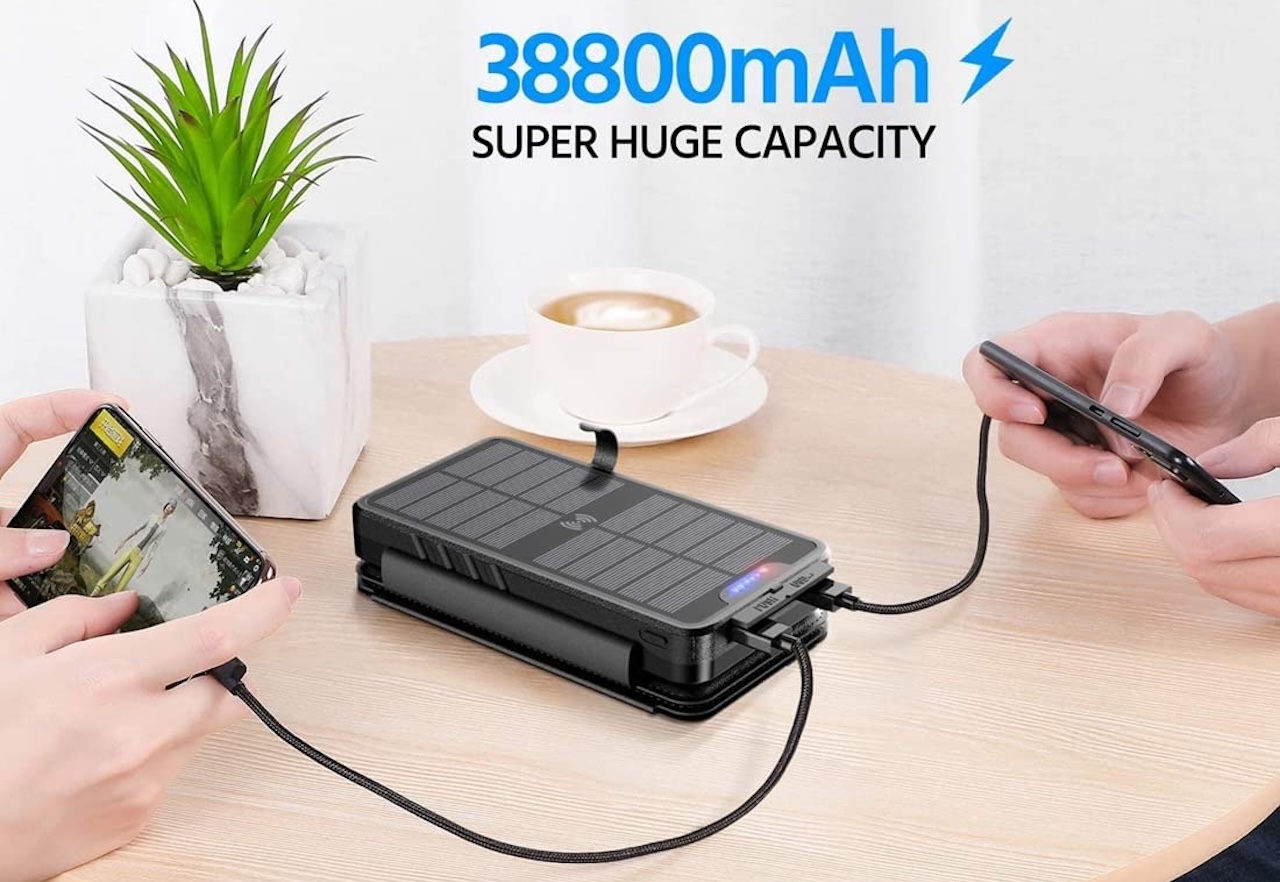
Specs: 38,800 mAh capacity / 4 foldable solar panels rated ~2W each (~5.5V/1.5A combined max input) / Qi 10W wireless + 2x USB-A 5V/3.1A outputs / USB-C input only / manufacturer markets waterproof, dustproof, shockproof build
Price: From $50
Where to Buy: Amazon
The QiSa is the standout for actual solar throughput in this size class. Independent lab testing clocked it generating 977 mAh per hour from direct sun, the highest of any integrated unit in published tests and noticeably ahead of the Hiluckey at 542 mAh per hour. Capacity is also the largest in this guide, which means real headroom for multi-day trips covering phone, headlamp, and a small camera kit. Worth the extra weight when you’re heading somewhere truly remote and want one device that earns its place in the pack.
What solar marketing promises versus what trails deliver
Manufacturer charge times assume direct, unobstructed sun, a perfect panel angle, and a cool battery. Cloud cover, tree canopy, a hot afternoon, and a panel lying flat on a tent fly all cut output, sometimes dramatically. Plan for well under the rated wattage in real conditions, top up the bank from wall power before you leave the trailhead, and treat solar as a top-up, not a primary charger.
The category we skipped
We left foldable 60W-plus solar blankets off this list on purpose. They’re excellent, but they’re panels, not power banks, and pairing them with a separate battery is a different buying decision. Expect next-gen integrated banks to nudge panel efficiency higher and improve USB-C output over the next product cycle, but a meaningful gap with dedicated split setups is going to stick around for a while yet.
Final word
For most readers, the Hiluckey 25,000 mAh four-panel is the best overall basecamp pick, the ADDTOP wins on budget, the BLAVOR PN-W12 covers the everyday-carry slot with wireless on top, and the QiSa earns the premium recommendation on raw solar throughput. The Renogy E.POWER is the simple, splash-resistant emergency option if you’d rather skip USB-C entirely. Lock in your unit before the long weekend, charge it from the wall the night before, and let the sun do the easy work from there.





Gadgeteer Comment Policy - Please read before commenting
38,800 mAh would make it not TSA-allowed.
That’s a good point…