Spring 2026 brought two true flagship launches, Sony’s WF-1000XM6 in February and Samsung’s Galaxy Buds 4 Pro in March, into a market where three strong 2025 holdovers (Apple’s AirPods Pro 3, Bose’s QuietComfort Ultra Earbuds (2nd Gen), and EarFun’s Air Pro 4+) are still the picks to beat in their respective lanes. Whether you need flagship adaptive ANC for flights or a budget pair for the commute, the right choice depends more on your phone ecosystem and fit preferences than on marketing dB numbers. Here are the five things to know before you buy.
Why the spring 2026 refresh actually matters
Premium, ecosystem, and value tiers rarely refresh in the same window, and when they do, it shifts what’s worth recommending across every price band. Older flagships are getting discounted, mid-tier models are scrambling on price, and some 2025 holdovers are quietly being repackaged as “2026 editions” with little more than a firmware bump. If you’ve been holding off on an upgrade since 2024, this is the moment your shortlist finally got interesting again.
How we sorted them: the specs that actually matter
Forget the dB marketing numbers. Four things decide whether a pair of ANC earbuds is worth your money in 2026, and every pick below was weighed against all of them. ANC depth matters most in the frequencies you actually encounter, like engine drone, HVAC hum, and human voices, not the lab tones that fill marketing decks. Transparency mode latency is the next quiet differentiator: the buds that let you hear a gate announcement or a barista without yanking them out are the ones you’ll actually keep using. Battery life only counts with ANC turned on, since the “ANC off” number on the box is mostly fiction for daily commuters and travelers. And codec support is only meaningful in context: LDAC, LC3, aptX Lossless, and Samsung Seamless Codec are spec-sheet wins only if your phone actually speaks them. Fit and call quality round out the scorecard.
1. Sony WF-1000XM6: the premium all-rounder
Best for: travelers, mixed iOS/Android households, anyone who wants the safest flagship pick.
Sony’s sixth-gen flagship is the most refined WF-1000 yet. The new QN3e processor is rated at three times the speed of the XM5’s chip, and ANC handling of low-frequency cabin noise on long-haul flights is among the strongest in the segment. The housing is slightly larger than the XM5, which improves seal for some ears and worsens it for others, so try before you commit if you have narrow canals.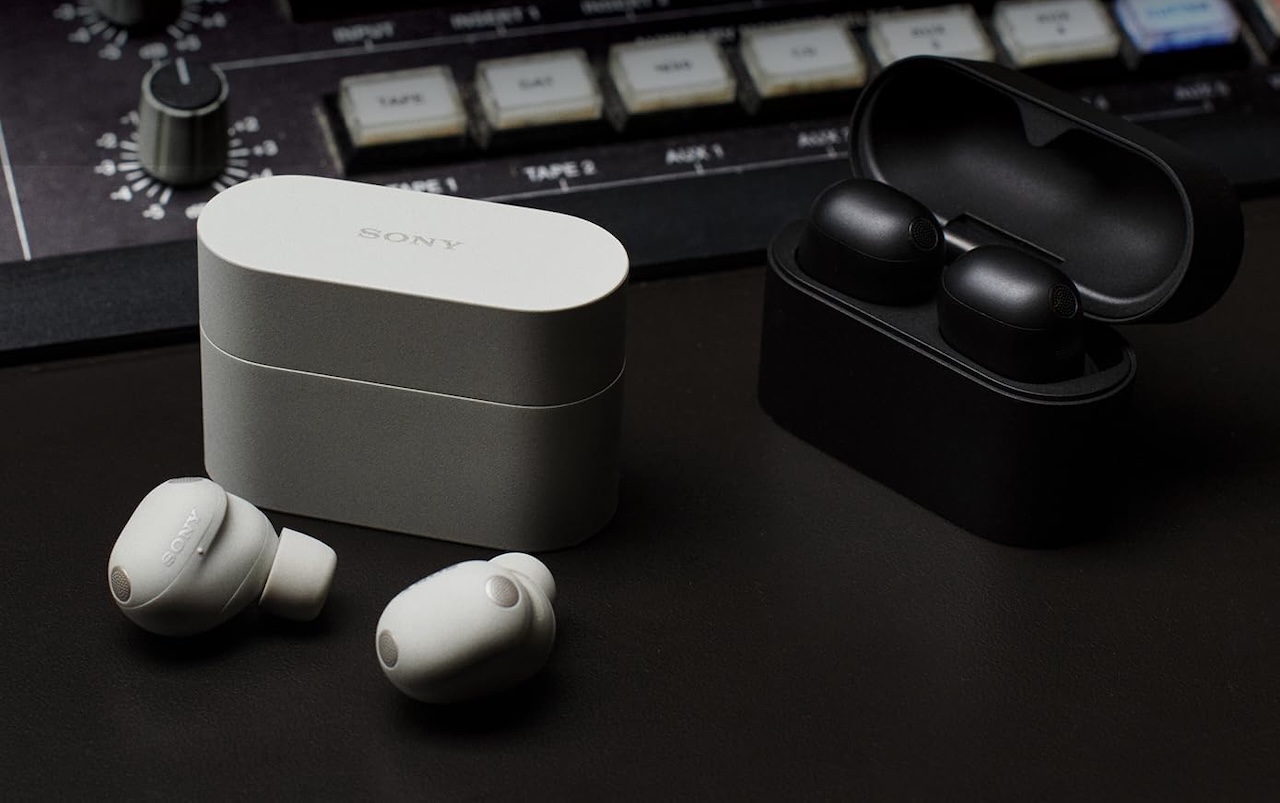
Price: $328
Where to Buy: Amazon
Battery life is unchanged from the XM5: 8 hours with ANC on, 24 hours total with the case (two extra charges, not three). Several reviewers report exceeding spec at moderate volume, but the box numbers haven’t moved. The Sony WF1000-XM6 wins on ANC, soundstage, and call quality, not endurance.
Trade-offs: $329.99 retail, larger buds that don’t suit every ear, and touch controls remain finicky in gloves.
2. Samsung Galaxy Buds 4 Pro: the Android ecosystem pick
Best for: Galaxy S26 owners, anyone deep in Samsung’s wearables stack.
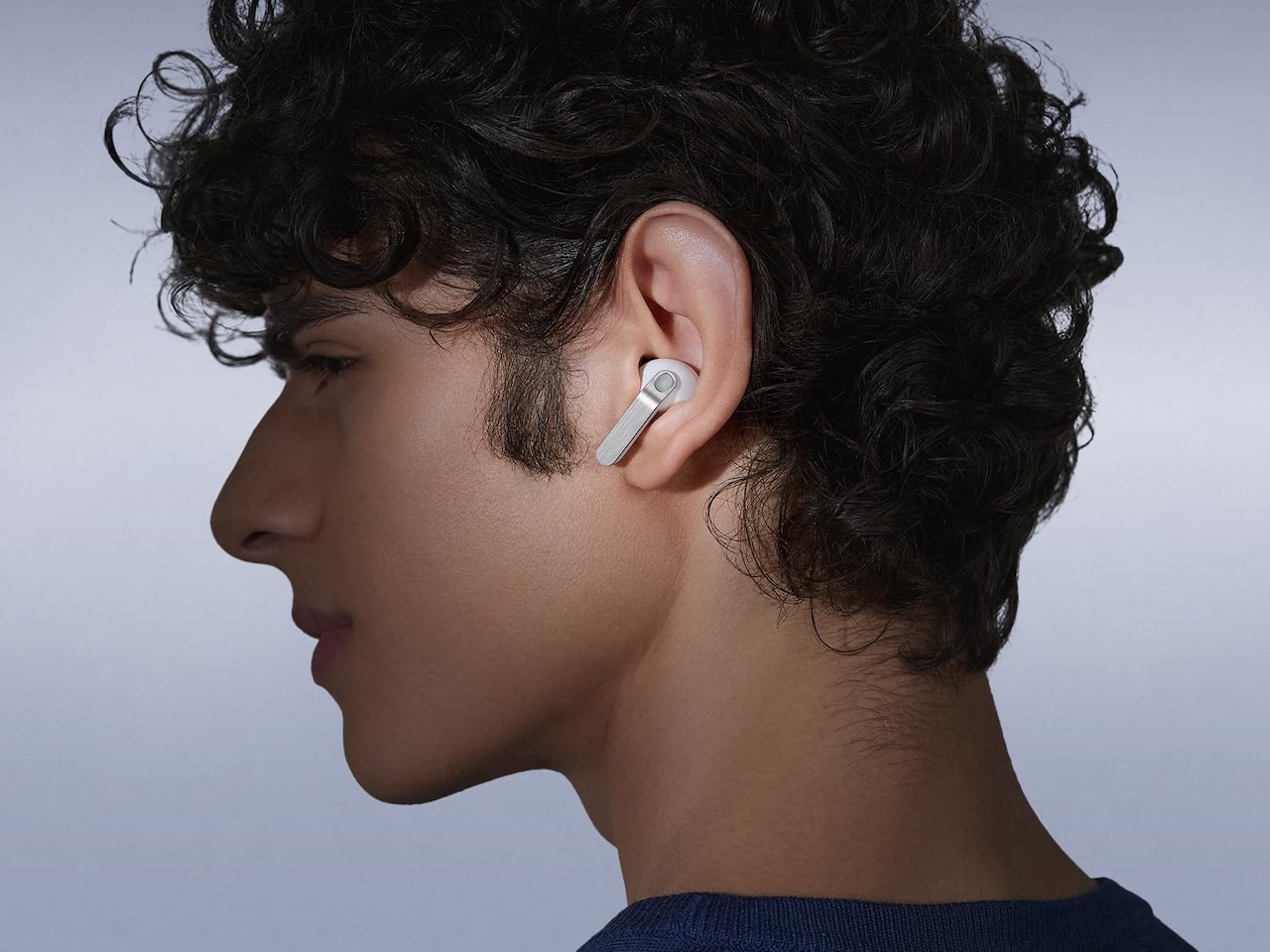
Launched alongside the Galaxy S26 series on March 11, the Buds 4 Pro lean hard on ecosystem integration. Samsung’s proprietary Seamless Codec (SSC) hits 24-bit/96kHz when paired with a recent Galaxy phone, the buds fall back to standard Bluetooth LE Audio with LC3 for everyone else, Auracast handoff between Galaxy devices is seamless, and Live Translate now routes real-time interpreted audio straight into the buds when paired with a Galaxy S26’s on-device AI.
Price: $249.99
Where to Buy: Amazon
The asterisk: that codec is the entire value story, and it only works inside the Samsung ecosystem. On an iPhone you’re back on AAC, and on a Pixel you can route LC3 over LE Audio, but either way you lose the 24-bit/96kHz ceiling and the Buds 4 Pro sound merely good rather than great. ANC is excellent across the board, but you’re paying flagship money for a feature set that only fully unlocks on one brand of phone.
Trade-offs: ecosystem-locked audio quality, the redesigned stem fit isn’t for every ear, and the best AI features need a Galaxy S26 to shine.
3. Apple AirPods Pro 3: the iPhone safe bet
Best for: iPhone users, Apple Watch owners, anyone already in the Apple ecosystem.
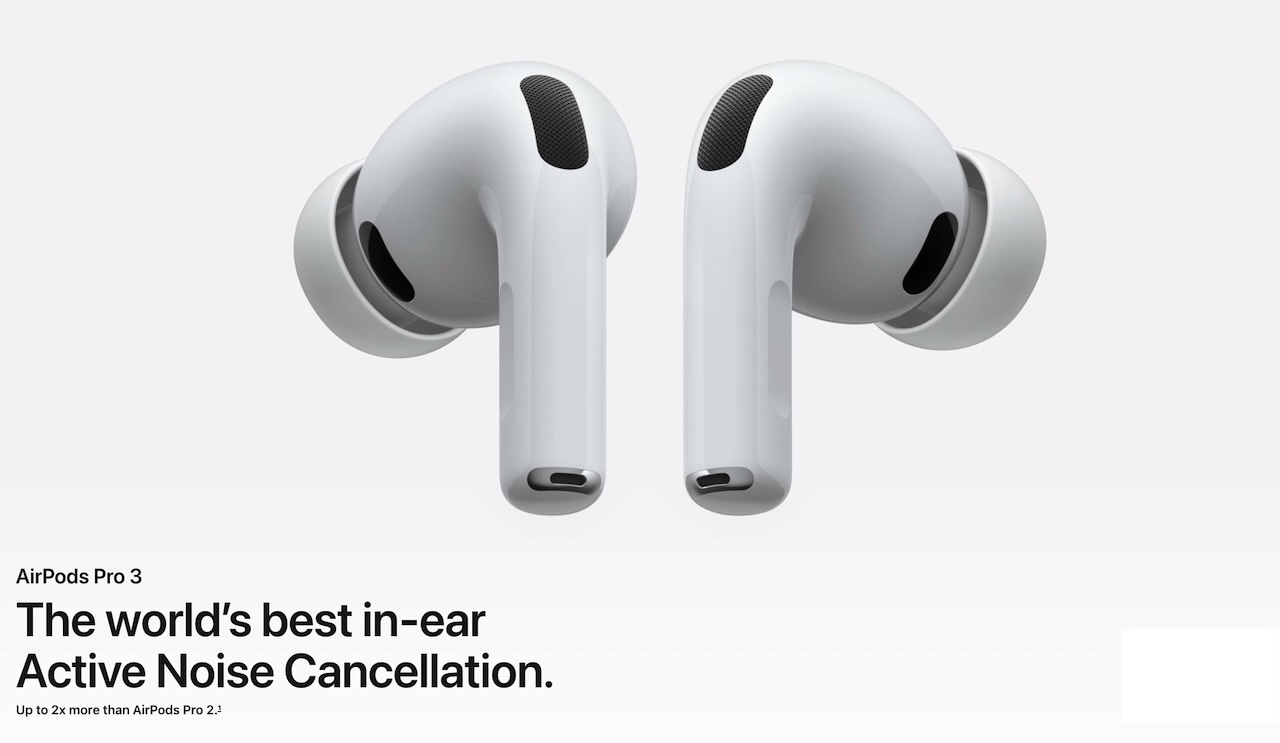
Apple’s third-gen Pro flagship, which launched in September 2025 at $249, pairs Apple’s H2 headphone chip with a redesigned tip seal and the most reliable adaptive transparency mode of any earbud on this list. Spatial Audio with head tracking is still best-in-class for Apple TV+ and Apple Music, and Conversation Awareness has finally crossed the line from gimmick to useful.
Price: $229 (Discounted from $249)
Where to Buy: Amazon
For iPhone users, the convenience tax pays for itself: instant pairing, AirPlay handoff to a HomePod, Find My integration, and built-in hearing-test features that competitors can’t match. Audiophiles will still prefer the Sony for raw sound quality, but the Pro 3 is the lower-friction daily driver if your phone runs iOS.
Trade-offs: wireless lossless audio only works when paired with an Apple Vision Pro using Apple’s H2-to-H2 connection. On iPhone, iPad, Mac, and Apple TV you’re still on AAC, and Android compatibility is bare-bones.
4. Bose QuietComfort Ultra Earbuds (2nd Gen): the ANC-first travel pick
Best for: frequent flyers, open-office workers, anyone who cares about silence above everything else.
Bose continues to set the bar for raw noise cancellation, and the QuietComfort Ultra Earbuds (2nd Gen) extend the lead with a refined CustomTune calibration that takes seconds per ear. On a long-haul flight, the Bose tends to cancel more low-end drone than either the Sony XM6 or the AirPods Pro 3. Immersive Audio is more of a novelty than a daily-use feature, but the option is there.
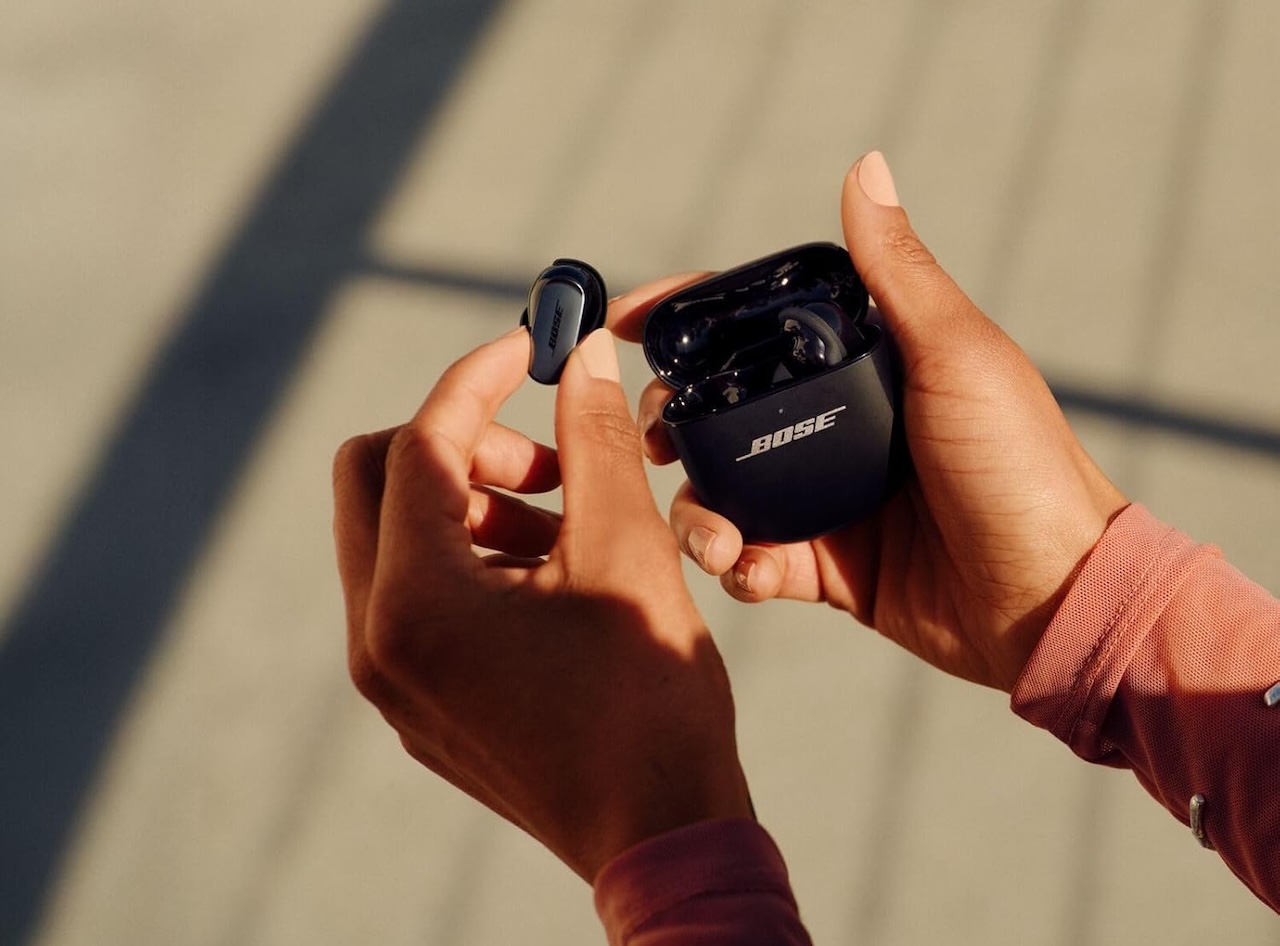
Price: $249 ($299)
Where to Buy: Amazon
Sound quality is warm and bass-forward rather than reference-flat. If you want studio neutrality, the Sony is the better pick. For the specific job of silencing the world, though, nothing on this list does it better.
Trade-offs: $299 retail, no LDAC support (Bose backs Qualcomm’s aptX Adaptive and aptX Lossless on Snapdragon Sound devices, alongside AAC and SBC), 6-hour battery with ANC on (24 hours with the case), and the case is the chunkiest of the bunch.
5. EarFun Air Pro 4+: the value disruptor
Best for: commuters, students, anyone who wants 80% of the flagship experience for a third of the price.
Technically a late-2025 release, the EarFun Air Pro 4+ is still the value benchmark every spring 2026 launch has to beat. EarFun packs LDAC, aptX Lossless via Qualcomm Snapdragon Sound, dual-driver Hi-Res certification, and a genuinely competent QuietSmart 3.0 adaptive ANC mode into a $99.99 package, a spec sheet that would have been flagship-tier two years ago.
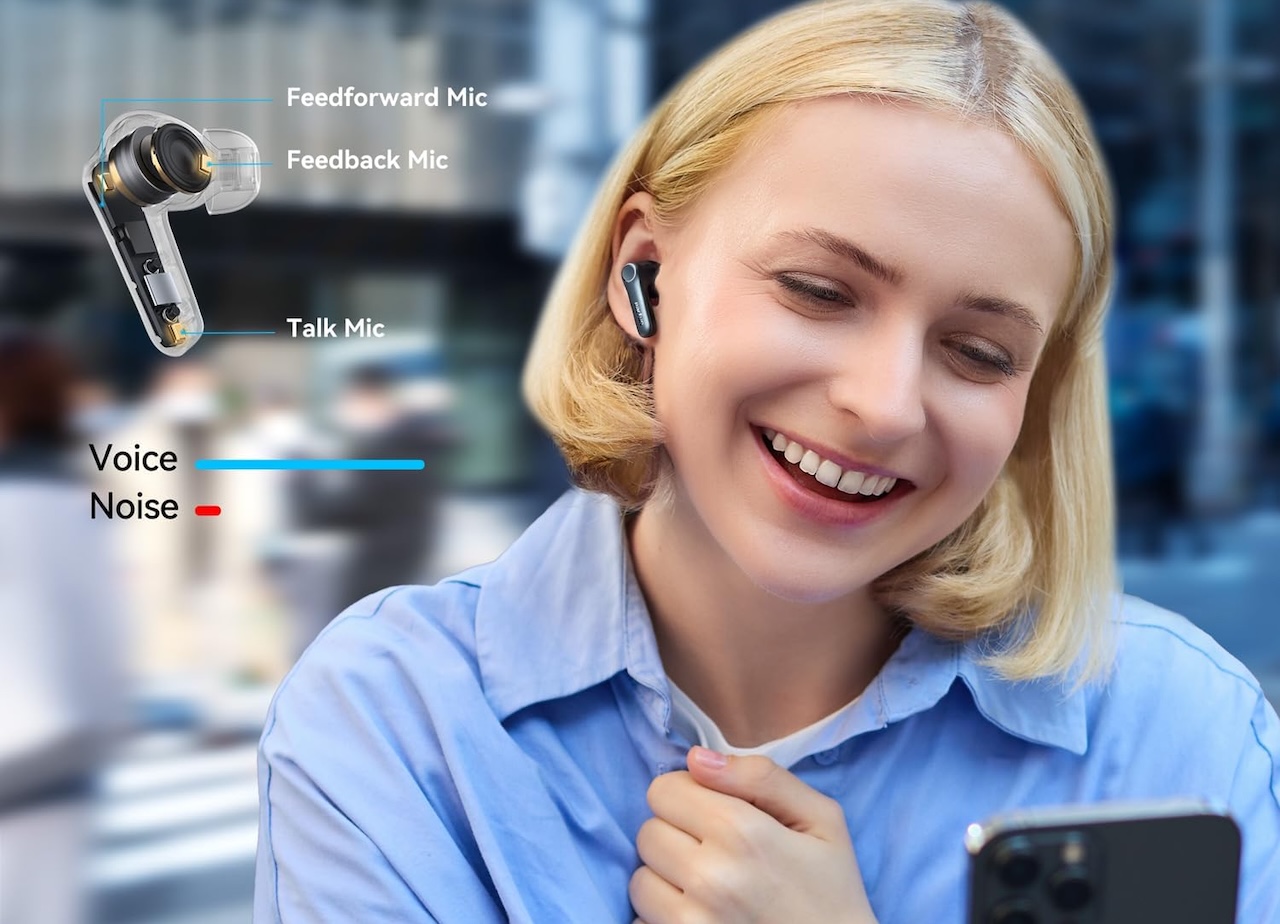
Price: $62.99
Where to Buy: Amazon
Where it compromises: transparency mode sounds noticeably processed compared to Sony or Apple, the app is functional but ugly, and call quality in wind is the weakest of the five. None of that matters if you’re using them for a daily commute or gym sessions. For travel? They’ll get you through a flight, just not as gracefully.
Trade-offs: mediocre wind handling on calls, app polish lags the price-to-feature ratio, and it rides on Qualcomm’s QCC3091 rather than the custom silicon the flagships use.
Skip the trend: open-ear ANC buds
Several brands have been pushing “open-ear ANC” through 2025 and 2026, or earbuds that don’t seal the canal but claim to cancel noise through directional drivers and beamforming. Early reviews of the most-hyped pairs land on the same conclusion: physics still wins.
Sealed in-ears block 15–25 dB of passive isolation before active cancellation does any work. Open-ear designs start from zero. Their “ANC” is really aggressive EQ that masks low-frequency noise, and it falls apart on a noisy subway platform or a window seat. They’re great for runners and office workers who need ambient awareness. Just don’t buy them expecting to silence a plane.
The re-release warning: spotting 2026 models that aren’t really new
The other thing the spring refresh exposed: several “2026” earbuds on the market right now are last year’s hardware with a firmware update and a price hike. The tells are easy to spot once you know what to look for. The biggest one is a spec sheet that quietly reuses the same SoC and driver size as the 2025 model: no new chipset, no new driver, no real reason to upgrade. Closely related is the “AI-enhanced ANC” claim that isn’t backed by any hardware change; genuine ANC improvements need new mics or processors, not a software badge. Identical case dimensions and weight are another giveaway, since new industrial design almost always means new internals underneath. And the clearest red flag of all is a $20–$40 price bump with no spec justification to support it. If a model launched in 2024 or early 2025 and is suddenly being marketed as a “2026 Edition” with the same model number plus a letter suffix, check the chipset before you check out.
The bottom line
The spring 2026 refresh made the market more crowded, not more confusing. The right pair is the one that matches your phone and your routine, not the one with the biggest number on the box.
Frequently asked questions
Which noise canceling earbuds should I buy for my phone?
Ecosystem lock-in does more for daily satisfaction than any spec on the box. iPhone users should default to the Apple AirPods Pro 3 for instant pairing, AirPlay, Find My, and the hearing-health features. Galaxy S26 owners get the most out of the Samsung Galaxy Buds 4 Pro, since Samsung Seamless Codec and Live Translate only fully unlock inside Samsung’s ecosystem. Pixel owners and anyone running a mixed iOS/Android household are best served by the Sony WF-1000XM6, which is the most platform-agnostic flagship. Budget-conscious buyers on any platform land on the EarFun Air Pro 4+.
Which pair is best for my budget?
Above $300, the Bose QuietComfort Ultra Earbuds (2nd Gen) ($299) and Sony WF-1000XM6 ($329.99) win on raw ANC and cross-platform flexibility. In the $180–$300 sweet spot, the AirPods Pro 3 ($249) or Galaxy Buds 4 Pro make sense if your ecosystem fits. Below $150, the EarFun Air Pro 4+ ($99.99) is uncontested, since it ships with LDAC, aptX Lossless, and competent ANC for a fraction of the flagship price.
Which earbuds are best for frequent travel?
Frequent flyers should overpay for the Bose QuietComfort Ultra Earbuds (2nd Gen) or Sony WF-1000XM6, since they deliver the deepest low-frequency cancellation, which is what actually matters on a long-haul flight. Daily commuters who don’t fly often get more lifetime value out of the EarFun Air Pro 4+, since its ANC is good enough for trains, buses, and offices at a third of the price. iPhone-tethered everywhere-else types will be happiest sticking with the AirPods Pro 3 for the seamless handoff between devices.
Are the “2026 edition” earbuds I’m seeing actually new?
Often, no. Several “2026” models on shelves right now are 2025 hardware with a firmware update and a price hike. Check the chipset, driver size, case dimensions, and weight against the previous model. If any of those are identical, you’re looking at a re-release. A $20–$40 bump with no spec justification is the clearest red flag.
Do open-ear ANC earbuds actually work?
Not really. Sealed in-ears block 15–25 dB of passive isolation before active cancellation does any work; open-ear designs start from zero. What gets marketed as “open-ear ANC” is aggressive EQ that masks low-frequency noise, and it falls apart on a noisy subway platform or a window seat. They’re great for runners and office workers who need ambient awareness. Just don’t buy them expecting to silence a plane.