
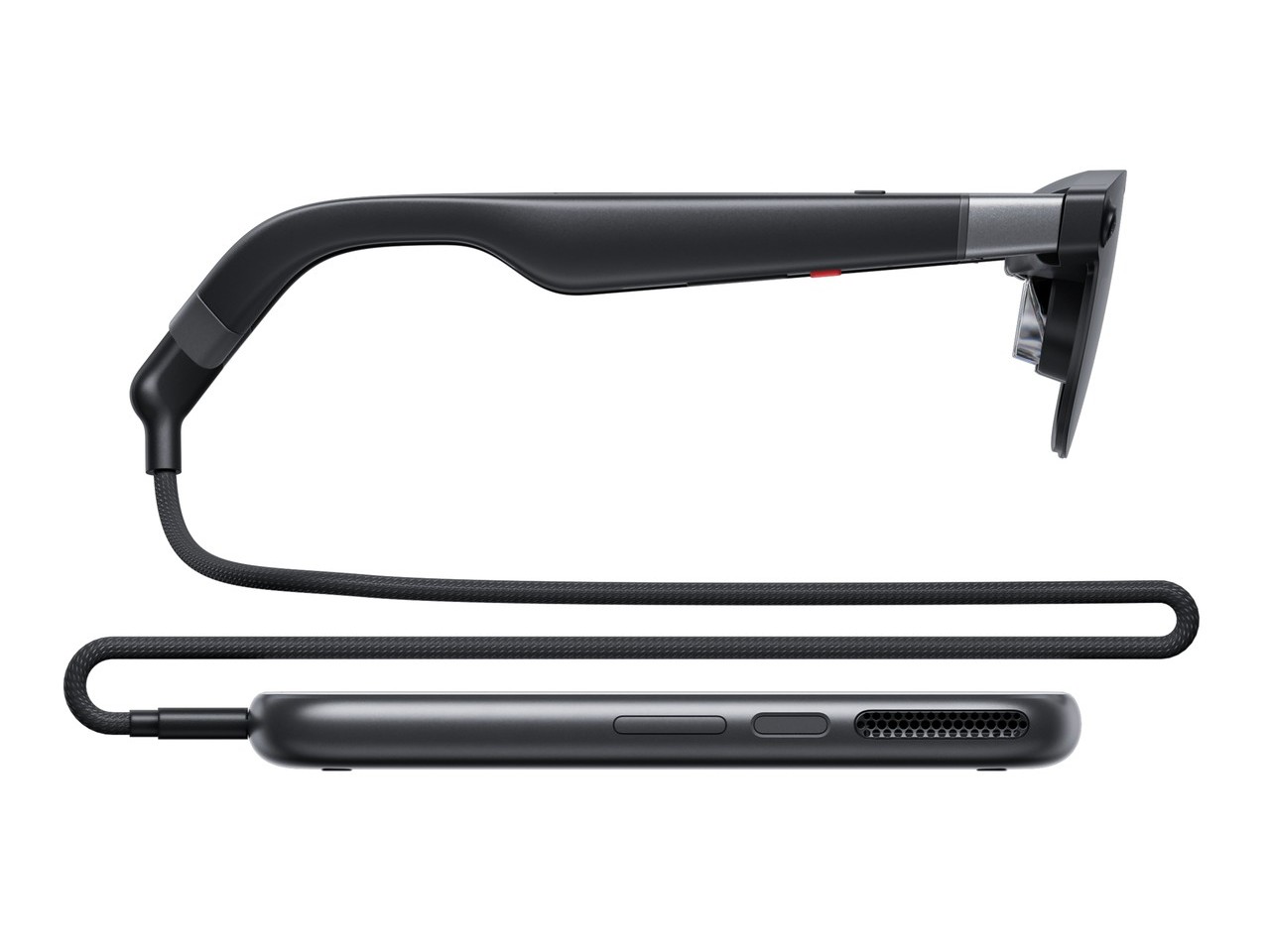
If XREAL Aura is the future of XR glasses, then the future is finally starting to look less ridiculous. It’s also still priced like a bet, not a normal gadget recommendation.
That’s the tension XREAL has created with Aura. On paper, these are exactly the kind of extended reality glasses I want the industry to build: lighter than a headset, more capable than simple display glasses, powered by Android XR, and tied into a real app ecosystem instead of another half-empty platform store. They aren’t just another pair of sunglasses with speakers. They aren’t just a wearable HDMI monitor. Aura is XREAL trying to move XR out of the bulky headset category and into something people might actually pack in a bag.
But the price ceiling matters. XREAL says the base model will cost no more than $1,500 before tax. Even if the final price comes in below that, this is still a product that asks buyers to spend laptop money on a category that has spent years promising mainstream usefulness without proving it to most people.
My take: XREAL Aura deserves attention because it is one of the clearest signs yet that XR glasses are becoming more practical. I wouldn’t tell most people to reserve one today. At $1,500, Aura makes the most sense for developers, XR enthusiasts, frequent travelers with money to burn, and people who already know they want spatial computing without strapping on a full headset. For everyone else, this is a product to watch closely, not a product to buy on faith.
What Aura actually is
XREAL is calling Aura portable spatial computing glasses powered by Android XR, and that description is mostly fair. The official XREAL Aura page says the glasses use a 70-degree optical see-through display, Gemini assistance, and a dedicated compute puck instead of putting everything into the glasses themselves.
That split design is important. Aura isn’t trying to be a completely self-contained pair of normal-looking smart glasses. The glasses connect to a compute puck powered by Qualcomm’s Snapdragon Reality Elite platform, while the glasses include XREAL’s X1S Spatial Coprocessor for low-latency spatial display and sensor processing.
The display specs are serious for this form factor. XREAL lists X Prism optics with a 70-degree field of view, Sony Micro-OLED panels at 1920 x 1200 pixels per eye, and refresh rates up to 120 Hz. The perception system includes two world-facing tracking cameras, 6DoF spatial anchoring, hand tracking, a high-resolution camera with a privacy LED, and real-time AI perception with user permission.
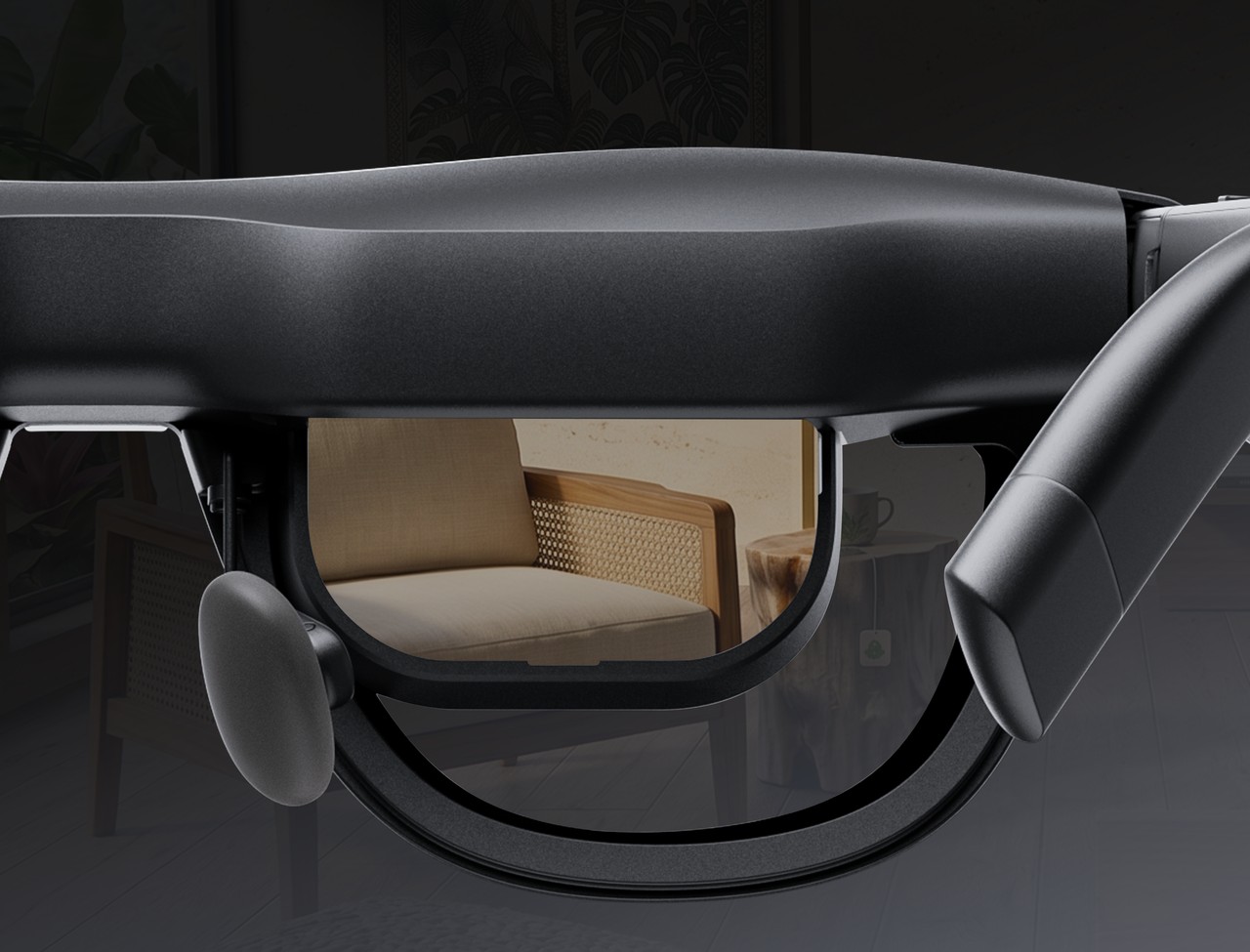
That’s a very different pitch from XREAL’s existing display glasses. The XREAL One Pro, for example, is a strong wearable screen at $599 with a 57-degree field of view and 1080p per eye, but it still lives mostly in the world of private screens, gaming, and laptop extension. Aura is trying to be a full Android XR device. That means apps, Gemini, spatial windows, hand tracking, and a developer ecosystem.
The big difference isn’t one spec. It’s the operating model. XREAL is asking us to see Aura less like a monitor for your phone and more like a new personal computer you wear on your face.
Why XREAL priced it this way
The easy reaction is to look at $1,500 and laugh. I get it. XREAL has trained buyers to think of its glasses as a few-hundred-dollar product category. The XREAL Air 2 Pro is currently listed at $249 on XREAL’s U.S. shop, while the One Pro sits at $599. VITURE’s current Luma XR glasses start at $399, with the Luma Pro at $499 and Luma Ultra at $599. Meta Quest 3 is a much bulkier mixed-reality headset, but Meta lists the 512GB model at $599.99.
Against that crowd, $1,500 sounds high.
Against Apple Vision Pro, which Apple says starts at $3,499, XREAL’s number looks almost restrained. That’s the comparison XREAL probably wants. Aura isn’t competing directly with a $249 display accessory. It is trying to become the smaller, more portable, more Android-friendly alternative to headset-style spatial computers.
That doesn’t make it a bargain. It makes it a category argument.
If Aura really delivers usable spatial apps, stable tracking, comfortable long-session wear, good battery life from the puck, convincing optics, and a real Android XR app library, then $1,500 isn’t an insane hardware price. It includes a display system, sensors, audio, cameras, a compute puck, a battery, memory, storage, and a platform. I can understand how XREAL gets to that number.
What I don’t buy is the idea that understandable pricing is the same thing as justified pricing for normal consumers.
Who should care
Aura matters most to four groups.
First, Android XR developers should care. Google says XREAL Aura is XREAL’s first wired XR glasses built with Google for Android XR, and reservations opened around AWE 2026. If you are building spatial apps, testing Android XR interfaces, or trying to understand how Google’s headset and glasses strategy will feel outside a Samsung headset, Aura could be one of the most important developer devices of the year.
Second, frequent travelers should pay attention. If Aura can give you a private theater, a real laptop workspace, and enough awareness of the real world through optical see-through lenses, it could be more useful on planes and in hotel rooms than a heavy headset. XREAL’s own imagery leans hard into this idea: giant screens, floating workspaces, and portable entertainment without carrying a monitor.
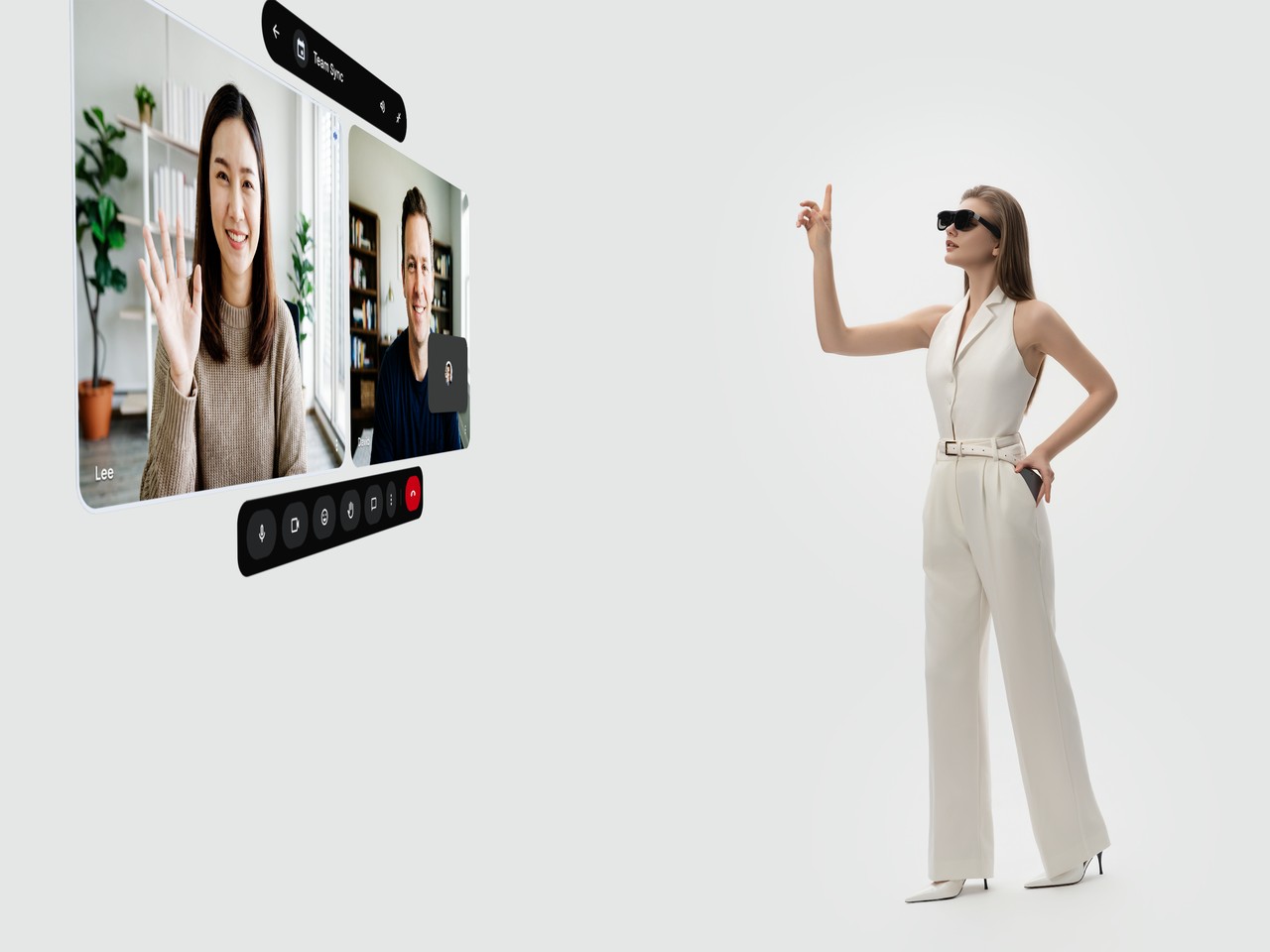
Third, existing XREAL fans should care. If you already use XREAL glasses and Beam Pro, Aura looks like the version that stops pretending the phone or accessory is incidental. The compute puck becomes part of the product from the beginning.
Fourth, anyone watching the smart glasses market should care because Aura draws a line between two futures. On one side are AI glasses like Ray-Ban Meta, which Ray-Ban sells in the $300 to $500 range depending on model and lenses, but with no true display in front of your eyes. On the other side are spatial computers like Vision Pro and Quest, which deliver richer immersion but require a headset. Aura is trying to sit between them.
That middle ground is the interesting part, and it’s why smart glasses design keeps splitting into different lanes.
Who absolutely should not buy it
If you are hoping for normal-looking glasses you can wear all day, don’t buy Aura.
If you mainly want music, calls, camera capture, and AI responses, Ray-Ban Meta-style glasses make more sense and cost a fraction of Aura’s expected price.
If you want VR gaming, fitness, immersive games, or mixed-reality experiments at home, Meta Quest 3 is cheaper, more established, and has a much larger consumer software base.
If you only want a huge private screen, that category already has cheaper options. for Steam Deck, Nintendo Switch, iPhone, MacBook, or travel movies, XREAL’s own One Pro or Air series may already cover the use case for far less money.
And if you are unsure whether you like wearing tech on your face, don’t start with a product that could land near $1,500 before tax. Start with cheaper display glasses or try a headset demo first.
Aura isn’t the entry point. It’s the expensive middle chapter.
How it compares with competing XR devices
Apple Vision Pro is the obvious status comparison, but it isn’t the cleanest practical comparison. Vision Pro is a full headset with eye tracking, a rich visionOS ecosystem, Apple’s strongest display and interface work, and a price that starts at $3,499. It is more powerful and more immersive than Aura is likely to be, but it is also heavier, more isolating, and more clearly a headset.
Meta Quest 3 is the value comparison. It’s bulkier and less socially acceptable as wearable glasses, but it offers a proven VR and mixed-reality ecosystem at $599.99 for the current 512GB model. If you want games, fitness, and home MR, Quest remains the easier recommendation.
Ray-Ban Meta is the mainstream comparison. It wins because it looks like glasses and does everyday things people understand: photos, video, calls, audio, and AI. It loses because it doesn’t give you a spatial display. It is smart eyewear, not XR computing.
VITURE and Rokid are closer in form factor. VITURE’s Luma line is priced from $399 to $599, while Rokid is pushing AI glasses with translation, captions, camera capture, and Gemini or GPT-powered assistance. Those products are easier impulse buys. Aura is trying to be more ambitious, but ambition is exactly what makes the price harder to swallow.
XREAL’s own lineup may be Aura’s toughest comparison. The One Pro already gives people a polished wearable display with native 3DoF spatial screen support for $599. Add accessories and the price rises, but the basic question remains: how many buyers need full Android XR badly enough to pay roughly twice as much?
That’s where I think most launch coverage is being too generous. Aura isn’t competing only with Apple Vision Pro. It’s also competing with the cheaper products that already solve the most common reason people buy these glasses: putting a big private screen in front of their eyes.
What XREAL got right
The biggest win is the form-factor direction. A full headset can be powerful and impressive, but it still announces itself as a headset. Aura looks much closer to something you could travel with, use at a desk, or wear for a focused session without feeling like you have moved into another room.
The optical see-through approach also matters. Camera passthrough can be useful, but it’s still mediated reality. Seeing the real world directly through the lenses is a cleaner idea for everyday spatial computing, especially if the device is meant for work, travel, and awareness instead of full VR immersion.
The 70-degree field of view is another important step. Wearable displays often feel cramped because the window is too small. XREAL Aura’s wider field of view should make spatial windows and entertainment feel less like peeking through a slot.
I also like the split-compute choice. Putting the heavy compute, battery, thermals, and storage in a puck is less elegant than magical all-in-one glasses, but it’s more honest. We’re not at the point where a full XR computer disappears into normal eyewear without tradeoffs. XREAL is choosing wearability over fantasy.
The Android XR angle is the other reason Aura deserves attention. Hardware alone doesn’t make XR useful. Apps do. If Aura can tap Google Play, Gemini, Chrome, YouTube, Maps, Photos, and XR-specific apps from day one, it starts with a stronger software story than most smart glasses startups can offer.
What concerns me
My first concern is the reservation model. XREAL is taking $99 reservations that become $199 in launch credit, and its $299 Founder Priority Pass has already sold out according to the Aura page. XREAL says reservations are refundable before final purchase confirmation, and the base model won’t exceed $1,500 before tax.
That’s better than a nonrefundable preorder, but it still asks people to reserve before final pricing, configurations, and shipping details are locked. For developers and committed enthusiasts, that may be fine. For regular readers, it’s a yellow flag.
My second concern is comfort. UploadVR reported that XREAL says the glasses portion weighs 95 grams. That’s light compared with a headset and heavy compared with normal glasses. The difference matters when the product is pitched for long focused sessions.
My third concern is identity. Aura is not a headset, but it isn’t normal smart glasses either. It isn’t a cheap private monitor, but it still depends on a cable and puck. That middle position is exciting for nerds and confusing for everyone else.
My fourth concern is privacy and social comfort. Aura includes world-facing tracking cameras and a high-resolution camera with a privacy LED. XREAL is at least acknowledging the issue, but camera-equipped glasses still make people uneasy. Ray-Ban Meta has already forced that conversation into public spaces. Aura adds a display and XR perception layer on top of it.
Finally, I worry about app reality. Google Play access is a huge advantage, but having millions of Android apps available isn’t the same as having millions of apps that feel good in XR. The first wave of Android XR software will decide whether Aura feels like a new computing platform or a clever way to float phone apps in front of your face.
Does $1,500 actually make sense?
For XREAL, yes. For developers, maybe. For most readers, not yet.
That’s the cleanest answer.
I can justify the bill of materials and strategy. Aura combines premium Micro-OLED displays, custom optics, cameras, tracking, audio, a dedicated compute puck, Android XR, Gemini, storage, battery, and two processors. It isn’t fair to price it like a simple screen accessory.
But consumer value isn’t about how many parts are inside. It’s about whether the product solves a problem clearly enough that people can explain the purchase to themselves.
At $599, XREAL One Pro can be explained as a huge private display you can carry anywhere. At $379 or $409, Ray-Ban Meta can be explained as camera sunglasses with AI and audio. At $599.99, Quest 3 can be explained as a VR and mixed-reality game console.
At up to $1,500, Aura has to be explained as a wearable spatial computer for Android XR. That may be accurate, but it’s still not an easy sell.
The price makes sense only if you already want the future XREAL is building. It doesn’t make sense if you are still waiting for XR to prove it belongs in your daily life.
What I’d tell a friend considering one
If a friend asked me whether to reserve XREAL Aura today, I’d ask three questions.
Do you already use AR or XR glasses regularly?
Do you specifically want Android XR and Gemini in a spatial computing device?
Would you still be happy if this feels like a first-generation platform device rather than a polished consumer appliance?
If the answer to all three is yes, I’d say Aura is worth watching closely and maybe worth reserving, especially with a refundable reservation. If the answer to any of those is no, I’d wait.
Wait for final pricing. Wait for battery-life claims. Wait for independent comfort testing. Wait for app demonstrations outside controlled demos. Wait to see whether Android XR on glasses feels essential or merely impressive.
I wouldn’t dismiss Aura. I also wouldn’t treat the $1,500 ceiling as a casual early-adopter fee. That’s real money, and XREAL still has to earn it.
Final verdict
XREAL Aura is one of the most interesting XR glasses announcements of 2026 because it points in the right direction. Smaller than a headset. More capable than display glasses. Built on Android XR. Connected to Gemini. Designed around a real app ecosystem instead of a novelty feature list.
That’s why I’m paying attention.
But attention isn’t the same as recommendation. At anything close to $1,500, Aura isn’t a mainstream XR breakthrough yet. It’s a promising, expensive bridge product for people who already believe in spatial computing and want the glasses version sooner than everyone else.
If XREAL nails comfort, battery life, software, and real-world usefulness, Aura could become the product people point to when they say XR glasses finally started getting practical. If it misses on any of those, the price will make it feel like another ambitious XR device that arrived before the market was ready.
So no, I don’t think XREAL has justified $1,500 for most buyers yet. I do think Aura may be the most convincing argument so far that XR glasses are moving toward something practical. That makes it worth watching, not blindly reserving.



Gadgeteer Comment Policy - Please read before commenting
i mean, it’s fully refundable, so it’s easy to reserve. free option. id cancel my founder’s at 1499.
otherwise, i agree with everything here. good article.