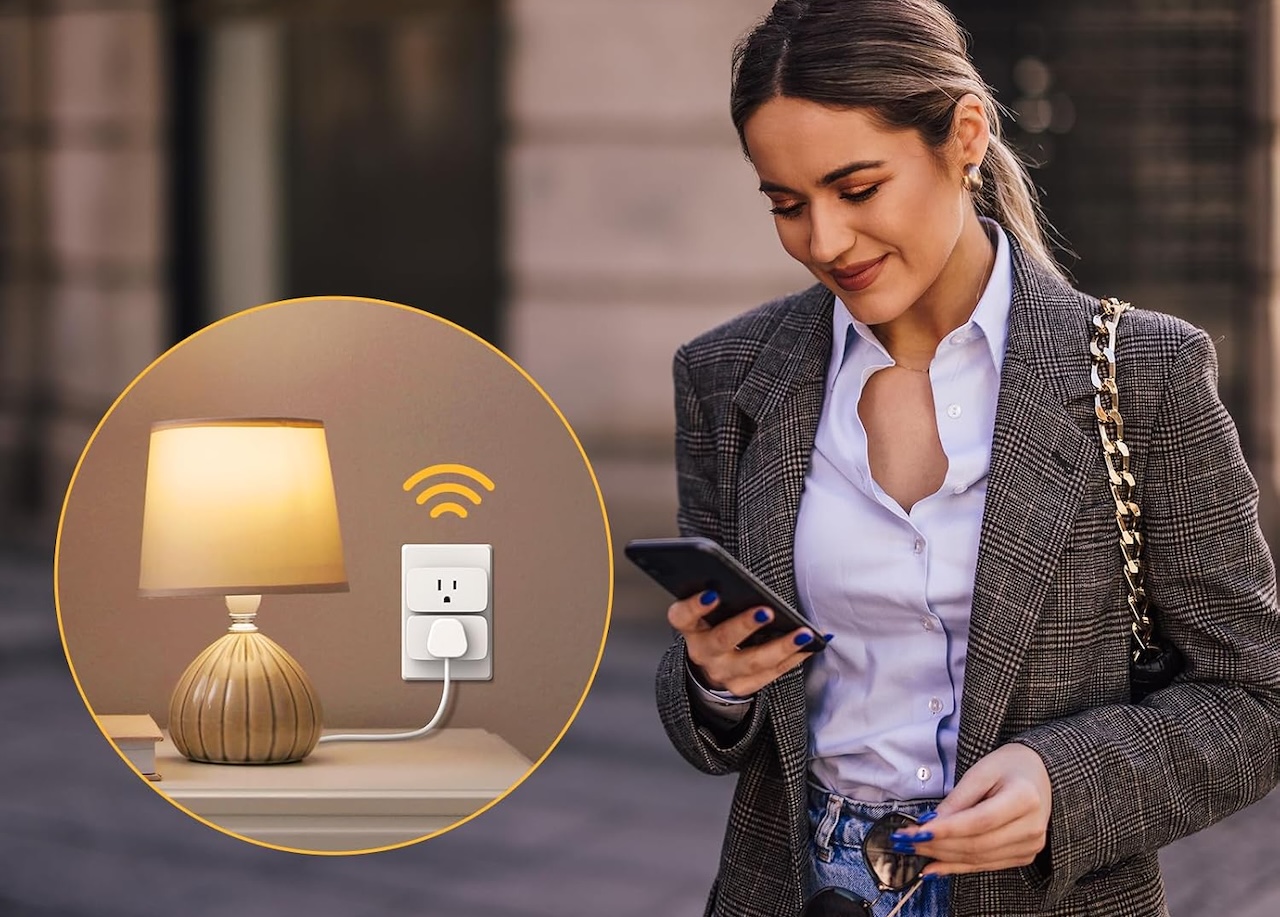
A four-pack of Matter smart plugs now runs about $24 on Amazon at deal pricing, and that’s the lever worth paying attention to. Not the new spec revision. Single digits per outlet is what lets you walk out of an ecosystem you spent four years assembling and into a different one without throwing the hardware away.
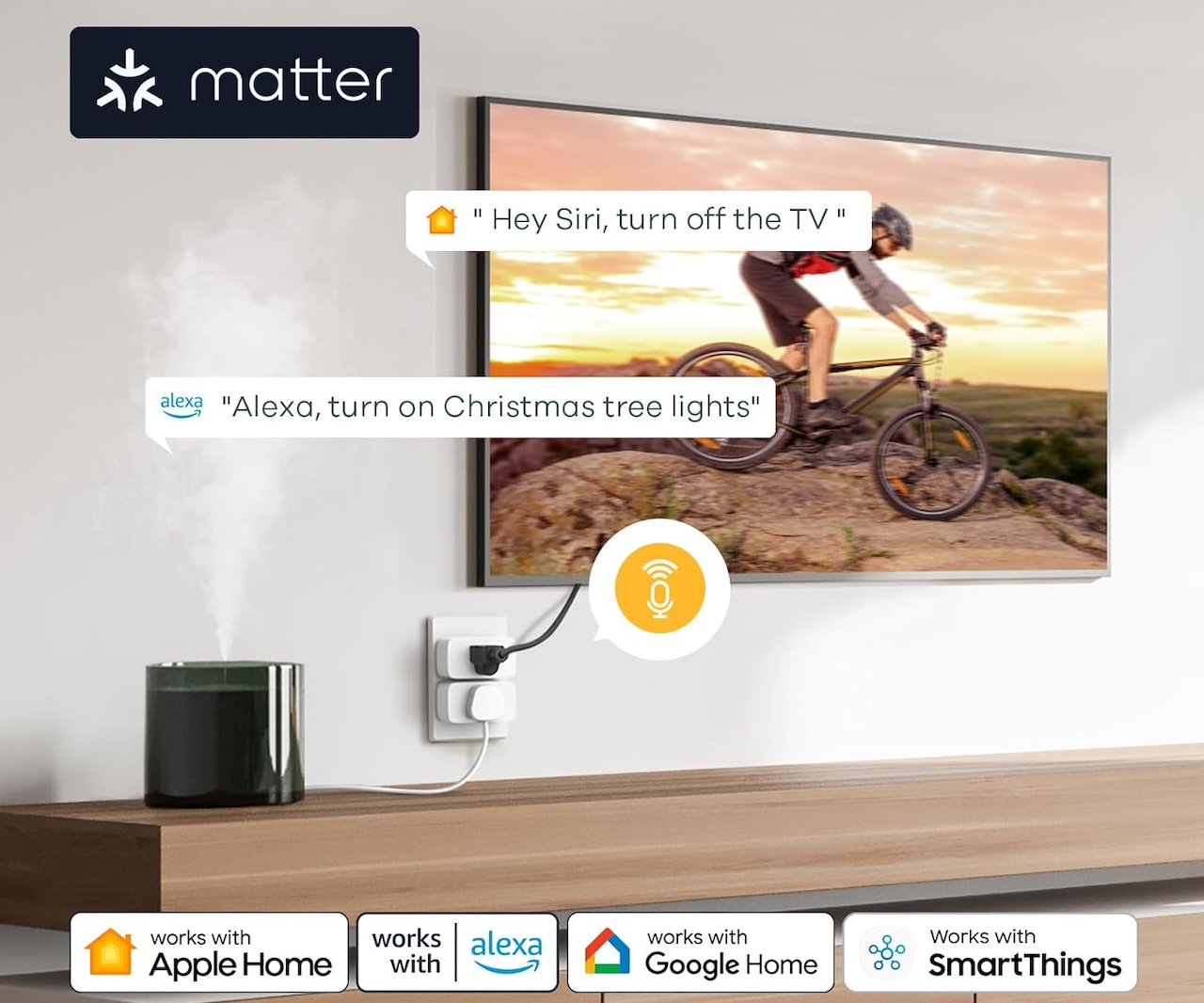
That’s the move worth making in 2026. The Linkind four-pack is the test case: scan a QR code, add it to Alexa, Google Home, Apple Home, or SmartThings using whichever Matter controller you already own (a HomePod mini, Echo, Nest Hub, or SmartThings Hub all qualify), then move it to a different one of the four next month if you change your mind. No new hub, no brand-specific app, no replacing the plug. The certification follows you instead of the app.
The escape hatch, not the upgrade story
The first Matter plugs were the proof-of-concept versions: awkward pairing flows, missing energy data, patchy multi-admin support (the feature that lets one plug answer to more than one platform at once). The plugs on shelves now are the ones built for actual switching. Pairing takes under a minute on most hubs. Multi-admin works across Apple, Google, Amazon, and Samsung. Device discovery doesn’t time out the way it used to.
Energy data finally makes the spec sheet
Matter 1.5, released in November 2025, expanded the energy side of the spec with standardized tariff, pricing, and grid carbon-intensity data, building on the Device Energy Management cluster that’s been part of Matter since 1.3. The practical result for plug buyers: wattage, kilowatt-hours, and cost estimates report in a shape any Matter hub can read in principle, even if the major platforms still display that data unevenly. SmartThings has the most developed energy dashboard, Google Home and Apple Home are still catching up, and for some plugs you’ll still want the manufacturer’s app for the full picture.
For about $10, you can find out which appliance is quietly running up your bill. That’s the kind of answer people used to buy a dedicated Kill A Watt meter for, except now the plug also turns the appliance off when it crosses a threshold you set.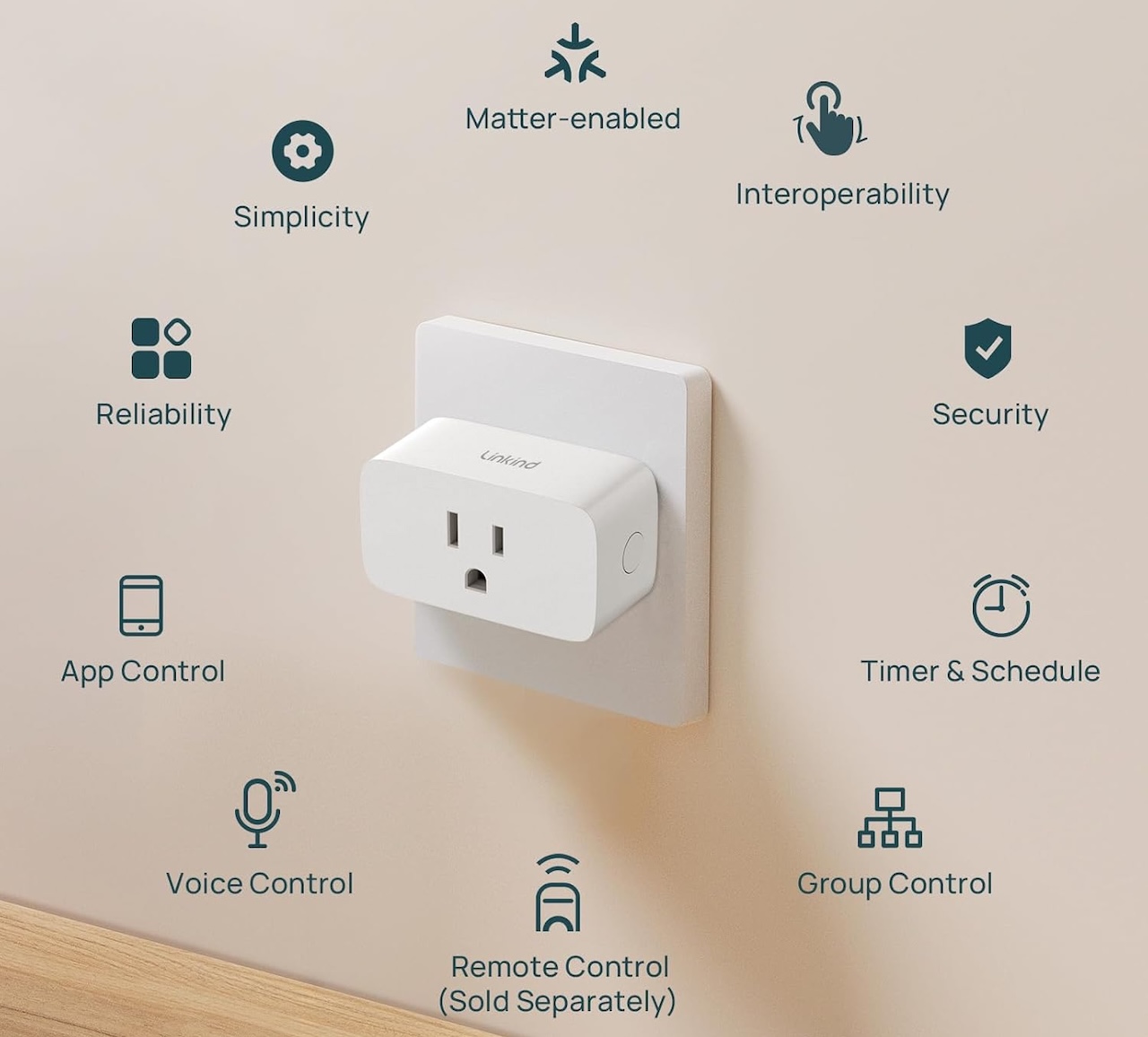
The cheap plugs, the outdoor plugs, the metered plugs
Three releases pushed Matter plugs into impulse-buy territory over the past several months.
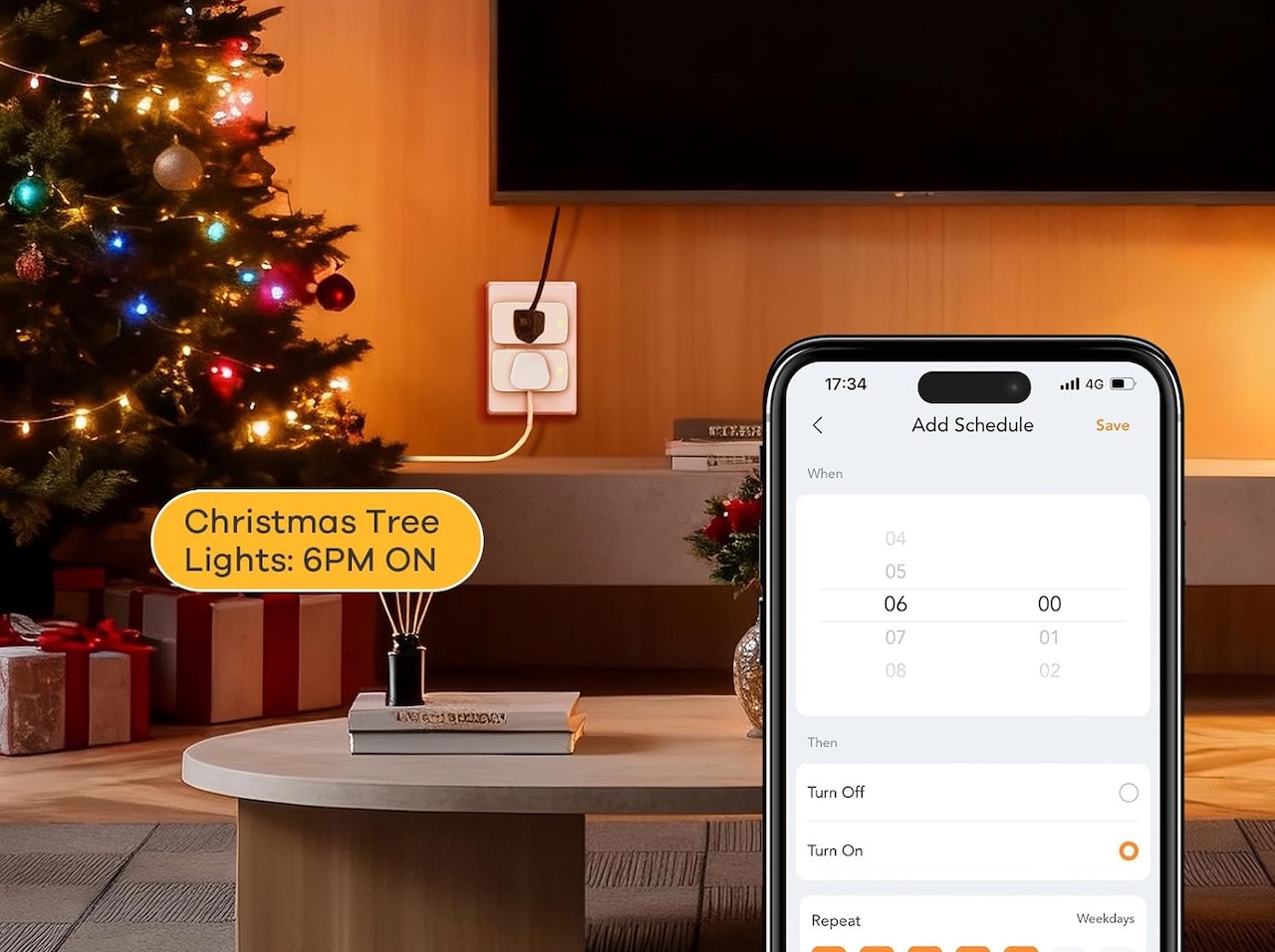
Linkind’s Matter Smart Plug is the volume play. Four-packs have been landing in the $22 to $24 range on Amazon at deal pricing (list runs higher), which works out to about single digits per outlet when you catch a sale. It’s Wi-Fi only, no energy metering, basic scheduling. Fine for lamps, fans, and seasonal lights.
IKEA’s TOFSMYGGA outdoor plug is a rare sub-$20 Matter-over-Thread option for patios and exposed installs, and IKEA’s first outdoor smart plug of any kind. It carries an IP44 rating with the lid closed, so a summer rainstorm won’t kill it. The catch: it’s rolling out only in select EU markets right now at around €13, with US and UK availability still unconfirmed.
Spend $24.99 and Shelly’s Plug US Gen4 gives you four radios in one chassis: Wi-Fi, Bluetooth, Zigbee, and Matter, plus real-time power monitoring and a customizable LED ring that doubles as a status light. It’s the one you buy for the fridge, the gaming PC, or the heater you suspect is the problem. Not a Thread device, though. If you want metered Matter-over-Thread, IKEA’s new GRILLPLATS plug is the closer fit.
Mix and match. A cheap Linkind for the bedroom lamp and a metered Shelly for the dryer is a perfectly normal Matter setup in 2026.
 Wi-Fi vs Thread, and why it actually matters
Matter doesn’t care which radio your plug uses. You should.
Wi-Fi plugs are cheaper and don’t need any extra hardware if your router already covers the house. The catch is that every plug counts against your Wi-Fi client limit, and 2.4GHz congestion can slow response times in dense apartments where every neighbor’s printer is also fighting for airtime.
Thread plugs form a low-power mesh. Every plugged-in Thread device acts as a router for battery-powered gear like door sensors and locks, so the more you install, the more reliable your sensors get. You’ll need a Thread border router somewhere in the house (a HomePod mini, Apple TV 4K, second-gen Nest Hub, or Echo Hub all qualify) to bridge it to your phone.
If you own a handful of smart devices and don’t plan to add more, Wi-Fi is fine. If you’re building toward a real mesh of sensors and locks, every Thread plug you add quietly makes the rest of that network better.
The “universal compatibility” label still has footnotes
Apple Home’s Matter energy support is still partial; for most plugs you’ll open the manufacturer’s app to see real wattage and history. Google Home shows power data for some compatible plugs, but per-watt routines and energy automations have been slow to roll out, with parts of the script editor still labeled experimental. Alexa handles the plugs cleanly, though its Hunches engine can occasionally flip a plug on or off in ways that surprise users running tight schedules. It’s switchable in settings.
SmartThings has the most developed energy dashboard of the four, though even there the supported-device list is narrower than the Matter spec suggests, with brands like Aqara and a handful of TP-Link models leading.
None of these are dealbreakers. They’re worth a glance at the release notes before you order a 10-pack.
What to actually check on the spec sheet
Maximum load matters more than it sounds. 15A (1,800W) is the US standard on most Matter plugs (Linkind, Kasa, Shelly, Eve, Tapo all hit it), which covers kettles, space heaters, and window ACs without complaint. The exceptions are slim or travel-style plugs that drop to 10A or 12A. Check the box before plugging in anything that draws real current. Power metering is the only way to get energy data, and the cheap plugs skip it. Outdoor use needs IP44 at minimum, IP65 for anything fully exposed.
Physical size sounds petty until a bulky plug blocks the second outlet you needed; compact profiles from Shelly, TP-Link Tapo, and IKEA solve that for a few extra dollars. And if you care about the seamless version of multi-admin, the one that shares a device across ecosystems in a few taps, look for Matter 1.4 or later certification on the box.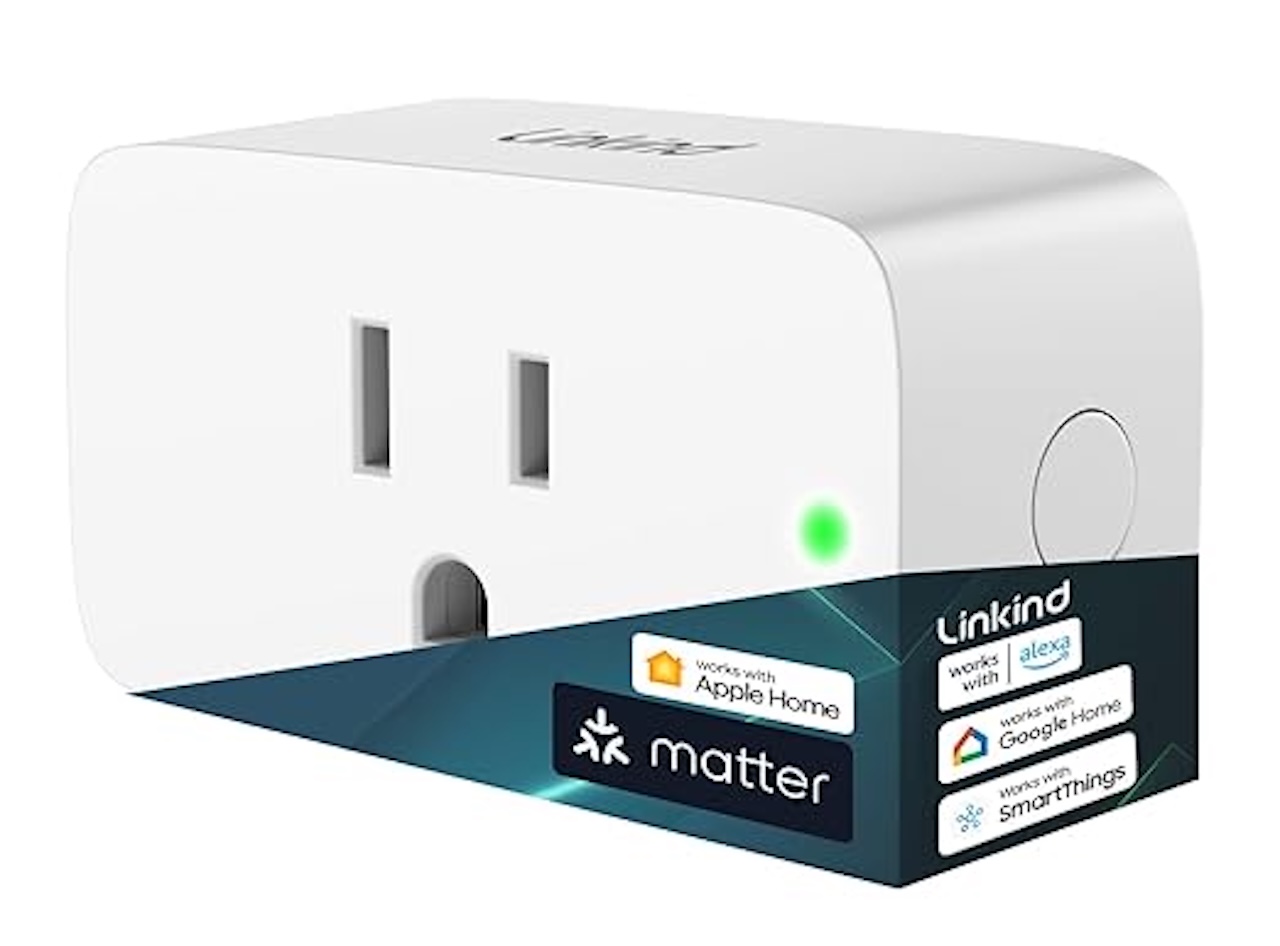
When a brand-native plug is still the right answer
Matter isn’t always the move. If you only use one ecosystem and never plan to switch, a native TP-Link Kasa, Wemo, or Eve plug usually has richer app features, longer schedules, and faster local control than a generic Matter equivalent. If you want niche features like per-outlet metering on a power strip, or direct export to your utility’s app, those still live outside Matter’s spec. And smart plugs bundled with motion or temperature sensors in one housing are almost entirely brand-locked.
For everything else, Matter is the safer long-term bet, because the certification follows the plug instead of the app you’re stuck inside.
Price: From $13.99 (1-pack)
Where to Buy: Amazon
The case for grabbing a four-pack this weekend
A Matter plug for as little as single digits is the cheapest way to keep your options open. Start a smart home, switch ecosystems, or finally find out what that mystery appliance costs to run, all without committing to a single app this time. A four-pack of Linkind for lamps and chargers, one metered plug for the appliance you’re suspicious of, and the hardware survives whatever you decide about platforms next year.