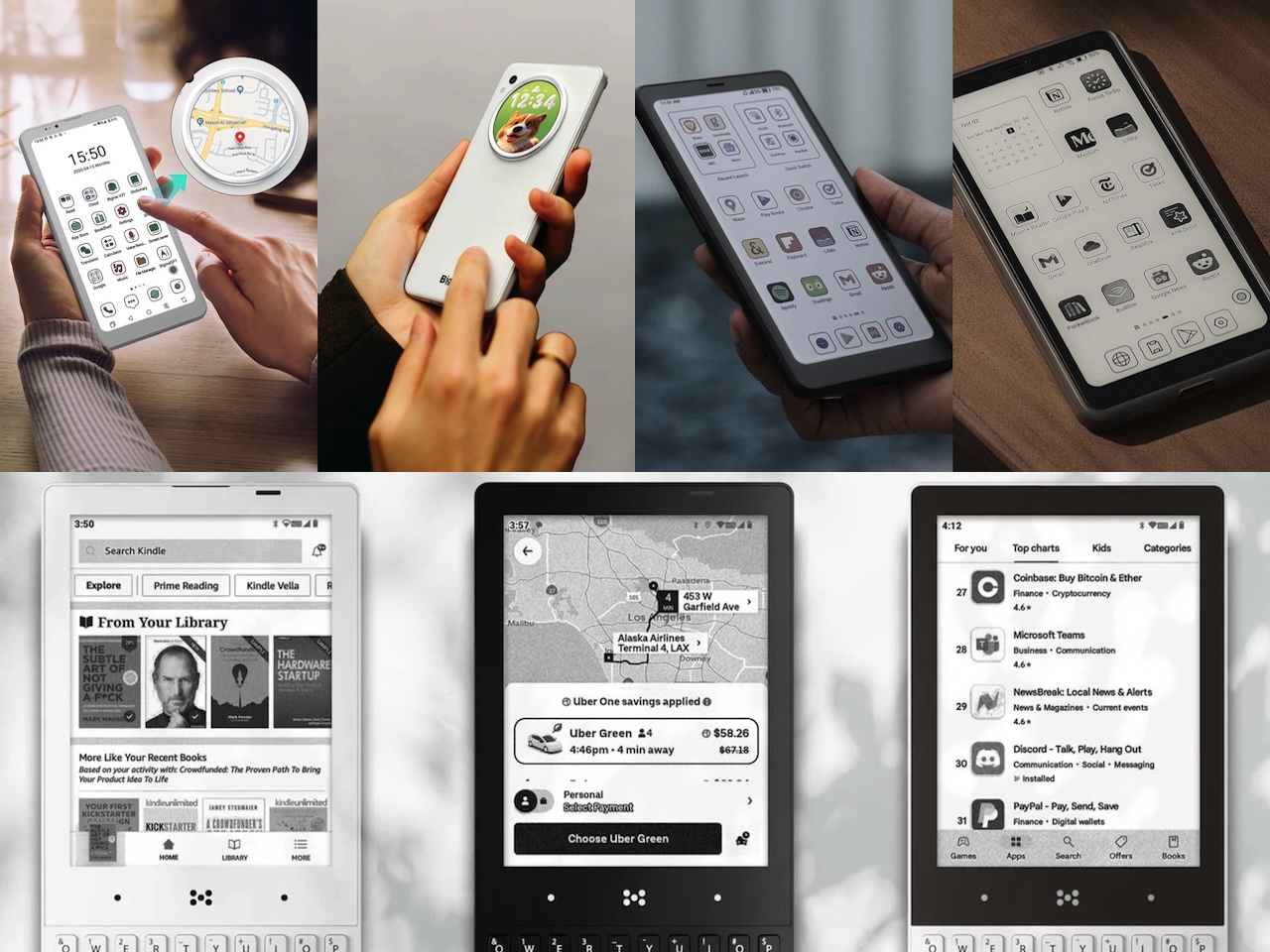
 Why E Ink phones are having a moment in 2026
More people are trading glossy OLED slabs for phones with E Ink displays that reflect light like paper instead of blasting it at your face. The payoff can be less eye strain, better outdoor readability, and multi-day battery life. The catch? Most E-Ink phones still trade speed for comfort, scrolling feels slower, videos look like flipbooks, and cameras are usually an afterthought. If you’re curious whether one can replace your daily driver, here are five 2026 picks worth taking seriously, one per brand actually shipping an E Ink phone this year.
How we sorted the list
We grouped picks around three things that tend to shape day-to-day life with an E Ink phone. There’s OS depth, whether you get full Android with Play Store access or a minimal launcher and a curated app set. There’s screen tech, with monochrome Carta panels leaning into crisp text and Kaleido 3 color layers trading a bit of contrast for hue. And there’s carrier compatibility, since LTE and 5G band coverage usually shapes how happily a phone will work on your network. Each pick below comes with a note on the trade-off it leans into, so you can pick the one that fits your life rather than chase a single best.
1. Boox Palma 2 Pro, the premium all-rounder with color and 5G
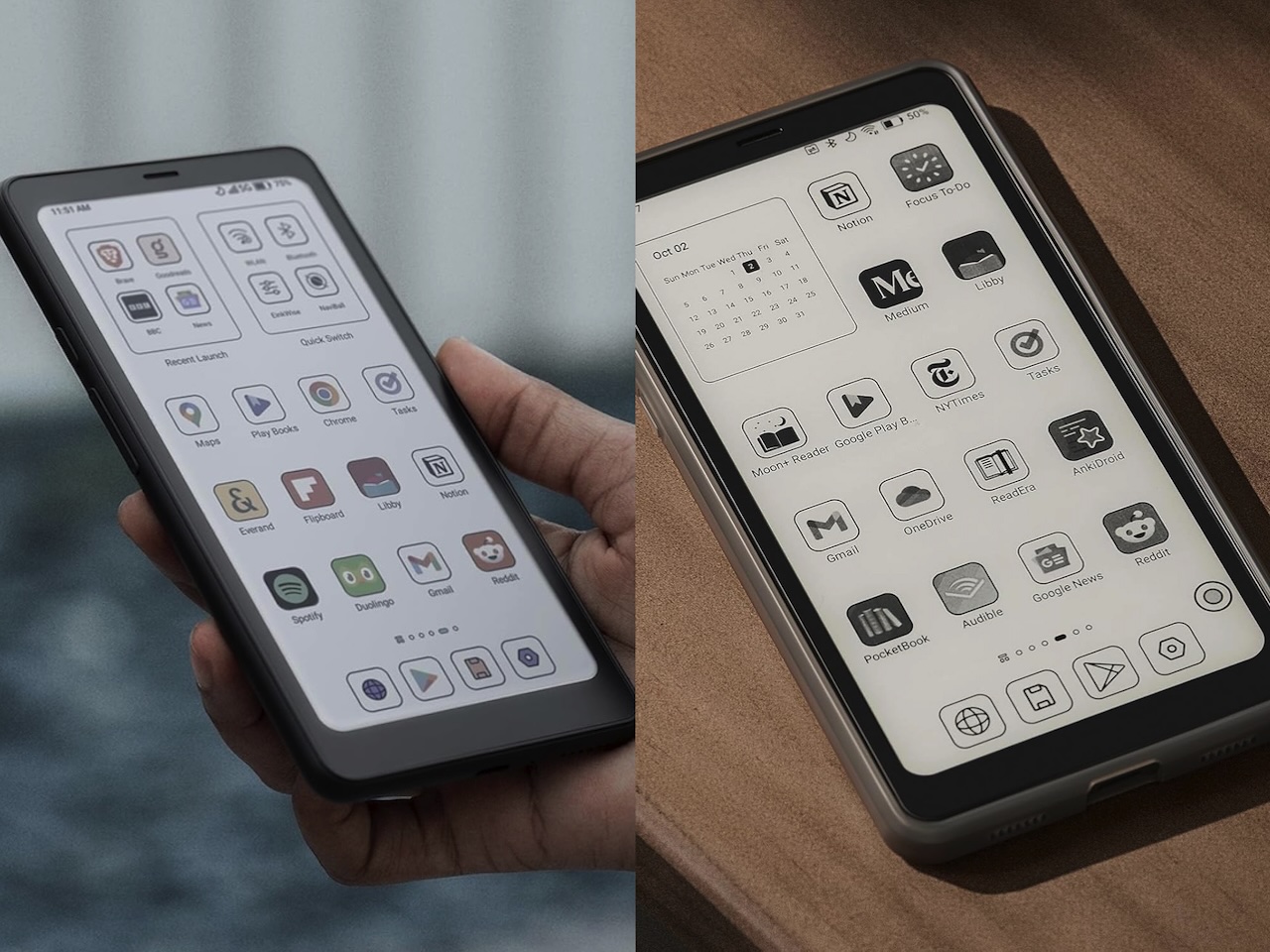
The Palma 2 Pro shipped in November 2025 as Boox’s answer to the question of whether an E Ink device can sit in the same pocket as a flagship without feeling like a downgrade. Fair warning before we get into specs: the SIM slot is data-only, so cellular calls and SMS run through WiFi-calling apps like WhatsApp or Zoom rather than the carrier itself. You get a 6.13-inch Kaleido 3 color E Ink panel, a Qualcomm Snapdragon 750G octa-core processor, 8GB of RAM, 128GB of storage expandable to 2TB via microSD, 5G data support, and a preinstalled Google Play Store on Android 15.
Price: $399.99
Where to buy: BOOX | Amazon
Boox Super Refresh tech smooths scrolling enough that web pages and PDFs don’t feel like a chore, and the 16MP rear camera is tuned for document scanning rather than vacation shots. The Palma 2 Pro is the pick when you want the Palma’s mindful-device feel but also need cellular data, color rendering for comics and magazines, and enough storage to skip the cloud entirely.
2. Bigme HiBreak Dual, the dual-screen oddity that solves the video problem
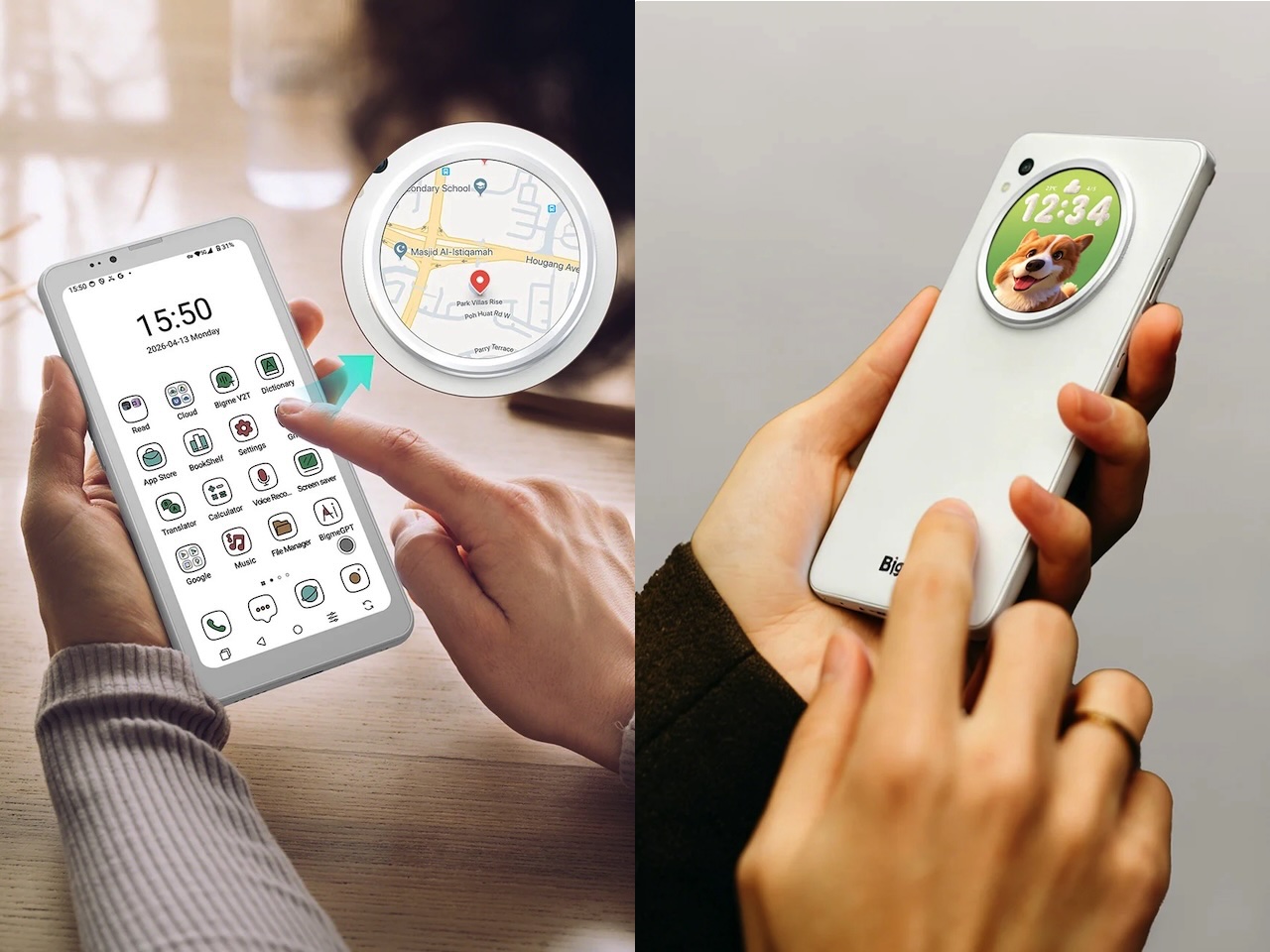
The Bigme HiBreak Dual answers the loudest complaint about E Ink phones, video playback, by adding a 360×360 LCD sub-screen to the back of the device. Reading, messaging, and scrolling happen on the front 6.13-inch E Ink panel. Flip it over and the rear LCD becomes a glance hub for incoming alerts, music playback, a color viewfinder that lets the main rear camera double as a selfie cam, and the occasional short clip. It runs Android 14 with Google Play, ships with MediaTek’s Dimensity 1080, supports dual 5G SIMs with GMS certification, and pairs with a 4,096-level pressure-sensitive stylus.
Price: From $519 | $359 (Early Bird Promo)
Where to Buy: BigMe
Configurations top out at 12GB RAM and 256GB of storage, and a 4,500mAh battery keeps it running. The trade-off is that the rear screen is small, treat it as a hub for glances rather than a full second display. Our hands-on coverage of the HiBreak Dual has more on the day-to-day.
3. Hisense A9 Pro, the import gamble that’s still worth it for some
The A9 Pro is one of the most popular E Ink phone imports in North America, with a Qualcomm Snapdragon 662, 8GB of RAM, 256GB of storage, Android 11, a 6.1-inch E Ink Carta 1200 display at 824×1648, and a 4,000mAh battery. The LTE band gamble nobody mentions, this is a China-market device, and US buyers should verify FDD bands B1/B2/B4/B5/B7/B8/B12/B13/B17/B18/B19/B20/B28 and TDD bands B38/B40/B41 against their carrier before importing.
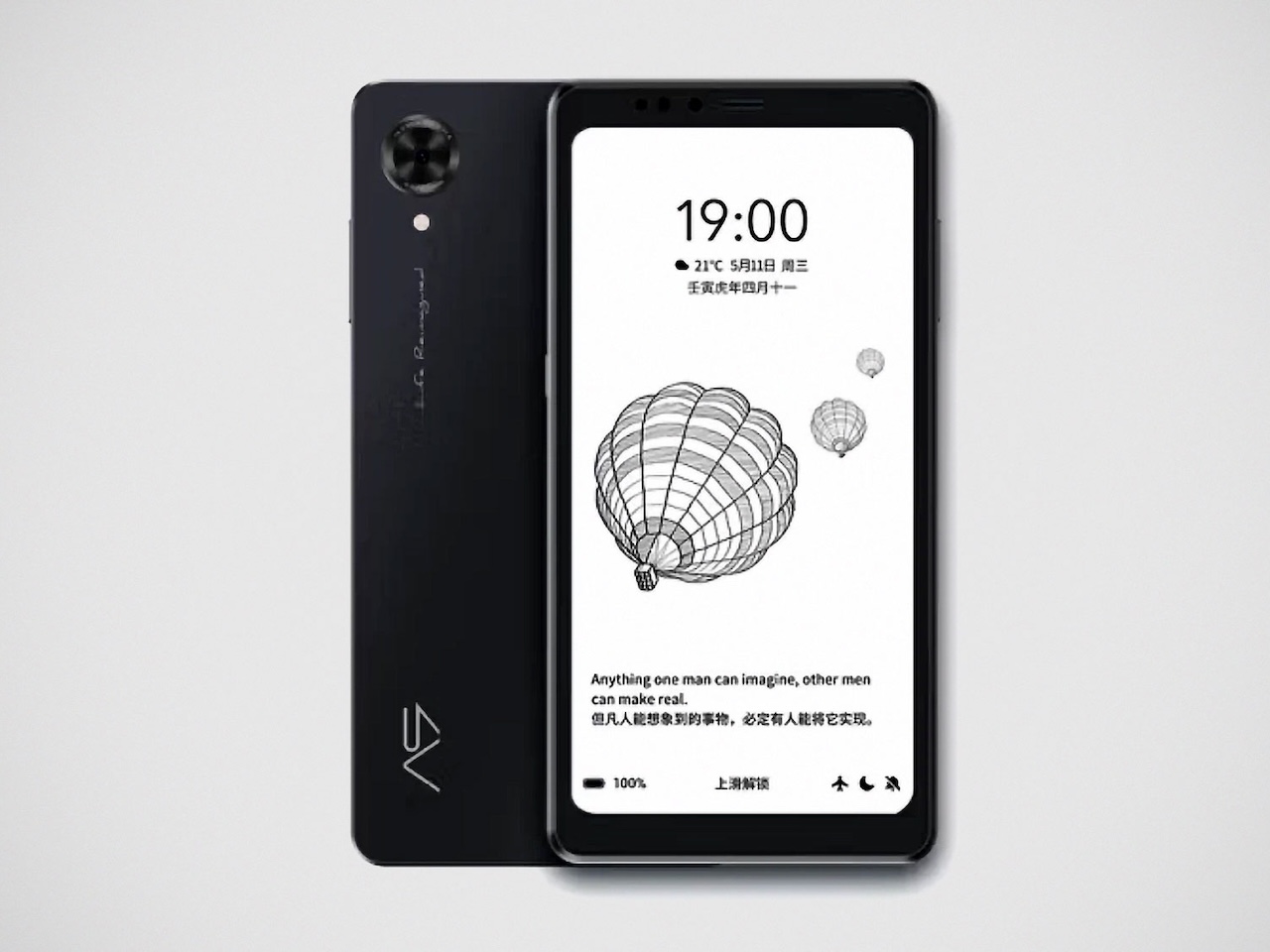 T-Mobile and Mint Mobile are the most reliable matches in the US, with AT&T and Rogers also reported to work; there’s no 5G support. If your bands line up, there’s also an active community ROM scene with LineageOS ports available. If not, you’ll see SOS-only on the status bar. Hisense has an A10 with 5G reportedly slated for mid-2026, so the A9 Pro is the current ceiling rather than the end of the line, but plan around the older Android 11 base if you import today.
4. Minimal Phone, the keyboard nostalgia pick
The Minimal Phone pairs a 4.3-inch grayscale E Ink touchscreen at 800×600 and 230 PPI with a physical QWERTY keyboard, the kind BlackBerry loyalists have been mourning for a decade. It runs Android 14 with full Google Play access out of the box (no sideload workaround needed), supports NFC, wireless charging, dual SIM with microSD expansion, and includes a headphone jack and fingerprint sensor.
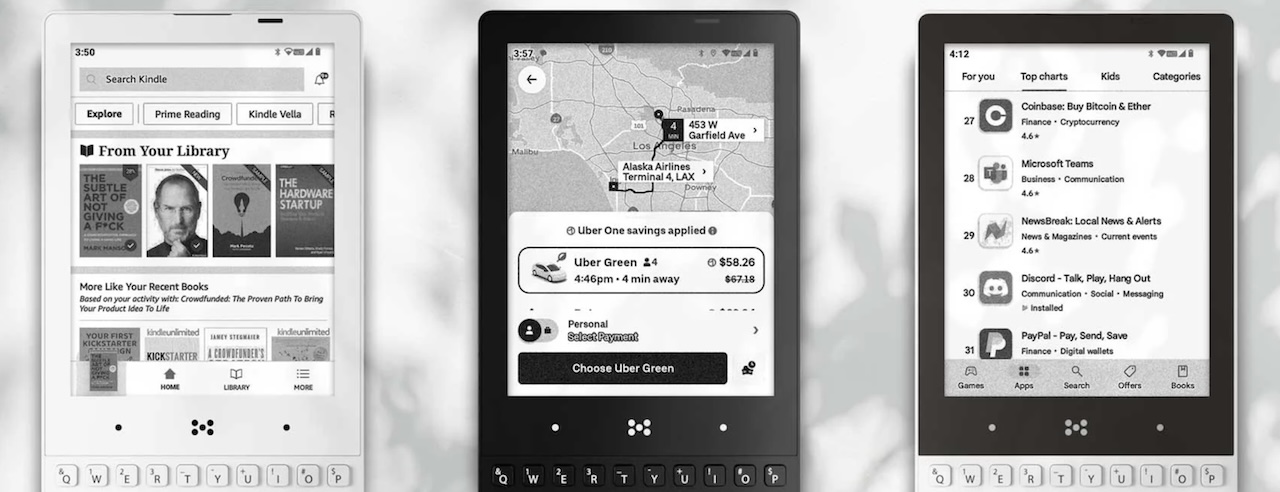 RAM and storage scale from 6GB/128GB starting at $499 up to 8GB/256GB at $599, with pre-order windows occasionally cutting that to $399. Physical keys pair oddly with E Ink in the best way, the slower refresh rate stops feeling like a flaw when you’re typing tactile messages instead of swiping at glass.
5. Mudita Kompakt, the minimalism pick for a true digital detox
The Kompakt isn’t trying to replace your phone, it’s trying to replace your relationship with your phone. The 4.3-inch 800×480 E Ink display runs MuditaOS K, a de-Googled Android build with calls, texts, calendar, alarm, music player, offline maps, notes, voice recorder, and an e-reader. 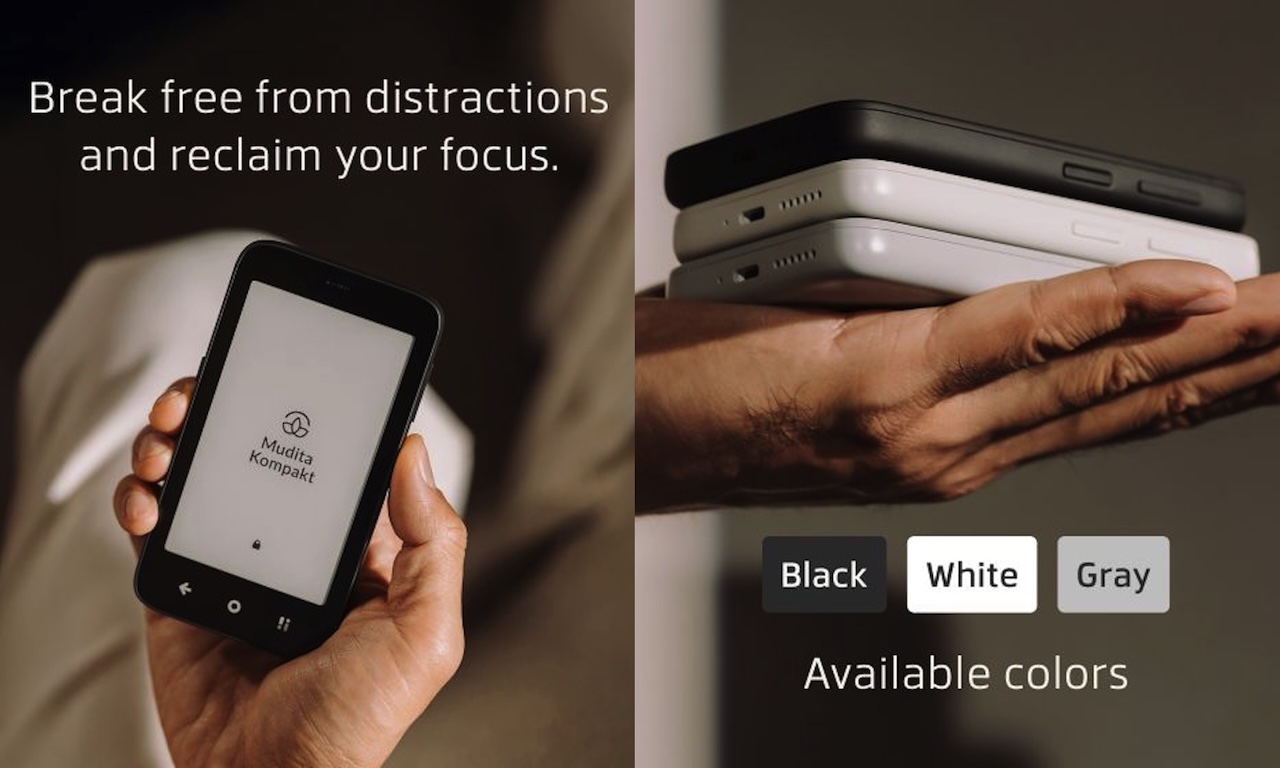
Price: $399 at Mudita direct, $379 on sale at third-party retailers, $439 list
Where to Buy: Mudita
There’s no preinstalled app store, but the Mudita Center desktop tool lets you sideload what you need. Hardware is honest minimalist: quad-core MediaTek MT6761V, 3GB RAM, 32GB storage with microSD support, a 3,300mAh battery rated for up to six days standby, 4G LTE, eSIM plus nano-SIM, NFC, GPS, and an 8MP camera for documents. If a true detox is the goal, this is the most honest expression of it in a phone you can actually buy.
How to choose between them
If you want a daily driver that won’t make you miss your iPhone, the Boox Palma 2 Pro is the premium ceiling, color, 5G, Google Play, and enough storage to live offline. If video matters more than purism, the Bigme HiBreak Dual is the only pick on this list with a dedicated color screen for short clips and notifications. If you live near a T-Mobile tower and don’t mind importing, the Hisense A9 Pro is one of the cheaper ways into full Android on E-Ink. If a physical keyboard is the whole point, the Minimal Phone is the most current option in this category. And if the real goal is using your phone less, the Mudita Kompakt is the most honest expression of that intent.
Frequently Asked Questions
Are e-ink phones good for your eyes?
E-Ink displays reflect ambient light like paper instead of emitting light at your face, so they cut blue light exposure and tend to reduce eye fatigue during long reading sessions. They aren’t a medical fix, but most users who get eye strain from OLED or LCD report meaningful relief after switching.
Can the Boox Palma 2 Pro make phone calls?
Not over a cellular network. The Palma 2 Pro has a data-only SIM slot, so calls and SMS run through WiFi-calling apps like WhatsApp, Zoom, or Google Voice rather than your carrier.
Does the Hisense A9 Pro work on T-Mobile in the US?
Yes for most US markets. The A9 Pro covers LTE bands B2, B4, B5, B12, and B17, which line up with T-Mobile and Mint Mobile coverage. There’s no 5G support, so expect 4G LTE speeds only, and verify your local tower bands before importing.
What’s the best e-ink phone with a physical keyboard?
The Minimal Phone is the most current e-ink phone with a built-in QWERTY keyboard, running Android 14 with full Google Play access out of the box. It starts at $499 for the 6GB/128GB configuration.
Can you use Google Play on an e-ink phone?
Yes on most picks in this list. The Boox Palma 2 Pro, Bigme HiBreak Dual, Hisense A9 Pro, and Minimal Phone all ship with Google Play Store preinstalled. The Mudita Kompakt is the exception, it runs MuditaOS K with sideloading through the Mudita Center desktop tool.