Most knife roundups push you toward $150 blades that live in a display case, not a pocket. The real action sits under $75, where a good folder gets used, lost, and replaced without guilt. That price band is exactly where most readers actually shop, and it happens to be where a handful of brands now punch far above their sticker. This year the sub-$75 shelf is stacked, so the hard part isn’t finding a decent knife but picking the one that fits how you carry.
I set a hard ceiling of $75 and looked for blades that earn their keep every day, weighing steel quality, lock security, and pocket manners over flashy handle scales. If you want a wider net, our roundup of budget EDC picks under $100 covers the next tier up. For pocket-and-legal-carry context, the folders that fit your pocket and the law guide is worth a read before you buy.
The Civivi Elementum anchors nearly every other budget list, so it sits out here to make room for folders that get less airtime.
1. Ontario RAT 2: Best first EDC knife
The RAT 2 is the easy answer when you want one blade that just works. Ontario builds it around AUS-8 steel, a stainless workhorse that sharpens fast and shrugs off humidity, which matters if you carry in a place like Florida.
The 3-inch drop-point blade rides on smooth washers, and the liner lock snaps in with little play. At roughly 2.75 ounces it disappears in a pocket, and the nylon handle survives drops that would chip fancier scales.
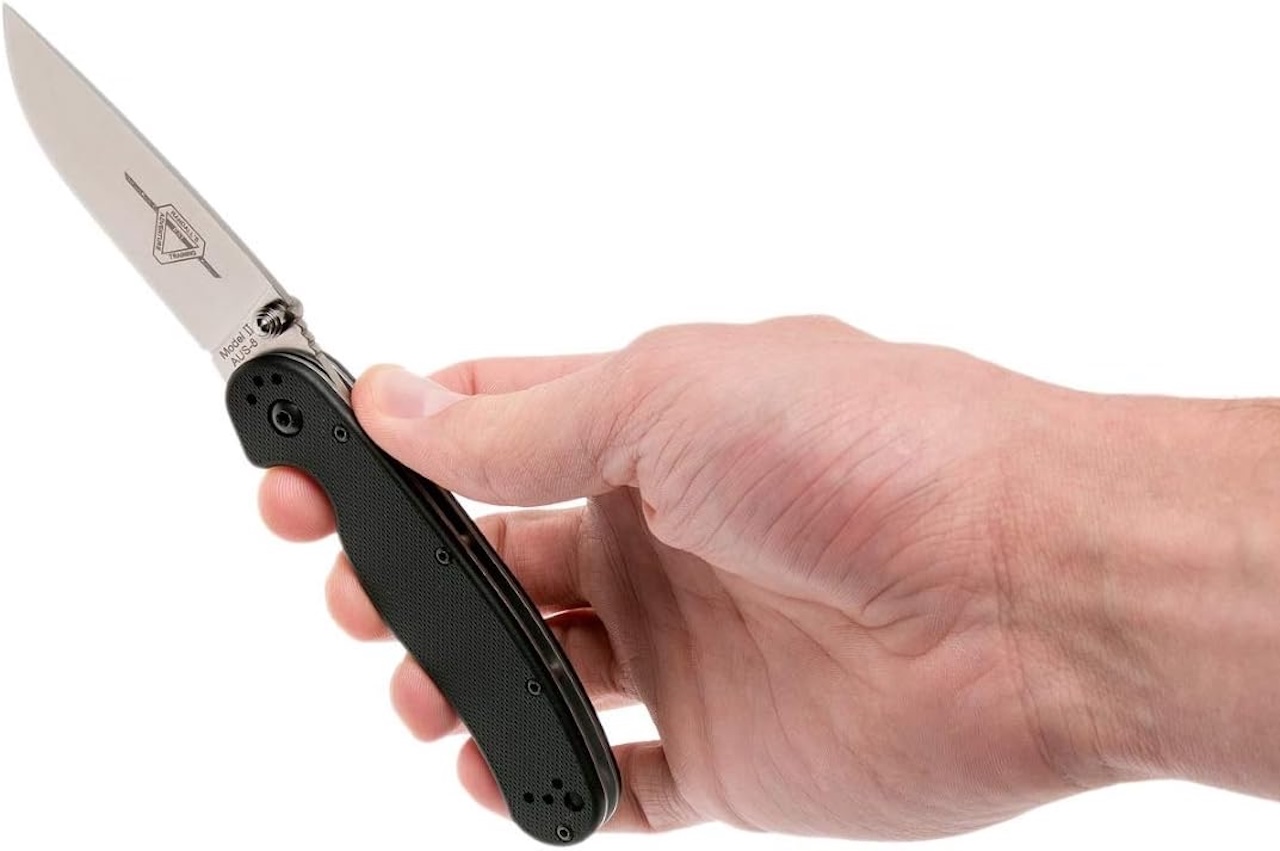
It’s the kind of beater you stop babying fast. It opens chores from box tape to lunch apples without complaint, and replacing it costs less than a nice dinner if you ever lose it. AUS-8 won’t hold an edge as long as premium powder steels, but touch-ups take seconds on any pocket stone.
Price: $41.98 | Where to Buy: Amazon
2. CRKT Pilar: Best compact city carry
The Pilar shrinks EDC down to something that rides in a coin pocket. CRKT wraps 8Cr13MoV steel in a stainless frame lock, and the 2.4-inch sheepsfoot blade looks unthreatening enough for office use. Jesper Voxnaes designed the wide, stubby profile, so it feels chunky in hand despite the short blade.
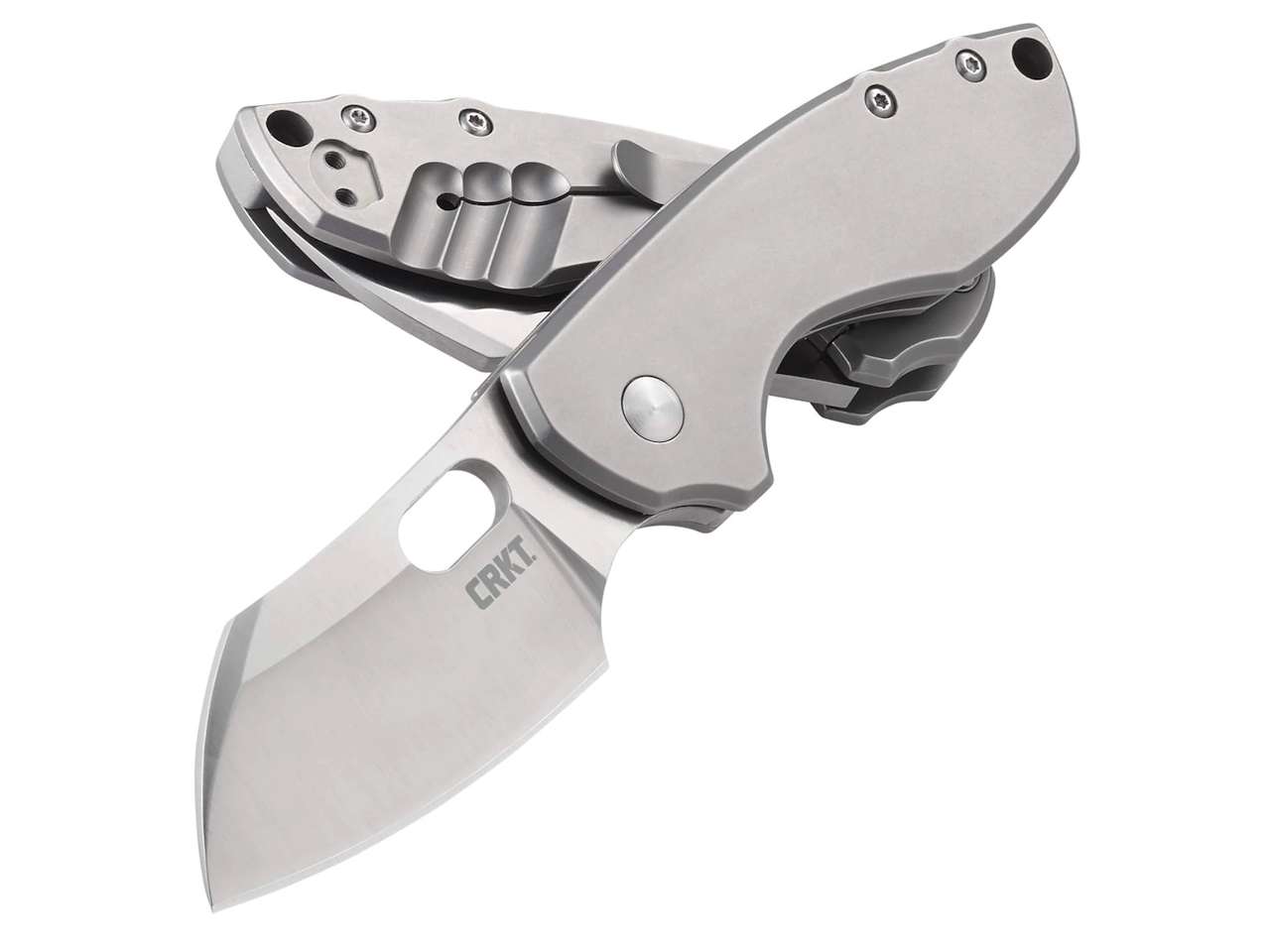
At about 4.2 ounces it carries heavier than its size suggests, which some people read as reassuring heft. The frame lock stays tight, and the blunt tip makes it a calm choice around coworkers.
Price: $24.99 | Where to Buy: Amazon
3. Vosteed Corgi Pup: Best crossbar lock for the office
The Corgi Pup shrinks that crossbar-lock charm into a knife small enough to forget you’re carrying. Vosteed runs 14C28N steel on a 2.37-inch drop-point blade, a Sandvik stainless that sharpens fast and fends off rust in humid air. A front flipper rides on a caged ceramic ball bearing, so the blade snaps out smooth with one pull. Design duty went to Yue, who gave it clean lines and a G10 handle that reads more boutique than budget.
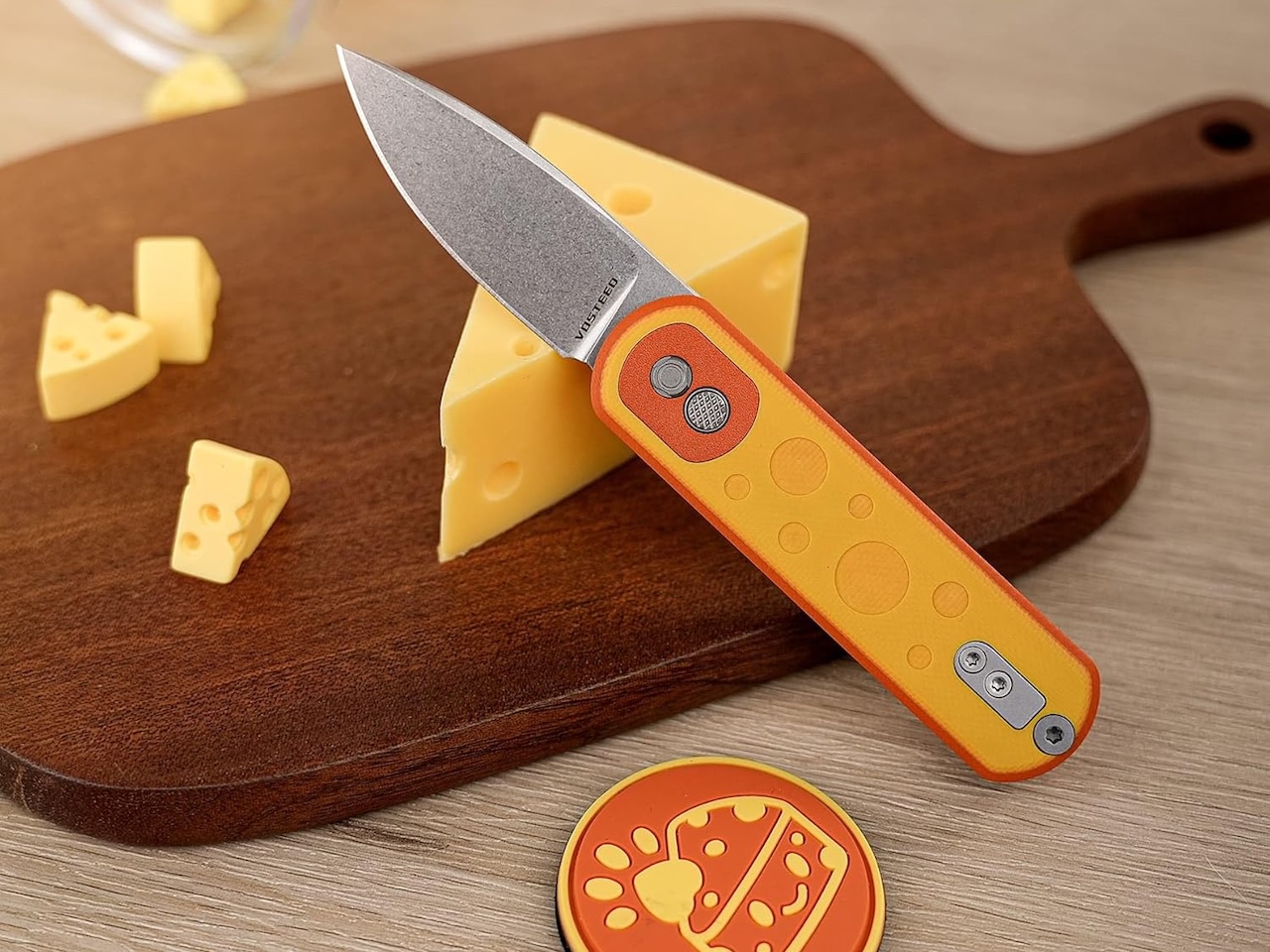
The star here is the Trek Lock, a crossbar design that unlocks from either side and keeps fingers clear of the blade path. At about 3 ounces and under 6 inches open, it slips into a slacks pocket without printing or pulling. The stubby 2.37-inch blade stays well under most office limits, so it clears the desk drawer where a longer folder would raise eyebrows.
Price: $59 | Where to Buy: Amazon
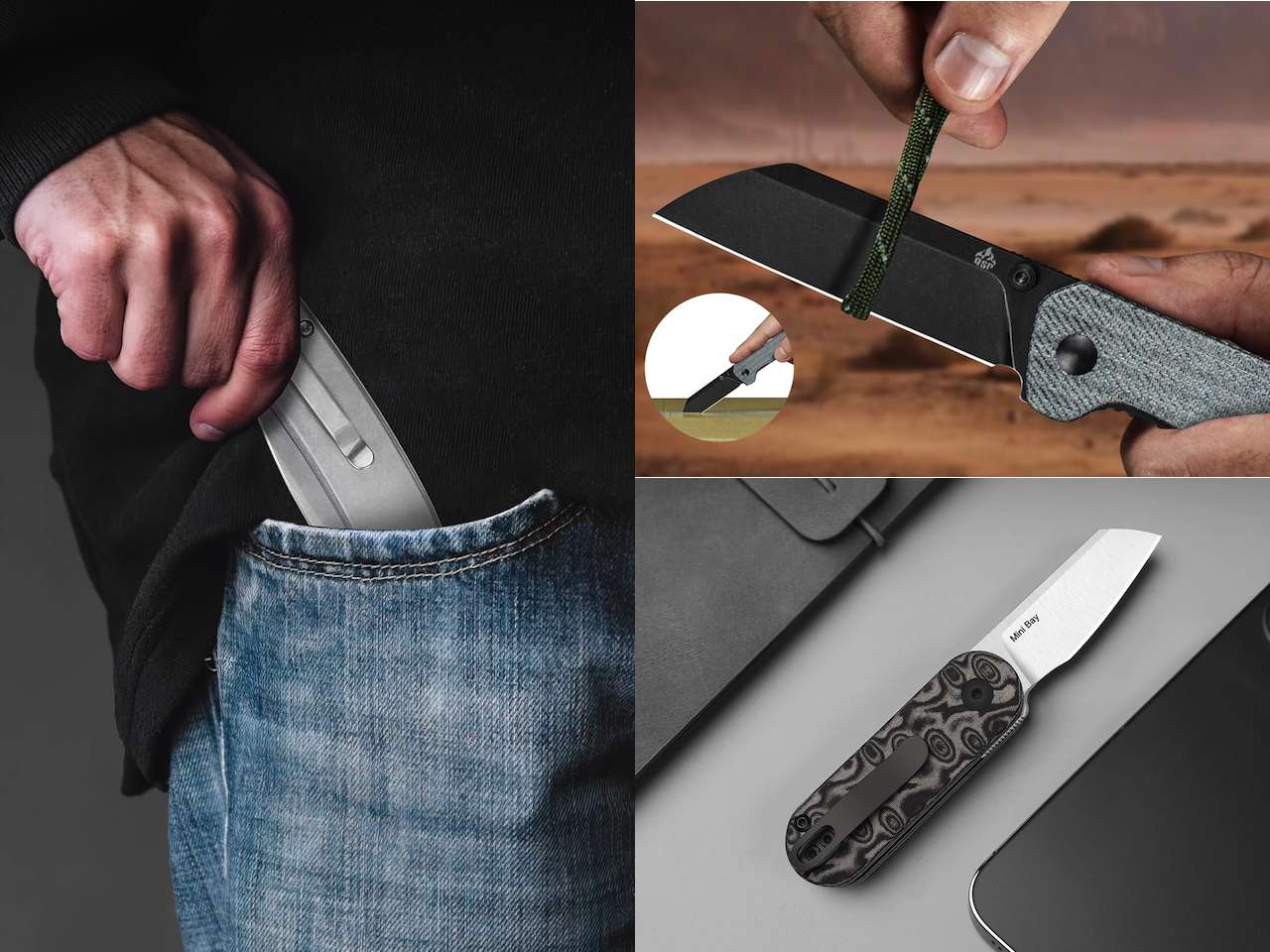
4. Kizer Mini Bay: Best ultralight keychain carry
The Mini Bay is the one that rides on a keyring instead of a pocket clip. Kizer runs 154CM steel on a 1.9-inch sheepsfoot blade, a stainless that sharpens easily and holds a working edge longer than you’d expect from something this small. Liz and Azo designed the stubby G10 handle to fill a full grip despite the tiny footprint.
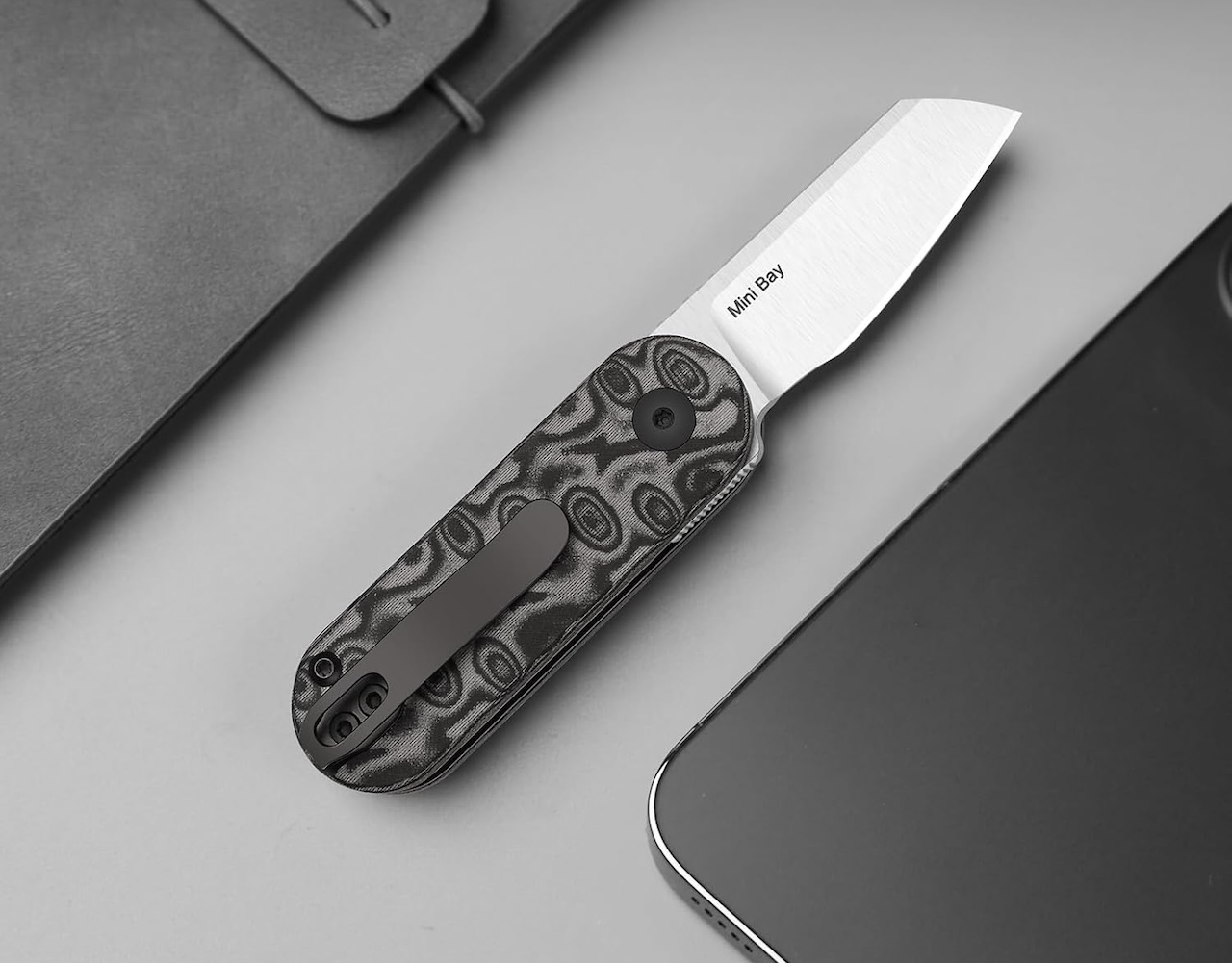
This one skips a lock entirely and runs as a slip joint, which keeps it legal in more places than a locking folder. A firm detent holds the blade open for light cutting, so treat it as a letter opener and box slicer rather than a hard-use tool. At about 2 ounces it’s the smallest carry here, easy to forget until you need it. That non-locking design also makes it a calm pick to hand a coworker or carry through cities with strict knife rules.
Price: $49.96 | Where to Buy: Amazon
5. Kershaw Leek: Best assisted opening pick
The Leek is the veteran that still earns a spot two decades after Ken Onion designed it. Kershaw builds this run in 14C28N steel, a Sandvik stainless that takes a keen edge and resists rust better than the old 8Cr recipe. SpeedSafe assisted opening flicks the slim 3-inch drop-point blade out with one push, and a frame lock backs it up. Best of all, this one is made in the USA and still lands under the cap at street prices.
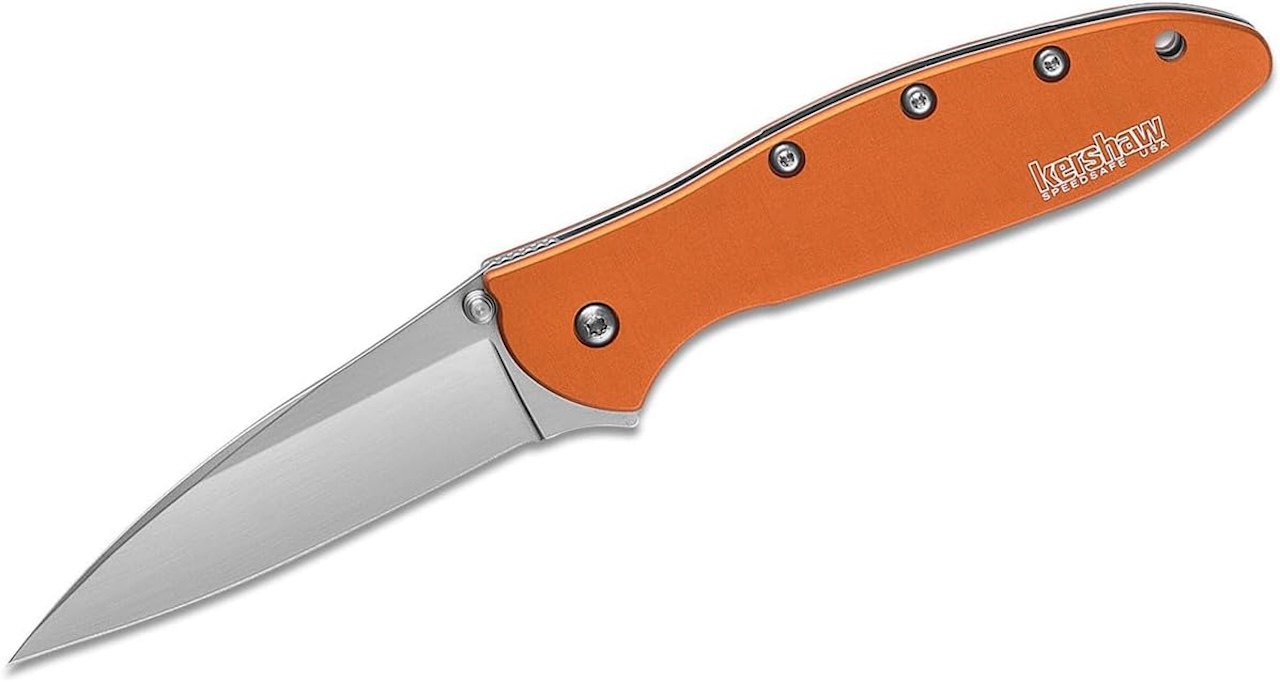
The narrow blade and 3-ounce weight let the Leek slip into dress pockets that fatter knives bulge. That same slim tip is delicate, so this is a slicer rather than a pry bar. A safety slider locks the blade closed for pocket peace of mind, a nice touch on an assisted opener.
Price: $69.20 | Where to Buy: Amazon
6. CJRB Pyrite: Best button-lock value
The Pyrite proves button locks no longer carry a premium price. CJRB runs AR-RPM9 steel, a newer powder stainless that sharpens easily yet holds an edge better than the older budget recipes. A steel handle wraps the 3.11-inch drop-point blade in a dense, planted package that feels pricier than it is.
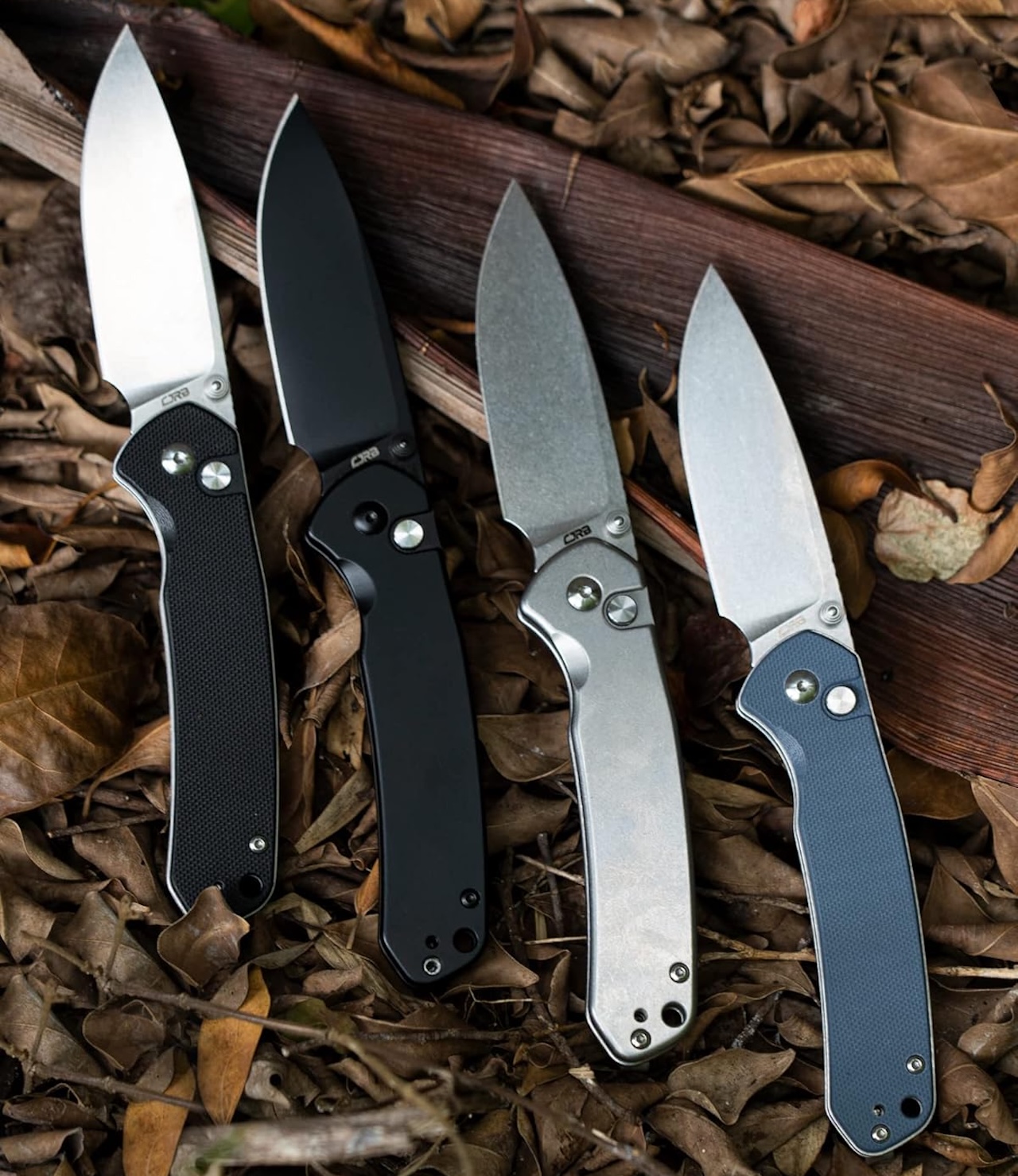
The button fires the blade open with a satisfying snap and locks up with no vertical play. A ceramic ball-bearing pivot keeps the action smooth over time. The polished steel scales look sharp but turn slick with wet hands, the one thing worth noting. For the money, it’s the easiest way to try a button lock without gambling on a no-name brand.
Price: $39.99 | Where to Buy: Amazon
7. QSP Penguin: Best steel upgrade for the money
The Penguin sneaks a real steel upgrade into a knife that costs less than a large pizza. QSP uses D2 tool steel on a 3.1-inch sheepsfoot blade, a harder semi-stainless pick that holds an edge far longer than entry steels. Denim micarta or G10 scales give it a grippy, broken-in feel straight out of the box. At about 3.2 ounces it rides flat thanks to a deep-carry clip that hides most of the handle.
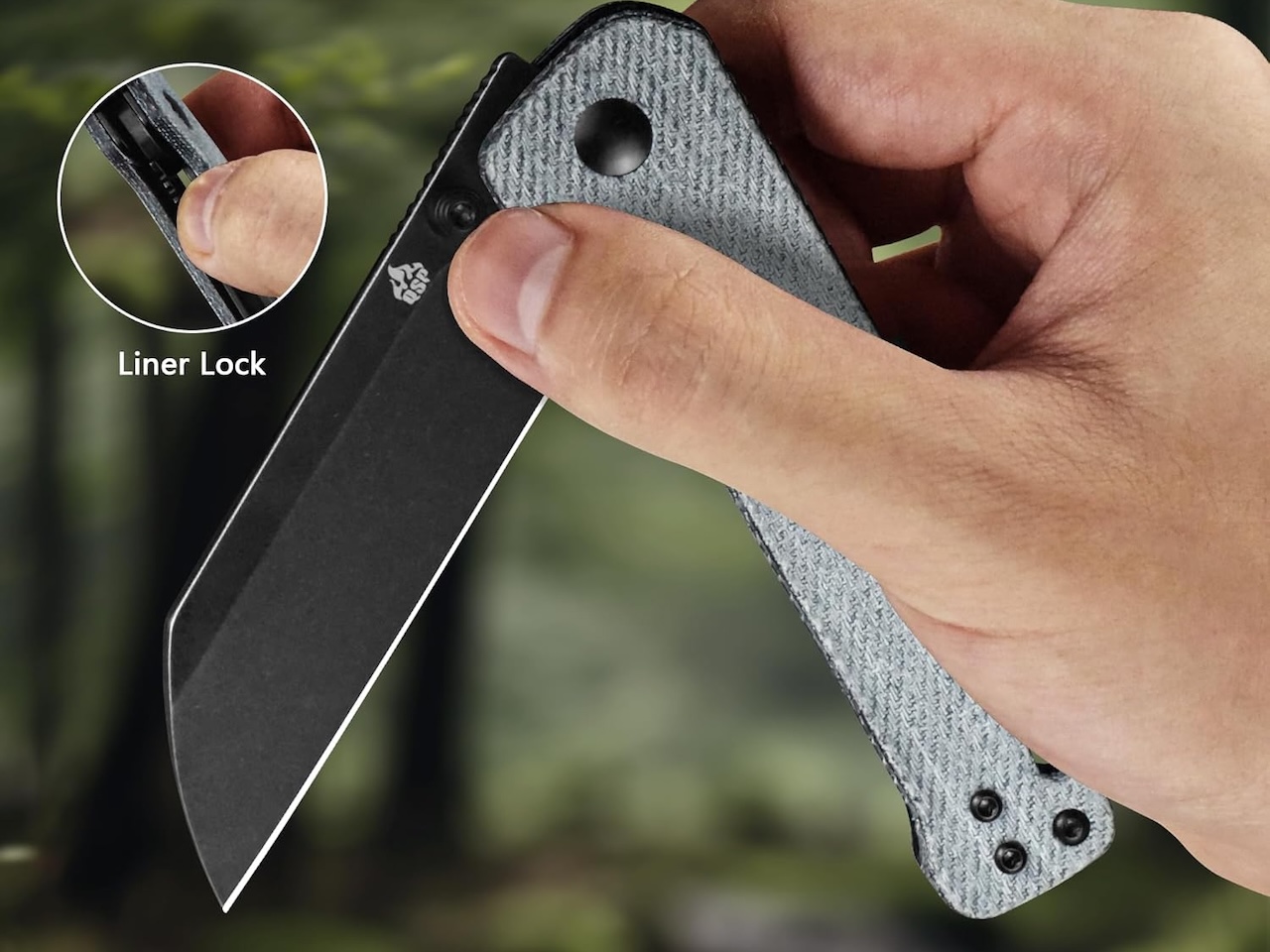
The straight sheepsfoot edge makes it a natural for breaking down boxes and clean utility cuts. Dual thumb studs flick it open on smooth washers, and the liner lock sits with no wobble. D2 wants a wipe of oil in humid weather since it isn’t fully stainless, so keep it dry after sweaty carry.
Price: $38.99 | Where to Buy: Amazon
Picking the right one for your pocket
Match the knife to how you actually carry, not to the spec sheet that looks best. Grab the RAT 2 or the QSP Penguin when you want a no-worry work blade that shrugs off abuse and costs little to replace. Reach for the Pilar when you want a compact, unthreatening shape for city and office days. The Leek suits anyone who wants a fast one-hand flick backed by a Made in USA stamp.
Go with the Corgi Pup for a crossbar lock that flips open at the desk, the Mini Bay for the smallest blade that clears strict knife laws, or the Pyrite to feel a button lock snap for cheap. Any of these seven clears the bar I set, so the wrong choice here is mostly the one that doesn’t fit your daily routine. If your budget stretches a little, our Benchmade alternatives guide shows what another $50 buys.
Frequently Asked Questions
What steel is best on a budget EDC knife?
Look for D2 or 154CM if edge retention tops your list, since both hold longer than entry steels like 8Cr13MoV. AUS-8 and 14C28N sit in the sweet spot for easy sharpening and everyday toughness. For a humid climate, lean toward the more stainless options and keep the blade lightly oiled.
Are these knives legal to carry every day?
Blade length and lock rules vary by city and country, so check your local limits and favor the shorter, non-assisted picks when in doubt. Blade lengths here run from about 2 to just over 3 inches, which keeps most of them legal in more places than longer blades.
Is a liner lock or a frame lock stronger?
Both handle daily cutting fine when built well, and lock consistency matters more than raw strength at this price. Frame locks like the Pilar tend to feel more solid because the whole handle slab braces the blade. Liner locks like the RAT 2 trade a little of that for easier one-hand closing. Neither one will let you down on the light EDC tasks these knives are built for.
What does assisted opening mean on the Kershaw Leek?
Assisted opening uses a spring that finishes the job once you nudge the blade past a set point, so it snaps out fast with one push. It isn’t the same as an automatic, since you start the motion yourself, which keeps it legal in more areas. The Leek adds a slider lock so the blade stays shut in your pocket.
How often should I sharpen a budget EDC knife?
Most people do fine with a quick strop every couple of weeks and a full sharpening every month or two of steady use. Softer steels like AUS-8 need touch-ups sooner but reward you by sharpening in seconds. Harder steels like 154CM stretch the interval but take more effort when they finally dull.