NEWS – Creator laptop collaborations usually stop at co-branded stickers and a logo swap. ASUS and GoPro went somewhere different with the ProArt PX13 GoPro Edition, and it’s now available in the United States starting at $2,999.99.
I’ve had this laptop on my desk, and I wanted to share what I know so far. This isn’t a full review. I haven’t finished my testing suite yet. But the embargo lifted today, the buy links are live, and there’s enough here worth talking about right now.
What You’re Actually Getting for $2,999.99
The standard ProArt PX13 costs $2,799.99 and ships with 64GB of RAM. The GoPro Edition costs $200 more and doubles that to 128GB of unified LPDDR5X-8000 memory.
Price: $2,999.99 (GoPro Edition) | $2,799.99 (Standard)
Where to buy: ASUS Store | Best Buy (GoPro Edition) | Best Buy (Standard)
But the price gap covers more than just memory. You’re also getting an ASUS Pen 3.0 with a wireless charger, a hardshell carry case with a belt-mount system, a protective sleeve, and a year of GoPro Premium+. ASUS is also throwing in three months of Adobe Creative Cloud All Apps and six months of CapCut Pro.
On paper, the accessories and subscriptions alone would cost well over $200 if you bought them separately. The 128GB memory upgrade is essentially free. That’s the kind of math that makes this configuration hard to ignore, even if you’ve never touched a GoPro.
The Hardware That Matters
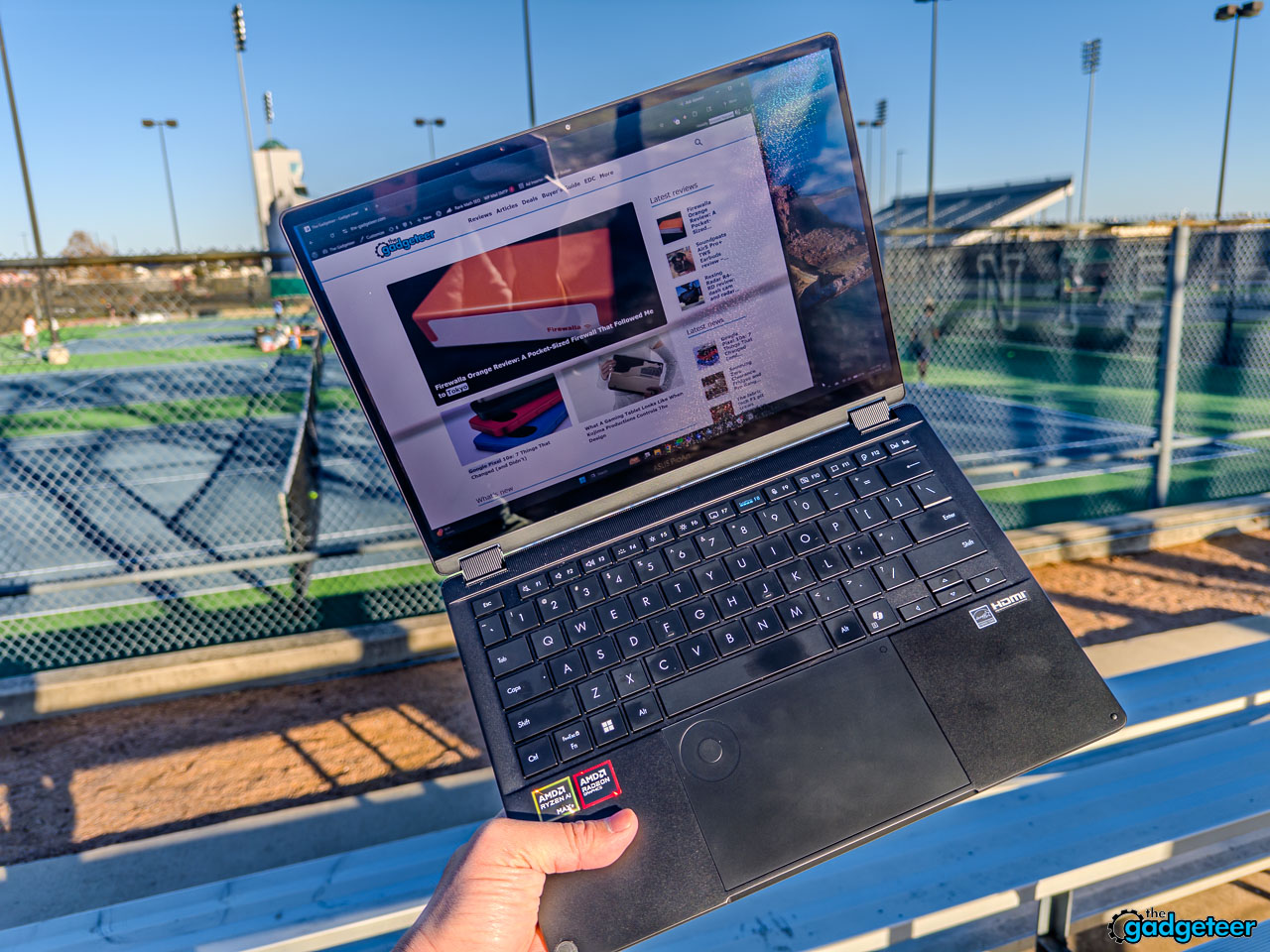
Under the hood, you’re looking at AMD’s Ryzen AI MAX+ 395 with 16 Zen 5 cores and a 50 TOPS NPU. The unified memory architecture means up to 96GB can be dynamically allocated as VRAM. For a 13.3-inch convertible that weighs 3.06 pounds, those numbers feel almost unreasonable.
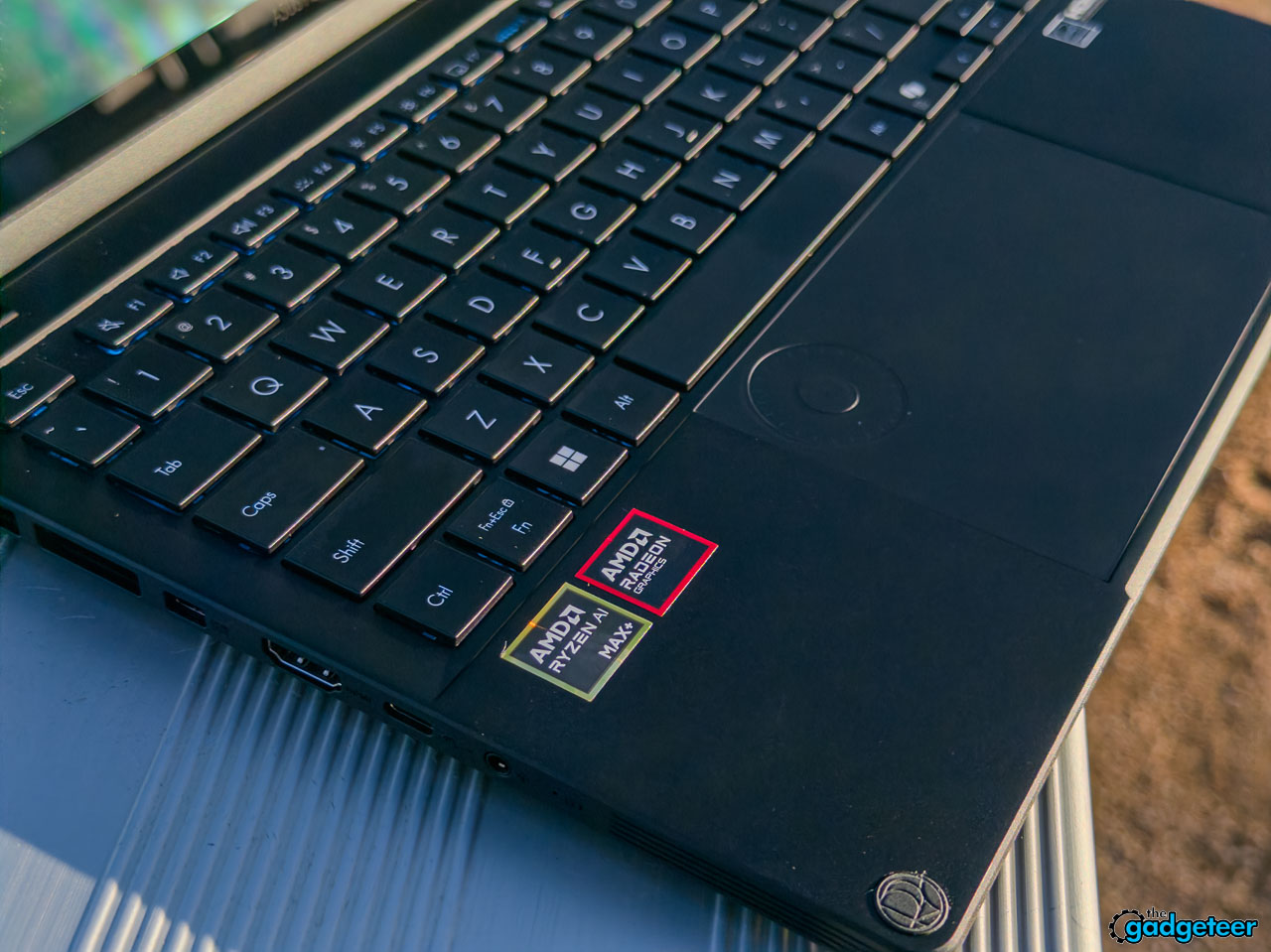
The display is a 3K OLED panel running at 2880×1880 in a 16:10 aspect ratio. DCI-P3 100% coverage, Delta E under 1, and PANTONE validation. Color accuracy isn’t a marketing bullet point here. It’s genuinely reference-grade on this screen. I’ve been staring at it for days and the calibration holds up.
Ports are solid for a machine this size. Two USB4-C connections handle 40Gbps and 100W power delivery each. You also get a full-size USB-A, HDMI 2.1, a UHS-II microSD slot, and a headphone jack. That microSD slot is a quiet highlight for anyone pulling cards from cameras all day.

The GoPro Touches
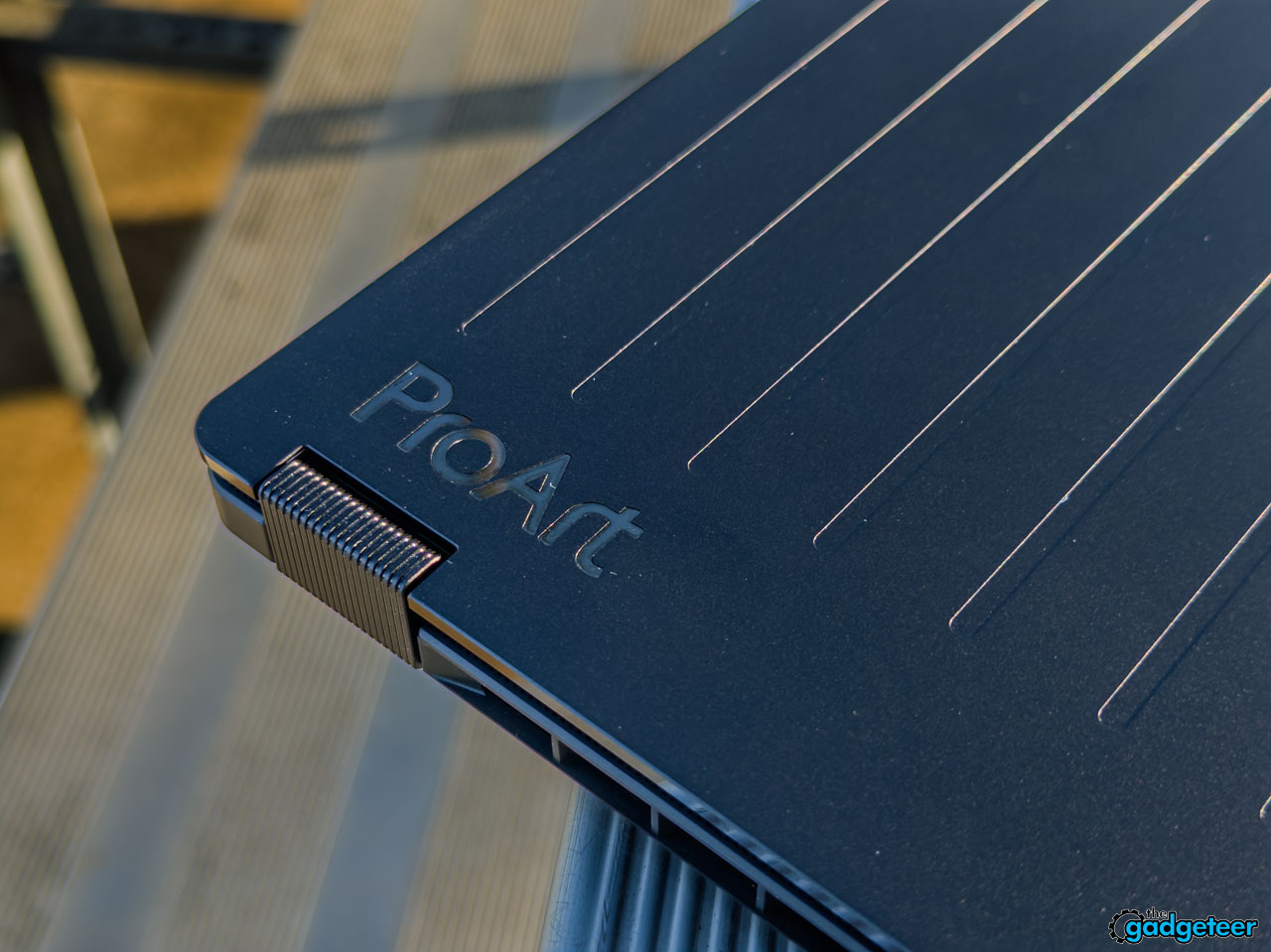
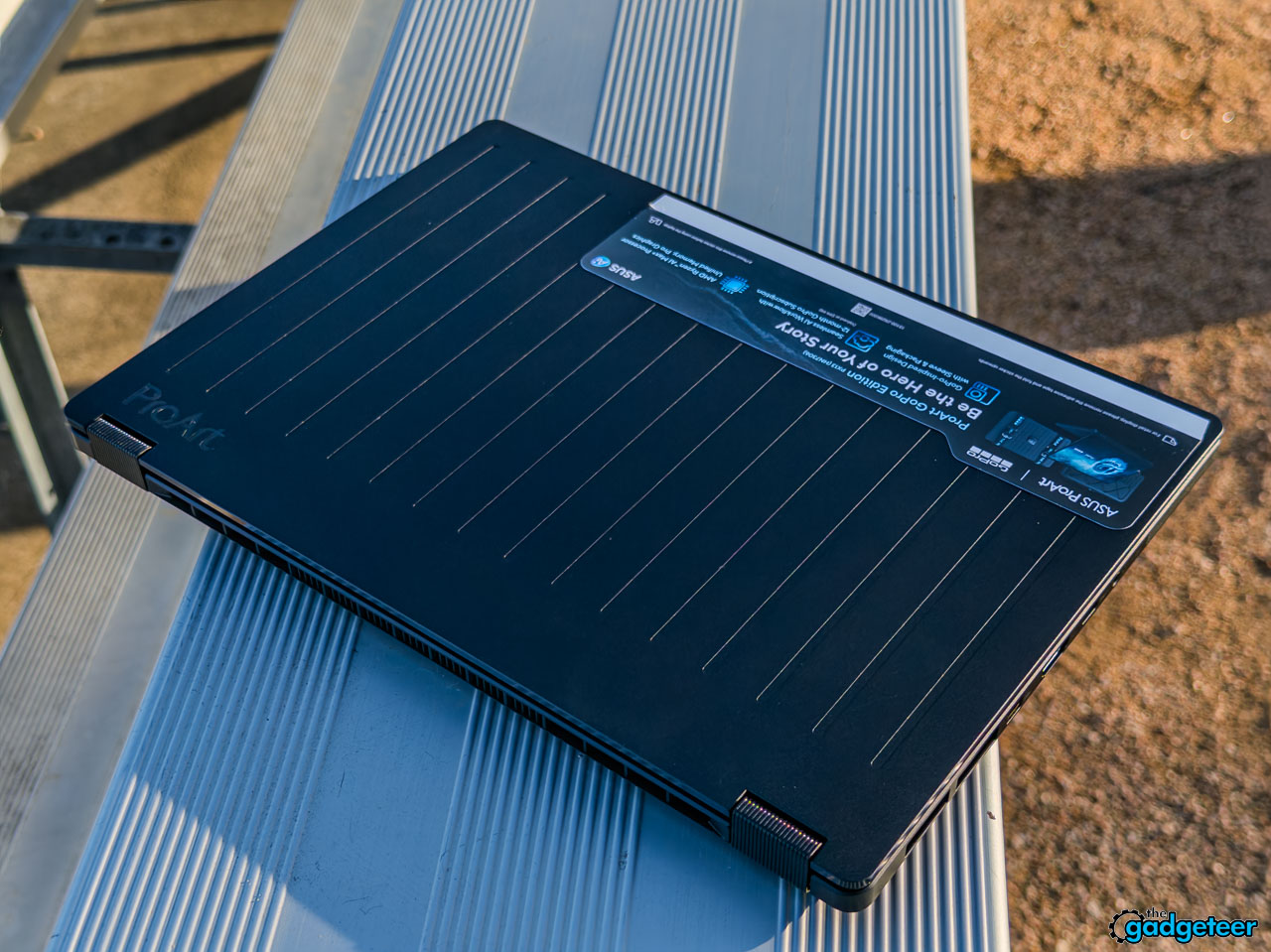
This is where the collaboration gets interesting. The design pulls from GoPro’s Hero cameras with vertical texture lines running across the lid and CNC-engraved details above the keyboard. There’s a matte-to-glossy black finish that feels intentional, not decorative.

The Cyan Blue keyboard backlight is subtle and distinctive. It doesn’t scream co-branding. It just looks different from every other black laptop on the market.
Then there’s the packaging. The foam cube that ships inside the box is customizable and doubles as a gear carry case. It’s a small thing, but it shows someone thought about how creators actually transport their stuff. The hardshell case has a belt-mount system that clips to bags and straps, which makes more sense when you consider this laptop weighs under 3.1 pounds and converts into a tablet.
What I Love So Far
I’ll say it plainly: this thing is fast. Loading large Premiere Pro timelines with 5.3K GoPro footage feels smoother than I expected from a 13-inch machine. The unified memory architecture lets the GPU pull from a massive pool without bottlenecking, and you can feel the difference when scrubbing through multicam edits.
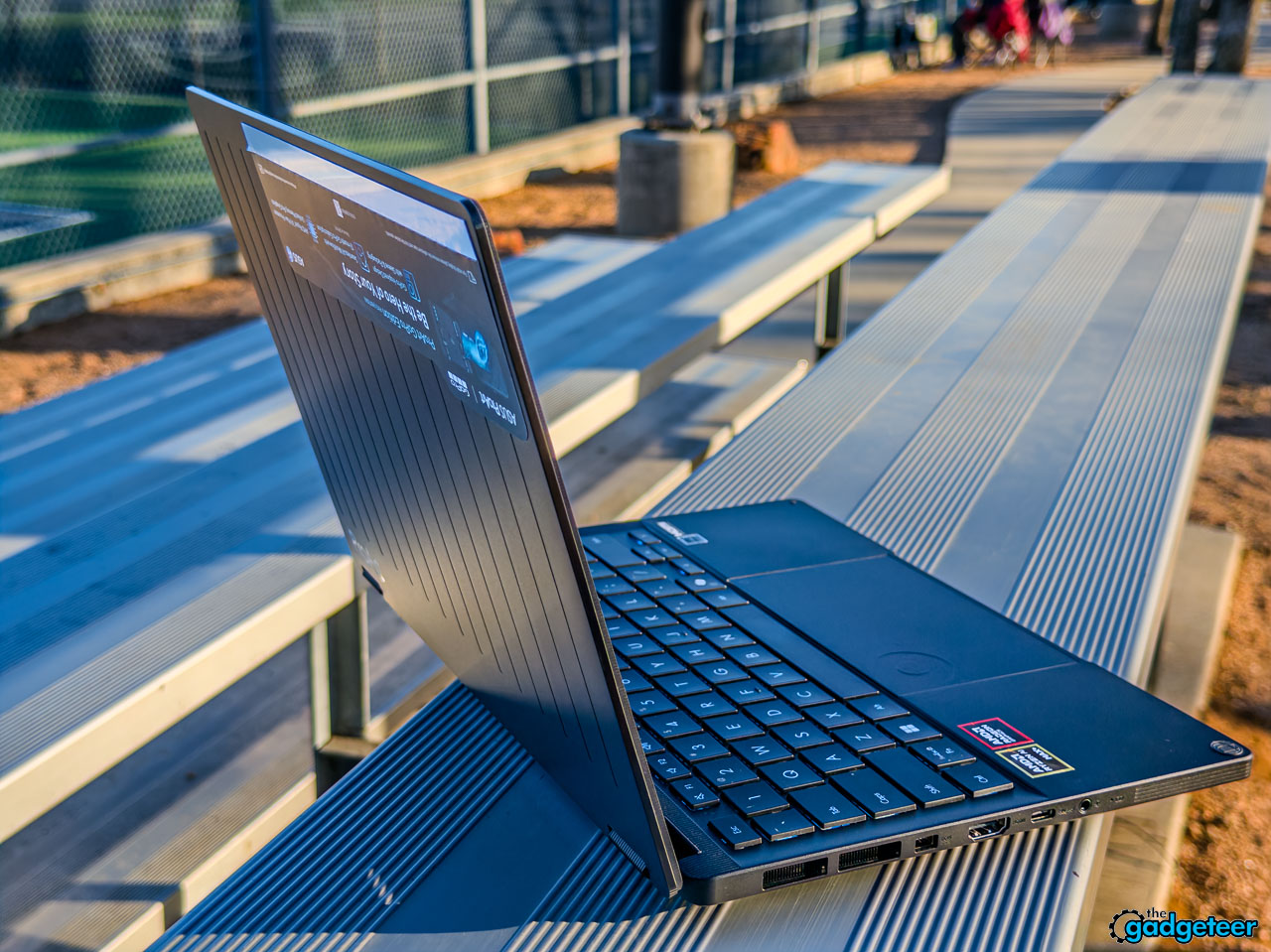
The build quality is excellent. It feels dense and solid in your hands without being heavy. The convertible hinge is sturdy, and using it in tent mode for monitoring playback on set just works. MIL-STD-810H durability certification means I’m not babying it when it goes in my bag.
StoryCube, the bundled media management tool, actually surprised me. It organizes footage by faces, locations, and timestamps with on-device AI. It’s not a replacement for a proper DAM system, but for sorting through a week of GoPro clips, it’s genuinely useful.
The 73Wh battery keeps things running longer than most creator laptops I’ve tested at this performance level. I haven’t done my full battery benchmark yet, but casual use throughout the day has been encouraging.
What I Still Need to Test
I haven’t run my full benchmark suite yet. That means I don’t have concrete numbers for sustained GPU performance under extended renders, exact battery life figures, or thermal behavior during prolonged export sessions. Those results will come in the full review.
I also want to spend more time with the Newstreet offline AI generation tool and really push the Copilot+ PC features in a real editing workflow. And I need to test how the 60Hz refresh rate on the OLED panel feels during extended use compared to higher-refresh alternatives.
Fan noise under heavy creative workloads is another area I’m watching. Early impressions are reasonable, but I want proper measurements before making any claims. The full review will cover all of this in detail.
Price: $2,999.99 (GoPro Edition) | $2,799.99 (Standard)
Where to buy: ASUS Store | Best Buy (GoPro Edition) | Best Buy (Standard)
I’ll have my full review with complete testing data, benchmarks, and a final verdict soon. For now, if you’re a creator who needs serious portable power and the value math on this GoPro Edition configuration makes sense to you, it’s worth a closer look.