The smart glasses market keeps adding players, but most of them ask you to choose between looking normal and actually doing something useful. (Here’s where smart glasses stood heading into 2026.) INMO thinks you shouldn’t have to. The INMO GO3, which launched on Kickstarter in April 2026 and is now heading into production, pack a 640×480 micro-LED display, 98-language real-time translation, and a magnetic swappable battery system into a frame that weighs about 58 grams. At a $499 Kickstarter price ($599 MSRP), they undercut most AR glasses while promising all-day use through hot-swappable batteries rather than a single long-lasting cell.
Price: $499 (Discounted from $599)
Where to Buy: INMO
What INMO GO3 actually does
The GO3 are binocular smart glasses with a monochrome green micro-LED display built into both lenses. You see a 30-degree field of view with text and simple graphics overlaid on the real world, not a full-color AR scene. INMO rates the peak brightness at 1500 nits, which means the display stays readable outdoors.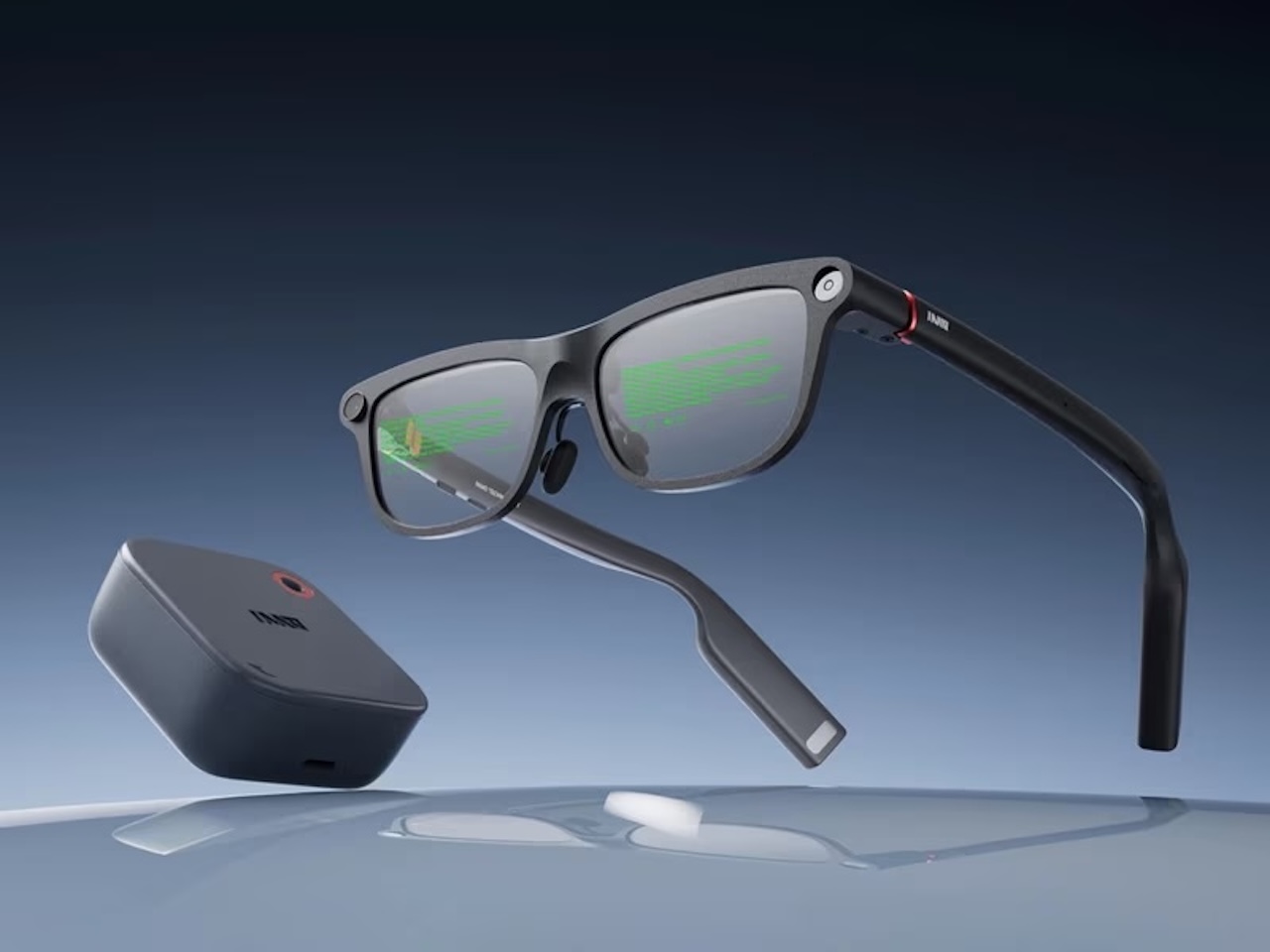
The glasses run their own software and connect to your phone via Bluetooth. They do not need a cable, a compute pack, or a pocket dongle. Inside the frame are cameras for photo capture and visual input, open-ear speakers for audio, and microphones for voice commands and translation. You control them through a mix of touch gestures on the temple arms and voice commands.
The AI layer is the selling point. INMO integrated ChatGPT and Gemini for general queries, plus a dedicated translation engine that handles 98 languages for text, speech, and photo translation. The glasses can also run a teleprompter, generate meeting summaries from voice recordings, and display turn-by-turn AR navigation.
All of this sits in a frame that looks like regular eyeglasses. INMO offers multiple frame styles and the temples measure 8mm thick. That’s the pitch.
The specs that matter
| Spec | Detail |
|---|---|
| Weight | ~58g (base frame) |
| Display | 640×480 micro-LED, diffractive waveguide, 1500 nits peak, 30° FOV, monochrome green |
| Battery | 270mAh swappable cells (×2 included); 1,300mAh charging case (~3–4 full charges); runtime per cell: ~3 hrs translation / ~3.3 hrs teleprompter / ~4.5 hrs calls / ~8+ hrs standby |
| Cameras | Built-in for photo capture and visual translation |
| Audio | Open-ear speakers with directional sound; microphones for voice and translation |
| Connectivity | Bluetooth to smartphone; no standalone WiFi claimed |
| Translation | 98 languages; two-way dialogue, photo translation, text overlay |
| AI assistants | ChatGPT and Gemini via voice command |
| Additional features | AR navigation, teleprompter, AI meeting notes |
| Price | $499 Essentials (glasses + case) / $549 bundle tiers (+ Ring4 or + Speaker) / $599 MSRP or Ultimate Suite (all three) |
The display is monochrome green, not full color. That is a deliberate tradeoff for brightness and battery life. If you want full-color AR video, INMO’s own Air3 at $1,099 is the step-up option.
How the swappable battery changes the math
The Ray-Ban Meta Gen 2, the category’s current benchmark, gets up to 8 hours on a charge, but when it’s dead, it’s dead. You charge the glasses in the case and wait. XREAL’s AR glasses draw power from the device they’re plugged into, so you’re tethered. Neither gives you the option to just swap in a fresh cell and keep going.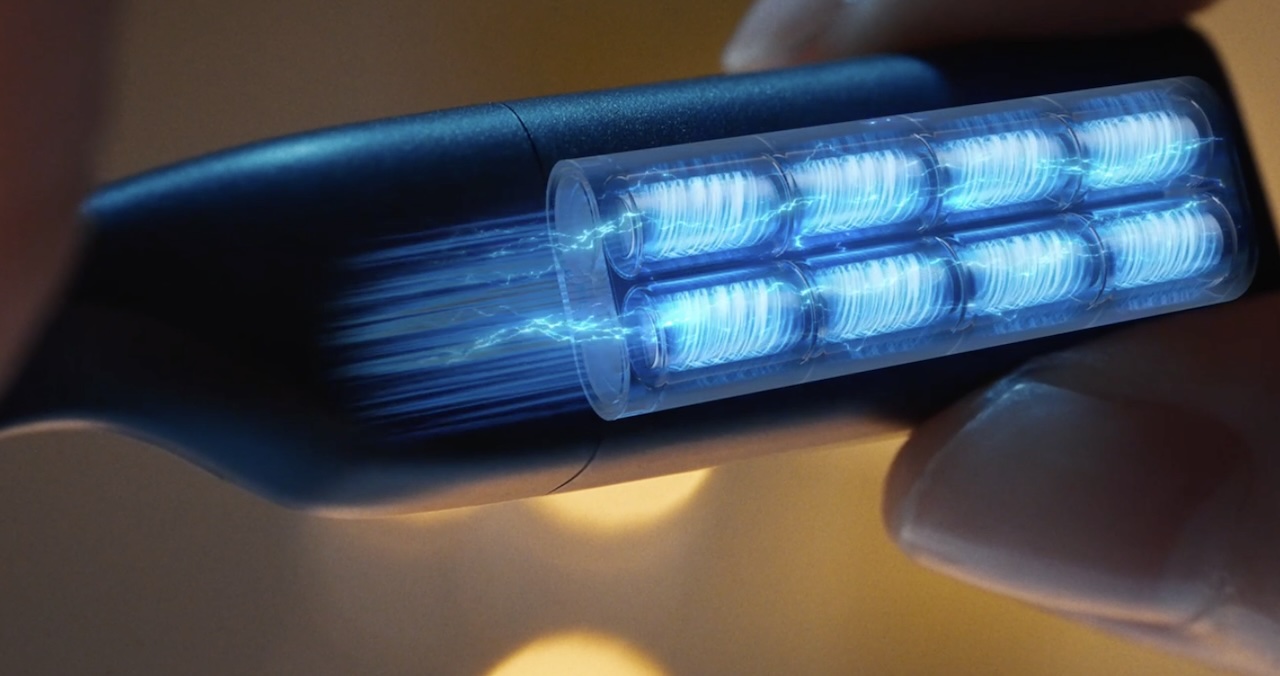
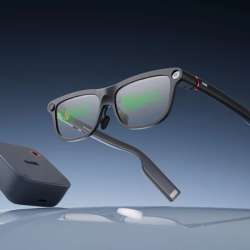
INMO’s approach is a magnetic battery that snaps into the temple. The company claims all-day use, but per their own specs, a single 270mAh battery lasts roughly 3 hours in active translation mode. The real flexibility is carrying a spare: you get a second battery in the box and the charging case holds enough charge for 3–4 full swaps. Pop the dead battery out, snap a fresh one in, and keep going. No cable needed. No hour-long wait while it charges in a case.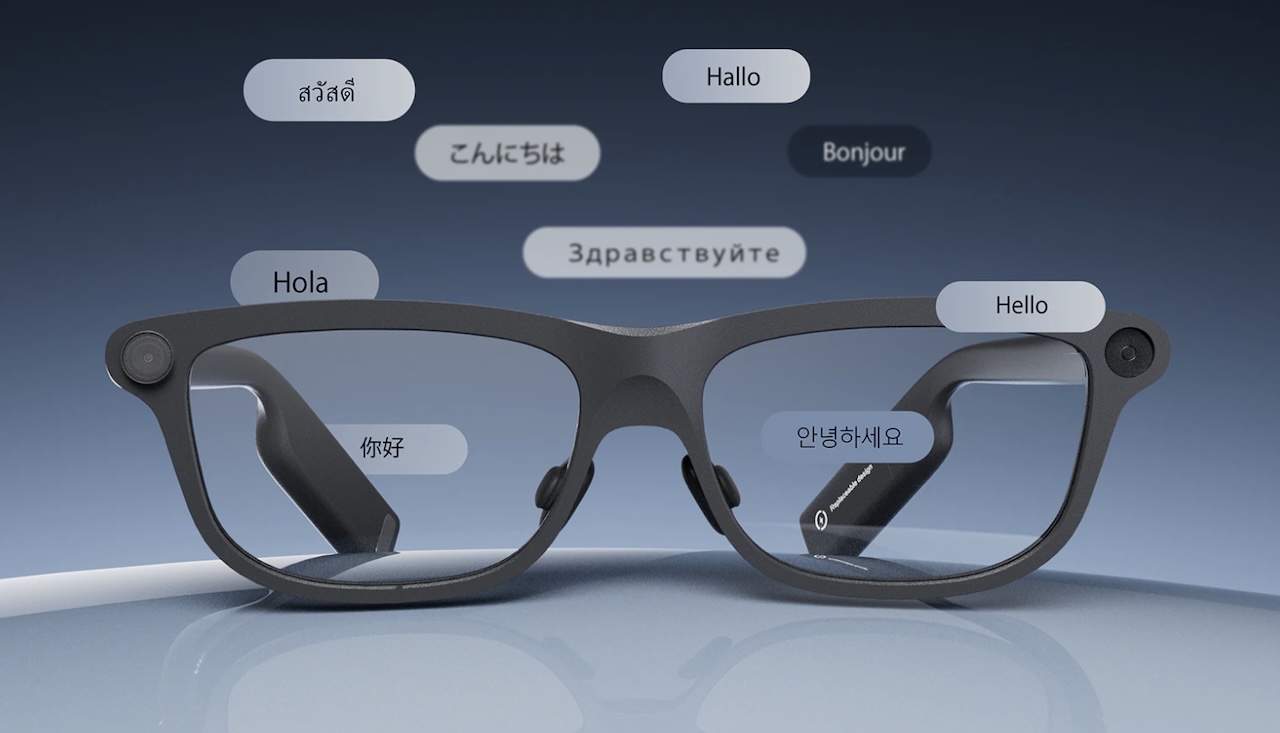
This matters for the GO3’s core use case. Travelers who need translation all day, presenters who run the teleprompter for hours, and field workers who navigate with AR overlays cannot afford to stop and charge. Battery anxiety solved.
What translation looks like in practice
The GO3’s translation mode overlays subtitles in your field of view as someone speaks. Point the camera at a menu or sign and the glasses translate the text in place. For two-way conversations, the optional INMO Speaker accessory handles the outbound audio so the other person hears the translation too.
INMO claims 98 languages including regional accents and dialects. The glasses use a combination of cloud translation and on-device processing for common phrases. Accuracy depends on network quality for cloud-dependent languages.
The real question is speed. Live translation only works if the lag is short enough to feel like a conversation. Early video coverage from Tech Spurt and Shane Starnes suggests the delay is roughly 1 to 2 seconds for common languages in early footage, longer for less common ones. That’s usable for travel and casual business, but probably not fast enough for rapid-fire dialogue.
Where INMO GO3 sits against Ray-Ban Meta and XREAL
The Ray-Ban Meta smart glasses start at $299 and do three things well: audio, photos, and Meta AI queries. They have no display. You cannot see translations, navigation, or a teleprompter. You look less like a cyborg, but you get less functionality.
XREAL’s 1S AR glasses cost $449 and deliver a full-color Sony micro-OLED display with a 1200p resolution and a 500-inch virtual screen for gaming and video. They plug into a phone, laptop, or console via USB-C. They do not run standalone software, have no cameras for translation, and require a cable.
The INMO GO3 sits in the middle. It has a display, cameras, and standalone operation like XREAL’s more expensive options, but at a lower price and with a focus on utility over entertainment. The monochrome screen is a downgrade from XREAL’s full-color panel, but the translation, navigation, and teleprompter features are things XREAL glasses cannot do at all. (See our full roundup of the best smart glasses in 2026.)
Here’s the tradeoff: the GO3 do less than full AR headsets and look slightly more tech-forward than Ray-Ban Meta frames. For $499, you get a tool, not a toy.
Pricing, shipping, and what to know before backing
The Kickstarter Super Early Bird price is $499 for the GO3 glasses and charging case. The $549 bundle tier adds either the INMO Ring4 gesture controller (Meeting Assistant) or the INMO Speaker for two-way translation. MSRP after campaign ends is $599. A $599 Ultimate Suite bundles all three: glasses, Ring4, and INMO Speaker.
Shipping is expected before the end of June 2026. INMO has not yet confirmed whether units have begun shipping as of this writing. The Kickstarter campaign was 5723% funded as of early June 2026, which means demand is there but fulfillment pressure is high.
Here’s the catch. INMO has shipped products before; the Air2 and Air3 both made it to backers, but support quality has been mixed. A Reddit thread from March 2026 warned of slow response times from INMO’s support team for warranty issues. Backing a Kickstarter is not the same as buying from Amazon. If you need glasses by a specific date or want easy returns, waiting for retail availability may be the smarter move.
What to watch next
INMO says retail availability will follow the Kickstarter shipments in Q2 2026. If the GO3 deliver on their translation speed and battery claims, they could become the default recommendation for travelers and business users who need a display without the bulk of full AR headsets.
Price: $499 (Discounted from $599)
Where to Buy: INMO
The bigger question is whether Apple enters the category in 2026 or 2027. If Apple launches its rumored smart glasses at $499 or higher, INMO’s first-mover advantage in translation-focused eyewear will be tested. (A look at 6 smart glasses worth watching as Apple joins the race.) For now, the GO3 are the only sub-$500 smart glasses that translate 98 languages, navigate in AR, and swap batteries on the fly. That is a narrow lead, but it is a real one.