Every time a Kodak Charmera sells out, someone adds it to a restock alert and waits. The smarter move this year isn’t waiting. There’s a designer on MakerWorld who already figured that out, and 319 backers who agreed.
Price: From $10
Where to Back: Makerworld
The Keymera, launched on MakerWorld crowdfunding on May 19, is a fully functional 3MP keychain camera you print, wire, and assemble at home. It isn’t a retail product you unwrap; it’s a two-hour desk project that ends with a working camera on your keyring. We’ve covered the Charmera since its launch, and it’s been one of 2026’s hardest keychain cameras to keep in stock. The Keymera is betting there’s a buyer who’d rather skip the wait and build.
What Keymera Is and What You Get
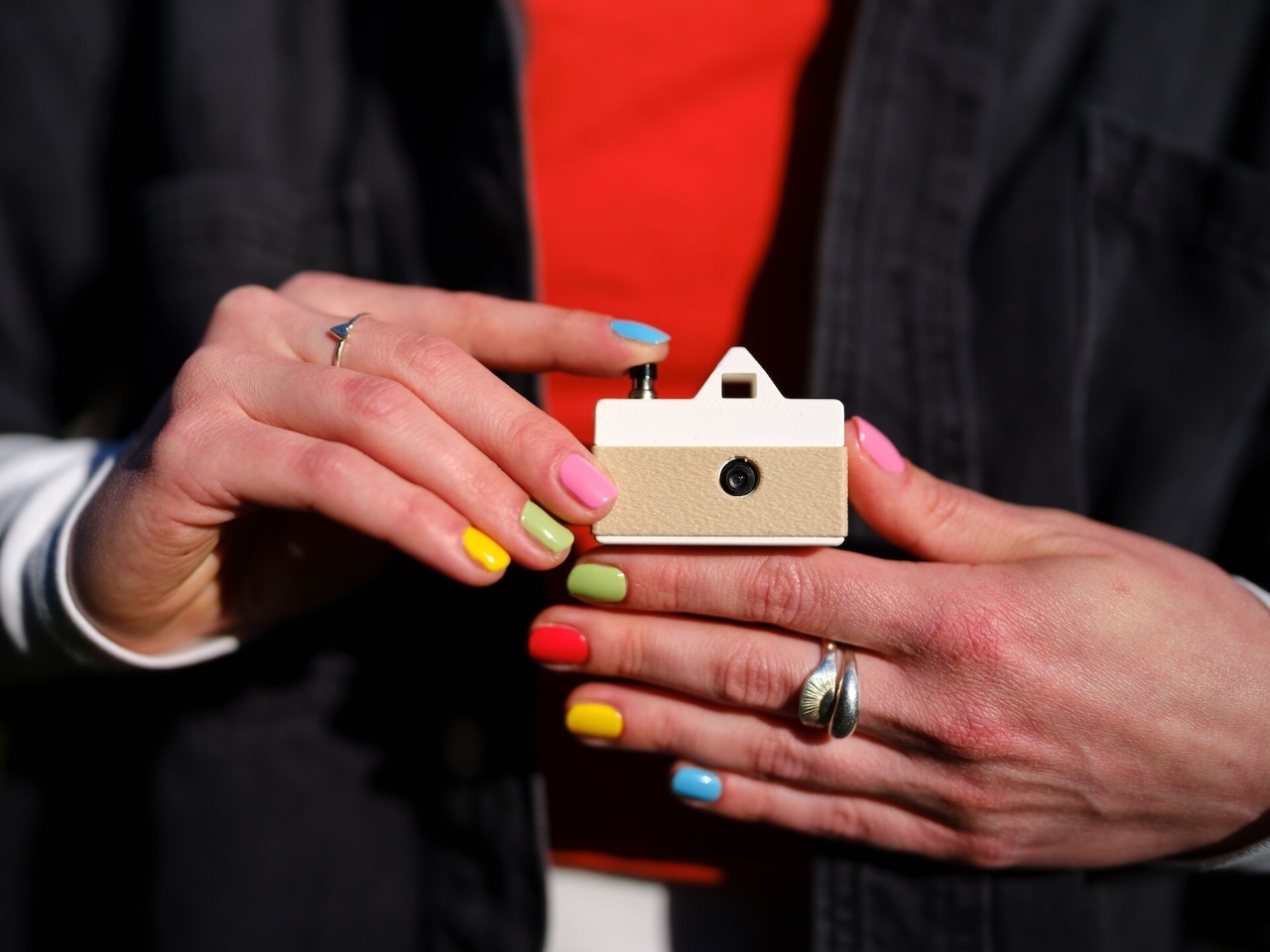
The Keymera is built around a Seeed Studio XIAO ESP32-S3 Sense microcontroller, a 3MP sensor, a rechargeable battery, one tactile button, and one status LED. Those four electronic components plus five 3D-printed shell parts make up the entire device. The designer, Matej Nahtigal, says total novices can finish the build in roughly two hours: one hour to print the shell, one hour to solder four joints, flash the firmware through Arduino IDE, and press-fit the pieces together. No screws, no glue.
Three exterior shell designs share the same inner electronics base. The Rangefinder is flat-topped and pocketable; the SLR carries a raised silhouette that looks like a shrunk-down classic; the Instant is square, bold, and inspired by toy instant-film cameras. A fourth TLR-style shell unlocked as a stretch goal at $4,000. All shells print in standard PLA filament, and the included fuzzy-skin settings create a leatherette texture directly from the slicer.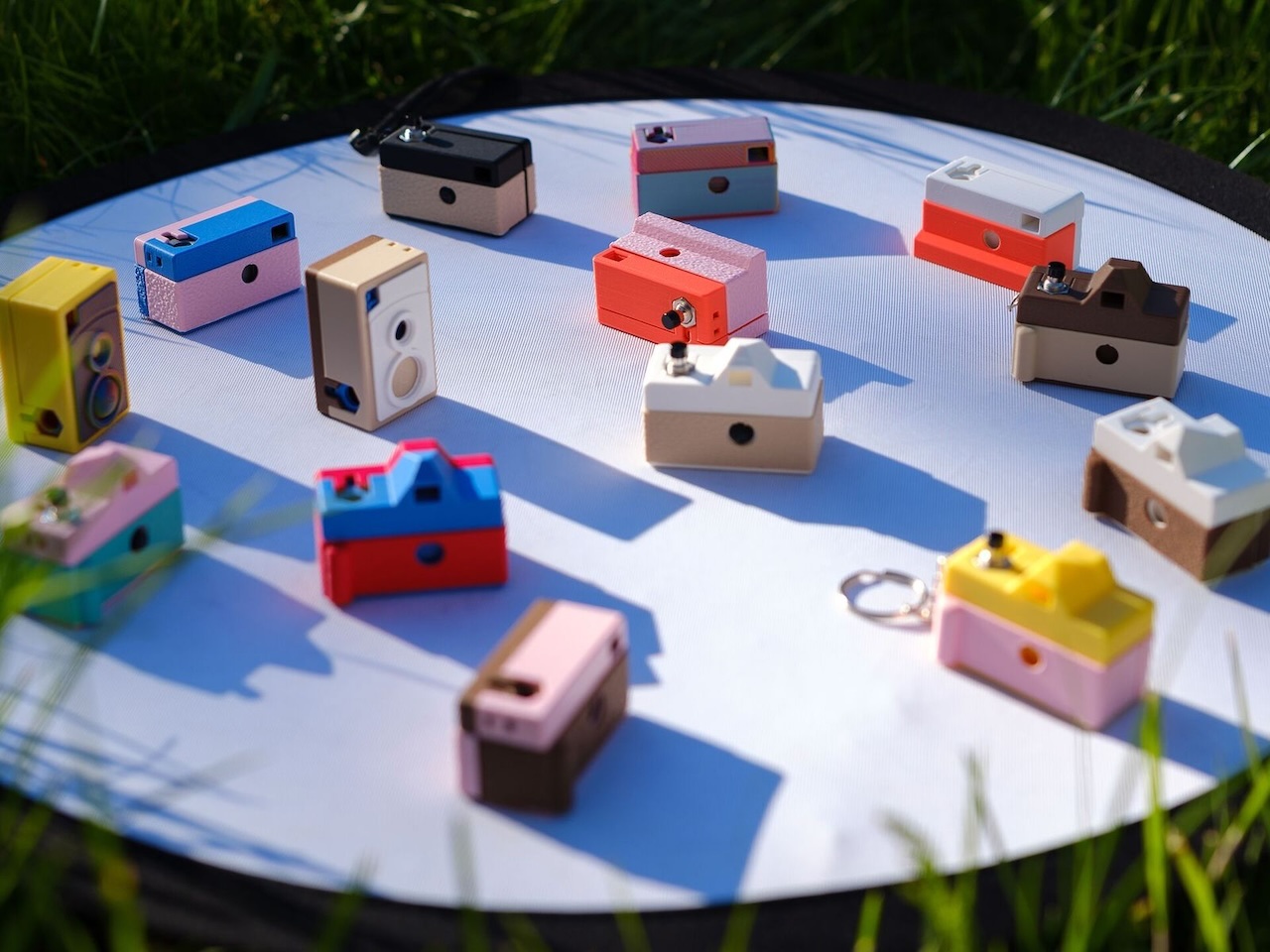
The camera measures 53 x 42 x 26 mm and weighs 44 grams. That makes it slightly shorter but deeper than the Kodak Charmera, and about 47 percent heavier. It saves photos to a microSD card and charges over USB-C, the same cable your phone uses.
The entry tier costs $10 for early birds and $15 at regular pricing for a single shell design. Where to Buy: MakerWorld crowdfunding.
How It Works: One Button, No App
Keymera’s entire interface is a single button and a single LED. Most of the time the device sleeps with the LED off. Press once and it wakes, captures one photo, saves it to microSD, and confirms with three slow blinks before returning to sleep.
Hold the button for approximately 2.5 seconds and the camera creates its own Wi-Fi hotspot. Your phone connects directly, and a gallery opens in your browser. There’s no app to install, no account to create, and no cloud storage involved.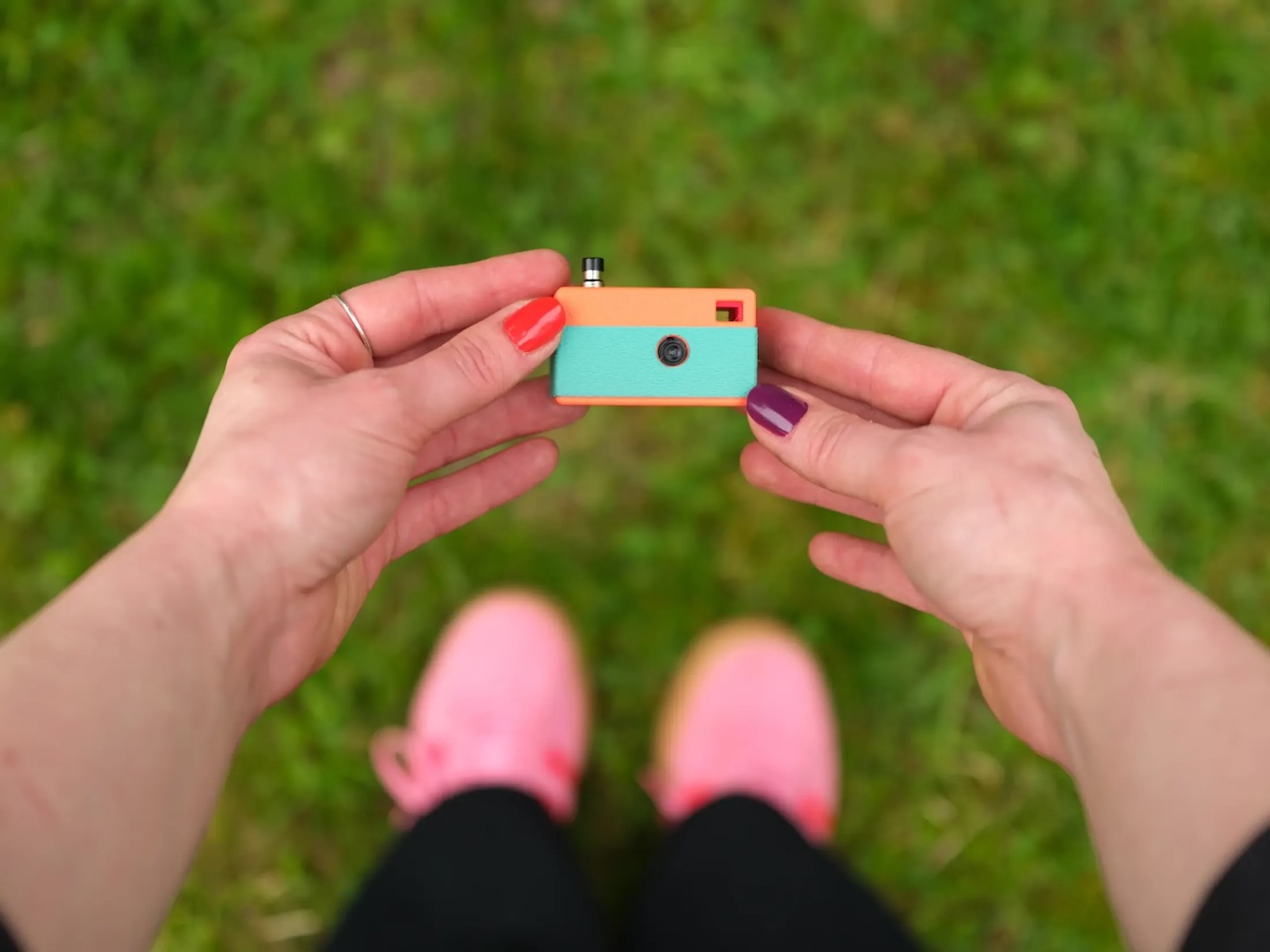
This is a deliberate constraint in an era where every camera wants a companion app. Nahtigal told PetaPixel it’s “a deliberately constrained camera in a moment when everyone is adding AI features to phones, fixed sensor, fixed firmware, no metadata harvesting, no account required to look at your own photos.” The photos are unedited JPEGs straight from a 3MP sensor. The lo-fi character is intentional, not a limitation.
How Keymera Compares to the Kodak Charmera and the Keychain Camera Field
The obvious comparison is the Kodak Charmera, the $34.99 retail keychain camera that currently defines the category. The Charmera ships ready to shoot with a 1.6MP sensor outputting 1440 x 1080 JPEGs, a fixed 35mm f/2.4 plastic lens, seven vintage filters, four overlay frames, and a tiny rear LCD for framing. It also shoots 1440 x 1080 video at 30fps in AVI format. The Charmera weighs 30 grams and measures 58 x 24.5 x 20 mm, making it thinner and lighter than the Keymera, with a built-in screen the Keymera lacks.
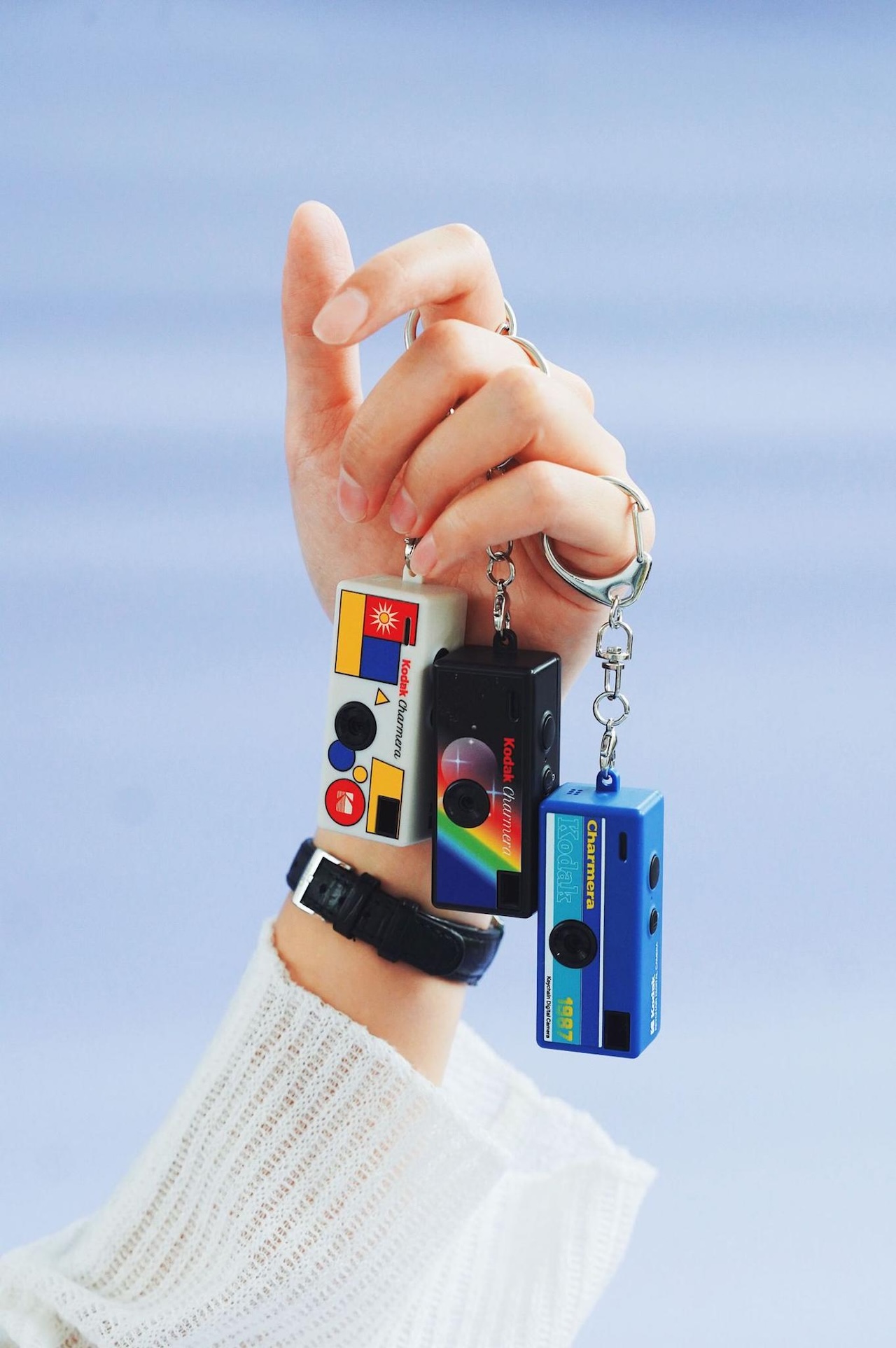
On paper, the Keymera’s 3MP sensor outresolves the Charmera’s 1.6MP output. In practice, both cameras are purpose-built lo-fi devices where resolution is almost beside the point. The Charmera offers filters, frames, and video; the Keymera offers customization, a hands-on build experience, and a Wi-Fi gallery that requires no app. The Charmera arrives in a blind box with collectible colorways; the Keymera arrives as digital files and a bill of materials, with unlimited color combinations determined by your filament choice.
For context, both cameras sit in a growing category of sub-$50 keychain digicams that trade image quality for immediacy and fun. The Charmera retails for $34.99 at Amazon, B&H, Best Buy, and Target, and has sold out repeatedly since its late 2025 launch, with resale prices climbing to $180 on the secondary market during shortages. Keymera is betting that a subset of those buyers would rather build their own than hunt for restocks.
The Campaign Reality: Pricing, Stretch Goals, and Delivery
The Keymera MakerWorld campaign has raised $9,756 from 319 backers with nine days remaining, more than six times the $1,500 goal. The $4,000 TLR stretch goal has already unlocked. The $8,000 Keymera Portal Pro stretch goal, which adds in-browser editing with filters, brightness and contrast controls, saturation, film borders, and direct save-to-phone, has also been reached.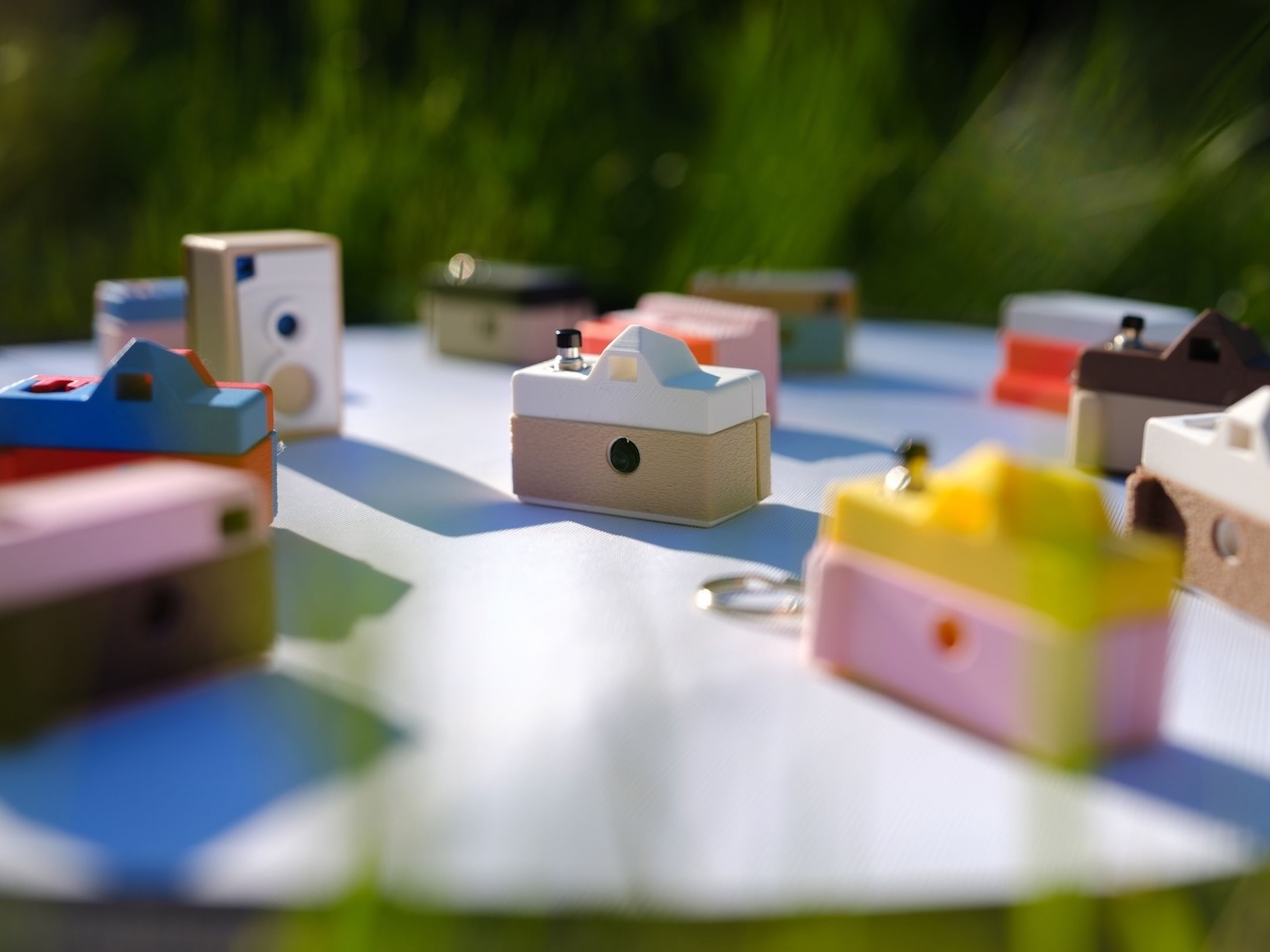
The entry math warrants a closer look. The $10 early-bird tier gets you the digital files for one shell, firmware, build guide, and bill of materials. The electronics themselves cost an additional $20 to $40 depending on supplier and shipping, per the campaign’s own estimate. That puts the real floor at roughly $30 to $50 for a finished camera, not $10.
The Full Roll tier at $25 early bird ($30 regular) includes all three launch shells plus every future shell unlocked by stretch goals. A commercial license tier at $99 early bird ($149 regular) allows buyers to build and sell finished units. Delivery is digital: files upload shortly after campaign close [TO VERIFY: confirm delivery window from MakerWorld campaign page], and physical electronics aren’t included in any tier.
Where Things Stand
Keymera isn’t trying to replace your phone camera or compete with the Charmera’s retail polish. It’s a maker project first and a camera second, aimed at photographers who already own a 3D printer and want a keychain camera that no one else has. The $10 headline is real for the files; the total build cost is closer to a Charmera’s retail price once you source the electronics.
Price: From $10
Where to Back: Makerworld
The broader signal is clear. Keychain cameras have moved from novelty to category in under a year. The Charmera proved there’s mass-market appetite for a lo-fi digital charm; Keymera is testing whether that appetite extends to build-it-yourself kits. If the campaign momentum holds, expect more crowdfunded entries before the end of 2026.