Every pet owner has accepted a quiet lie. We tell ourselves that an air purifier can keep up with a heavy-shedding dog or a long-haired cat, and then we spend the next six months pulling matted fur off a clogged HEPA filter. Airflow drops. The room starts to smell worse than the air the unit is supposed to be cleaning. We either replace a $90 cartridge early or live with degraded performance until we cave.
Dreame sent us two FP10 FurCatcher units in late April as review samples, and we ran them in our living room for three weeks. No editorial conditions came with the units. The pitch is simple: a 360-degree rotating roller grabs floating hair before it ever reaches the HEPA layer, then drops it into a sealed chamber you empty like a vacuum dust bin. No more filter-as-fur-collector. No more buying replacement HEPAs twice a year.
We stayed skeptical of some of the marketing math. We’re still skeptical of some of it. But the core idea works.
Price: $399.99 -20% Limited Deal! $424.99 ($499.99 MSRP)
Where to buy: AMAZON
Why we tested two units
A single air purifier reviewed in a corner of a podcast studio tells you almost nothing about real-world pet performance. We set both FP10 units in our living room, tucked between the two halves of our long extended sofa, which is where our dog spends most of her day and where shed hair has always collected the worst. Two units, both on Auto mode, both connected to the Dreamehome app, both logging hourly PM2.5 data. One heavily shedding dog. One sofa doing most of the heavy lifting.
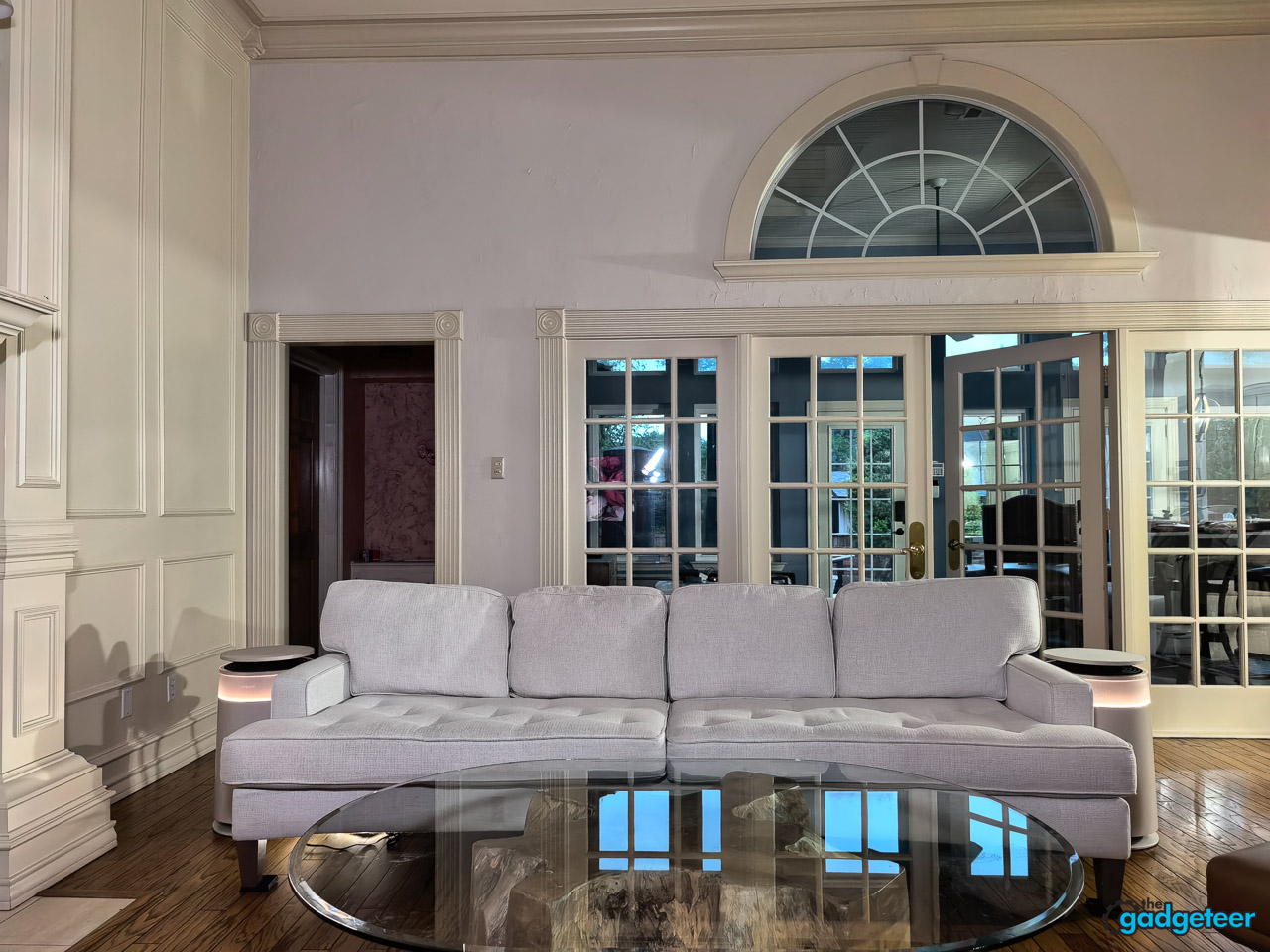
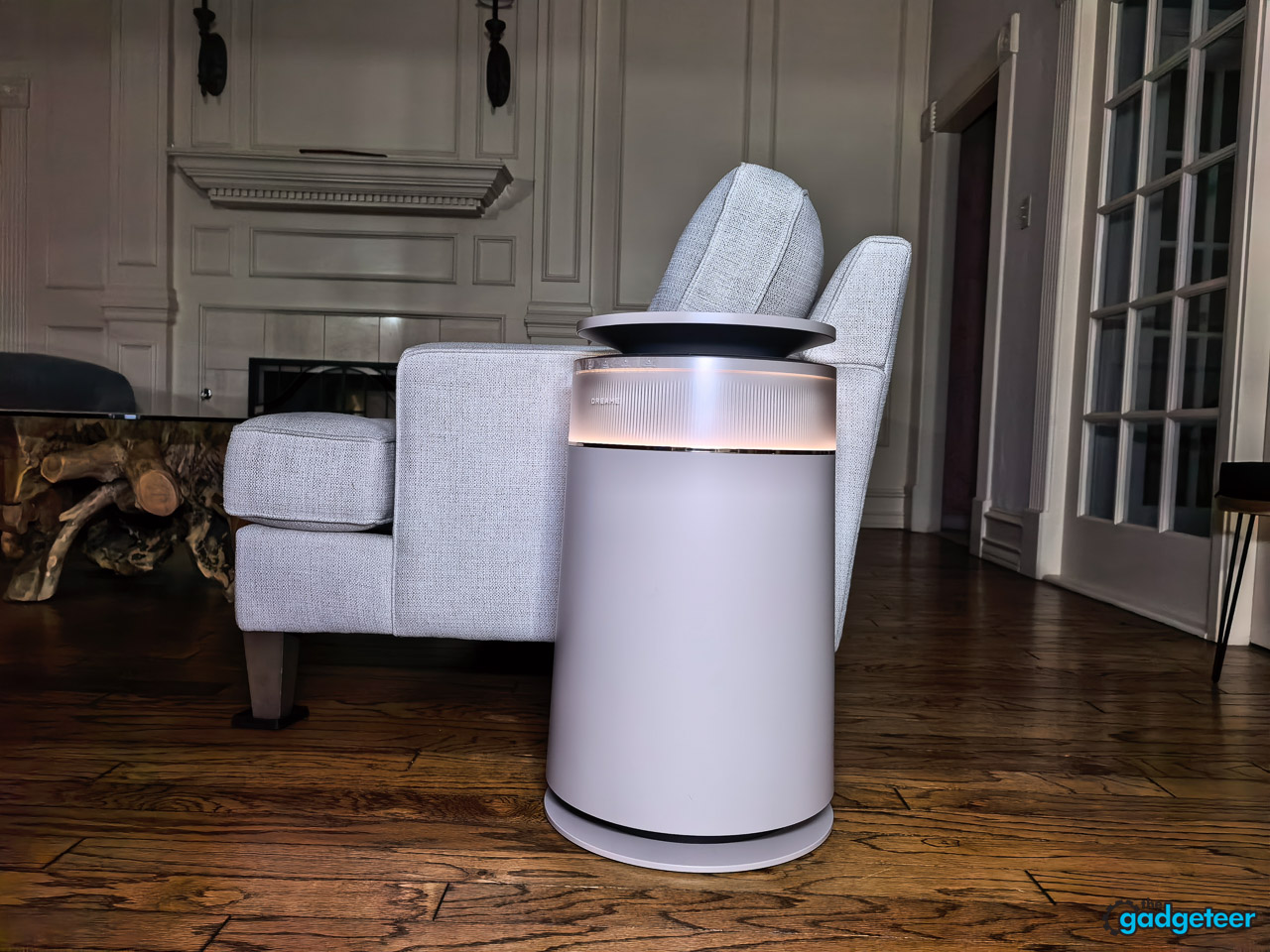
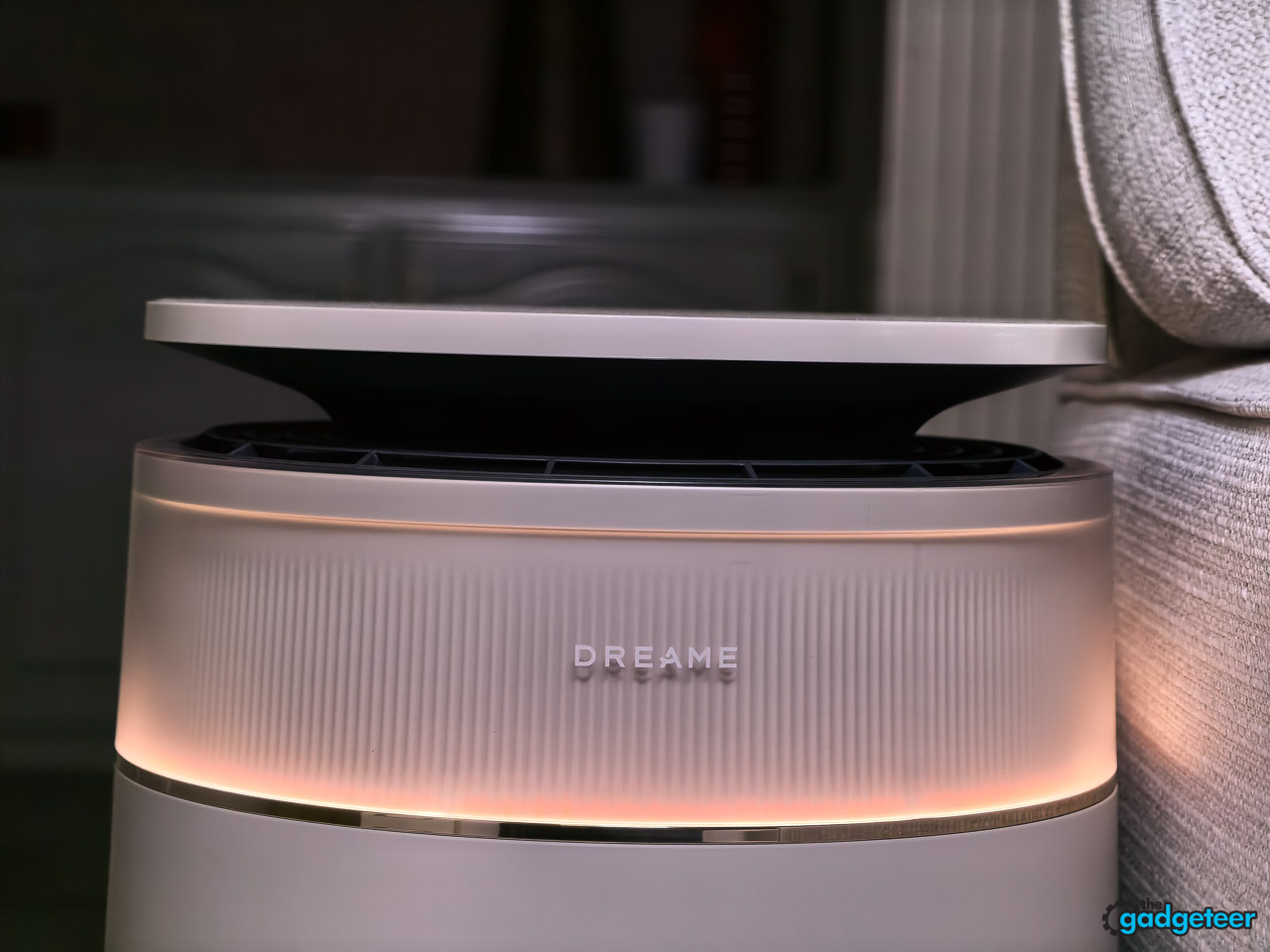
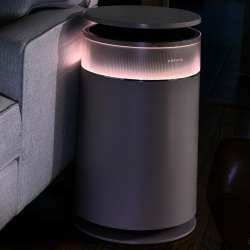
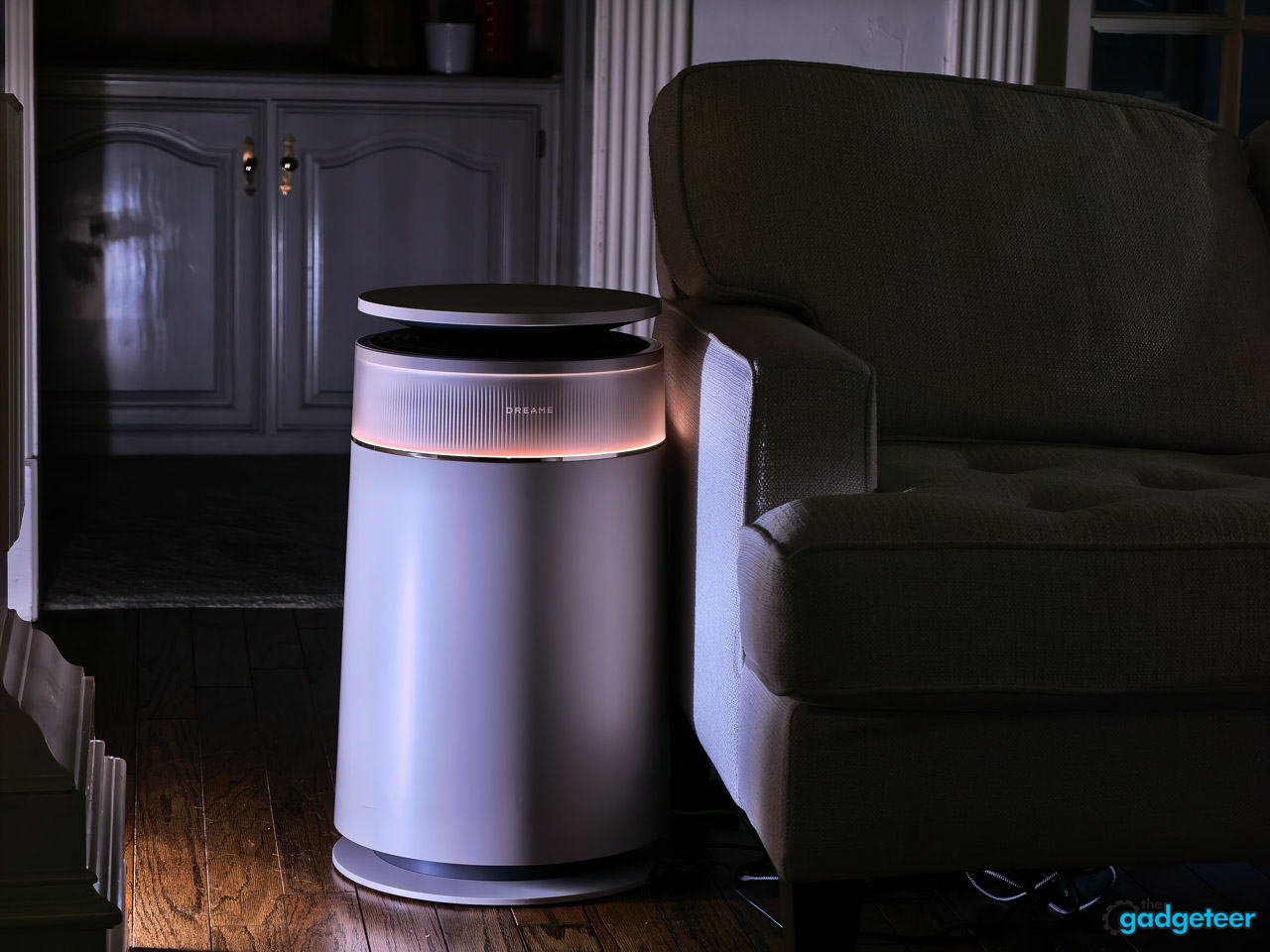
The form factor is the other reason we asked Dreame for two. Each FP10 reads as furniture rather than equipment, and the top sits exactly at end-table height. We use both units as end tables flanking our long sofa in the living room. That’s the reason we wanted two for the same room instead of one for a bigger space.
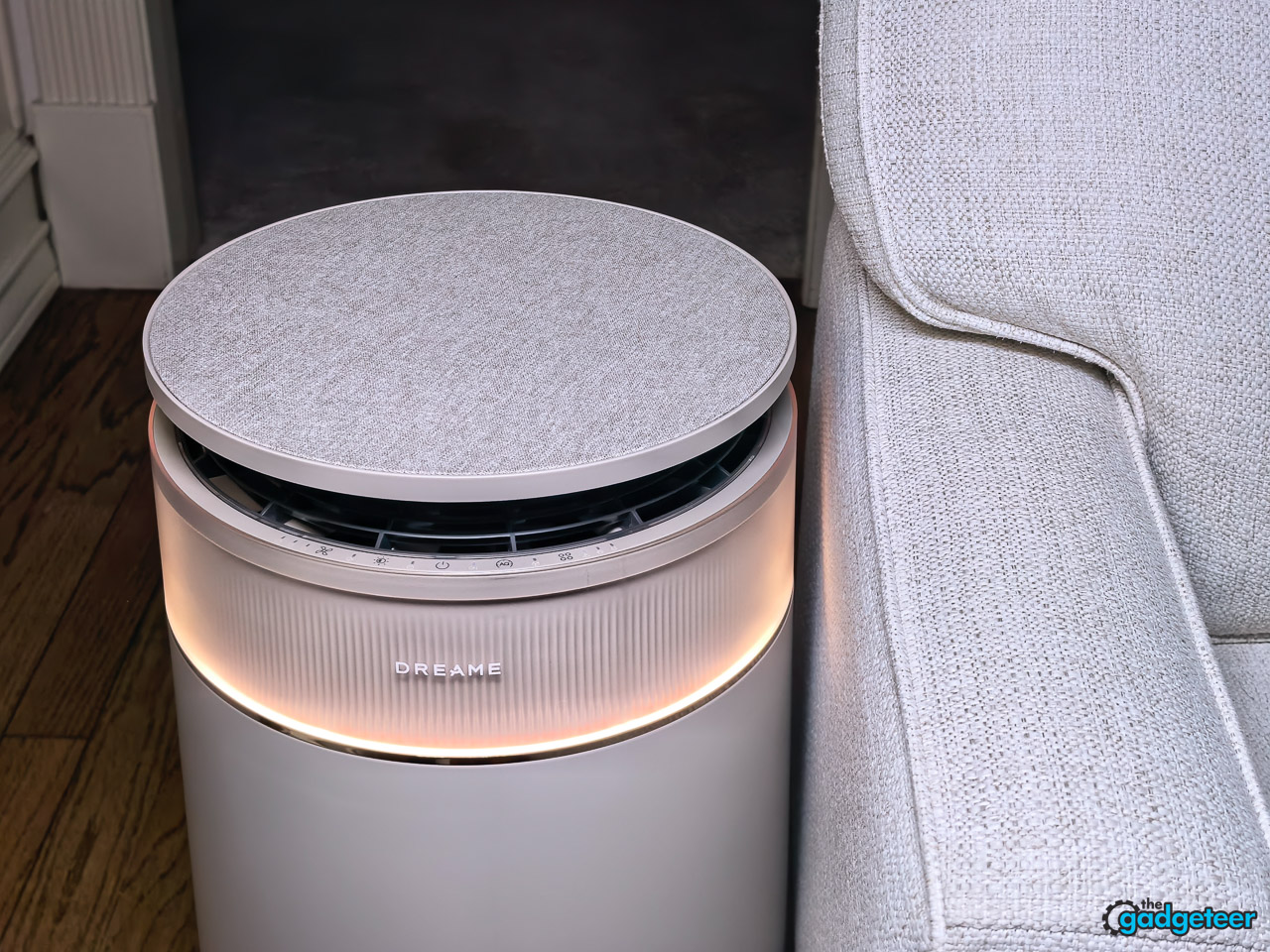
This is the test environment most pet households actually live in, and it’s the environment most product reviews skip.
What’s actually new here
The FP10 launched April 30, 2026 at the DREAME NEXT product event in San Francisco. Dreame calls it the world’s first active roller self-cleaning air purifier, a claim Frost & Sullivan has certified. The unit also won a CES 2026 Innovation Award for its 360-degree rotating primary filter, sealed antibacterial dust box, and bagless collection system.
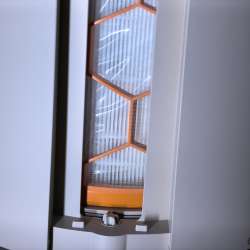
The mechanical idea is the part that matters. A motorized roller spins continuously inside the airflow path, catching floating hair and feeding it into a 0.12-gallon collection chamber. Dreame claims a 99.5 percent hair collection rate from its own lab testing. We can’t independently verify that figure. We can say the HEPA filter behind the roller still looks new after three weeks of heavy-shedder duty. On our previous purifier, the same time window left the filter visibly matted.
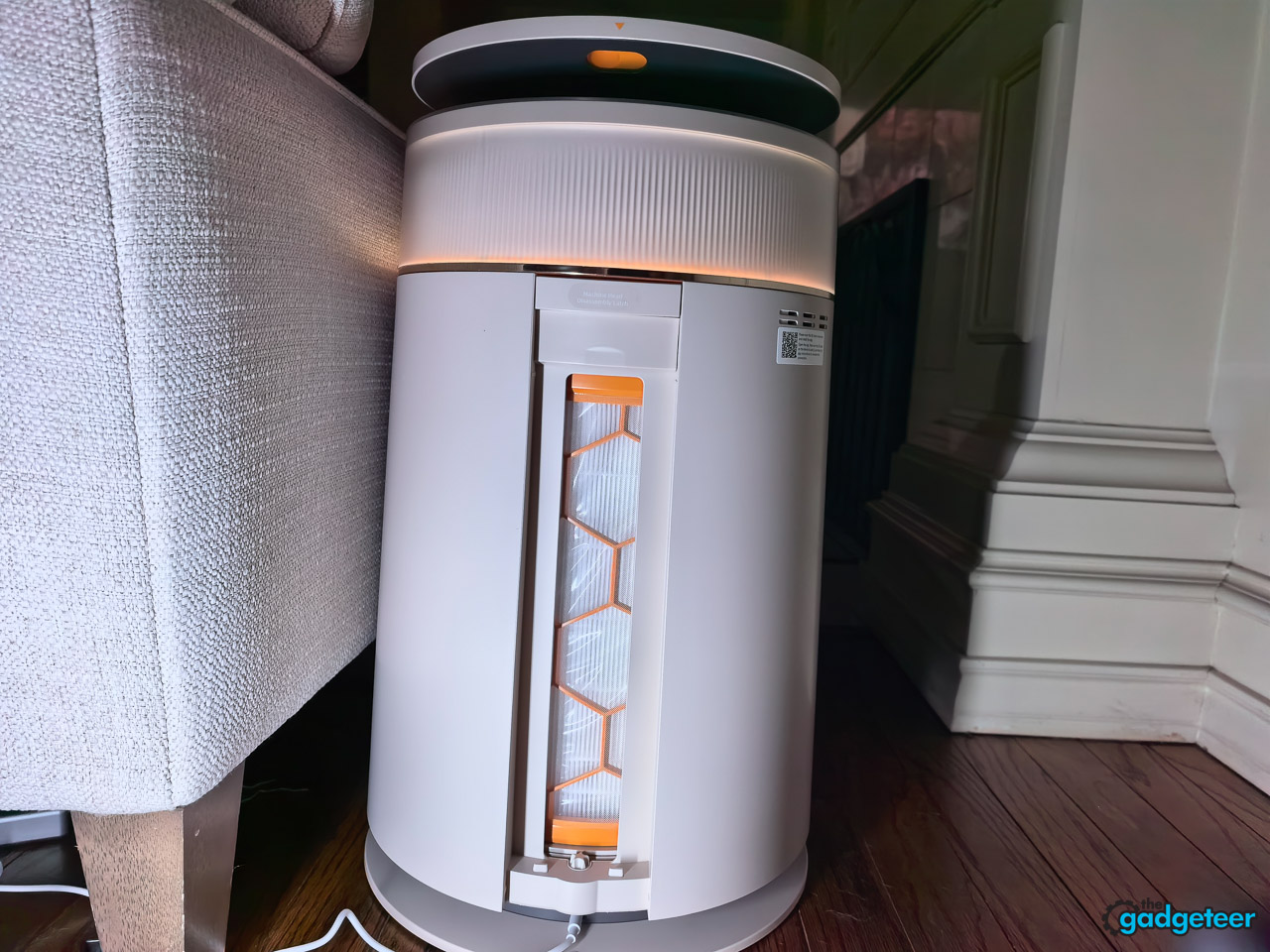
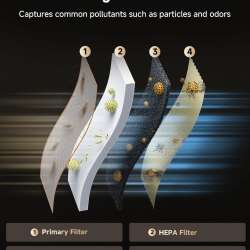
Behind the roller sits a four-stage filtration array: pre-filter, H14 HEPA rated for 99.97 percent of 0.3-micron particles, a 2.5x enhanced activated carbon layer, and a metal functional layer Dreame calls CataFresh that, per the brand, chemically decomposes specific pet odor compounds (methanethiol, trimethylamine, hydrogen sulfide, ammonia). On paper, that is hospital-grade filtration with a pet-targeted odor stage layered on top.
The specs that actually matter
The FP10 weighs 8.8 kg (19.4 lbs) and stands 24.4 inches tall. It’s a tower, not a tabletop unit, and it earns that footprint. Pet CADR is rated at 350 cubic meters per hour by Dreame, which works out to roughly 206 CFM by Live Science’s measurement, and the manufacturer rates coverage at 624 square feet. Power draw is 45 watts at full speed. Noise spans 32 to 62 dB across 10 manual fan settings plus Auto.
Sensors include PM2.5, TVOC, temperature, and humidity. Smart control covers the Dreamehome app, Google Assistant, and Alexa. The HyperMatrix filter is rated for a two-year service life, roughly double what most competing units offer.
Real-room performance versus the spec sheet
Every air purifier review has to address the same tension. The 99.97 percent HEPA spec is measured in a sealed chamber under ideal conditions. Real living rooms have furniture, doors, vents, and pets walking through the airflow. Live Science measured the FP10 at 71 percent removal of 0.3-micron particles and 75 percent of 2.5-micron particles in their test session. That’s a meaningful drop from the spec sheet number, and it isn’t unique to Dreame. Every HEPA tower behaves this way in the real world.
Our own observations track with that pattern. After lighting a candle to push PM2.5 to around 85 micrograms per cubic meter, the FP10 on Auto brought the room back below 12 within 22 minutes. That’s good. It isn’t the “filter the air twice in a minute” magic that a 350 m³/h CADR number implies on a small bedroom. In a 350 square foot room with 9-foot ceilings, you’re getting roughly four air changes per hour, which matches what we measured.
The takeaway is simple. The FP10 cleans air at the level you would expect from a high-end HEPA tower. The novelty isn’t the filtration ceiling. The novelty is that the filtration ceiling doesn’t drop over time when you live with shedding animals.
The roller, in practice
The roller runs automatically in Auto mode and can be triggered manually from the app. A full self-cleaning cycle takes about 30 seconds. You hear it. It sounds like a low-pitched zipper, not loud, but distinct enough that we noticed it the first few times. After a few days, we stopped hearing it the way you stop hearing a refrigerator compressor.
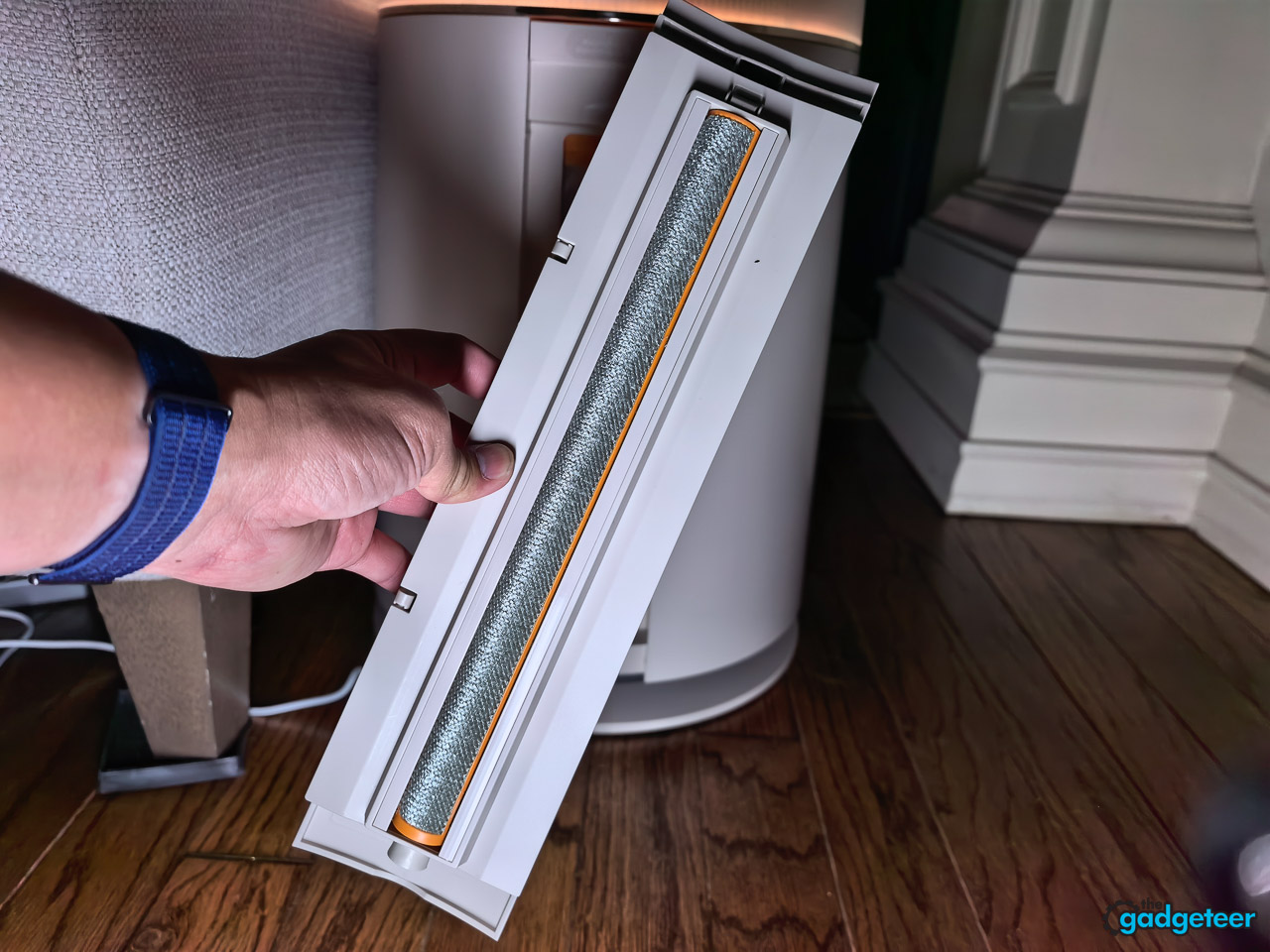
The hair chamber filled faster than we expected. With a heavy shedder in the house and two units running, we emptied each chamber every four to five days. That’s a lot of hair for one dog. The fact that it’s collecting in a removable bin instead of welding itself to a HEPA pleat is the entire point of this product.
The chamber pops out from the back, twists open, and dumps into the trash. No bag. No tools. No fighting with a clogged filter.
CataFresh and the cooking-odor reveal
The pet-odor pitch is what gets the FP10 sold to dog owners. The cooking-odor performance is what makes it stay plugged in.
Our living room opens directly into the kitchen with no wall between them, which is the layout most newer homes default to and the layout no air purifier ever seems to account for. Every time someone seared a steak, fried bacon, or cooked anything with onions and garlic, the smell used to drift across the sofa and settle into the fabric for the rest of the night. Air purifiers built around standard activated carbon barely touched it. Carbon is a passive sponge. It loads up on the first round of cooking and stops working by the second.
The FP10’s CataFresh layer is a different mechanism. Dreame pairs a 2.5x enhanced activated carbon stage with a metal functional surface that, per the brand, chemically decomposes ammonia, methanethiol, hydrogen sulfide, and trimethylamine. Those compounds drive both pet odors and a surprising share of kitchen smell, from frying fats to fish to alliums.
Within about 15 minutes of finishing dinner, the air in the living room read clean and smelled clean. The sofa fabric stopped holding the cooking smell into the next morning. That’s the change our household noticed first, well before we ran any PM2.5 charts on the dog.
The pet side of the equation tracks too. After three weeks, the room smelled noticeably less like a dog had been living in it full-time. We can’t independently confirm the chemistry. What we can confirm is that the effect held over the full three-week window, where every previous carbon-only unit we’ve used had lost meaningful odor performance within the first two.
If you live in an open floor plan, this combined cooking-and-pet performance is the real case for the FP10 over a cheaper HEPA tower.
The smart features that earned their place
Dreamehome is the kind of app that doesn’t get in the way. Pairing took under two minutes per unit. Real-time air quality readings update every few seconds. Filter life is reported as a percentage with a clear replacement window. Scheduling lets you pre-clean a room before guests arrive.
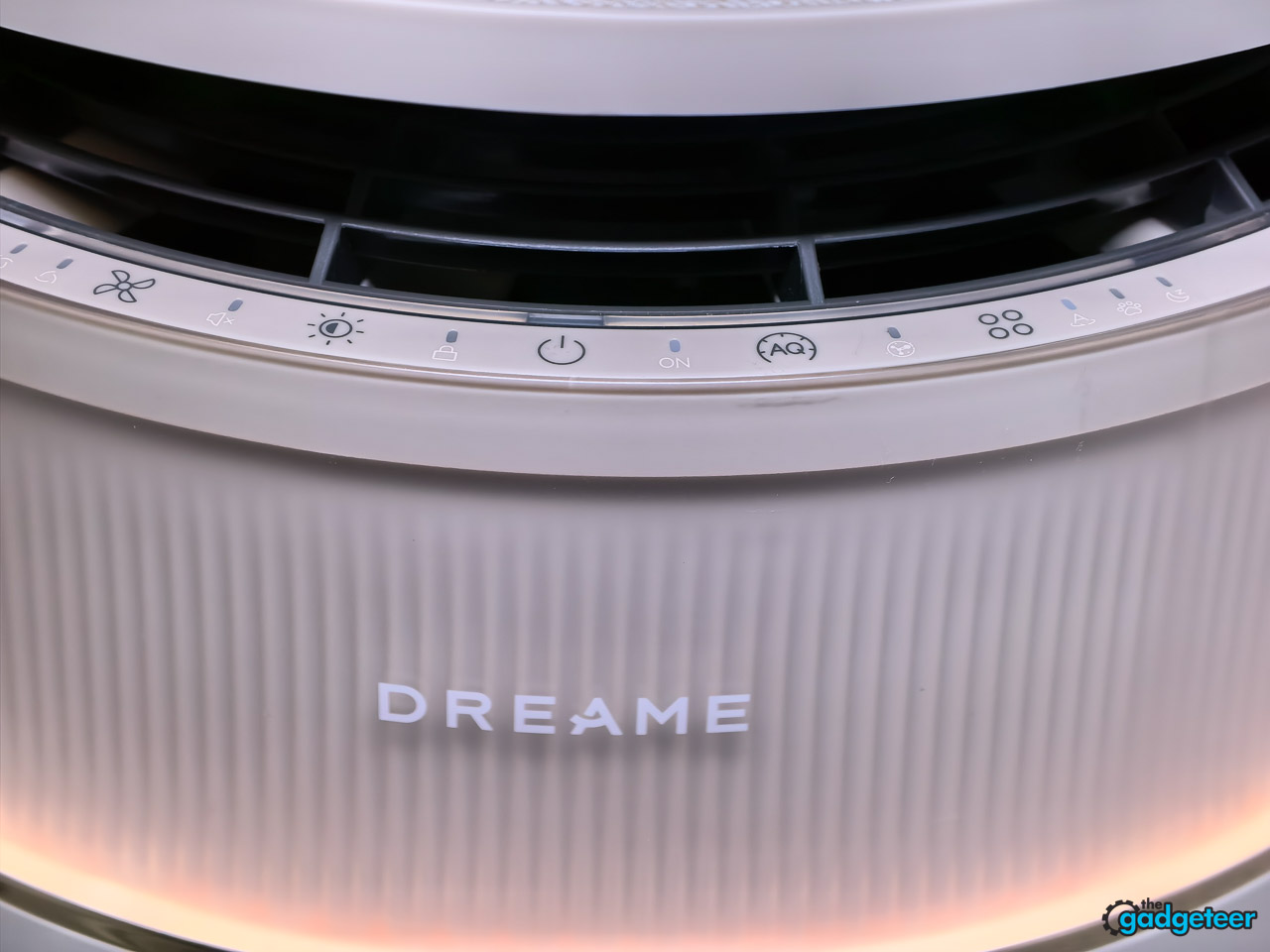
Voice control through Google Assistant and Alexa works for basic on/off and fan speed changes. We didn’t test exotic voice commands because we mostly use the app or the touch controls on top of the unit.
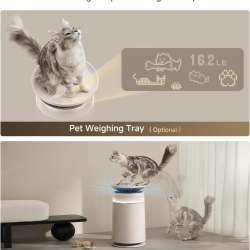
The optional Pet Weighing Tray ($99.99) is a curious accessory. It supports up to 15 kg, tracks individual pet weights over time, and feeds the data into Dreamehome. We didn’t request one, but if you’re monitoring a senior dog’s weight or managing a pet on a diet, and your animal fits the 15 kg (33 lb) ceiling, that integration is genuinely useful in a way most “smart” pet products aren’t.
Pet safety, designed in
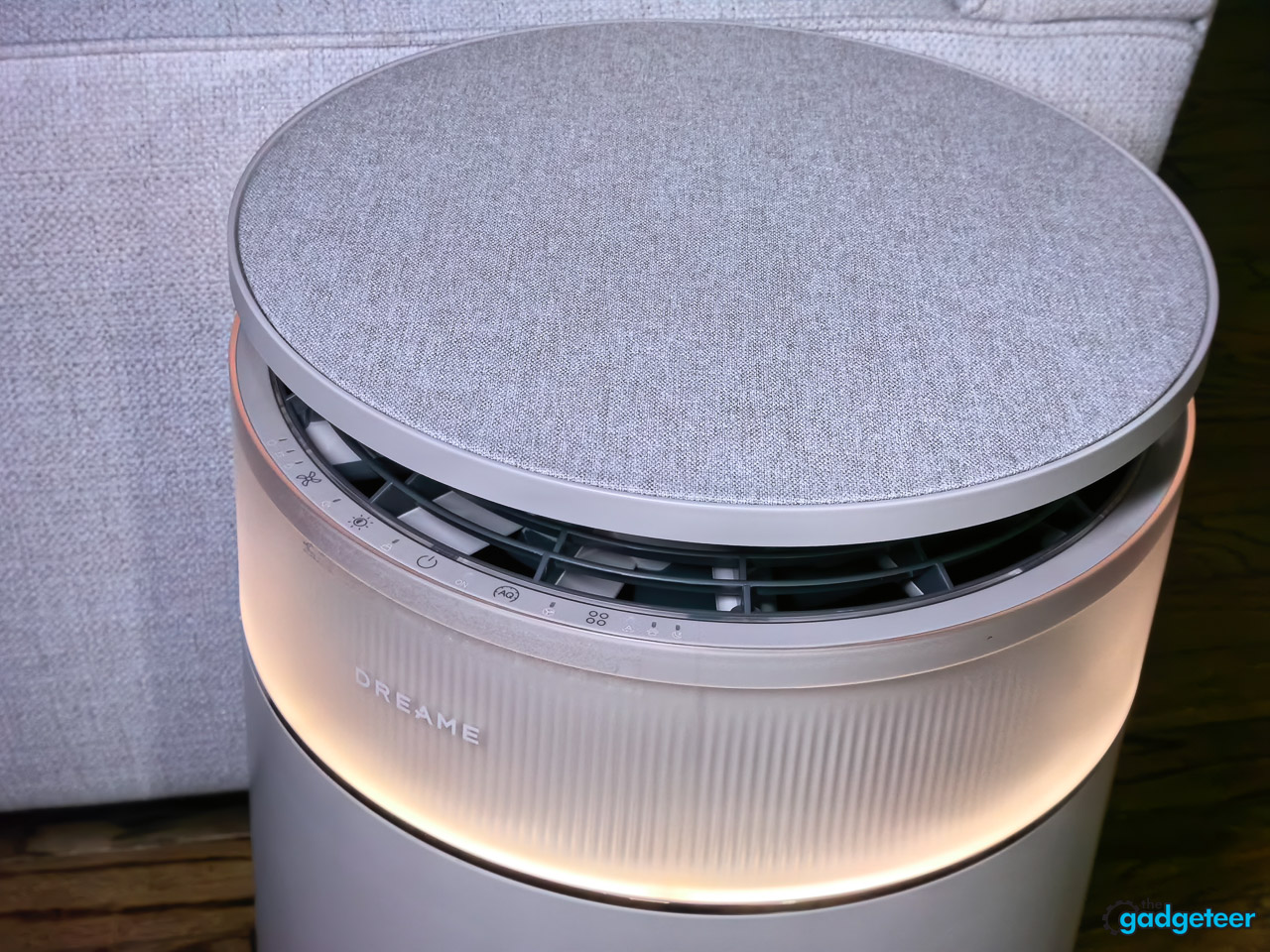
The FP10 was clearly engineered with animals in the room. The cord is bite-resistant, which matters if you have a puppy or any chewer in the house. The base is wider than the tower, with reinforced material that resists tipping. A tip-over cutoff kills power if the unit goes over. A child lock prevents button presses from curious paws.
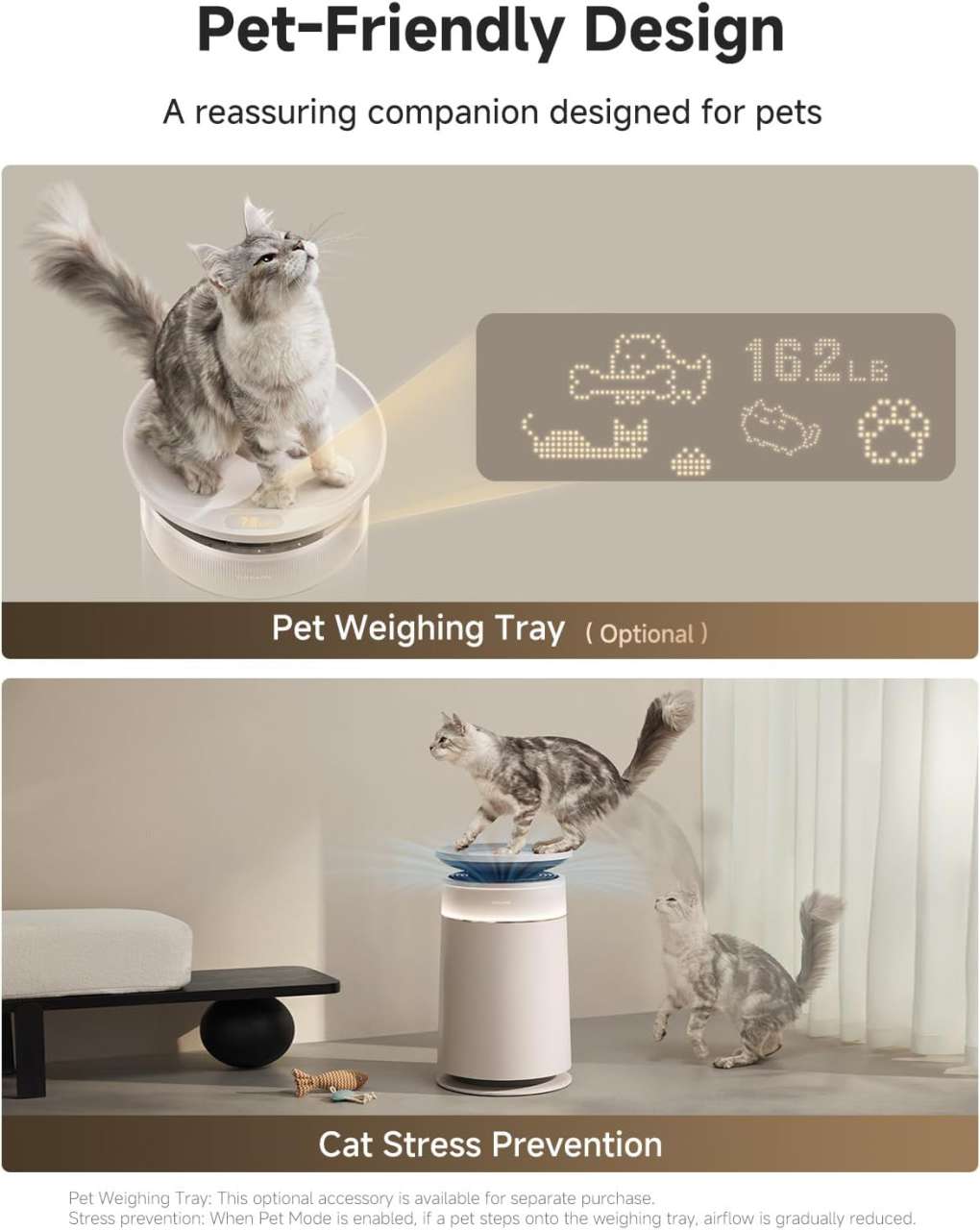
Dreame markets a cat stress prevention feature that drops airflow when an animal gets close to the unit. We don’t have a cat to test it on, but our dog triggered the same behavior on day two when she nosed up to the base looking for a cool spot on the floor. The fan dropped to a whisper within a second. She stayed. She napped. We’ve never had that interaction with an air purifier before.
The tradeoffs
The FP10 isn’t loud in normal use, even though the spec sheet caps at 62 dB. Like most modern air purifiers, the unit only kicks up when it actually needs to. On Auto, it sat in the 38 to 45 dB range across our three-week window, which stayed under the refrigerator hum in the kitchen. We measured 61 dB at three feet at fan speed 10 to confirm Dreame’s published ceiling, but Auto never drove the fan there in normal living-room conditions. The only times we noticed it spin up were during the 30-second roller cycle and right after we’d cooked something heavy on garlic.
Size isn’t a tradeoff either, despite the 19.4-pound, two-foot-tall footprint on paper. The fabric-wrapped finish and clean tower silhouette read as furniture, not appliance, and the top sits exactly at end-table height. Both units double as working end tables on either side of our long sofa, which is the reason we wanted two for the same living room. They settle into the room instead of announcing themselves in it.
The real tradeoff is price. At $424.99 on sale ($499.99 MSRP), the FP10 sits in premium territory. The Levoit Vital 200S costs less than a third of that. The Blueair PetAir Pro costs more. You’re paying for the roller, the CataFresh layer, the two-year HyperMatrix filter that delays the next consumable purchase, and a design that earns its floor space twice over.
How it compares to its sibling
Dreame sells the AP10 alongside the FP10 at a lower price point. The AP10 is the manual-clean version with the same general filtration approach, low and wide intake designed to catch hair and dander near the floor, but no self-cleaning roller. If you don’t mind pulling fur off a filter every few weeks, the AP10 saves you money and weight. If filter maintenance is the friction that keeps you from running your air purifier in the first place, the FP10 is the upgrade that removes the excuse.
Who this is not for
If you don’t have pets, the FP10’s roller is wasted money. A standard H14 HEPA tower will give you the same air-quality results for less.
If you live in under 300 square feet, the FP10’s CADR is overkill for the room, and a smaller purifier will do the job for less.
If you’re shopping on a strict budget under $200, the Levoit Vital 200S or the Dreame AP10 will serve the use case acceptably, with the understanding that filter maintenance becomes your weekly chore.
Where to buy
Price: $399.99 -20% Limited Deal! $424.99 ($499.99 MSRP)
Where to buy: AMAZON
Source: Dreame provided two FP10 review units at no cost. Dreame did not see the draft before publication, and no conditions were placed on coverage. As an Amazon Associate, The Gadgeteer earns from qualifying purchases.
The bottom line
We started this review with two manufacturer-provided units and a healthy dose of skepticism, pulling dog hair out of a HEPA pleat with a pair of tweezers. We’re ending it by twisting open a sealed chamber and dumping a small mountain of fur into the trash. That’s the entire pitch of the Dreame FP10, and the pitch holds up.
The marketing math has some softness around the edges. The 99.5 percent hair collection figure is brand-stated lab data. The 22x floating hair capture comparison is against unspecified competitors. The H14 HEPA performs closer to 71 percent in real rooms than to 99.97 percent in sealed chambers. None of that is unique to Dreame, and none of it changes the practical experience.
What you actually buy is an air purifier that doesn’t degrade as fast as the air it cleans. For pet households, that is the most useful improvement we have seen in this category in years.