
If you’ve ever felt that woozy, tunneling-vision feeling right before you pass out, you know how little warning your body gives you. A new joint study from Samsung and Chung-Ang University Gwangmyeong Hospital in Korea suggests a Galaxy Watch6 can give you that warning, and it can give it to you up to five minutes early.
This isn’t a feature you can switch on tomorrow. Samsung is clear about that. It’s a research result, recently published in the European Heart Journal Digital Health, and it points to where the next wave of preventive smartwatch features is heading.
What the study actually found
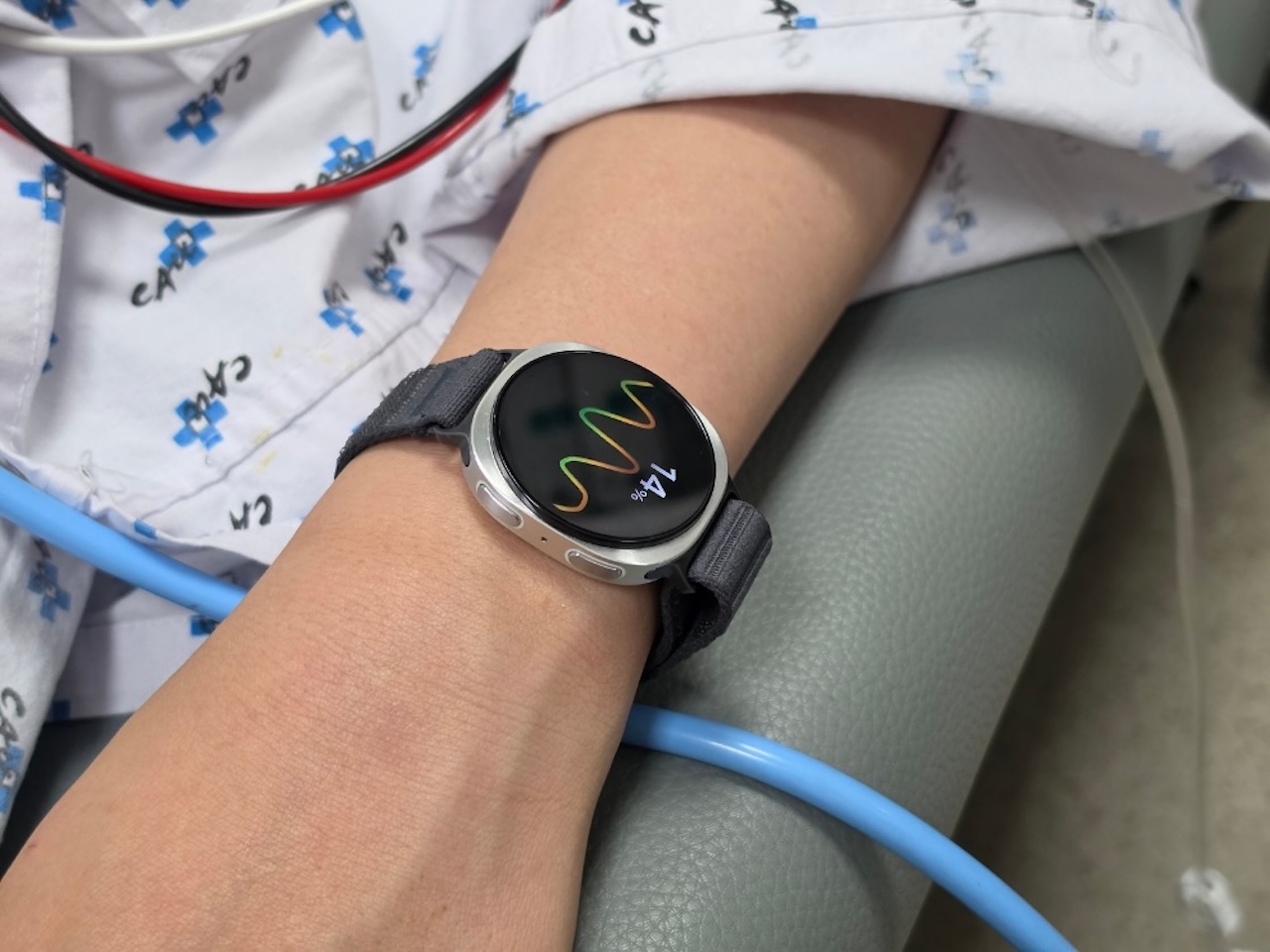
The research team, led by Professor Junhwan Cho of the Department of Cardiology at Chung-Ang University Gwangmyeong Hospital, ran 132 patients with suspected reflex fainting through induced fainting tests. They used the photoplethysmography (PPG) sensor on the Galaxy Watch6 and fed the resulting heart rate variability data into an AI algorithm.
The model called impending fainting episodes up to five minutes ahead of time with 84.6 percent accuracy, though the paper reports a wide 95 percent confidence interval of 65 to 92 percent that reflects the modest sample size. Samsung adds that the figure was achieved at a sensitivity of 90 percent and a specificity of 64 percent, evaluated using AUROC and threshold metrics. In plain terms, the system is good at not missing real fainting events, and a bit looser about flagging false positives, which is the right tradeoff for a safety warning.
The authors describe it as the first commercial smartwatch study to prospectively predict vasovagal syncope using PPG-derived heart rate variability. Earlier work predicted syncope using ECG or blood pressure data, but not from a stock consumer smartwatch. The paper sits in Volume 7, Issue 4 of the journal and is open to read at academic.oup.com.
Why vasovagal syncope is worth catching early
Vasovagal syncope is the medical name for what most people just call fainting. Per Samsung’s description of the condition, a person’s heart rate and blood pressure drop abruptly in response to factors like excessive stress, leading to a temporary loss of consciousness.
The faint itself usually isn’t dangerous. The fall is. Professor Cho put it this way in the press release: ‘It’s not uncommon for syncope patients to suffer trauma from falls, and in extreme cases, some experience severe injuries such as fractures or cerebral hemorrhage.’ A five-minute heads-up is enough time to sit down, lie down, get to a wall, or ask the person next to you for help. That’s the entire point.
How the watch saw it coming
The study used HRV data captured by the Galaxy Watch6’s PPG sensor as the input signal. Heart rate variability is the tiny beat-to-beat variation in your pulse, and it’s a well-known proxy for what your autonomic nervous system is doing.
The AI model in this study learned the specific HRV pattern that shows up in the minutes before a vasovagal episode. The watch isn’t measuring blood pressure directly. It’s reading the rhythm signature your body broadcasts before things tip over.
What this is, and what it isn’t
This is the part where the PSA framing matters, and there are a few things to be clear about. Most importantly, this is research, not a feature. Samsung’s footnote is explicit: ‘Findings are based on the research study and do not reflect a feature currently available on the device.’ Don’t expect a faint-warning toggle in your Galaxy Watch6 settings tomorrow. The study also used Galaxy Watch6 specifically, and Samsung hasn’t said which other models share enough sensor parity to support the algorithm. The 84.6 percent accuracy is high for an early-warning use case, but it’s not 100, and the 64 percent specificity means some false alarms are part of the picture if and when this ships. Regulatory clearance is also a separate process, and Samsung hasn’t announced FDA, MFDS, or CE submissions for a syncope-prediction feature.
If you have a history of fainting, this study is good news on the horizon, but it’s not a substitute for talking to a cardiologist about head-up tilt testing or a wearable Holter.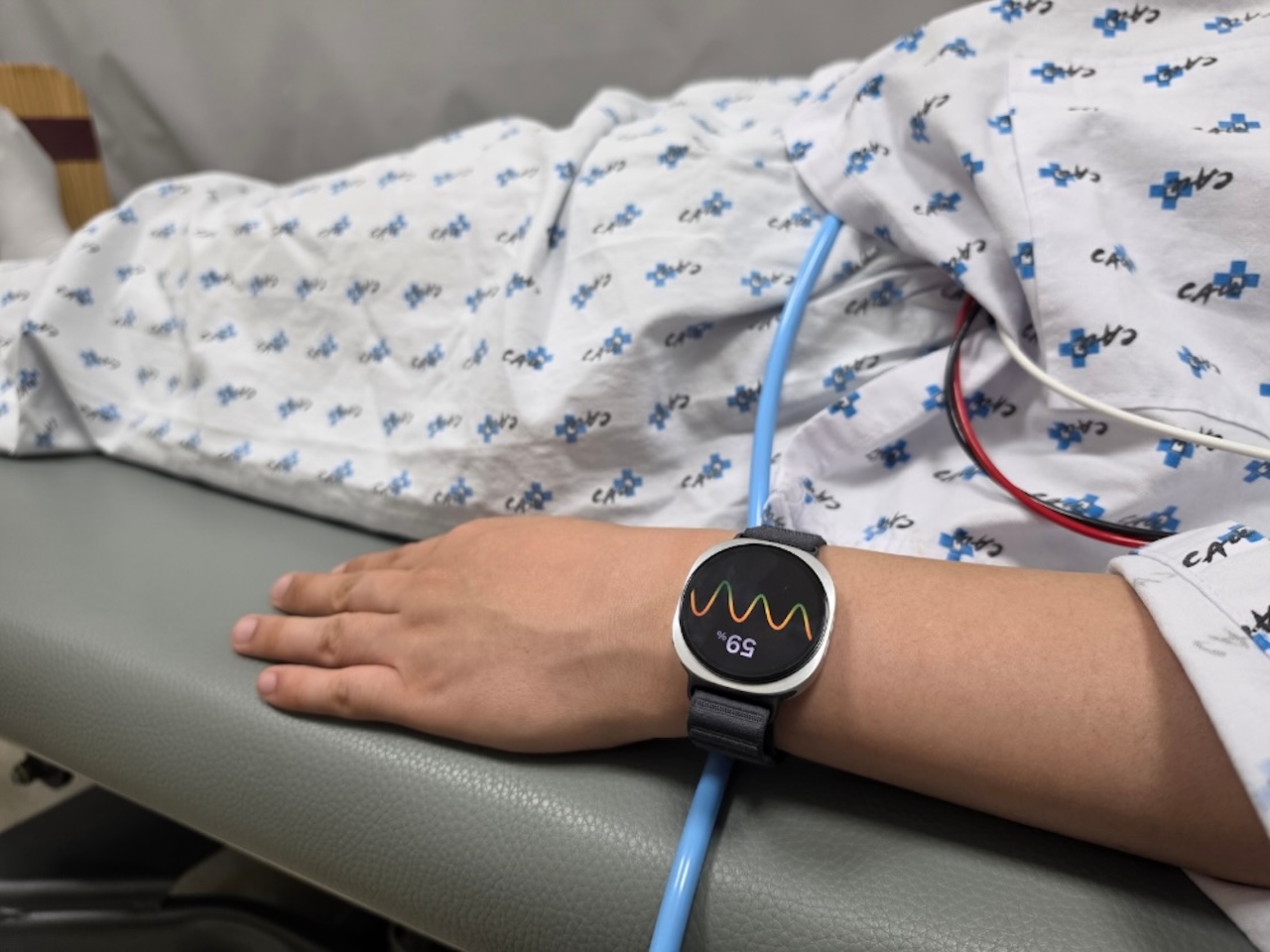
Who should be paying attention
This story matters most for people with diagnosed vasovagal syncope or recurrent unexplained fainting, and for the caregivers and family members of older adults who are already at risk of dangerous falls. It’s also worth a read for endurance athletes who occasionally faint after hard efforts, and for anyone who has gone down at the sight of blood, during a blood draw, or in heat and crowds. Galaxy Watch6 owners who are simply curious about what their existing PPG and HRV data could one day flag will find plenty to think about here too.
What I’d watch for next
The big questions are timing and scope. Three threads worth watching: whether this graduates from paper to a beta feature inside Samsung Health, and which Galaxy Watch models end up supported; whether Samsung pursues FDA, MFDS, or CE clearance, since that’s what moves it from interesting research into a medically actionable warning; and whether 84.6 percent accuracy holds up outside the tilt-test lab, where everyday motion, sleep, and noise make PPG signals far messier.
‘This study is an example of how wearable technology can help shift healthcare from being designed for “post-care” to a model of “preventive care,”‘ said Jongmin Choi, head of Samsung’s Mobile eXperience Health R&D Group, in the press release. ‘We are committed to driving technological innovation that empowers our users to lead healthier everyday lives.’
Samsung is positioning this as a step toward preventive health. The honest read: the signal exists in commodity smartwatch data. Turning it into a shipping safety feature is the next, harder mile.
