

Google just confirmed it: intelligent eyewear with Gemini AI is arriving this fall, built in partnership with Samsung, Gentle Monster, and Warby Parker. When it lands, it will compete directly with Meta Ray-Ban at flagship prices. Right now, before that launch reshapes the category, AI smart glasses under $100 are already delivering real utility.
The under-$100 category is proving it: ChatGPT integration, real-time translation, open-ear audio, and hands-free cameras packed into frames that look like normal glasses. I pulled current Amazon listings for the top sellers and focused on the models with the most credible specs on paper: real-time translation, camera stabilization, and battery life the makers rate for a full day. I haven’t tested these hands-on, so the performance notes below reflect manufacturer claims and buyer reviews rather than my own use.
The three picks here each serve a different buyer. The GetD AI Glasses are the best all-rounder for translation and AI assistance. The SGUKZF brings a 1080p camera with anti-shake for hands-free recording. And the Plunthorn B0GJ5LD7QL is a strong seller with 1,000+ units bought last month. Here is how they compare.
Quick picks
| Product | Price | Best For |
|---|---|---|
| GetD AI Glasses | $99.99 | Translation and AI assistance |
| SGUKZF AI Smart Glasses | $64.99 | Hands-free 1080p camera |
| Plunthorn AI Smart Glasses | $67.99 | All-round value with camera |
Best all-around AI smart glasses under $100: GetD AI Glasses – no camera by design, so the entire spec sheet goes toward translation (145 languages) and AI assistance. If conversation assist and audio are your priority, this is the pick at $99.99.
Best with camera: SGUKZF AI Smart Glasses the anti-shake 1080p camera is the reason to buy. Translation, audio, and photochromic lenses come along for the ride at $64.99.
Among the most popular: Plunthorn AI Smart Glasses (Plunthorn, $69.99) – 1,000+ units sold last month makes the case before the spec sheet does. Camera, translation, AI assistant, and audio all in one 35g frame. The all-rounder at $69.99.
GetD AI Glasses: Best overall for translation and AI
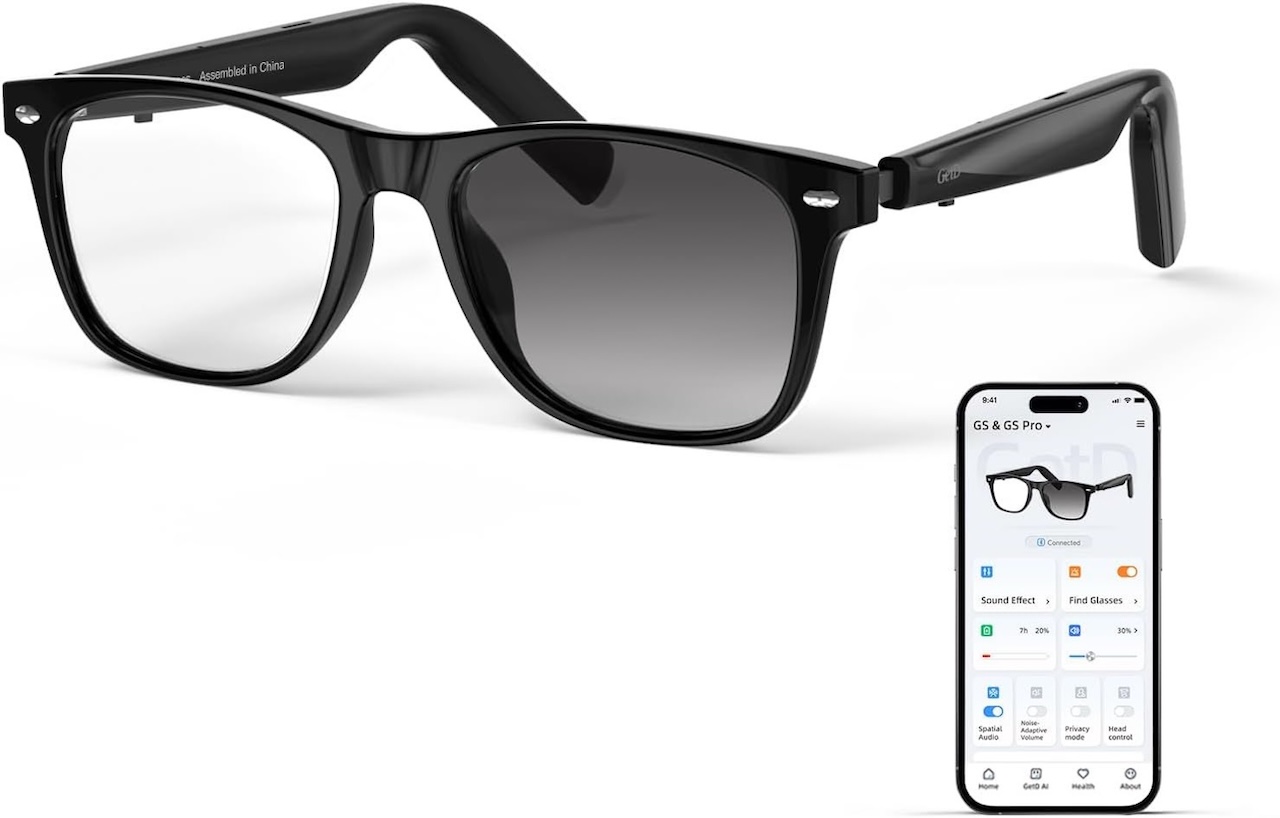
Price: $99.99
Where to Buy: Amazon
The $99.99 GetD AI Glasses cover the core of what the Meta Ray-Bans do for translation and audio, at a fraction of the price. These do not have a camera, so they skip the privacy concerns and the bulky frame that comes with integrating a lens and processor. Instead, GetD focuses on what matters most for daily use: AI assistance, translation, and audio.
GetD says the translation works bidirectionally: you speak, the glasses translate and play the result through the open-ear speaker. Real-world translation on budget glasses like these tends to lag, so expect to repeat yourself in fast conversation. The AI assistant can answer questions, set reminders, and handle voice notes through the GetD app. And GetD rates the open-ear audio for clear music and calls without blocking out your surroundings – useful for walking, commuting, or working at a desk.
Battery life is a highlight: 11 hours of music playback and 9 hours of talk time from two 115mAh batteries (one in each temple). The TR90 frame is lightweight at under 29g, and the photochromic lenses automatically darken outdoors. The main trade-off is no camera, and the AI features require the GetD app and an internet connection. Some users report the app setup needs patience, and negative reviews mention connection and charging problems. At this price, the value is strong for travelers and AI-curious buyers, but skip if you want a camera or offline AI.
SGUKZF AI Smart Glasses: Best with 1080p camera and EIS anti-shake
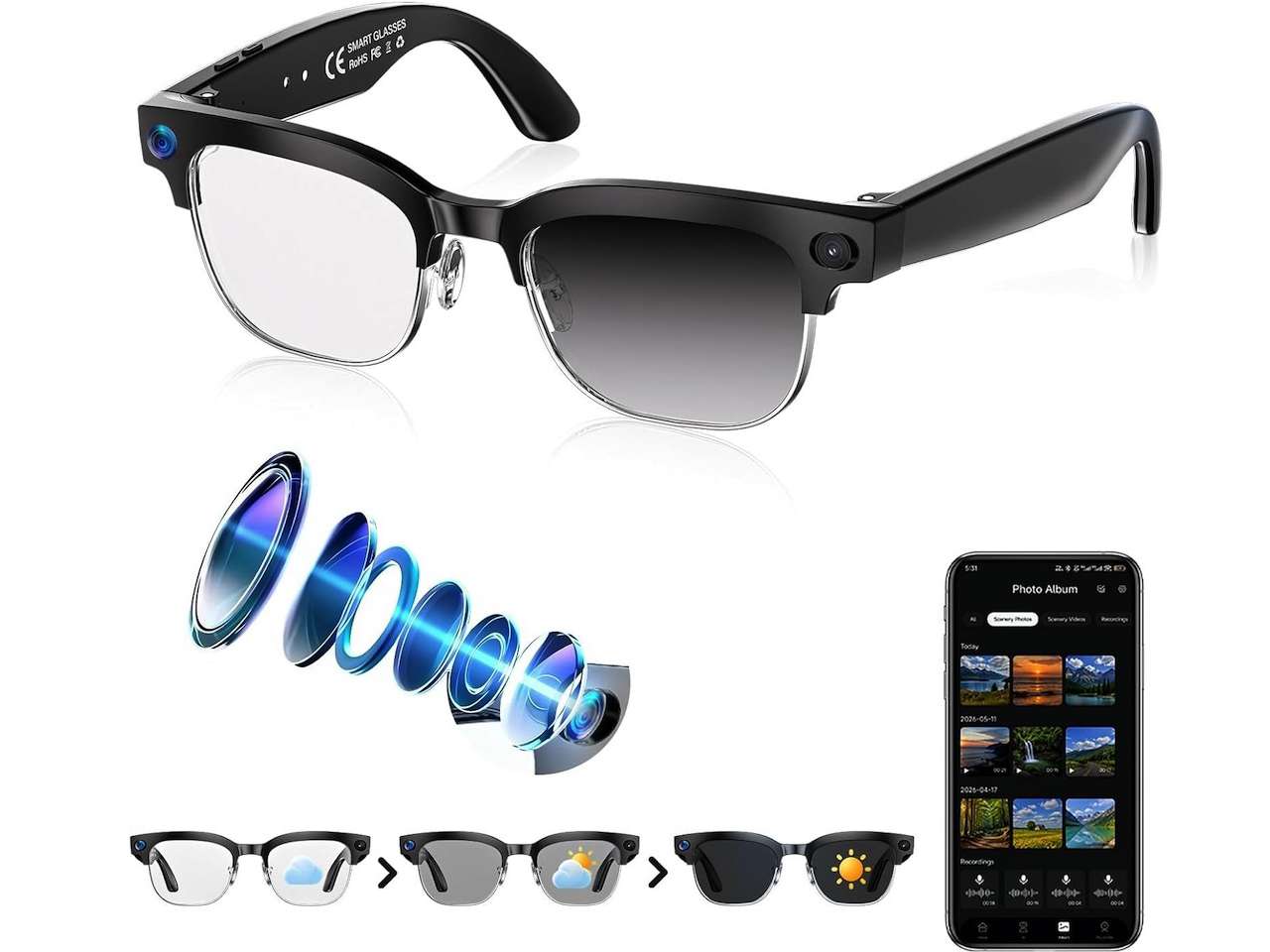
Price: $64.99
Where to Buy: Amazon
The SGUKZF AI Smart Glasses are for people who want a camera in their glasses. The 8MP Sony IMX219 sensor records 1080p video with electronic image stabilization and produces interpolated 4K photos. That’s still solid at this price. The listing pitches the anti-shake for walking, cycling, and casual vlogging. It’s not cinema-grade, but it’s aimed at social content and hands-free documentation, and I haven’t tested how well it holds up in motion.
Beyond the camera, these include real-time translation (139+ languages), open-ear Bluetooth audio, photochromic lenses, and an AI voice assistant. They are rated IP66 waterproof, which covers rain and sweat. Over 1,000 units were bought last month, and the 4.2-star average from 110 reviews suggests solid consistency. The 290mAh battery is rated for roughly a full day of use, though heavy video recording will drain it faster. At 35g, they are lightweight enough for all-day wear.
Plunthorn AI Smart Glasses: One of the most popular picks
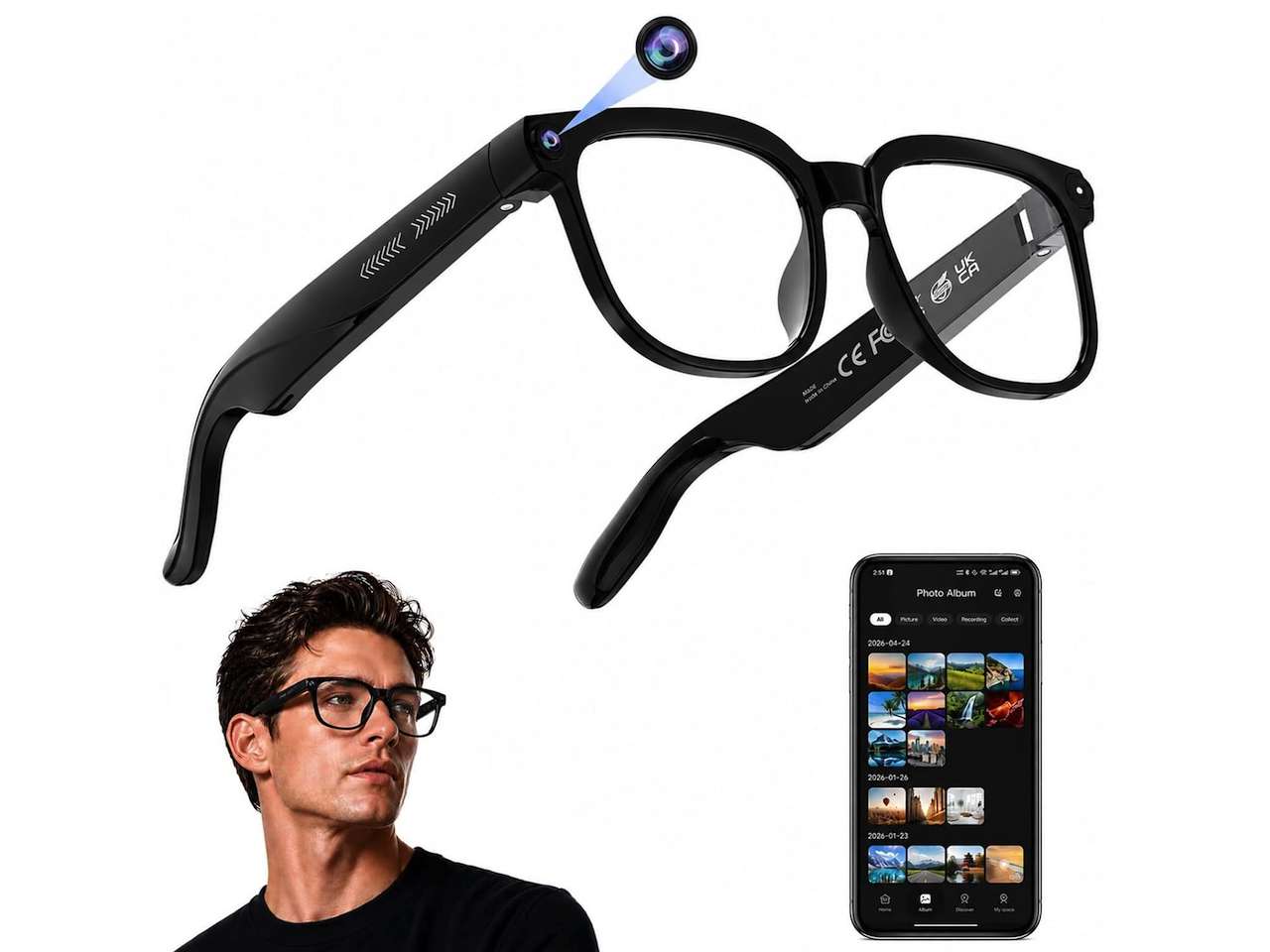
Price: $67.99
Where to Buy: Amazon
With 1,000+ units bought in the last month, the Plunthorn AI Smart Glasses ($67.99) are among the best-sellers in this category. The formula is familiar: a 1080p camera with interpolated 4K photos, real-time translation, ChatGPT assistant, object recognition, and open-ear audio , all in a 35g frame with photochromic lenses and IP65 protection. The transparent lens variant gives these a modern look that does not scream ‘tech gadget.’
What to look for in AI smart glasses under $100
AI assistant type: Most under-$100 glasses use a companion app with built-in ChatGPT integration. The GetD glasses support both ChatGPT and DeepSeek. Translation quality: Look for bidirectional real-time translation (you speak, glasses translate, speaker plays result). The GetD glasses cover 145 languages. Camera or no camera: If you want to record video or take photos hands-free, pick a model with an 8MP or better camera. If translation and AI assistance are your priority, a camera-free model like the GetD offers lighter weight and fewer privacy concerns.
Lens type: Photochromic lenses that auto-darken outdoors are standard at this price. Some models also include blue-light-blocking clear lenses for indoor use. Battery and charging: Look for at least 8 hours of continuous use. Magnetic charging is convenient but not universal. The GetD glasses charge via a cable, which is reliable but less elegant than a dock.
The Bottom Line
AI smart glasses under $100 in 2026 are not a compromise. They are a genuinely useful category for travelers, remote workers, and anyone who wants AI assistance hands-free. The GetD AI Glasses are the best all-rounder for translation and daily AI use. The SGUKZF is the camera pick for hands-free recording. And the B0GJ5LD7QL is a proven seller for a reason: it does everything well for $69.99. Pick the one that matches your priority, and you will get real utility without spending Meta Ray-Ban money.
Frequently Asked Questions
Are cheap AI smart glasses worth it in 2026?
Yes, with conditions. The under-$100 category has matured enough to deliver real daily utility: bidirectional translation, open-ear audio, and a companion AI assistant are all achievable at this price. What you’re trading away is verified hands-on performance data, brand accountability, and warranty confidence. If you’re a traveler or remote worker who wants translation and audio without paying flagship prices, the value is genuine. If you need proven video quality or seamless app reliability, wait for a reviewed option.
Will these glasses work without a smartphone nearby?
Mostly no. All three picks route their AI assistant features through a companion app on your phone and need an active internet connection. What works offline: Bluetooth audio, basic call handling, and camera recording for the camera picks. Take your phone out of the equation and these become audio glasses and nothing more.
Do budget AI glasses work with iPhone, or just Android?
The GetD app is confirmed on both iOS (iOS 13.0+) and Android (8.0+). The SGUKZF and Plunthorn companion apps are listed as compatible with iOS and Android, but platform support on unreviewed brands can change — confirm on the current Amazon listing before buying.
Do the camera models record true 4K?
Not in the traditional sense. The 8MP sensors in budget AI glasses like the SGUKZF and Plunthorn use the Sony IMX219 sensor class, which records 1080p video and produces interpolated, upscaled 4K photos. Listings market these as 4K video, but actual video output tops out at 1080p. That’s still workable for social content and hands-free documentation, but it’s a meaningful distinction before you buy.
How do these compare to the Ray-Ban Meta?
The Ray-Ban Meta Gen 2 starts from around $299 depending on style, with popular configurations running $379 and up. It offers a 12MP camera and has a tested track record from major reviewers. The picks here cost $65 to $100 and haven’t been independently tested at that level. The GetD AI Glasses come closest on translation and audio features, but the Meta pair delivers a verified camera and a deeper AI pipeline. If $100 is your ceiling, the GetD or Plunthorn are the best-documented options at this price. If your budget stretches, the Meta is the safer long-term bet.
Auto Amazon Links: No products found.

Gadgeteer Comment Policy - Please read before commenting
Thanks for sharing. I’m specifically looking for smart glasses without a camera, and it seems GetD would be a good match.