
You don’t need to wait for Apple. The smart-glasses shelf in 2026 finally has ten pairs that earn their price tags, and the gap between “buy now” and “wait for” has never been clearer. Six weeks of cross-checking specs, prices, and on-frame battery claims across the category turned up a pattern: the big brands are winning on polish, the small brands are winning on focus, and three pairs in the next twelve months will reset the entire map. Here is the lineup that holds up today, what each one does well, and which ones you should honestly sit out.
Price snapshot at the top: the ten picks you can actually buy today span $149.99 to $799. The cheapest on the list is the OhO sunshine Edge Pro. The most expensive available at retail is the Meta Ray-Ban Display at $799, which includes the Neural Band. Snap Spectacles sits outside that range as developer-only access at $99/month.
1. Ray-Ban Meta Blayzer and Scriber Optics: best overall AI-and-camera glasses
The second-gen Ray-Ban Meta line clears the bar nothing else in the category clears: it doesn’t read as tech on your face. The Blayzer and Scriber Optics frames, built by EssilorLuxottica, were announced on March 2026 as the prescription-first models in the lineup, with optical-retailer availability beginning April 14.
The on-frame camera shoots up to 3K Ultra HD video, the Meta AI button answers questions about whatever you are looking at, and the redesigned charging case now delivers up to 48 hours of extra charging on the go. The Oakley Meta HSTN and Oakley Meta Vanguard cover everyday and sport wear, so the same brain ships in four frame families.

Price: $499
Where to Buy: Meta
Best for: hands-free capture and a built-in assistant without looking like you are cosplaying a Black Mirror episode.
Tradeoff: no in-lens display. Notifications come through the open-ear speakers, not your field of view.
Skip if: you need an extreme prescription the new Blayzer and Scriber range still cannot cover.
2. Viture Beast: best XR display, full setup
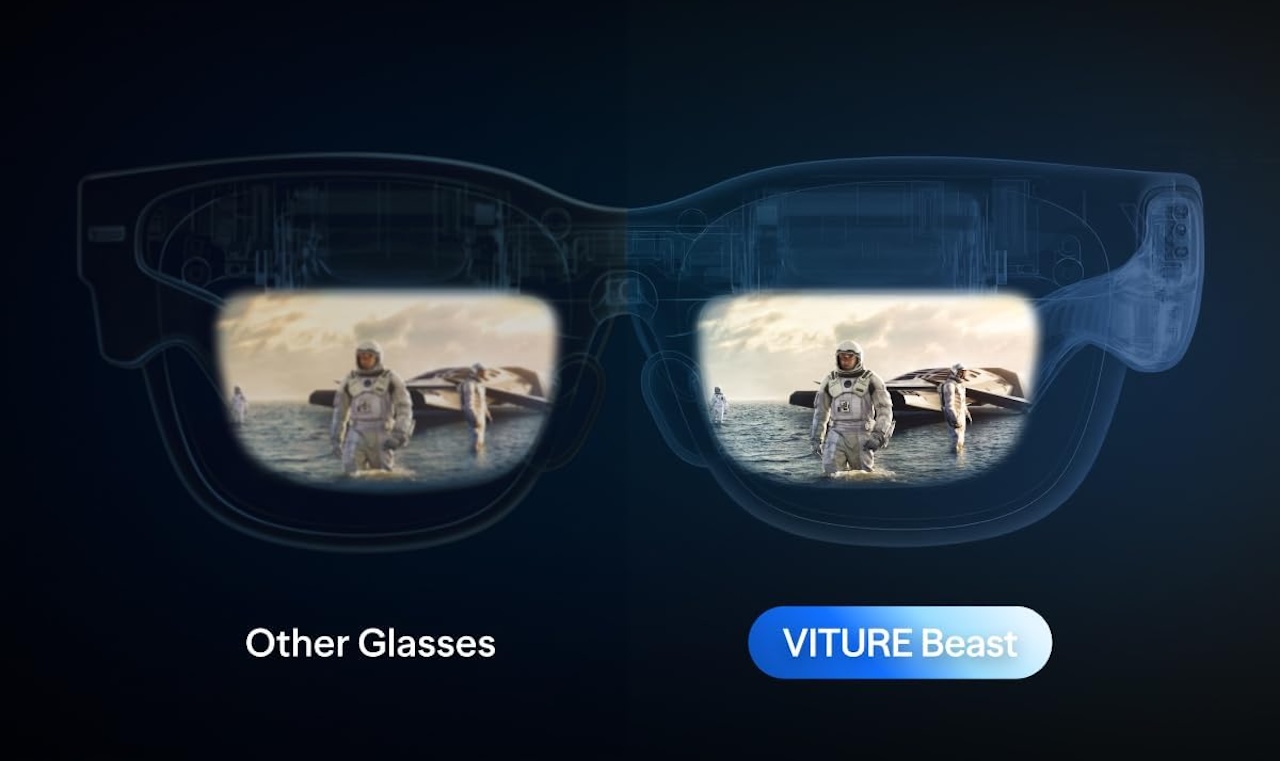
The Beast is Viture’s flagship, announced at CES 2026 and officially launched in April. You get a perceived 174-inch virtual screen at 4m, 1200p Sony micro-OLED panels, 1250-nit peak brightness, a 58° field of view, built-in VisionPair 3DoF tracking, and 9-level electrochromic dimming, all in an aluminum-magnesium frame with HARMAN-tuned audio. Plug into a Steam Deck, a MacBook, an iPhone, or a Switch 2 dock and you have a workstation in your backpack.
Price: $553.28 (On Sale from $728)
Where to Buy: Amazon
Best for: desk-bound users who want a big, bright micro-OLED monitor strapped to their face.
Tradeoff: they look like sunglasses indoors, and cable management is still cable management.
Skip if: you wanted untethered AR. These are a tethered display, not a standalone computer.
3. Xreal 1S: best travel display with head tracking
The XREAL 1S landed at CES 2026 and brings the One-series formula to a sharper, smarter package. Specs run 1200p per eye, a 52° FOV, a 16:10 aspect ratio that fits PC and Switch 2 modes natively, and a 120Hz refresh rate. The X1 chip handles native 3DoF, so the virtual screen stays put when you turn your head mid-flight. The frames are lighter on the bridge than the Beast, slimmer in a carry-on, and the XREAL Hub power-and-play adapter (45W fast charging, 120Hz passthrough) drops in for $39.99 when you want to charge your phone or Steam Deck mid-session.

Price: $449 (On Sale from $529)
Where to Buy: Amazon
Best for: Frequent flyers who watch a movie on every leg.
Tradeoff: Brightness tops out around 700 nits, so anything sunlit still washes out fast.
Skip if: You want the absolute biggest, brightest picture. The Beast still wins on raw image.
4. RayNeo Air 4 Pro: best budget AR display
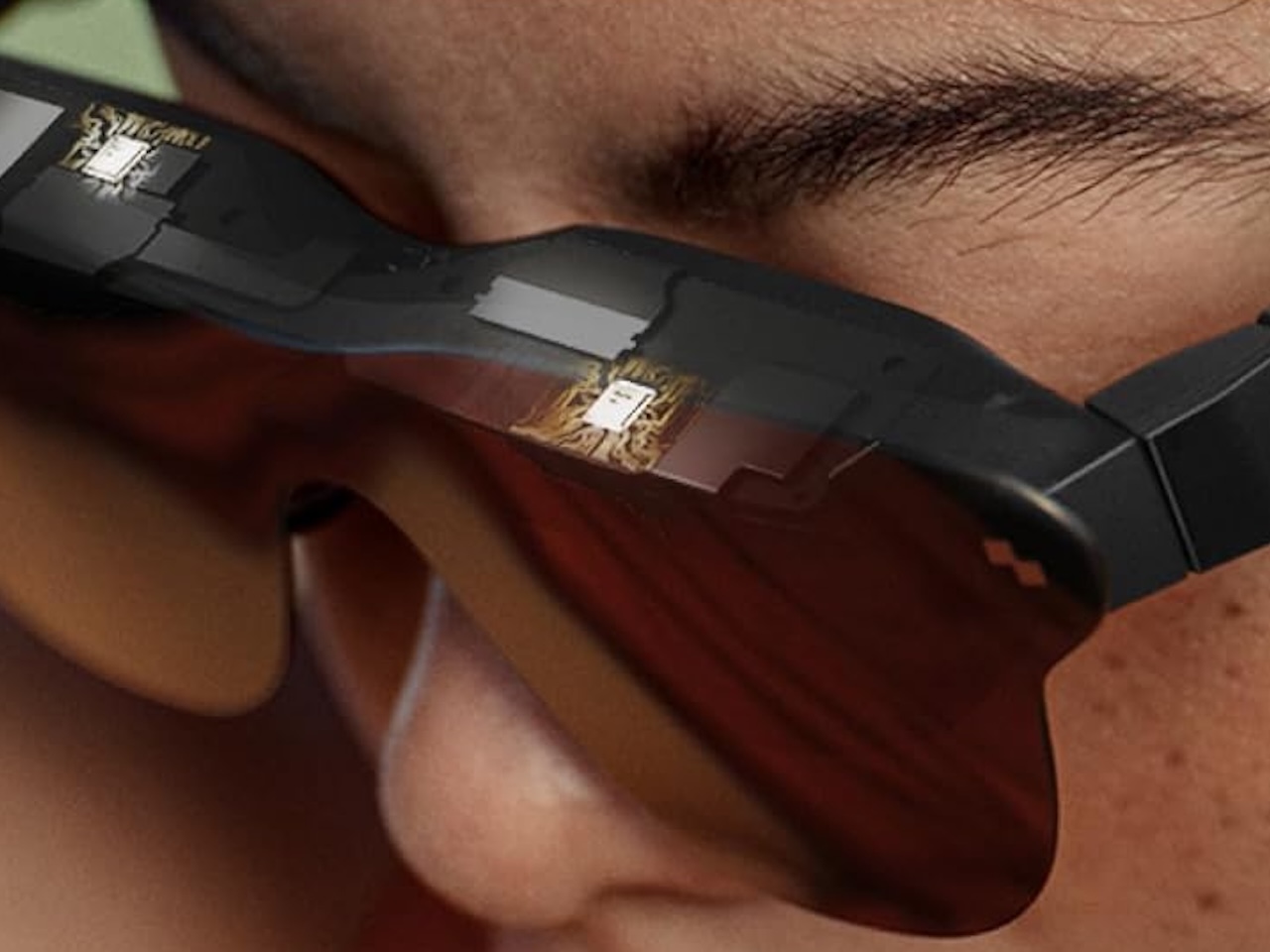
The Rayneo Air 4 Pro is the surprise of the year. TCL’s RayNeo brand put 1080p SeeYa micro-OLED panels, a 120Hz refresh rate, and HDR10 into a 76g frame at $299. The 201-inch projected screen, 1200 perceived nits, and four-speaker setup tuned by Bang and Olufsen make it the first sub-$300 AR display worth taking seriously. Phone mirroring is straightforward via USB-C.
Price: $299
Where to Buy: Amazon
Best for: anyone who wants a big, sharp AR display for around $300.
Tradeoff: no electrochromic dimming, no built-in 3DoF, and the nose-pad ergonomics divide longer-session reviewers.
Skip if: you want head-tracked screen anchoring or a wider FOV. That is Xreal 1S or Beast territory.
5. Even Realities G2: best minimal-design display glasses
The Even Realities G2 takes the opposite approach from the bright, immersive display glasses. It is a productivity tool designed to look like normal eyewear, with discreet in-lens micro-LED readouts for teleprompting, translation, notifications, and a built-in AI assistant. The G2 pairs with the R1 smart ring for input, and at CES 2026 it picked up an Innovation Award. The 36g frame is closer in feel to a pair of prescription glasses than to a tech wearable.

Even G2 smart glasses: from $599
Even R1 ring: $249
Where to buy: G2 Crown Panto · G2 Rectangular · Even R1
Best for: knowledge workers who want glanceable text in their line of sight without the headset look.
Tradeoff: no entertainment display, no in-lens video, and the AI assistant is less capable than Meta AI on raw queries.
Skip if: you want a movie screen on your face. The G2 is for reading, not watching.
6. Meta Ray-Ban Display: best first-generation AR display from a major brand
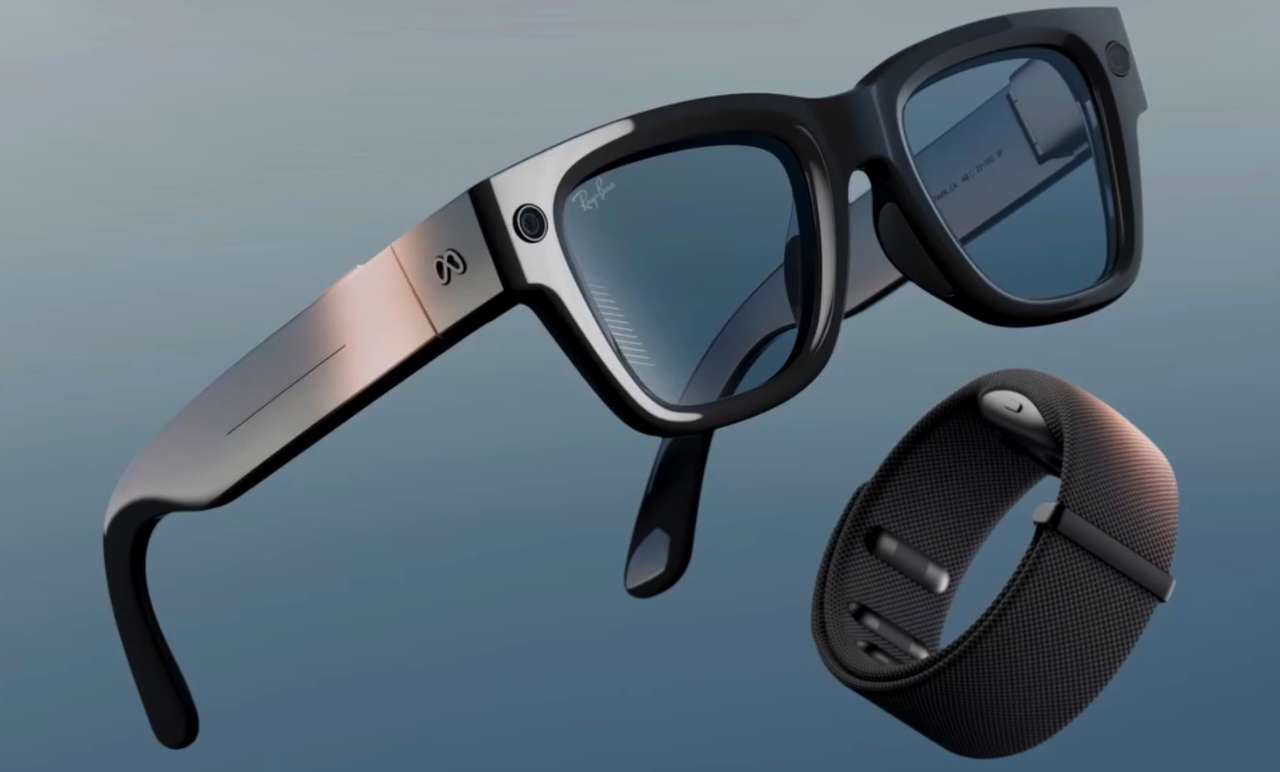
The Display is the first Ray-Ban with a built-in in-lens screen, announced in September 2025 and shipping in limited quantities through 2026. The 20° field-of-view display shows notifications, turn-by-turn Maps directions, live translations, and a 12MP camera viewfinder, all controlled by the Meta Neural Band, an EMG wristband that reads muscle signals for cursor movement and handwriting recognition. The $799 price includes both the glasses and the band. CES 2026 added a Teleprompter feature and a Garmin unified-cabin partnership that brings the same neural interface to aircraft dashboards.
Price: $799
Where to Buy: Meta
Best for: early adopters who want the first credible in-lens display from a major brand and a control scheme that does not require touching the frame.
Tradeoff: limited stock, premium price, and the Neural Band takes a day or two of muscle-memory calibration before cursor control feels natural.
Skip if: you would rather wait for the inevitable Gen 2 with a wider FOV.
7. Solos AirGo V2: best AI features with modular frames
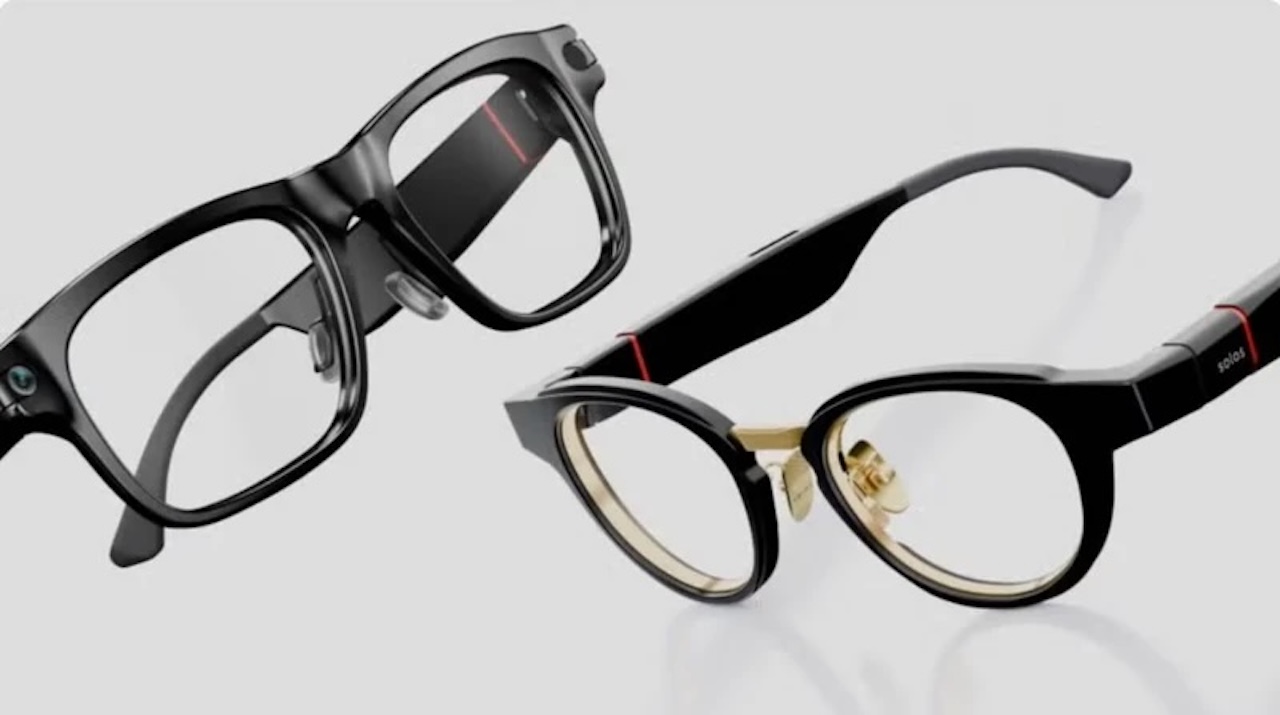
The AirGo V2 launched at CES 2026 and is the first Solos model to ship with a 16MP camera. The SmartHinge system lets the front frames detach from the temples, so you can swap styles (sport, optical, sun) without buying a second pair of electronics. Voice queries route through SolosChat, which uses ChatGPT for translation, summaries, and visual recognition. The V2 is the most modular AI-glass family in the category, and at $299 it undercuts the AirGo Vision on price while upgrading to a stabilized 16MP camera with live streaming.
Price: $249
Where to Buy: Amazon
Best for: early adopters who want LLM-powered voice features and modular frame styling in one pair.
Tradeoff: open-ear audio is competent rather than excellent, and SolosChat ships with a 3-month premium subscription, then $9.99/month for extended ChatGPT history.
Skip if: you specifically need Meta AI’s social-sharing pipeline.
8. INMO GO3: best AI translation with swappable battery
INMO’s GO3 Kickstarter campaign launched earlier this month and is heading into production now. The 58g frame packs a 640×480 micro-LED display, 98-language real-time translation, AR navigation overlays, and a magnetic swappable battery that clicks in and out without shutting the glasses down. The CNC 5-axis-milled frame and the multiple frame designs voted on by the community each year set it apart from the injection-molded majority. We covered the launch in detail three days ago, and the takeaway holds: at $499 Kickstarter it is the best value translation-and-display glass on the market.

Price: $499
Where to Buy: INMO
Best for: frequent travelers who want on-lens translation in a normal-looking frame.
Tradeoff: Kickstarter pricing is a moving target, and the GO3 is not yet in mass retail.
Skip if: you need retail returnability today.
9. Snap Spectacles (5th Gen): Best developer AR
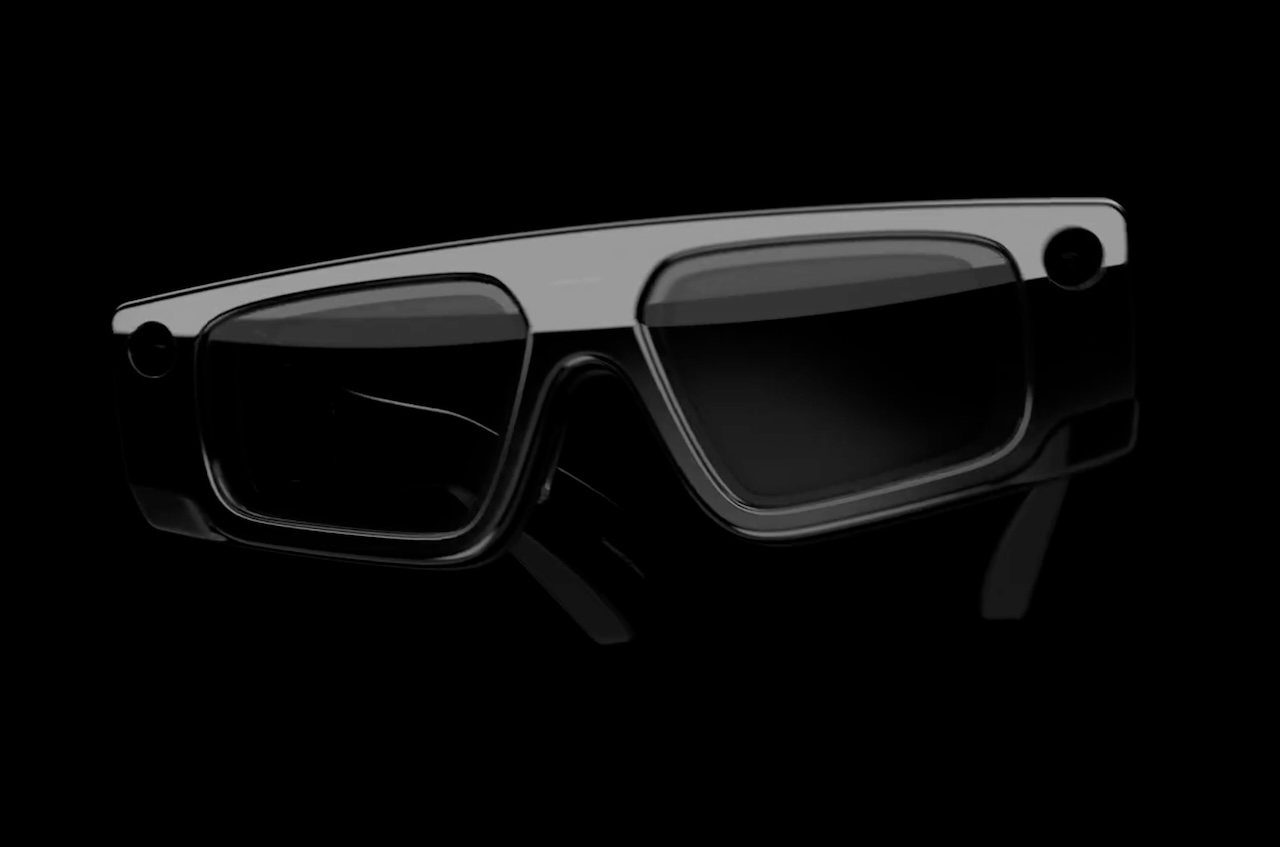
Snap’s 5th-gen Spectacles remain the most capable developer AR glasses on the market, with see-through Lenses, built-in spatial computing, and the Snap OS developer stack. They are not a consumer purchase. Snap charges $99/month for access, and the hardware ships only to approved developers. The consumer Specs product is reported by The Information and UploadVR for a fall 2026 launch at around $2,500. For 2026 buyers, Spectacles earn a slot on this list as the only true standalone AR platform you can put on your face, with the caveat that you cannot actually buy one as a consumer yet.
Price: $99/month
Where to Buy: Spectacles
Best for: developers, AR creators, and anyone who wants to live in the most mature standalone AR ecosystem.
Tradeoff: not available for consumer purchase.
Skip if: you are not building AR software for Snap OS.
10. OhO sunshine Edge Pro: Best 4K POV video glasses
The Edge Pro (model A31pro) is built around one specific job: capturing 4K video from your face without a phone in your hand. The camera writes to 64GB of built-in storage, the USB-C port lets you record while charging from a power bank, and the lightweight TR90 square frame keeps the whole package to about 41 grams. Bluetooth 5.3 handles open-ear audio for calls and music, and the companion app covers two-way translation across 164 languages. The photochromic lenses block blue light, hit 100% UV400 protection, and self-adjust between tinted and clear as ambient light changes.

Price: $224.99 (From $241.99)
Where to Buy: Amazon
Best for: vloggers, cyclists, and POV creators who want a sub-$200 4K capture device shaped like sunglasses.
Tradeoff: review count is still small, and the 4K bitrate is not sustained at full rate under thermal load.
Skip if: you want a polished app ecosystem. This is a capture device first.
What separates these picks
The whole shopping decision collapses to one fork: do you want a camera, or do you want a screen? If it is a camera, the Ray-Ban Meta line wins on polish and social integration, the Solos AirGo V2 wins on modular styling, the INMO GO3 wins on translation value, and the OhO Edge Pro wins on raw 4K capture for the price. If it is a screen, the Viture Beast wins on raw image quality, the Xreal 1S wins on travel and head tracking, the RayNeo Air 4 Pro wins on budget, the Even Realities G2 wins on minimal design, and the Meta Ray-Ban Display wins on the first credible in-lens screen from a major brand.
Three categories we held back from ranking, and why: the Google and Samsung Android XR glasses, because Google has confirmed an audio-only pair launches this fall but has not announced a price or a full compatible-phone list, so we cannot rank it yet. Apple’s N50 smart glasses, because Bloomberg’s Mark Gurman reports a late-2027 retail launch following a late-2026 reveal, so there is nothing to buy. The Snap Specs consumer version, because it has not shipped yet at any price, though the developer Spectacles already earned a slot above. If you want the platform most likely to define the next five years of smart glasses, wait for one of those three.
The bottom line
Buy the Ray-Ban Meta Blayzer or Scriber if you want camera and AI in a normal-looking frame today. Buy the Viture Beast if you want the biggest, brightest portable screen on the market. Buy the Xreal 1S if you fly often and want head tracking. Buy the RayNeo Air 4 Pro if you want a 1080p HDR display for $300. Buy the Even Realities G2 if you want glanceable text without the headset look. Buy the Meta Ray-Ban Display if you have $799 and want the first credible in-lens screen from a major brand.
Buy the Solos AirGo V2 if you want modular AI glasses with ChatGPT routing. Buy the INMO GO3 on Kickstarter if you travel internationally. Buy the OhO Edge Pro if you want 4K POV video for $149. Buy Snap Spectacles only if you are an AR developer building on Snap OS. And if the honest answer is “all of the above, eventually,” wait for Android XR, Apple N50, or the Snap Specs consumer launch. The category is real now, and the next twelve months will be the best window to buy into it.
Frequently Asked Questions
What is the difference between AI glasses and AR display glasses?
AI glasses have no screen in your field of view. They route audio, voice commands, and a camera feed through your phone. AR display glasses project a virtual screen, usually via micro-OLED or micro-LED panels, that floats in front of you. Some models, like the Even Realities G2 and Meta Ray-Ban Display, split the difference with discreet in-lens readouts rather than full entertainment displays.
Are smart glasses safe to wear all day?
For most users, yes. Camera-equipped AI glasses run 4 to 8 hours per charge, and display glasses are tethered to a phone or computer so battery life depends on the source. Weight is the bigger factor. The Ray-Ban Meta Blayzer and the Solos AirGo V2 both come in around 30g, close to a standard pair of glasses. The Viture Beast and Xreal 1S run heavier because of the optics.
Do smart glasses work with prescription lenses?
The Blayzer and Scriber Optics Ray-Ban Meta models ship prescription-ready. The Viture Beast and Xreal 1S support prescription lens inserts sold separately. The Even Realities G2 has built-in myopia adjustment dials on each lens. The Meta Ray-Ban Display and INMO GO3 are the two models to verify prescription support on before ordering, since both are first-generation designs.
Which smart glasses work with iPhone vs Android?
The display glasses (Viture, Xreal, RayNeo, Even Realities) all work with both iPhone and Android via USB-C DisplayPort alt mode, though iPhone 14 and earlier needs a USB-C-to-Lightning adapter. The AI glasses split. Ray-Ban Meta and the Meta Ray-Ban Display work with both, with iOS getting a slightly more polished first-party app. Solos and INMO both ship with cross-platform companion apps. Snap Spectacles is the outlier, built on Snap OS and not designed for iPhone or Android phone pairing.