

Open-ear earbuds used to be a workout-only category. In 2026 they’re the default pair a lot of people reach for first, because hearing the world around you isn’t a compromise anymore. CES this past January was an open-ear arms race, with Shokz, Sony, JBL, and Soundcore all unveiling new pairs within days of each other. The sound’s better, the fit options make sense, and the price range covers almost every budget. This roundup picks one model per brand from the six brands leading the category right now, so you can compare designs instead of stacking three Shokz against each other.
Open-ears come in three fit styles in 2026: cuff (the bud clips onto your ear rim), hook (an over-the-ear arm holds the driver in front of your canal), and ring (a doughnut-shaped driver sits inside the ear with a hole in the middle). Each trades off comfort, security, and sound differently.
Quick terminology note: open-ear isn’t bone conduction. Bone-conduction headphones (like Shokz’s OpenRun line) skip the eardrum entirely and vibrate sound through your cheekbones; open-ear earbuds still fire into your ear canal but without sealing it. The sound-quality gap is wide, and every pick below is open-ear.
How we picked: one model per brand to keep the field even when comparing open-ear headphones, drawing on public spec sheets, hands-on press from CES 2026, and reviewer consensus several websites. Every pair here is a current model you can buy in May 2026, not a CES concept.
Bose Ultra Open Earbuds: the comfort benchmark
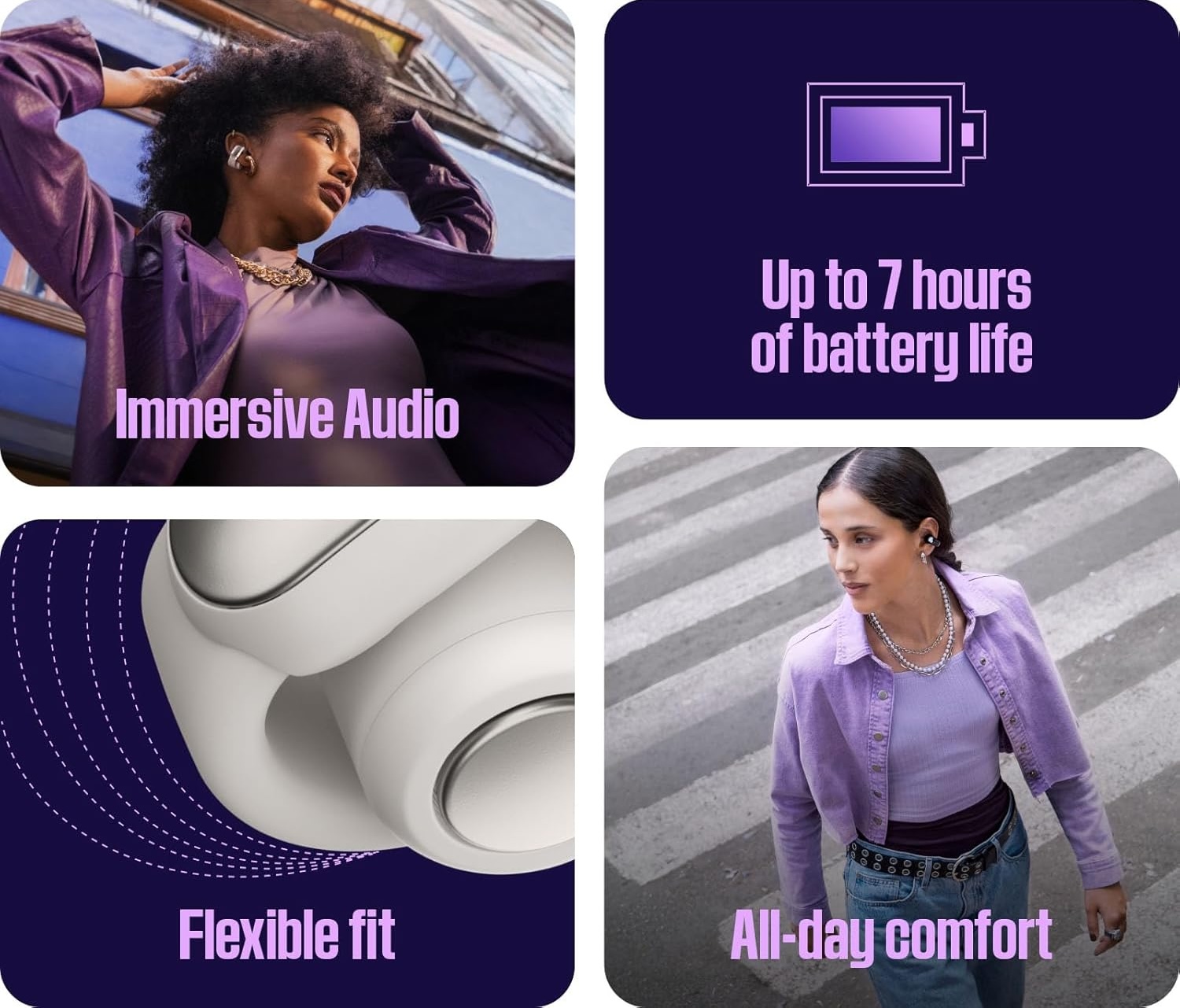
Price: From $309.99
Where to Buy: Amazon
The cuff-style fit Bose popularized changed how this category gets judged. The Ultra Open clips onto the rim of your ear like a small earring, distributes its weight along the cartilage, and stays put through long workdays without the pressure headache hooks can cause. Bose’s OpenAudio tuning pushes more midrange and low-end into your ear than the geometry should physically allow. Vocals sit forward, bass has actual presence at moderate volumes, and leakage stays low. The catch is run-day security: the cuff shifts on harder strides. There’s no ANC by design, the case is bigger than it needs to be, and at $299 it’s the most expensive pair here. Released February 2024; Bose hasn’t announced a successor.
Shokz OpenFit Pro: the runner’s pick

Price: From $249.95
Where to Buy: Amazon
Launched at CES 2026, the OpenFit Pro is the first pair Shokz has shipped with TÜV-certified noise reduction, which Shokz pitches as an open-ear category first. Flip on a mild noise reduction pass on the train without losing the awareness the form factor exists for. The over-the-ear hook is the most secure fit on this list. It survives sprints, head turns, and sweaty intervals. Shokz has been refining its drivers across the OpenFit line, and the Pro keeps that flagship-tier tuning: warmth in the low end, vocals that don’t get buried in wind noise, and Dolby Atmos support. Battery’s 50 hours total with case (12h per charge) with NR off, or 24 hours total (6h per charge) with NR on. IP55. Retail $249.95. The trade-off is sunglasses arms and helmet straps fight the hook.
Nothing Ear (open): the design pick
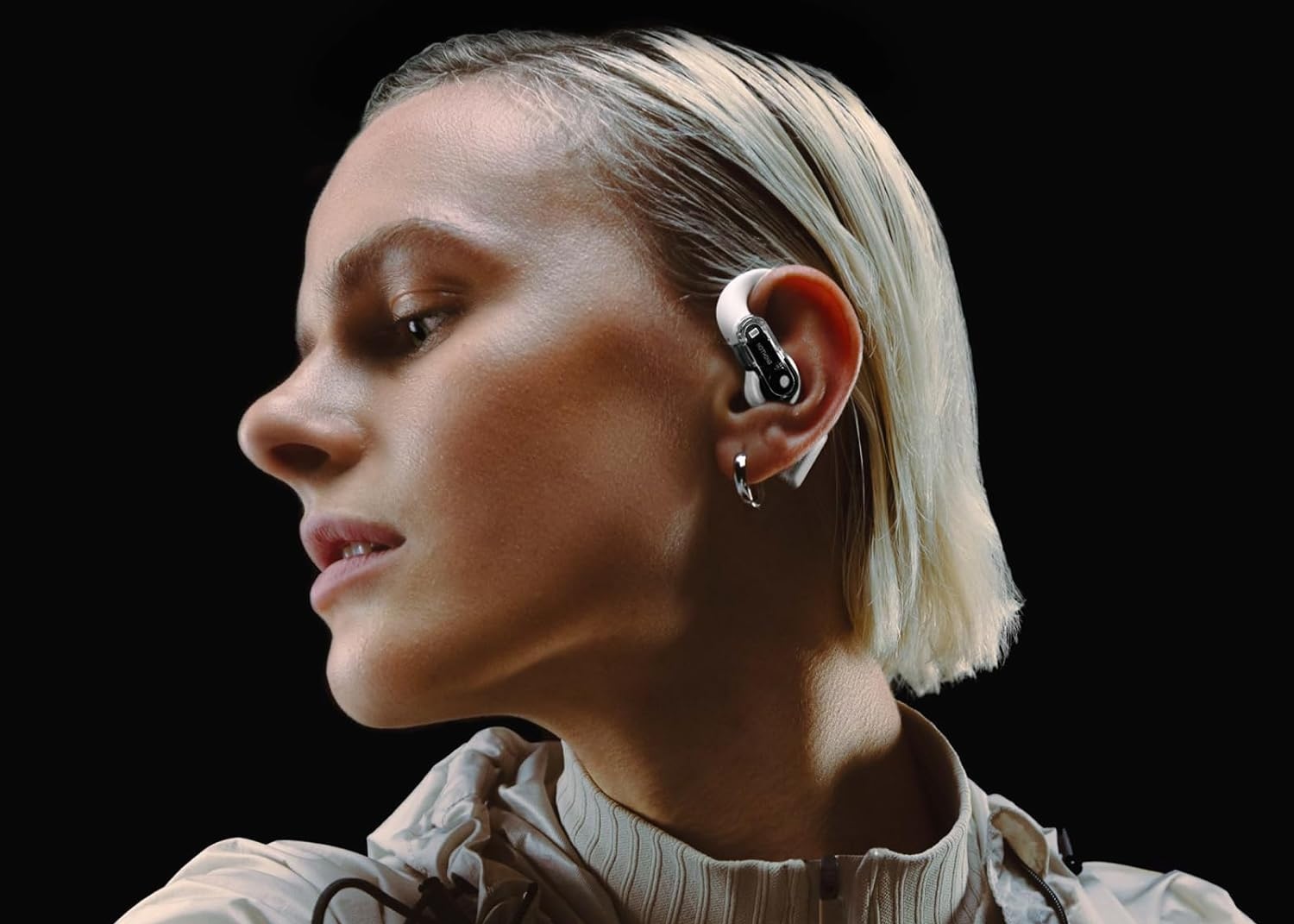
Price: $99 (From $149)
Where to Buy: Amazon
Nothing’s first open-ear pair is the easiest one to recommend on style alone. The transparent shell, dot-matrix charging case, and flush hook make it the only pair here that looks like a 2026 product instead of a 2022 hearing aid. The sound’s competitive: Nothing tuned the Ear (open) bright and punchy, which keeps vocals crisp instead of muddy. The Nothing X app’s EQ presets do real work. Battery’s 30 hours total with case (around 8 hours per charge in typical use), Bluetooth 5.3. The catch is the mic, which lags Bose and Sony on windy outdoor calls. Released September 2024, currently $99 in the US after launching at $149.
Sony LinkBuds Open: the office pick
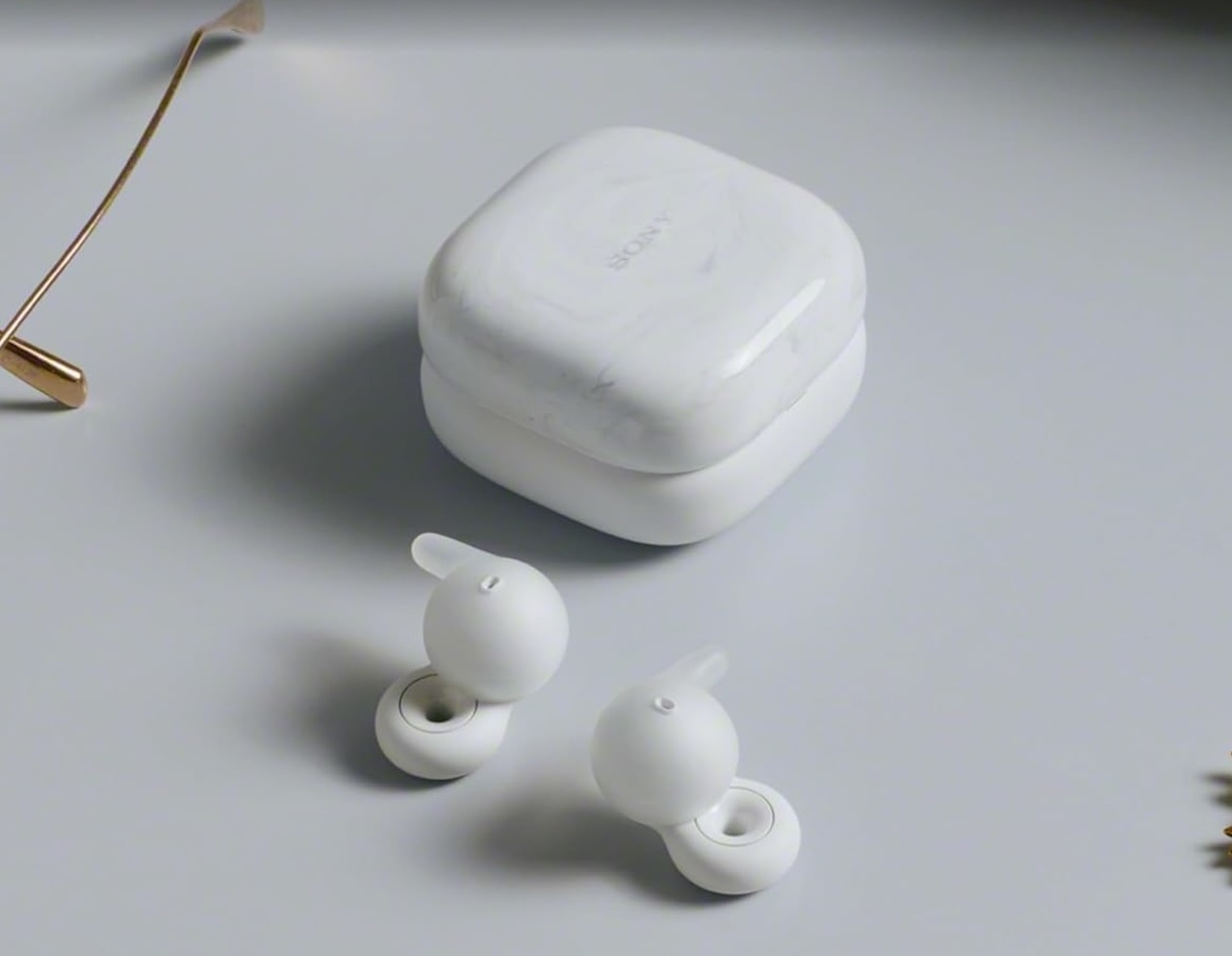
Price: $228
Where to Buy: Amazon
Sony’s LinkBuds line introduced the ring-driver design in 2022, the one with the open hole in the middle of the bud. The LinkBuds Open (the 2024 refresh, model WF-L910) keeps that approach and finally makes it competitive on sound. The buds weigh next to nothing, sit almost invisibly inside the ear, and don’t broadcast that you’re wearing headphones the way a Bose cuff or a Shokz hook does. That low profile is why they’re the office pick on this list: wear them through back-to-back meetings, hear your colleague when they walk up, and don’t look like you’re zoned out. Sony’s beamforming mics lead the category on call quality. Where they fall short is bass, which the ring-driver geometry physically limits. Battery’s 8 hours per charge and 22 hours total with case. Retail $229.99.
Soundcore AeroFit 2: the value pick
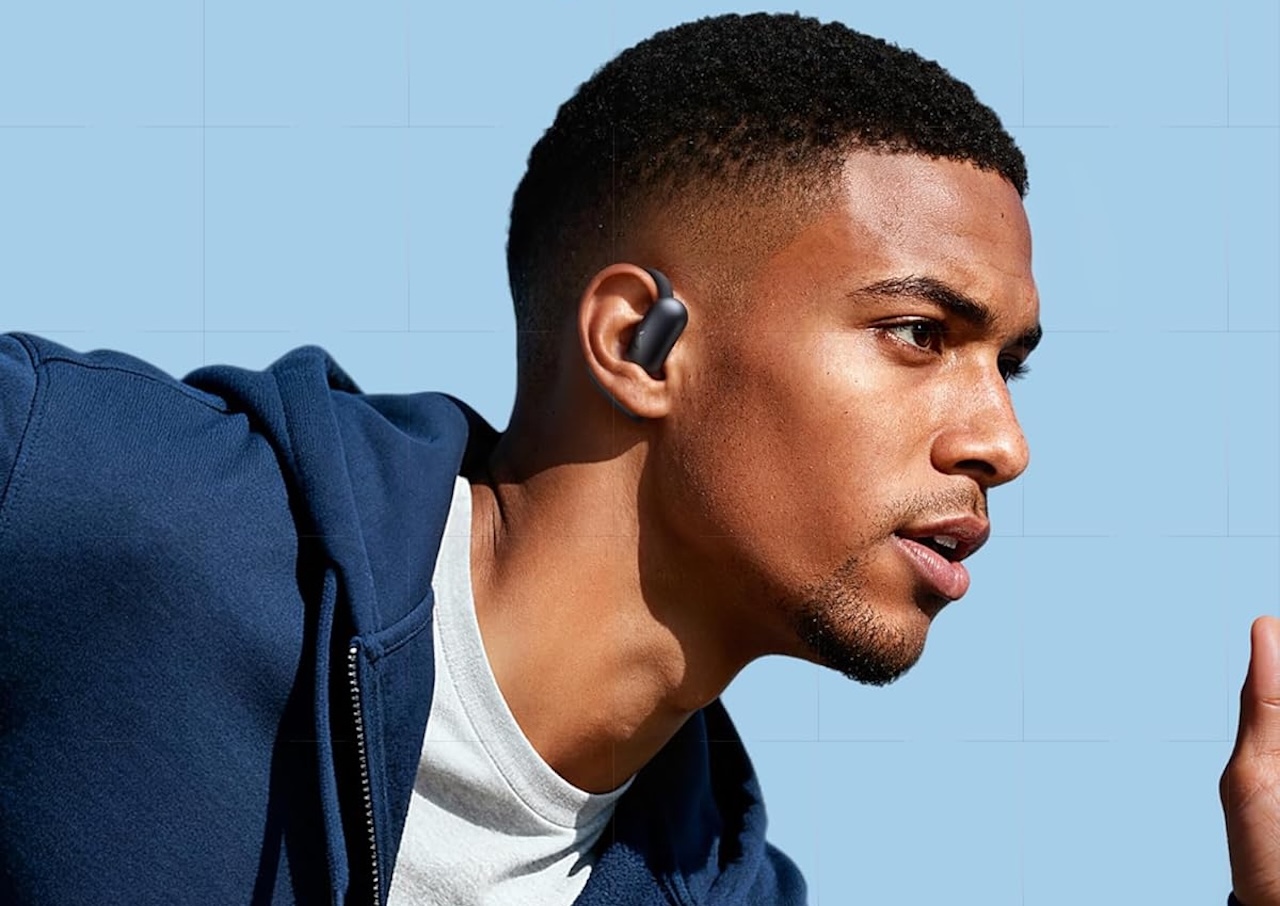
Price: $79
Where to Buy: Amazon
Soundcore priced the AeroFit 2 at $99.99, less than half of what Bose charges, and the comfort gap is smaller than that math suggests. The hook is well-shaped, the silicone tips don’t dig into the cartilage, and IP55 handles the gym and the rain. Sound’s tuned warm, which is a sensible choice at this price. The low end has more body than the Shokz, vocals are forward without being shouty. Battery’s 10 hours per charge and 42 hours total with case (the longest here), and wireless charging is in the box. Multipoint works between two devices without dropping audio mid-call. Push past 80 percent volume and the top end gets harsh; keep it moderate and it’s the best value in the category. Soundcore also launched the AeroFit 2 Pro (CES 2026 Innovation Award honoree) at a higher price.
JBL Soundgear Sense: the cyclist’s pick
Price: $164
Where to Buy: Amazon
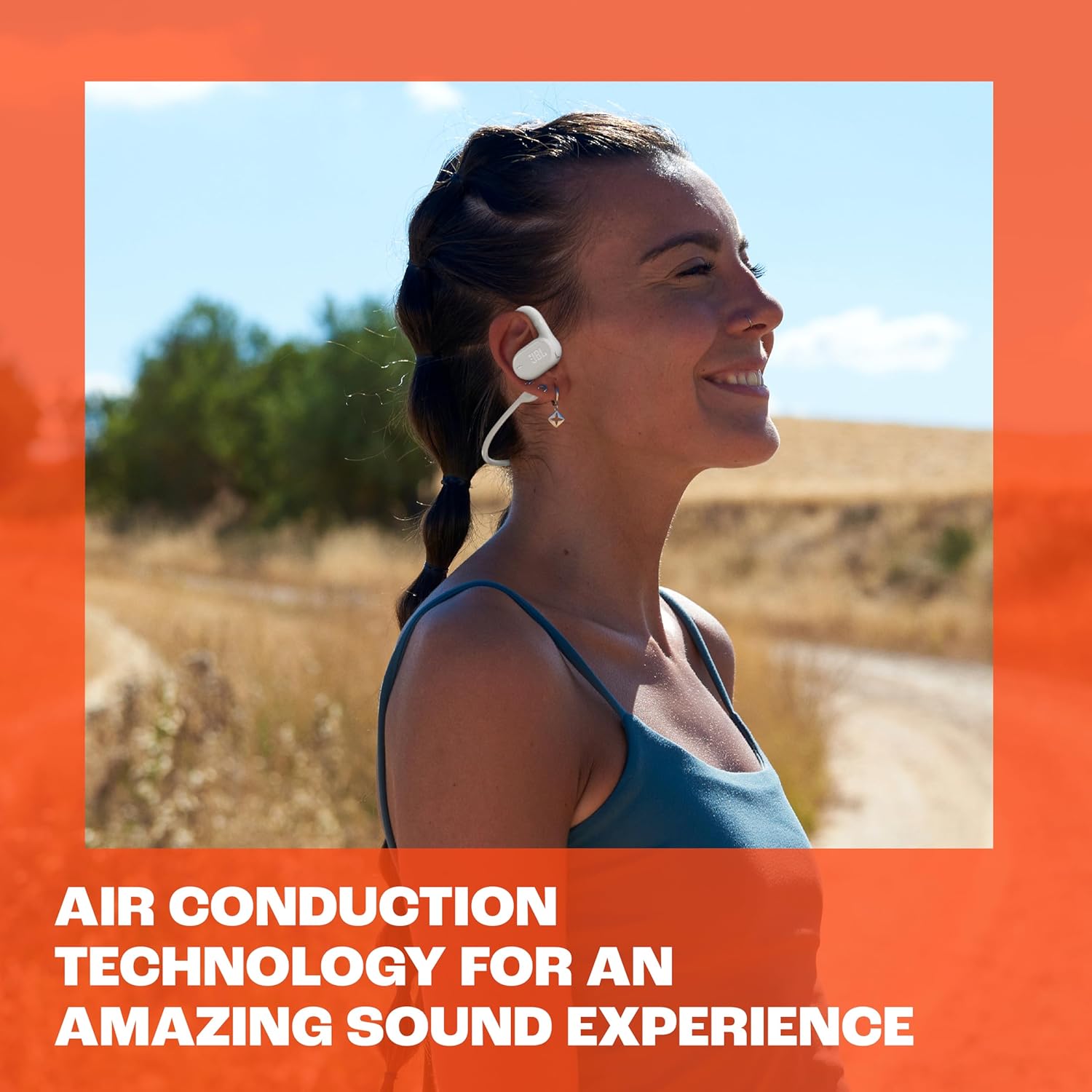
The Soundgear Sense ships with a detachable neckband tether, the entire pitch for anyone who’s lost an AirPod to gravity. The hook is comfortable, IP54 handles rain and sweat, and JBL tuned the 16.2mm OpenSound drivers bass-forward in the way the brand always does. The trade-offs are weight and refinement: heavier than the Shokz or the Nothing, and the sound profile isn’t as detailed as the Bose or Sony in the upper registers. Battery’s 6 hours per charge and 24 hours total with case. JBL showed five new open-ear pairs at CES 2026, so a Sense refresh is plausibly on the horizon if you can wait. Released August 2023.
Why no AirPods in this list
Apple sits in the open-ear conversation without a true cuff or hook product, which is worth a beat to explain. The AirPods 4 are already a loose-fit, open-back design that rests in the concha without sealing the canal, and the AirPods 4 (ANC) variant adds Transparency Mode and Adaptive Audio. They’re a strong Apple-ecosystem option, but they don’t have the explicit cuff, hook, or ring geometry the rest of the category settled on. If you want a true cuff- or hook-style open-ear design with reliable iPhone pairing, the Bose Ultra Open is the closest match in feel to the AirPods experience.
How to pick the right pair
Fit style matters more than any single spec. Cuff (Bose) wins on all-day comfort and works best if you wear glasses, since there’s nothing competing for space behind your ear. Hook (Shokz, Nothing, Soundcore, JBL) wins on security and is the right call for running and cycling, but it’ll clash with thicker sunglasses arms and helmet straps. Ring (Sony) is the lowest-profile option and the easiest to forget you’re wearing, at the cost of bass.
After fit, two questions matter most: call quality and how loud you actually listen. Sony and Bose lead on mics. Bose, Shokz, and Sony hold up cleaner at high volumes than Soundcore or JBL. If you’re shopping mostly on price, the AeroFit 2 is the easiest call; it’s the only pair on this list that doesn’t feel like a compromise at its price point.
The bottom line
Each of these six is the right answer for a specific person. Bose for the buyer who wants the most comfortable all-day fit. Shokz for the runner. Nothing for the design-conscious buyer who doesn’t want to wear something that looks like 2010s tech. Sony for the office worker who lives on calls. Soundcore for the buyer who refuses to spend top-of-range money. JBL for the cyclist who’d rather not lose a bud to gravity. Match the pair to the use case and you’ll be fine.

Gadgeteer Comment Policy - Please read before commenting
The Bose Ultra Open set the comfort standard for cuffs, but the Shokz OpenFit Pro with noise reduction is the more interesting innovation for runners. The Sony LinkBuds Open win for office use — the ring design is the least noticeable and the mics are best in class. For most people, the Soundcore AeroFit 2 is the smart buy: most of the experience for a third of the price.