
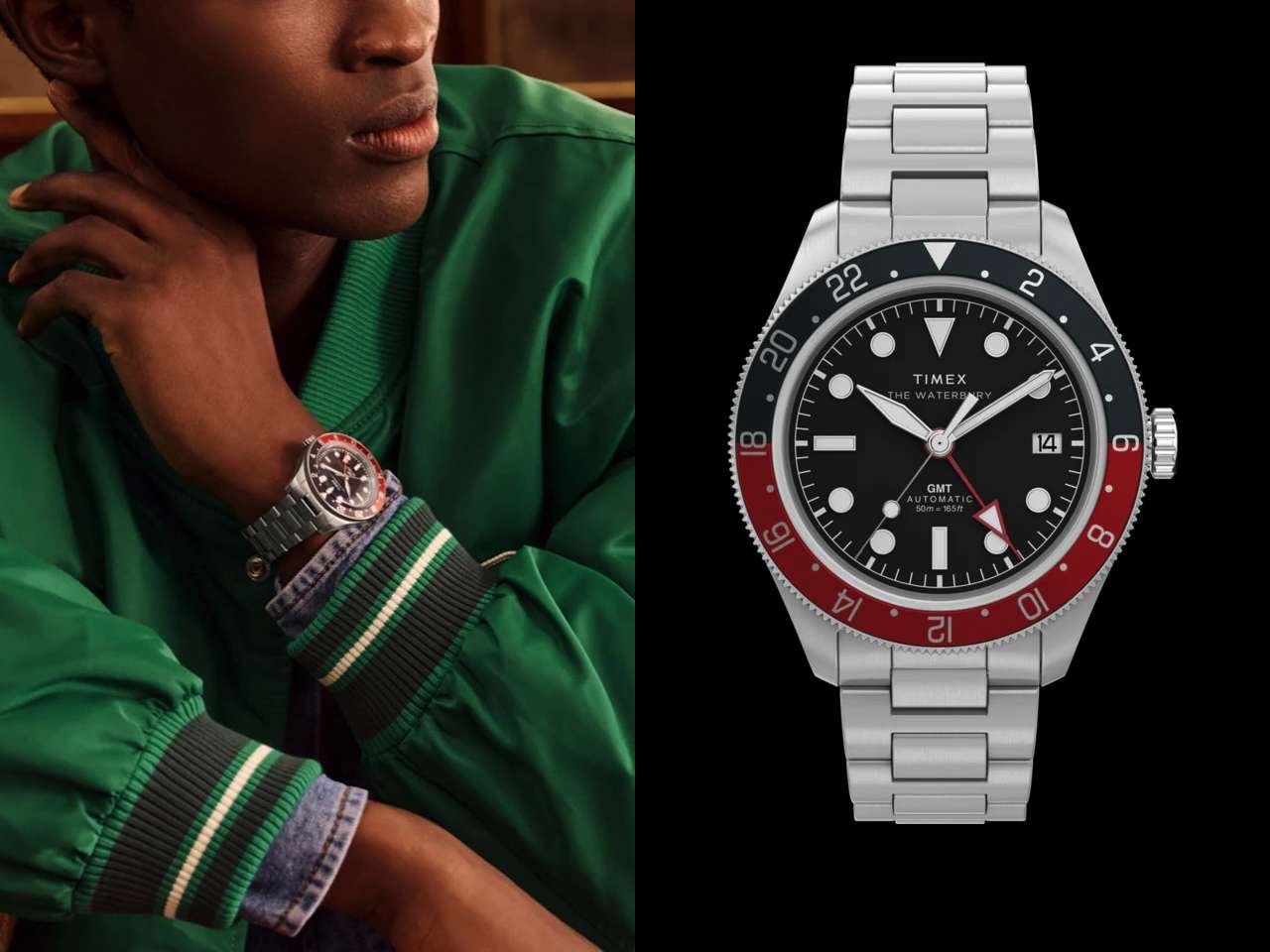
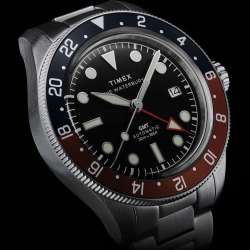
The Timex Waterbury Heritage Automatic GMT answers a specific question: how close can you get to a Rolex GMT Master on a consumer tech budget? Timex’s answer is 41.5mm of stainless steel, a two-tone rotating bezel with a numeral track, a color-matched GMT hand, and a bracelet that mirrors the profile of the reference it’s clearly chasing. Priced at $569 (now $573.74 on Amazon), it’s also the first watch in the Waterbury Heritage line to run on a mechanical movement instead of quartz, which is the part that makes it news.
Price: $573.74
Where to Buy: Amazon
The mechanical piece is the story here. Until now, every Waterbury Heritage Timex shipped ran on a battery, so putting a Japanese automatic inside the line changes what the collection is about. Timex’s spec sheet names the movement only as “Japanese automatic GMT” and doesn’t call out a specific caliber, so anything more precise than that should wait until the brand states it directly.
Coke and Sprite colorways, without the five-figure ask
Both versions of the GMT are built around the same case and movement, with the split coming down to bezel colors. The red-and-black version lines up with what watch people call the Coke: a black base, a red upper half, and a GMT hand dipped in the same red to match.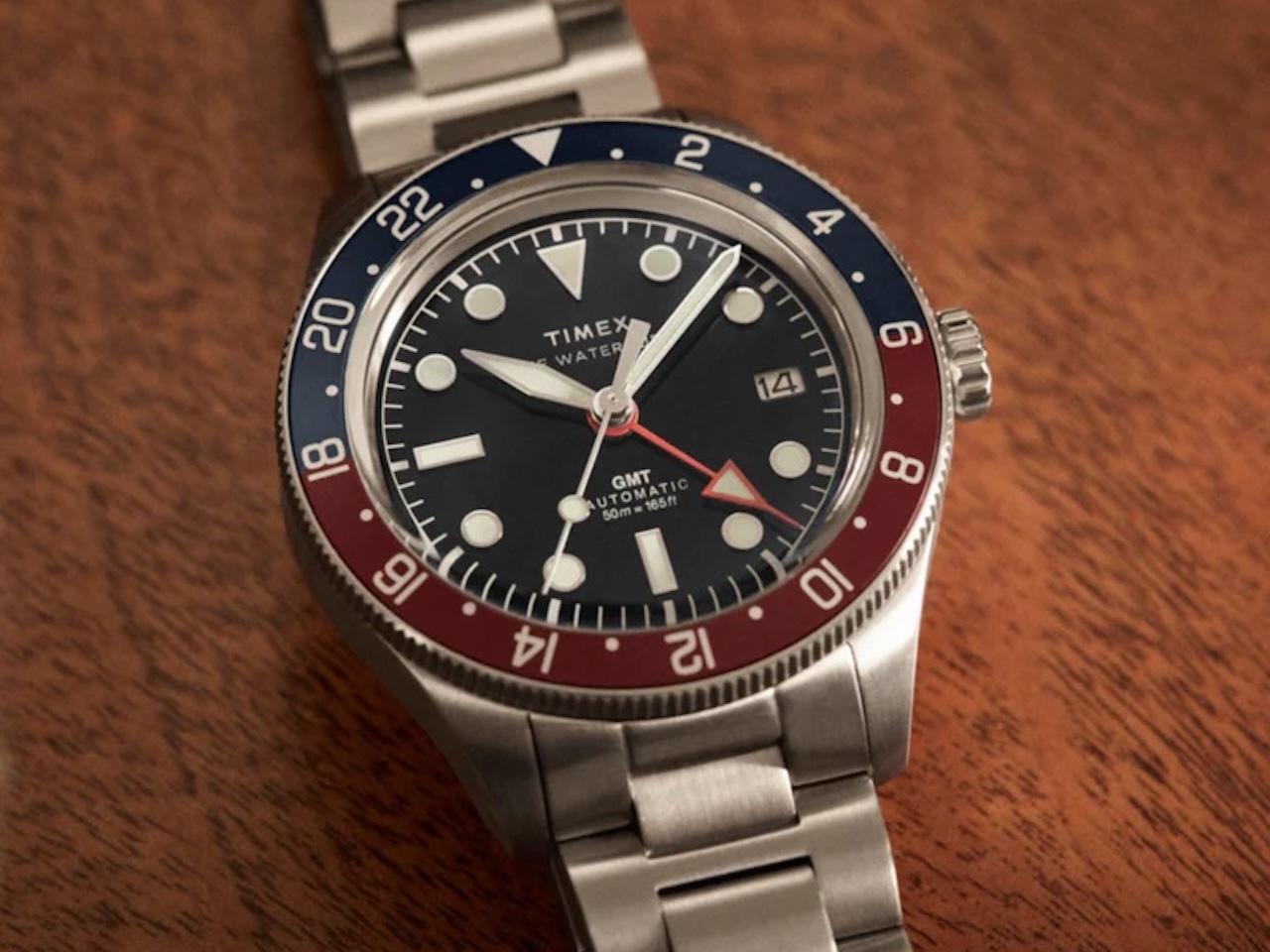
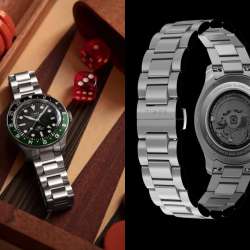
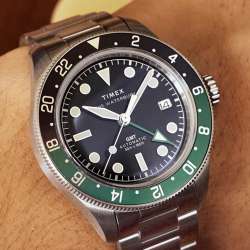
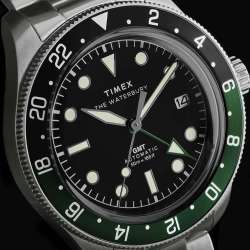
The green-and-black version gives you the Sprite treatment, with a green upper bezel and a matching green GMT hand. Dial layout is the same on both. Applied hour markers, bold numerals riding the bezel for the 24-hour track, and a three-link steel bracelet that hugs the case in a recognizable pattern.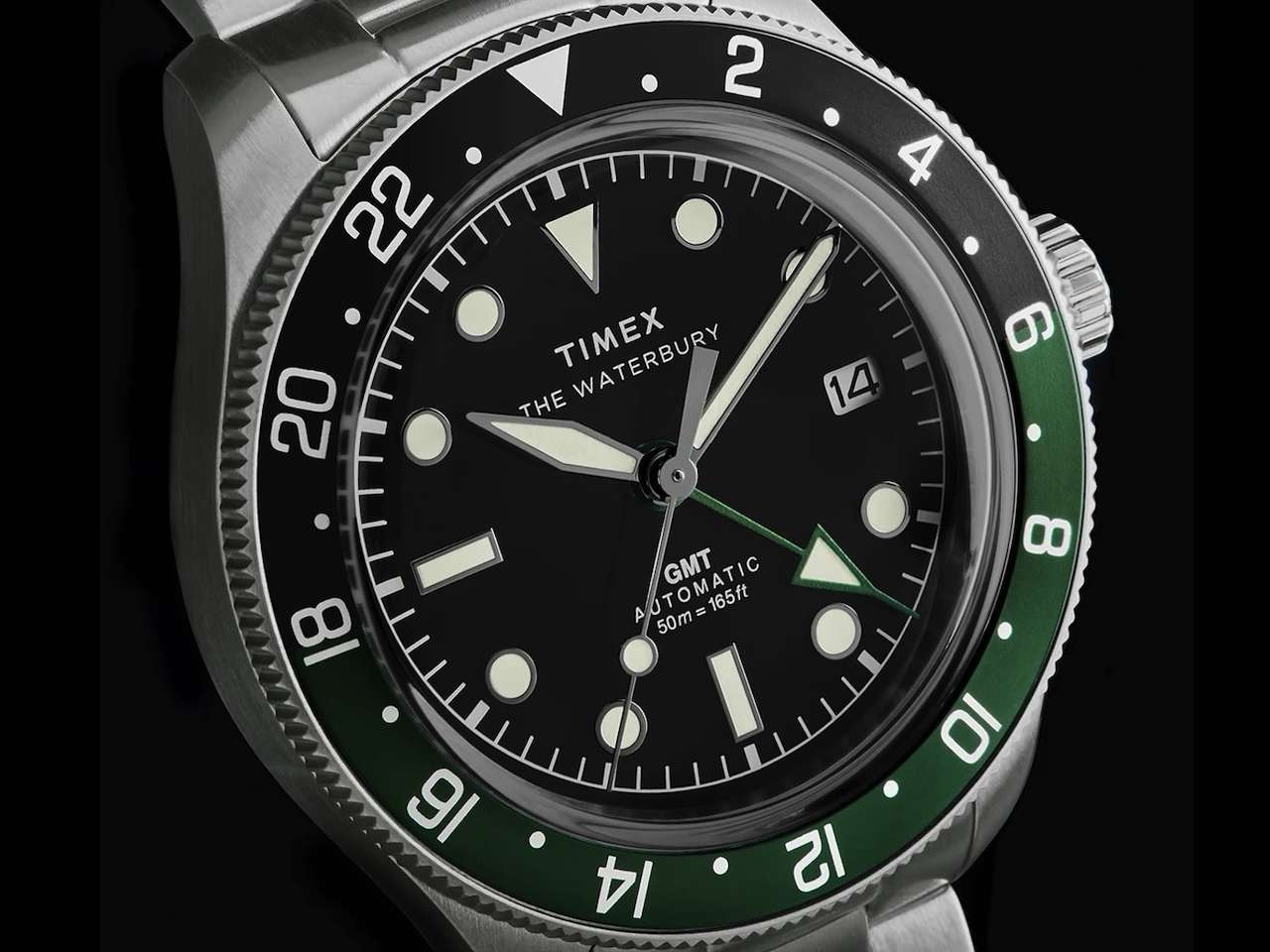
If you’ve never gone down the Rolex GMT Master rabbit hole, the Coke and Sprite nicknames refer to Rolex’s own bezel color schemes on the reference. The Coke is black and red, the Sprite is black and green, and both still command five-figure prices on the Rolex side of the shelf. Homage watches that borrow those palettes have been a growing category for years now, and Timex is joining the conversation at the affordable end.
The dual-time function is where the GMT badge earns its keep. You can track a second time zone with the dedicated red or green GMT hand and the two-tone unidirectional rotating bezel. For anyone with clients, family, or coworkers in another city, that’s one glance to figure out whether it’s a reasonable hour to send a message. Frequent flyers get the same benefit without pulling out a phone, and parents with kids studying abroad can check whether it’s breakfast time over there.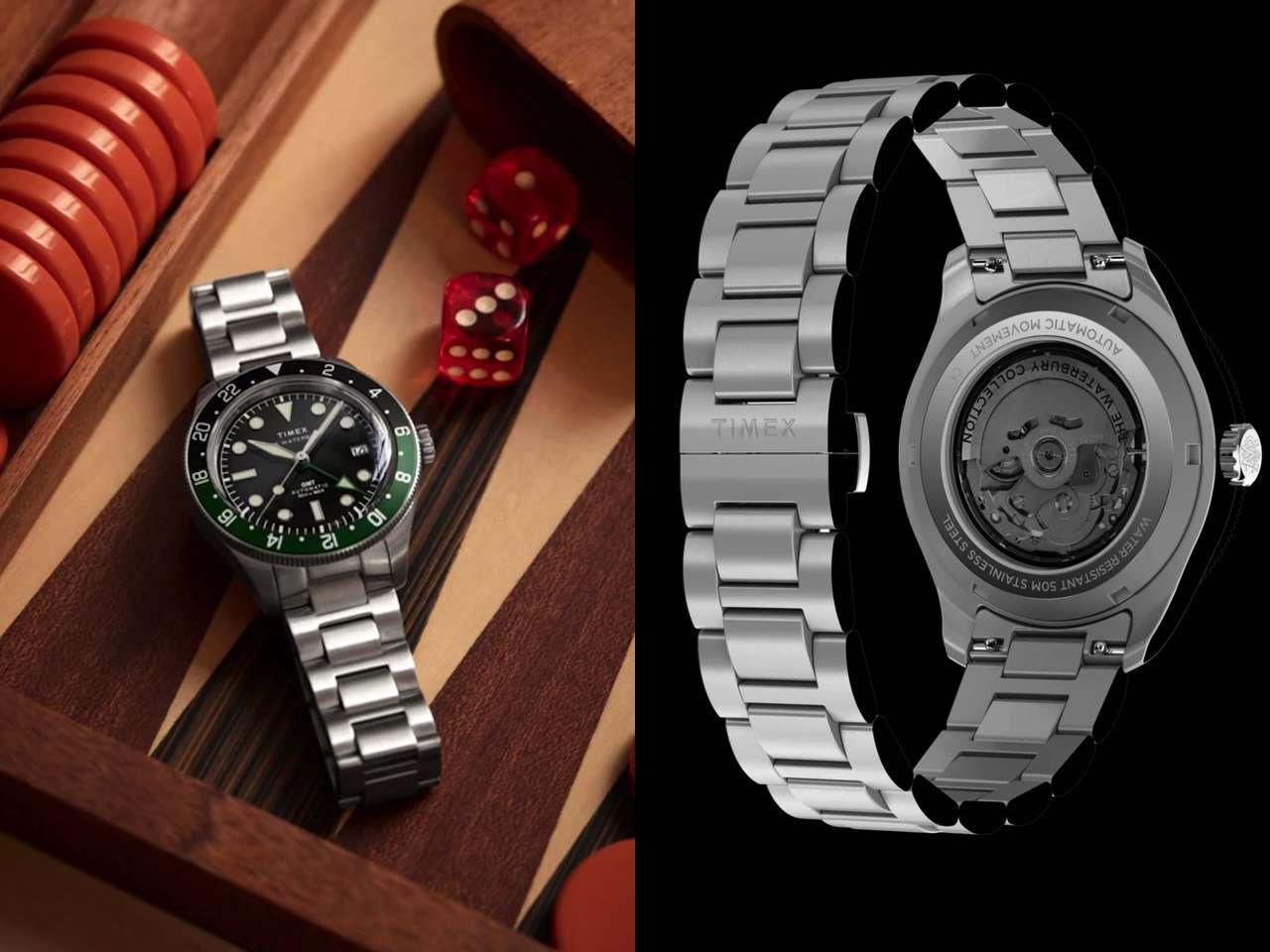
In practical terms, an automatic movement is powered by the motion of your wrist. A weighted rotor inside spins as you move, winds the mainspring, and keeps the watch running. Wear it most days and you’ll never have to reset it. Leave it on your dresser for a weekend and it’ll stop, so you’ll set it again when you pick it back up. That’s the deal with automatics, and it’s the trade-off for never swapping batteries.
The case, dial, and bracelet details
The case measures 41.5mm across with a 48.9mm lug-to-lug and a 14mm profile, all in brushed stainless steel with a silver-tone finish that mixes brushed and polished surfaces for some visual depth. That’s a mainstream modern size, not dressy, not chunky, and it should sit comfortably on most wrist sizes between 6.5 and 8 inches.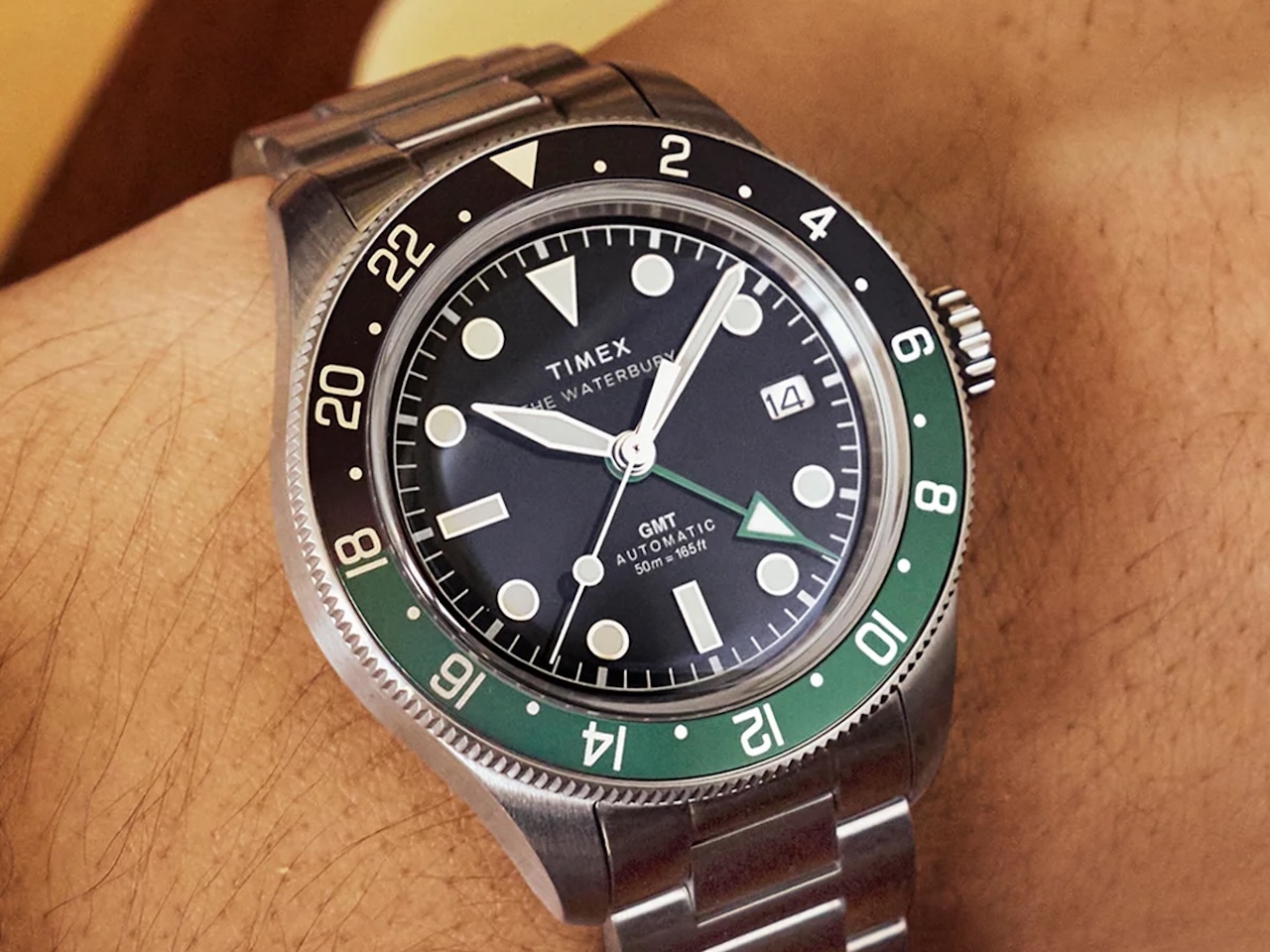
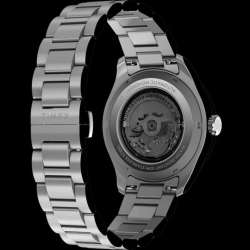
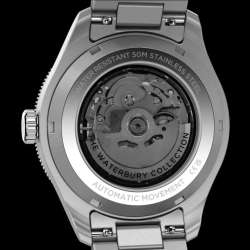
Covering the black dial is a domed K1 crystal treated with an anti-reflective coating. K1 is a hardened mineral glass, better than ordinary mineral on scratch resistance but still a step below sapphire, and the dome itself is the piece that gives the face its vintage read. The hour and minute hands and the applied markers carry luminant fill, so reading time in a dim bar or an early-morning airport lounge doesn’t need a flashlight. The date window sits at the 3 position, and the rotor is visible through the exhibition caseback whenever the watch is running.
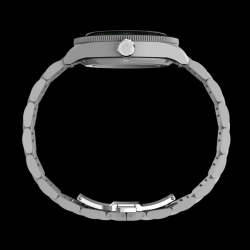
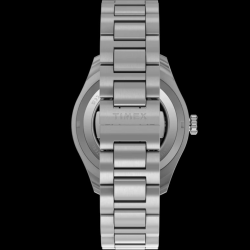
The bracelet is stainless steel on 20mm quick-release spring bars, so swapping to a leather, nylon, or rubber strap takes seconds and no tools. The links are self-adjustable, which means resizing also happens at home without a bracelet tool, and the butterfly deployant clasp keeps a flat, clean profile on the wrist side.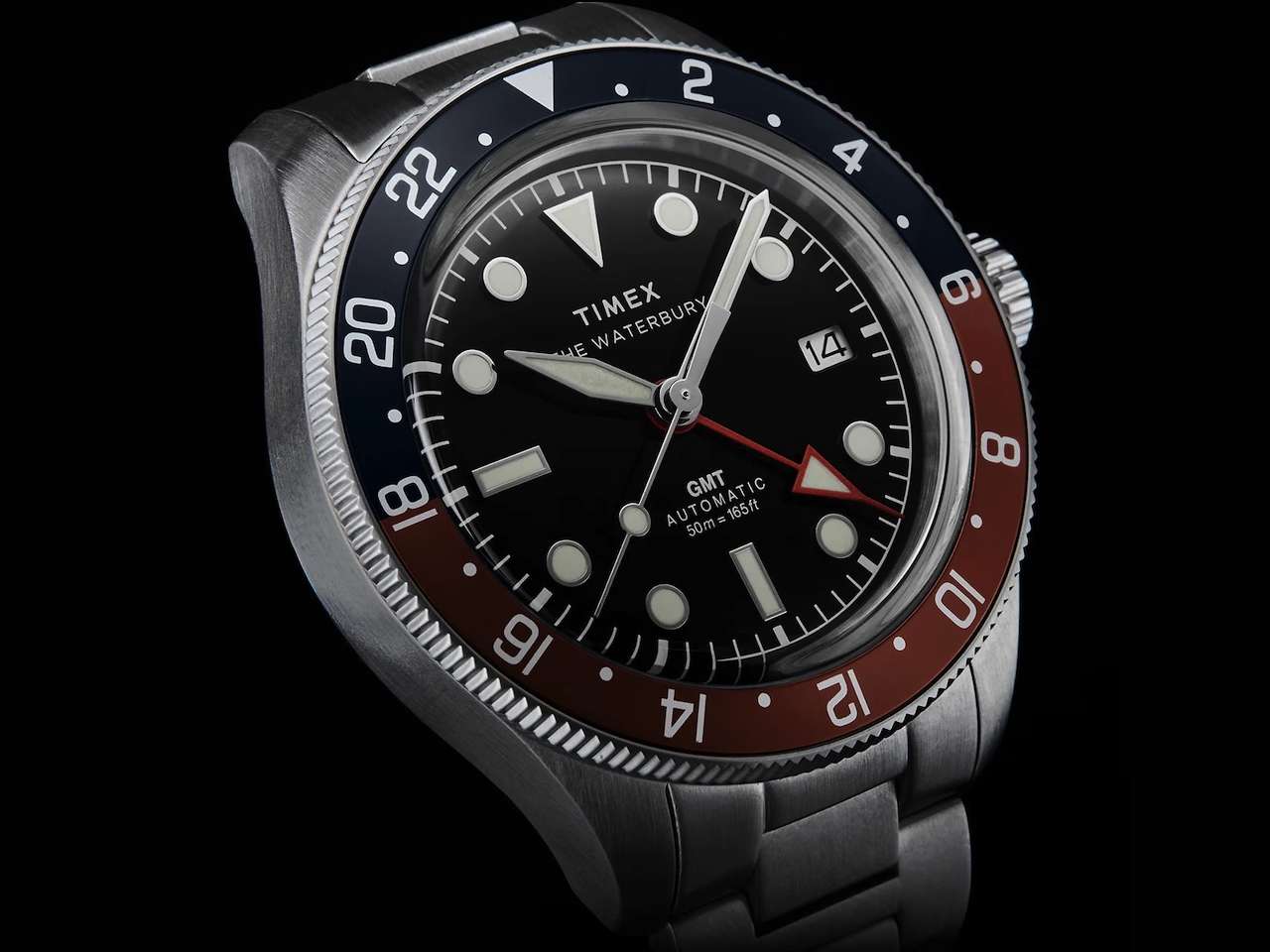
The catch, because there’s always one at this price, is water resistance. Timex rates the watch at 50 meters, which is fine for rain, splashes, handwashing, and short dips in the pool. It’s not for snorkeling, and it’s not for anything deeper. If you were hoping for a do-everything travel watch that handles beach days, this isn’t it. If you mostly need a second-time-zone watch for flights and work calls, 50 meters is plenty.
Pricing and availability
Either colorway lands at $569, and Timex has both listed on its store as of launch. That drops the watch into a crowded affordable-GMT bracket with a growing number of options, though few of those options come dressed this loudly in Rolex references. For anyone who likes the GMT Master silhouette but has no plans to spend five figures getting it on the wrist, Timex’s pitch is straightforward: close-enough looks, a real mechanical GMT, and a price tag sized for consumer tech rather than Swiss watchmaking.


Price: $573.74
Where to Buy: Amazon
The Waterbury Heritage line has been a vintage-leaning quartz story up until this release, so this launch doubles as the line’s first real step into mechanical territory. If it sells, expect more automatics from the Heritage bench in the seasons ahead.
Timex’s recent run
This release slots into a busy stretch for Timex. TG recently covered the Q Timex NASA, a $259 Apollo 17 tribute that hit wrists right as the Artemis II crew returned from the first crewed Moon flyby in over 50 years, and the MM6 Maison Margiela x Timex T80, an all-gold digital throwback sold as a gift set with a matching bracelet. There’s also the Studded Timex T80, Briefing × Timex Expedition Field Watch, and the Expedition Pioneer Titanium Automatic GMT. The Waterbury Heritage Automatic GMT is the most mechanical and the most Rolex-adjacent, which is a different lane for a brand that usually works quartz reissues, space-program tributes, and fashion collaborations.



Gadgeteer Comment Policy - Please read before commenting
Important note about GMT implementation (traveller or office type). The Timex Waterbury Heritage Automatic GMT (TW2Y60600) uses the Seiko NH34A movement, which is an office GMT, this means you adjust the GMT hand to track a second time zone, but you cannot quickly jump the local hour hand when traveling, the defining feature of a traveller GMT.
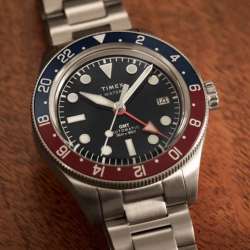
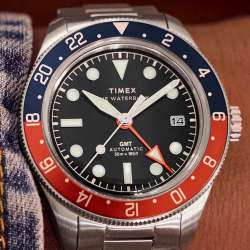
I guess I’ll keep using my Sugess S420 Pepsi GMT and have a nicer looking homage with similar if not less cost associated. These Timex pieces are really shooting for the moon simply because they embraced mechanical movements.