Qualcomm came to Computex with two announcements that sound like they belong to different companies. One is a chip platform for $300 Windows laptops. The other is a ready-made brain for humanoid and industrial robots. The thread connecting them is Qualcomm’s pitch that intelligence now has to run everywhere, from the cheapest laptop to a factory floor, and that it’s the company built to sit at both ends.
Snapdragon C puts Snapdragon in entry tier $300 laptops
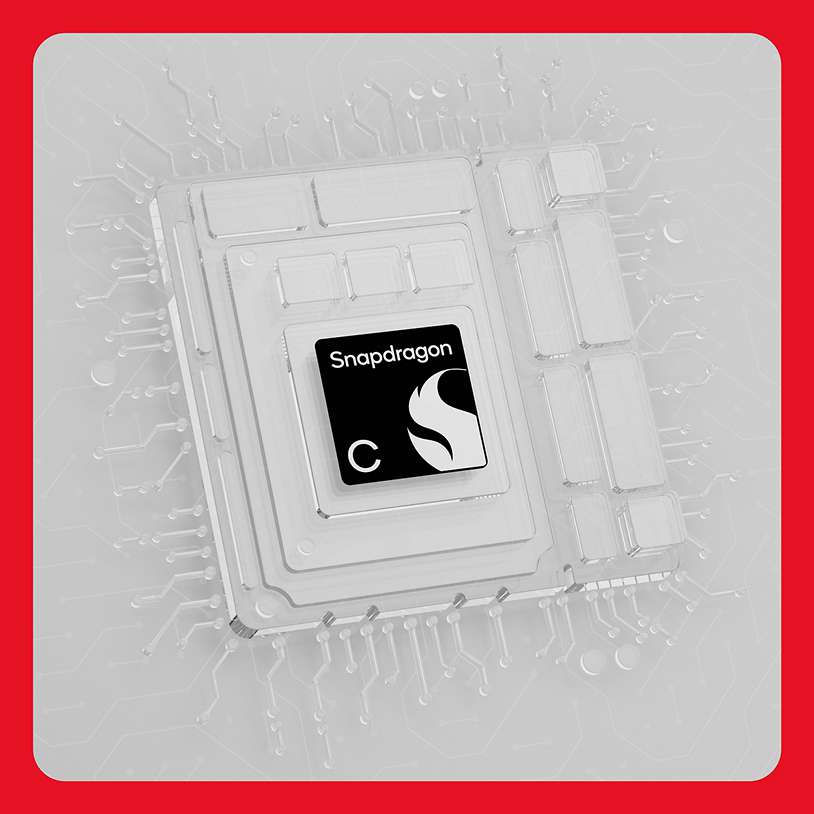
Qualcomm spent two years pushing Snapdragon into premium and mainstream Windows laptops. Snapdragon C is the move in the other direction. It’s a platform built specifically for entry-tier laptops that start around $300, aimed at students, families, frontline workers, and small businesses.
The pitch is that the things you notice every day carry down to the budget shelf: all-day battery life, a system that stays responsive across web browsing, video streaming, productivity, and video calls, and laptops that run cool and quiet instead of spinning up a fan under light work. Cheap laptops usually get loud and warm because they’re straining to keep up. If that efficiency story holds at this price, it’s the part buyers will feel first.
Snapdragon C-Series: Read Qualcomm’s announcement
Dragonwing IQ-10 Robotics Reference Design: Read Qualcomm’s announcement
What’s inside, and what you don’t get
Snapdragon C stands for Compute, and it sits below the Snapdragon X family. The architecture is the interesting wrinkle, and Qualcomm filled it in on the briefing call. Snapdragon C does not use Oryon, the custom CPU core in Qualcomm’s premium PC platforms. It’s built on a custom Arm architecture using Qualcomm’s Kryo CPU cores. Qualcomm positions this as bringing Arm’s efficiency fundamentals to a lower rung in its PC stack, so the same battery life and thermals story extends down into entry-tier systems.
Snapdragon C includes an integrated NPU, so on-device AI features reach the entry tier. Here’s the catch worth knowing: Qualcomm confirmed on the briefing call that Snapdragon C will not support Copilot+, saying it is designed for entry-tier devices and is not built to meet Copilot+ requirements around NPU performance and memory. The NPU is there for lighter on-device AI, but the marquee Copilot+ Windows features stay on pricier machines. The laptops run Windows 11, and Qualcomm is holding back full specs, including memory ceilings (expect lower configurations here), process node, and GPU details, for the next couple of months.
Who’s building the first ones
Acer, HP, and Lenovo are the lead partners, and Qualcomm says laptops powered by Snapdragon C are expected to hit shelves later this year. Kedar Kondap, who leads Compute and Gaming at Qualcomm, framed Snapdragon C as value-oriented computing that brings modern PC experiences to students, families, and customer-facing small businesses watching their spend. That’s the slice of the market the first wave of AI PCs has mostly skipped, and Snapdragon C is Qualcomm’s attempt to fill that gap. Qualcomm doesn’t set the final price, so the around $300 figure is a floor the OEMs build from, not a fixed sticker.
Dragonwing IQ10 is a robot brain in a box
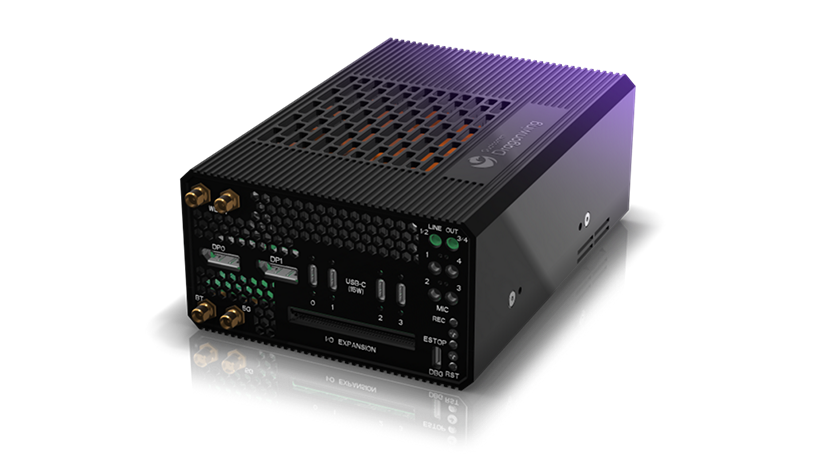
The second announcement lives in a different world. Qualcomm unveiled the Dragonwing IQ10 Robotics Reference Design, a production-ready platform aimed at industrial, autonomous mobile, and humanoid robots. If you’ve watched the wave of humanoid robot demos over the past year and wondered what’s actually running them, this is Qualcomm’s answer.
The Dragonwing IQ10 processor is designed to deliver up to 700 TOPS of on-device AI, paired with 18 Qualcomm Oryon CPU cores, multicore NPUs, and an advanced GPU, so robots can handle perception, planning, and reasoning on the device instead of depending on separate accelerator cards in many designs. It natively supports up to 12 GMSL2 cameras via three MAX96724 chips mapped to three CSI ports, alongside LiDAR, time-of-flight, and IMU sensors. Networking and control run over two 10GBase-T ports and one 2.5GBase-T port, four 1GBase-T EtherCAT ports via an Intel I226 controller over PCIe, eight CAN-FD channels split across domains, plus PCIe, TSN, and USB. Memory is LPDDR5x with 64 GB in package and ECC, storage is 512 GB UFS 4.0 (2-lane) plus one PCIe Gen5 NVMe SSD in 2280 form factor, and connectivity covers integrated Wi-Fi 7 and Bluetooth over PCIe, plus an optional 5G modem module via PCIe. The whole board measures about 176 × 125 × 75 mm and ships as an enclosed system with integrated forced-air cooling, rated to run from -40 to 70 degrees Celsius on 12V or 24V input, which tells you Qualcomm is aiming at real factory and field deployments rather than lab demos. Early access partners include NEURA Robotics, Advantech, APLUX, Booster, Innodisk, MeiG, NEXCOM, Radxa, Thundercomm, and VinMotion. Qualcomm is putting the design in front of early access customers in June 2026, with global availability targeted for September 2026.
Why an all-in-one robot board is the actual news
The spec sheet is impressive, but the real argument is about integration. Qualcomm’s point is that building a robot today means stitching together compute, sensing, networking, safety, real-time control, and a full software stack, and that integration is the bottleneck that slows everything from prototype to production. The IQ10 reference design tries to collapse that work into one cohesive system. On the software side, it ships with on-device AI runtimes, ROS2 support, and cloud-connected fleet management through Qualcomm’s AI hub, so teams aren’t building their own toolchain from scratch either.
The part that stands out is how the sensors connect. Qualcomm’s argument is that many current robots rely on separate bridging boards to wire sensors into the compute, which adds cost and latency, and the Dragonwing IQ10 RRD answers that by integrating sensor ingestion directly into the box with native GMSL2, Ethernet, EtherCAT, CAN-FD, and other interfaces. Qualcomm built that ingestion into the IQ10 directly, with GMSL2 cameras and the rest plugging straight in, which keeps data streams aligned and cuts the lag between sensing and acting. The promise is that a developer can scale from a simple camera-based robot to a complex multi-sensor humanoid without redesigning the data pipeline along the way. On the call, Qualcomm said it is drawing on its decade of automotive work here, from perception pipelines to SoC requirements, temperature handling, and safety concepts, and the team explicitly called out that an autonomous vehicle is effectively another kind of robot.
The Gadgeteer’s take
These two announcements barely belong in the same press call, and that’s the point Qualcomm is making. The compute continuum story, intelligence running everywhere from a $300 laptop to a humanoid robot, is the frame it wants you to leave with.
On the laptop side, I’m cautiously interested. Budget Windows machines are where good intentions usually die in cost-cut RAM and a fan that never stops, so if Snapdragon C carries even part of its battery and thermal story to $300, that fixes real complaints. “All-day battery” and “responsive” are easy to say on a slide, though, and the Snapdragon X, X Elite, and now C naming stack is getting hard for normal shoppers to follow.
Snapdragon C-Series: Read Qualcomm’s announcement
Dragonwing IQ-10 Robotics Reference Design: Read Qualcomm’s announcement
The robotics piece is the more strategic bet. Qualcomm isn’t selling robots, it’s selling the board everyone else builds robots on, and an all-in-one design with sensors wired in is a useful answer to the integration mess. The long list of named partners is a strong start, but reference designs win or lose on whether those partners actually ship, and global availability isn’t until September. We’ll know more once the first IQ10-based machines and Snapdragon C laptops show up in the real world.