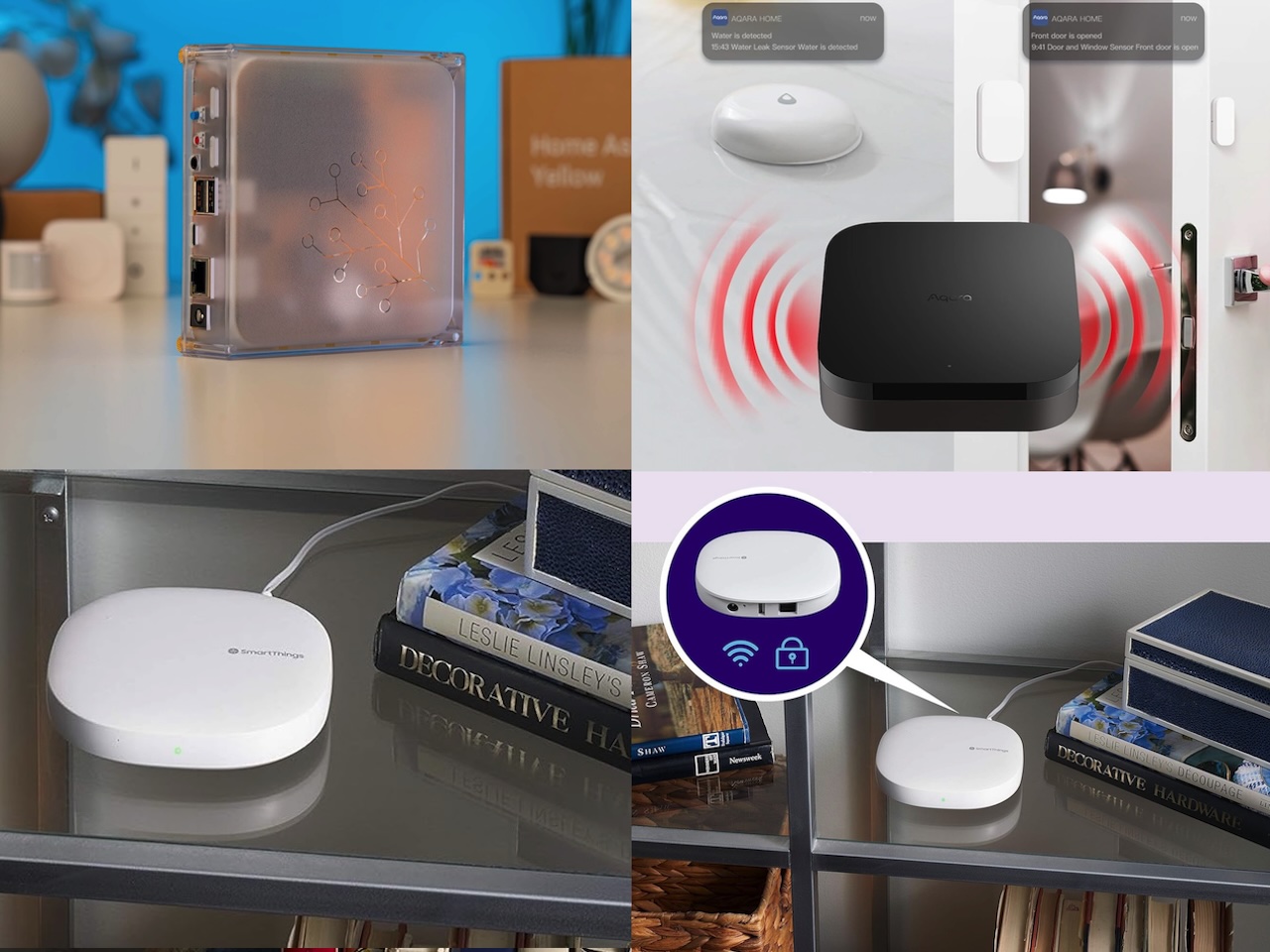
You don’t need a hub to use a smart bulb anymore, but you do need one if you want motion sensors, dimmer wall switches, door locks, and robot vacuums talking to each other without six different apps on your phone. The hub question in 2026 is no longer “do I need one” but “which platform do you want to live inside for the next three years.”
Matter is the universal language now, Thread is the radio that makes battery sensors last two years on a coin cell, and Zigbee 3.0 still powers most of the cheap smart plugs already in your home. The five picks below cover the four major platform axes (Apple, Amazon, Samsung, and the universal Matter layer) plus Home Assistant for power users. Pick by ecosystem, not by spec sheet, because the spec sheets all look similar in 2026.
At a Glance: 5 Hubs, 5 Platform Axes
If you want the short version, here is the one-line map. Each platform axis has one strong pick. The universal one sits at the top because it works with all the rest.
| Pick | Best For | Platform | Price (USD) |
|---|---|---|---|
| Aqara Hub M3 | Universal Matter controller | Apple Home, Google Home, Alexa, SmartThings | $159.99 |
| Apple HomePod mini | Apple households | HomeKit, Matter, Thread | $99 |
| Amazon Echo Hub | Alexa and Ring homes | Alexa, Zigbee, Amazon Sidewalk | $179 |
| Aeotec SmartThings Hub v3 | Mixed-brand legacy setups | Zigbee, Z-Wave, Wi-Fi, Matter | $170 to $220 |
| Home Assistant Yellow | Power users, local-first | Home Assistant, Matter bridge | $135 (PoE kit, CM4 sold separately; EOL Oct 2025, limited stock) |
1. Aqara Hub M3: Best Overall / Universal Matter Controller
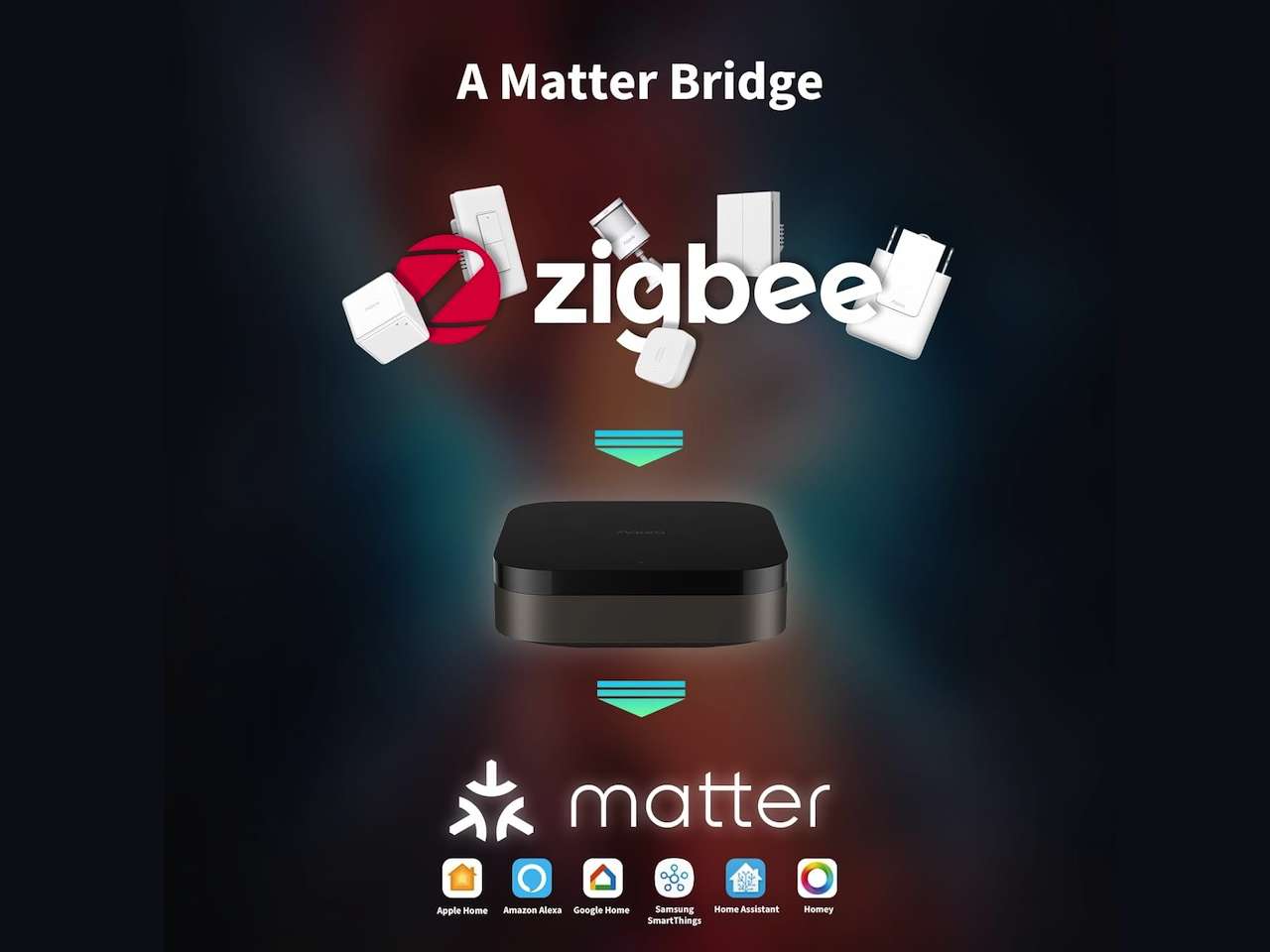
The M3 is a small black puck that sits on a shelf and quietly becomes the only hub you actually need in 2026. It packs a built-in Thread Border Router and Zigbee 3.0 radio, runs automations locally on the device, and exposes its own Aqara Zigbee accessories to Apple Home, Google Home, and Alexa over Matter.
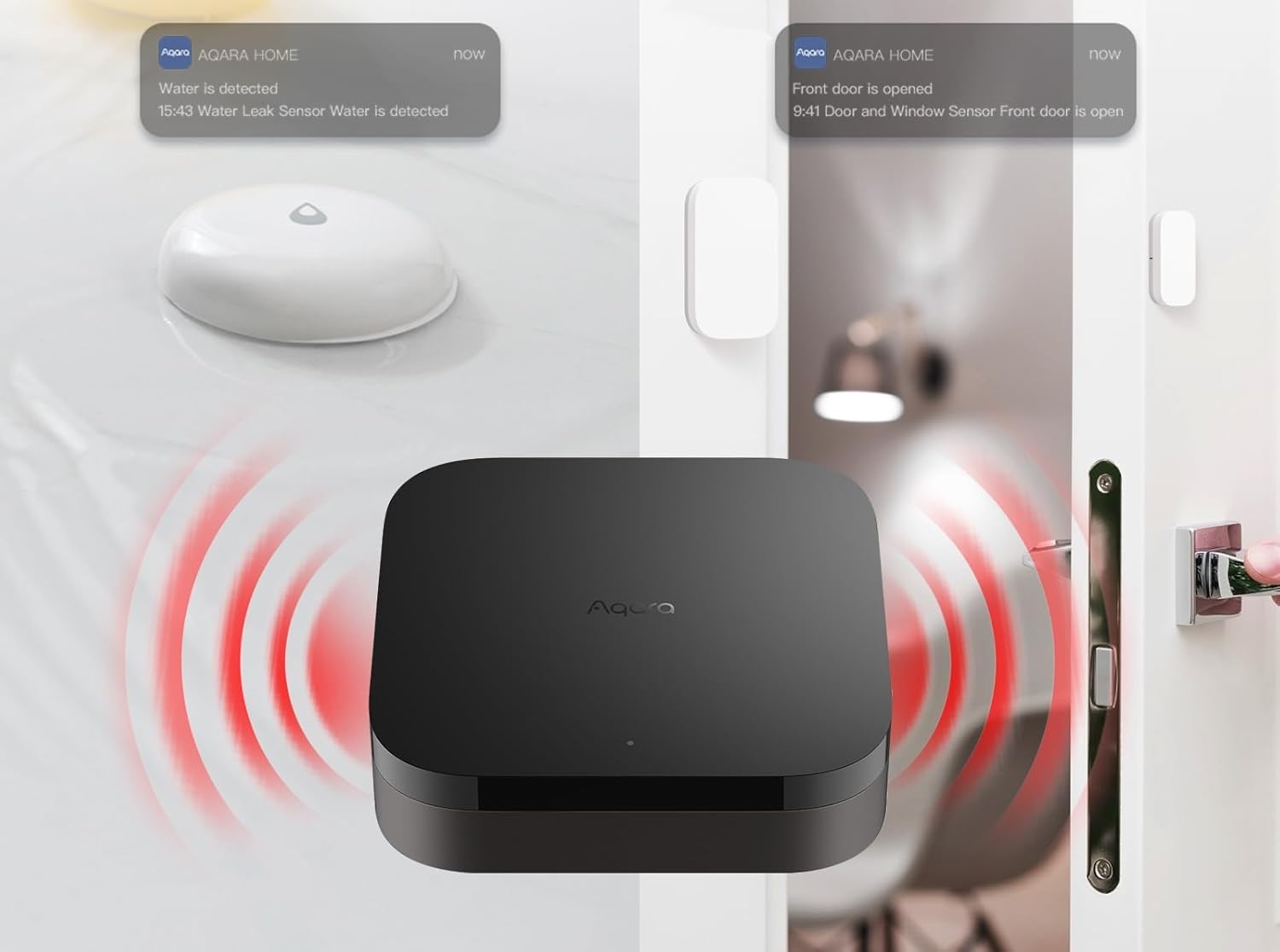
Price: $159.99
Where to Buy: Amazon
Third-party gear from Philips Hue or TP-Link Kasa works through its own Matter-enabled bridge or Matter-direct device, not the M3’s Zigbee radio. For context, the SmartThings v3 covers more legacy radios, and the Echo Hub goes deeper on Ring, but the M3 is the only one in the lineup that plays nicely with all four major platforms on the same day you set it up.
Setup is the lightest of any pick here. Plug it in, scan a QR code from any of the four major hub apps, and the M3 announces itself as both a Matter controller and a Thread Border Router in the same pairing flow. No second app or extra firmware juggling on day one.
If you already own a HomePod mini, Echo Hub, or SmartThings and you are still shopping for a hub, the case for the M3 is that it acts as the universal translator between them. TG has leaned on the same no-cloud framing for buyers who do not want to learn MQTT, and that case still holds in mid-2026.
2. Apple HomePod Mini: Best for Apple Users
If you live in an iPhone house, the HomePod mini is the cheapest, fastest path to a real smart home. The mini operates as a local Thread Border Router for HomeKit accessories, so any Thread device on the network routes through it. It natively supports Matter and ships with the kind of privacy defaults Apple users have come to expect: anonymized request routing, no audio retention by default, and on-device processing where the hardware allows. As of June 2026, the mini still sits at $99 on apple.com
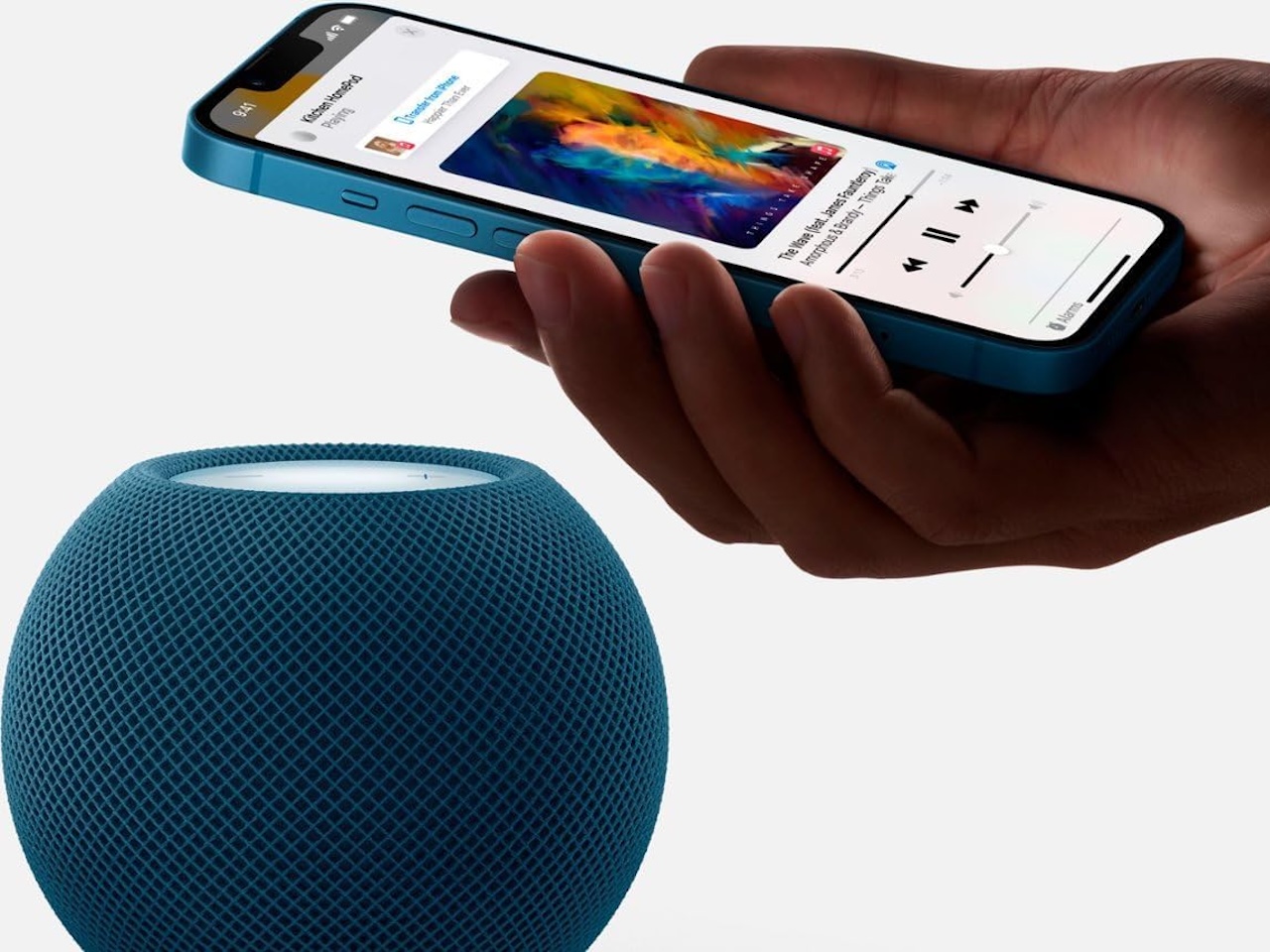
Price: $149.99
Where to Buy: Amazon
You do not need an iPhone to make the mini useful, but you do need an Apple ID and at least one HomeKit accessory to get anything out of it. For a two-person household with iPhones, iPads, and an Apple TV 4K, the mini doubles as a HomeKit hub, a Thread border router, and a basic intercom. On paper it is a $99 speaker; in the real world it is the central nervous system of an Apple-centric home.
The privacy play is the part that matters most to buyers who already trust Apple with their data. Apple says it does not associate Siri requests with your Apple ID, linking them to a random device identifier instead. On capable devices, the audio itself is processed locally using the Neural Engine. The company has held that line for years.
The mini is the lowest-friction hub in 2026 for anyone who already buys into the Apple ecosystem.
3. Amazon Echo Hub: Best for Alexa and Ring Homes
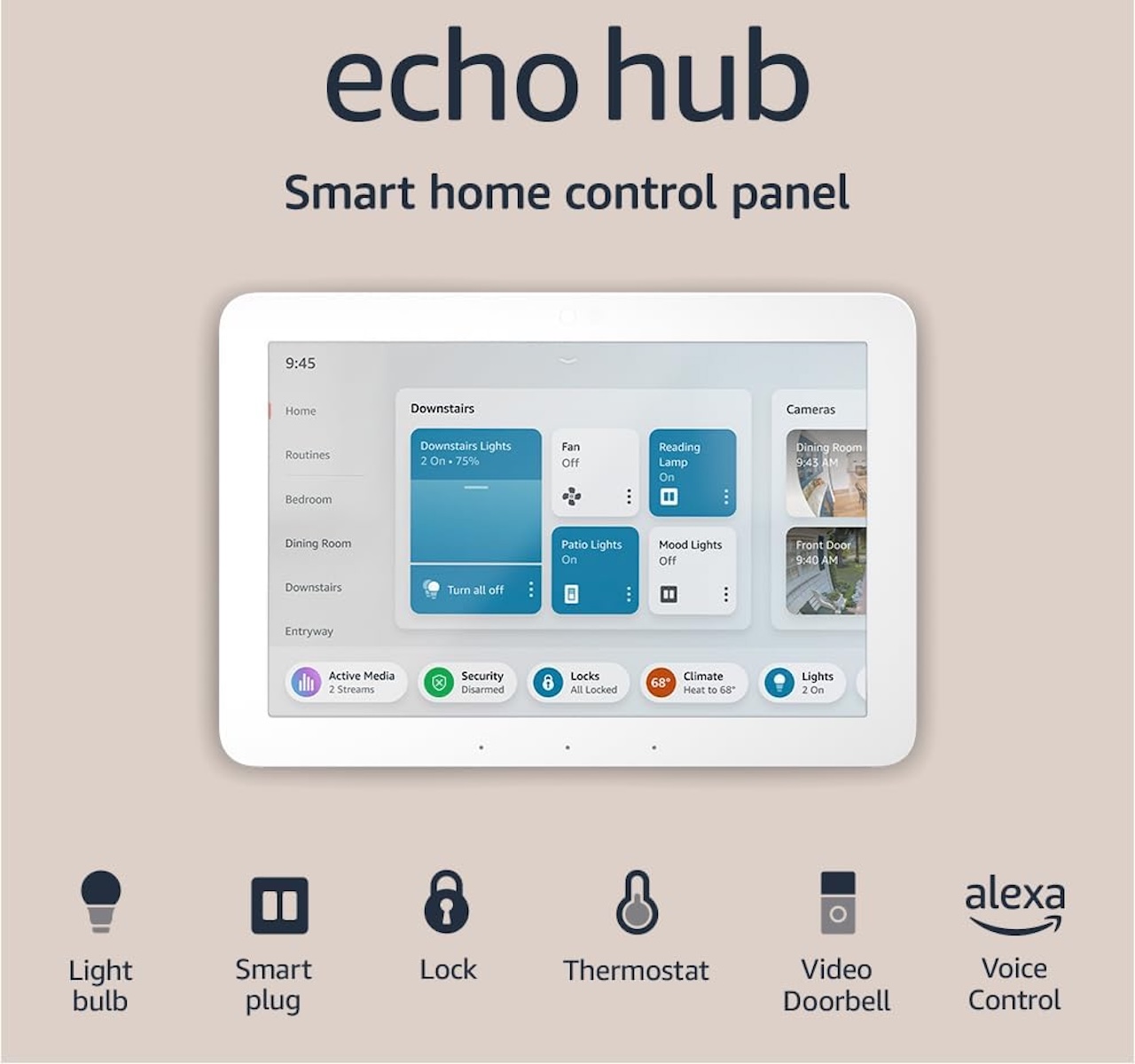
The biggest gotcha in the smart home display market in 2026 is not screen size. It is that most “smart displays” still want to be a speaker first, a panel second. The Echo Hub is a dedicated 8-inch wall-mountable control panel for Alexa, and it is the first Amazon device in years that treats the touchscreen as the point. It integrates with Ring security cameras, supports Zigbee, and uses Amazon Sidewalk for low-bandwidth neighbor-network connectivity. As of the data pulled in mid-June 2026, the Echo Hub sits at $179 on Amazon.
Price: $179.99
Where to Buy: Amazon
If you have more than three Ring devices, the Echo Hub is the only one of these five picks that gives you a single screen to see them. Pull-to-refresh camera feeds, arm and disarm Ring Alarm, run a Routine that lowers the blinds and dims the lights from one tap. The cost is the lock-in. The Hub is only useful if you live in Alexa and Ring land. If you do not, skip it. The voice control is the same Alexa you would get from any Echo speaker, which is to say: good at shopping lists, weather, and timer management, weak at third-party music services. The panel is the reason to buy it. The speaker is the bonus.
4. Samsung Aeotec SmartThings Hub V3: Best for Mixed-Brand Legacy Setups
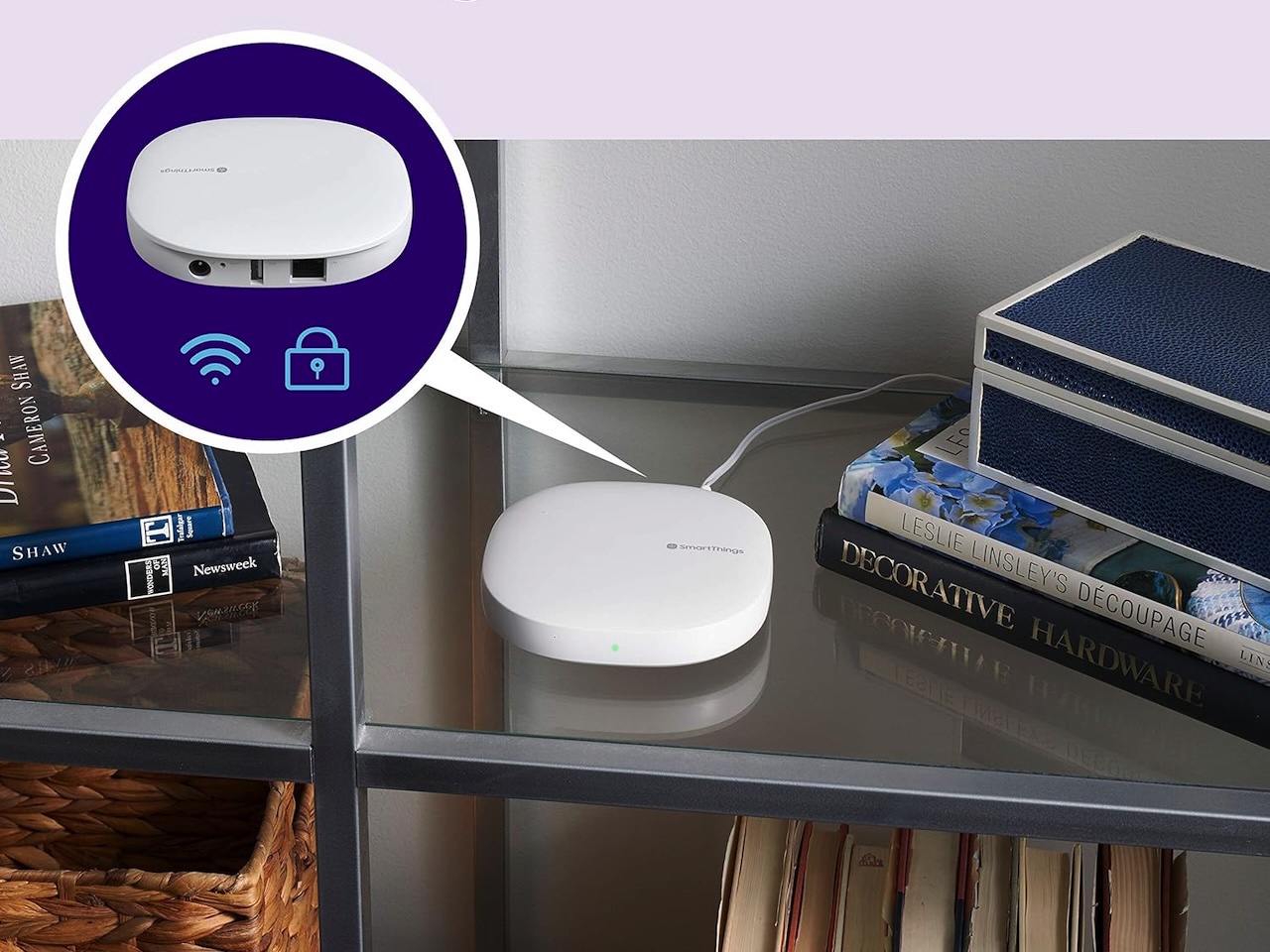
The SmartThings market in 2026 looks the way it has for five years. The SmartThings hub remains the broadest platform for buyers who already own a mix of Zigbee, Z-Wave, and Wi-Fi devices from different brands. The v3 has been Aeotec-branded since Samsung stopped manufacturing it in 2021, and it natively supports all three radios plus Matter, including the 1.5 spec that added camera and energy-management support in November 2025.
Heads up on the new Aeotec SmartThings Hub 2, announced at IFA in September 2025 and shipping in the US since late October 2025: it dropped Z-Wave entirely, so the older v3 is the one to buy if legacy Z-Wave gear is on your list. No other hub in this lineup speaks Z-Wave out of the box. For context, that matters if your home already has Z-Wave door locks, water leak sensors, or a Z-Wave thermostat from a previous install. SmartThings is the only one of these five that takes them in without buying a separate bridge.
Price: $499.99
Where to Buy: Amazon | Aeotec ($149)
Pricing for the Aeotec v3 has climbed since it went out of production. Expect roughly $170 to $220 depending on retailer and tariff surcharge as of June 2026. Where it earns its place is the device compatibility.
The SmartThings app works with over 5,000 compatible devices, the automations are simpler than Home Assistant, and the platform supports multi-user routines. On paper, the SmartThings v3 looks like a less ambitious pick than the Aqara M3. In the real world, it is the only hub in this lineup where you can pair a 2017-vintage Z-Wave switch and a 2026 Matter plug on the same day.
The two tradeoffs are reliability and app quality. A SmartThings user community thread in late 2025 noted that Samsung removed the Groovy Cloud back in 2022, which killed a lot of custom automations. The current platform is more locked down than Home Assistant. If you want total control, pick the Yellow.
If you want the broadest device compatibility without writing a single line of YAML, the v3 is the one to buy.
5. Home Assistant Yellow: Last-Chance Pick for Power Users
Heads up before you read on: Nabu Casa ended production of the Yellow in October 2025, so what sits on retailer shelves today is the last of the run. Software support continues, but if you want a Yellow, this is the year to grab it. Skip ahead to it anyway if you have a Saturday afternoon and you want the entire smart home running off the cloud, on a Raspberry Pi Compute Module 4 inside a compact black case. It hosts Home Assistant, the open-source platform that runs locally on the device, exposes every connected accessory through a single dashboard, and adds new devices faster than any commercial hub because it is open source.
Local-only processing is the whole pitch, the same pattern we covered when the SwitchBot AI Hub launched with on-device processing earlier this year. As of June 2026, the Yellow PoE kit retails around $135 at CloudFree, with prices at other retailers varying as wind-down stock thins. The Raspberry Pi Compute Module 4 sells separately for roughly $80 to $120 in a typical Home Assistant config, though the full SKU range runs wider depending on memory and storage. The kit bundles Zigbee and Thread radios. The Home Assistant Green, now around $159 after a January 2026 price increase, is a good entry point if you do not need the Raspberry Pi slot.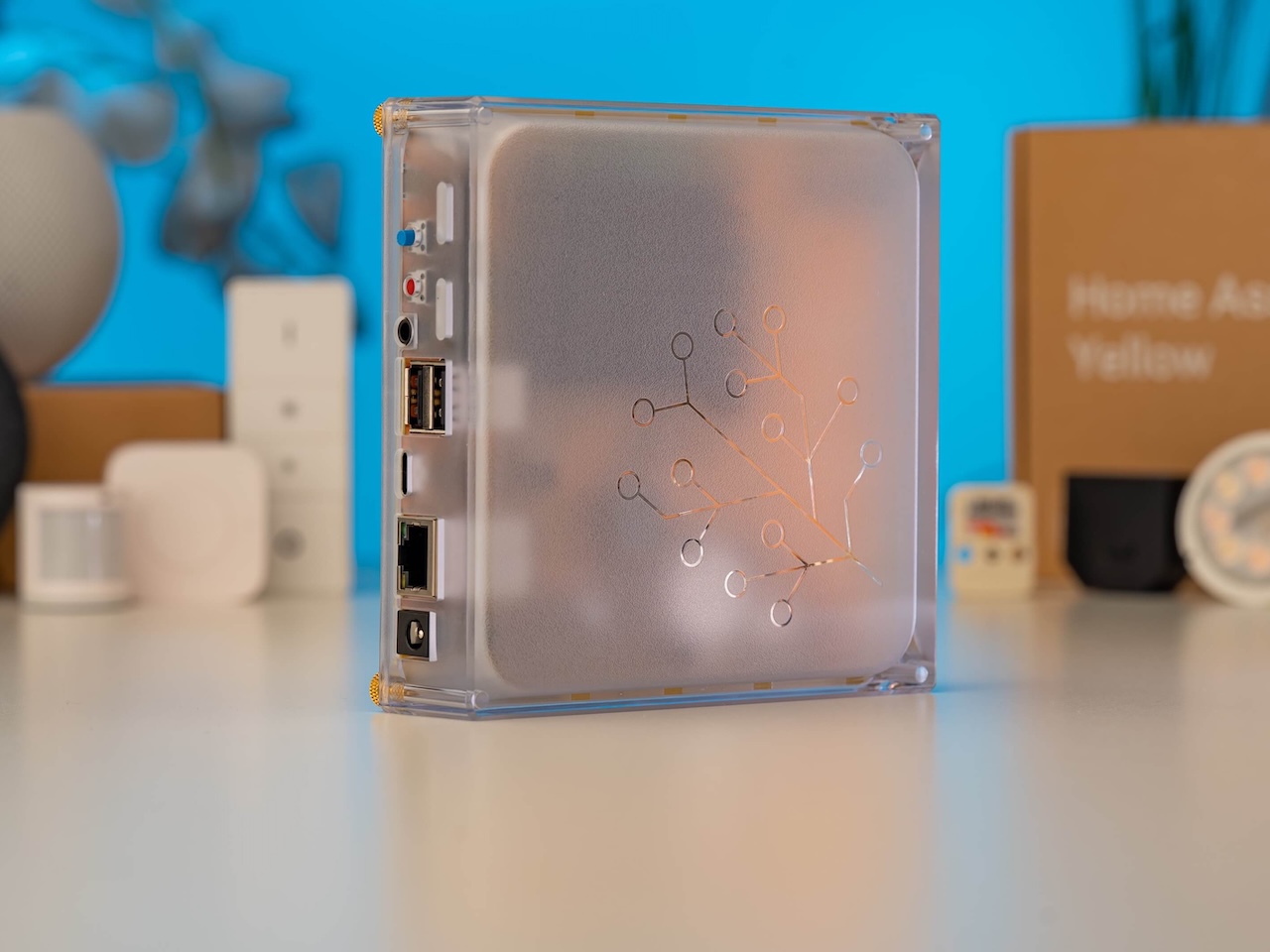
Skip it if you want things to work the first time. The Yellow earns its place by being the only hub in this lineup that lets you write your own automations in YAML, import community blueprints, and run Node-RED for visual flows. You can do everything the Aqara M3 does, plus more, and nothing leaves your home network unless you let it. The steep learning curve is the cost. The privacy and control are the payoff.
The Yellow is also the only hub in this lineup that is not a single-purchase solution for most buyers. You will need to buy a power supply, possibly a Zigbee USB stick if the bundled radio is not enough, and you will spend a Saturday afternoon reading the Home Assistant documentation. The bar is still higher than the M3.
What Separates These Picks
Picture the moment in a real house when the kitchen lights flicker, the porch sensor fires, and the robot vacuum needs to know it is time to dock. The hub you choose decides whether that sequence runs locally in under 200 milliseconds or pings three different cloud servers and arrives two seconds late. The lens below is what actually separates these five hubs in 2026.
- Matter support. Every hub in this guide acts as a Matter controller, but they are not all on the same spec level. Echo Hub and SmartThings Hub v3 are confirmed on Matter 1.5 firmware, Aqara Hub M3 currently runs Matter 1.4, and Home Assistant Core is certified at Matter 1.3 with newer features arriving via software updates. Apple’s HomePod mini works as a Matter controller and Thread Border Router, but Apple does not publish a specific Matter version number for it.
- Thread radio. A Thread Border Router is what keeps your battery-powered sensors alive for years on a coin cell instead of months. All five picks ship with a built-in Thread Border Router, so you do not need a separate bridge just to get Thread motion sensors or contact sensors online.
- Local processing. The M3, HomePod mini, and Yellow all run automations locally. The Echo Hub and SmartThings v3 still rely on cloud round trips for some automations. If your internet goes down, the local-first hubs keep working.
- Voice assistant lock-in. HomePod mini keeps you inside Siri. Echo Hub keeps you inside Alexa, with Ring and Amazon services tightly woven into the experience. SmartThings Hub v3 is more voice-agnostic, and both Aqara Hub M3 and Home Assistant Yellow are happy to sit underneath whichever assistant you already use.
- App quality. HomeKit and the Apple Home app are the cleanest. SmartThings is good, less elegant. The Aqara app is functional, less polished. Echo Hub’s panel UI is purpose-built for the wall. Home Assistant is the most powerful and the least polished.
Pick by ecosystem first. The spec sheet and radio list only matter once you know which of these worlds you actually want to live in.
The Bottom Line
If you are buying a hub in 2026, you are really buying a platform. The Aqara M3 is the right pick for the buyer who wants one hub to bridge everything. The HomePod mini is the right pick for the buyer whose family already lives inside the Apple ecosystem. The Echo Hub is the right pick for the buyer with three or more Ring devices.
The SmartThings v3 is the right pick for the buyer with a Z-Wave thermostat and a half-dozen Zigbee plugs already installed. The Home Assistant Yellow is the last-chance pick for the power user with time to read the docs, while Nabu Casa’s October 2025 production end works its way through retailer stock.
It is the most consequential smart home purchase of the year, by our count. The platform you pick in 2026 is the one you live with through at least 2028, and the cost of switching later is real. Pick by ecosystem first. The spec sheet is the second question, not the first.