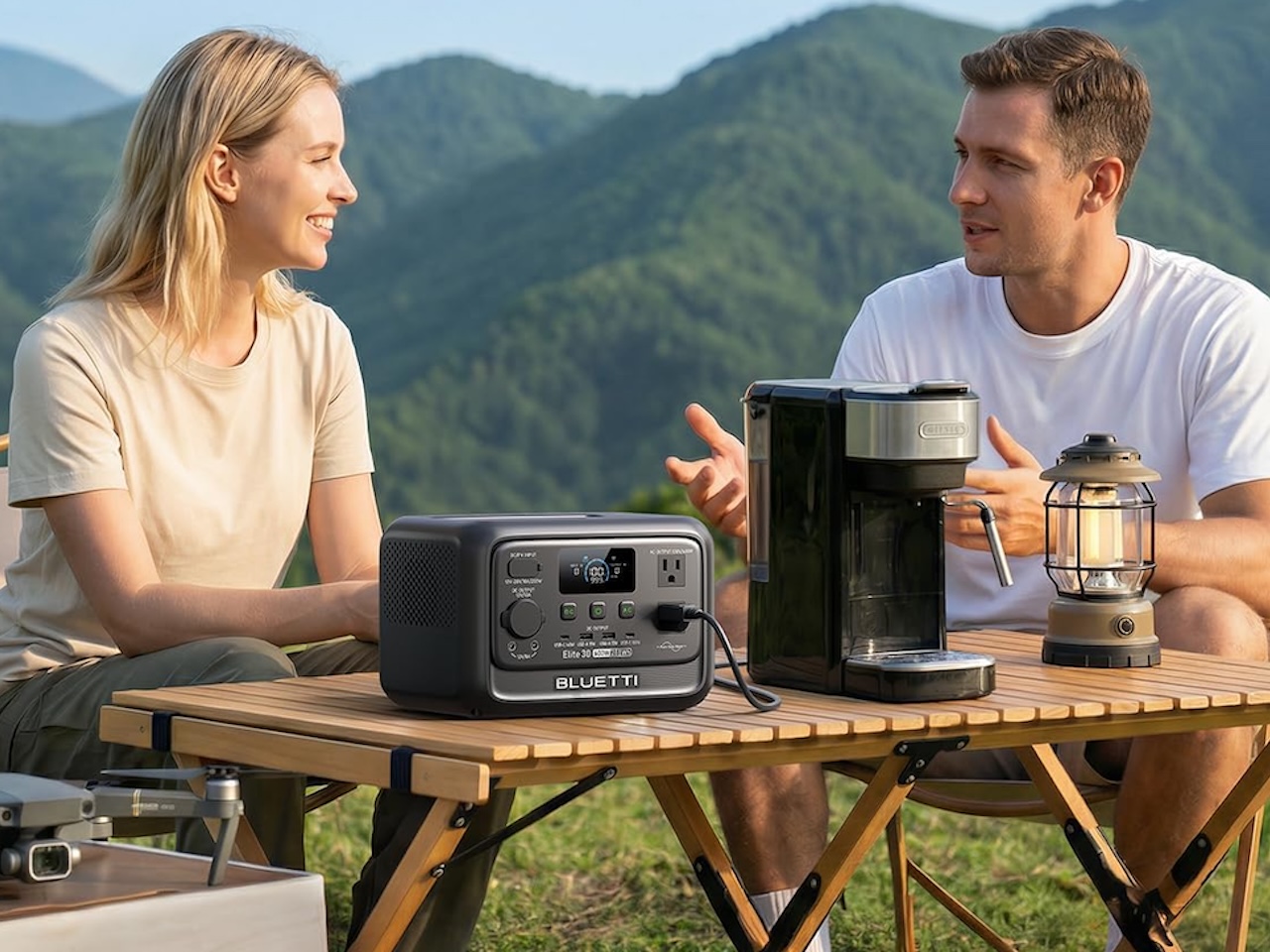
Portable power stations used to be camping gear for people who already owned solar panels. Now they’re closer to home infrastructure. That’s not curiosity traffic. Those are buyers trying to keep routers, refrigerators, laptops, CPAP machines, and weekend gear running without dragging a gas generator out of the garage.
The mistake is buying by watt-hours alone. A 288Wh box can be the right answer for a router and laptop. A 2,000Wh station can be the right answer for a refrigerator and sump pump. A cheap station with weak AC output can be worse than a smaller one that charges faster and uses safer LFP cells.
BLUETTI Elite 30 V2 Portable Power Station: $219
Where to Buy: Amazon
This guide sorts the current Amazon field by job, not by brand loyalty. The winning pattern is clear: LFP batteries, fast AC charging, useful USB-C output, and enough AC wattage for the load you plan to run.
The Gadgeteer has covered older backup power gear before, including the EcoFlow Delta Pro review, the BLUETTI AC200L review, and the Geneverse HomePower ONE PRO review. This list updates that buying decision for 2026.
Quick comparison
| Pick | Price | Capacity | AC output | Weight | Best for |
|---|---|---|---|---|---|
| BLUETTI Elite 30 V2 | $239 | 288Wh | 600W | 9.4 lb | Routers, laptops, short UPS duty |
| BLUETTI AC70 | $379 | 768Wh | 1000W | 22.5 lb | Weekend camping and small outage backup |
| Jackery Explorer 1000 v2 | $449 | 1070Wh | 1500W | 23.8 lb | The safest 1kWh default |
| EcoFlow DELTA 2 | $449 | 1024Wh | 1800W | 27 lb | Fast charging and expandable backup |
| BLUETTI AC180 | $499 | 1152Wh | 1800W | 35.3 lb | Appliance loads under $500 |
| Anker SOLIX C1000 Gen 2 | $799 | 1024Wh | 2000W | 24.9 lb | Fastest 1kWh recharge |
| Jackery Explorer 2000 v2 | $899 | 2042Wh | 2200W | 39.5 lb | Fridge and home outage backup |
| BLUETTI Elite 200 V2 | $799 | 2073.6Wh | 2600W | 53.4 lb | High-output 2kWh value |
How to choose without wasting money
Capacity tells you how long the station can run a load. Output tells you what it can start and keep running. Those are different buying decisions. A router and modem may draw 20 to 40W combined. A full-size refrigerator can spike much higher at startup, even if its running draw looks harmless. That’s why a small station can be great for internet backup and useless for a kitchen outage.
Battery chemistry matters too. For anything you plan to keep for years, LFP is the baseline I’d buy now. The models here use LFP or are sold as LiFePO4 units, which generally means better cycle life and safer long-term storage than the older lithium-ion stations that filled the category a few years ago.
Charging speed is the last thing buyers underrate. If the grid comes back for two hours, a station that refills fast is more useful than a larger one that crawls. That’s especially true during rolling outages, road trips, and solar-charging windows where sun moves quickly.
BLUETTI Elite 30 V2 Portable Power Station
Price: $219
Where to Buy: Amazon
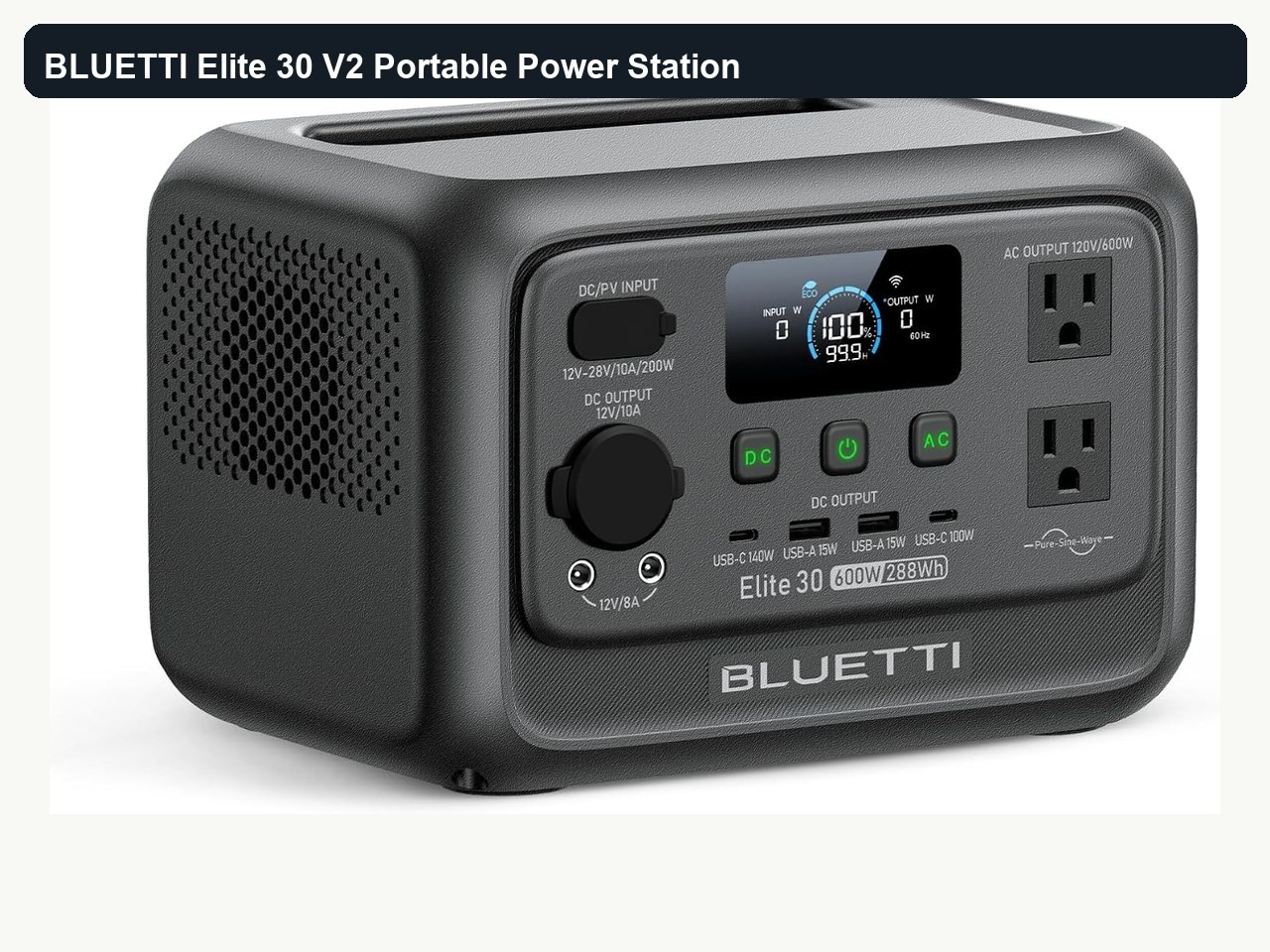
The BLUETTI Elite 30 V2 is the small station I’d buy before a normal UPS if the goal is more runtime and more flexibility. The useful part is a 288Wh LFP battery, 600W continuous AC output, 1500W power lifting, two USB-C ports rated up to 140W and 100W, Wi-Fi and Bluetooth app control, and a 10ms UPS mode. At 9.4 pounds, it’s still a grab-and-go box.
That spec mix makes sense for modern home problems. A modem, router, mini PC, laptop, camera battery charger, or CPAP backup doesn’t need a 50-pound battery. It needs enough clean power to ride through an outage and enough USB-C output to avoid charger clutter.
The limit is capacity. A 288Wh battery isn’t a refrigerator plan. It’s the station for keeping communications alive, finishing work during a blackout, powering a diesel heater, or running lights at a campsite. Buy the Elite 30 V2 when portability matters more than appliance runtime.
BLUETTI AC70 Portable Power Station
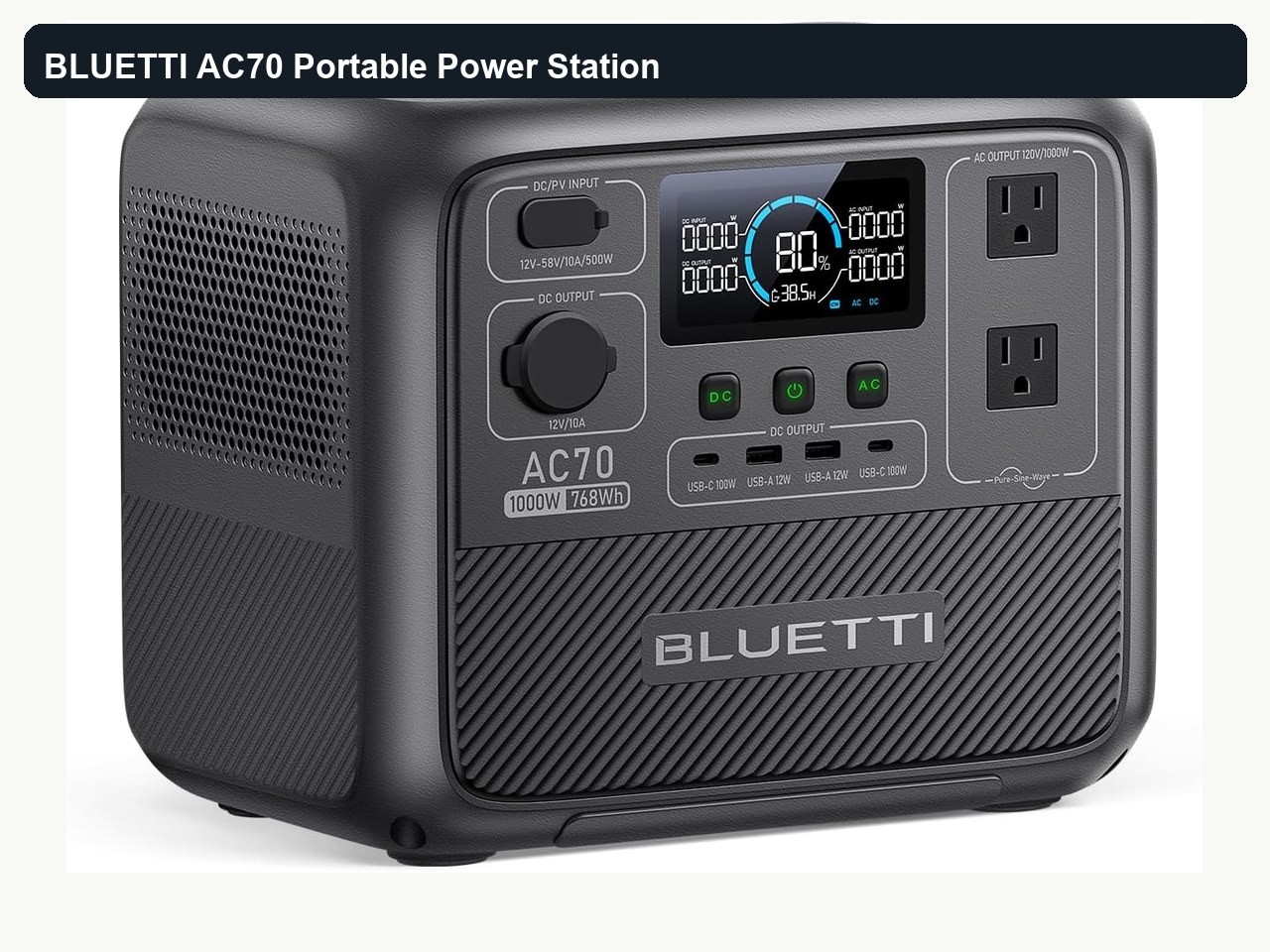
Price: $328.99
Where to Buy: Amazon
The BLUETTI AC70 is the first step up from gadget backup into real weekend power. The live listing shows 768Wh of capacity, 1000W AC output, 2000W power lifting, 500W solar input, 950W max AC charging, two AC outlets, and a 22.5-pound weight. That’s a practical middle size for camping, a work shed, camera gear, a router plus computer setup, or small appliances that don’t need all-day runtime.
I like this size because it forces realistic expectations. It can run more than laptops and phones, but it’s still small enough to move without planning your whole garage around it. The AC70 is also a good fit if you want to learn solar charging before buying a full 2kWh station.
Read the runtime math before you plug in a heater or coffee maker. A customer review on the listing points out that usable AC energy can land lower than the 768Wh headline after inverter losses and self-consumption. That’s not a BLUETTI-only issue. It’s how these stations work. Buy it for moderate loads, not for running high-wattage heat all night.
Jackery Explorer 1000 v2 Portable Power Station
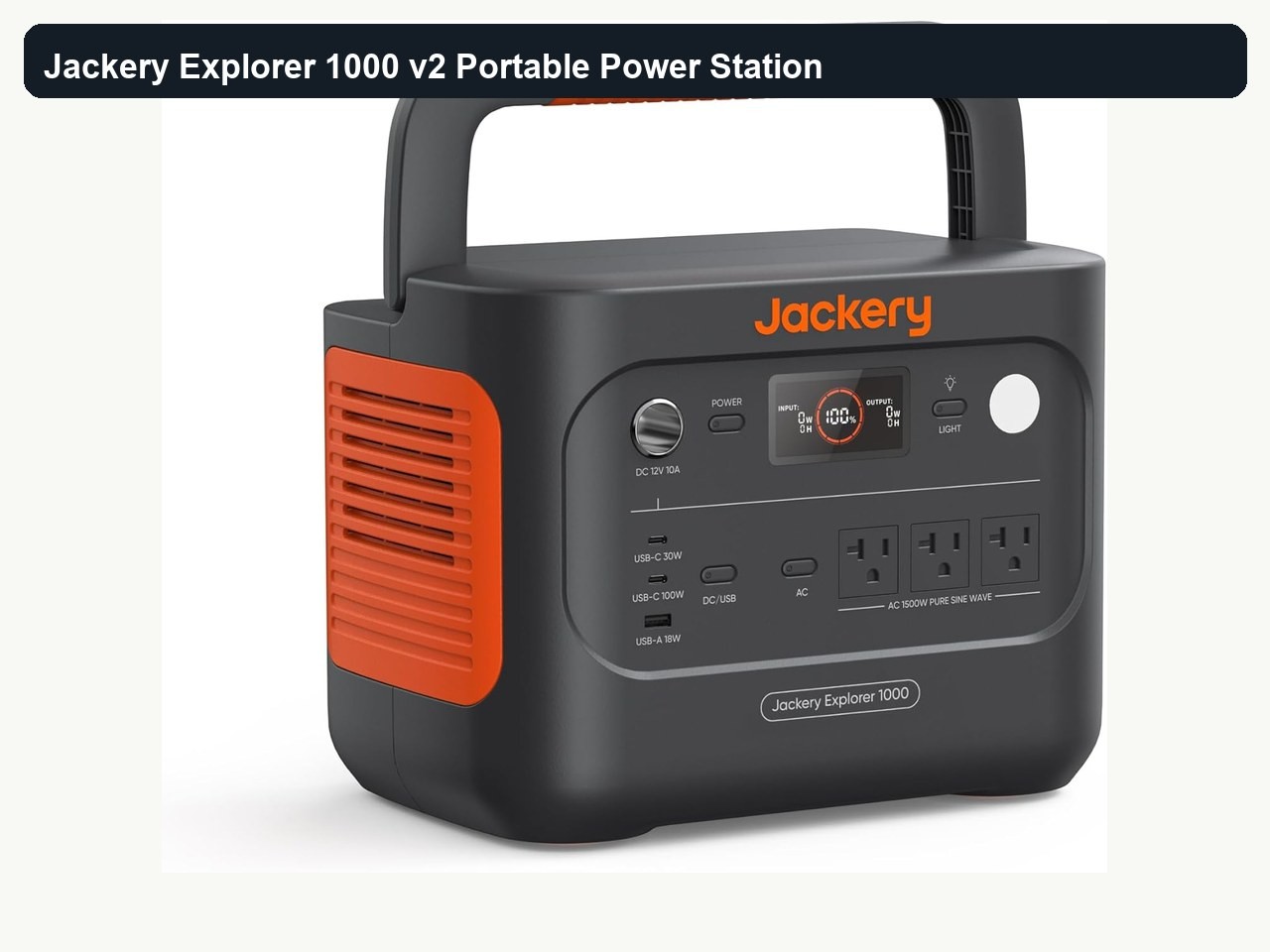
Price: $448.99
Where to Buy: Amazon
The Jackery Explorer 1000 v2 is the easiest recommendation for someone who asks, “Which one should I buy if I don’t want to overthink this?” The useful part is a 1070Wh LiFePO4 battery, 1500W AC output, 3000W surge, 100W USB-C, one-hour fast charging, and a 23.8-pound weight.
That combination is why this sits in the center of the guide. It’s large enough for a mini fridge, laptop station, lights, Starlink-style internet gear, camera charging, and typical camping electronics. It’s not so large that it becomes garage equipment.
The Jackery interface is also less intimidating than some app-heavy stations. For emergency gear, that is the useful part. If the power goes out and someone else in the house needs to use it, the buttons and display need to make sense without a manual.
The trade is price competition. BLUETTI and EcoFlow often undercut Jackery on watts per dollar. Jackery still earns the default spot because weight, reputation, and the 1kWh capacity line up cleanly. If I were buying one station for general household and car-camping use, this would be one of the first listings I’d check.
EcoFlow DELTA 2 Portable Power Station
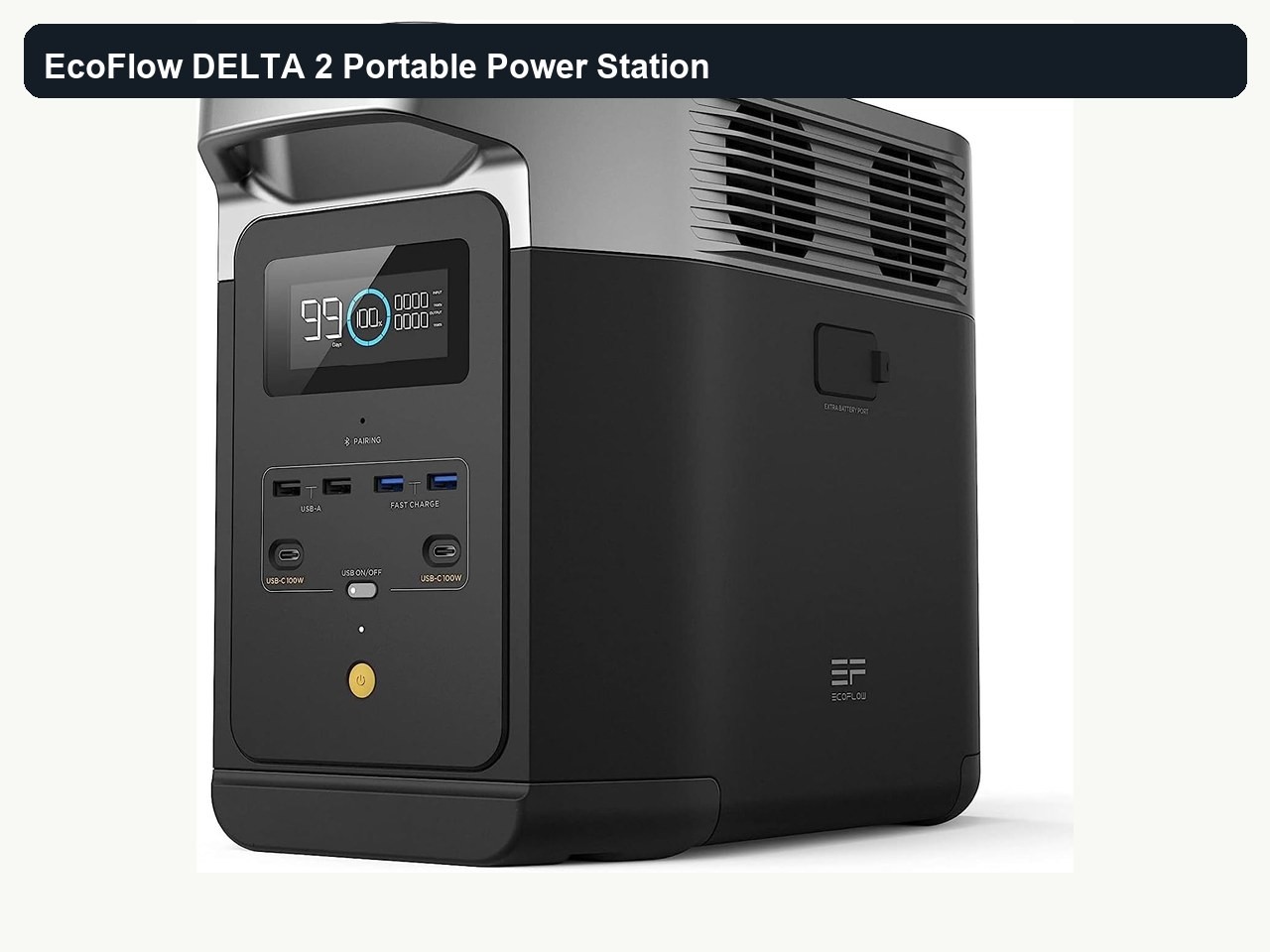
Price: $449
Where to Buy: Amazon
The EcoFlow DELTA 2 is the pick for buyers who care about recharge speed and expansion. The useful part is 1024Wh of LFP capacity, 1800W AC output, a large port array, and fast AC charging.
EcoFlow’s advantage is the system around the box. If you want app controls, expansion batteries, and a path toward a larger home-backup setup, the DELTA 2 is easier to justify than a simpler one-piece station. It’s also strong for apartment backup because you can keep it inside, charge it fast from the wall, and avoid fuel, exhaust, and storage issues.
The caution is complexity. More app control and expansion options also mean more settings, firmware, fan behavior, and ecosystem decisions. If you want a station that sits on a shelf until a storm, the Jackery may feel calmer. If you want to grow the setup later, EcoFlow has the better runway.
BLUETTI AC180 Portable Power Station
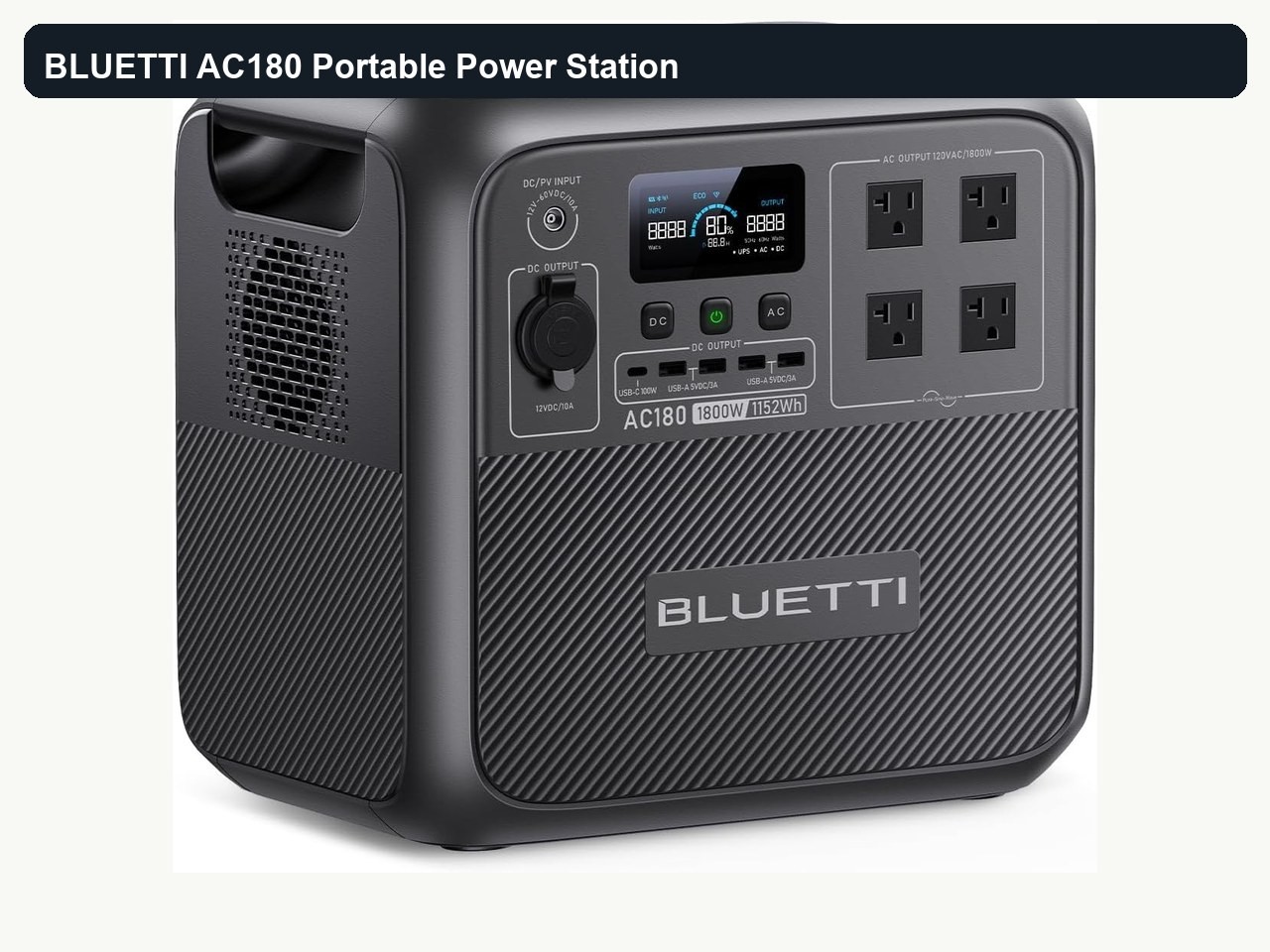
Price: $599
Where to Buy: Amazon
The BLUETTI AC180 is the value play when you need more muscle than the AC70 but don’t want to cross into 2kWh pricing. The useful part is 1152Wh of LFP capacity, 1800W AC output, 2700W peak output, 8 outlets, and 0 to 80 percent charging in about 45 minutes. At $599, it sits in a useful gap.
That gap is appliance territory. A station around this size can cover short refrigerator runs, a microwave burst, a coffee maker, tools, or a heavier camping setup better than the small boxes can. It’s also strong as a backup for people who want one station that can handle normal electronics and a few higher-wattage tasks.
The cost is weight. At 35.3 pounds, the AC180 is portable in the same way a full cooler is portable. You can move it, but you won’t want to carry it across a campsite five times a day. Buy this for home, RV, shed, or car-adjacent use.
Anker SOLIX C1000 Gen 2 Portable Power Station
Price: $599
Where to Buy: Amazon
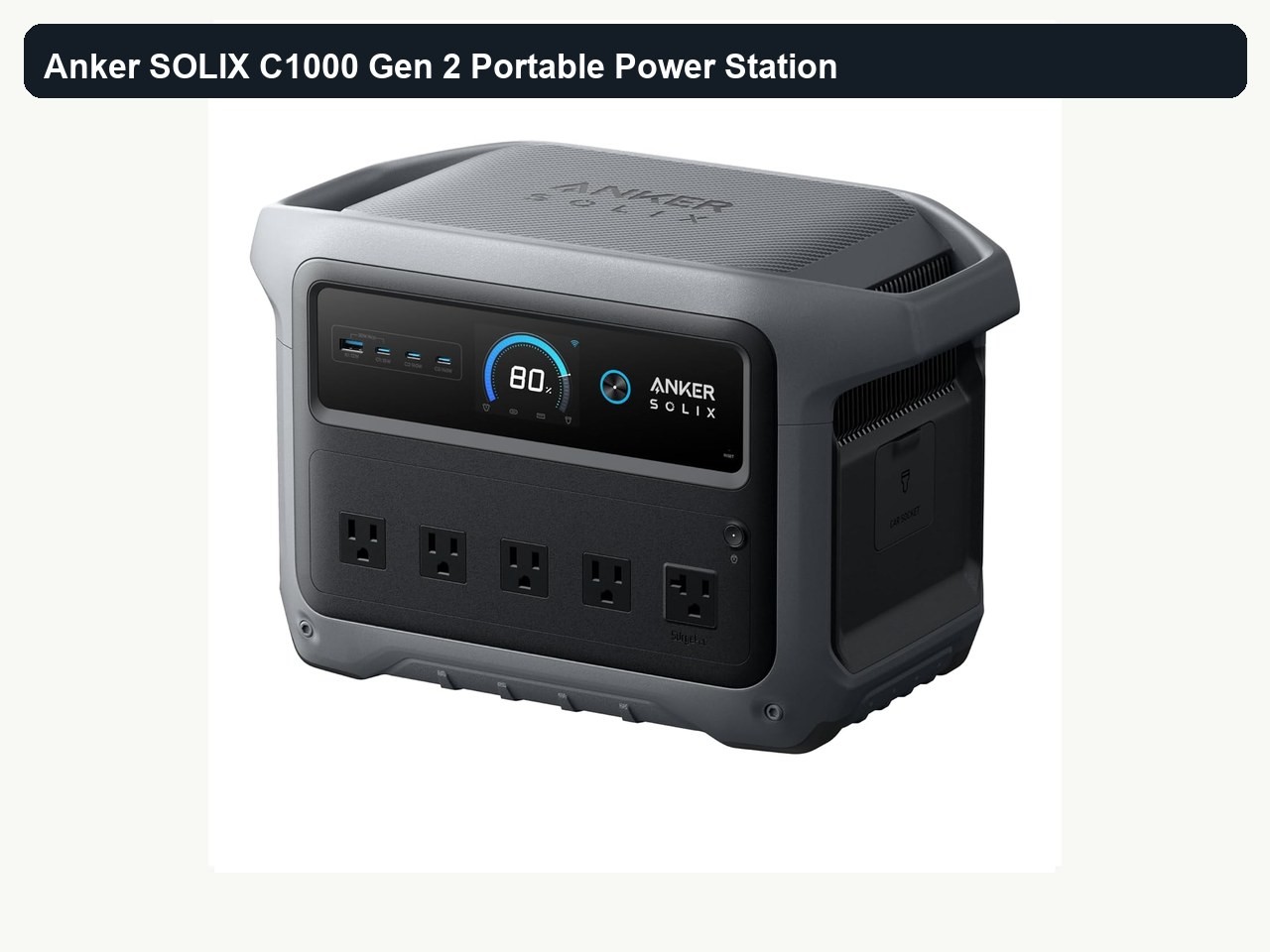
The Anker SOLIX C1000 Gen 2 is for the buyer who values fast turnaround more than the lowest shelf price. The useful part is a 1024Wh LiFePO4 battery, 2000W rated output, 3000W peak output, a 49-minute full charge claim, and 10 outlets.
That 49-minute charging claim is the hook. If you’re dealing with unreliable power, short generator windows, or a road trip where wall time is scarce, fast refill speed changes how often the station is useful. You can top it off during a lunch stop or between outage windows instead of waiting half a day.
Anker also has a strong accessory and charger reputation, which matters when the station is part of a larger pile of USB-C gear. A power station isn’t only AC outlets anymore. It’s also a central charging hub for phones, tablets, drones, lights, and laptops.
The reason it’s not the default pick is price. At $799, it’s much higher than the Jackery Explorer 1000 v2 and EcoFlow DELTA 2 listings. Buy the Anker if the recharge speed and output rating are the parts you’ll use. Otherwise, spend the difference on solar, extension cords, or a second smaller station.
Jackery Explorer 2000 v2 Portable Power Station
Price: $899
Where to Buy: Amazon
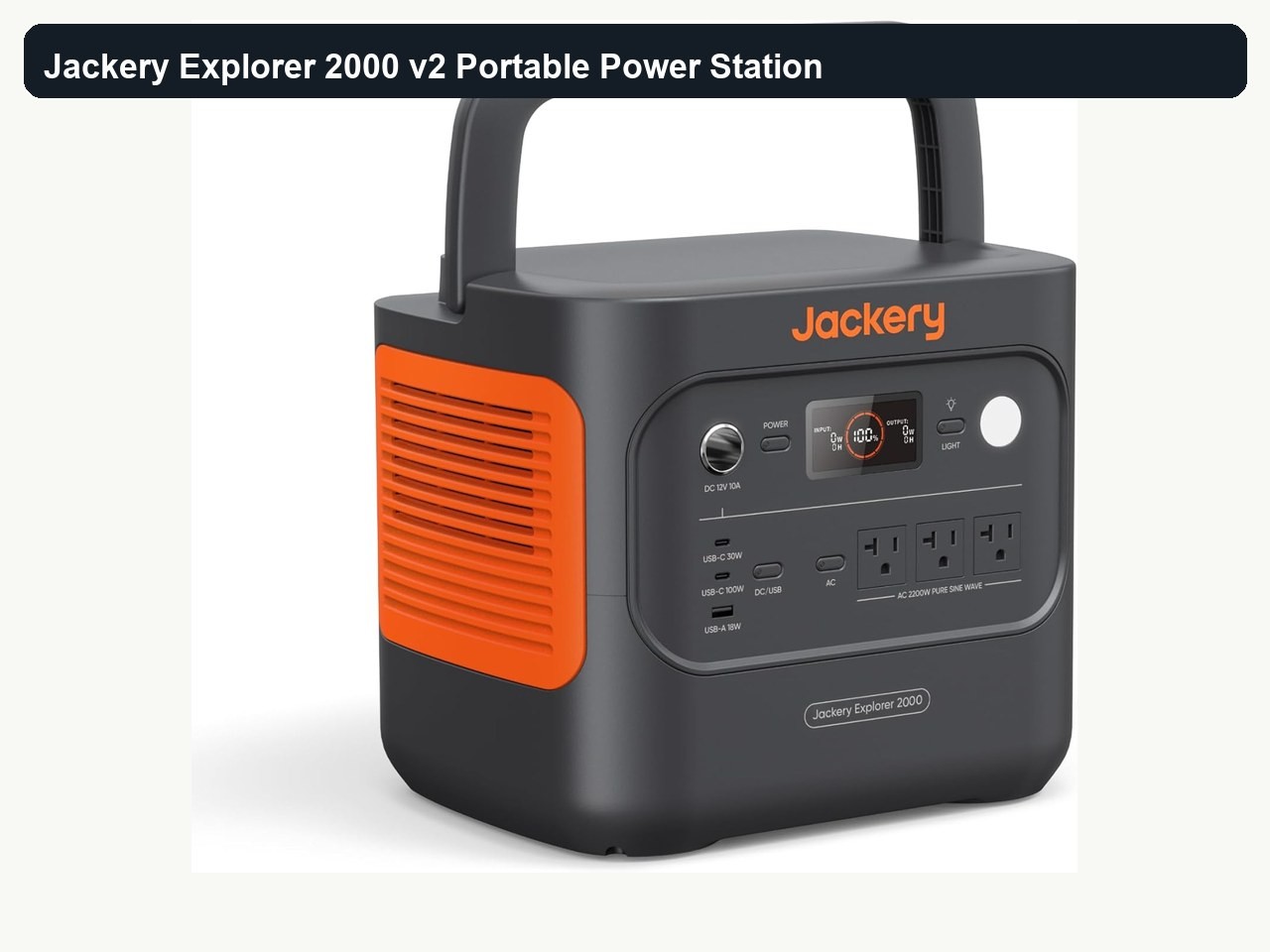
The Jackery Explorer 2000 v2 is where portable power starts to feel like real outage planning. The useful part is 2042Wh of capacity, 2200W AC output, fast AC charging, UPS capability, a 39.5-pound weight, and a five-year manufacturer warranty.
The reason this model matters is the weight-to-capacity ratio. Many 2kWh stations are heavy enough that you think twice before moving them. Jackery keeps this one under 40 pounds, which makes it more practical for stairs, a trunk, a garage shelf, or moving between kitchen and basement during an outage.
This is the station I’d look at for refrigerator backup, sump pump coverage, microwave use, a remote-work setup during longer outages, or family camping where small stations start to feel like toy batteries. It has the capacity to be useful and the output to start more demanding loads.
The warning is still load discipline. A 2kWh battery isn’t a whole-house generator. Space heaters, induction burners, hair dryers, and air conditioners can drain it fast. Use it for refrigeration, communications, lights, pumps, and short appliance bursts, and it makes sense.
BLUETTI Elite 200 V2 Portable Power Station
Price: $798.99
Where to Buy: Amazon
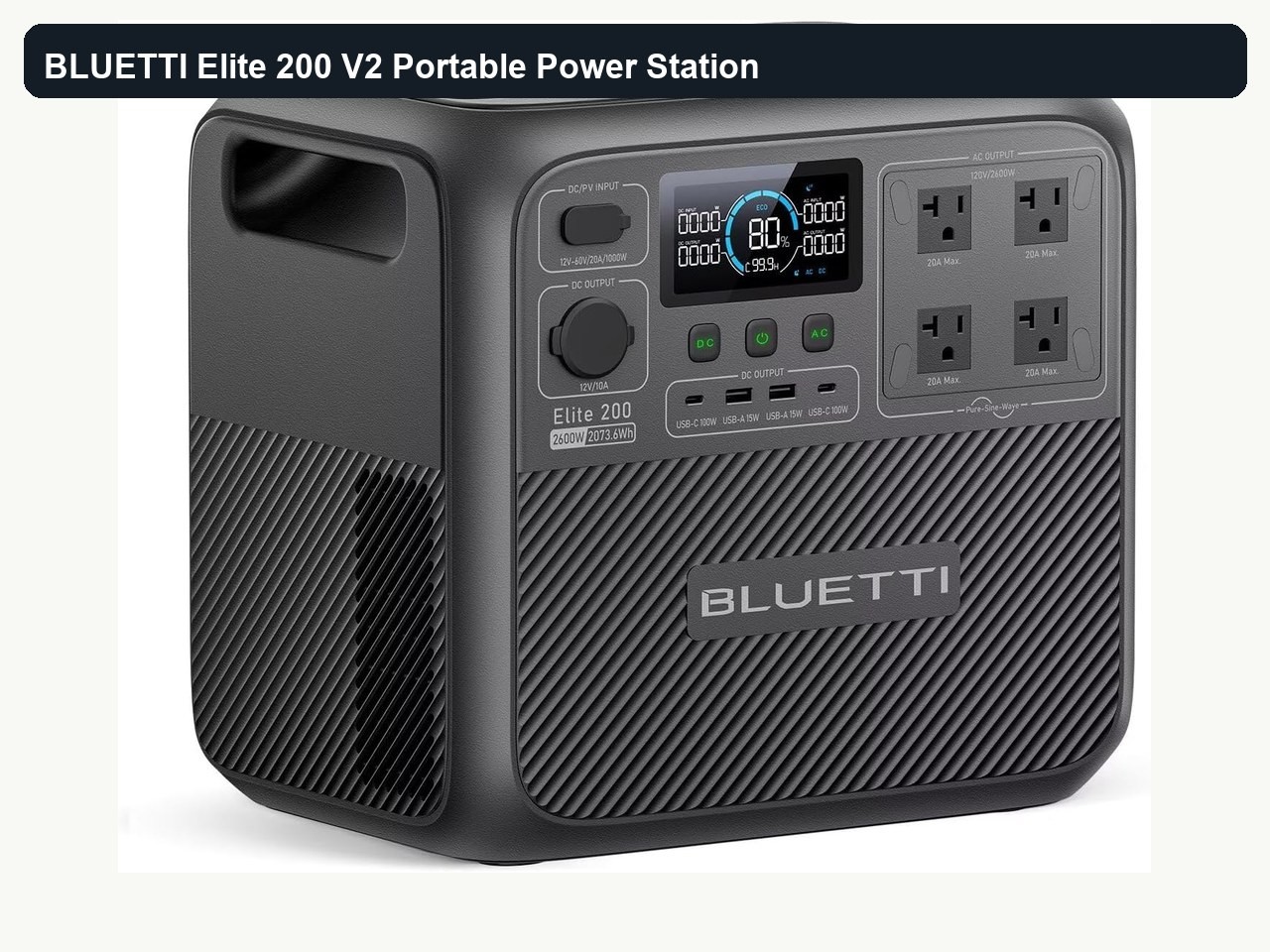
The BLUETTI Elite 200 V2 is the aggressive 2kWh value pick. The useful part is 2073.6Wh of LFP capacity, 2600W AC output, 3900W power lifting, 0 to 80 percent charging in 50 minutes, a 15ms UPS spec, and a 6000+ cycle battery claim. At $799, it undercuts several lower-output 2kWh competitors.
This is the one I’d compare directly against the Jackery Explorer 2000 v2. The BLUETTI gives you more rated output and more listed battery-cycle headroom for less money. That’s attractive if your loads include power tools, kitchen appliances, a heavier RV setup, or longer blackout coverage.
The trade is mass. At 53.4 pounds, the Elite 200 V2 is a luggable power station, not a casual carry. If it will live in a garage, RV, basement, or dedicated backup spot, that weight is acceptable. If it needs to move up stairs or into a trunk often, the Jackery’s lower weight becomes a real feature.
What the specs mean in the real world
For internet backup, the BLUETTI Elite 30 V2 is enough. A router, modem, laptop, and LED light don’t need 2kWh. Smaller also means quieter, cheaper, easier to store, and easier for someone else in the house to use.
For camping, the BLUETTI AC70 and Jackery Explorer 1000 v2 cover the widest range. The AC70 is easier on price and still handles meaningful loads. The Jackery is the cleaner default when you want more capacity without jumping into heavy gear.
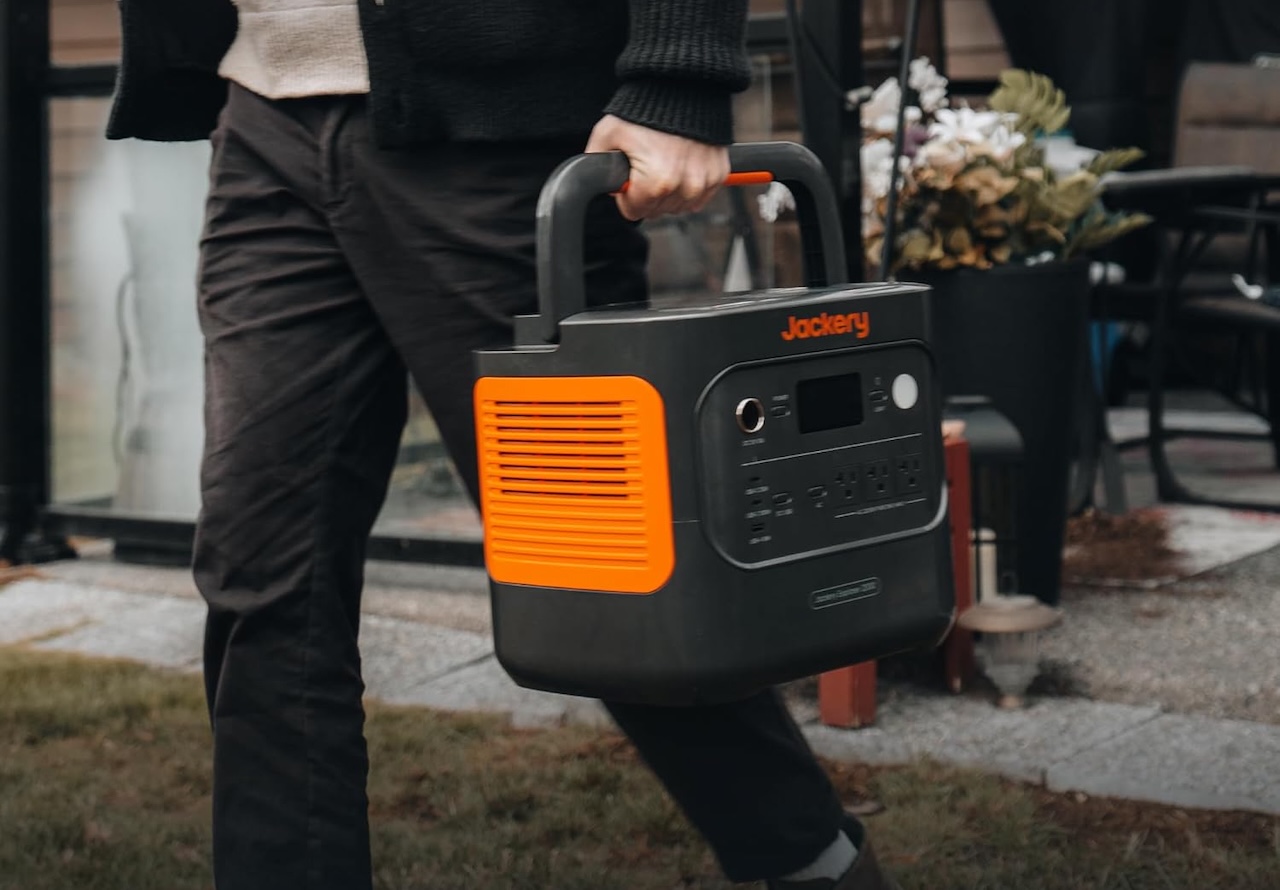
For home outage planning, start at the BLUETTI AC180 and move up. The EcoFlow DELTA 2 is better if you want expansion and fast charging. The Jackery Explorer 2000 v2 is the lighter 2kWh station. The BLUETTI Elite 200 V2 is the high-output value play if weight isn’t the deciding factor.
Don’t buy a portable power station because the box says “solar generator.” Buy it because the capacity, AC output, charging speed, battery chemistry, and weight match the load you plan to run.
Final recommendation
If I had to pick one for most readers, I’d start with the Jackery Explorer 1000 v2. It has enough capacity for useful backup, enough AC output for common loads, and a weight that still feels portable.
If the budget is tighter, the BLUETTI AC70 is the smarter smaller step. If outage backup is the real reason you’re shopping, skip the small stuff and look at the Jackery Explorer 2000 v2 or BLUETTI Elite 200 V2 instead.
The right portable power station isn’t the biggest one you can afford. It’s the smallest one that can run the loads you truly care about.