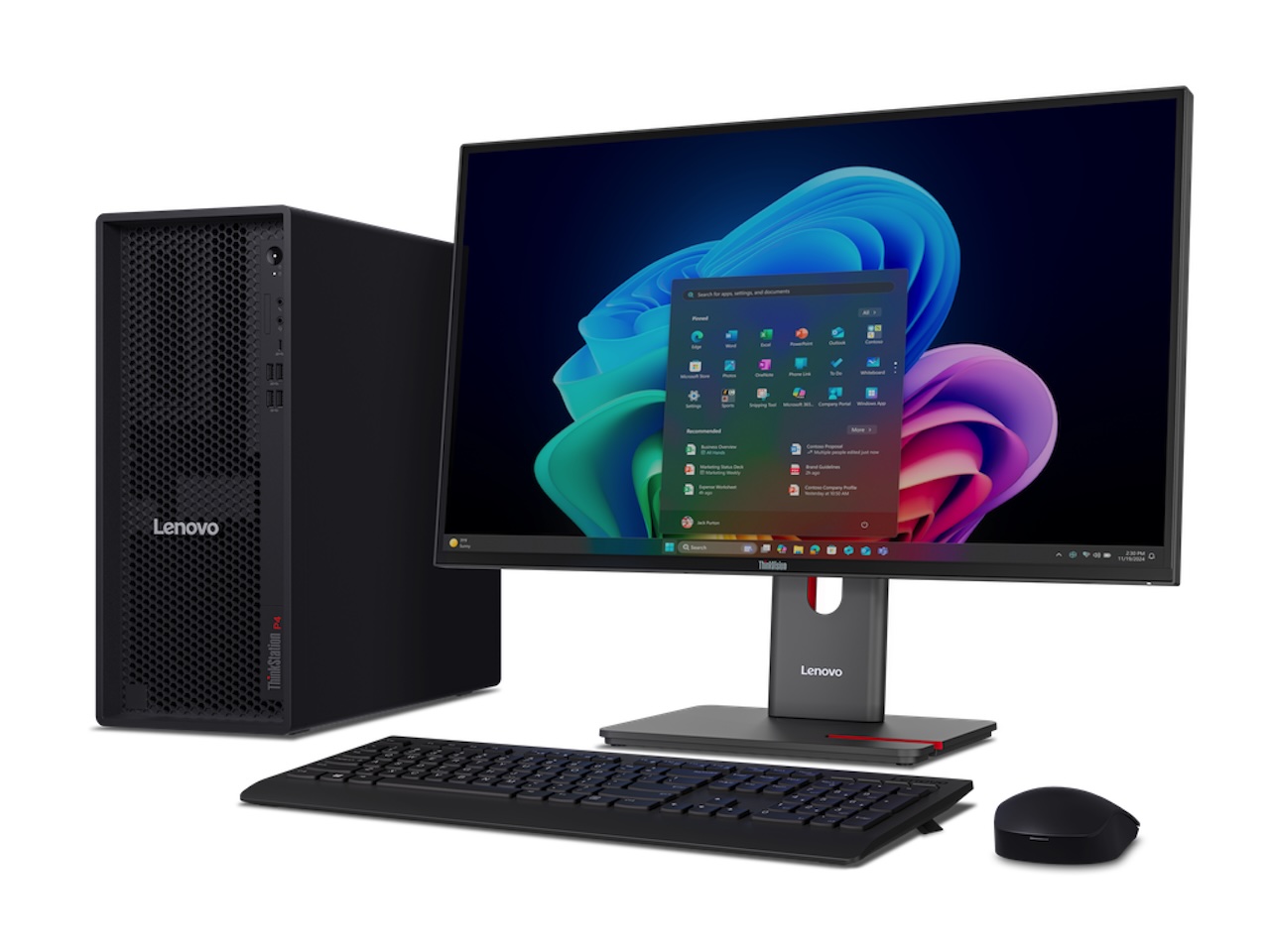
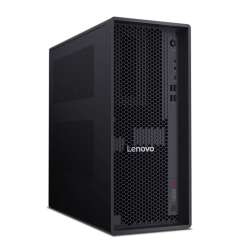
Workstation buyers spent the last few years watching the AI conversation drift to the cloud. Studios paid for instance hours, finance teams paid for inference latency, and design shops paid for the bandwidth to ship raw assets back and forth. The ThinkStation P4 lands in a 30-liter tower that says the math has finally shifted.
It pairs AMD’s Ryzen PRO 9000 Series CPU with NVIDIA’s RTX PRO 6000 Blackwell Workstation Edition GPU, a combination Lenovo says is a first in this class. The GPU configuration tops out at 96 GB of GDDR7 ECC VRAM and up to 4000 TOPS of AI compute. That’s an entry-tier chassis quietly carrying a workload class that used to require a colocation contract.
It’s the form factor that gives this announcement teeth. If you’re a colorist, a CAD lead, or a simulation engineer, you’ve been waiting for an AI-class GPU that doesn’t ask you to give up a tower or call facilities about cooling. The P4 answers both questions in one box.
The CPU picks a side
The top SKU is the Ryzen 9 PRO 9965X3D, 16 cores, up to 5.5 GHz, built on Zen 5 and paired with the AMD PRO 675 chipset. AMD’s 3D V-Cache earns its keep here on workloads that hammer L3 cache: simulation, large compile jobs, and pro audio passes. Memory tops out at 256 GB of DDR5 across 4 DIMM slots, running up to 6400 MT/s. ECC UDIMM is offered at 16 GB and 32 GB, which matters if you’ve ever lost a 14-hour render to a single-bit flip.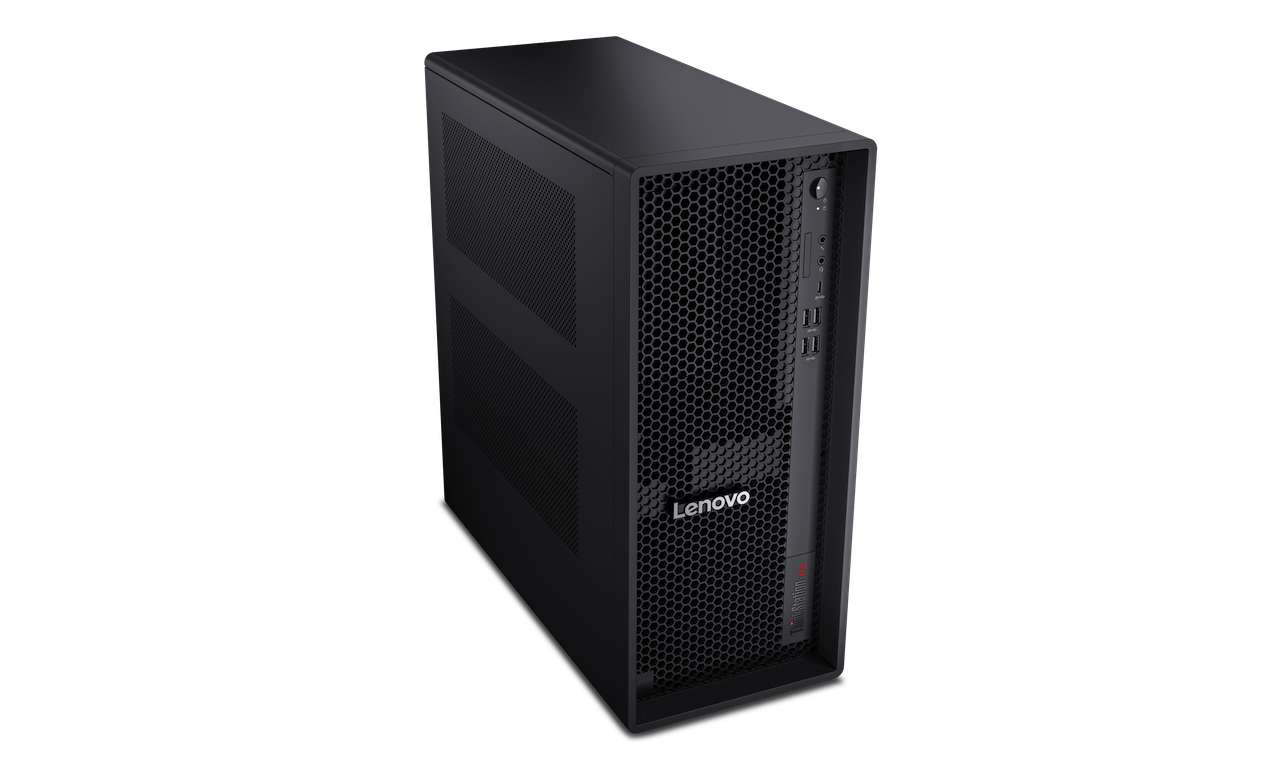
The non-ECC ladder runs 8 GB, 16 GB, 32 GB, and 48 GB UDIMM, with 64 GB CUDIMM at the top. That gives you headroom to keep model weights resident next to the active project rather than paging across PCIe. It’s also the part that decides whether your big-scene Houdini sessions stay live or stall.
Storage and I/O without compromises
Six total drives, six total tools. Up to three M.2 PCIe NVMe SSDs (4 TB each, 12 TB combined) handle the active scratch and project tier. Up to three 3.5-inch SATA HDDs (12 TB each, 36 TB combined) cover archival, with on-board RAID 0/1/5.
That mix is the part most cloud-first pitches gloss over. You can keep an actively edited 8K timeline on Gen 5 NVMe, park dailies on a second NVMe, and stash a season’s worth of project archives on spinning storage without leaving the chassis.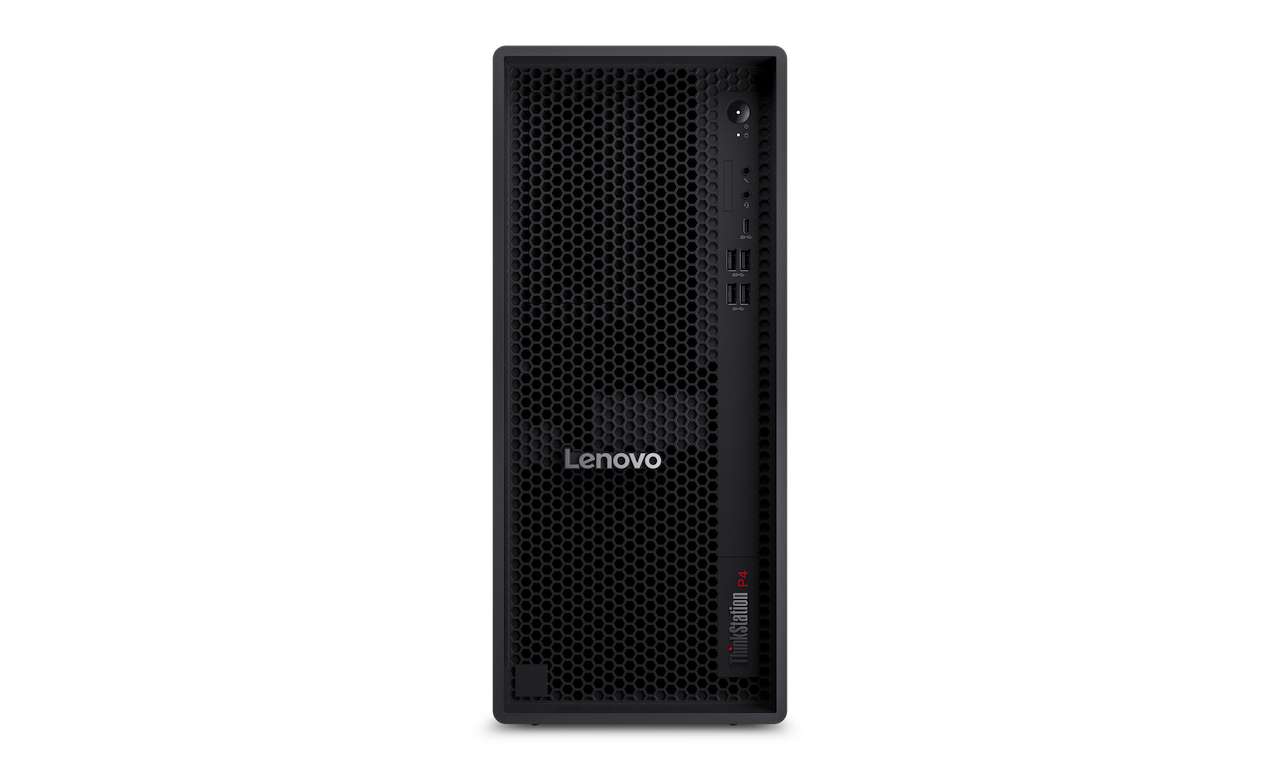
Front I/O is unusually thoughtful for a tower this size: a USB-C 3.2 Gen 2 at 20 Gbps, two USB-A 3.2 Gen 2 at 10 Gbps, two USB-A 3.2 Gen 1 at 5 Gbps, an audio combo jack, a mic jack, and a 3-in-1 media card reader. Rear ports cover four more USB-A 5 Gbps connections, DisplayPort 2.0, DisplayPort 1.4, HDMI 2.1, a 2.5 GbE Realtek RJ-45, an adapter-dependent extra video out, plus serial and LPT for the engineering shops that still depend on them. Wireless is Foxconn Wi-Fi 7 (2×2 802.11be) with Bluetooth 5.4 on a PCIe 2230 card. Expansion is one PCIe 5.0 x16, one PCIe 4.0 x4, and two PCIe 4.0 x1 slots.
Power and thermals match the ambition. PSU options run 500 W, 750 W, and 1100 W at 92% efficiency. Optional liquid cooling handles CPUs up to 170 W TDP, which is the right ceiling for the higher-binned X3D parts.
Who Lenovo’s drawing a circle around
The P4 is positioned for 3D animation, editing, compositing, CAD, BIM, solid modeling, simulation, rendering, and software development. Verticals called out include AEC, automotive, manufacturing, media and entertainment, finance, and education. ISV certifications cover AVID, Altair, Autodesk, ANSYS, Bentley, Dassault, Nemetschek, PTC, and Siemens, which is most of the list that matters. Lenovo Performance Tuner ships alongside it for workload-aware tuning.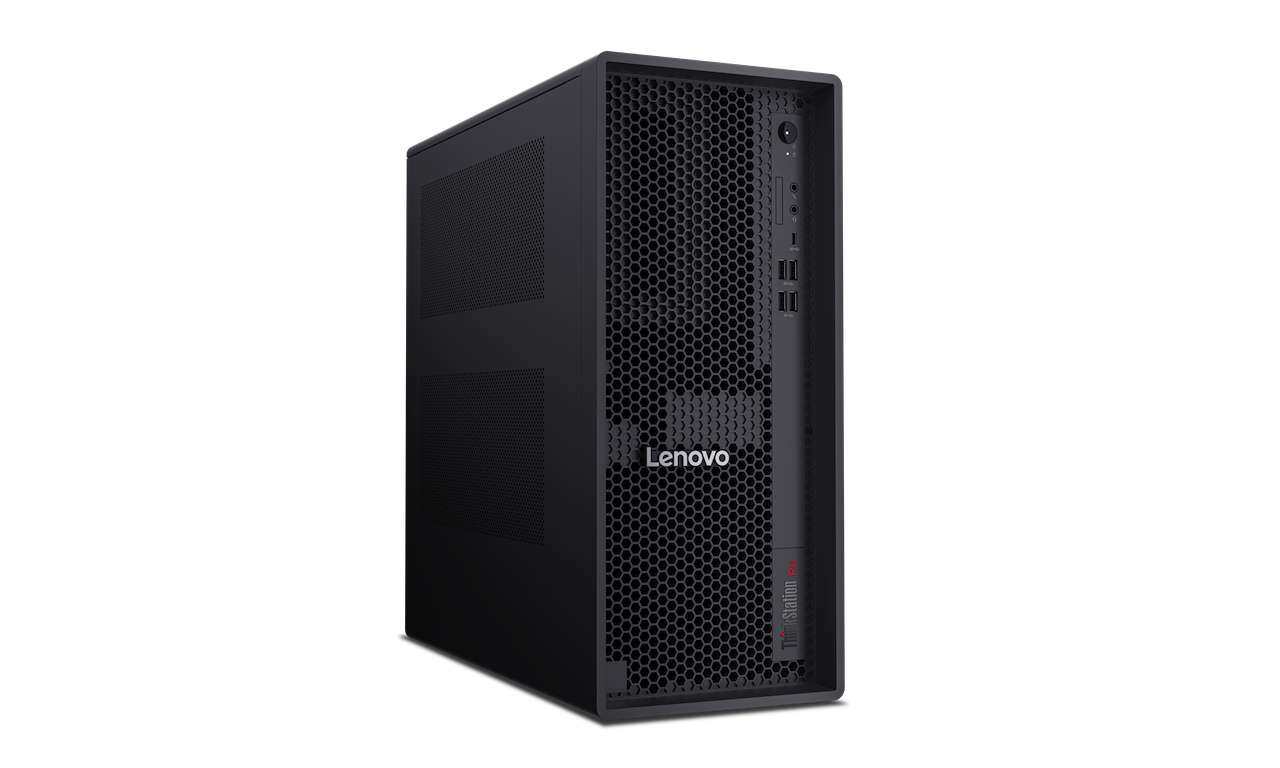
For independent creators and small studios that can’t justify a rack of cloud GPU instances, the “all of it in 30 liters” argument is the one that lands. You’re not paying for elasticity you don’t need, and you’re not waiting on egress charges to ship dailies to a reviewer. That’s the actual pitch, stripped of slide deck language.
Sustainability, security, and what’s still under wraps
Sustainability claims aren’t background filler here. Packaging uses 95% PCC ABS in the wired USB keyboard and mouse, 90% PCC in the EPE cushion, 30% ocean-bound plastic in the bag, and FSC-certified paper. Certifications include ENERGY STAR 9.0, EPEAT Gold, TCO Certified 10, and RoHS.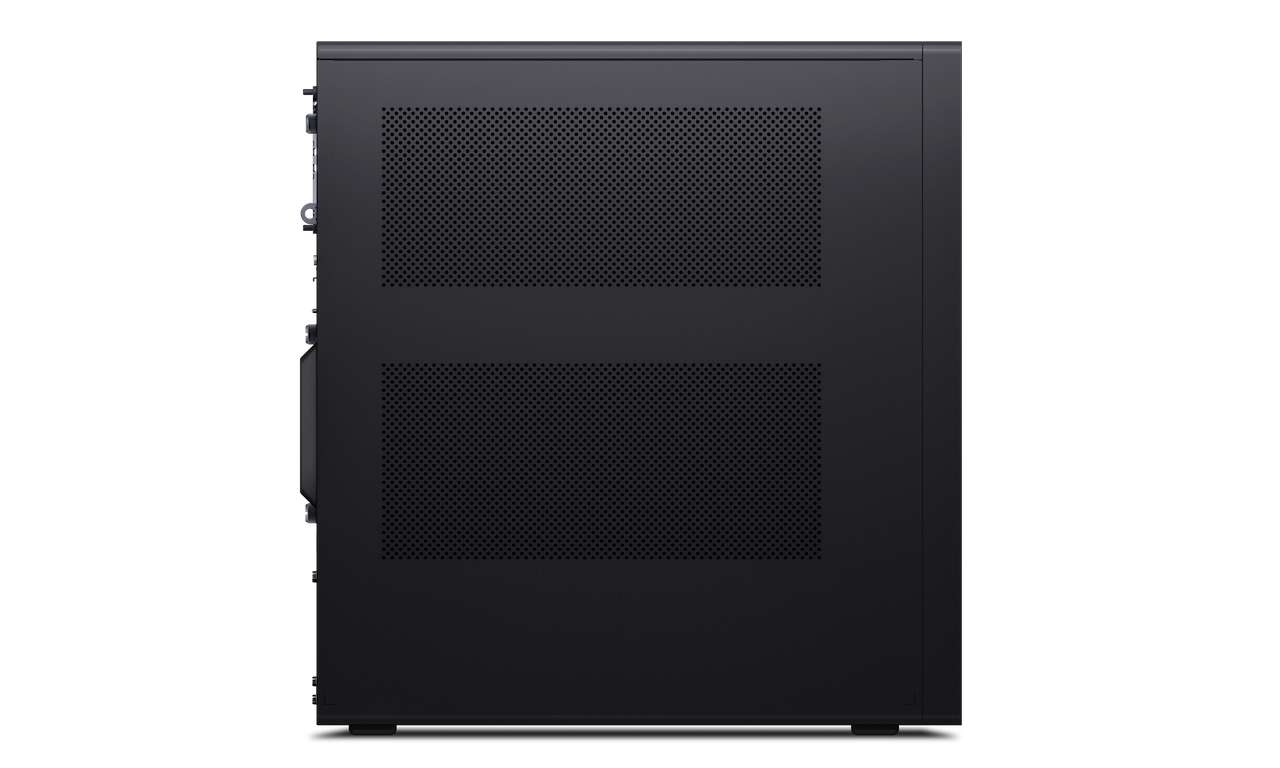
Security stacks ThinkShield with discrete TPM 2.0, a Kensington security slot, a chassis intrusion switch, and an E-Lock. OS options cover Windows 11 Pro, Ubuntu Linux, and Red Hat Enterprise Linux, which says everything about who the buyer is. Manageability ties into Lenovo Commercial Services, Premier Support Plus, and TruScale DaaS variants for shops that want it leased rather than capex’d.
Availability runs in select markets starting June 2026, with North America following in August 2026. Pricing wasn’t locked in the embargoed brief and is expected closer to launch. The competitive question isn’t whether this can outrun a higher-class P-series box, because it can’t. It’s whether on-desk AI finally beats the cloud math for serious individual creators, and for the first time in a while the answer looks like it might be “yes”.