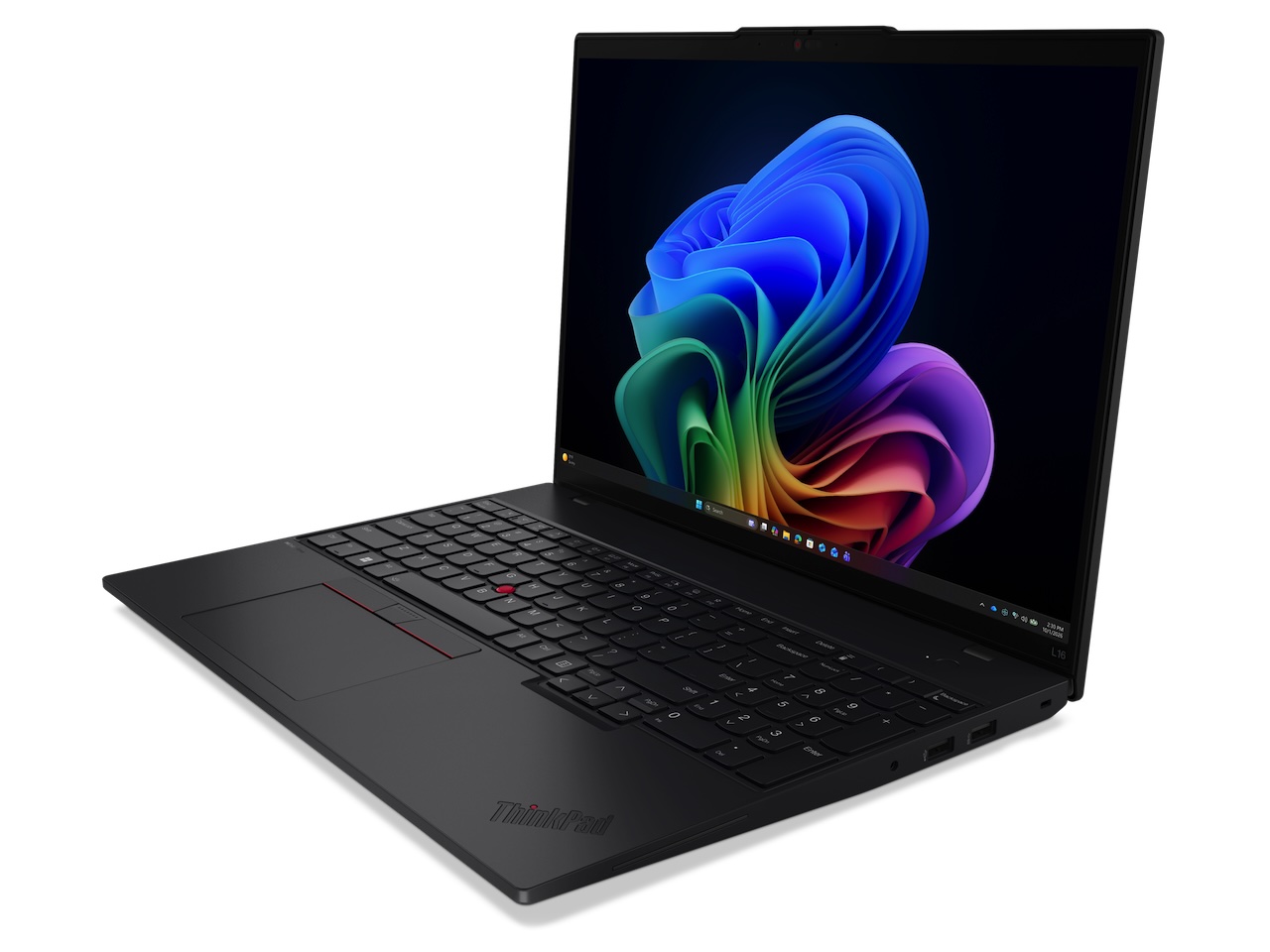
The 16-inch business laptop usually shows up with a flagship price tag attached. Lenovo’s been comfortable selling it that way through T16 and P16 generations. The ThinkPad L16 Gen 3 (AMD) is the one that puts the bigger screen in the value tier.
It runs up to AMD Ryzen AI PRO 400 Series processors with a 50 TOPS NPU, which is the Copilot+ PC threshold. The 16-inch display gives you the multi-window real estate the 14-inch L14 doesn’t, and at 1.78 kg it’s noticeably lighter than the workstation-class siblings. For hybrid workers who park the laptop on a desk more often than they live out of a bag, that combination is the missing middle.
The pricing position is what makes the announcement count. You’re not paying T-series money for screen size anymore.
Display, audio, and the productivity angle
The panel choices are two 16-inch WUXGA IPS options: a 400-nit non-touch with low blue light and 45% NTSC, and a 400-nit touch variant with the same color and anti-glare coating. Screen-to-body sits at 87%, which is one of the more aggressive ratios in the value-tier 16-inch field. Most competitors at this price still ship with thicker bezels.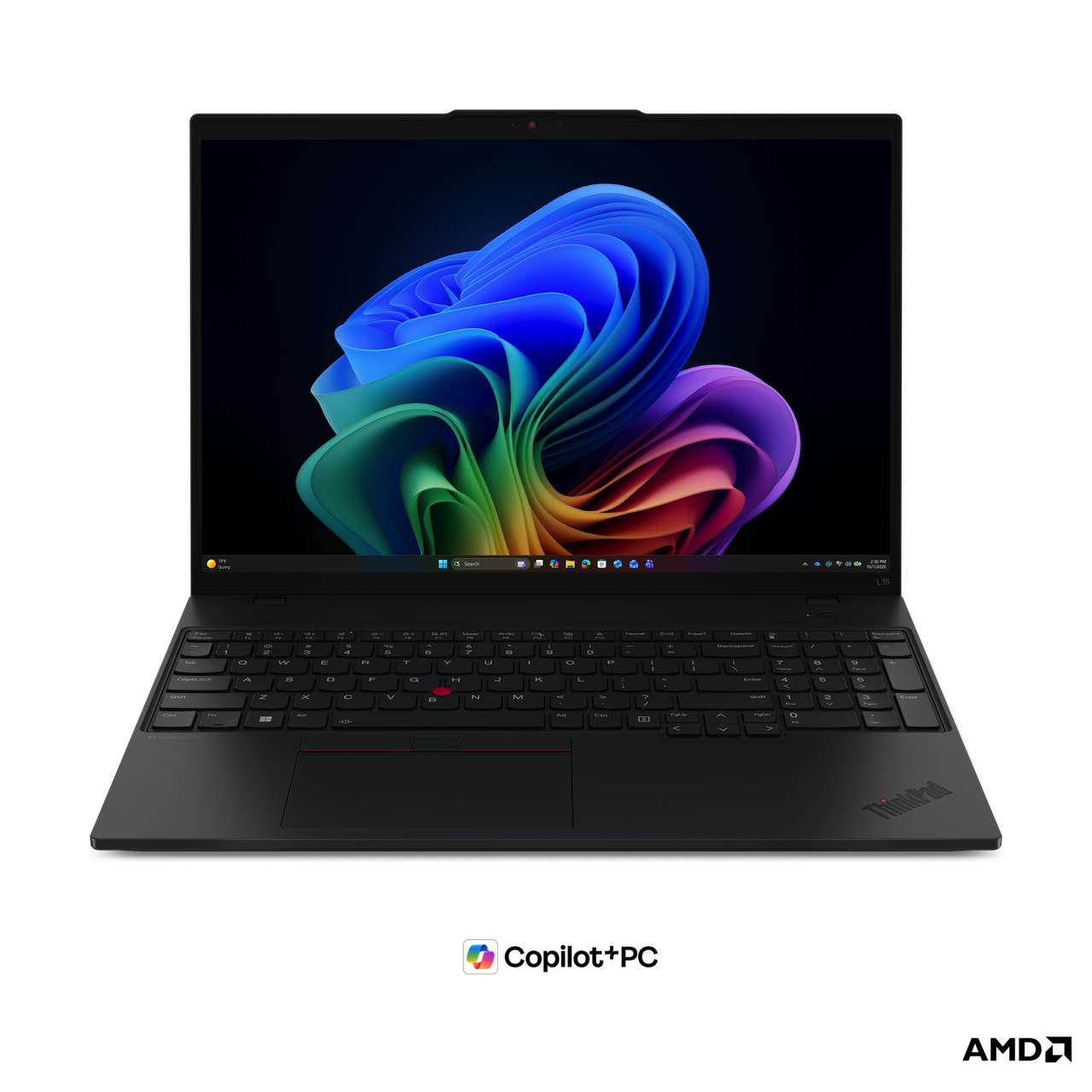
Audio is Dolby Audio with dual speakers and dual mics, which signals a different audience than the L14. That stack handles presentation playback and meeting-room speaker reach better than the Elevoc Voice config on the smaller chassis. If your team uses the laptop as the conference room driver as often as the desk machine, the audio difference is the part that shows up first.
Compute, memory, and storage
Memory caps at 64 GB DDR5 at 5600 MT/s across dual SODIMM slots, with up to 2 TB of PCIe Gen4x4 SSD (2280) on the storage side. Both are user-replaceable. The AMD Ryzen AI PRO 400 platform handles the workload mix that lives on this laptop: multi-window Excel, BI dashboards, multiple Teams sessions, and the occasional local LLM-assisted query running on the NPU.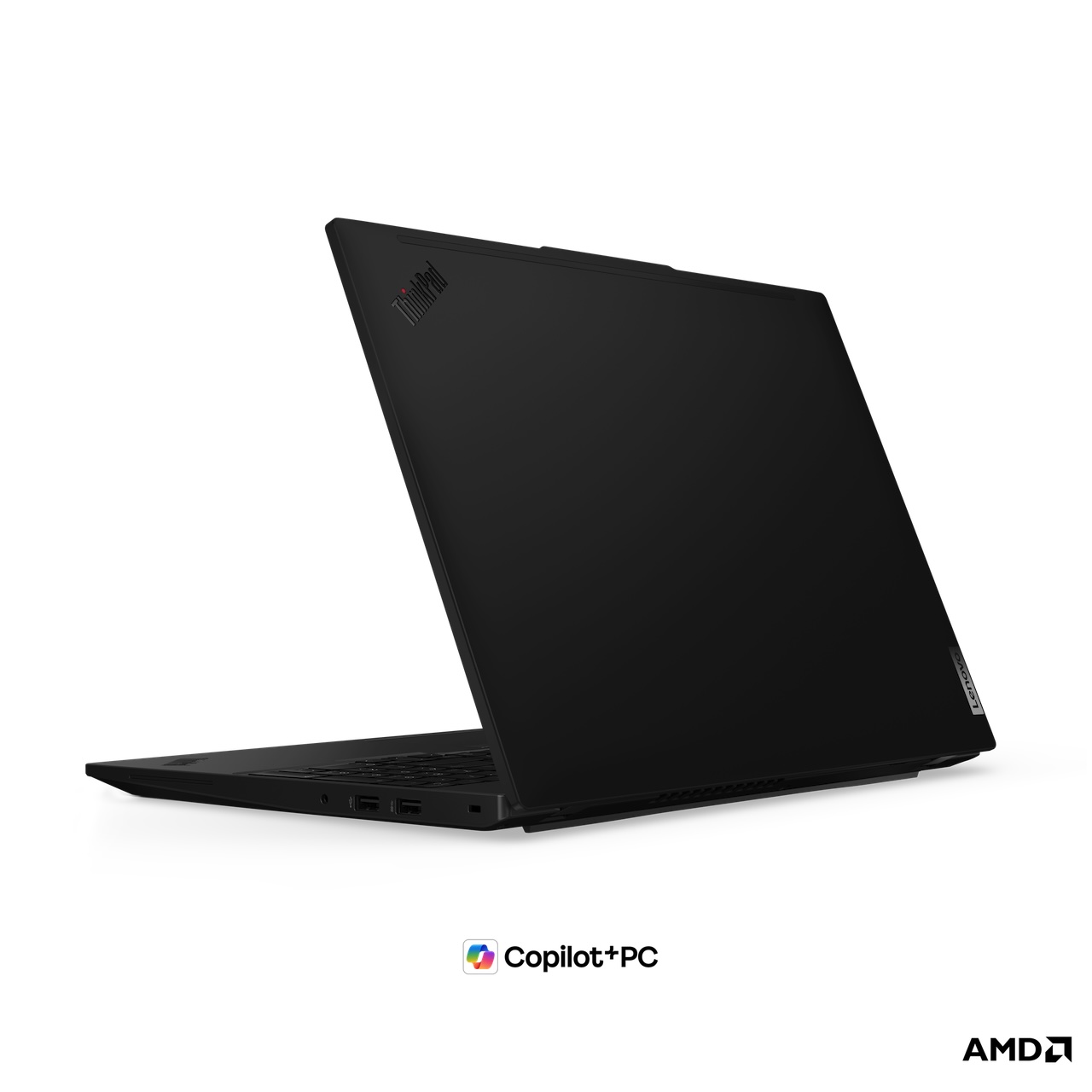
Battery options are 57 Whr or 46.5 Whr, both with 90% post-consumer recycled cells. RapidCharge over USB-C PD up to 65 W is the standard charging story across this gen. The 57 Whr cell paired with AMD Ryzen AI PRO 400 efficiency is the larger battery option in the L16 Gen 3 AMD configuration.
Ports, wireless, and the I/O story
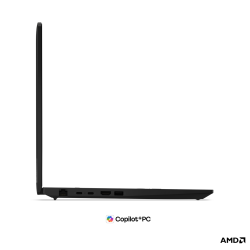
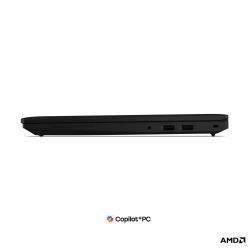
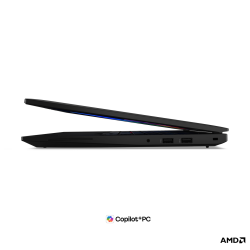
Two Thunderbolt 4 ports run at 40 Gbps with Power Delivery 3.0 and DisplayPort 2.1 (Lenovo’s L16 Gen 3 AMD datasheet uses the Thunderbolt 4 label on this SKU, which is the wording to match). USB-A coverage is one USB 2.0 plus two USB 3.2 Gen 1 (one Always On). HDMI 2.1, an RJ45 jack, an audio combo jack, a Smartcard reader, and a NanoSIM slot (WWAN-ready Cat6) round out the layout.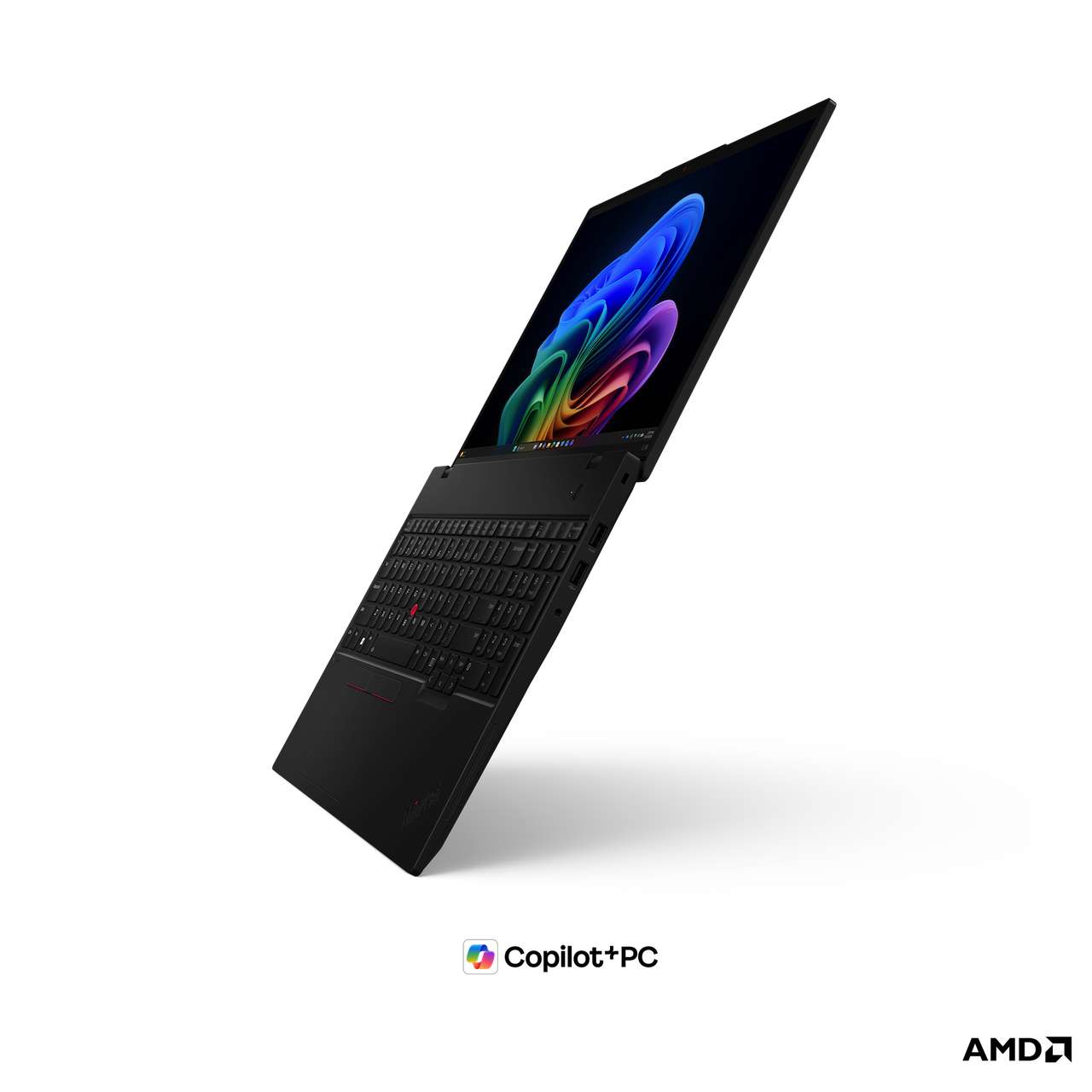
Wireless is Wi-Fi 7 “5 Gig” with Bluetooth up to 5.4. WWAN supports 4G LTE Cat12 and Cat6. NFC is an option. That’s the same connectivity ladder as the L14 family, which keeps fleet purchasing simple for teams ordering both screen sizes from the same configurator.
Security, sustainability, and what’s still TBD
Security covers ThinkShield with AMD PRO Security and Manageability at the platform layer, plus a Power-On Touch Fingerprint Reader, optional IR camera, a Smartcard reader, dTPM 2.0, the Kensington Nano Lock Slot, and the webcam privacy shutter. AMD PRO handles the remote provisioning, firmware-level security, and managed-sleep role Intel vPro plays on Intel client devices, so fleet IT teams get the same management surface area on the AMD side. Software ships Lenovo Commercial Vantage, Lenovo Smart Connect, Dolby Settings, and Smart Noise Cancellation. OS options are Windows 11 Pro and Ubuntu Linux.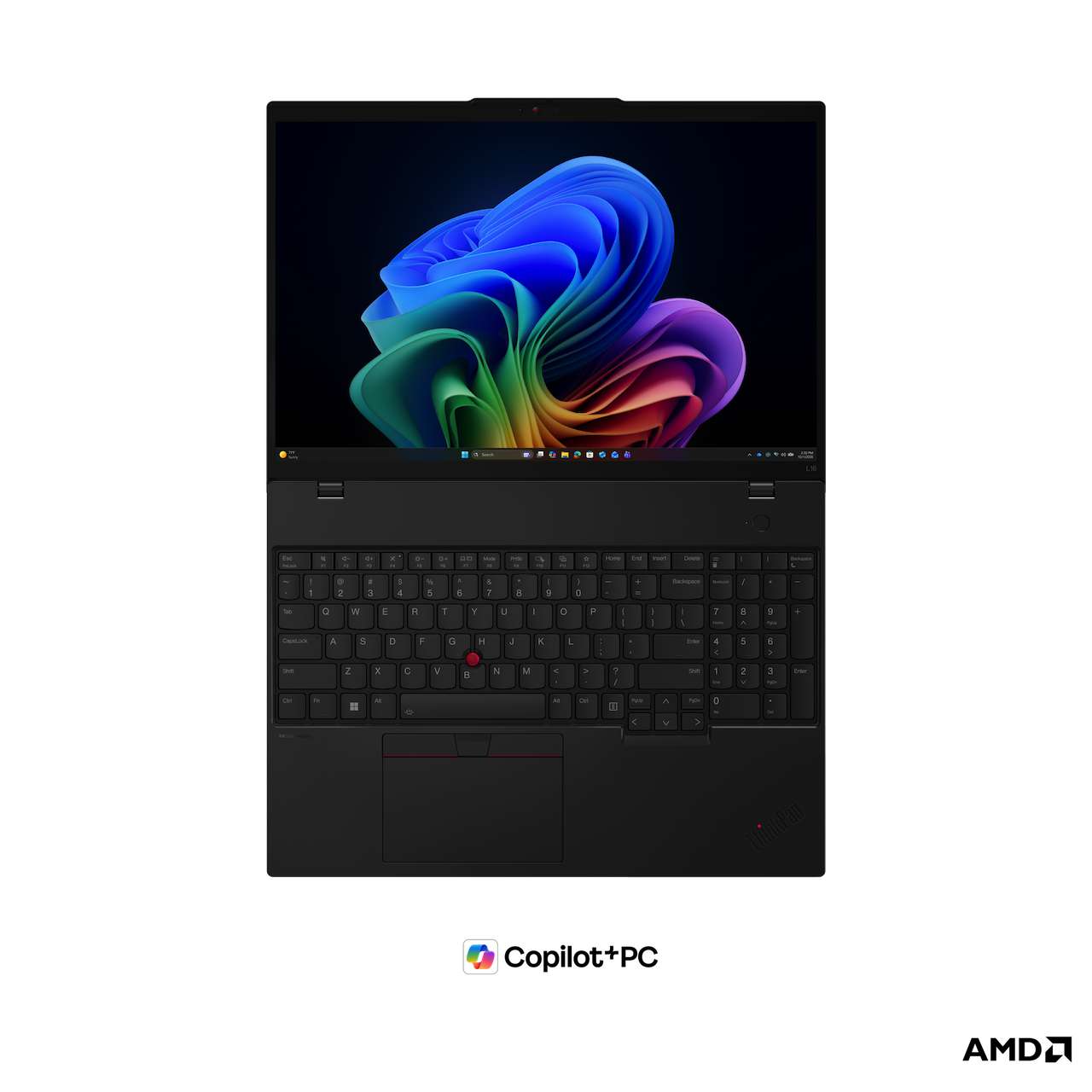
Sustainability comes in at a total PCC of 21.01 to 28.57%, lower than the L14 because the bigger chassis has more material to account for. Packaging is 100% recycled. Certifications include ENERGY STAR 9.0, EPEAT Gold in the US, Canada, and Germany, TCO 10.0, CO2 Offset, and MIL-SPEC 810H. That stack still clears most procurement requirements without a footnote.
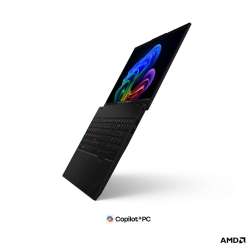
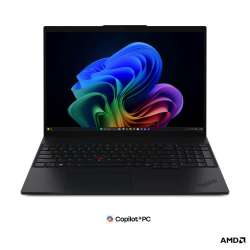
Availability and pricing weren’t disclosed by Lenovo at embargo and should land closer to launch. The L16 isn’t trying to compete with T-series ultraportables or P-series workstations. It’s trying to convince the buyer who’s been forced into 14 inches because the 16-inch tier costs too much, and at this price the argument is genuinely competitive.