
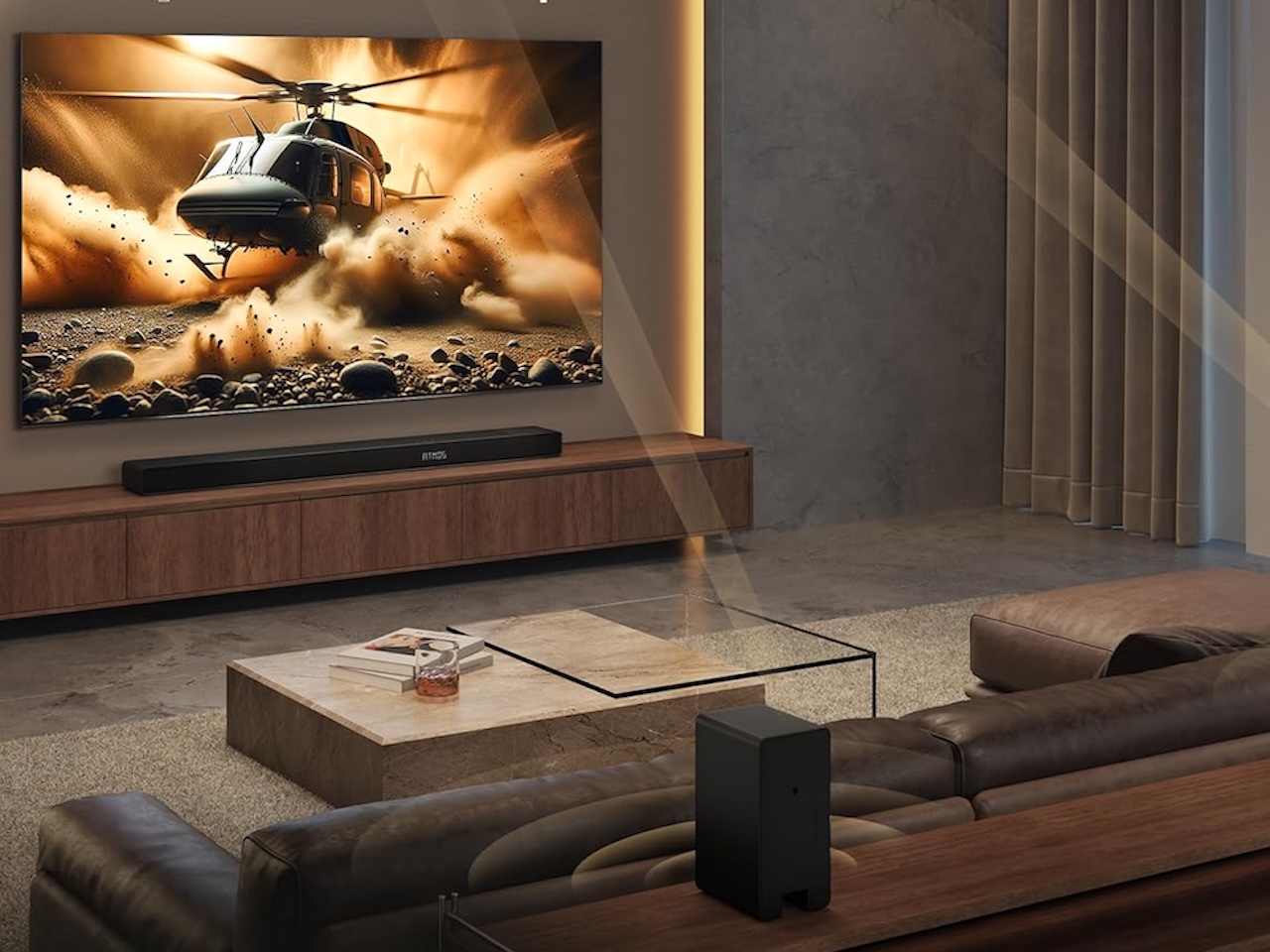
The jump from built-in TV speakers to a real soundbar is bigger than the jump from a $500 soundbar to a $1,500 one. The first upgrade fixes everything that was broken. The second upgrade chases marginal gains most living rooms can’t even reveal.
The change shows up inside five minutes of plugging one in. Dialogue separates from the score instead of getting buried, and bass picks up real weight even on bars that don’t ship with a sub. Stereo width extends past the TV bezel, volume can climb without distortion or that brittle tin-can effect, and even virtual surround processing gives action scenes a real left-to-right pan.
How this short list came together
The rule for inclusion was simple: every pick has to clearly outperform a built-in TV speaker setup, land under $500 at MSRP, and fit a real living room without a separate AV receiver or a wiring project.
Each pick stays under $500 at MSRP and either ships with a subwoofer or carries serious built-in low-end drivers. Dialogue handling also has to be clean, since that’s the most common weak spot of cheaper bars.
Connectivity has to clear HDMI eARC, or at minimum HDMI ARC, with no optical-only relics. All five stay widely available across North American retailers, no boutique imports.
1. Sonos Beam (Gen 2): the small smart bar that grows with you
The Beam (Gen 2) is the soundbar I’d hand to anyone who wants a single-box upgrade and doesn’t want to think about cables, subs, or apps for a long time. It’s compact enough to sit under a 50-inch TV without looking ridiculous, and Sonos’s tuning leans hard into vocal clarity, which is exactly what most TV-speaker complaints come down to.
The Atmos here is virtual, not true height channels, so don’t expect the ceiling-rain effect you’d get from a 5.1.4 setup. What you do get is a wider front stage, much better dialogue intelligibility, and the kind of mid-bass that makes streaming shows feel mixed for a living room rather than a phone.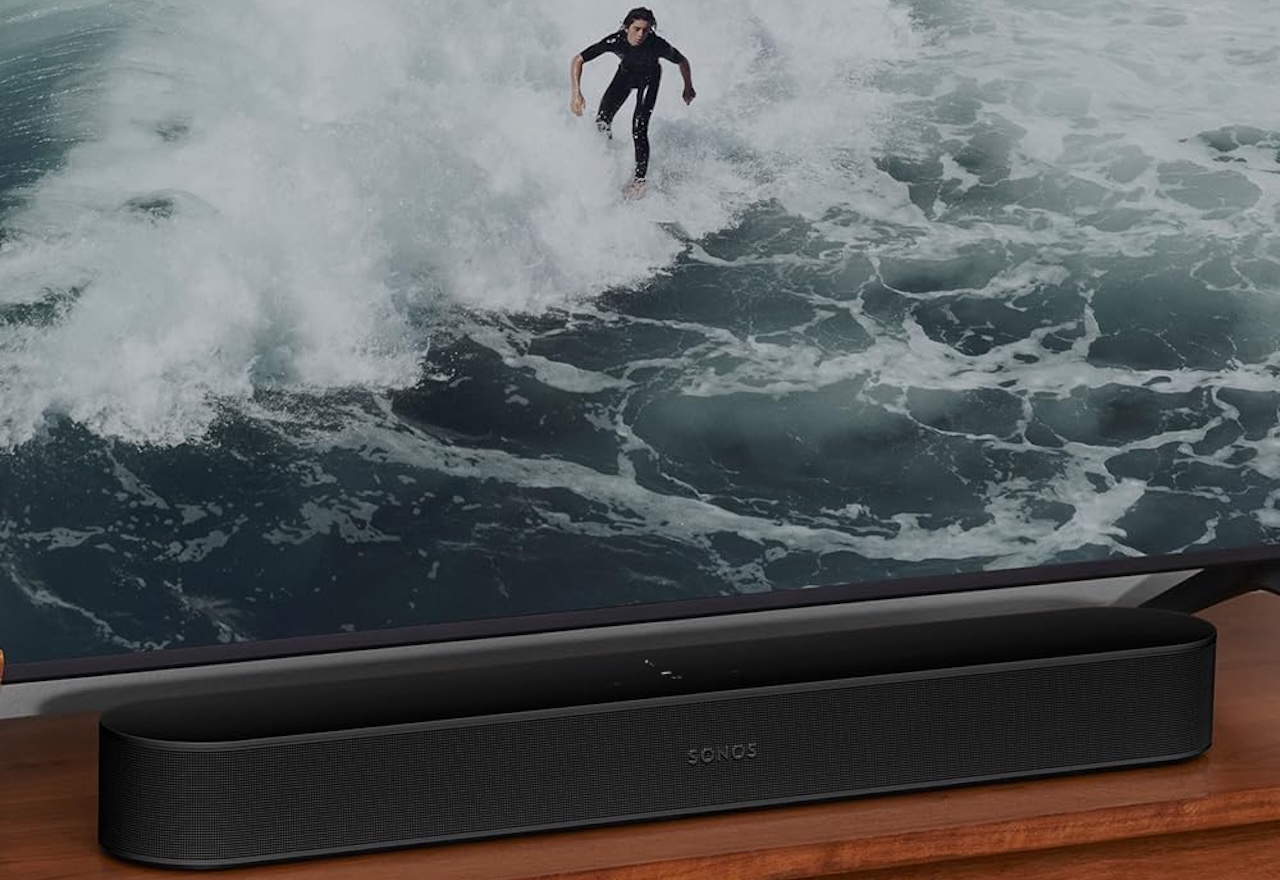
Price: $499
Where to Buy: Amazon
What makes it worth the price is the upgrade path. Drop in a Sonos Sub Mini later, add a pair of Era 100s as wireless rears, and you’ve got a real surround system without rewiring anything.
The Beam isn’t the cheapest entry on this list, but Sonos has the strongest track record on long-term software updates in the segment, which matters if you plan to keep the bar for more than two TV upgrade cycles.
It’s the right call for smaller rooms, vocal-heavy viewing, and anyone who wants room to expand later. Skip it only if a subwoofer in the box matters more than smart features at this price.
2. Klipsch Flexus Core 200: a true 3.1.2 setup with room to breathe
The Flexus Core 200 is the pick when you want true Atmos channels at this price, not a virtual approximation. It’s a 3.1.2 bar with dedicated up-firing drivers, and Klipsch’s house sound brings a forward, slightly bright signature that suits action films and live sports better than most picks in this bracket.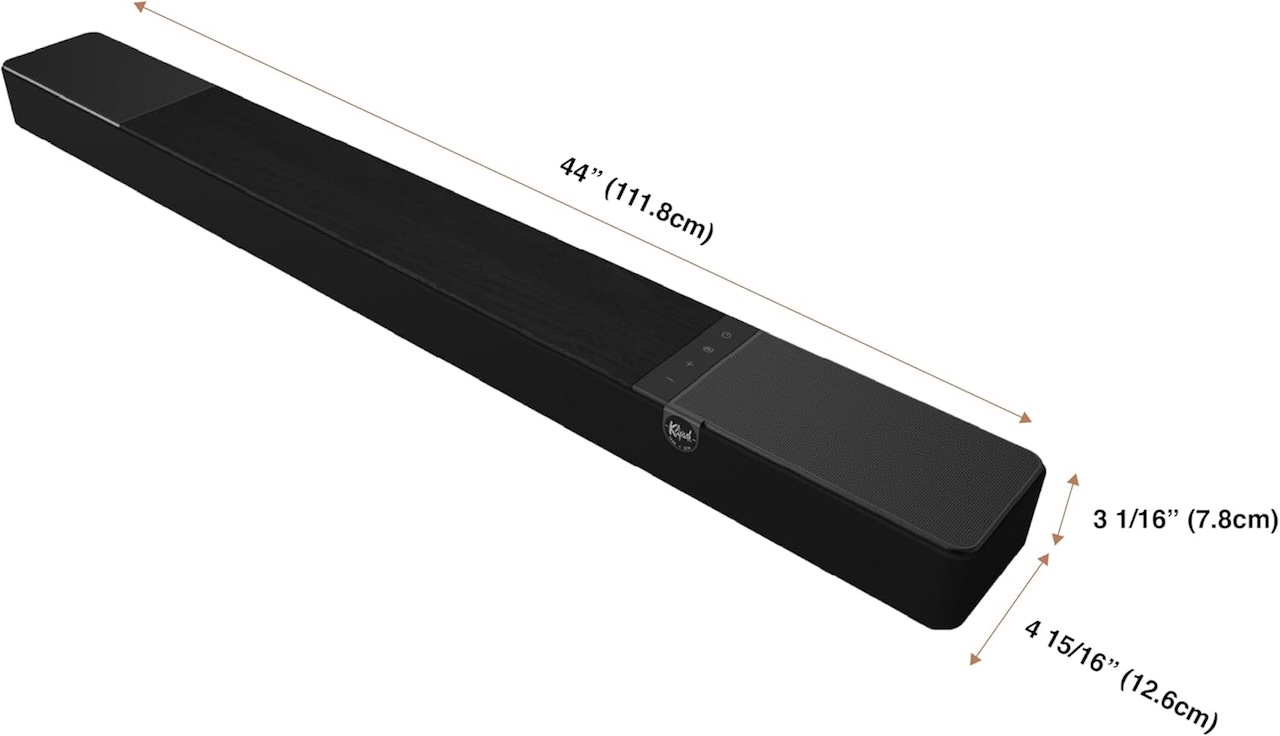
Price: $399 (From $549)
Where to Buy: Amazon
Dialogue handling is solid for a bar with no separate center module, which is rare under $400. Bass without an external sub is more than respectable, although a Flexus Sub added later will fill out the bottom octave in a way the bar alone can’t.
Klipsch’s warranty and parts support also tend to outlast cheaper rivals, and the bar holds resale value better than the budget Vizio and TCL alternatives floating around this price band.
The Flexus Core 200 fits rooms where you actually want Atmos to do something, plus action and sports viewers who like a forward presentation. Look elsewhere if you prefer a quieter, mid-forward sound profile, since Klipsch leans bright.
3. JBL Bar 300: built-in subwoofer that punches above its size
JBL squeezed real low-end drivers into a single bar with the Bar 300, and the result is the easiest five-minute install on this list. One cable, one box, and you’re done. No second piece to place, no power strip rearrangement.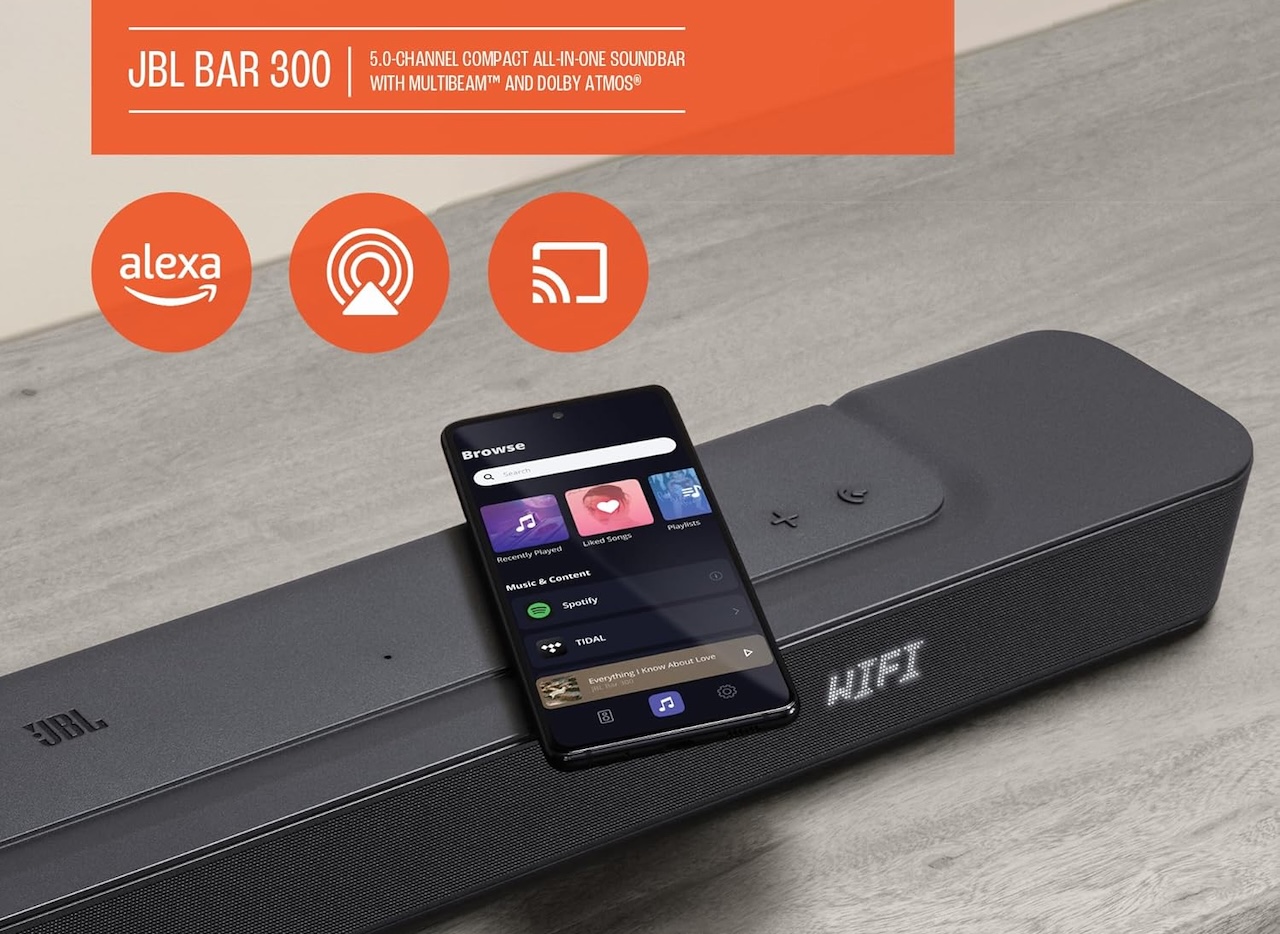
Price: $399
Where to Buy: Amazon
The MultiBeam processing fakes surround pretty convincingly in a normal living room, and Atmos is virtual rather than true, but dialogue clarity holds up at higher volumes better than most all-in-ones. The strengths here are a single-box install, real built-in bass for the form factor, and clean dialogue at volume. The trade-offs are a subtle Atmos height effect and an upgrade path that stays inside JBL’s ecosystem. If your priority is to make the TV sound dramatically better with zero added boxes, this is the cleanest answer in the segment.
4. Yamaha SR-B40A: cleanest dialogue per dollar
If you’re upgrading a TV mostly for news, sitcoms, podcasts piped through the TV, and the occasional movie night, the SR-B40A is the value pick. Yamaha has been tuning soundbar dialogue for years, and it shows on this one.
The wireless sub adds the bass that you can’t fake out of a single bar, and the Atmos processing is virtual but tasteful. It doesn’t try to oversell the height effect, which means it never sounds like a cheap surround simulator.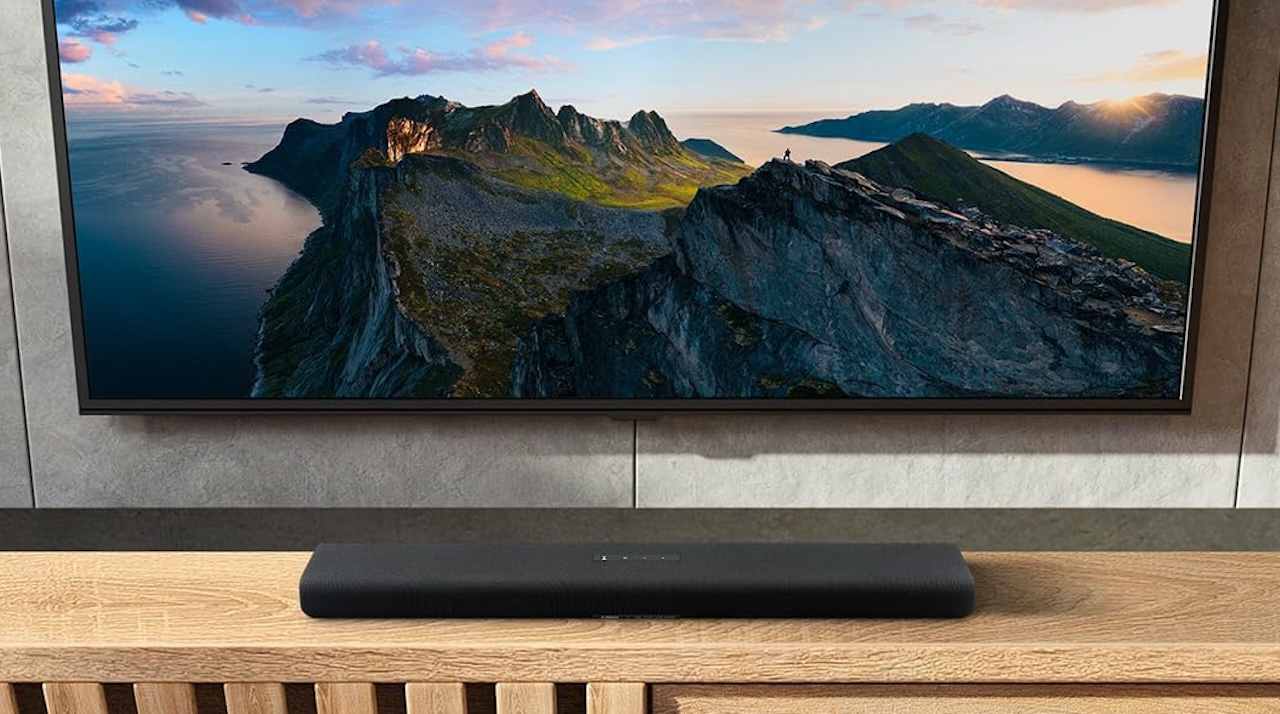
Price: $399
Where to Buy: Amazon
What the SR-B40A won’t do is wow you with cinematic scale. It’s tuned for clarity over spectacle, and at this price that’s the right call. You can always step up to a bigger bar later if movie nights become the main use case.
5. Hisense AX5140Q: full 5.1.4 surround for the price of a Beam
The AX5140Q is the most ambitious thing you can buy for $500 in this category. It’s a true 5.1.4 system with a soundbar, wireless subwoofer, and two wireless rear speakers with built-in up-firing drivers, and the surround field it produces is closer to a separates setup than to a typical all-in-one bar.
Dialogue holds together at volume, the sub doesn’t bloat the mids, and the rears finally give you the back-of-room atmospherics that most $500 single-bar systems can’t touch. True up-firing drivers on the rear satellites handle Atmos overhead cues with more authority than any of the virtual-Atmos picks above.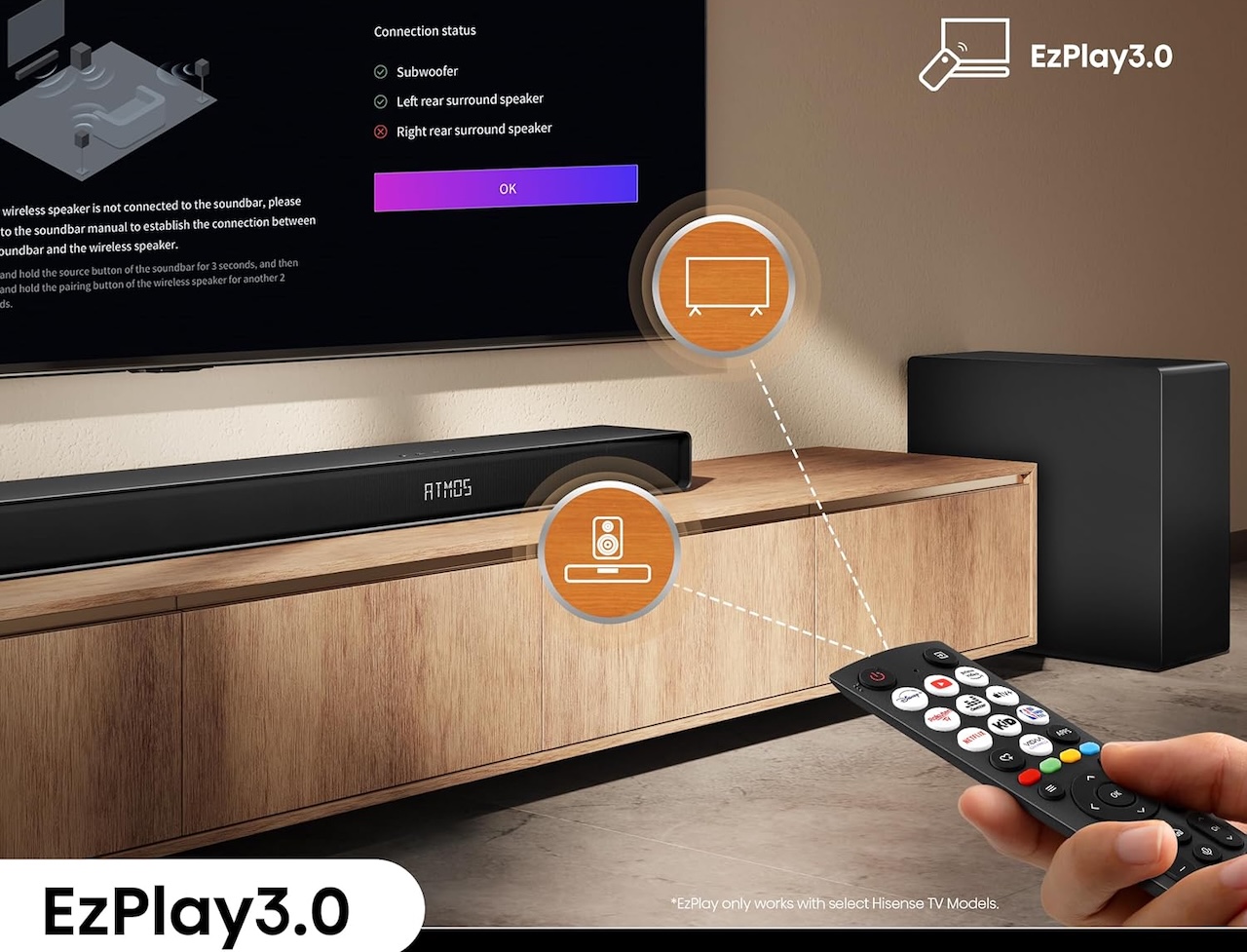
Price: $349 (From $399)
Where to Buy: Amazon
The trade-off is setup. You’re placing two rear speakers, running power to them, and finding a sub spot, so this isn’t the plug-it-in-and-done option. If you’re willing to spend 30 minutes on placement, no other pick at this price gets closer to a real home theater.
The AX5140Q’s app polish and EQ flexibility lag behind Sonos, but for pure home-theater impact at the $500 ceiling, that’s a fair trade.
Movie nights, sports with a crowd, and anyone chasing the most channels per dollar should land here. Walk past it if you want a single-box install and don’t want rear speakers in the room.
How to pick between these five
The honest sorting question is whether you care more about install simplicity or end-state performance. If it’s simplicity, the JBL Bar 300 or Sonos Beam (Gen 2) wins. If it’s performance per dollar, the Hisense AX5140Q runs away with it.
For most rooms the shortcut works like this. Small room with smart features in play, the Sonos Beam (Gen 2) is the answer. The Klipsch Flexus Core 200 fits when you want true Atmos channels and don’t need a separate sub yet. The JBL Bar 300 covers one-box installs with real bass, the Yamaha SR-B40A wins on vocal clarity for everyday TV, and the Hisense AX5140Q delivers full surround at the price ceiling.
FAQ
Will any of these beat a $1,500 soundbar? No, but the gap is smaller than the gap between a built-in TV speaker and any pick on this list. The first $500 fixes the worst problems. Spending the next $1,000 buys polish, scale, and finer Atmos imaging.
Do I need a separate subwoofer? Depends on the room and the bar. The JBL Bar 300, Yamaha SR-B40A, and Hisense AX5140Q either include or build in the low-end drivers you need. The Sonos Beam and Klipsch Flexus Core 200 are stronger with a sub added later.
Is virtual Atmos worth it under $500? For wider stereo and more aggressive surround panning, yes. For the actual overhead-rain effect Atmos is marketed on, no. The Klipsch Flexus Core 200 and Hisense AX5140Q are the only picks here with real up-firing drivers.
HDMI ARC or HDMI eARC? eARC if your TV supports it. eARC carries lossless and uncompressed audio, which matters for streaming Atmos titles. ARC works fine if eARC isn’t an option, you’ll lose access only to the higher-bitrate formats.
The bottom line
Five bars, five different best-at use cases, and all five clear the only test that actually matters: they make your TV stop sounding like a TV. The Hisense AX5140Q is the most performance per dollar, the Sonos Beam is the smartest long-term play, and the JBL Bar 300 is the easiest install nobody regrets.
Pick the one that matches the room you actually have, not the home theater you wish you had. Under $500, every choice here is a real upgrade, and the regret risk lives almost entirely on the side of buying nothing at all.



Gadgeteer Comment Policy - Please read before commenting
Kudos to Klipsch for providing dimensions in both normal ISO units and medieval US units.
They deserve a hogshead of kudos!