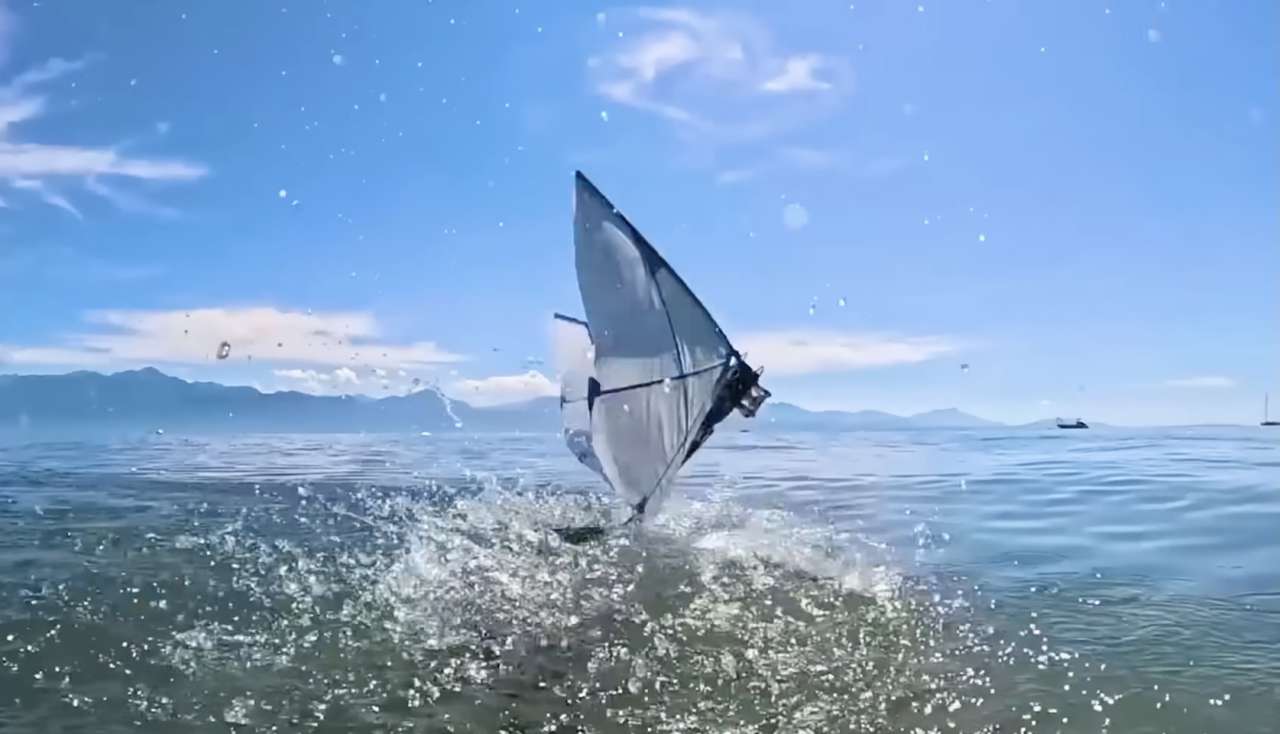
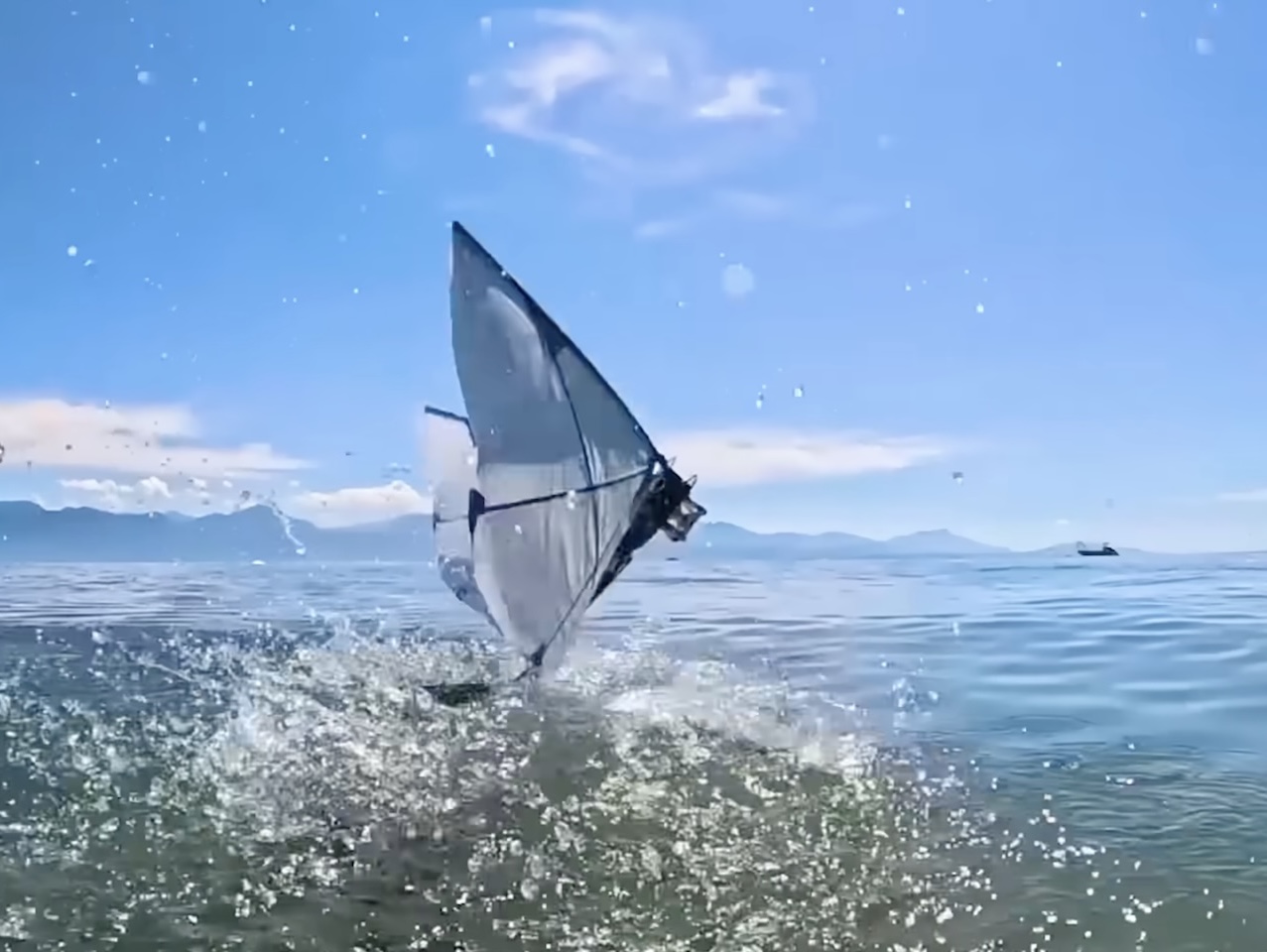
Picture a seabird diving into a lake, chasing fish underwater, then bursting back into the sky without breaking stride. Engineers at MIT and EPFL just built a robot that swims and flies just like that, and it weighs less than a can of soda. No propellers, no legs, no folding tricks, it swims, dives, and flies on a single pair of flapping wings.
The robo-bird at a glance
| Spec | Detail |
|---|---|
| Name | Flapping-wing aerial-aquatic vehicle (FAAV) |
| Built by | MIT and EPFL |
| Weight | 250 g (8.8 oz), under 300 g |
| Wings | Two flexible flapping wings, three sizes tested (60 to 100 cm) |
| Flap rate | 5 to 6 per second cruising, about 10 to exit the water |
| Water exit | Pitched around 70 degrees, launches without feet |
| Speed | Swims about 1 m/s, flies about 6 m/s |
| Range | About 4 mi flying or 1+ mi swimming per charge |
| Tested in | Water tank and Lake Geneva |
| Autonomy | Not autonomous yet, pre-programmed flapping and tail angles |
| Published in | The journal Science, July 2026 |
Nature figured this out first
Around 100 bird species already split their days between water and air, among them loons, gulls, puffins, and petrels. They dive to chase fish, then haul themselves back into the sky moments later. This robot copies that whole loop, and the team calls it the first bird-scale machine to swim, dive, launch, and fly on flapping alone. At about 250 grams (8.8 oz), it sits in the same size class as the seabirds that inspired it.
How it crosses from water to air
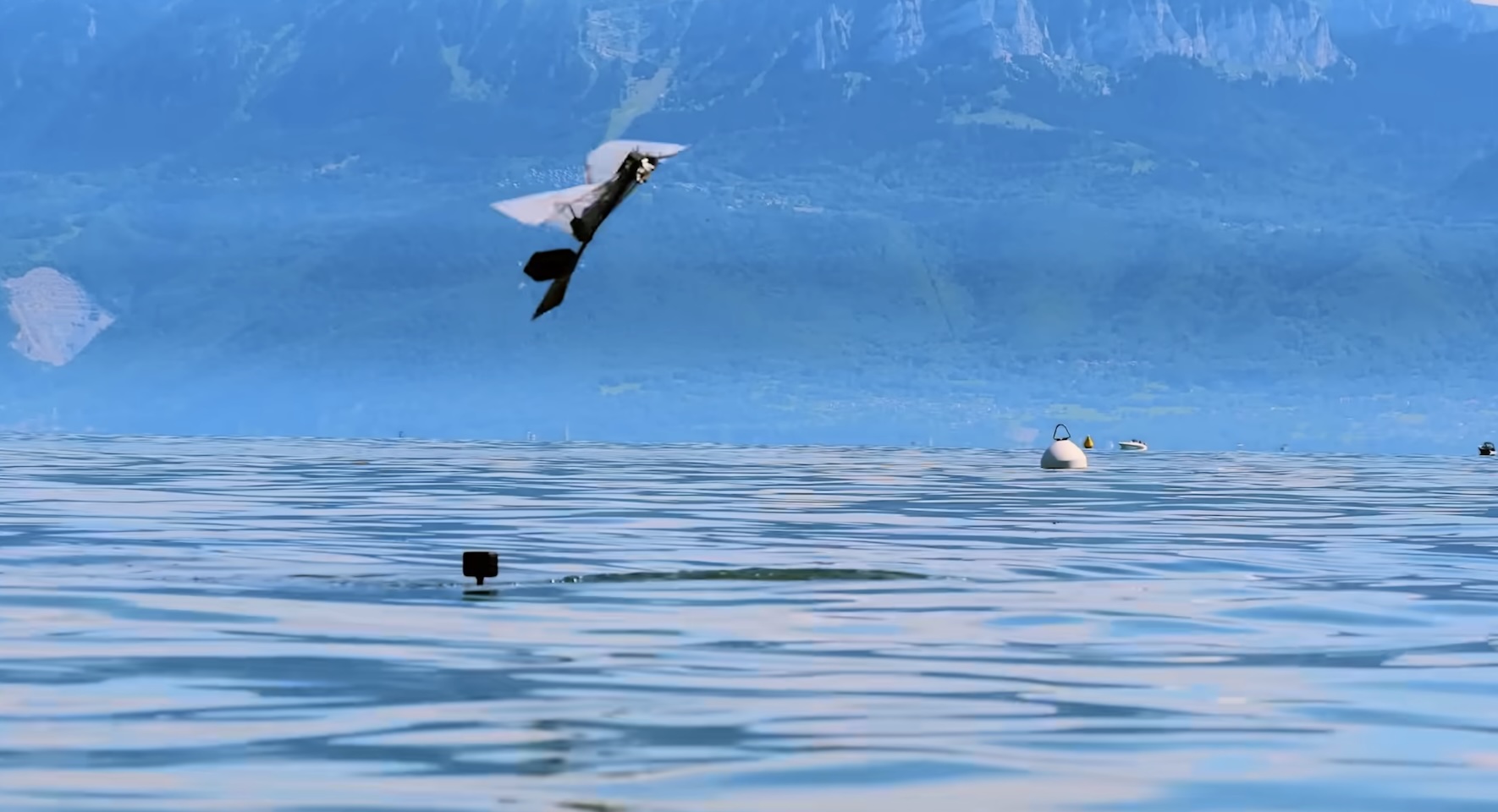
Water is about 1,000 times denser than air, so most machines cheat by carrying separate systems for each. This robot skips that and relies on flexible wings plus carefully tuned flapping. Underwater the wings bend to shrink each stroke and spare the motor, then stiffen enough to hold the robot up once it’s airborne.
The pace shifts with the task. Cruising in either medium, the robot beats its wings five to six times a second. That keeps it swimming at almost 1 meter per second and flying at around 6 meters per second. Leaving the water is the exception, since there it has to ramp up to roughly 10 beats a second to break the surface.
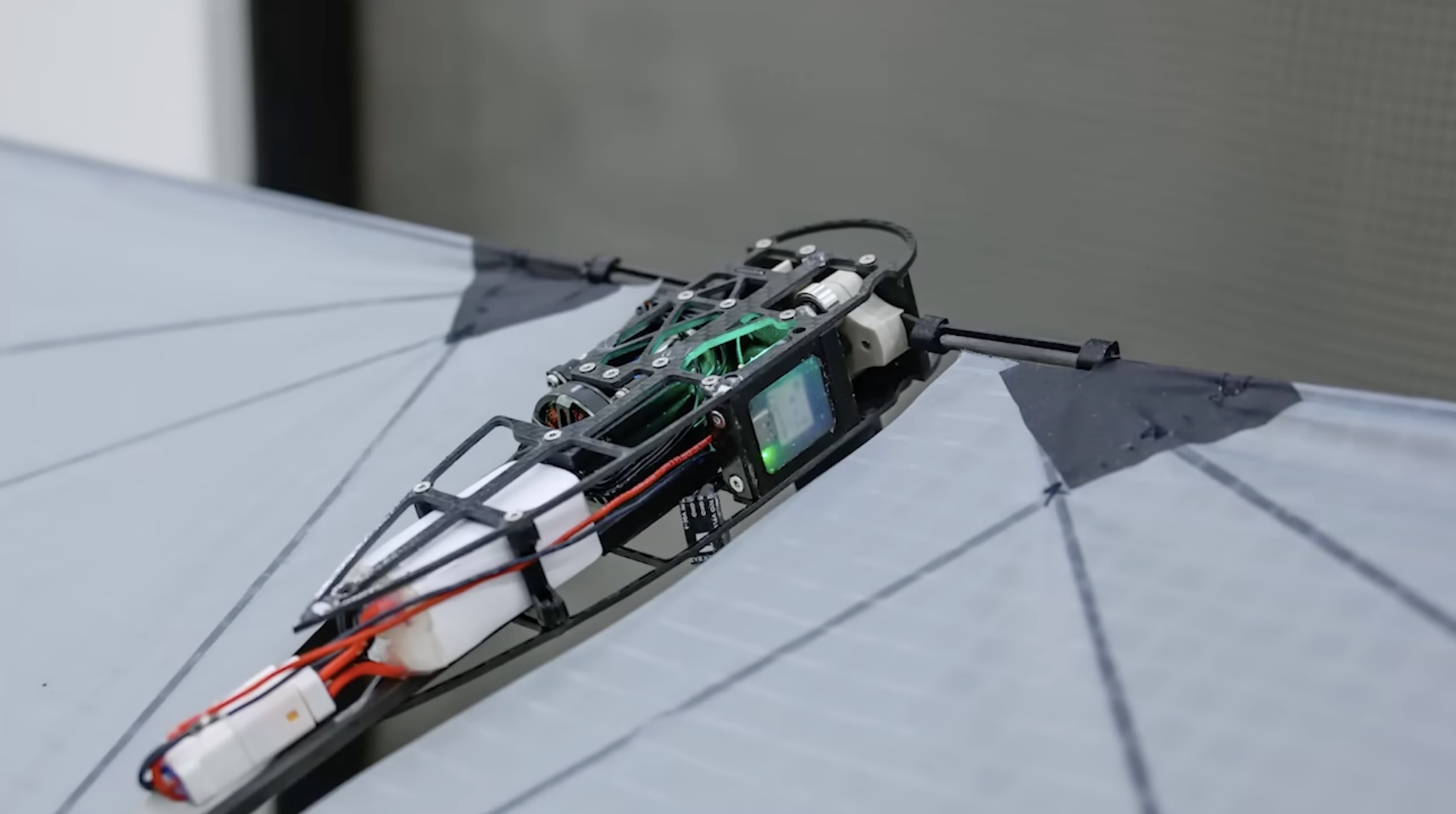
Inside the open body sit a battery and a waterproof motor that drives a crankshaft, pumping the wings up and down. Those wings are a translucent nylon fabric stiffened with carbon fiber struts and coated to shed water, and the tail is motorized to tilt the robot up or down. The whole robot is also neutrally buoyant, so it hangs in place underwater instead of bobbing up or sinking, which spares the small battery.
The hardest part is leaving the water
Swimming works. Flying works. The trouble lives in the handoff between them, the instant the robot has to break the surface and get airborne on wing power alone. Miss that beat and the rest is moot, which is exactly why earlier bird-scale robots never managed it.
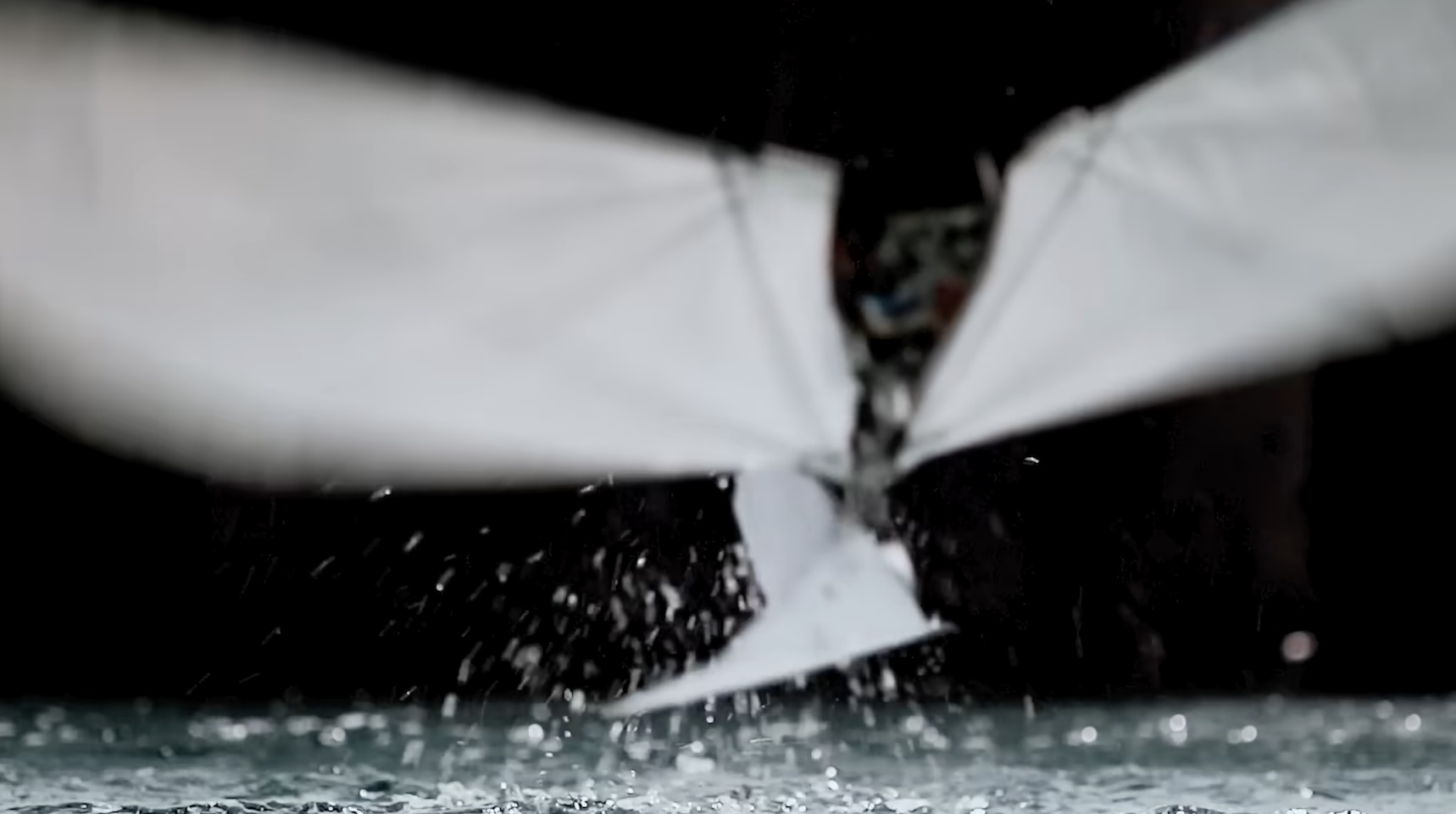
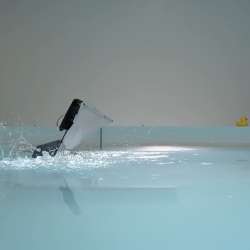
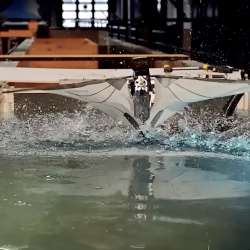
The team found the robot pulled it off most reliably when the wings hit a middle ground on stiffness, bendy enough to move through water yet firm enough to hold it up in air. The exit angle turned out to be the deciding factor. Pitching to around 70 degrees keeps the wingtips from catching the surface on the way up, and anything steeper tips the robot back into the water.
What it teaches us about diving birds
The payoff here isn’t only mechanical. Since you can measure and rerun a robot in ways you never could with a live puffin, it works as a testbed for open questions about diving birds. One example: the team thinks birds tucking in their wings underwater may be chasing speed and sharper maneuvering rather than saving effort. That hunch is nearly impossible to check on a wild animal, yet simple to isolate on a machine.
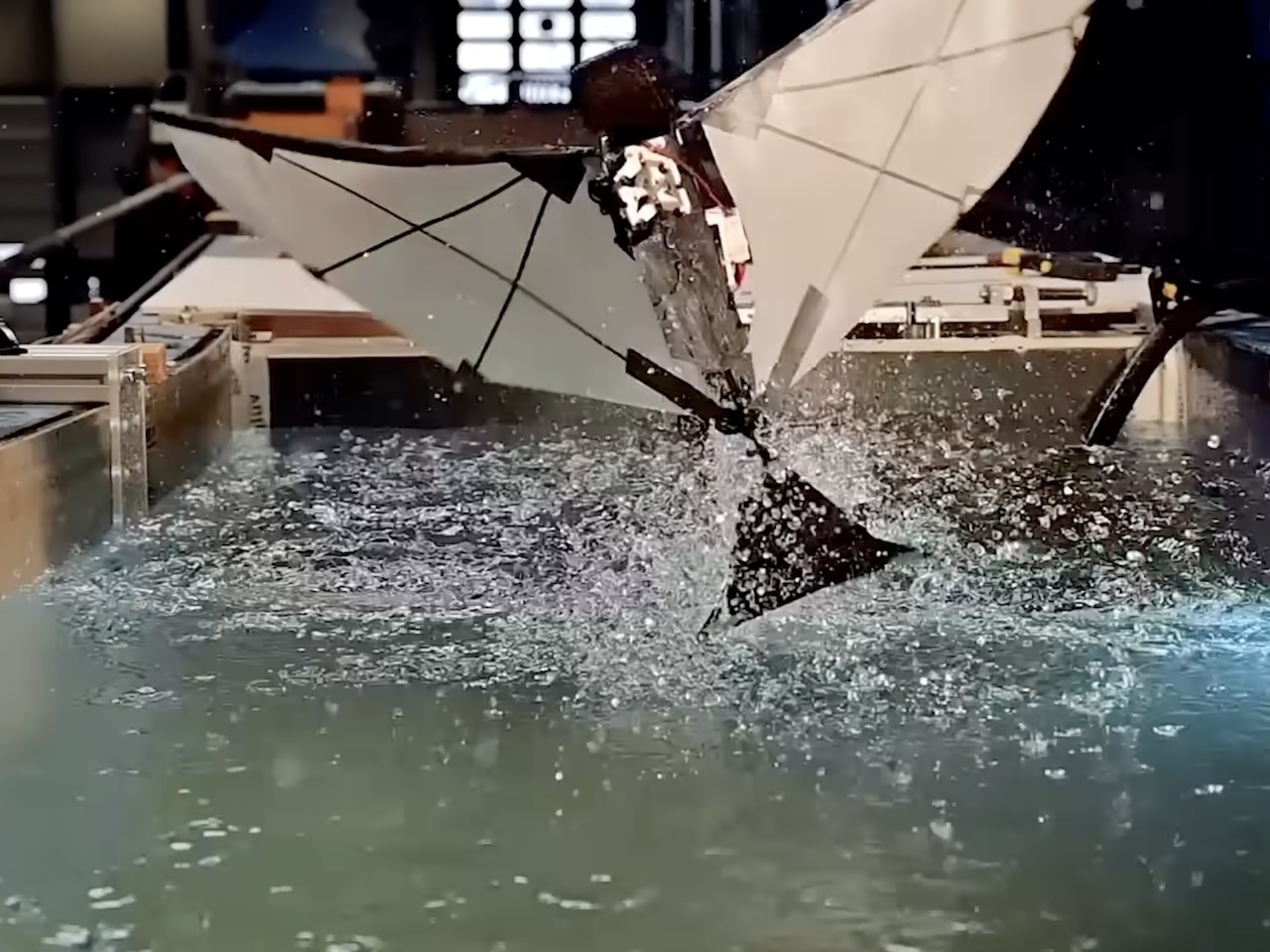 Birds and robot also land in the same efficiency band, a metric called the Strouhal number that runs from about 0.2 to 0.4. And where bulkier diving birds tend to shove off with their legs, this one leaves that step out and still clears the surface.
When flying beats swimming
The data hides a threshold too. Past about 15.5 m (51 ft), flapping through the air costs the robot less than paddling the same stretch underwater. So on a long enough trip, it pays to pop out, cruise over the top, and splash back down rather than slog through the whole way.
Tested in a lake, and no feet required
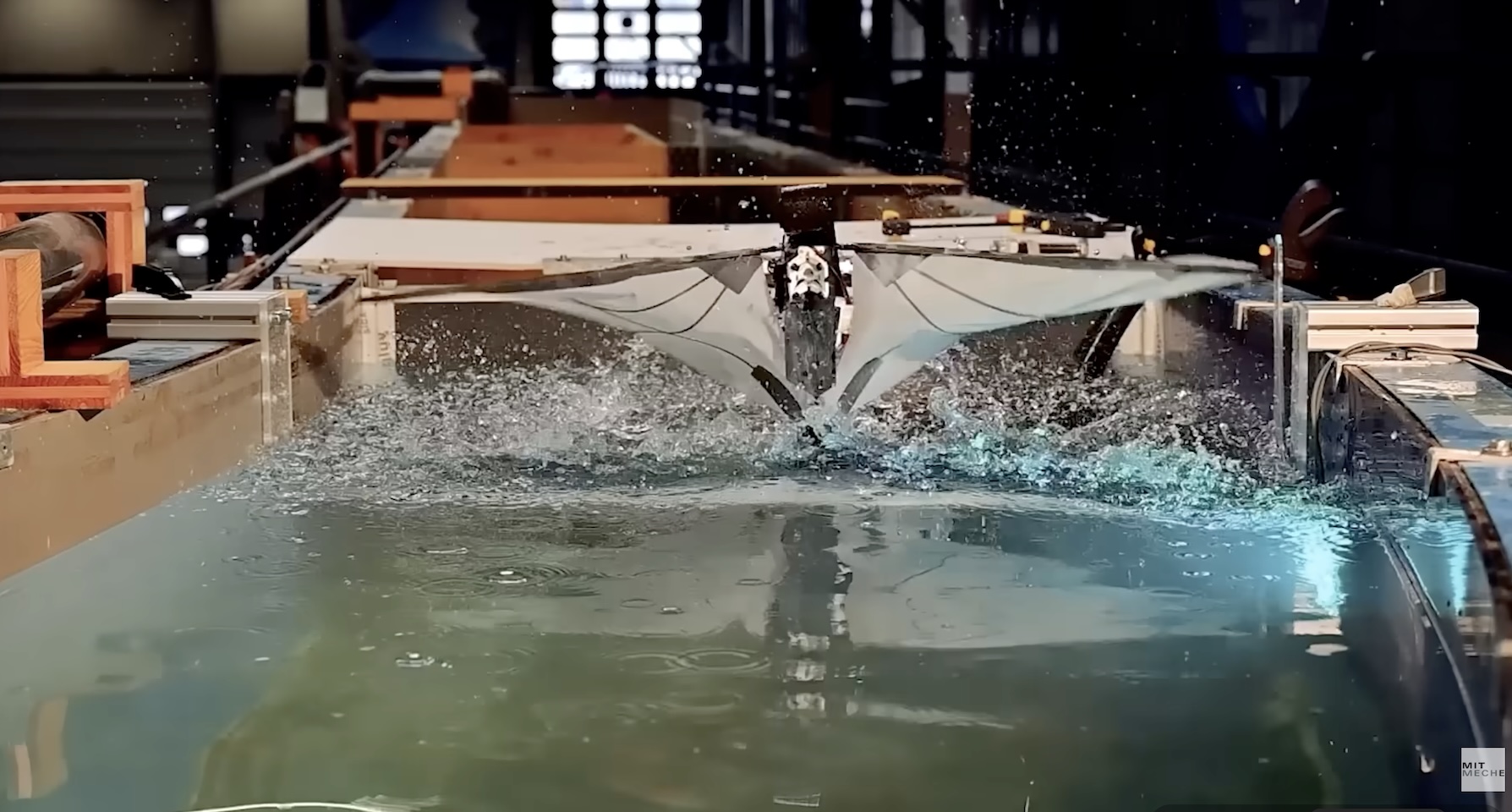
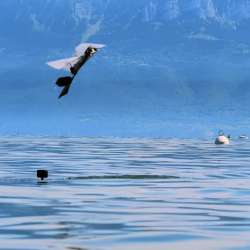
The team built three sets of wings, then ran the robot first in a water tank and later out in Lake Geneva. The medium wings, about 80 centimeters across, hit the sweet spot. The real surprise came at takeoff. It could launch straight out of the water without paddling feet, the move most diving birds count on to get airborne.
If you look at birds, most birds need to paddle their feet at the surface to take off. And the question was, do we need the same for robots? And it turns out we don’t.
That’s Zufferey again, and it’s the finding that breaks new ground, since no one had flown out of the water on wings alone before.

What’s next for the robo-bird
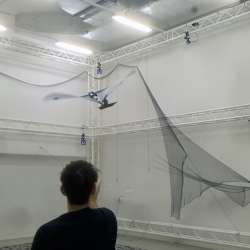
The system isn’t autonomous yet, and the flights so far ran on pre-programmed flapping and tail angles rather than live control. Next, the team wants wings that can turn as well as flap, plus tests in rougher conditions like choppy water and wind. Further out, they picture a low-cost tool for ocean science, reaching spots too risky for traditional vessels.
Our dream vision is for oceanographers, marine biologists, and members of coastal communities to launch this robot from a boat, or from shore, and it would fly close to the area of interest, such as an iceberg or a port facility, or over a pod of whales. It would dive into the water to take a measurement or collect a sample, and fly back to deliver the data at a fraction of the cost of traditional methods.

That quote comes from Raphael Zufferey, assistant professor of mechanical engineering at MIT, who worked on the project with Moritz Hüsser, and the research was published in the journal Science.