
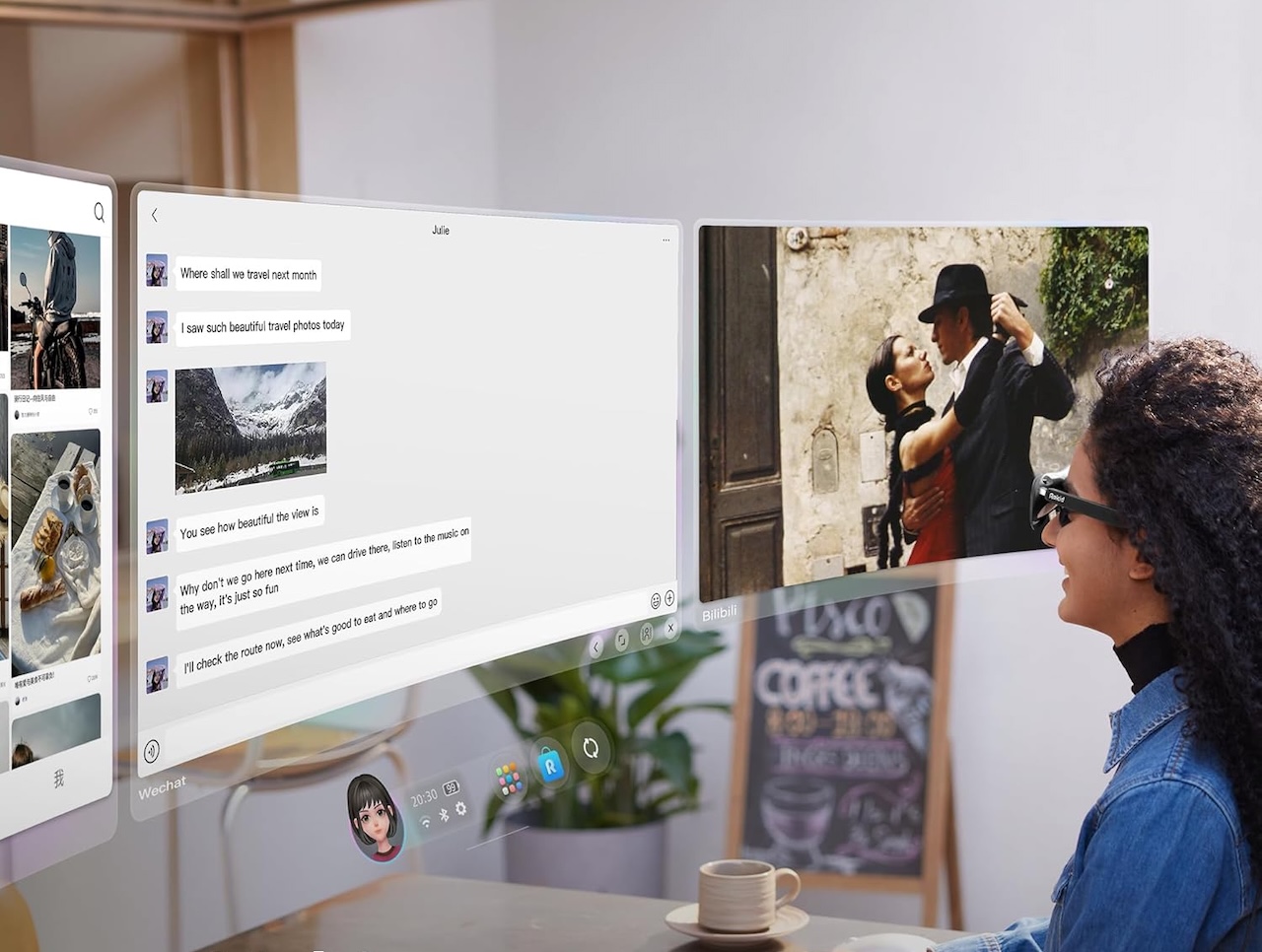
You already know the pitch. AR glasses that replace your monitor, your TV, your second screen. Every company in consumer tech has a version of it right now, and most of them require you to squint past the compromises to find the product underneath. The display is dim in anything brighter than a dark room. The app ecosystem is three things deep. The device that powers it is your phone, which means you are draining the battery you actually need. The AR category has been full of demos for years, and most of them disappoint in a living room.
Price: $538
Where to Buy: Amazon
What Rokid is actually selling with the AR Spatial bundle is harder to dismiss. It ships with a pocket computer purpose-built for the glasses: the Station2 handles all the processing, runs its own app store with Netflix, YouTube, and Prime Video already on it, and carries a 5,000mAh battery so the Max2 glasses themselves stay at 75 grams. The glasses display. The Station2 thinks. That division of labor is why the Max2 hits 120Hz at 600 nits without a cable to a laptop or a battery that dies before lunch. With Prime Day running June 23 to 26, this is the lowest price you are likely to see on this hardware until the holidays.
What You Actually Get
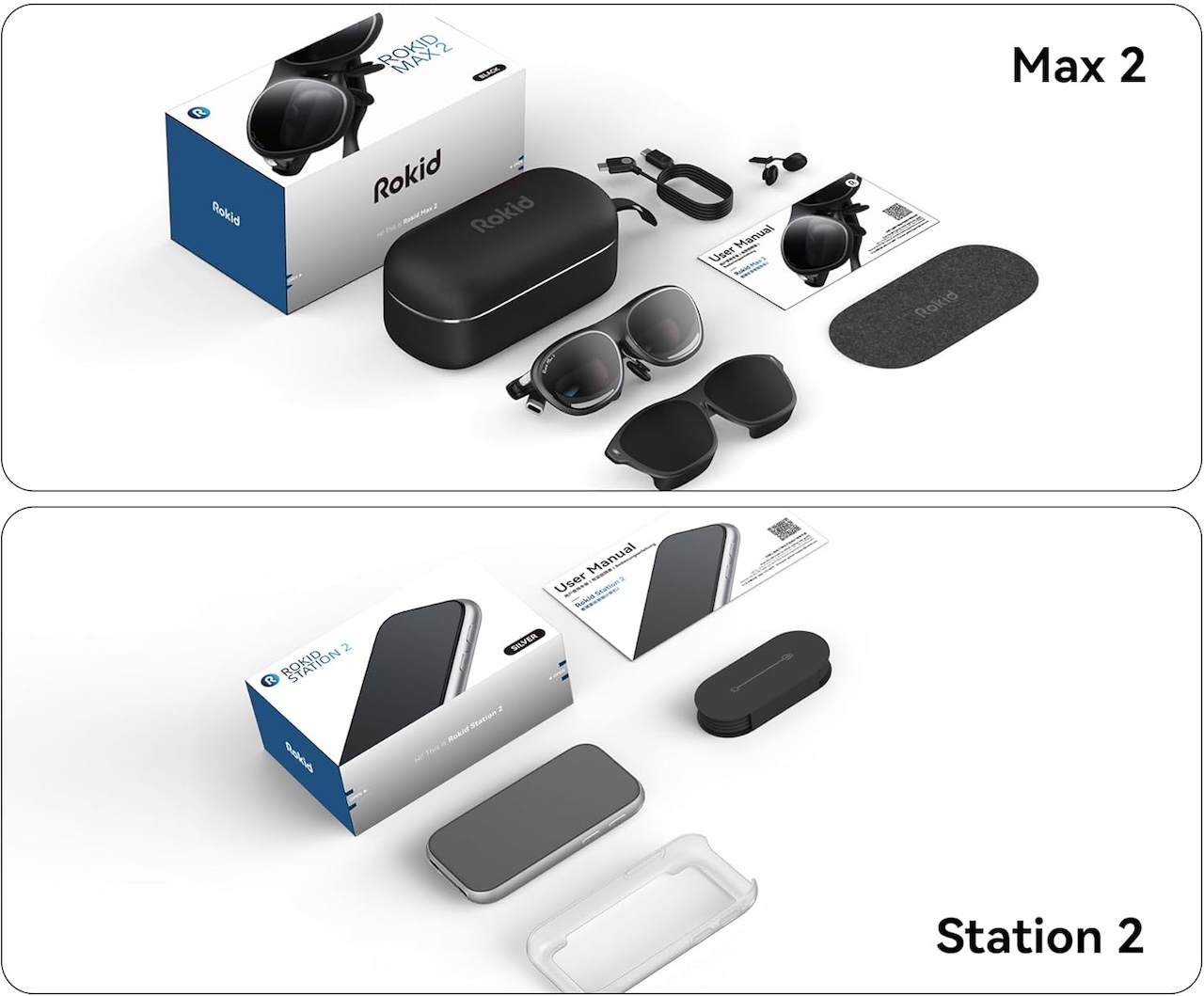
The Rokid AR Spatial bundle on Amazon is two pieces of hardware sold together: the Rokid Max2 AR glasses and the Rokid Station2 spatial computer. The glasses are the display. The Station2 is the brain.
That distinction matters. Most AR glasses reviewed in 2025 and early 2026 required a phone or laptop as the host device. Rokid ships the host device in the box.
The 3-Screen Setup, Explained
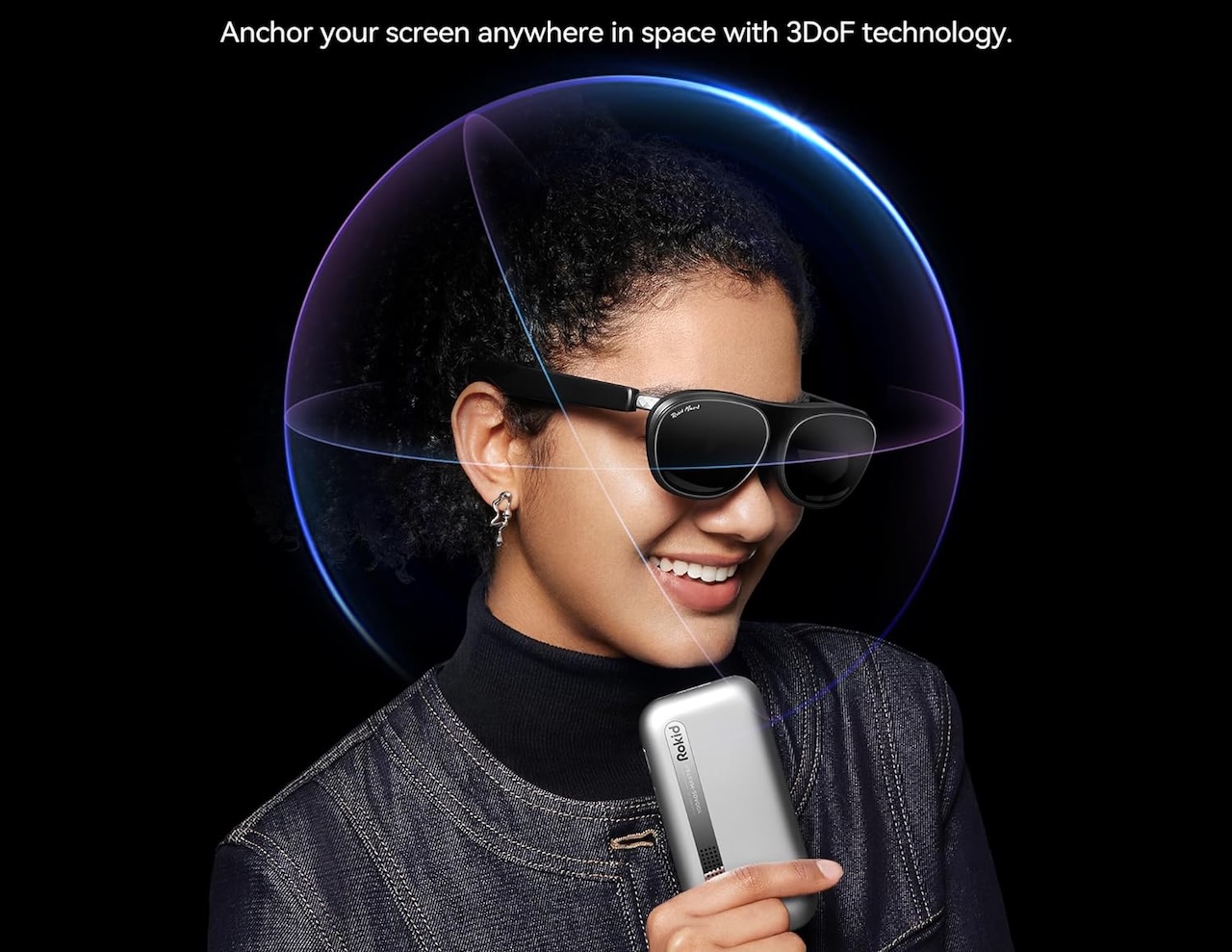
The Max2 uses a 360° Micro-OLED panel running at 120Hz and 600 nits. Rokid’s YodaOS-Master software stacks virtual windows spatially, meaning you can pin a browser to your left, a video to your center, and a productivity app to your right, each anchored to a spot in the room rather than floating in front of your face.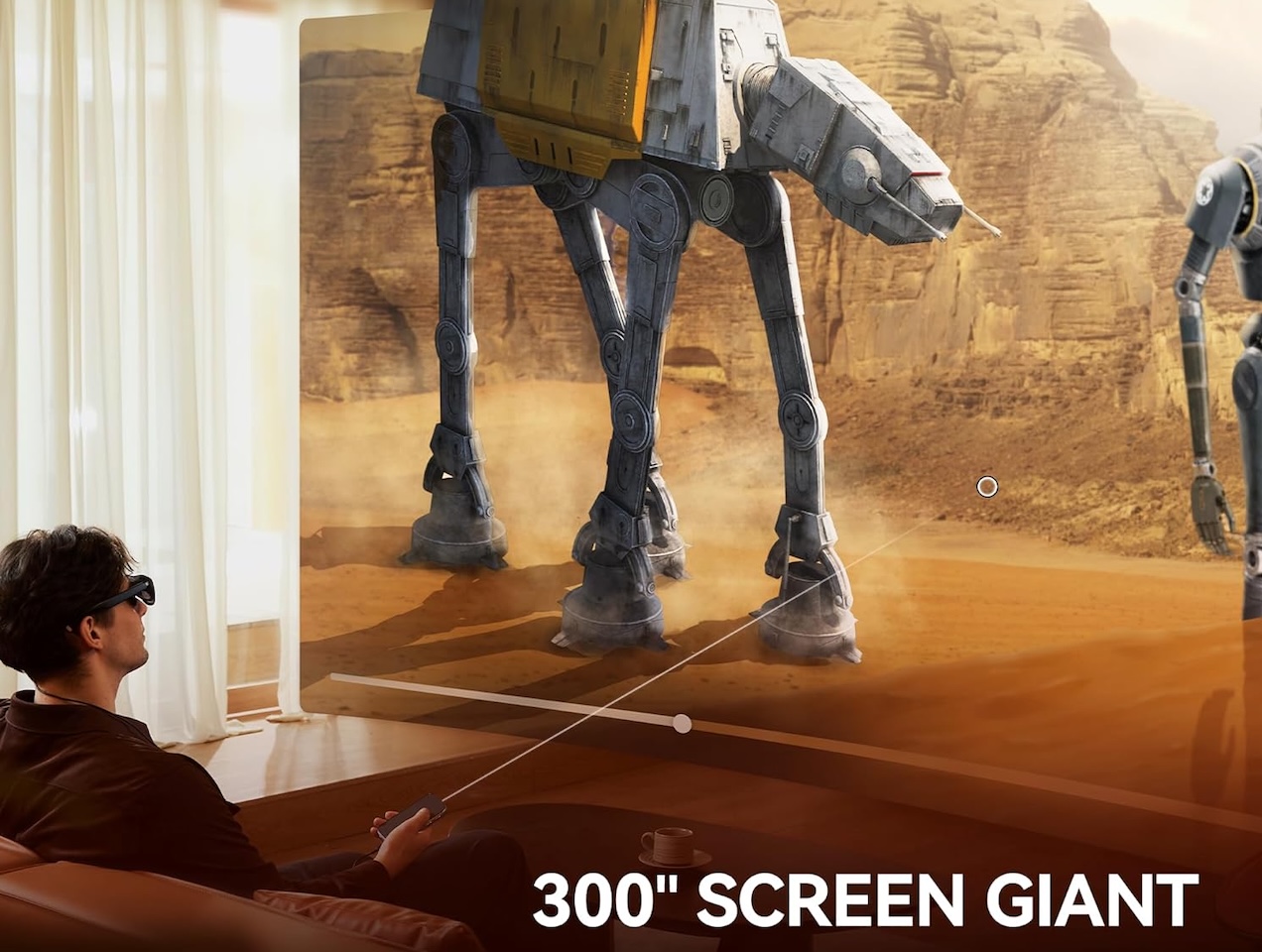
Reviewers who tested the Max2 independently confirmed the display holds up. PCMag called out its “sharp picture with a wide field of view” and listed a 50-degree FOV, which Rokid frames as equivalent to watching a 215-inch screen from 20 feet away. How-To Geek put it plainly: “If you’re looking for good video glasses, the Rokid Max 2 delivers with a comfortable design and quality output.”
One creator on YouTube titled their review I Edited a Video on a 300-Inch Screen and made it to the end without walking it back. That is not a ringing endorsement from a lab, but it is a real use case from someone who actually tried it.
Specs at a Glance
| Component | Detail |
|---|---|
| Display | Micro-OLED, 120Hz, 600 nits, 1920×1200, 50° FOV |
| Glasses weight | 75 grams |
| Myopia correction | 0.00D to -6.00D (built-in, no inserts needed) |
| Station2 battery | 5,000mAh / ~3.5 hours runtime |
| Station2 specs | 8GB RAM, 128GB storage, Wi-Fi 6, Bluetooth 5.2 |
| Ports | Dual USB-C (charge while using) |
| Gaming | Nintendo Switch, PS5, Xbox supported |
| Streaming | Netflix, YouTube, Prime Video via Station2 app store |
5 Reasons to Buy During Prime Day
- The bundle is the value story. The Max2 glasses alone retail for $449 and frequently street-price around $399. Getting the Station2 spatial computer folded into that at a Prime Day discount changes the math considerably.
- Built-in myopia correction is a real differentiator. The Max2 adjusts from 0.00D to -6.00D without prescription inserts, which effectively disqualifies most of the field if you wear glasses.
- 75 grams is light enough to forget. Many competing display glasses in 2026 land between 80 and 90 grams, the XREAL 1S is 82g, the XREAL One Pro is 88g, and that gap does not register until hour two of a work session when it suddenly does.
- You already have the content. Netflix, YouTube, and Prime Video are confirmed on Station2’s app store. You are not buying into a beta ecosystem or waiting on a platform deal. Your current subscriptions travel with you.
- Gaming without a TV is a real use case here. Nintendo Switch, PS5, and Xbox all work with the bundle, which means a 215-inch virtual screen in a hotel room or a dorm without a TV. Note that consoles using HDMI output require an HDMI-to-USB-C adapter for power passthrough, not included, but inexpensive and widely available.
2. Honest Concerns
Rokid rates the Station2 battery at 3.5 hours; one review clocked it at up to 5 hours depending on load. Either way, this is not a full workday device without a USB-C charger nearby, both ports support simultaneous charging and use.
 Price: $538
Where to Buy: Amazon
The Station2 fan is also audible after a few minutes of normal operation. Netflix and Apple TV are limited to 0DoF mode, meaning no spatial depth for streaming. And the 3-screen multitasking mode only works via DLNA on Android, Miracast and Chromecast connections drop to single-screen mode.
Prime Day Pricing
The bundle retails for $538 on Amazon. Rokid has confirmed $199 off for Prime Day 2026, which would bring it to approximately $499, described by the brand as the lowest price to date.
Prime Day runs June 23 to 26. The deal is expected to be live at the start of the sale window.
 Who Should Buy This
Buy it if: You work from a laptop and want multiple screens without carrying monitors. You travel with a gaming console. You wear glasses and are tired of AR headsets that require inserts.
Skip it if: You need all-day battery life for a full workday without plugging in. You want the deepest possible app ecosystem right now.
Consider the alternative: If a virtual display isn’t what you’re after and you just want an AI assistant on your face, Rokid also makes the AI Glasses Style, a non-display pair at 38.5 grams with a 12MP Sony camera, ChatGPT and Gemini built in, and real-time translation. It retails for $299 and is a closer competitor to the Meta Ray-Ban. Different product, different use case.
Price: $538
Where to Buy: Amazon
Bottom Line
The Rokid AR Spatial bundle is one of the few sub-$1,000 AR packages in 2026 that combines a standalone compute unit, a built-in display, and vision correction up to -6.00D in a single box. The 600-nit display is not the brightest in the category, competitors like the Viture Beast push significantly higher, but it is sharp, fast at 120Hz, and paired with spatial software that most glasses-only bundles cannot match. At $199 off for Prime Day, the argument for waiting gets harder to make.
