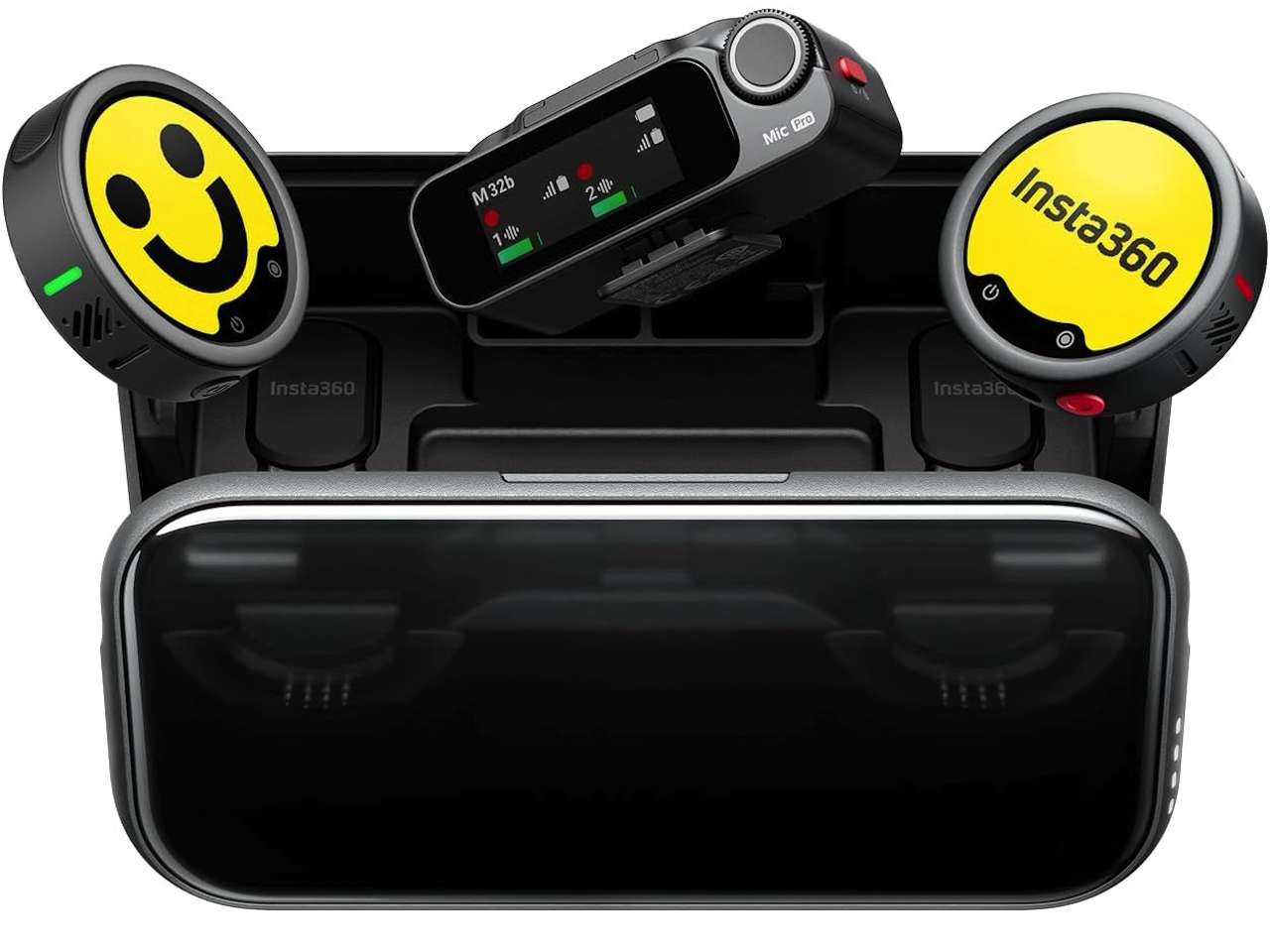
The wireless lavalier category has been stuck on a single argument for years: which compromise hurts least, weight or sound quality. Insta360’s Mic Pro doesn’t argue the compromise. It changes what the mic looks like on camera. As of early May, it’s shipping through the Insta360 Store and Amazon at US$199.99 for the 1 TX + 1 RX starter kit, with a transmitter-only option at US$99.99, a 2 TX + 1 RX bundle at US$329.99, and a 4 TX + 1 RX panel configuration at US$528.99. We’ve covered wireless lavs across price tiers, from Hohem Mic 01 to Saramonic Ultra to Godox WEC, and Mic Pro is the first one that asks the category to do something different with the transmitter itself, not just the audio chain.
Price: $329.99
Where to Buy: Amazon
Insta360 calls both the 3-mic array and the E-ink display industry firsts, and the combination has no real precedent at this price. NAB Show 2026 was the public debut, review units landed with creators a week before the announcement, and stock has been live on the Insta360 Store and Amazon since launch day.
What it actually is
Underneath the marketing layer, the Insta360 Mic Pro is a 2.4 GHz wireless system built around a 3-mic array inside every transmitter. Each 19.7 g transmitter pairs to a 29.8 g receiver with an OLED touchscreen, and the 174 g charging case carries two transmitters plus the receiver for 30 hours of total runtime. That’s the shape.
Architecture is where Insta360 wants the argument, not price. Conventional wireless lavs lean on a single omnidirectional capsule and call it a day. Mic Pro packs three capsules into each transmitter, with onboard DSP combining their input to emulate four selectable polar patterns: omnidirectional, super-directional, cardioid, and figure-8. Four patterns in one body. You switch modes from the receiver or the app, and cardioid also doubles as a camera-mounted shotgun on Sony bodies and Insta360 cameras alike, which is the part event shooters will care about most.
32-bit float is the other headline. Standard 24-bit recording clips when audio exceeds a set ceiling and the take is gone, while 32-bit float widens the dynamic range so far that Insta360 says clipping is effectively eliminated, which saves the take when a subject decides to shout. The 32 GB onboard holds 60 hours of 24-bit mono or 44.8 hours of 32-bit mono backup, with files auto-splitting every 30 minutes so a long ceremony won’t blow up the card.
What’s new versus the Mic Air
Mic Air launched earlier as a single-capsule entry option, and Mic Pro lands as a new product, not an upgrade. The Air uses one microphone, mono, one noise-cancel mode, 10 hours on the transmitter. The Pro fields three microphones, four selectable patterns, an onboard NPU, 32-bit float stereo, and 30 hours total runtime with the case plus a 5-minute fast charge for 1.5 hours of use. Same brand, different ambitions.
Visible difference number one is the E-ink screen on each transmitter, and it’s the entire reason the mic looks different on camera. Where every other wireless lav reads as a featureless cylinder, Mic Pro’s 1.22-inch front face becomes whatever brand asset you want it to carry, written from the Insta360 app and locked to the panel even after the unit powers down.
The mechanism makes the gimmick stick: a 6-color E-Ink panel only draws current during a refresh, so persistent branding doesn’t cost battery life, and the screen stays readable in direct sunlight where OLED would wash. The practical payoff is workflow, because a panel shoot, a multi-host podcast, or a guest who keeps swapping seats stops being a Sharpie-and-tape exercise when each transmitter is already labeled with who’s wearing it.
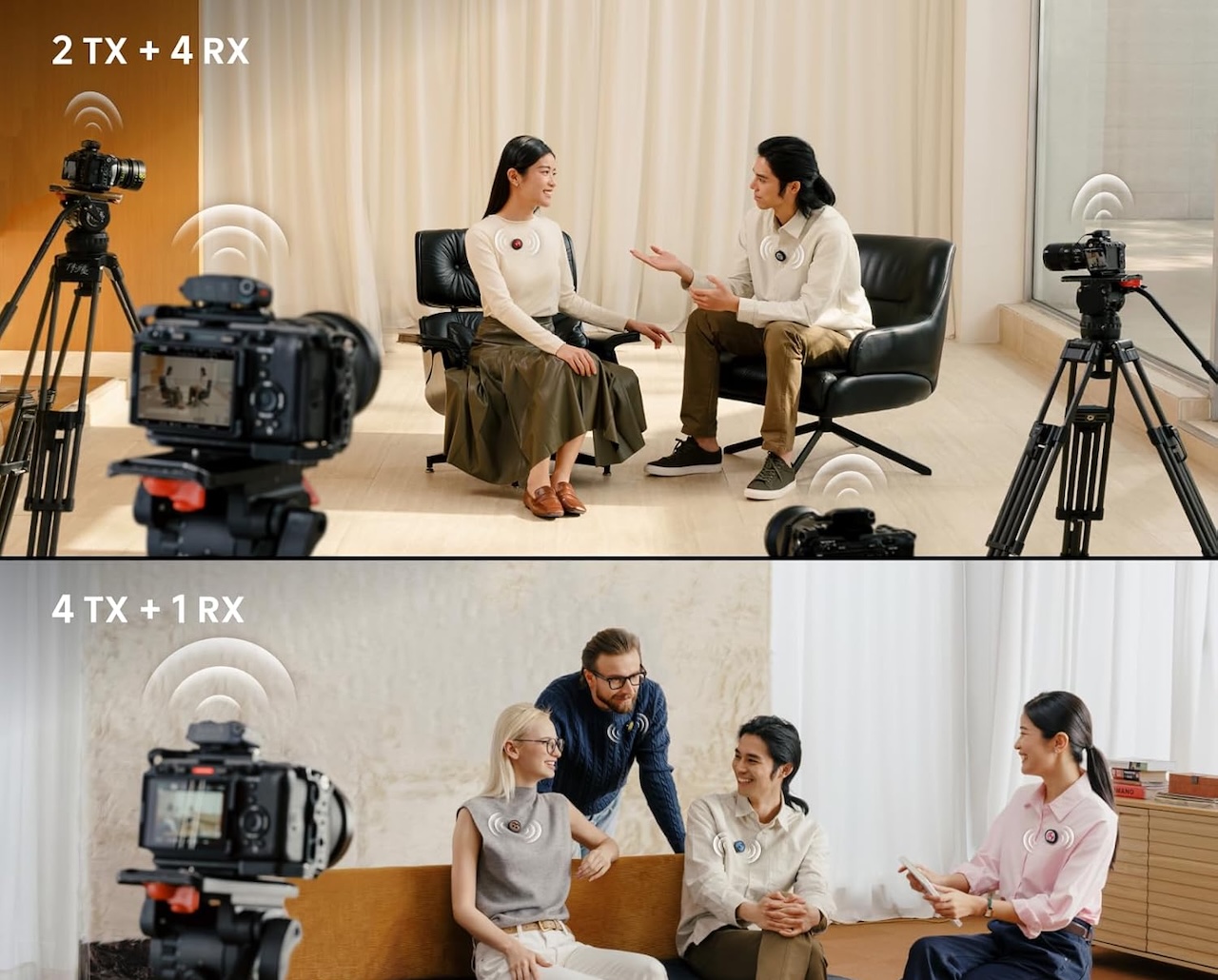
Configuration ceilings tell another story. Mic Pro supports 4 TX + 1 RX and 2 TX + 4 RX setups plus sub-one-frame timecode sync over 24 hours, while Mic Air tops out at 2 TX + 1 RX with no timecode. Range pushes to 400 m on the Pro from 300 m on the Air. The gap is real.
Where it slots in Insta360’s audio line
Mic Pro takes the flagship slot; Mic Air keeps the entry option. Both systems run Insta360’s Direct Connect, pairing the transmitter to an X5, X4 Air, Ace Pro 2, or GO Ultra over Bluetooth with no receiver. The Pro adds a 48 kHz direct audio path versus 16 kHz Bluetooth to non-Insta360 devices.
Four-channel digital output unlocks when the receiver pairs to compatible Sony bodies through the separately sold Camera Adapter, which Insta360 hasn’t dated yet. Phone routing covers both sides: USB-C on Android, Lightning on iOS, and Bluetooth from the transmitter for quick app or livestream work.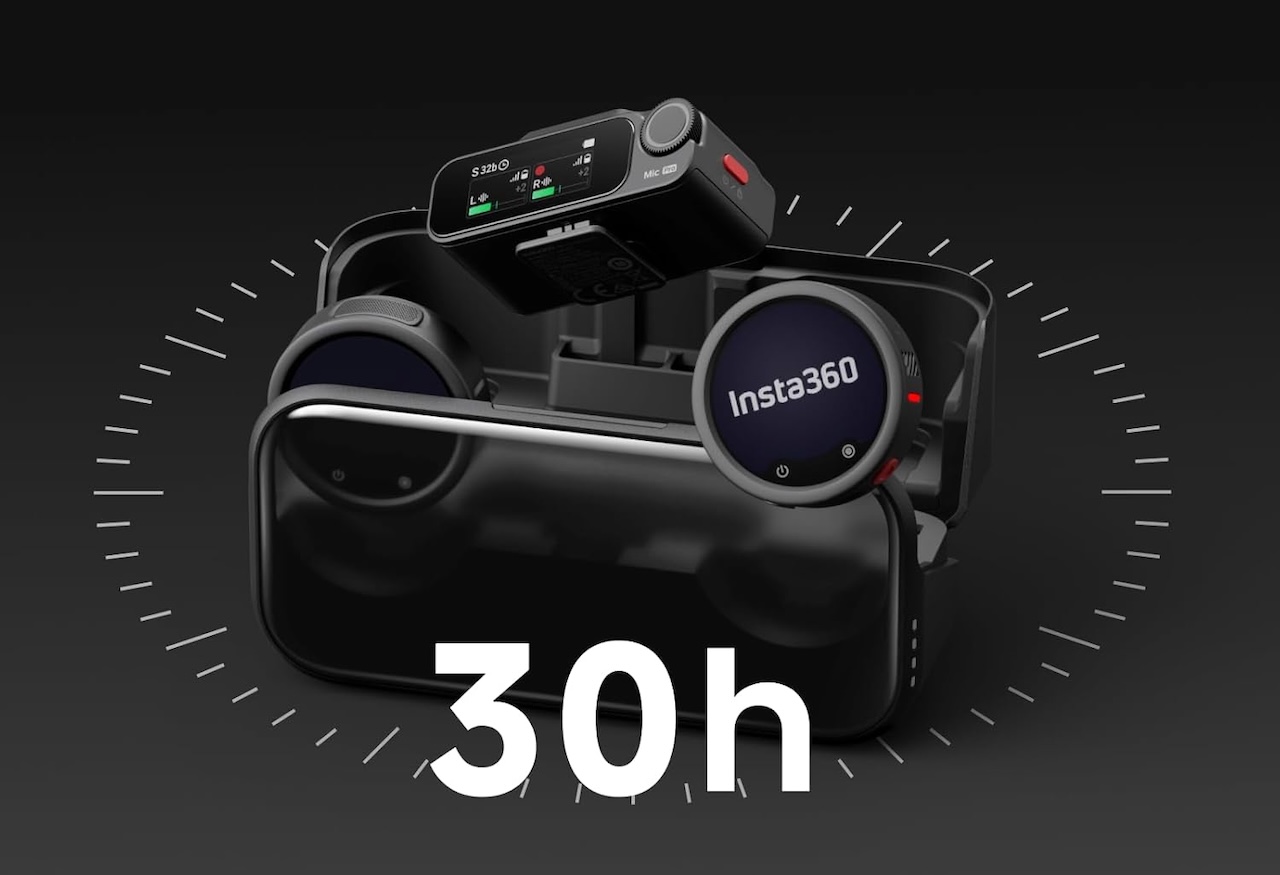
The Mic Pro’s shipping
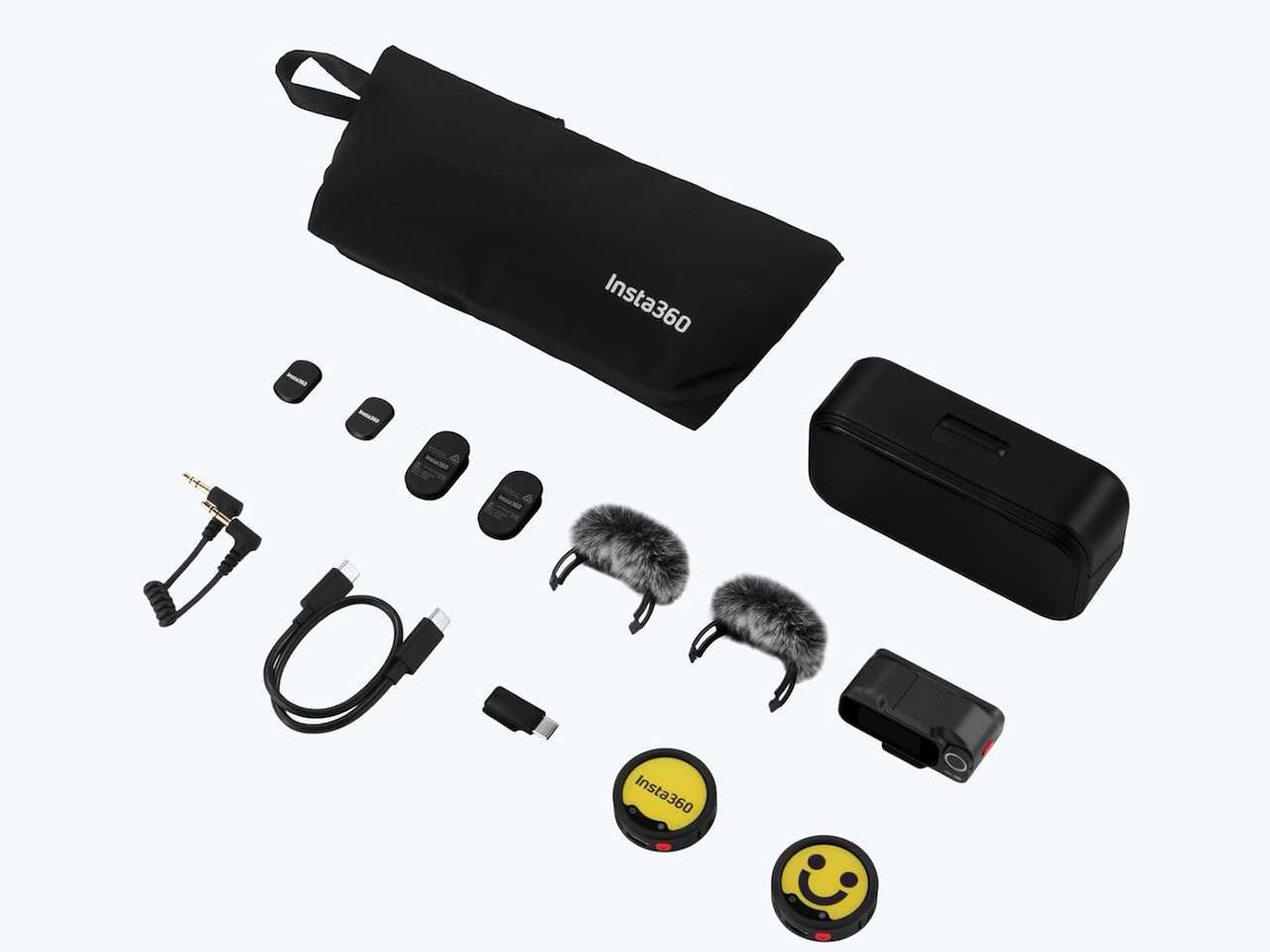
Stock is live at the Insta360 Store across all four tiers: US$99.99 (transmitter only), US$199.99 (1 TX + 1 RX), US$329.99 (2 TX + 1 RX), and US$528.99 (4 TX + 1 RX). On Amazon, the 2 TX + 1 RX kit at US$329.99 is the most visible bundle and the natural pick for solo interviews or two-person vlogs. Free shipping kicks in at US$129 from the Insta360 Store, returns run a 15-day window, and FlexiCare is available as a paid damage-replacement add-on. No backorder language anywhere.
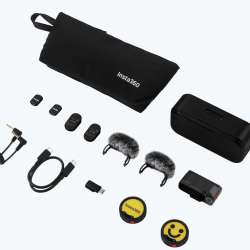
Accessories depend on the camera. Sony shooters need the Camera Adapter for four-channel audio, iPhone users need the Lightning adapter, and outdoor work wants the Large Windshield over the directional pickup modes. Read the kit list before checkout.
Who should buy the Mic Pro, and who should skip
Buy the Mic Pro if you shoot across mixed environments and need noise cancelation that adapts on the fly, if you want selectable pickup patterns instead of one fixed mode, or if you record events, interviews, or anything where losing audio isn’t an option. The 4 TX + 1 RX configuration is the right move for panel work and multi-host podcasts.
The 2 TX + 1 RX kit at US$329.99 is the better value for two-person vlogs and weddings, while the 1 TX + 1 RX kit at US$199.99 is the entry point for solo creators. E-ink branding pays off for anyone whose mic appears on camera, and it costs nothing extra. Pick the kit that matches the shoot.
Price: $329.99
Where to Buy: Amazon
On the skip side, the math flips. If you already own a Mic Air and you shoot mostly in quiet or controlled rooms, the Air’s single-mode noise cancelation still does the job and the Pro becomes a hard pass.
Casual vloggers with a single Insta360 camera should stay on the Mic Air, where the lower price is the cleaner starting point. The 4 TX + 1 RX tier is a hard skip unless you actually need four independent audio tracks, because the US$528.99 jump is steep for a configuration most buyers will never touch. Pay for what you’ll shoot, not for what you might.