

Walk into a phone store this spring and almost every pair of wireless earbuds on the wall has “ANC” stamped on the box. Sony refreshed its flagship line in February, Samsung launched a new Galaxy Buds tier in March, Apple’s late-2025 AirPods Pro 3 still anchors the AirPods slot in every new iPhone’s setup flow, and a wave of sub-$100 brands have quietly added active noise cancellation to models that, two years ago, barely offered credible ANC. The marketing has caught up to the chips, but the chips haven’t caught up to physics. Before you buy your next pair, it helps to know what ANC is really doing inside those tiny shells, and where even the best implementations still leak.
The spring 2026 landscape
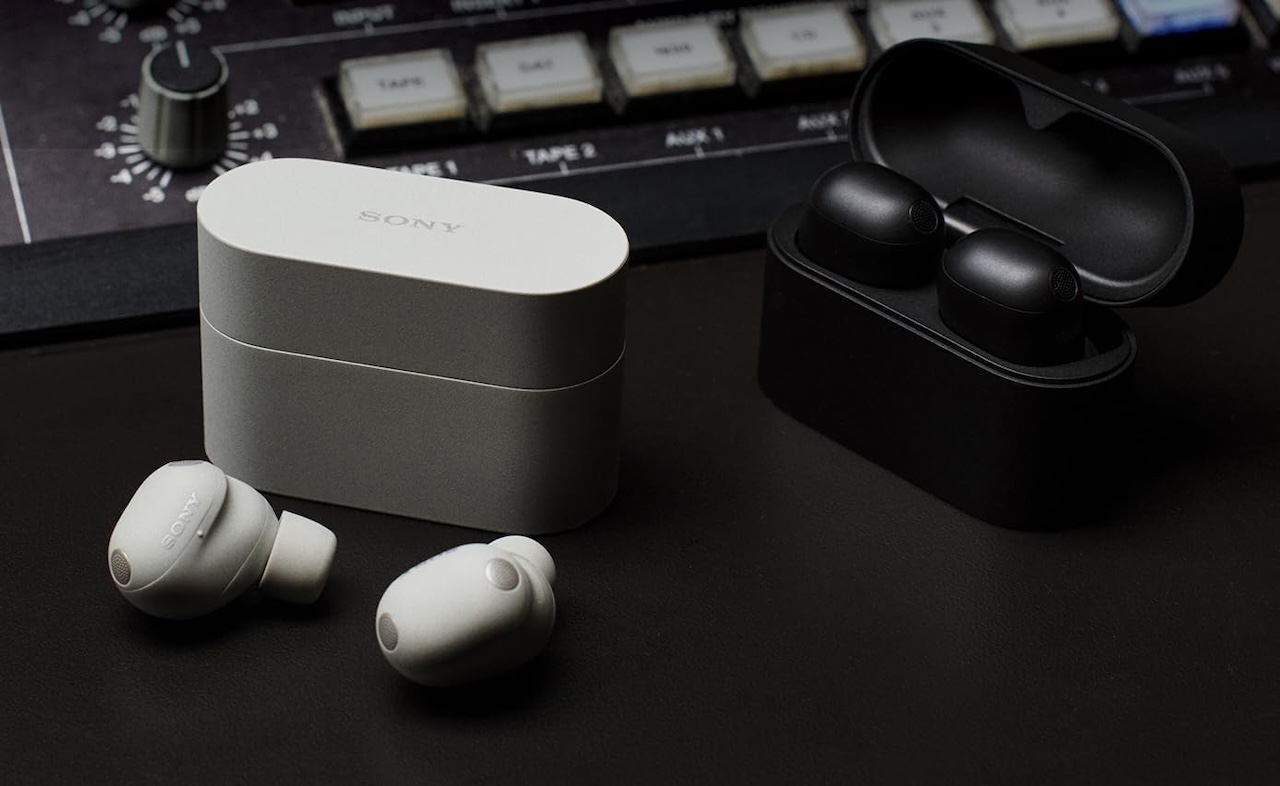
Price: $298 (Sony WF-1000XM6)
Where to Buy: Amazon
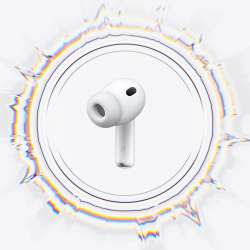
The refresh cycle did two things at once. At the top, Sony’s WF-1000XM6 (February 2026) and Samsung’s Galaxy Buds 4 Pro (March 2026) pushed ANC further into adaptive territory, joining Apple’s late-2025 AirPods Pro 3 and Bose’s mid-2025 QuietComfort Ultra Earbuds 2nd Gen, each with on-device processing that adjusts cancellation strength based on the scene around you.
At the bottom, Anker, EarFun, and a long tail of Amazon-first labels finally shipped credible ANC at prices that used to buy a plain pair of Bluetooth buds. The result: shoppers see the same three letters on a $250–$330 flagship and a sub-$80 budget pair and assume they’re getting the same thing. They aren’t.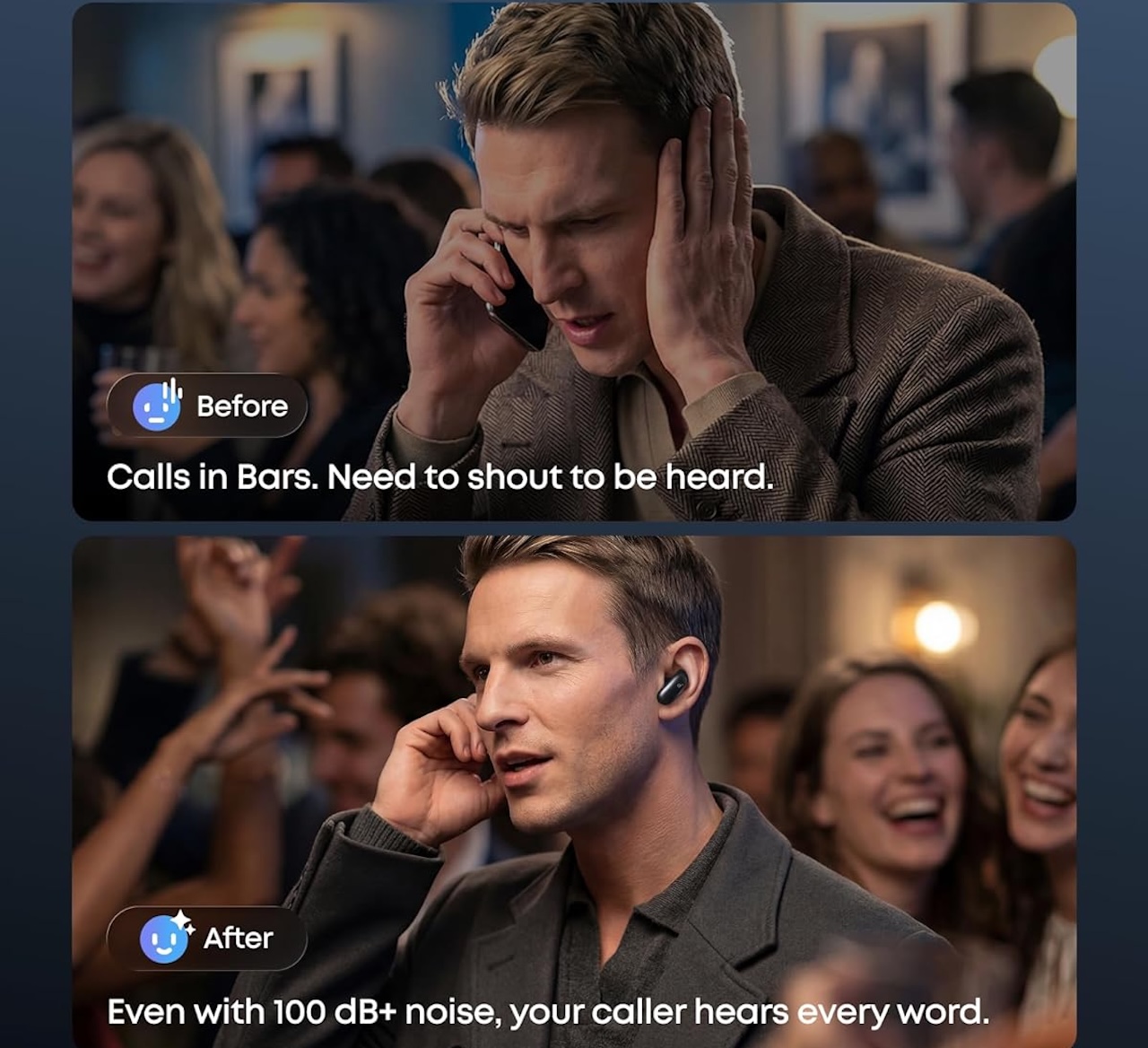
Price: $169 (Soundcore Liberty 5 Pro)
Where to Buy: Amazon
How does ANC work in tiny earbuds?
ANC listens to the world with tiny microphones, generates a sound wave that is the inverse of what’s coming in, and plays that anti-noise into your ear alongside your music. When the two waves meet, they cancel, in theory. Over-ear headphones have it easier: they trap a large, predictable pocket of air against your ear, with room for multiple mics and a stable acoustic model. Earbuds do the same trick in a chamber the size of a pea, with mics millimeters from the driver, against a seal that depends entirely on how a silicone tip fits a specific ear canal.
That’s why ANC quality in earbuds is less about raw chip power and more about everything around it: mic placement, tip design, feedback-loop speed, and how the firmware reacts when the seal shifts as you chew, walk, or talk.
The spec-sheet numbers that matter
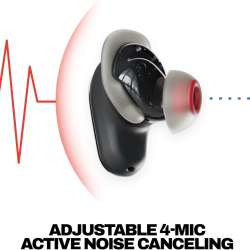
Brands love decibel reduction figures: ‘up to 30 dB’ is typical, with some flagships claiming higher. Three things to know. First, ‘up to’ is doing heavy lifting , that figure is measured against a controlled broadband test signal, in a lab, with a perfect seal on a head-and-torso fixture. Second, decibels are logarithmic and perceptual: roughly every 10 dB cuts perceived loudness in half, so the difference between 25 and 30 dB of reduction matters more than the small numeric gap suggests. Third, the number tells you nothing about where in the frequency range the cancellation happens, which is what actually decides whether a plane feels quiet or your coworker still cuts through. More useful, when you can find it: independent measurements showing how the buds handle engine drone (roughly 30–500 Hz), HVAC hum (around 60–500 Hz), and the speech intelligibility band (roughly 500 Hz to 4 kHz).
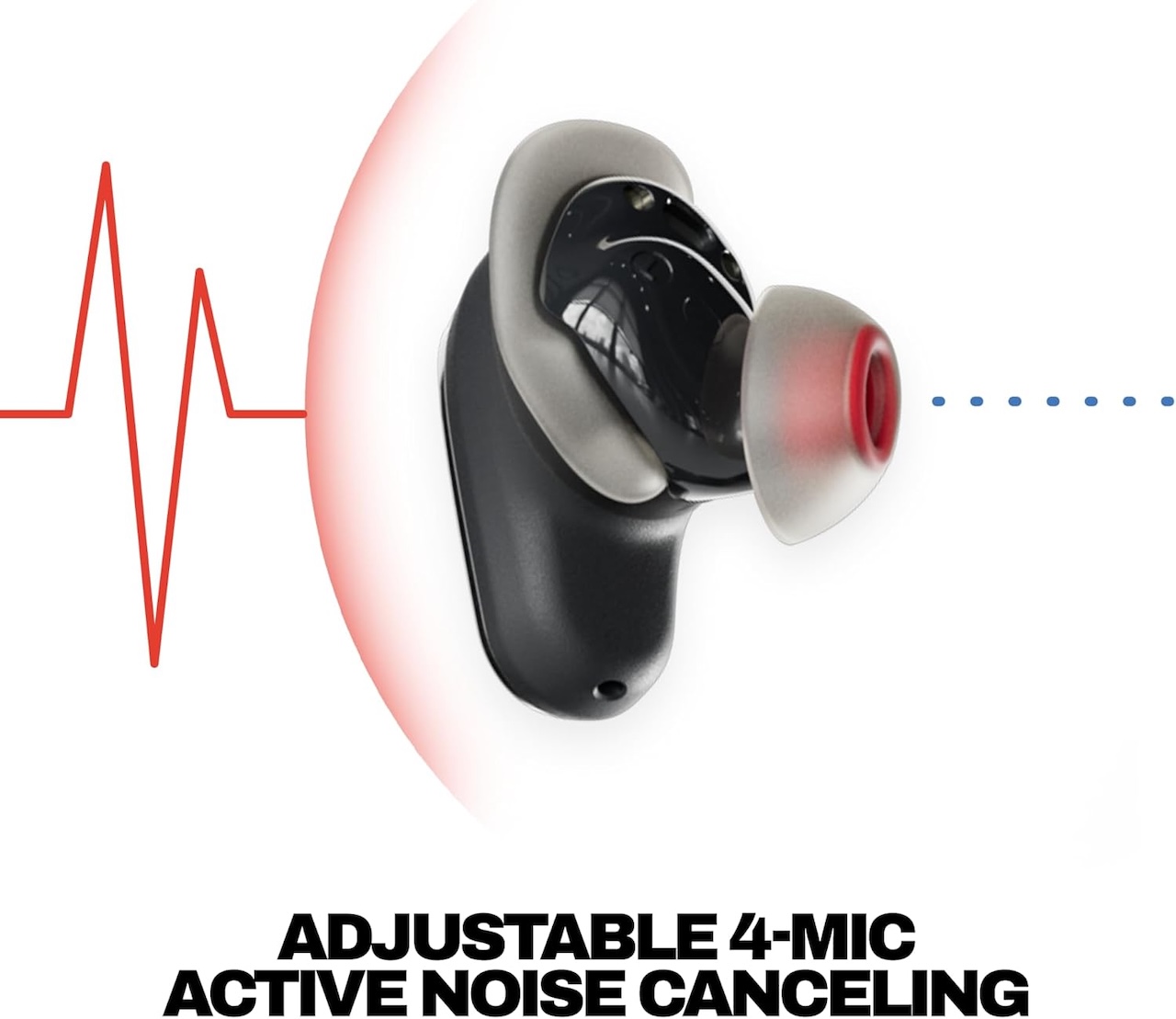
Price: $90 (Skullcandy Method 360 ANC Wireless Earbuds)
Where to Buy: Amazon
Why fit beats the chip
The biggest predictor of how good ANC feels is whether the ear tip seals your canal. Passive isolation, plugging the hole, does most of the work above ~1 kHz, where active cancellation struggles. ANC layers on top, handling low-frequency rumble that foam and silicone can’t block. Break the seal and you lose both: high frequencies leak in directly, and the cancellation algorithm gets confused because its acoustic model no longer matches reality.
The wrong tips on an expensive pair can underperform the right tips on a cheap one. If a new pair disappoints, swap tips before you blame the brand.
What ANC blocks well, and what it doesn’t
ANC is excellent at steady, low-frequency noise: jet engines, train rumble, bus diesel, air conditioning, refrigerator hum, coffee-shop ventilation. That’s the kind of sound the algorithm can predict and cancel cleanly. What it still struggles with, even on flagship buds in 2026:
- Human voices. Speech is fast, variable, and sits in a range where cancellation is harder and your brain is wired to pay attention. ANC lowers a nearby conversation, not erases it.
- Sudden, sharp sounds. Door slams, dog barks, clattering dishes. Transients move faster than most cancellation loops can fully respond to.
- High frequencies. Keyboard clicks and sibilant “s” sounds are the responsibility of passive isolation, not ANC.
- Wind. Air moving across an external mic is heard as real sound, which is why wind often gets louder with ANC on.
The hidden costs
ANC isn’t free. Running the mics and DSP typically costs roughly 15 to 30 percent of battery life, depending on the model. It can introduce a faint hiss in quiet passages, a pressurized “cabin pressure” feeling, and occasional pumping when the algorithm reacts to a changing scene. Reviewers generally find that budget implementations show all three more often, with less chip headroom and less firmware tuning to fall back on. Wind handling is the other tell. Cheap ANC tends to amplify wind into a roar; better models throttle cancellation when they detect airflow.
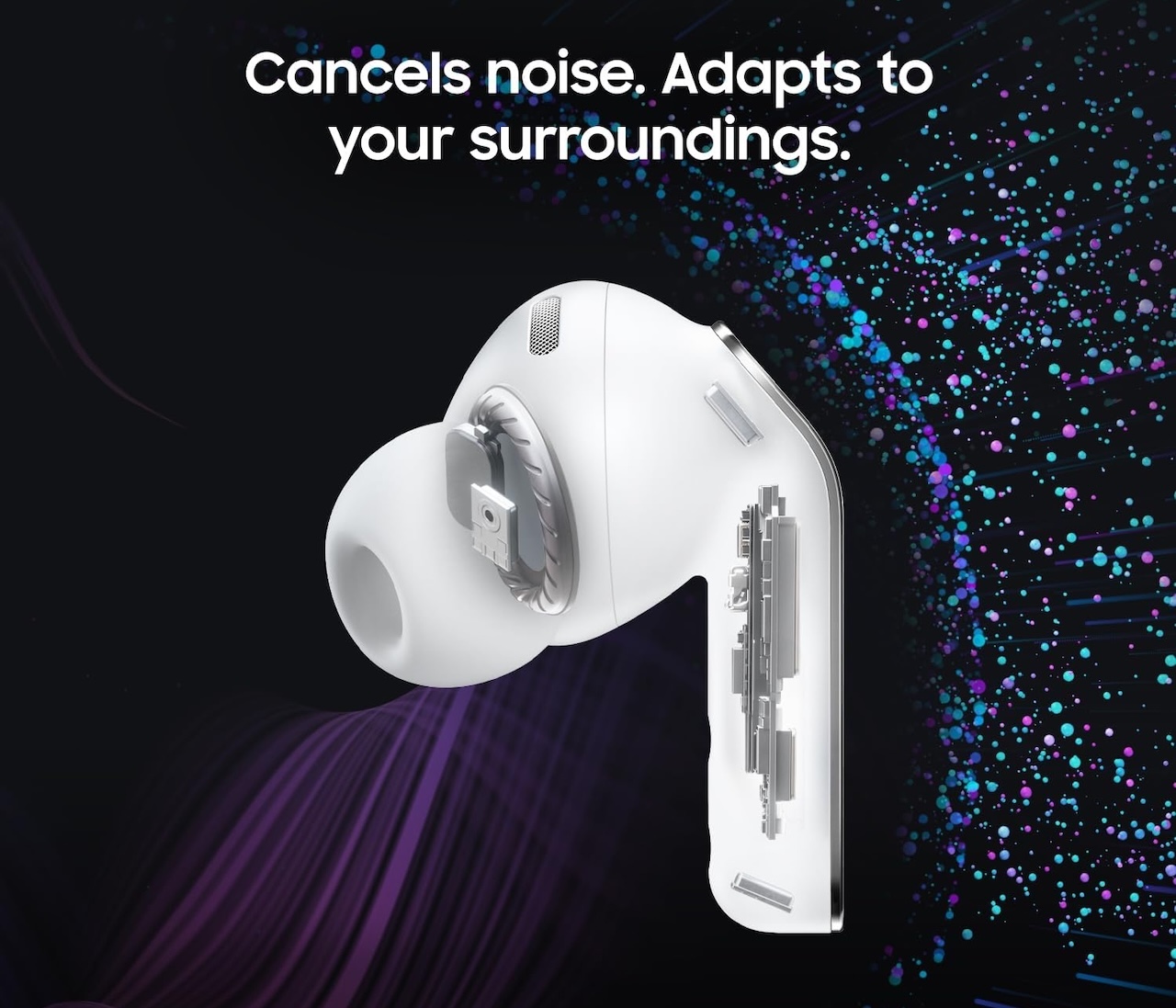
Price: $249 (Samsung Galaxy Buds 4 Pro)
Where to Buy: Amazon
Adaptive and transparency modes
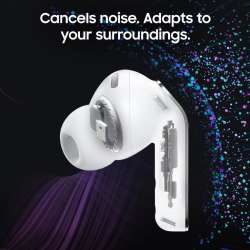
Flagship buds in 2026 increasingly bundle ANC with two siblings: adaptive ANC, which scales cancellation up and down based on the ambient scene, and transparency mode, which uses the same mics to pipe the outside world into your ears. They share hardware but solve opposite problems. Adaptive helps people moving between environments, office to street to subway, without fiddling with settings. Transparency matters for situational awareness: announcements, traffic, a coworker without pulling a bud. Reviewers generally find that budget models advertise both but implement them as simple on/off toggles instead of continuous, scene-aware processing.
Are the best ANC earbuds in 2026 worth it?
For most people, yes, with caveats. A well-tuned $60 pair will meaningfully reduce plane and train noise, soften an open-plan office, and make a noisy commute more tolerable. It won’t match a flagship on voice rejection, wind handling, or adaptive subtlety, and it’s more sensitive to a bad seal. For occasional travel and daily commuting, budget noise cancelling earbuds are finally a reasonable buy. For focused work in unpredictable environments, the flagship premium still earns its keep, and that’s the real bar for the best ANC earbuds in 2026.
The most important upgrade, at any price, is the one that costs nothing: find the tip that actually seals your ear, and let physics do half the work before the chip even wakes up.



Gadgeteer Comment Policy - Please read before commenting
You should show brand and model numbers in your Where to Buy boxes.