
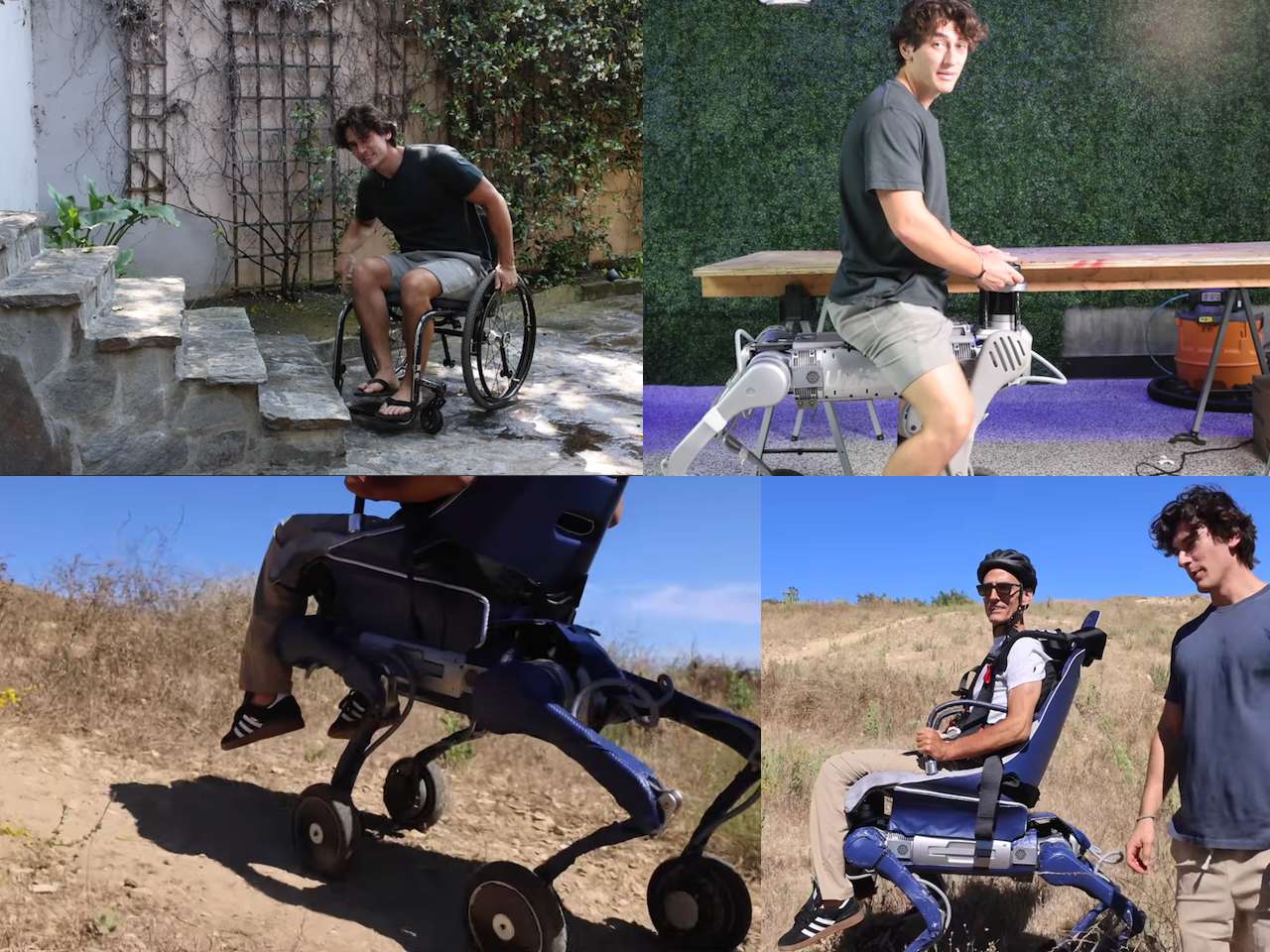
Jake Laser has spent his whole life watching his dad navigate a world that wasn’t built for wheelchairs. His father, a former marathon runner, has multiple sclerosis, an autoimmune disease that attacks the spinal cord and has kept him in a wheelchair for more than a decade.
Stairs, gravel paths, steep hills. These aren’t inconveniences. They’re walls.
For years, Jake dreamed of building something that could tear those walls down. When he was eight, he tried making bionic legs out of cardboard. They didn’t work. Twenty years later, with a YouTube channel, a growing engineering toolkit, and a little help from an unexpected sponsor, he built something that actually does.
The result is a one-of-a-kind robotic mobility chair built on a Unitree Go2-W quadruped. It walks, rolls, climbs stairs, and navigates terrain no traditional wheelchair can handle. And it gave a man who hadn’t climbed a hill in a decade the chance to do it again.
The Problem That Most People Never Think About
Jake’s dad is a chemical engineering professor, and he isn’t the kind of person who accepts limitations. He drove a manual transmission car long after most people would have switched to automatic.
But MS doesn’t care about determination. Over time, even small obstacles like a loose gravel driveway or a crack in the sidewalk became dangerous.
Most people see a wheelchair and think it solves mobility. But a standard wheelchair stops working the moment the ground stops being flat.
Loose gravel, snow, grass, stairs. These aren’t edge cases. They’re everyday barriers that isolate people in ways able-bodied folks rarely consider.
So Jake realized that instead of trying to build a better wheelchair, he should replace the wheels entirely. With legs.
From an Email to a Full Build
Getting a Unitree Go2-W isn’t cheap. The wheeled quadruped robot starts around $16,000 for the entry configuration and can climb past $30,000 for the advanced models. That’s not exactly a weekend DIY budget.
Jake made calls for months, hitting dead ends, until an email arrived from a company called Ark Stem.
Ark Stem is a social platform for builders. Founded by a 23-year-old who’d been watching Jake’s videos for a decade, the company offered to sponsor the project. A full-circle moment: a fan of the channel grew up, started a company, and helped make the dream real.
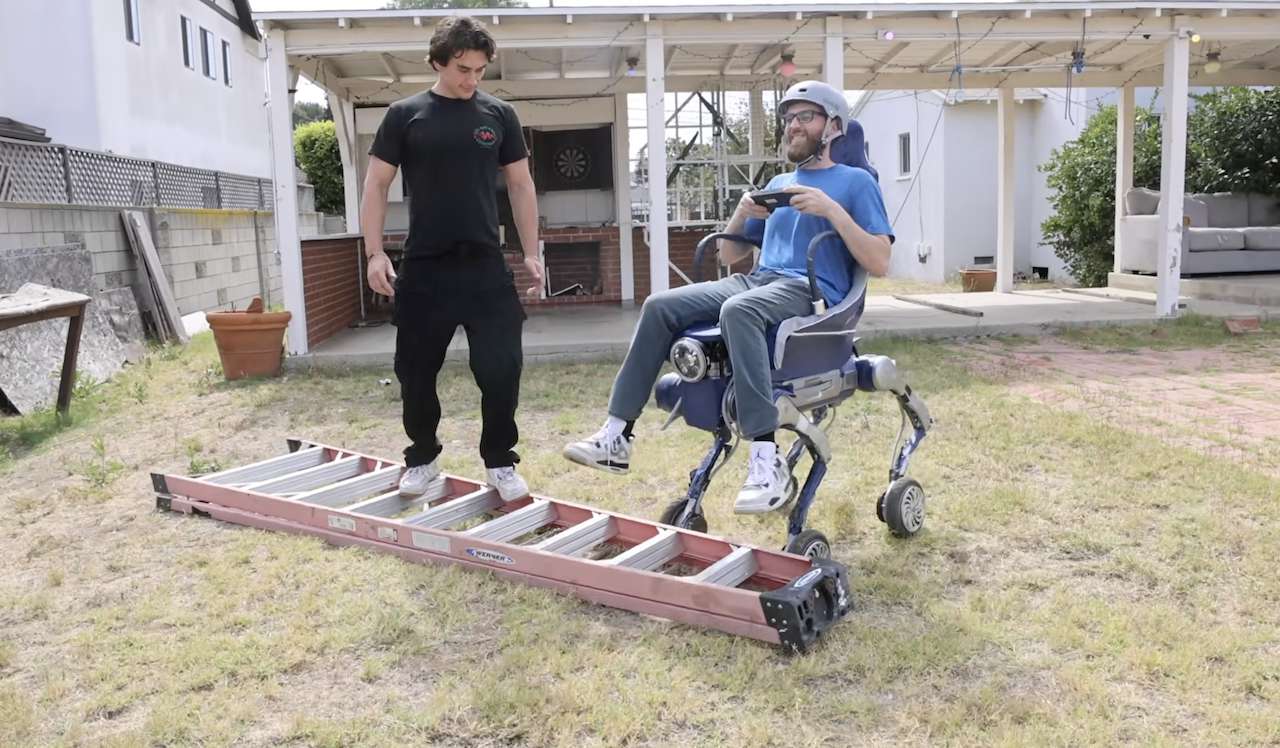
With the Go2-W in hand, Jake started hacking. What makes this robot unusual is that each of its four legs ends in a driven wheel, so it changes modes on the fly. Roll across a flat yard and it stays on the wheels. Reach a staircase or a stretch of loose rock and the legs take over.
The challenge was adding a person to that equation. He bolted a bucket-style racing seat high on the frame, wrapped it in navy blue suede, and strapped his dad in with a five-point harness. The seat rides above the legs so they can still swing and climb freely.
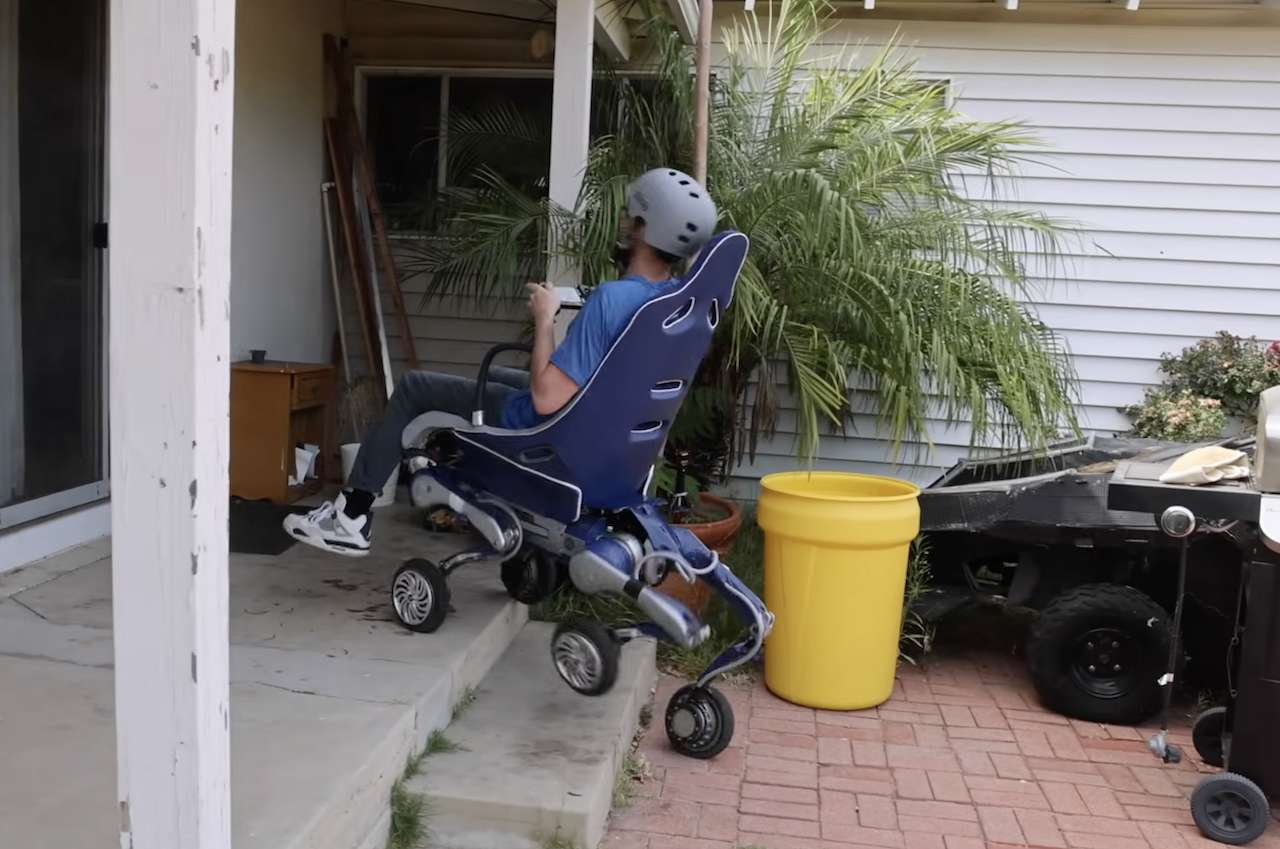
The code was where things got hard. A rider on top constantly shifts the center of gravity, so Jake had to retune how the robot reads and corrects its own footing while moving. Before his dad ever climbed on, he put the machine through punishing trials: up over tall curbs, across the rungs of a ladder laid flat, down full staircases, and out onto a bed of river stones. It only earned a passenger once it held steady through every one.
More Than Engineering, This Is Design
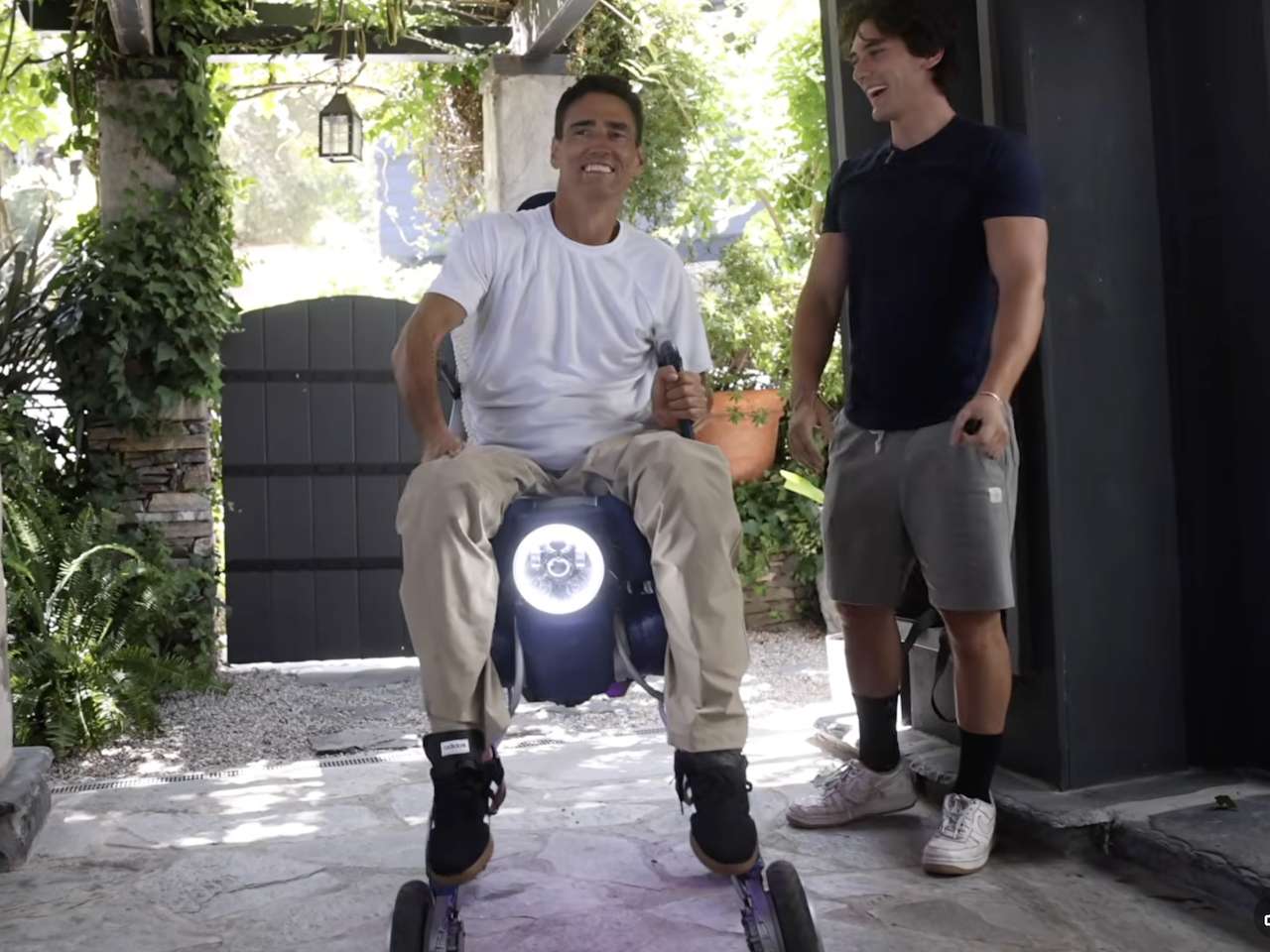
 Jake didn’t stop at making it work. He made it beautiful. A 1940s Bugatti he had seen in person set the direction: sweeping body panels trimmed in carbon fiber, glowing LED strips tucked under the chassis, headlights in a chrome finish, and spinner-style covers over the wheels. The result looks less like a medical device and more like something out of a sci-fi movie.
The choice of navy blue suede and chrome was deliberate. This isn’t a wheelchair that announces disability. It’s a machine that announces capability. His dad calls it “the coolest thing I have ever ridden.”
What This Means for Accessible Robotics
This build isn’t a commercial product. It’s a custom one-off that required months of engineering, thousands of dollars, and the privilege of access to industrial robotics.
But it points at something real. The Unitree Go2-W costs a fraction of what Boston Dynamics robots cost, and it’s hackable. That combination is rare and powerful.
Jake is clear that the current version isn’t ready for real-world use. They had a few spills during testing, and the balance system still needs refinement.
 He has ongoing support from Ark Stem and plans to iterate. The goal is a safer, more refined version that could actually help people.
In the meantime, there are already off-road wheelchairs that work. Fellow YouTuber Zack Nelson from JerryRigEverything runs a company called Not a Wheelchair that builds electric off-road chairs. Those are a viable option right now for anyone who needs real terrain capability. But Jake’s project shows where the technology is heading.
The Gadget That Changed One Man’s World
When Jake’s dad first sat in the finished chair, he didn’t say much. He just drove it around the driveway, smiling. Then he took it on a trail.
For the first time in ten years, he climbed a hill. Not in a van with a ramp, not on a paved path. He rolled and walked over dirt and rocks and roots, under his own control.
This isn’t a product review, and it isn’t a buyer’s guide. It’s a story about what happens when someone with engineering skills decides to solve a problem for someone they love.
The robot dog mobility chair isn’t for sale. But the idea behind it is worth paying attention to, because the next version might be.




Gadgeteer Comment Policy - Please read before commenting
Great post!