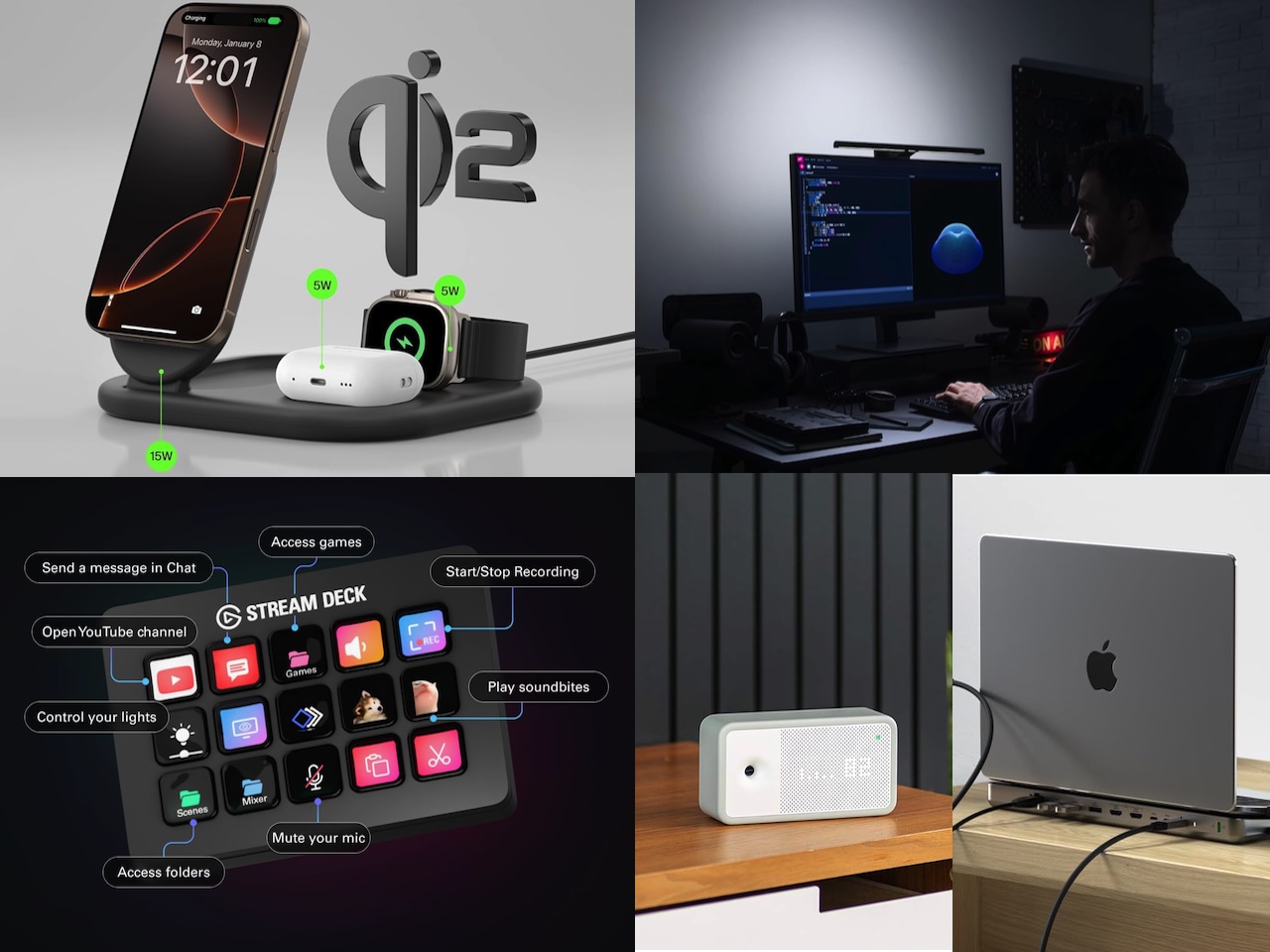
Big desk gadget launches have been quiet in 2026. But five smaller corners of the workspace are still moving fast. Programmable keys, smart lighting, dock storage, wireless charging, and air quality tools are each changing in their own way. Together, they make today’s desk look a little different from a year ago.
This is a May 2026 look at five desk gadget categories that are quietly reshaping hybrid workspaces. One product leads each category. The categories below are different from the ones in TG’s April 30 desk roundup.
1. Programmable Macropads
Macropads have grown up fast. They used to be just for streamers. Now they are real productivity tools. The software is strong enough to set shortcuts for creative apps, automations, and meeting controls. You don’t need to write code.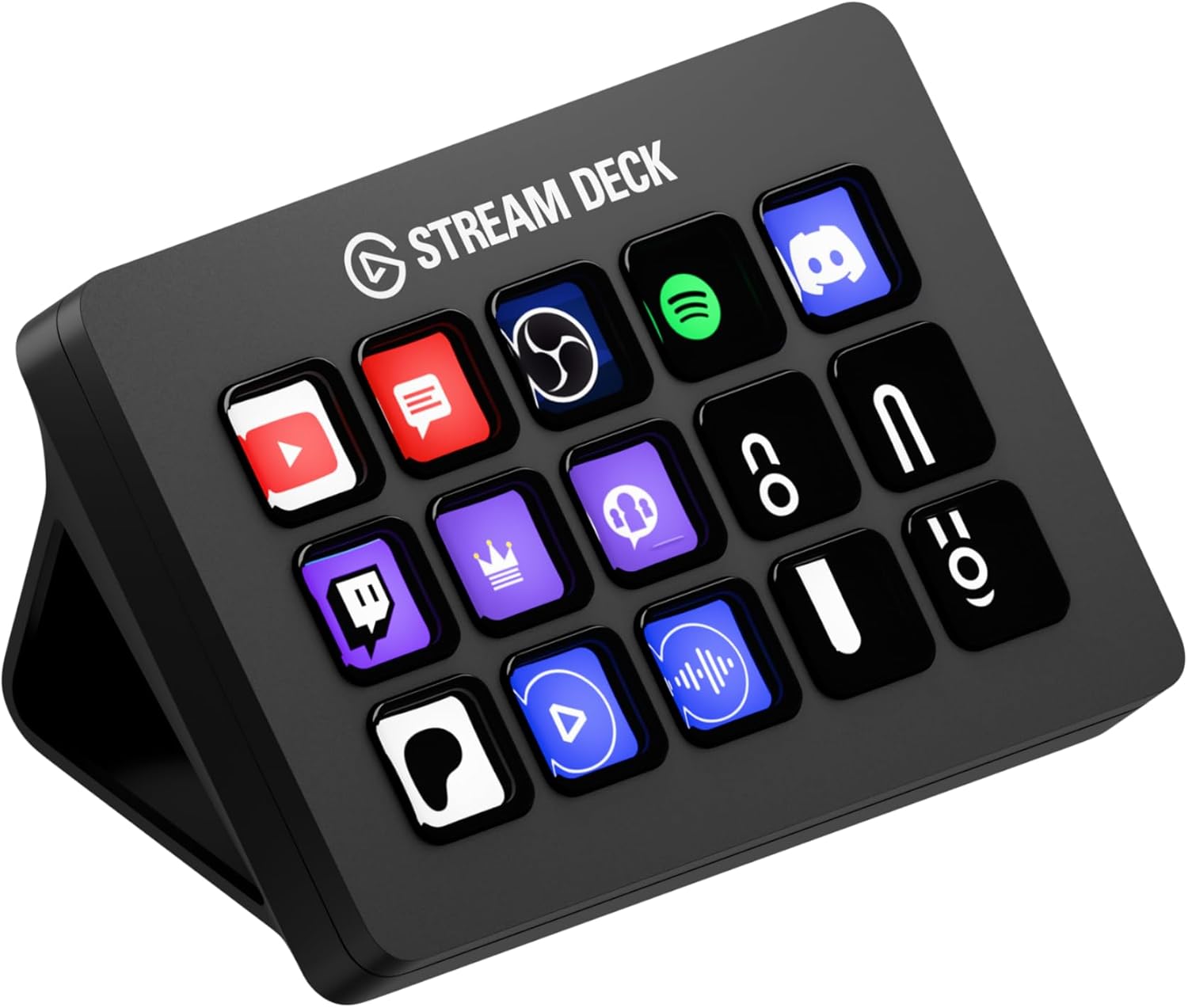
Price: $149.99
Where to Buy: Amazon
Elgato’s Stream Deck MK.2 (15 keys) leads the category. Its marketplace has thousands of plugins, profiles, and icons, the biggest set in the space. The price is about ~$119.99 on sale, with a list price of $149.99. Loupedeck, Mountain, and Razer have caught up on hardware. But Elgato still wins on software, which is why it stays on top for cross-app shortcuts in 2026.
2. Monitor Light Bars With Auto Color Temperature
Monitor light bars went from niche to normal between 2024 and 2026. The first job was cutting screen glare. The new job is auto-shifting the light color through the day. Most major brands now offer time-of-day color shifts, auto-dimming, and ambient sensing as standard features.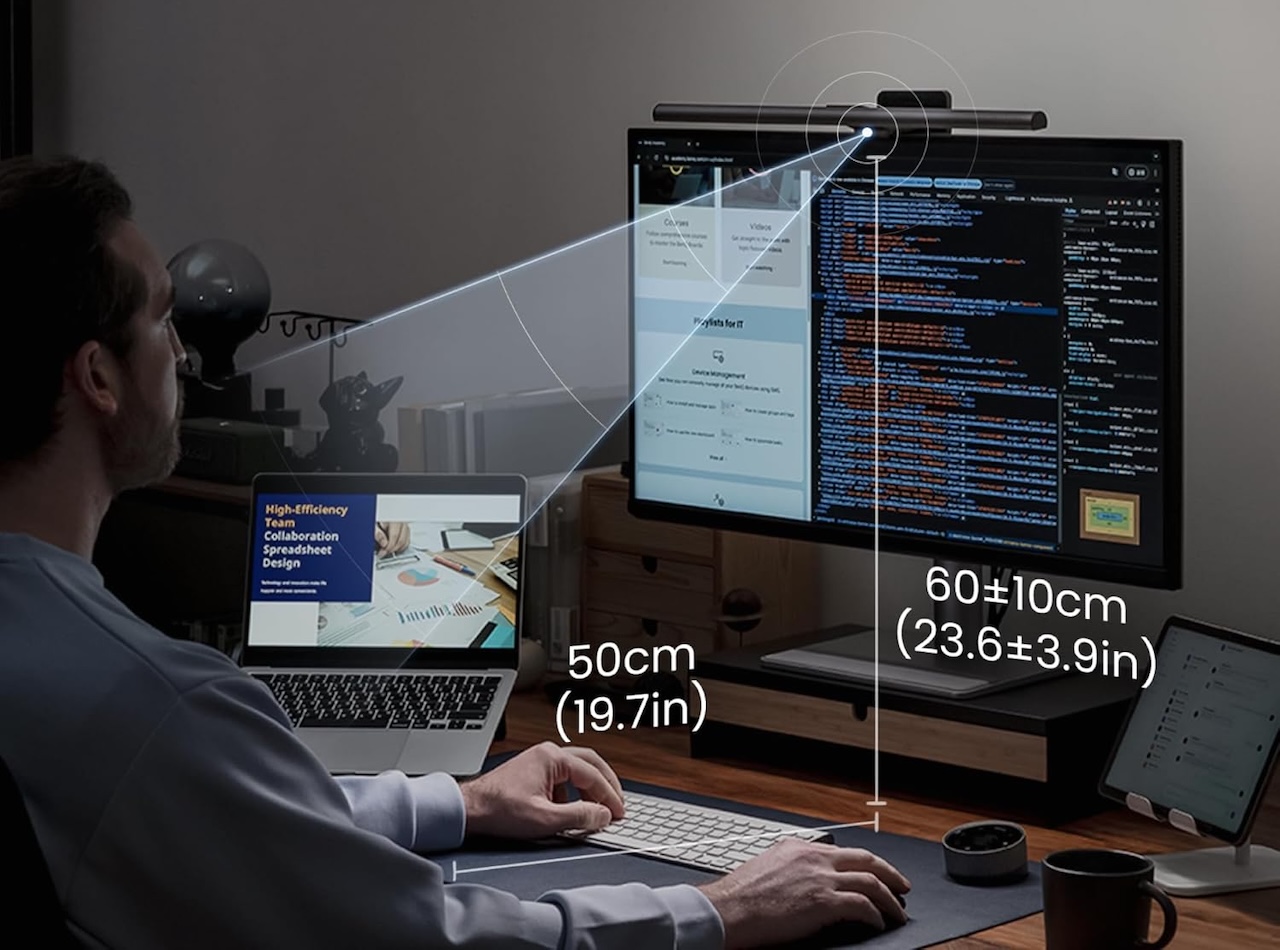
Price: $199
Where to Buy: Amazon
BenQ’s ScreenBar Halo 2 leads this category at about ~$179. It puts out more than 1,000 lux at the center, measured 50 cm below the bar. You can dial the color from warm (2700K) to cool (6500K) using the wireless puck. It runs on USB-C (5V, up to 3A, 15W max). The Halo 2 also widens its backlight by a reported 423% over the first Halo, thanks to a new three-zone design. That points to a wider trend: light bars are now sold for ambient comfort, not just glare control.
3. USB-C Docks With Built-in NVMe Storage
Docks with a built-in NVMe slot are growing into their own category in 2026. Putting the dock and the SSD enclosure into one device means fewer cables and a single place for fast scratch storage. That matters more now that hybrid work has people moving files between machines all the time.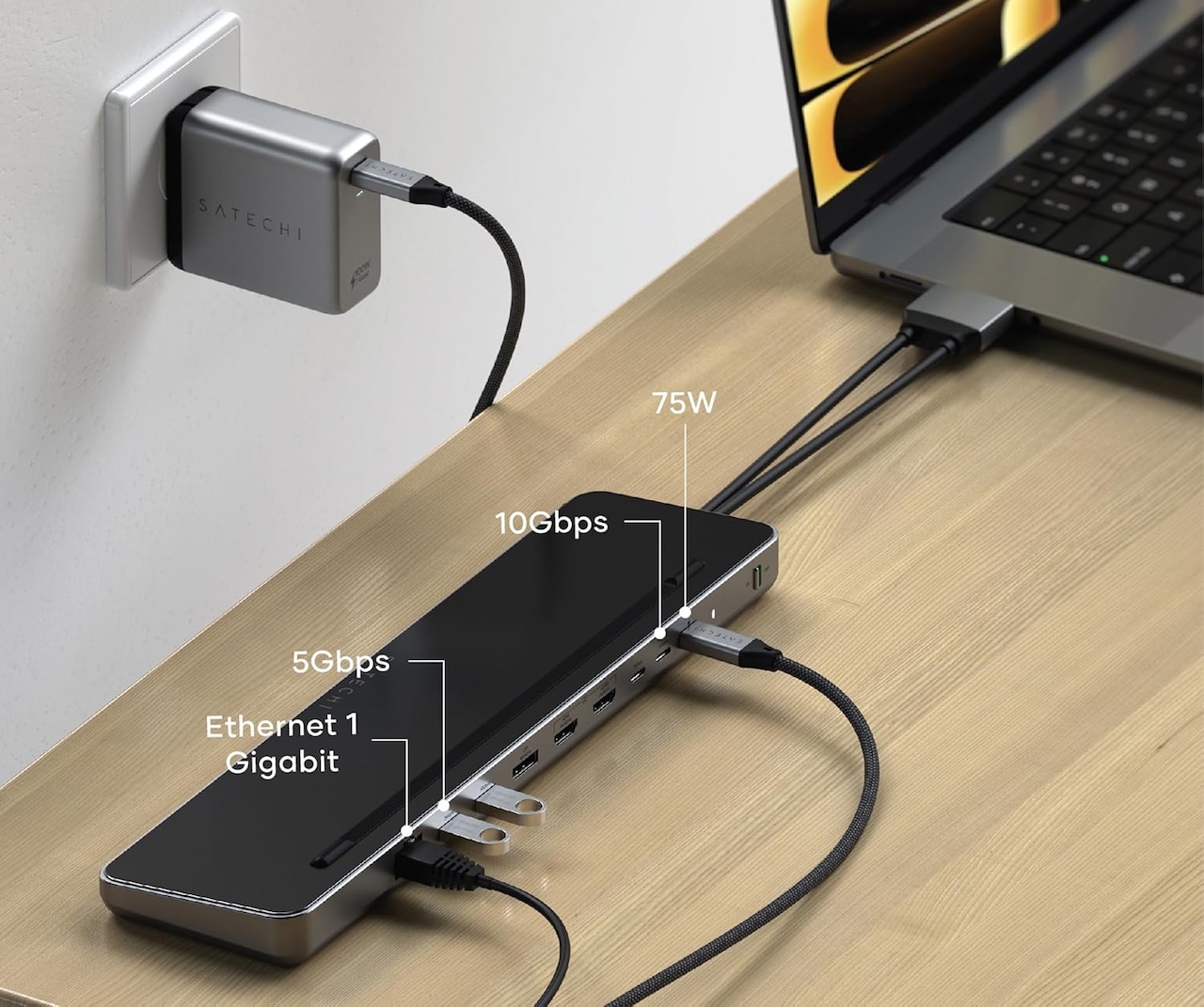
Price: $169.99
Where to Buy: Amazon
Satechi’s Dual Dock Stand (ST-DDSM) is one of the leading examples at about ~$169.99. It holds a 2280 M.2 NVMe (or SATA) drive on the bottom and moves data at 10 Gbps over USB-C 3.2 Gen 2. It adds nine ports: two HDMI 2.0, one DisplayPort 1.4, two USB-C data ports (one at 5 Gbps, one at 10 Gbps), two USB-A ports, and Gigabit Ethernet. It also pushes 75W back to your laptop. Sonnet’s Echo 13 Thunderbolt 5 SSD Dock and ASUS’s Master Thunderbolt 5 Dock DC510 offer similar designs, usually at higher prices.
4. Foldable 3-in-1 Qi2 Charging Stands
Qi2 finally fixed the magnet problem that held 3-in-1 chargers back for years. With Qi2 15W now on iPhone, some Android flagships, and many watch and earbud accessories, the folding 3-in-1 has moved from a fancy gadget to a normal travel item.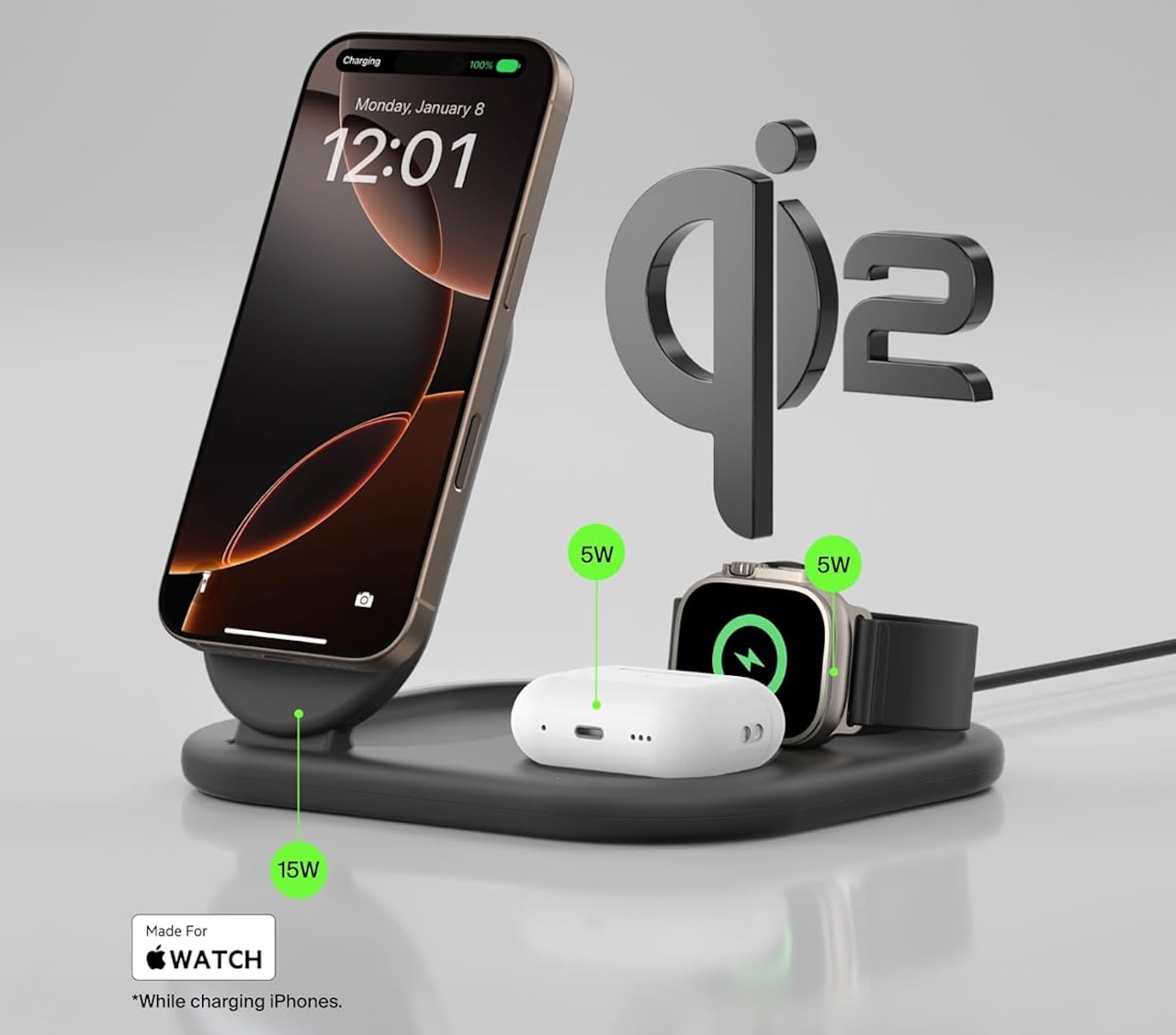
Price: $79.99
Where to Buy: Amazon
Belkin’s BoostCharge 3-in-1 Magnetic Foldable Wireless Charger with Qi2 15W (WIZ029) leads this category at about ~$79.99 to $89.99 on sale, with a list price of $99.99. It snaps a phone to the magnetic pad at 15W, fast-charges Apple Watch Series 7, 8, 9, Ultra, and Ultra 2 (0 to 80% in about 45 minutes), and tops up earbuds at 5W on the base. The folded size is 144 by 157 by 19 mm, and it supports iPhone StandBy mode. Anker, Mophie, and Nomad sell similar folding 3-in-1 designs as Qi2 spreads.
5. Desk Air Quality and CO2 Monitors
Indoor air quality is the youngest category on this list. It moved into desk-gadget territory after 2020, when more people started paying attention to CO2 buildup, VOC fumes, and fine PM2.5 dust indoors. The category is still small, but it is growing fast. 2026 is the year it crosses from a health-focused niche into everyday productivity gear.
Price: $259.99
Where to Buy: Amazon
Awair’s Element leads this category at about ~$249 on sale ($299 list). It tracks CO2 from 400 to 5,000 ppm, plus PM2.5, VOCs, temperature, and humidity. It sends alerts to your phone over 2.4 GHz Wi-Fi. Research on focus and CO2 keeps interest high. Levels above 1,000 ppm are tied to measurable focus drops, which matters most in closed rooms and basements with weak airflow.
What These Five Subcategories Have in Common
All five categories are on the same path, just at different stops. They are moving from extra to standard. Macropads got there first. Light bars are there now. NVMe-equipped docks and Qi2 3-in-1 chargers are getting there through 2026. Air quality monitors are next.
The shared driver is hybrid work. Desks are stable enough now to invest in, but mobile enough that travel-friendly designs and multi-machine setups matter. Categories that fix real problems, like eye strain, cable mess, indoor air, and repeat shortcuts, are growing faster than decorative ones.
Where the Desk Gadget Category Goes Next
The second half of 2026 should push three trends harder. First, deeper smart-home links for light bars and air monitors. Second, wider Qi2 use, which should bring 3-in-1 charger prices down. Third, faster docks as Thunderbolt 5 and USB4 v2 reach mid-priced models. The category is no longer waiting on flagship launches. The action is in the subcategories.