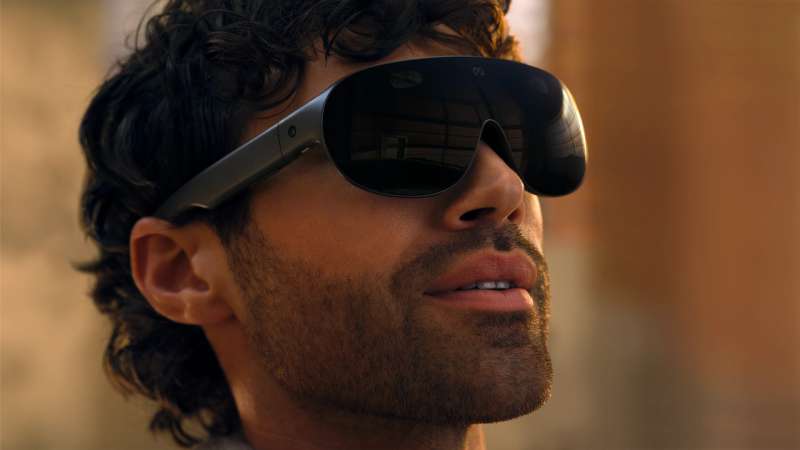
Video glasses always sound easy: plug in, get a giant screen, relax. In real life, they can feel fiddly in a way that makes you stop using them after a few days, which is always a small letdown when the whole point is convenience. RayNeo’s Air 4 Pro is being pitched as AR glasses that keep the setup simple, with “no WiFi or apps required,” and that’s an appealing promise because it aims straight at the friction.
Price: $249 (Early bird price), $299
Where to Buy: Amazon
The headline spec is a 201 inch virtual display, though that number comes with context. RayNeo calculates it at a 6 meter viewing depth, and the actual field of view sits around 46 to 47 degrees. IGN’s hands-on pegged the perceived size closer to 135 inches, and most reviewers describe it as feeling like a large TV floating in front of you rather than an actual movie theater screen. If you’ve ever tried to watch a movie on a phone in bed, you already know the glare, the tiny framing, and the constant hand adjustments get old fast. Put simply, RayNeo Air 4 Pro is a pair of AR glasses that act like video glasses, projecting a virtual display that feels big enough to replace a monitor, even if the “201 inches” is more marketing math than lived experience.
The Vision 4000 idea: make the signal look better, not just bigger
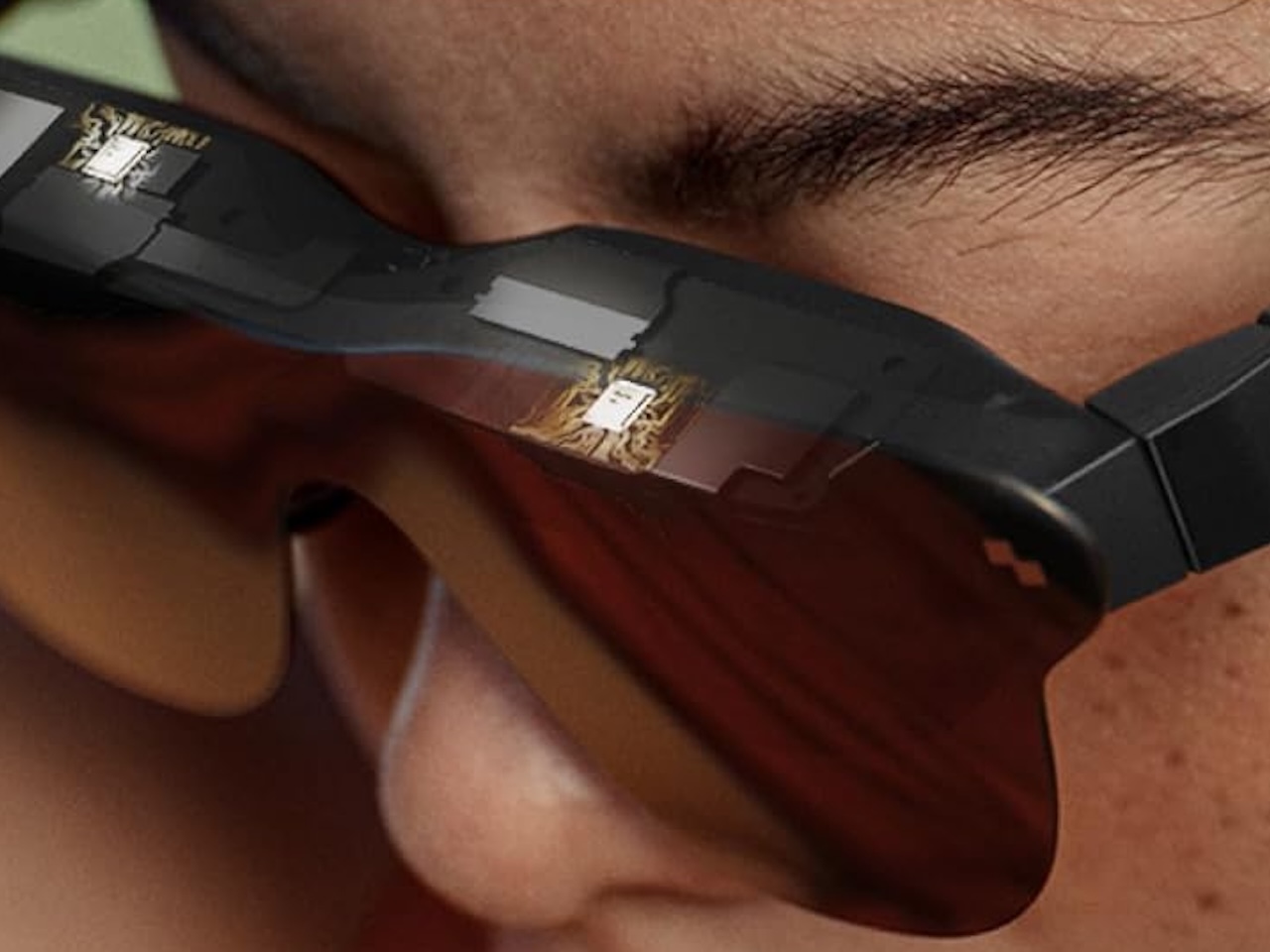
The most interesting claim isn’t the size, it’s the processing. RayNeo says the Air 4 Pro uses a Vision 4000 chip with AI SDR to HDR upscaling, co developed with Pixelworks, to enhance color, sharpness, and motion clarity in real time. That’s a smart angle because smart glasses live or die on whether motion and gradients look clean instead of crunchy.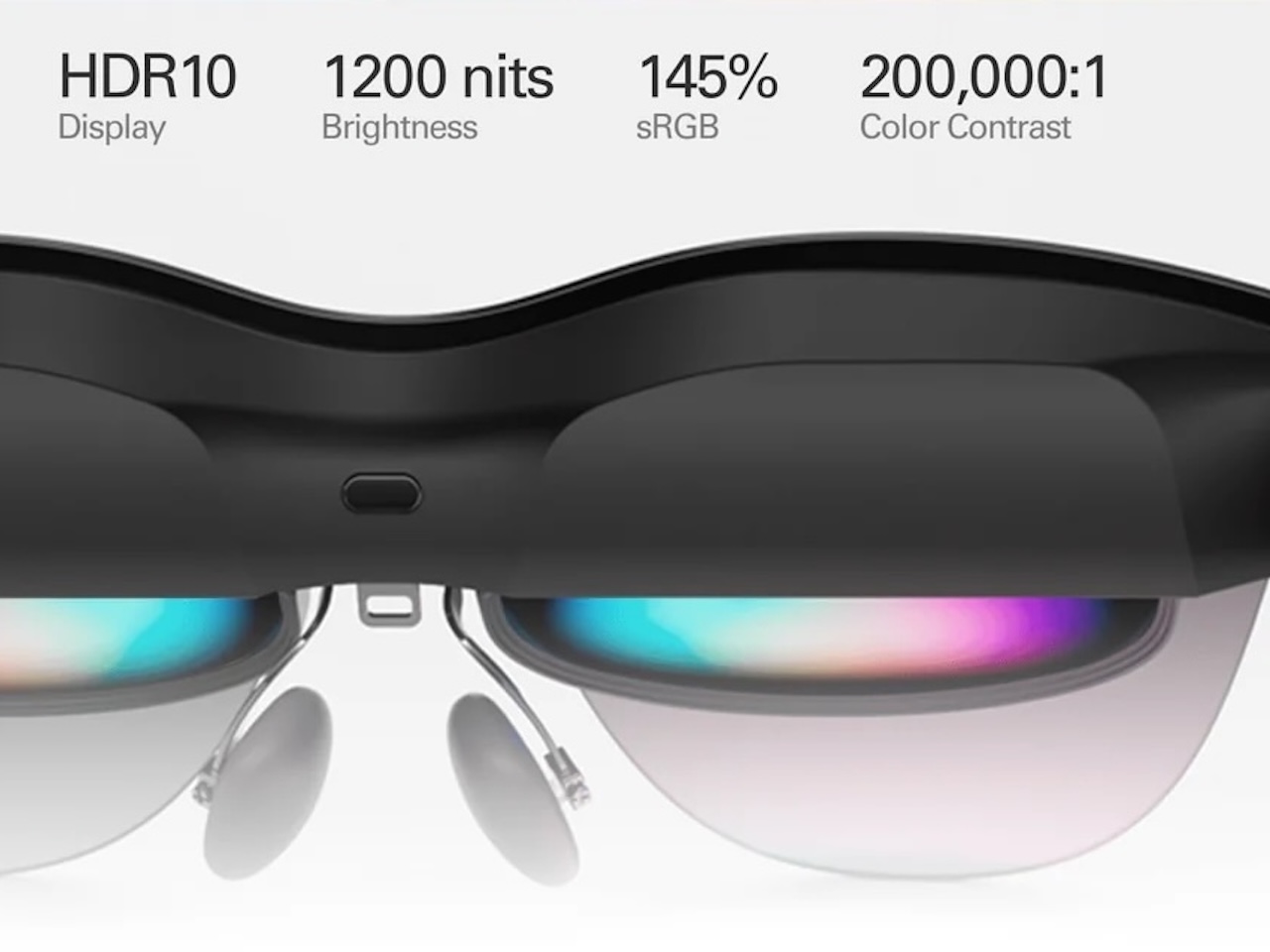
Upscaling can be a quiet win when it’s subtle. It can also get weird when it pushes contrast too hard and turns skin tones into something plastic looking, which is the kind of thing you notice instantly even if you can’t explain it. Early reviews are mixed on this one. Gizmodo’s hands-on said the AI HDR mode didn’t produce a huge visible difference when upscaling a 480p YouTube video, calling it “slightly more high-res” but not enough to impress. ComicBook’s reviewer was more positive, saying even non-HDR content got “a noticeable visual lift.” The truth probably depends on what you’re feeding it, and how picky your eyes are.
Audio that tries to be useful in public
Most open ear audio is a compromise, and it usually shows up in the worst way at the worst time. In the Amazon listing, RayNeo positions the Air 4 Pro as “Audio by Bang & Olufsen,” with four speakers and 360 degree spatial sound. In use, that claim would matter most if dialogue stays clear when you’re not in a quiet room.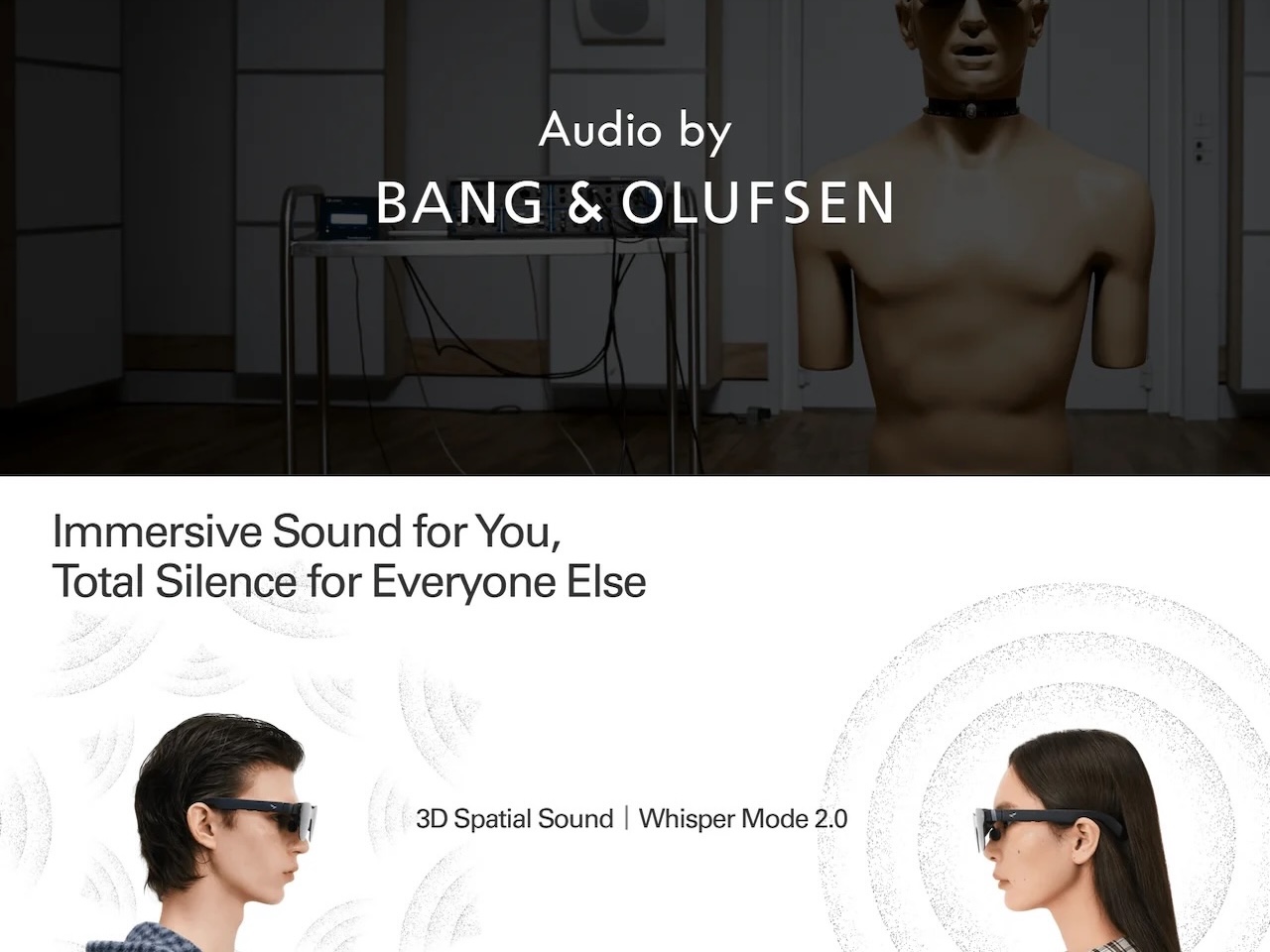
The listing also mentions an optional Sound Tube accessory that directs sound into your ears to boost volume and clarity, and it’s sold separately. That’s mildly annoying, but it’s also an honest admission that built in speakers can’t satisfy every situation.
Comfort and eye strain are the real deal breakers
Wearables don’t fail because the spec sheet is weak. They fail because they feel bad on your face after ten minutes, and that’s a brutal kind of failure because you can’t talk yourself out of discomfort. RayNeo’s listing calls out TÜV certified low blue light and a 3840Hz flicker free display aimed at reducing eye strain during long sessions. Even if you don’t obsess over certifications, that’s a sensible thing to prioritize. 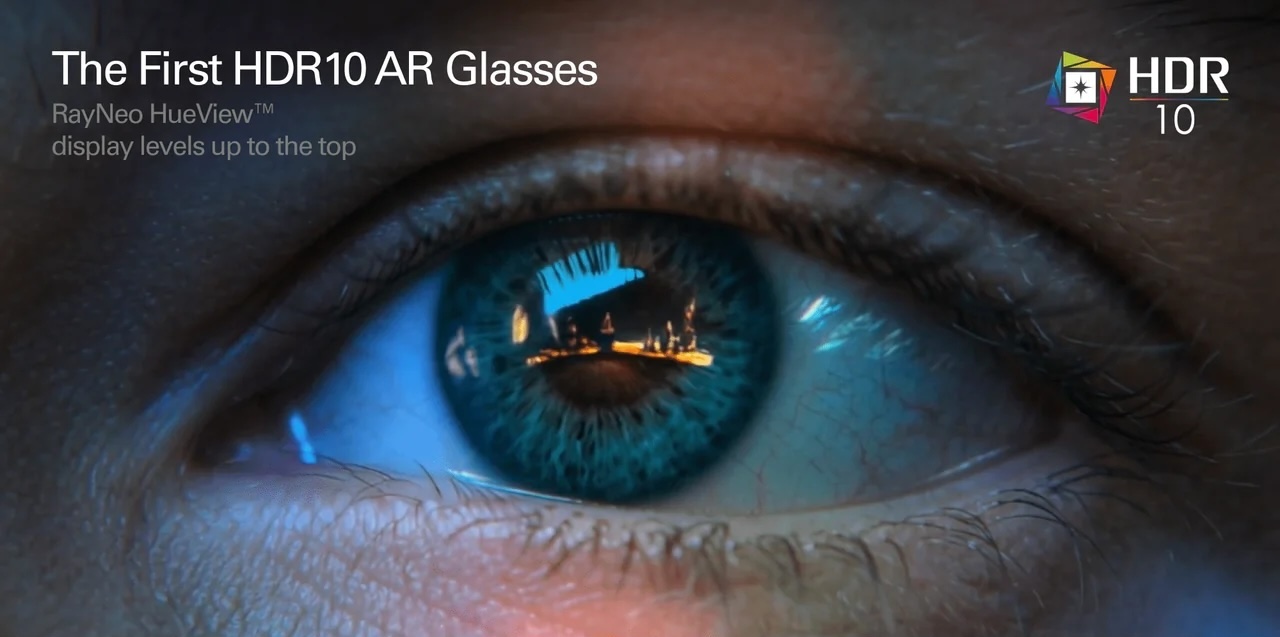
It also says the Air 4 Pro weighs 76g and uses adjustable nose pads and flexible temples for a pressure free fit. That’s the sort of spec that sounds boring, but you’ll feel it immediately if the frame presses too hard during a long flight or a late night movie.
Compatibility is the whole purchase
RayNeo frames this as “universal USB C compatibility,” with no WiFi or apps required, and the spec sheet calls out iPhone 15, 16, and 17 USB C models, Android phones, MacBook, iPad, Steam Deck, and PlayStation consoles. If you’re wondering whether it works with iPhone, that’s the cleanest answer: the listing says iPhone 15, 16, and 17 USB C models connect directly.
There’s also a telling line about being “designed without internal power storage for a lighter frame,” which is a trade off worth noticing. It keeps things lighter and simpler, which is a good call for comfort, but it also means you’re always tethered to your source device, and it’s drawing power from that device the entire time. If you’re plugged into a phone, expect your battery to drain noticeably faster. And if you’re asking whether you’ll need WiFi or an app, the listing’s pitch is no: it’s marketed as “no WiFi or apps required.”
Price: $249 (Early bird price), $299
Where to Buy: Amazon
So the real question is: do you want a giant private screen that follows you around, or do you want a gadget you’ll only use when everything is perfectly set up. If you’re honest about that, the RayNeo Air 4 Pro AR Glasses’ plug and play pitch starts to look either like a great fit or a warning label, and you can decide before you spend the money.