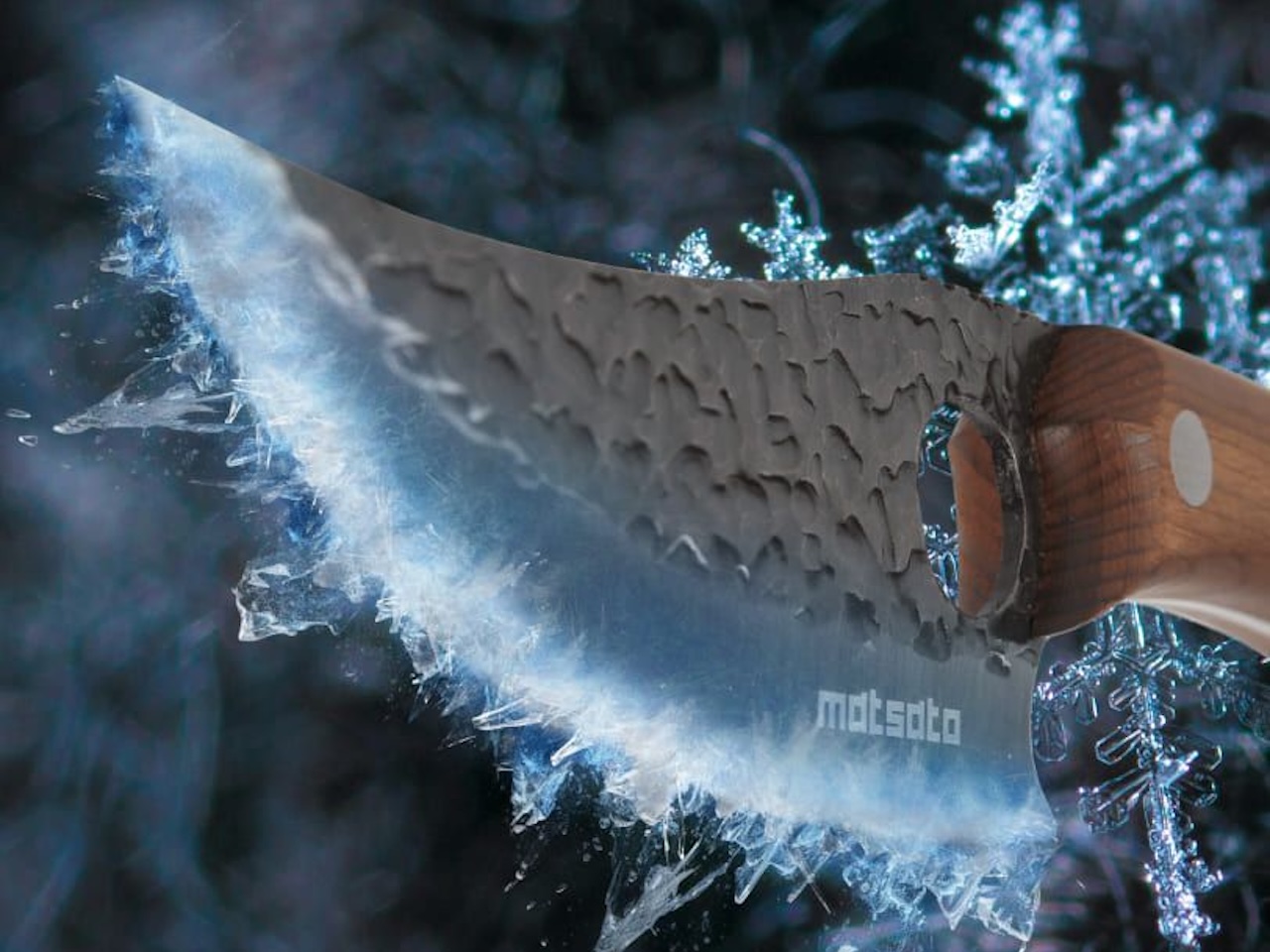
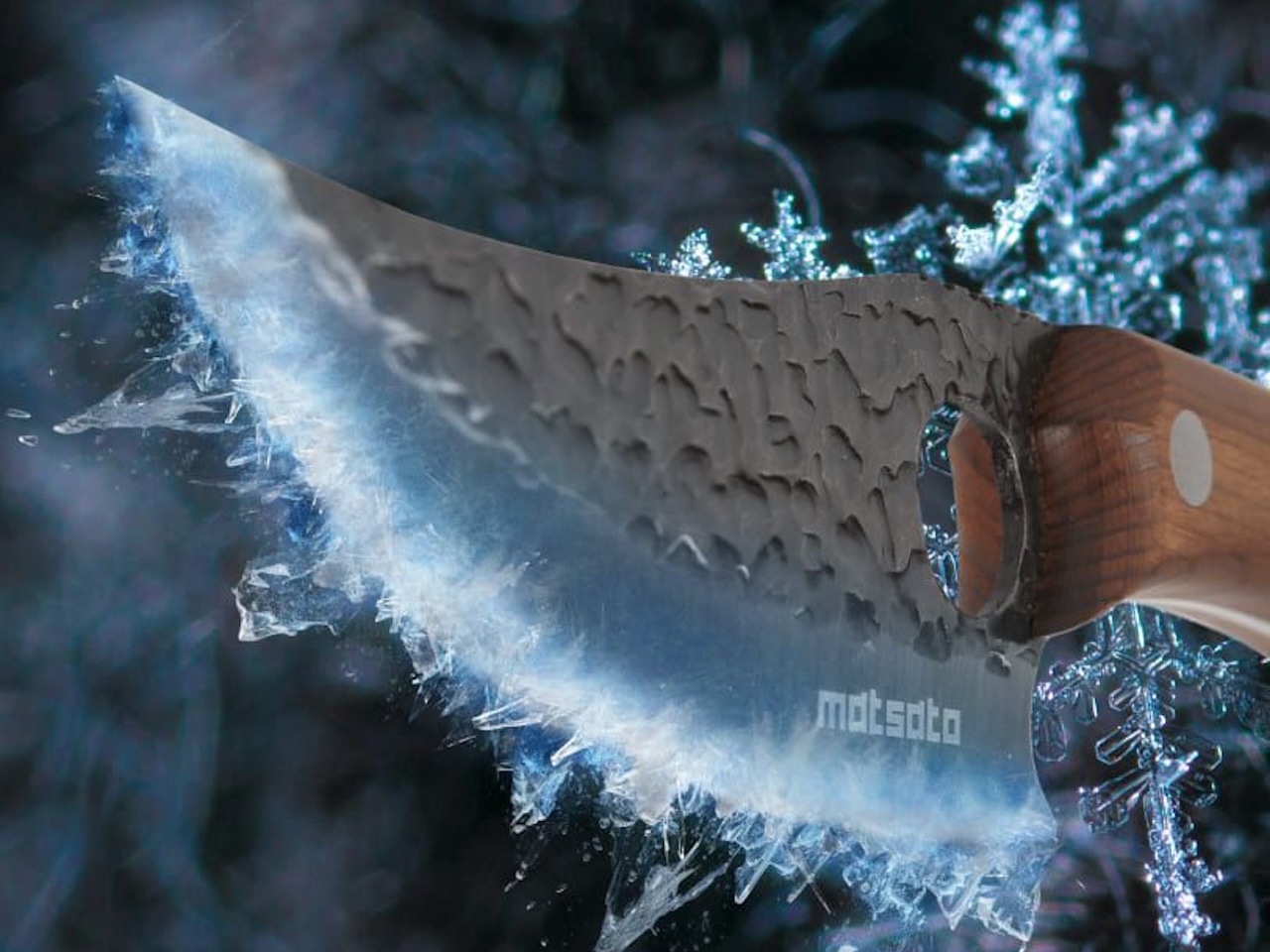
The Matsato knife didn’t follow the usual playbook. There was no splashy launch event and no celebrity chef endorsement tour, but there was a heavy push through online ads and affiliate content that flooded video platforms and social feeds. It became one of the most talked-about kitchen tools on the internet before most traditional outlets had even noticed it existed. The Matsato knife has become a genuine phenomenon in the budget cutlery space. The question everyone keeps typing into Google isn’t whether it looks cool. It’s whether the thing actually works.
Price: From $34.99
Where to Buy: Matsato, Amazon
What the Matsato Knife Actually Is
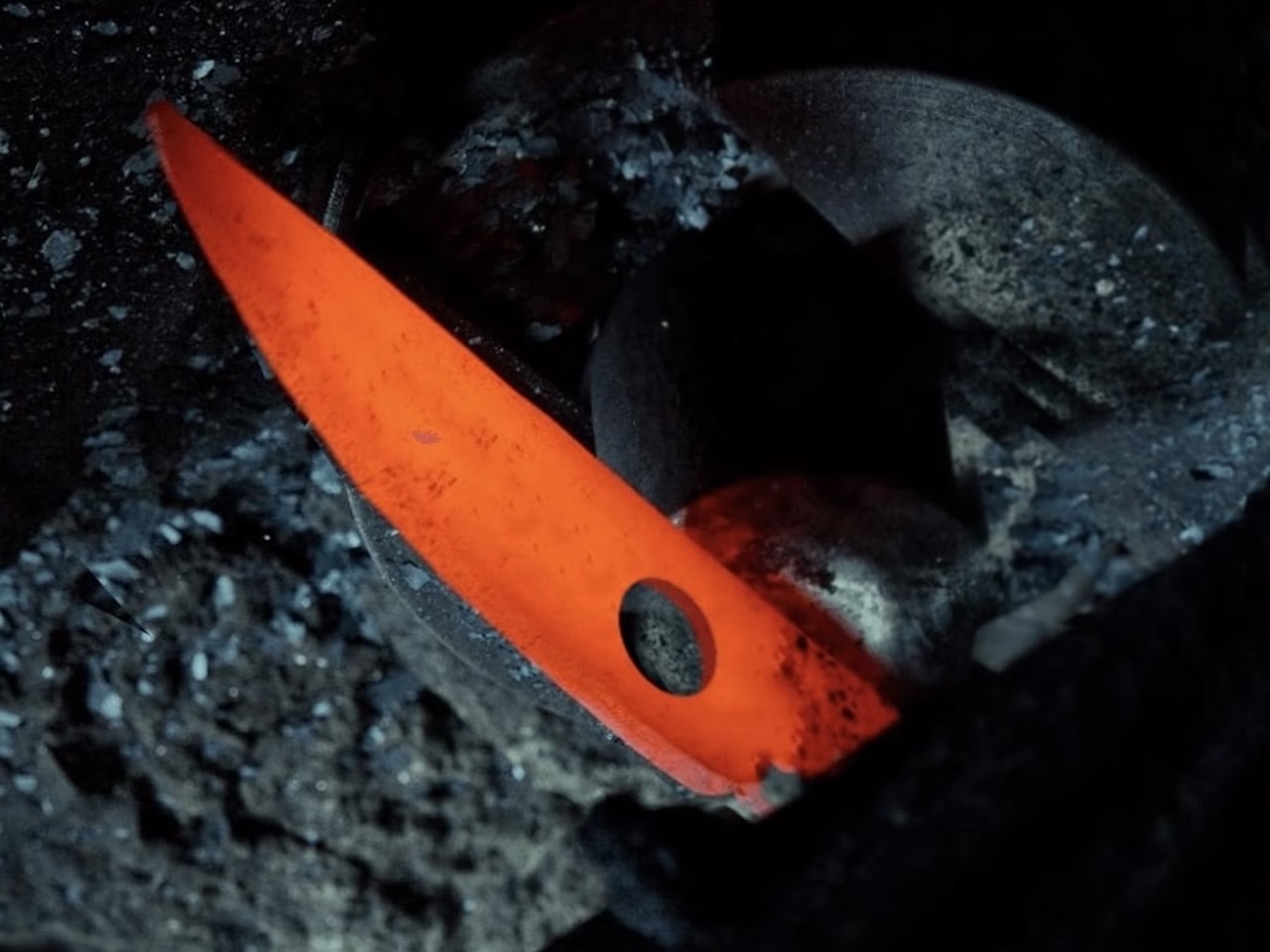
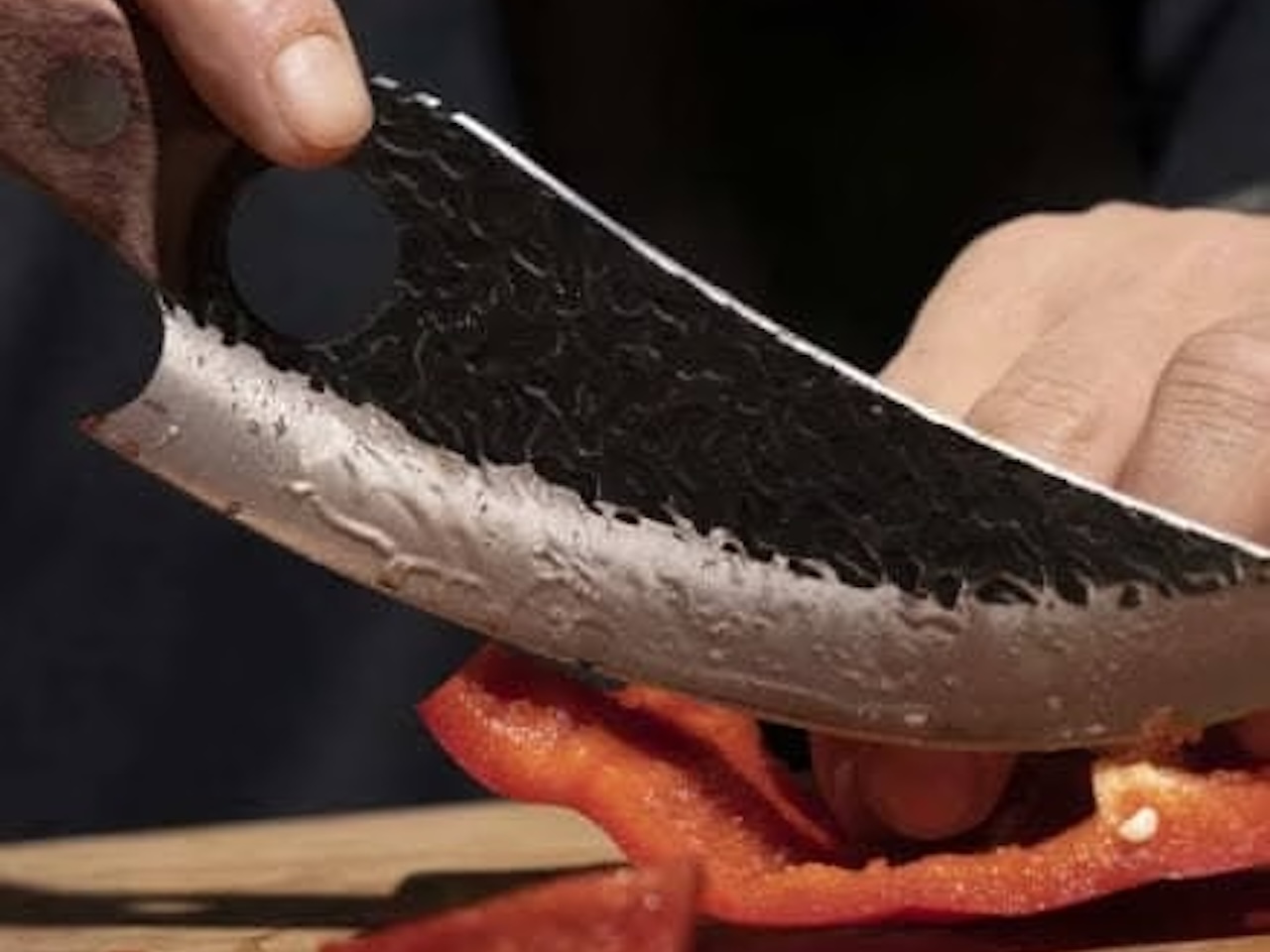
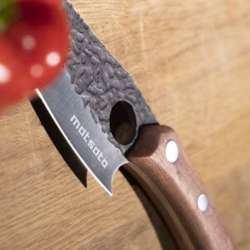
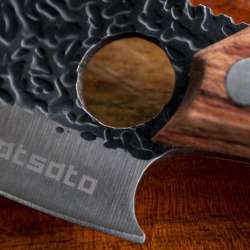
At its core, the Matsato knife is a Japanese-style chef knife built around ice-hardened stainless steel and a hammered blade finish designed to reduce food from sticking during cuts. The handle is ergonomic beechwood, shaped for balance and long sessions without hand fatigue, and the blade features a laser-carved index finger hole near the bolster that gives users a different grip option for more controlled cuts. It’s positioned as a do-everything kitchen knife, covering slicing, dicing, chopping, and mincing across vegetables, fruits, and meats.
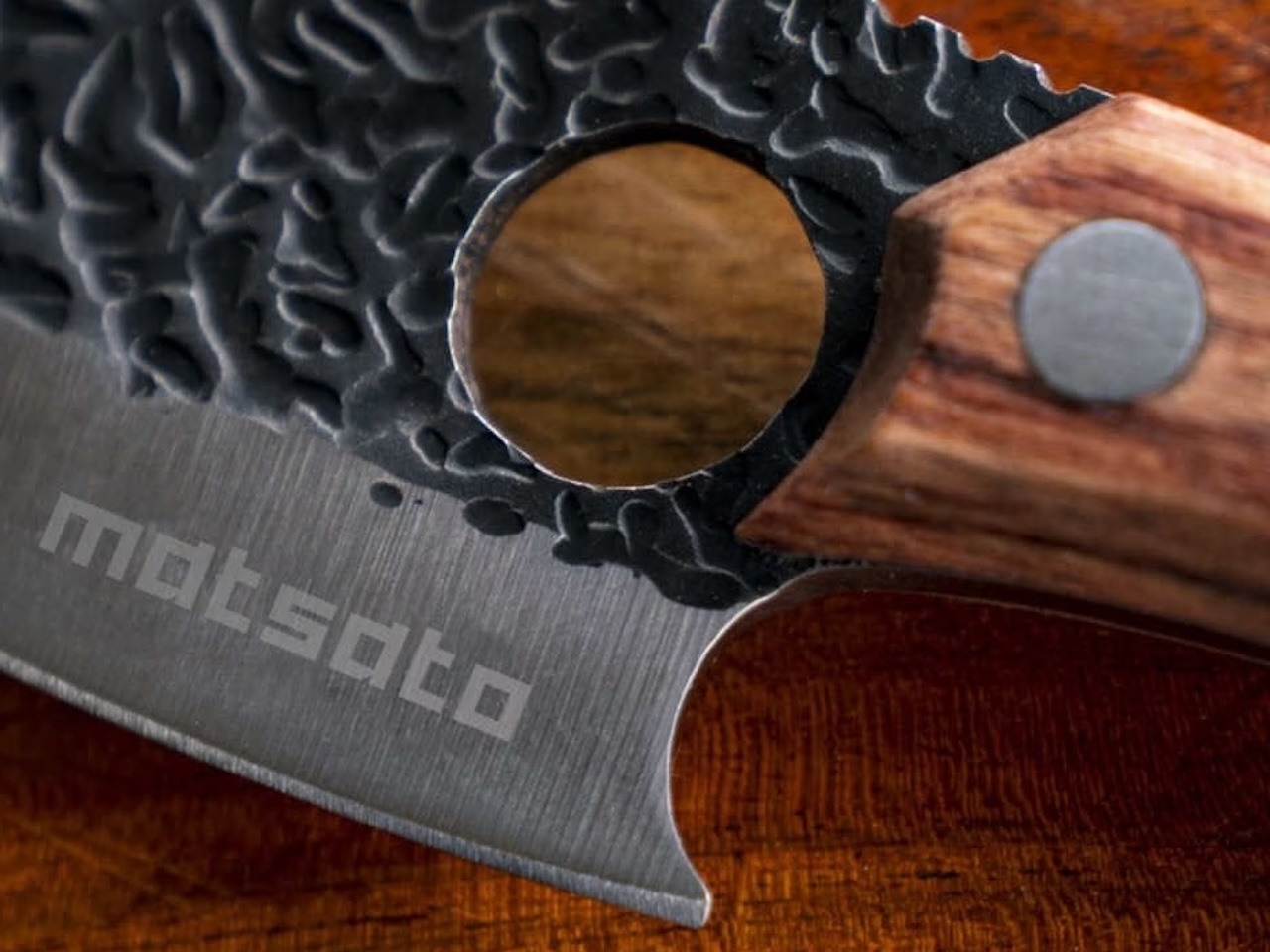
The hammered finish isn’t just decorative. That textured surface creates tiny air pockets between the blade and whatever you’re cutting, which means fewer stuck potato slices and less drag through dense produce. Paired with the weight distribution Matsato engineered into the blade-to-handle ratio, it feels more deliberate in hand than most knives at this price point have any right to feel.
The Price That Stopped People Mid-Scroll
The official site regularly runs aggressive promotions, advertising 70 percent off sales that bring the knife into the $20 to $30 range depending on the configuration. Standard retail pricing from major sellers tends to land closer to $35, which means the deep discount framing is more of a permanent marketing tactic than a limited-time offer. A premium leather sheath bundle is also available for buyers who want a storage and protection option included.
That pricing is what turned curiosity into conversions. The Matsato knife sits in a zone where impulse purchases happen without much deliberation, and the Japanese-inspired aesthetic gives it a visual identity that photographs well in kitchen content. It looks like it should cost significantly more than it does, which is exactly the kind of gap that drives viral traction on platforms where appearance matters.
Where It’s Actually Made
This is where the conversation gets interesting. Matsato leans heavily into Japanese design language across its branding, from the name itself to the visual presentation on its website and product listings. The company behind the brand, however, is registered in Lithuania, not Japan. The knives themselves are manufactured in China, likely in Yangjiang, Guangdong, a city known as the country’s knife and scissors capital. That double disconnect has sparked ongoing debate across online forums and review sections, with some buyers feeling the marketing constructs a Japanese origin story that doesn’t match reality.
Knife enthusiast communities in particular have been vocal about the branding approach, with several pointing out that the Matsato appears identical in profile and construction to other viral knife brands like Huusk, suggesting a shared supply chain of generic blades repackaged under different names.
It’s worth noting that “Japanese-style” and “made in Japan” are two different claims, and Matsato technically makes the former. The design principles, the blade geometry, the hammered finish tradition all trace back to Japanese knife-making philosophy.
What Buyers Are Saying
Customer sentiment breaks into two distinct camps, and the gap between them is wide. On the positive side, casual buyers praise the sharpness out of the box, the weight, and the visual presentation. First impressions tend to run positive, and for people who’ve never owned a higher-end kitchen knife, the Matsato feels like a genuine upgrade over whatever came in a block set.
The other camp is louder and more specific. Knife industry insiders and enthusiast communities describe it as a low-grade steel blade, likely 3Cr14 or 420J, dressed up with marketing that far outpaces the materials. Several buyers have noted that products shipped directly from China despite being listed as domestic inventory, and customer service response times have drawn consistent criticism across review platforms. The deeper concern isn’t just quality control. It’s whether the entire product is a generic import, rebranded and sold at a markup through aggressive ad funnels.
Why It Matters Beyond the Kitchen
The Matsato knife story isn’t really about cutlery. It’s about how products go viral in 2026 through aggressive digital marketing rather than traditional media infrastructure. No PR agency placed this in a gift guide, but the brand’s ad spend across video platforms and affiliate content creators did the heavy lifting that old-school press coverage used to handle. The product found its audience through paid visibility, social sharing, and a price point that eliminated friction.
Price: From $34.99
Where to Buy: Matsato, Amazon
The knife itself occupies a specific niche: good enough performance at a price low enough to make the purchase feel risk-free. Whether that formula holds up over months of daily kitchen use is a different question, one that the next wave of long-term user reports will answer.