
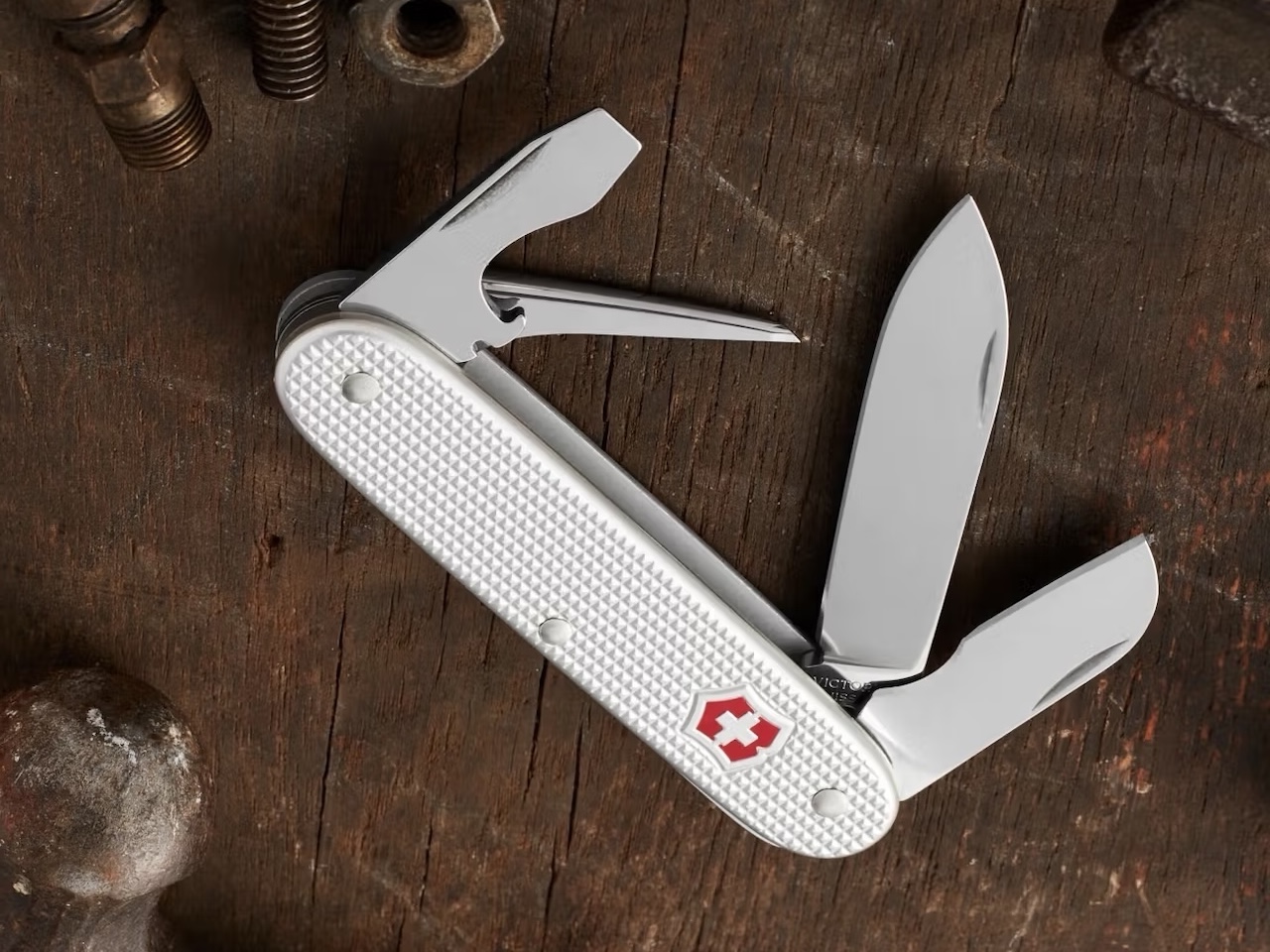
 Every list of the “best” Swiss Army knives for EDC recommends the same three or four models. There’s nothing wrong with a Huntsman or a Super Tinker, but Victorinox makes well over 100 variations of the Swiss Army Knife, and the most interesting options rarely show up in the conversation. Some of them carry hidden features that sound made up until you actually pull them out of the scales. Others take a deliberate “less is more” approach that makes the standard lineup feel cluttered by comparison.
What makes a Swiss Army knife interesting for everyday carry isn’t always the tool count or the blade length. Sometimes it’s a design decision that breaks from convention, a specialist function nobody expected on a pocket knife, or a form factor that solves a problem most people didn’t realize they had. Victorinox has been manufacturing these knives in Ibach, Switzerland since 1884, and across 140 years of production, some genuinely unusual models have slipped into the catalog without getting the attention they’re worth.
These seven picks aren’t ranked and they aren’t filtered by price. They’re chosen because each one does something that the rest of the lineup doesn’t, and because every single one of them works as a legitimate daily carry. If your current EDC rotation has gotten predictable, this is where it gets interesting.
Victorinox Compact
Most 91mm Swiss Army knives hide tweezers and a toothpick in their handle slots. The Compact hides a pressurized ballpoint pen. It sits where you’d normally find the corkscrew on the back scale, and because it’s pressurized, it writes at any angle, in wet conditions, and in temperatures that would kill a standard ink cartridge. Victorinox doesn’t advertise this feature loudly, and plenty of SAK owners have no idea it exists on any model in the lineup.
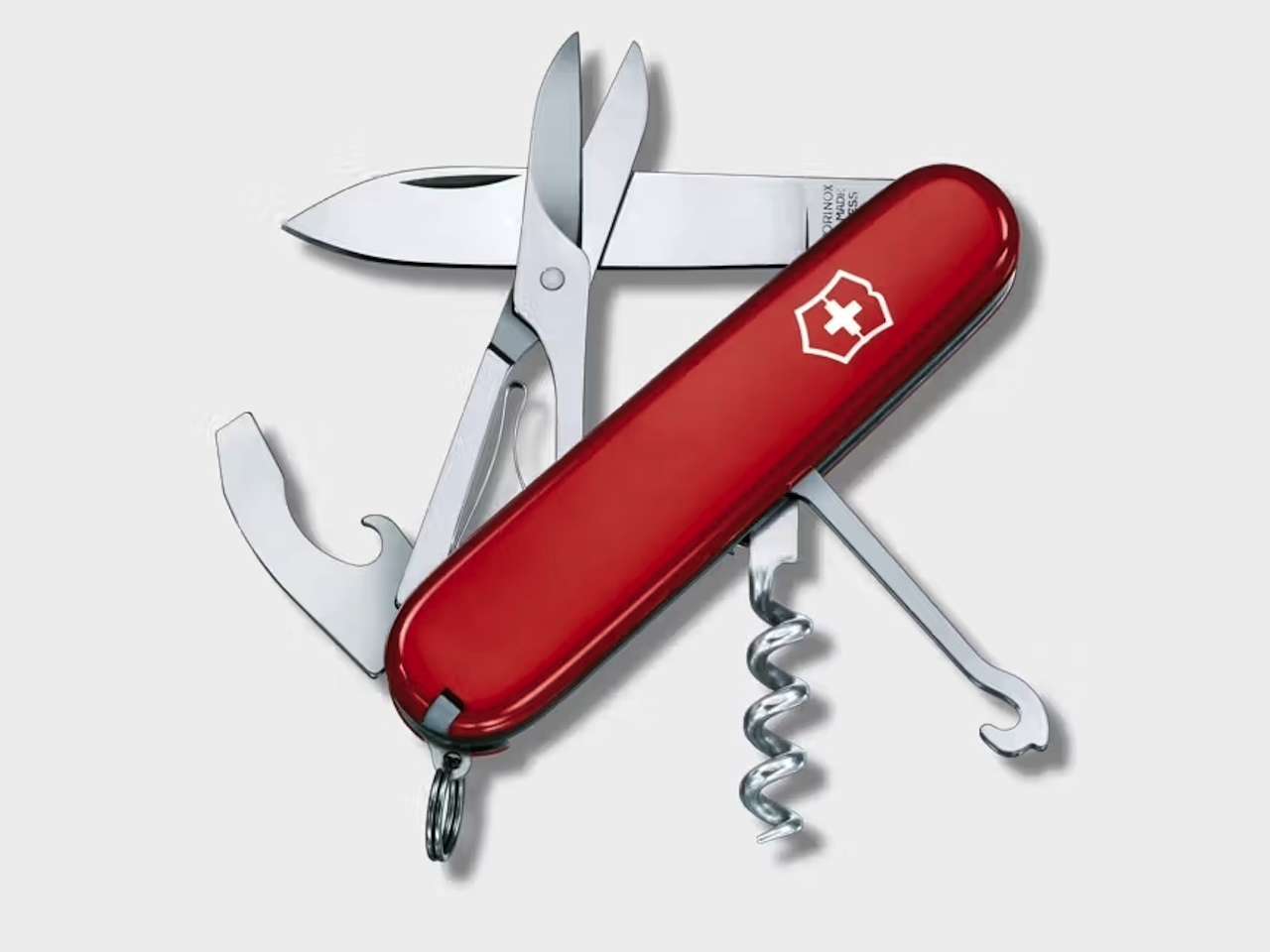
The pen isn’t even the only reason the Compact earns its name. Fifteen functions fit inside a package that measures 91mm long and weighs just 64 grams, making it lighter than most two-layer Officer’s knives despite packing three layers of tools.
The multipurpose hook that Victorinox includes on certain models lives here too, and it’s become a quiet favorite among people who open packages daily. A mini screwdriver for eyeglasses and electronics tucks into the corkscrew, and full-size scissors handle everything from trimming threads to cutting tape. For a knife that sits in the middle of the catalog with zero fanfare, the Compact packs an absurd amount of utility into its slim frame.
Price: $47.99
Where to Buy: Amazon
Victorinox Rambler
The Rambler is a 58mm keychain knife, the same size as the Classic SD that millions of people carry without thinking twice about it. Where it separates itself is with a magnetic Phillips screwdriver, a tool that Victorinox almost never includes in the keychain platform. That single addition turns a tiny pocket knife into something genuinely useful for tightening eyeglasses, adjusting electronics, or handling the small Phillips-head screws that show up constantly in daily life.
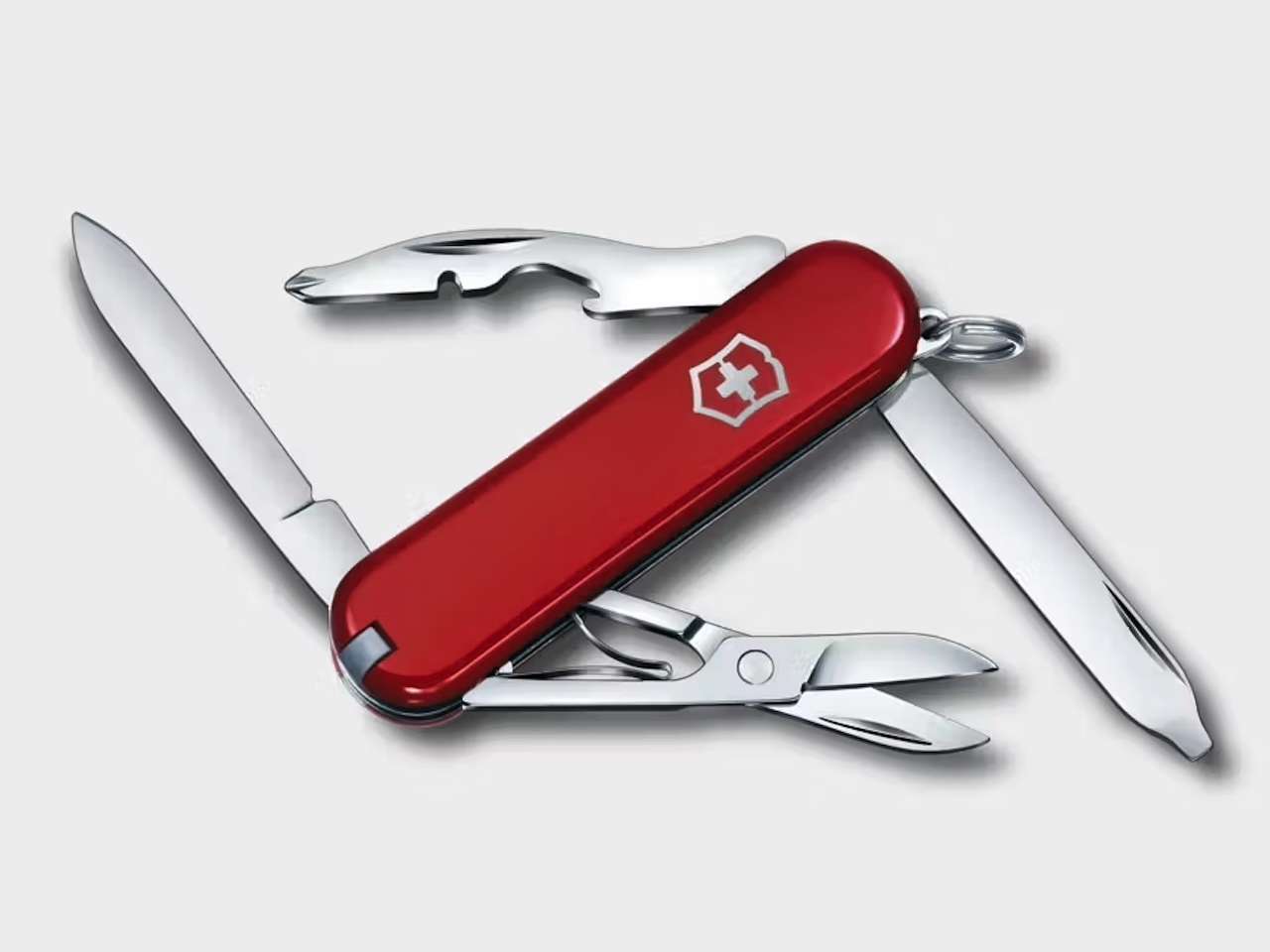
Ten functions fit inside a frame that weighs 31 grams and sits on a keychain without adding noticeable bulk. Scissors, a flat-head screwdriver, a bottle opener, a wire stripper, and a nail file round out the tool set, but the Phillips is the reason the Rambler has developed a following among IT workers and people who fix things for a living. It’s the smallest Swiss Army Knife that can handle both screw head types, and for anyone who’s ever been frustrated by the Classic SD’s lack of a Phillips, the answer has been sitting in the catalog all along.
Price: €27/$30
Where to Buy: Amazon
Victorinox Cadet Alox
At 8mm thick and 45 grams, the Cadet is the thinnest Swiss Army Knife you can carry that still includes a full-size blade. Victorinox achieves that slim profile by doing something counterintuitive: removing the toothpick and tweezers slots that exist on nearly every other model. Those two small accessories require extra space between the scales, and without them, the Cadet sits flatter in a pocket than any other knife in the 84mm Alox range.
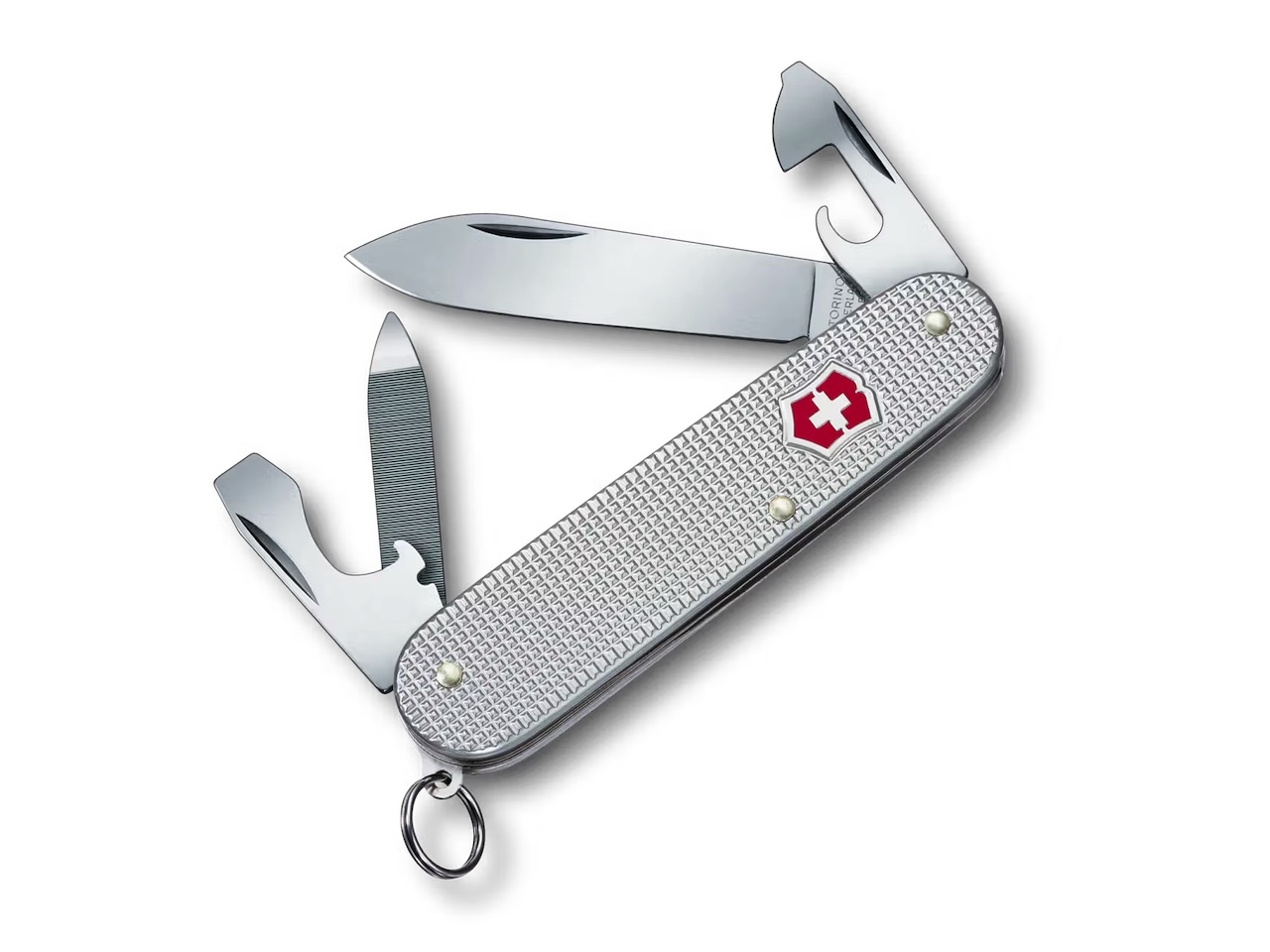
The ribbed aluminum Alox scales replace the standard cellidor handles found on most Victorinox knives, adding grip texture and a visual refinement that reads closer to a gentleman’s accessory than a utility tool. Nine functions include a large blade, can and bottle openers, two flat-head screwdrivers, a wire stripper, a nail file with nail cleaner, and a key ring. That’s enough to handle virtually any everyday task without the bulk of a full-size Officer’s knife. The Cadet has developed a reputation in EDC communities as the Swiss Army Knife for people who don’t normally carry Swiss Army Knives, and the design philosophy behind it explains exactly why.
Price: $79.95 AUD ($56 in the US)
Where to Buy: Victorinox Australia
Victorinox MiniChamp Alox
Fifteen functions in a 58mm keychain knife. That number sounds physically impossible until you see how Victorinox managed to layer the tools inside a frame that weighs just 40 grams and measures 10mm thick. The MiniChamp Alox fits on a keychain, rides next to car keys without complaint, and still manages to include scissors, a magnetic Phillips screwdriver, rulers in both metric and imperial, a nail file, a bottle opener, and a small blade.
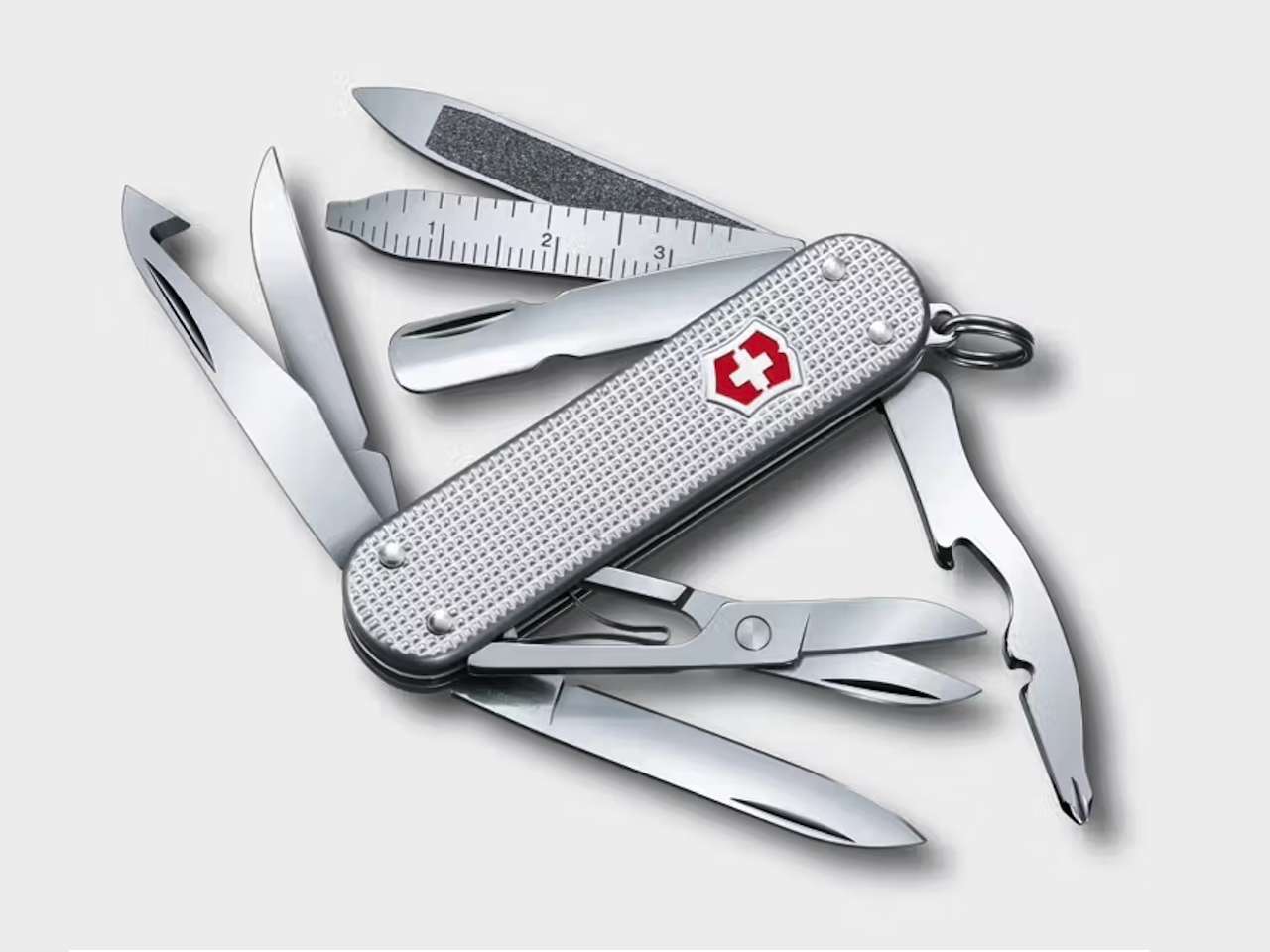
Then it gets weird, in the best way. The MiniChamp also carries an orange peeler and a cuticle pusher, two tools that have no obvious place on a pocket knife and yet somehow feel right once you’ve used them. The orange peeler works on any citrus fruit without piercing the flesh underneath, and the cuticle pusher doubles as a fine scraping tool for labels and adhesive residue.
Victorinox dresses this version in silver Alox scales with a letter opener that doubles as a secondary cutting edge, and the result is a keychain tool that contains more functions than some full-size multitools. For sheer tool density relative to its size, nothing in the Victorinox catalog comes close.
Price: $49.98
Where to Buy: Amazon
Victorinox Electrician Alox
While most Swiss Army knives try to be everything to everyone, the Electrician does the opposite. Seven functions, 93mm of Alox-scaled frame, and a very specific purpose: electrical work. The dedicated electrician’s blade features a rounded tip designed for stripping wire insulation without nicking the conductor underneath. A separate wire scraper handles heavier gauge insulation and cable sheathing. These aren’t generic tools adapted for electrical tasks; they’re specialist instruments that happen to fold into a pocket knife.<
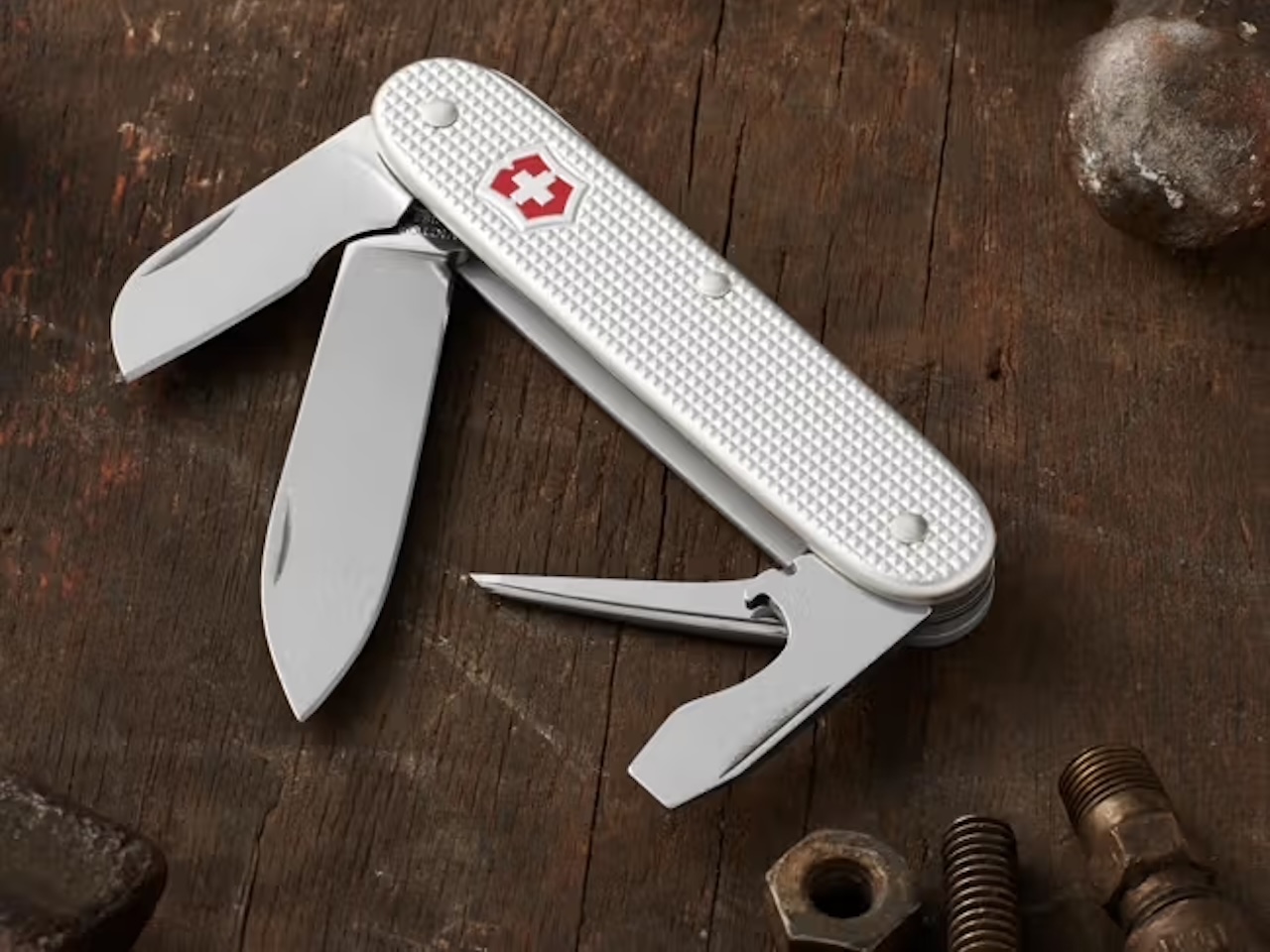
The Electrician weighs 69 grams and carries a standard large blade alongside the specialist tools, plus a bottle opener, a 7mm screwdriver, a wire stripper, and a reamer. It’s the kind of knife that tradespeople throw into a tool bag without worrying about it, and the Alox scales can survive workshop abuse that would crack standard cellidor handles.
What makes it interesting for the broader EDC audience is the concept itself: a Swiss Army Knife built for one job, refined over decades, and still available for less than most tactical folders. The EDC community has started paying attention to the Electrician as a “less is more” counterpoint to the Swiss Army Knives that try to cram 30 tools into one package.
Price: CHF 43.00 ($54 USD)
Where to Buy: Victorinox
Victorinox Explorer
The Explorer carries a magnifying glass. Not a digital zoom app, not a clip-on lens, but an actual glass magnifier built into the handle alongside 15 other functions. It’s the kind of tool that sounds like an afterthought until you need to read fine print on a medication label, inspect a splinter, examine a circuit board, or identify a tiny maker’s mark on a piece of hardware. Once you’ve used it a few times, its absence from other models starts to feel like an oversight.
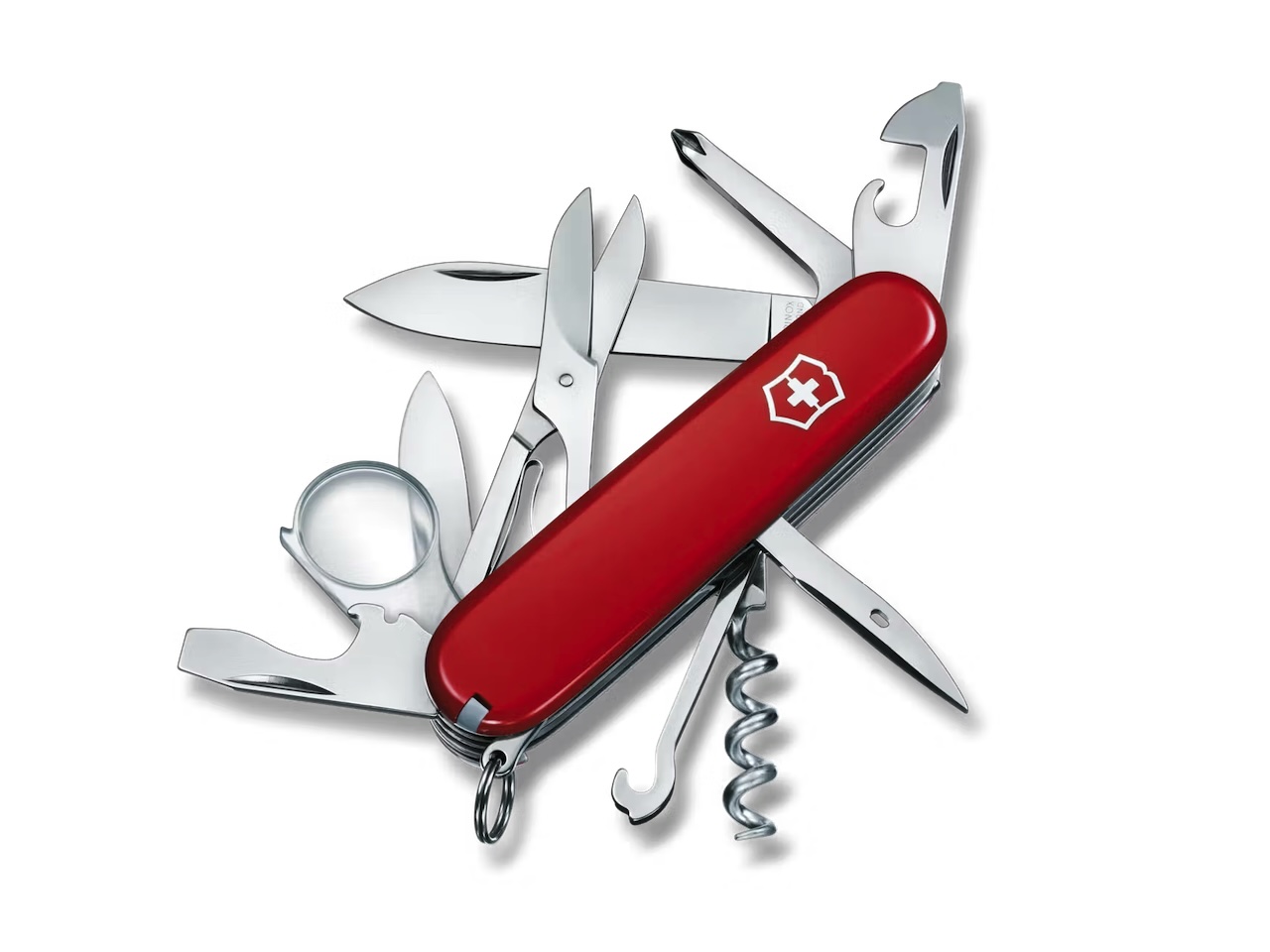
Sixteen functions fill a 91mm frame that weighs 101 grams, making the Explorer one of the heavier Officer’s knives in the lineup. Two blades, scissors, a Phillips screwdriver, a corkscrew, a reamer with sewing awl, a multipurpose hook, and the full complement of openers and screwdrivers round out the tool set.
The Explorer sits in the catalog between the simpler Spartan and the tool-heavy SwissChamp, occupying a middle ground where the tool count is high enough to handle genuinely complex tasks but not so high that the knife becomes unwieldy. The magnifying glass is the conversation starter, but the overall layout is what keeps it in rotation.
Price: $54.99
Where to Buy: Amazon
Victorinox Pioneer X Alox
The Pioneer has been part of the Victorinox lineup for decades, but for most of that history it never included scissors. The Pioneer X changed that. Adding precision scissors to the 93mm Alox platform created what many EDC enthusiasts now consider the most complete everyday Swiss Army Knife: a stainless steel frame with ribbed aluminum scales, nine functions, and a weight of 94 grams that feels substantial without feeling heavy.
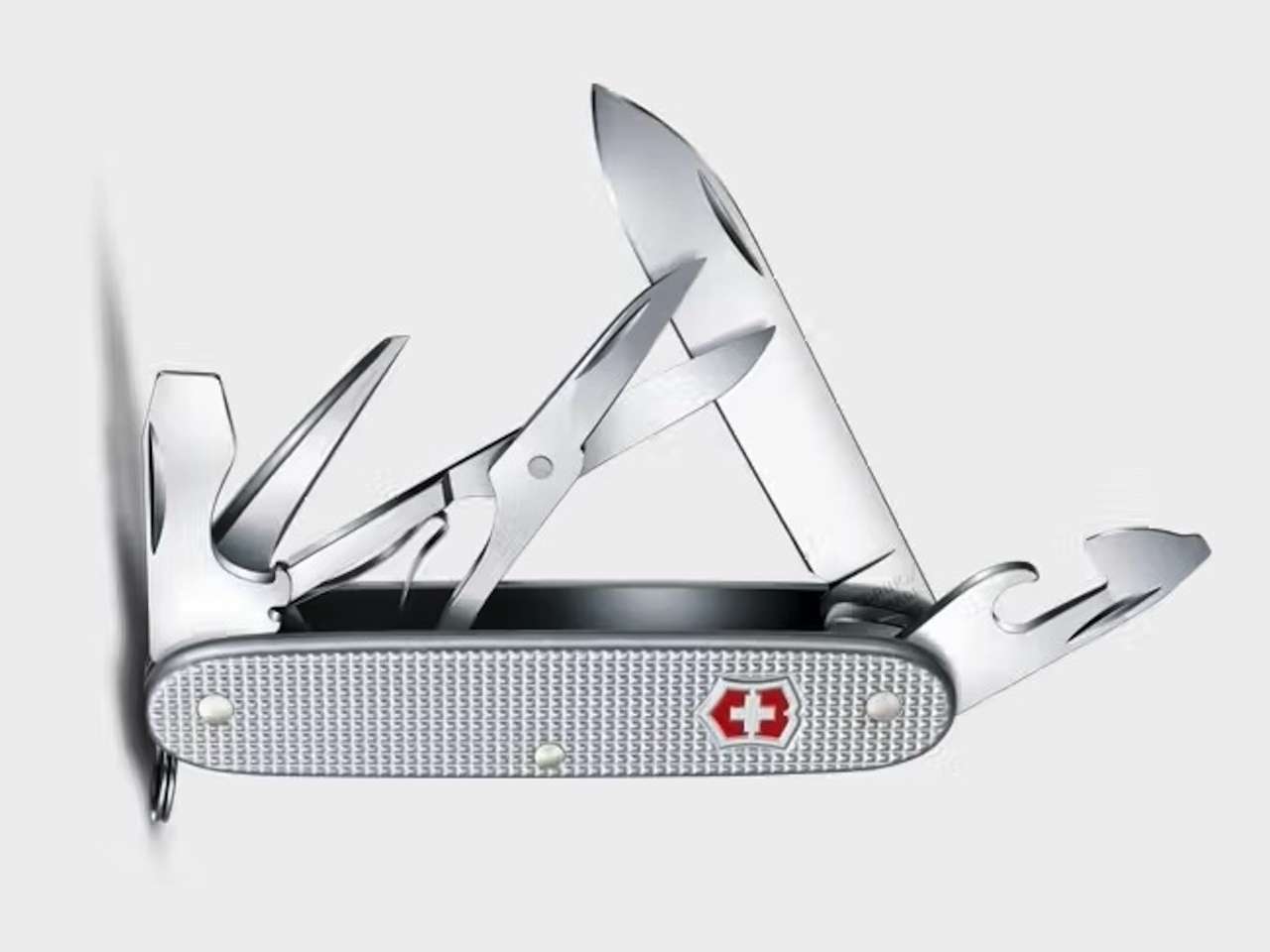
The rest of the tool set reads like a greatest hits of practical design. A large blade, can and bottle openers, two flat-head screwdrivers, a wire stripper, a reamer with punch, and a key ring cover the tasks that actually come up during a normal day. The Pioneer X doesn’t try to impress with exotic tools or extreme function counts. Instead, it takes a proven platform, adds the one tool that was always missing, and delivers it in Alox scales that develop character over years of daily use. Online EDC forums have turned the Pioneer X into a recommendation so common it’s practically consensus, and the reason is simple: everything works, nothing is wasted, and the build quality will outlast whatever pocket you carry it in.
Price: $49
Where to Buy: Amazon
Why “interesting” matters for EDC
The Swiss Army Knife market is full of “best” lists, and most of them point to the same handful of models. Nothing wrong with reliable picks, but Victorinox builds these knives in enough variety that there’s almost certainly a model tuned to how you actually use a pocket knife rather than how a generic list assumes you will. A Compact with its hidden pen solves a completely different problem than a Pioneer X with its Alox durability, and an Electrician built for one specific trade has nothing in common with a MiniChamp that tries to carry an entire toolbox on your keychain.
Every knife on this list is Swiss-made with Victorinox’s lifetime warranty, and all of them use the same stainless steel that the company has been refining since Karl Elsener founded the workshop in 1884. The interesting part isn’t just what these knives can do. It’s what they reveal about how thoughtfully Victorinox approaches a product that most people assume hasn’t changed in a century.

Gadgeteer Comment Policy - Please read before commenting
You left out the Swiss army knife with a nailclipper in it – the Nailclip 580. DON
https://www.amazon.com/Victorinox-Functions-Swiss-Multi-Tool-Cleaner/dp/B00K3LGU6E/ref=sr_1_3?crid=16KIG39QM3IBX&dib=eyJ2IjoiMSJ9.QwQtg5FJjP_fbkg93ws9cujCorKQLixrwDdl7ZW-xeN53ZbDnpbFqDUzsBXtrIl2XmpO_phJRHmufUDXqnQ55qGpPag4PSPLLgzTLpPJLBwabfzt6CVe8dQ0a5yeu2lvMsIkgfDbGLkGIkdTzsU_ysRz_Ppd6h72uk7rPpvYX0j2g67H90dSPwpRh8Ccfe22Fq-b9fjLOibXEl3Kx5tN9rz3r4dN96MwaWnKIiD5b5exv3n3hrI9kGu18x-IUbps.7Z6xGyf2Vnfa4TBZ8hw1Uw5YtgMJByqA2eD4Od2kGZg&dib_tag=se&keywords=nailclip%2B580&qid=1774114654&sprefix=nailclip%2B580%2Caps%2C294&sr=8-3&th=1