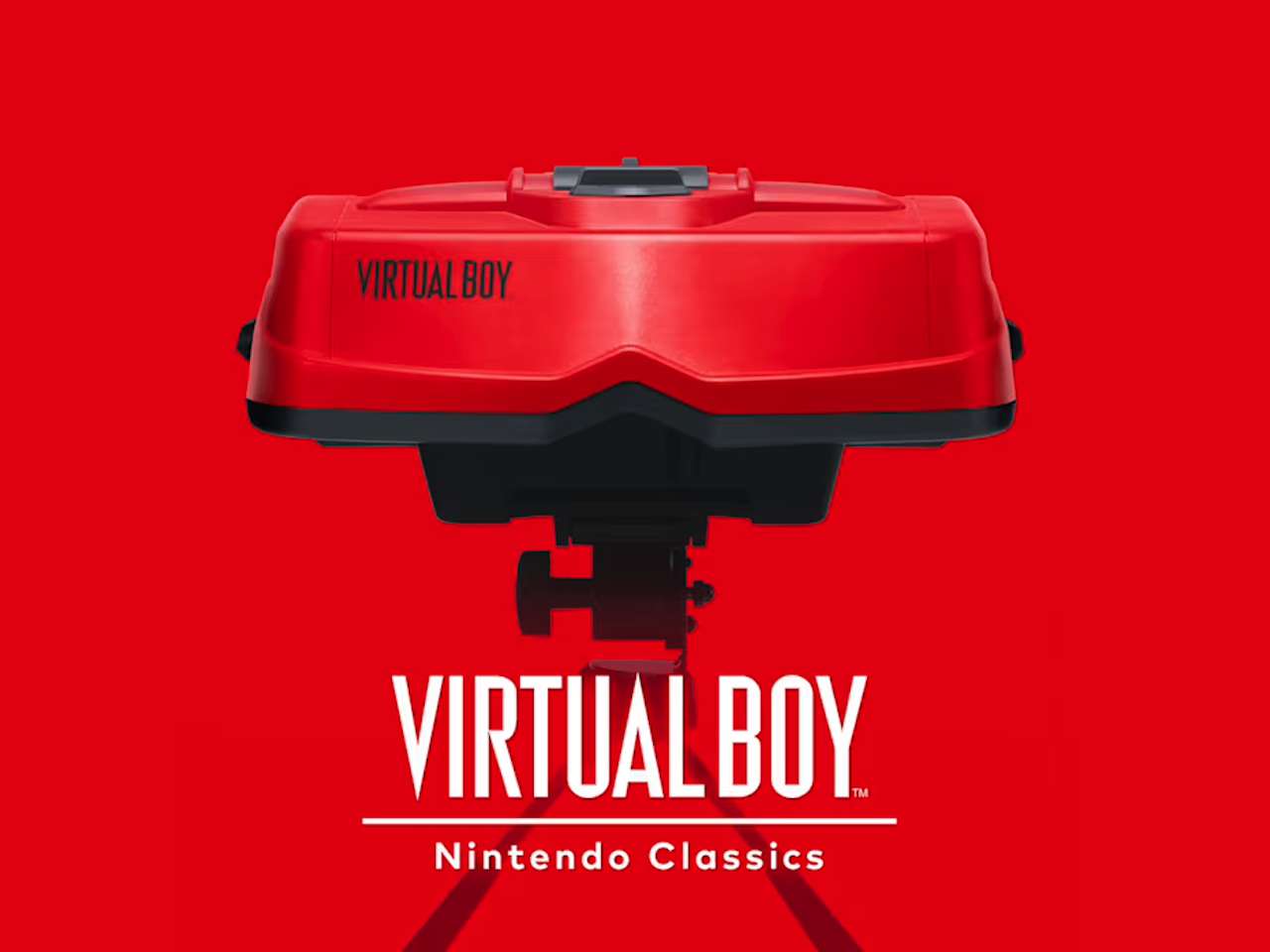
ARTICLE – Nobody buried the Virtual Boy. Nintendo’s red-and-black tabletop console from 1995 simply vanished on its own, barely lasting twelve months before becoming the company’s most talked-about hardware misfire. Three decades of distance made it look like Nintendo preferred the whole chapter stayed forgotten.
Price: $24.99, $99.99
Where to Buy: Nintendo
That silence broke on February 17, 2026, the official Virtual Boy Switch Online release date. Nintendo Switch Online + Expansion Pack members can now play seven Virtual Boy titles through a new “Nintendo Classics” app on Switch 2 and the original Switch. The collection supports stereoscopic 3D via two optional accessories, one replicating the original hardware and one built from cardboard. You don’t need either one. Every game runs in standard 2D on your regular screen, which makes this feel more like a genuine archival effort than a gimmick. The lineup spans pinball, boxing, a platformer, puzzles, golf, a wireframe shooter, and a horror title never released outside Japan until now.
So the real question is: can a console most people only recognize from memes deliver something worth playing in 2026? It depends on you. If you need modern polish, this isn’t your stop. What Nintendo was building before VR went mainstream comes through clearly in these seven Virtual Boy Switch Online games, though, and they tell a surprisingly sharp story.
What the Seven Games Play Like
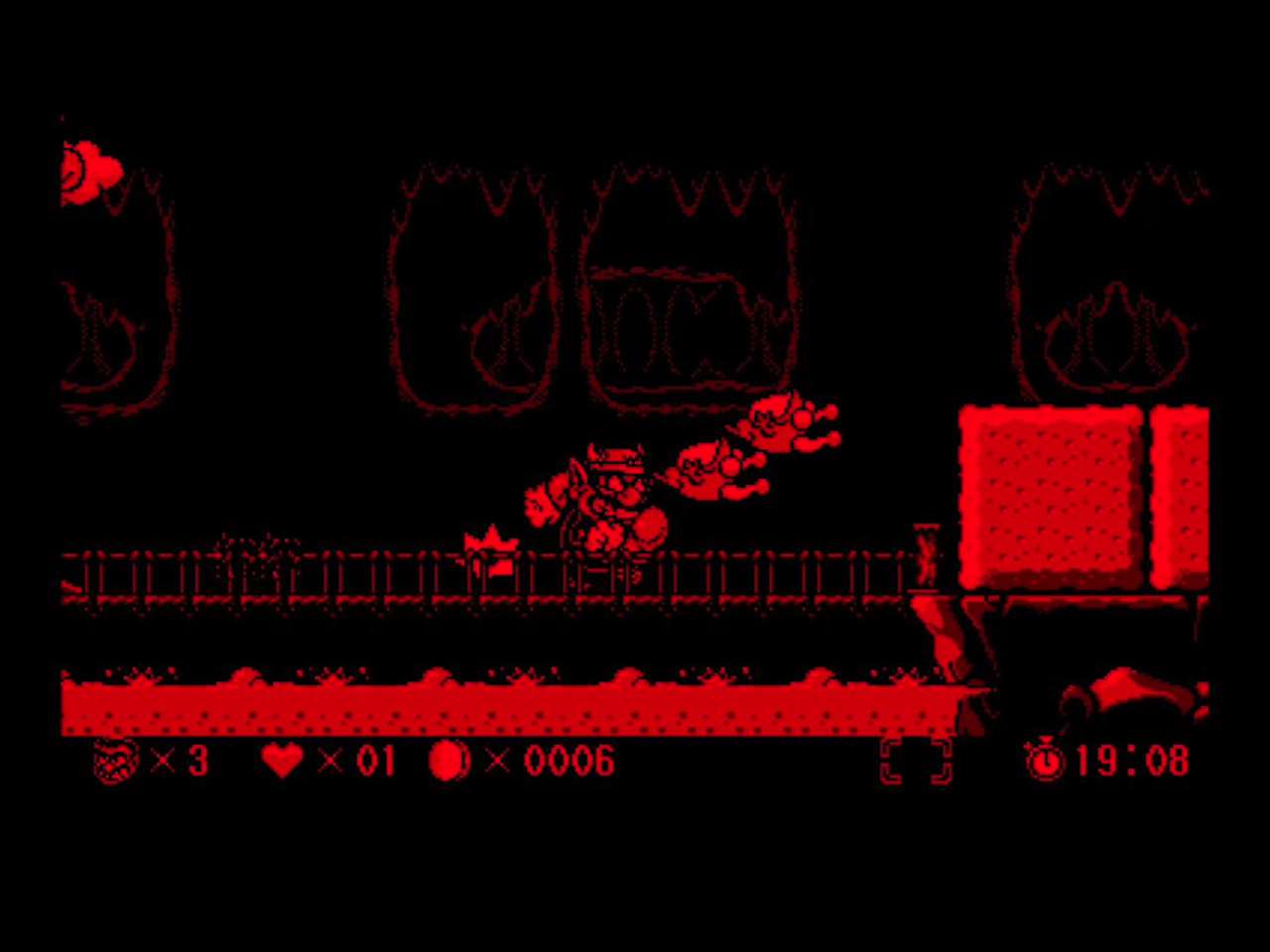
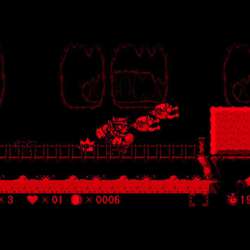
Virtual Boy Wario Land is the collection’s strongest entry, a platformer where Wario drops through a cave floor and fights back to the surface through hidden rooms, traps, and power-ups that reward exploration over speed. Stereoscopic depth gives it a diorama quality where platforms sit on separate planes, and hidden paths crack open when you charge into walls that look solid from one layer but hollow from another. Power-up hats cycle from fire attacks to flight, each one reshaping how you read the space around you. Boss fights demand awareness across both depth layers, blending timing with positioning that feels intentional rather than punishing. Level design runs moodier than the Game Boy entries before it, with enough layered ideas per stage to justify replaying. The design depth earns it.
Red Alarm is pure wireframe. It puts you inside a Tech-Wing Fighter navigating an AI battle system called KAOS while glowing red lines trace enemies against a pitch-black void, with a freely movable replay camera that was ahead of its time in 1995 and a stark visual pull that conventional sprite work can’t match.
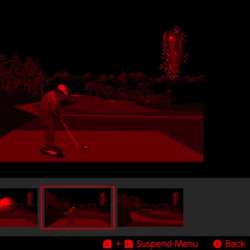
Galactic Pinball spreads across four cosmic tables where depth makes the ball feel weightier and more trackable at speed. Teleroboxer puts you in a robot boxing ring with stereoscopic punches flying at your face, delivering the visceral experience the original hardware was built for. 3-D Tetris reworks the formula into a spatial well across three modes, including a shape-matching challenge that forces planning several moves deep. The Golf Sim offers 18 holes with wind and terrain where 3D adds enough visual data to feel purposeful. Both sit as supporting entries, not filler.
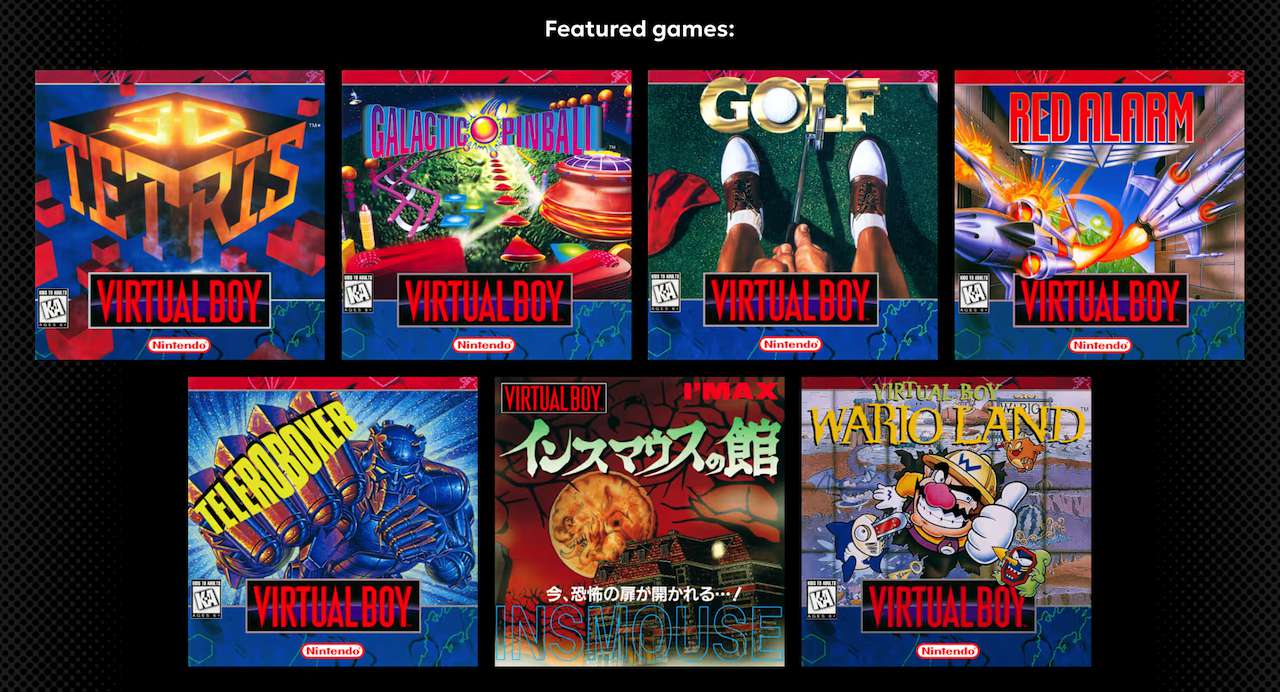
The genuine surprise is The Mansion of Innsmouth, a 1995 Japan-exclusive horror adventure where you play a detective trapped in a monster-filled mansion with a ticking clock, dodging creatures that lurch from the stereoscopic darkness. It’s a time capsule. Western players have never had official access, making it the most significant addition in the set.
How Stereoscopic 3D Works on Switch
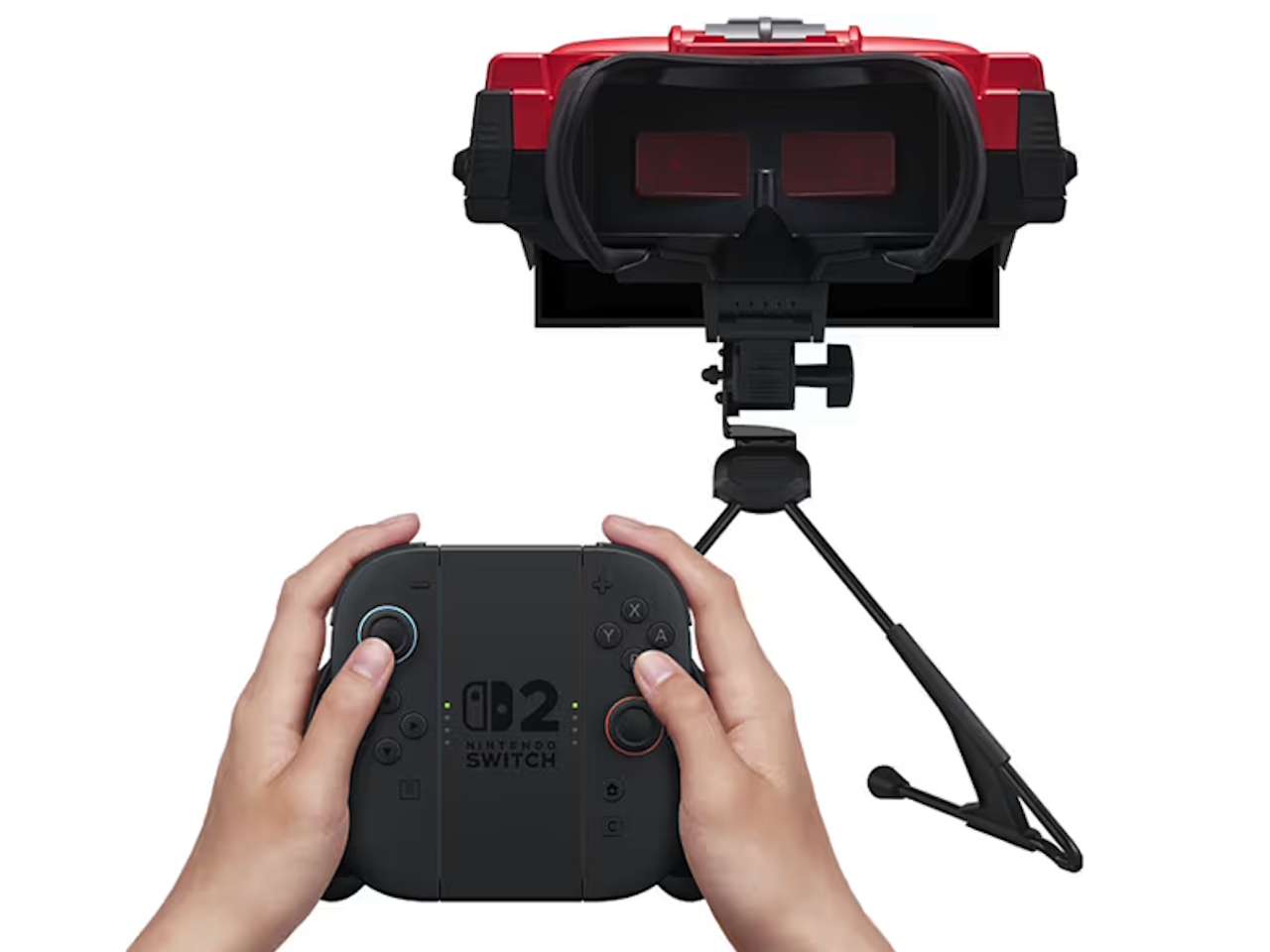
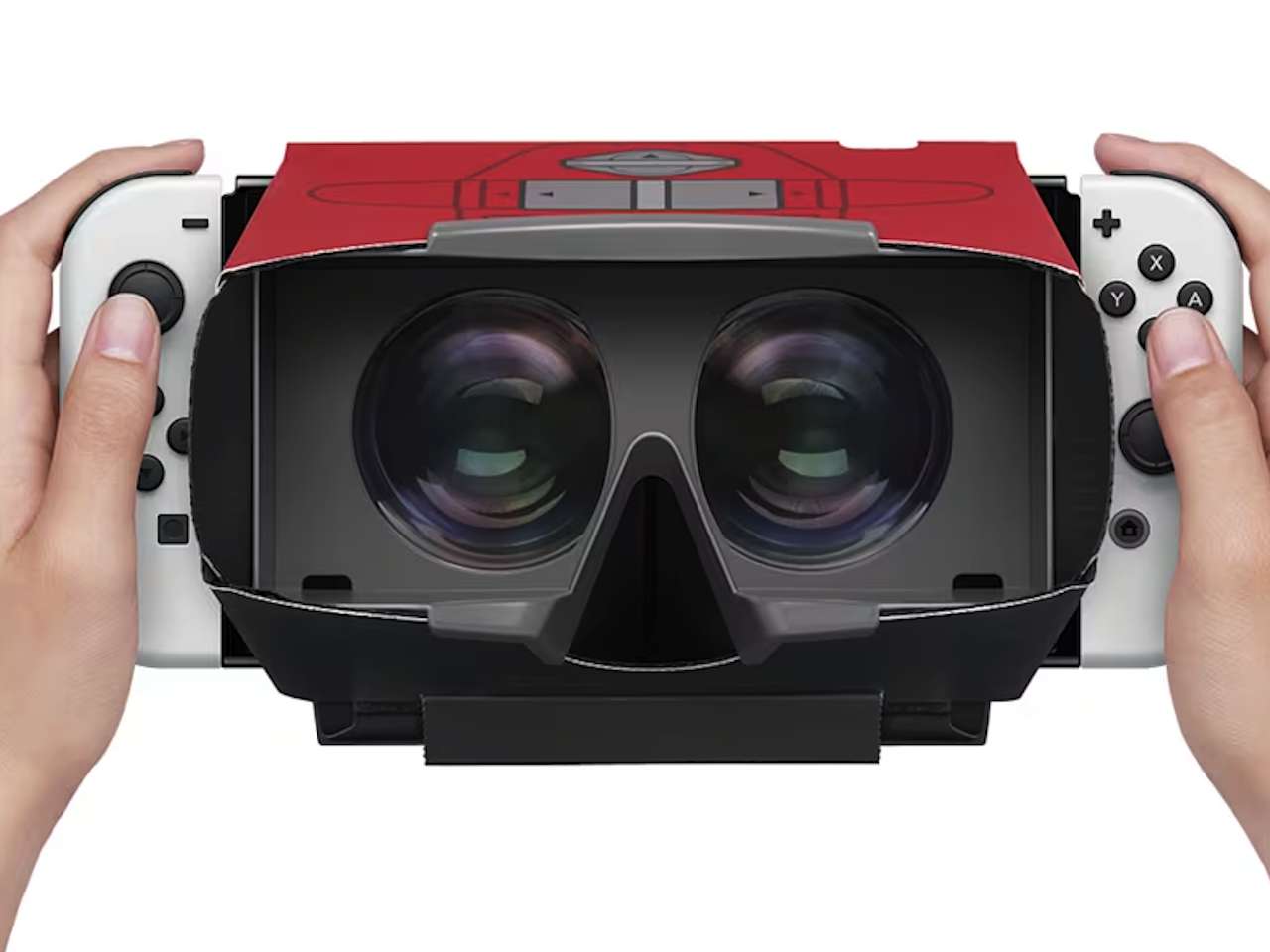
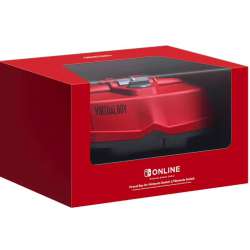
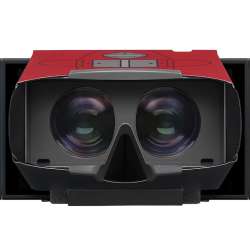
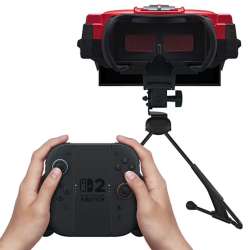
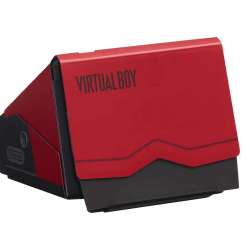
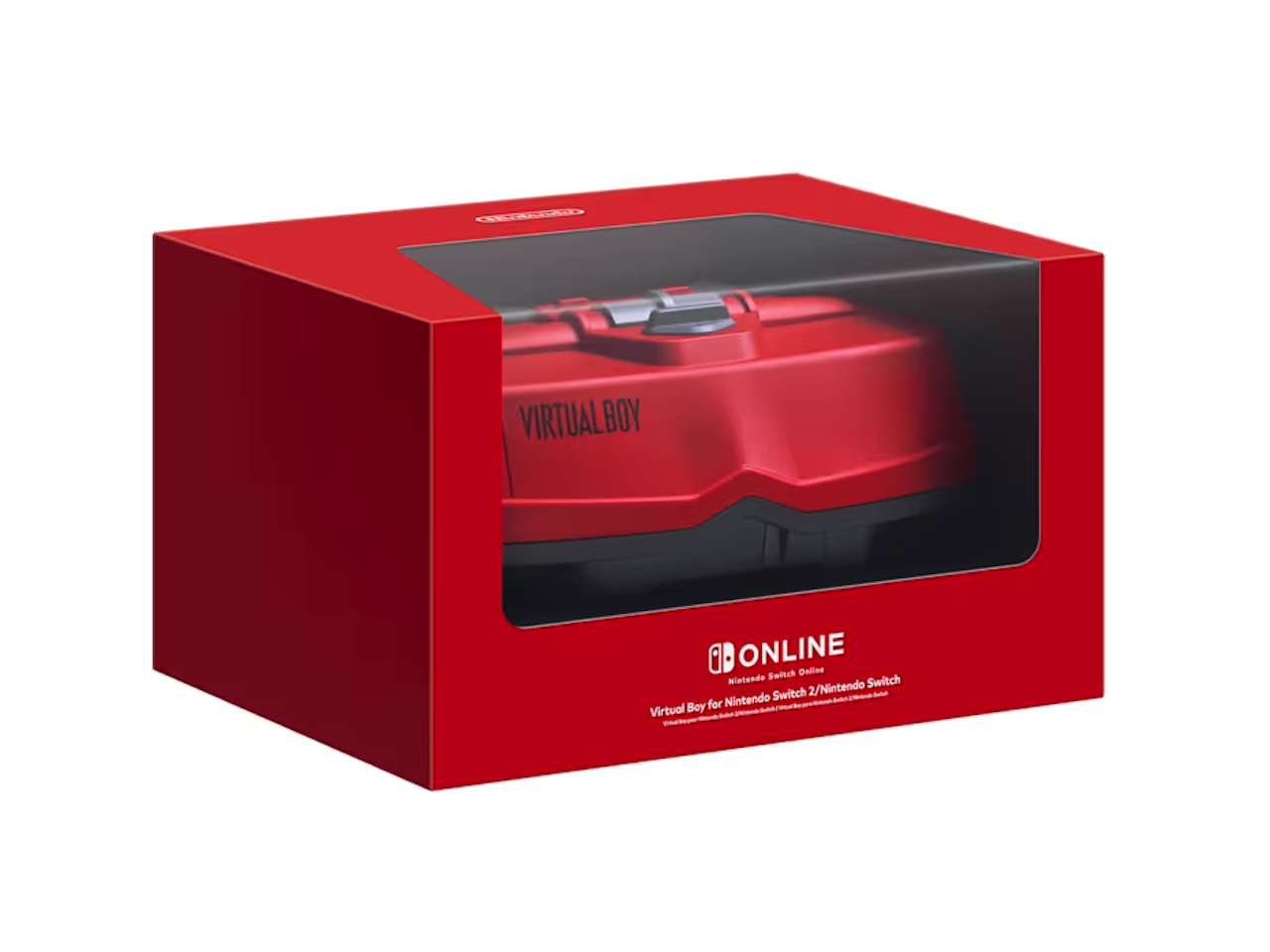 The hardware setup makes this launch feel different from a typical retro drop. Stereoscopic 3D requires sliding your Switch into a viewing accessory that Nintendo sells in two versions: a replica of the original Virtual Boy with the iconic red stand, and a Virtual Boy cardboard model for anyone who wants depth without the shelf commitment.
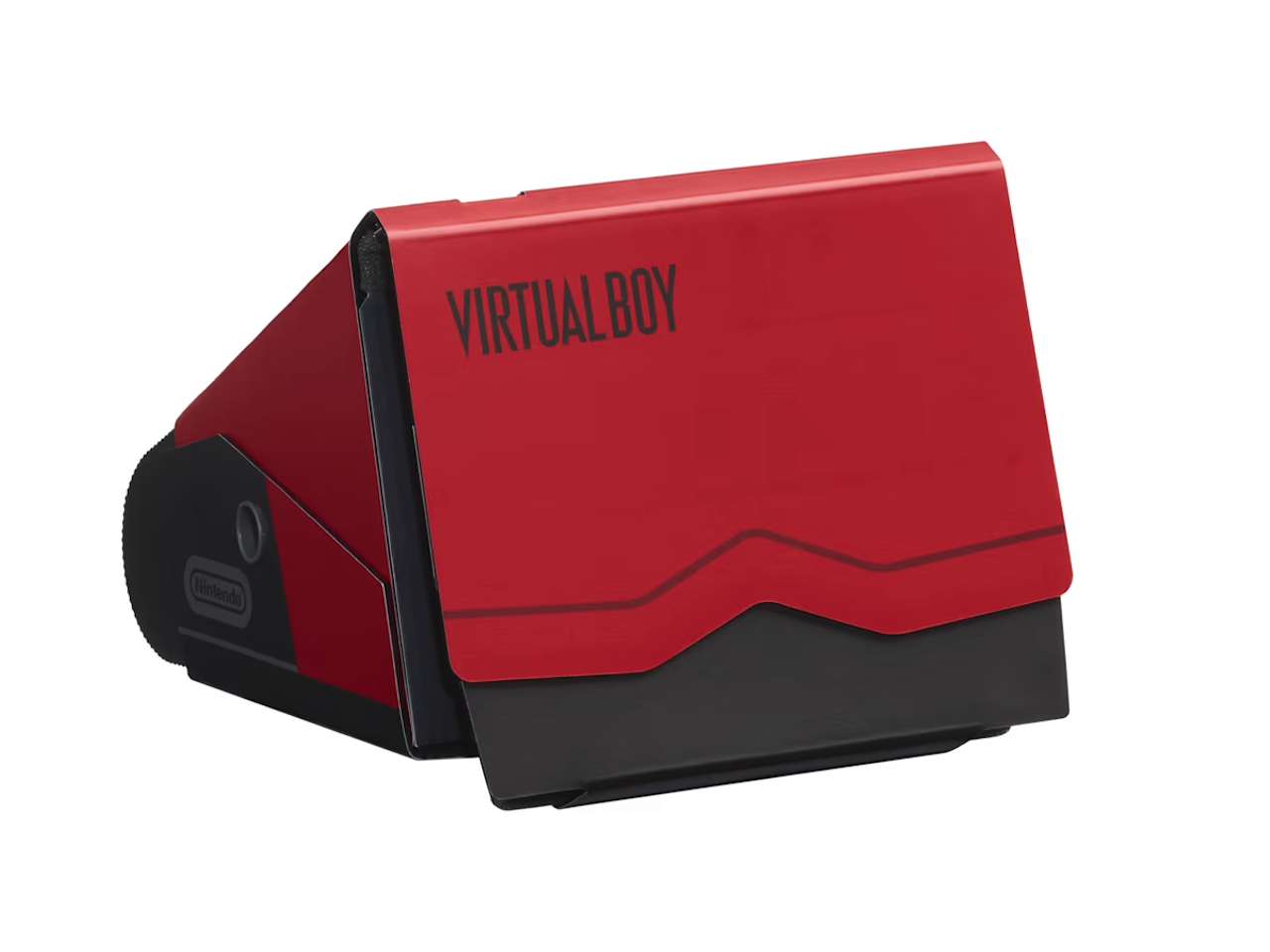
Both ship through the Nintendo Store. Making them optional was a smart call that keeps every game accessible without a secondary purchase. You can try all seven titles in flat 2D first, then decide whether the stereoscopic layer justifies the accessory cost. The replica runs $99.99 and targets collectors who value the physical artifact. At $24.99, the cardboard version performs the same optical job with less shelf commitment.
Who Should Pass on This
If modern graphics and progression-heavy design define your gaming diet, this won’t convert you. The mismatch runs deep. These are 1995 titles with 1995 constraints, the red-and-black palette wears on you after extended play, and most games favor short arcade bursts over deep sessions. If Virtual Boy curiosity alone drives your upgrade from the base tier, the Expansion Pack’s $49.99 annual cost is worth weighing against the broader retro catalog.
Players who’ve already experienced these titles through emulation won’t find enough new here. The 3D adds novelty, but it isn’t transformative if you’ve played the games flat. Competitive online gamers with no connection to gaming history will read this as a museum exhibit. That’s a fair take. The value comes from first discovery, not replay depth. If you already know what Virtual Boy games feel like, the freshness won’t land. Casual subscribers who rarely open the retro apps might question whether seven niche titles from a failed console shift anything. Whether that curiosity carries enough pull depends on how much weight you give the word “niche.”
Who This is Actually For
Retro fans curious about the Virtual Boy but never able to track one down finally have a clean entry point, with seven Nintendo Switch Online Expansion Pack games covering a strong cross-section of the console’s library playable on modern hardware instead of 30-year-old units notorious for causing headaches. It’s worth the time.
Nintendo history buffs get something extra. The Mansion of Innsmouth warrants attention for anyone who follows the region-locked corners of Nintendo’s catalog. Playing a Japan-exclusive horror game on a modern console in 2026 is the kind of odd find that makes subscription services feel alive. 3-D Tetris and the golf sim bring quieter pacing that balances the flashier action entries. Both prove the Virtual Boy wasn’t only spectacle. Some of its software was solid work trapped inside a console nobody wanted to lean into on a tabletop stand.
The accessories add a worthwhile layer for anyone willing to go deeper. The effect is tangible. Sliding your Switch into a replica of the original Virtual Boy and seeing these games in stereoscopic 3D feels like cracking open a time capsule sealed in 1996, the kind of physical interaction digital storefronts can’t replicate.
Price: $24.99, $99.99
Where to Buy: Nintendo
If you follow gaming news for the genuinely unexpected, this qualifies. Nintendo reached into its most awkward hardware chapter and pulled out seven forgotten games, now playable on modern screens with 3D that actually delivers. It took nerve. Leaving the Virtual Boy in the vault would’ve been safer. The result is more fun than a 30-year-old punchline has any right to be.