
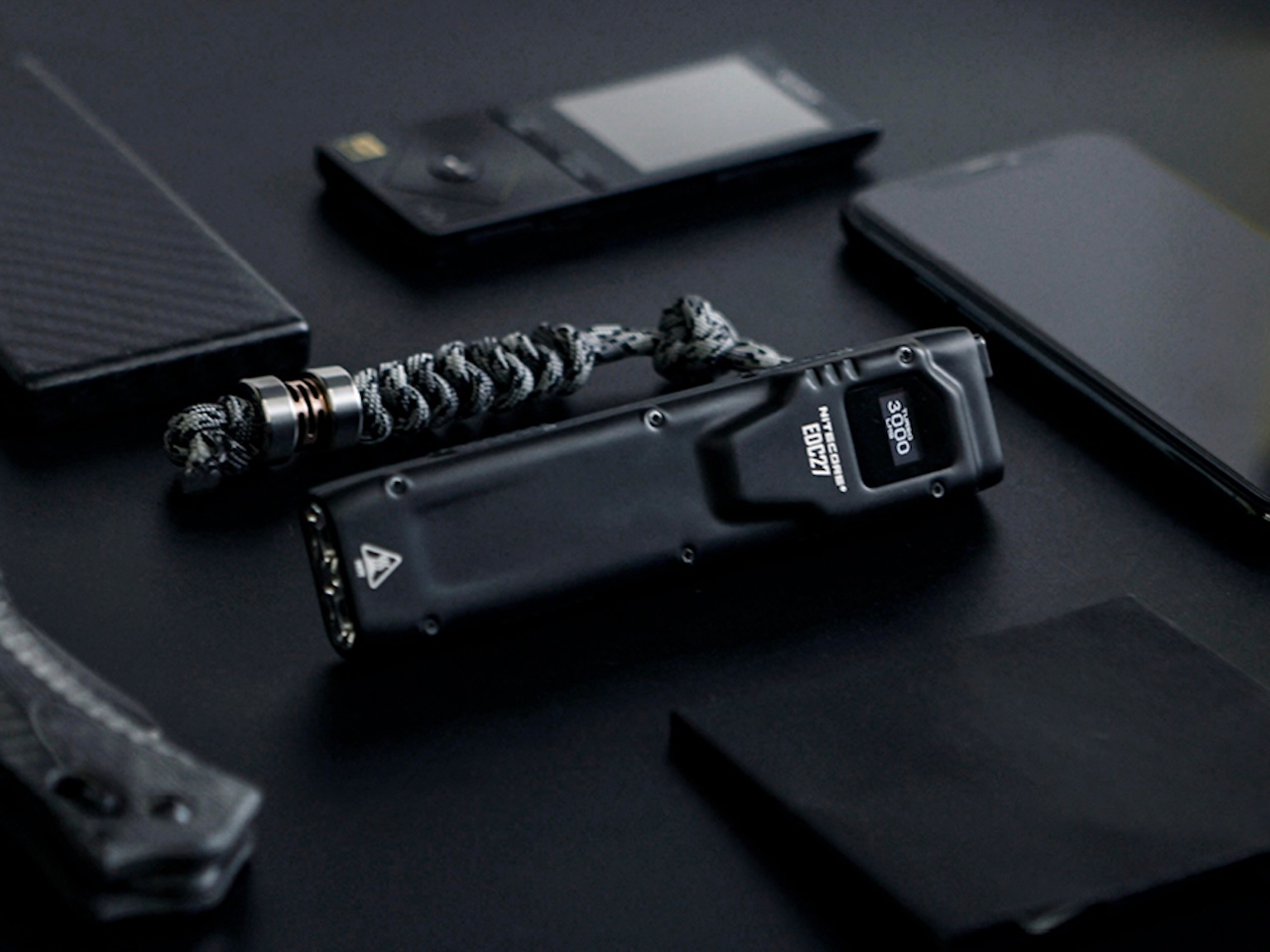
For decades a flashlight meant a round metal tube, the kind that rolls off a nightstand and prints through your jeans like a roll of coins. You clicked it, hoped the batteries held, and shook it when the beam went brown. That era is closing, and good riddance.
Price: $45.95
Where to Buy: Amazon
The lights worth carrying in 2026 are flat slabs that sit beside your wallet and borrow their whole look from the phone in your other pocket. They top up over USB-C or a magnetic cable and report the battery right on the body. No more guessing. If your everyday light still rolls, you’re carrying last decade’s hardware.
Why Flat Beats Round
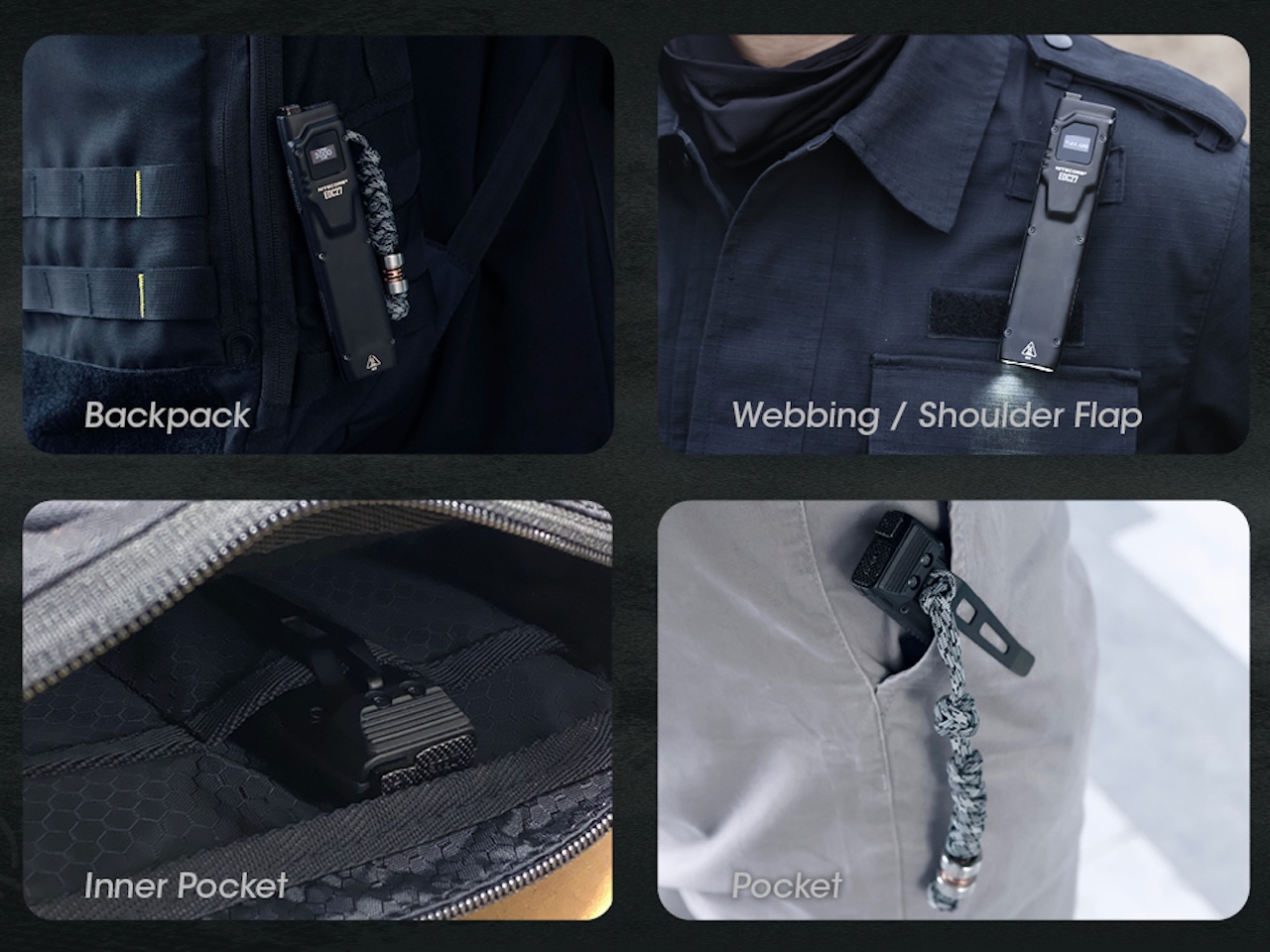
Start with how it carries. A rectangular body slides into a pocket the way a folding knife does, flat against the seam instead of fighting it, so it won’t roll off a table and won’t bulge through fabric. Round tubes never solved that, no matter how much knurling the maker stamped on. That single shape change is why the category moved.
Makers also moved the main emitter to the face of the slab, not the tip of a tube. Point a face emitter at a wall and the light spills wide and even, more like a small floodlight than a laser pointer, which is exactly what you want when you’re hunting for keys under a car seat. SureFire floated it early with the Stiletto. Olight made it a category with the Arkfeld.
Flat isn’t a free win, though. A slab with sharp edges digs into your palm, and a few early models traded grip for looks. The lights that win round their corners enough to stay comfortable without losing the flat profile. Get the geometry wrong and the whole pitch falls apart.
What the Screen Actually Tells You
Brightness was never the real upgrade. Feedback is. Older lights made you guess at runtime or read a single blinking dot like Morse code, then left you stranded when the guess went wrong. The flat generation prints a readout right on the body, so you check your mode and your charge before you thumb the switch.
The Baton 4 shows how little you actually need: Olight paired a metal switch with laser-microperforated indicator dots that kill the guesswork without a full panel. Not every light needs an OLED to feel current. The screen grabs the headline. The feedback is the point.
Inside the Nitecore EDC27
Nitecore went furthest here. The EDC27 body is flat stainless steel about the width of a marker, cool and smooth until the OLED strip wakes up across the top. The panel spells out brightness and battery in real numbers, not a vague row of colored dots you decode by feel. That readout is the clearest case for putting a screen on a flashlight at all.
Price: $89.95
Where to Buy: Amazon
The original pushes 3,000 lumens from dual emitters, charges over USB-C, and runs on a built-in 1,700mAh cell for a list price near 90 dollars. That’s serious output for the money. The UHi refresh swaps in Nitecore’s NiteLab UHi 20 emitter and lifts the ceiling to 3,100 lumens. Nitecore says it throws to 333 yards.
Spend any time with a light like this and the screen stops reading as a gimmick. You glance down, read the exact charge and mode, and decide whether to drop to low before a long walk back to the car. A tube light makes you guess at that, every time. Information beats blinking dots.
Pick by distance. The original handles nearly any indoor or around-the-house job at 3,000 lumens. The UHi version earns its keep when you want reach across a yard or down a trailhead. Either way, the screen is why you’d choose the EDC27 over a plain tube.
How Olight Stuffed Three Beams Into a Slab
Olight took the slab somewhere different, cramming jobs into one candy-bar body instead of chasing pure output. The Arkfeld carries a pocket clip and magnetic charging that snaps the cord on with a satisfying click. The Pro model fires three sources from the same flat face: a white beam, a green laser, and a 365nm ultraviolet light for checking hotel sheets or hunting scorpions. One slab, three tools.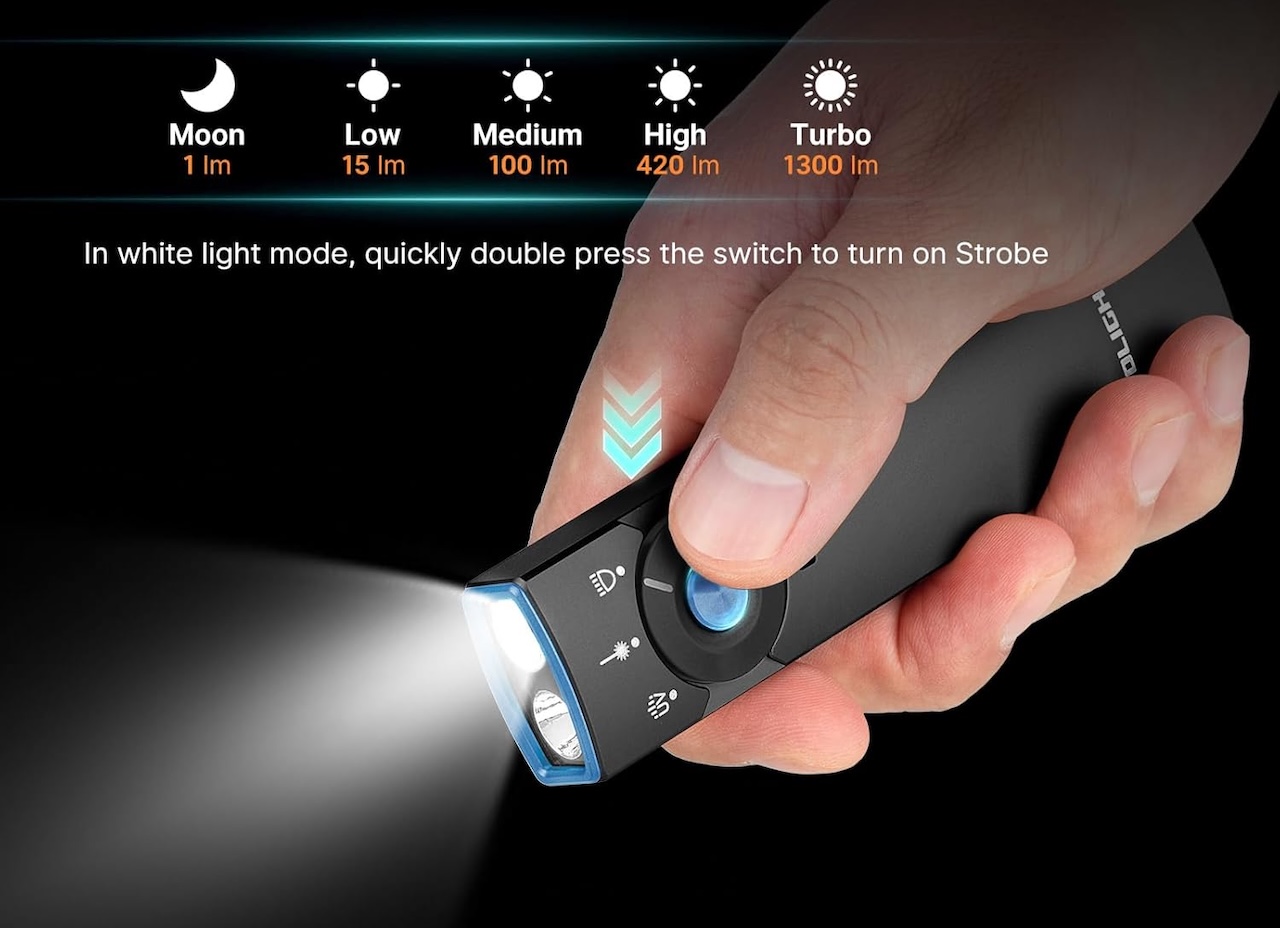
Price: $89.99
Where to Buy: Amazon
Charge readout comes from a five-level indicator rather than a full screen, a sensible trade in a slab already holding a laser and a UV emitter. The Arkfeld Ultra later pushes output to 1,400 lumens at around 120 dollars. You pay for breadth, not bragging-rights lumens. Worth it when your light doubles as a pointer and a stain detector.
The Best Flat EDC Flashlights to Compare in 2026
Specs sort this field fast, once you stop treating the lumen count as the only number that matters.
| Model | Max lumens | Max throw | Charging | Price (USD) |
|---|---|---|---|---|
| Nitecore EDC27 | 3,000 | 220 m | USB-C | $89.95 |
| Nitecore EDC27 UHi | 3,100 | 305 m | USB-C | $89.95 |
| Olight Arkfeld Pro | 1,300 | 102 m | Magnetic | $90 |
| Olight Arkfeld Ultra | 1,400 | 103 m | Magnetic | $130 |
| Fenix E06R Pro | 1,600 | 160 m | USB-C | $75 |
Read across the row, not down the lumens column, because charging style and throw separate these lights more than raw output does.
Where the Slab Light Goes Next
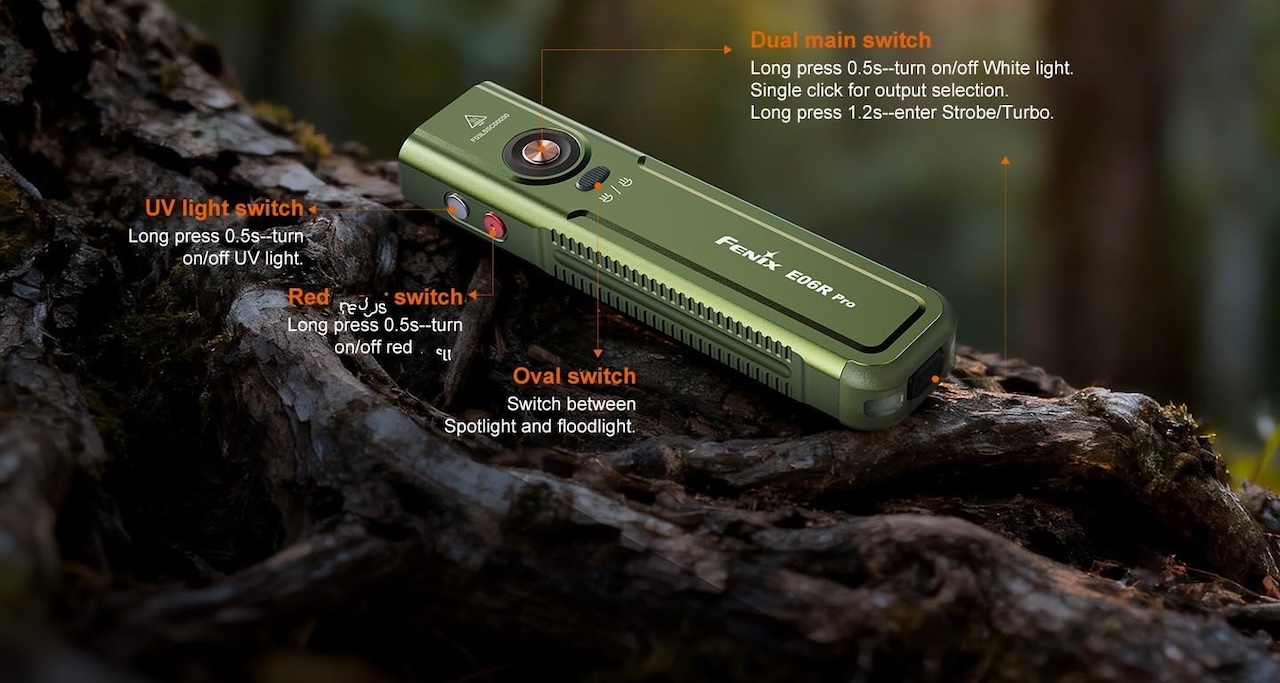
Budget caught up fast. Fenix sells the E06R Pro, a flat light rated at 1,600 lumens for about 75 dollars, proof you don’t need Nitecore money to ditch the tube. Wuben builds a slab-style line around magnetic bases and side-mounted beams. The shape stopped being a premium novelty and turned into a default.
Price: $74.95
Where to Buy: Amazon
Every brand lands on the same recipe: a face-mounted flood, USB-C or magnetic charging, and a readout that treats battery as information instead of mystery. Buy into it and you upgrade two things at once, how the light carries and how much it tells you. The lumen number is the distraction. Round tubes still belong in a glovebox or a toolbox.
The move is simple. If your daily light still rolls off the table, make the next one a slab and choose it for the readout before the lumen count. Want flat and cheap, grab the 75 dollar Fenix; want the screen thinking for you, step up to the EDC27. Carry a flat light that looks like your phone, because your pocket already voted.
Auto Amazon Links: No products found.

Gadgeteer Comment Policy - Please read before commenting
Your price for the EDC27 is off by $40 and the link points to the EDC07 for that price. This is a misrepresentation and/or a bait-and-switch moment. Please check model numbers carefully!
Hi, Wes! Sorry about that. Updated. 🙂