
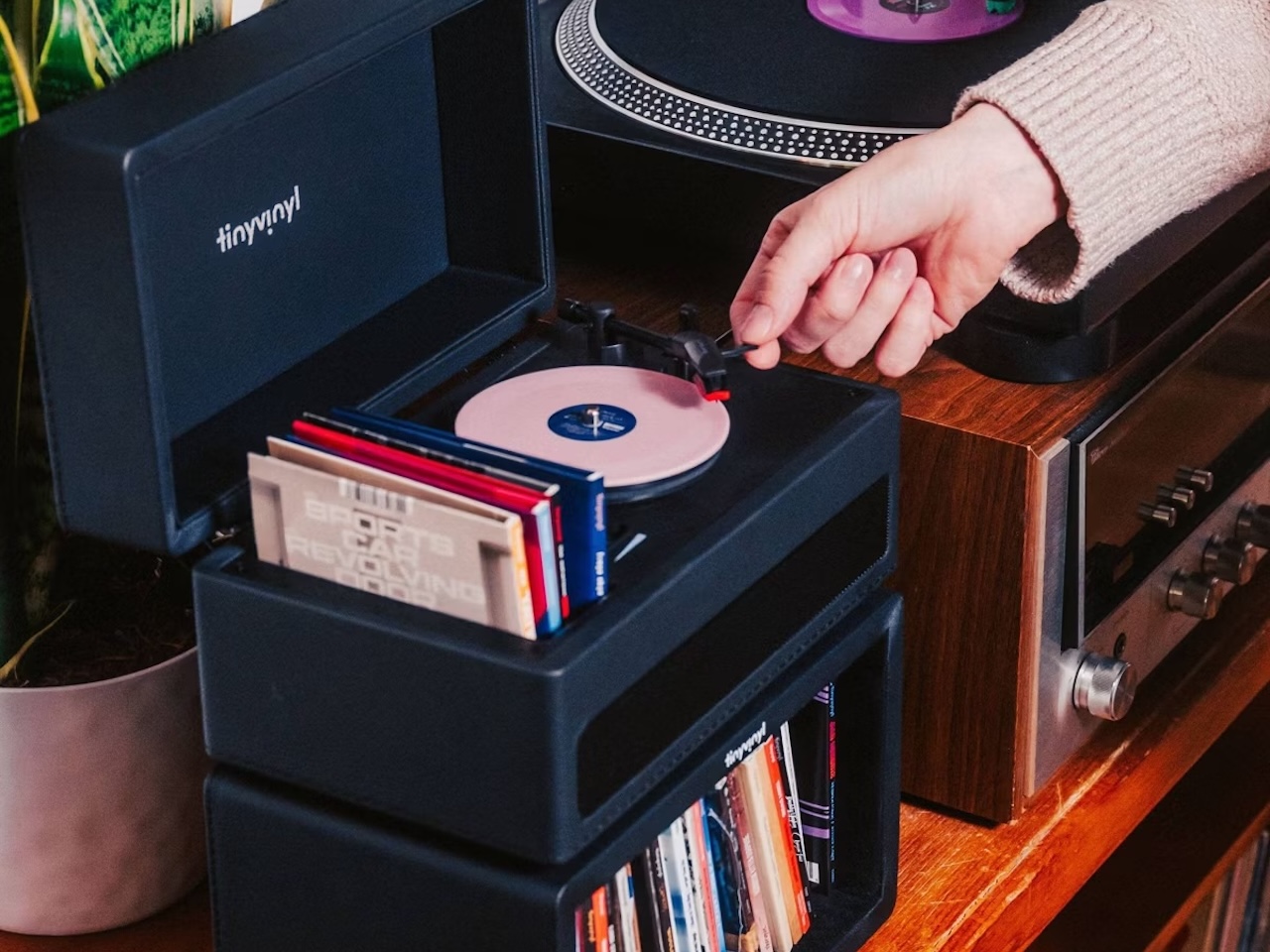
A $50 record player that can’t play any full-size records sounds like a bad deal. It nearly is, because the records it plays already work on most turntables you might own.
The Tiny Vinyl Player does one thing: it spins 4-inch records that look like full-size albums but fit in your palm. No LPs, no 45s, no 7-inch singles, only the mini format at 33 1/3 RPM. If that sounds like a gimmick, you’re not wrong. Tiny Vinyl’s own playback guidance adds a wrinkle: these records run on most standard manual turntables as long as the tonearm reaches the platter’s center and auto-stop is switched off, which makes this player optional rather than required.
Collector economies run on exclusivity: limited-run sneakers, graded trading cards, Funko Pops with chase variants. Tiny Vinyl taps the same loop at a fraction of the entry cost. A $50 turntable and $14.99 mini-records deliver the tactile part of vinyl collecting without the $500 table and $35 LPs. Whether that experience is worth owning comes down to which of three paths you recognize as yours.
Decision 1: Go All In on Tiny Vinyl
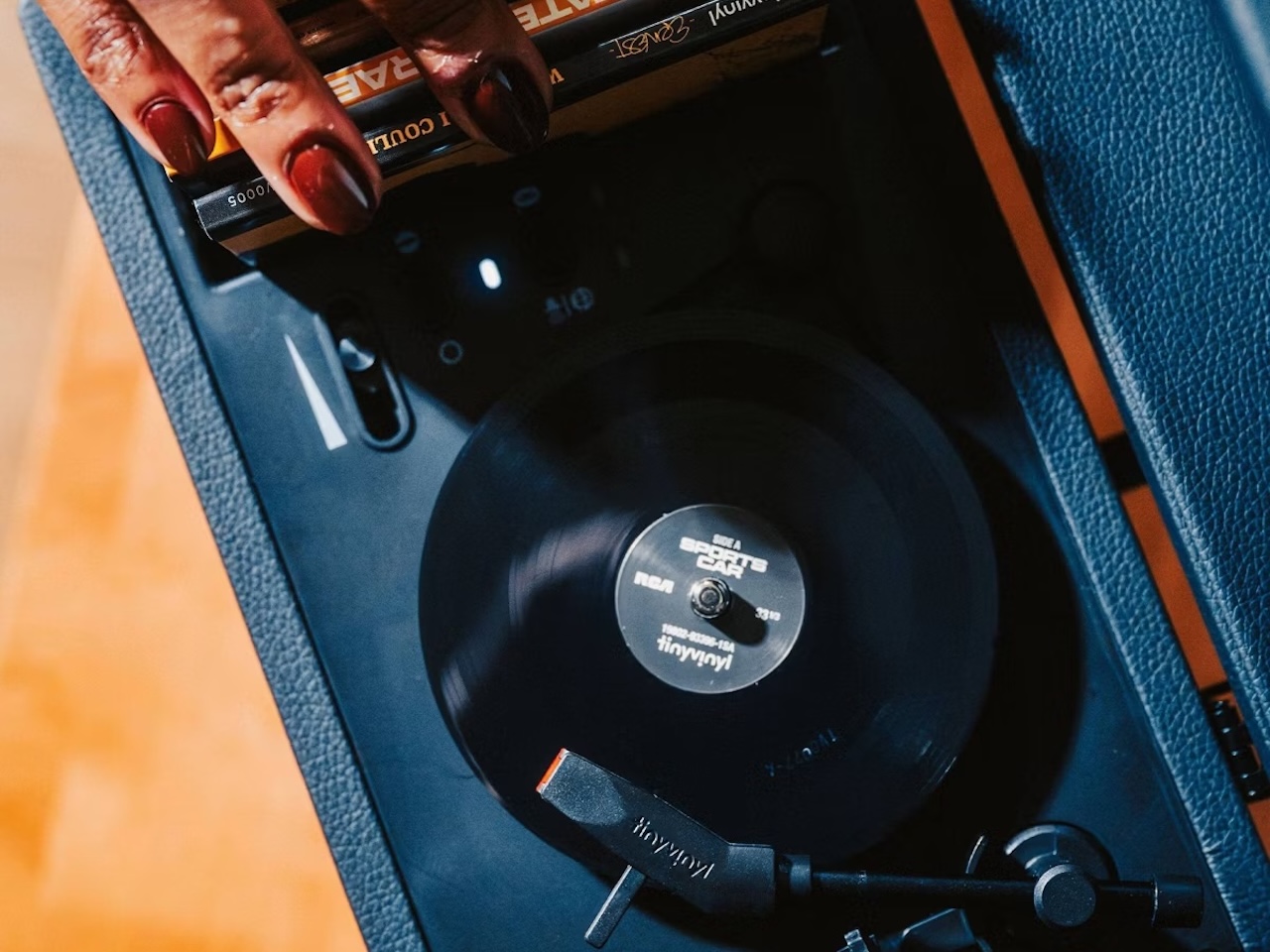 Built-in stereo speakers and Bluetooth out mean you can send a mini-record to a wireless speaker instead of the small onboard drivers. Build quality matches the price: plastic body, basic tonearm, nothing fancy. Each Tiny Vinyl is a two-sided single holding up to four minutes per side, and the catalog runs through classic rock, country, pop, and hip-hop, from Frank Sinatra and Black Sabbath to Kacey Musgraves, Chappell Roan, and Doechii. Collecting them feels like building a microcosm of a real record collection without needing the space or budget.
Best for: Collectors who want the ritual of vinyl without the cost. People who display records as art. Gift-givers looking for a $50 conversation starter.
The tradeoff: You only own music that exists in mini format. No deep catalog. No rare pressings from your favorite artist’s back catalog. The format is novelty-first, music-second.
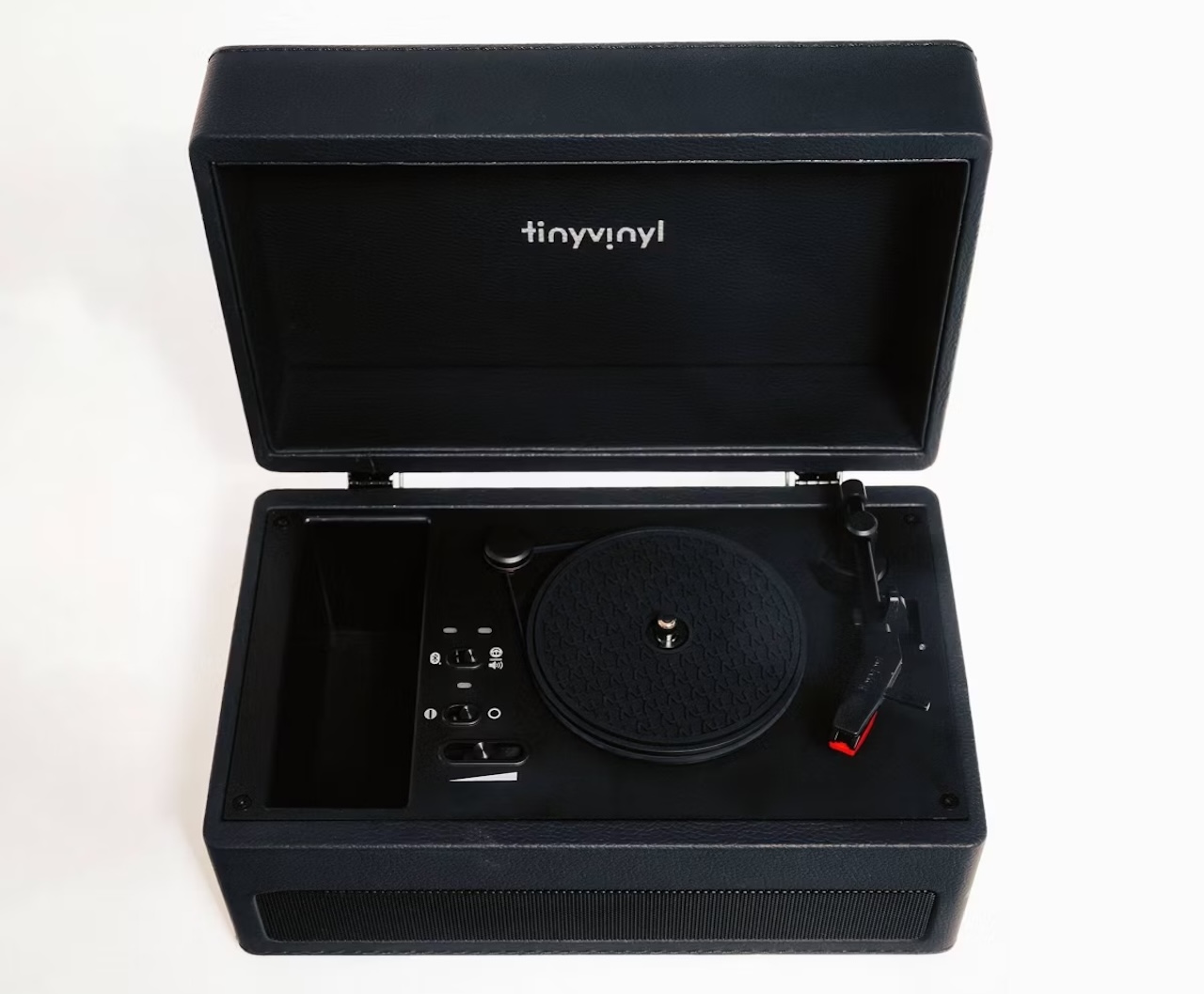
💿 Tiny Vinyl Player
Price: $49.99
🛒 Where to Buy: Target
Decision 2: Buy a Real Turntable Instead
Victrola’s Journey lists for $89.99 but regularly drops to around $50 on sale. It’s a full-size, three-speed deck (33 1/3, 45, and 78) with built-in stereo speakers, Bluetooth streaming in from your phone, an RCA line out for external speakers, and a headphone jack. It plays every 12-inch LP, 10-inch, and 7-inch single you can pull off a record store shelf, and it spins your Tiny Vinyls too. One deck, both formats, no second purchase.
Best for: Anyone serious about building a music collection. People who have or plan to accumulate real vinyl. Traditionalists who want the full experience.
The tradeoff: At $50, the Journey sounds like a $50 turntable. The built-in speakers are small, the cartridge is basic, and you’ll want to upgrade eventually. Real vinyl also costs real money. New LPs run $25 to $40, and used bins take patience to dig through.
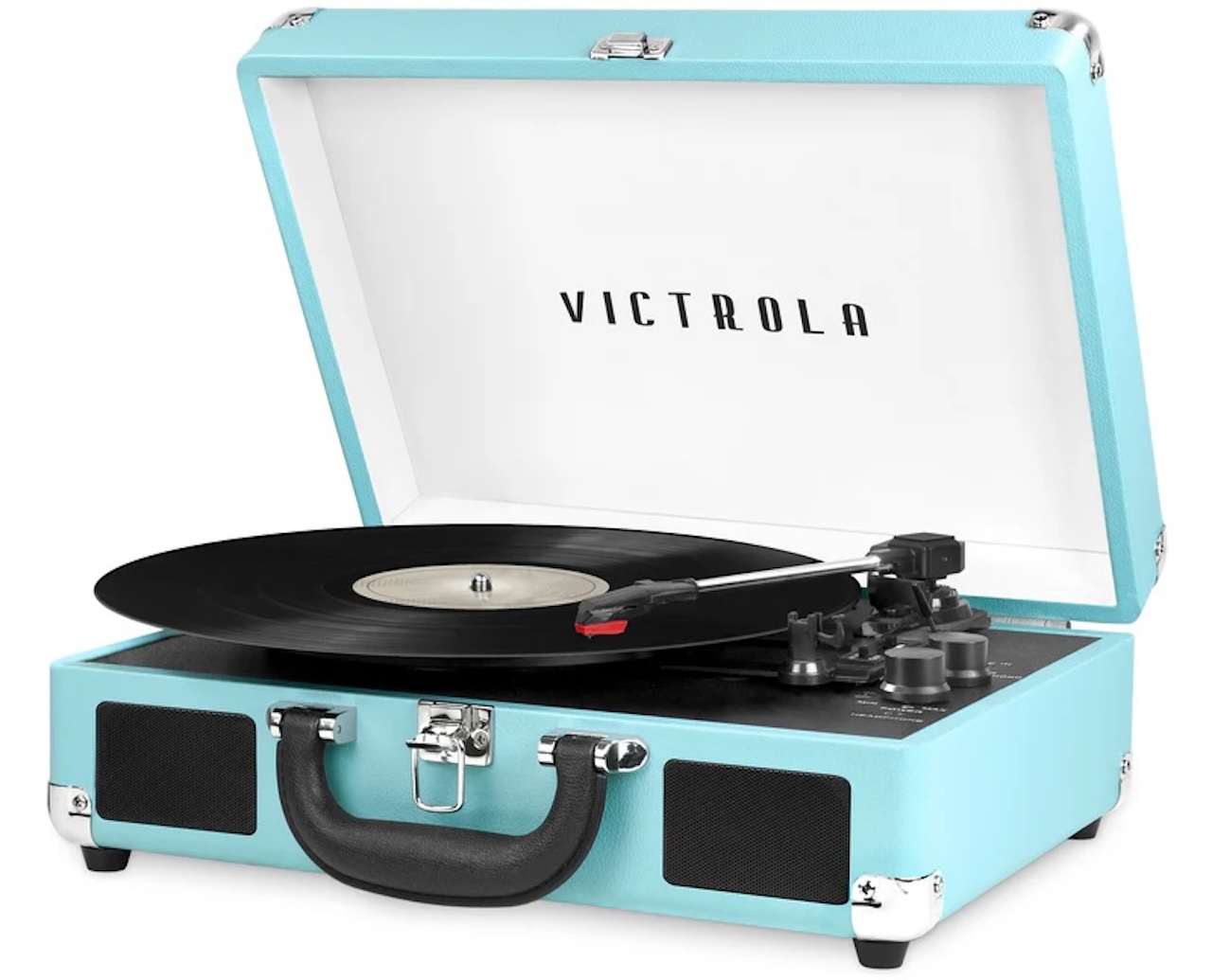
💿 Victrola Journey (VSC-550BT)
Price: $49.98 (From $89.99)
🛒 Where to Buy: Amazon
Decision 3: Get Both for $100
Both decks land near $100 together when the Journey is on sale, since the tiny player costs $50 and the Victrola drops from its $89.99 list to about the same. At sale pricing, the pair costs less than a basic Audio-Technica LP60X, which retails for $179. Know what the second deck actually buys: the Victrola already spins Tiny Vinyls, so the little player adds a display object and a dedicated home for the mini format, not a capability you lack. If that trade appeals, the split works cleanly, with the tiny one on your desk and the Victrola in the living room.
Best for: People who want the collecting experience and the music. Desk-dwellers who want a visual centerpiece. Gadget enthusiasts who appreciate the contrast.
The tradeoff: Two turntables take up space, and one of them duplicates what the other already does. The total audio quality from both together is still entry-level. If audio fidelity counts to you, skip both and start with an LP60X at $179.
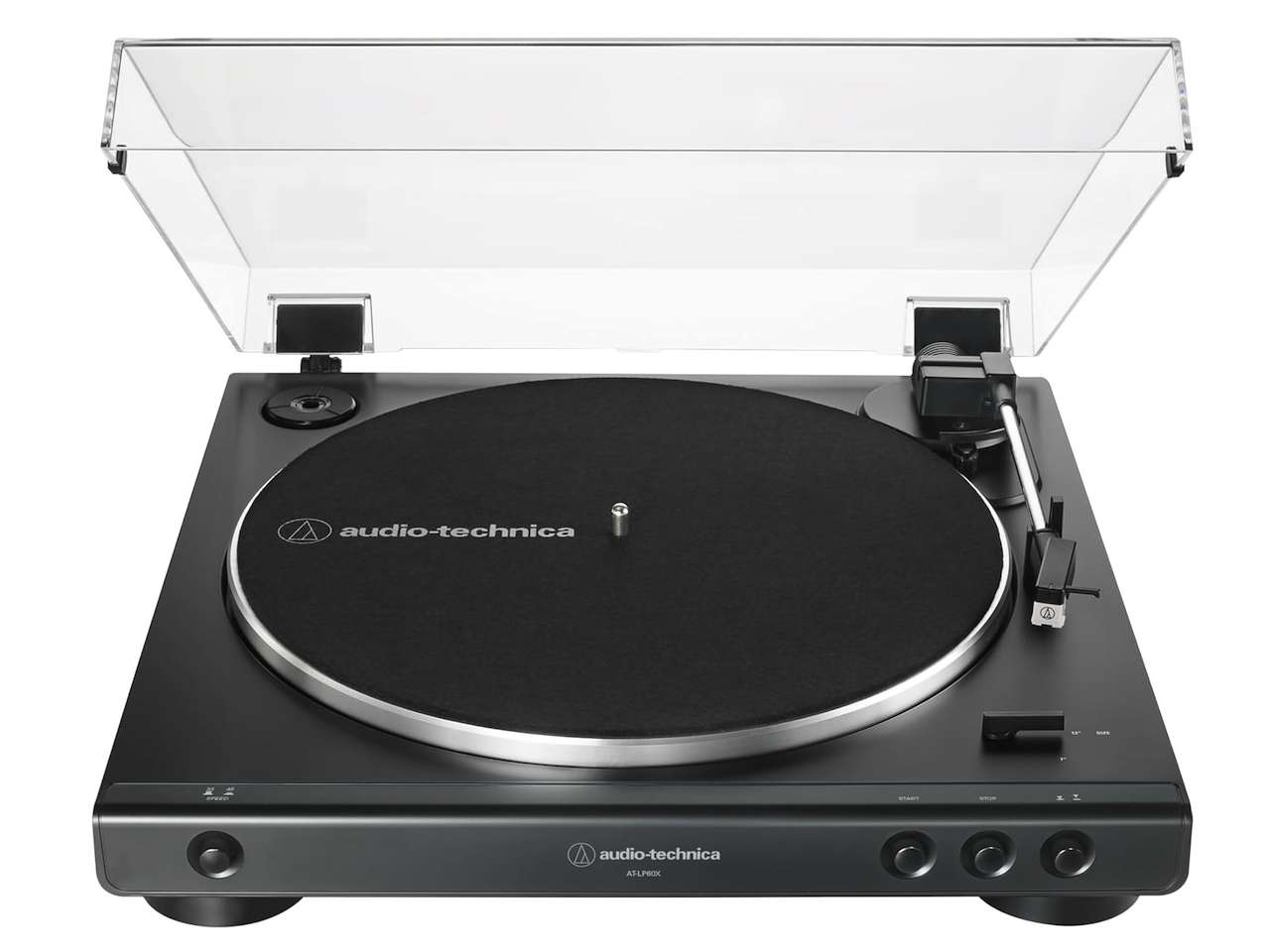
💿 Audio-Technica AT-LP60X
Price: $179
🛒 Where to Buy: Amazon
Which Path Should You Take?
Choose the Tiny Vinyl Player only if you want the mini format to have its own dedicated deck. If you buy vinyl to display on a shelf, not to spin. If the ritual of watching a miniature record turn on a player built for it counts more than the music coming out of it.
Go with the Victrola Journey if music is the point. If you want to walk into a record store and buy whatever catches your eye. If the idea of a curated music library excites you more than a curated shelf of miniatures.
Buy both only if the display piece matters to you on its own terms. The tiny deck scratches the collector itch, the Victrola plays everything, and neither one needs the other. For about $100 when the Journey is on sale, you get two objects doing one job apiece.
The Bottom Line
The $50 Tiny Vinyl Player isn’t a replacement for a real turntable, and it isn’t trying to be. It’s a collectible that happens to spin, in the same way a Funko Pop is a figurine that happens to have a bobblehead. Judge it as a turntable and it fails. Judge it as a collector object and it delivers what it promises: a cheap, tactile entry into a hobby that usually costs ten times as much.
If you already own a manual turntable, save the $50 and spend it on records instead. If you want a small object on your desk that turns a song into a ritual, the player earns its price. Anyone shopping for a first real turntable should put that money toward the Journey and skip the mini deck entirely.
Auto Amazon Links: No products found.
