The sub-$100 fitness tracker market hit an inflection point in 2026. Continuous heart rate, blood oxygen, AMOLED screens, multi-band GPS, and two-plus weeks of battery are all standard at this tier. Behind the shift: Xiaomi’s Smart Band 10 going global at $50, Amazfit’s Bip 6 bringing 5-system GPS to a $79.99 watch, the Fitbit Inspire 3 settling at $80 as Google folds Fitbit under Google Health, and the Garmin Vivosmart 5 deal-priced to $99 ahead of an expected Vivosmart 6.
Here’s how the five trackers driving the shift line up, and what comes next.
At a glance: The five trackers
| Tracker | Price | Display | Battery | GPS | Position |
|---|---|---|---|---|---|
| Fitbit Inspire 3 | $99.95 ($80 street) | 0.76″ AMOLED | 10 days | Connected | Entrenched default |
| Xiaomi Smart Band 10 | ~$50 | 1.72″ AMOLED | 21 days | Connected | Global benchmark |
| Amazfit Bip 6 | $79.99 | 1.97″ AMOLED | 14 days | Built-in (5-system) | Budget GPS leader |
| Amazfit Band 7 | $49.99 | 1.47″ AMOLED | 18 days | Connected | Aging value play |
| Garmin Vivosmart 5 | $119 ($99 on deals) | 0.84″ OLED | 7 days | Connected | Clearance Garmin |
What $100 buys in 2026
A decade ago, sub-$100 meant a step counter. In 2026, the floor includes 24/7 heart rate, SpO2, sleep staging, stress scores, and 100+ workout modes. The ceiling at this price: built-in GPS, AMOLED color, and two-week battery.
Three details the spec sheets bury: whether GPS is built-in or connected (uses your phone), whether the HR sensor lags on HIIT spikes, and whether the companion app gates features behind a subscription.
The 2026 wave
Xiaomi’s Smart Band 10 went global in late 2025 and is now the cheap-band benchmark. The Amazfit Bip 6 launched in March 2025 at $79.99 and quickly became the most capable sub-$100 GPS smartwatch on the market. The Fitbit Inspire 3 now sits at $80 street at major retailers. Xiaomi is rolling out the Smart Band 10 Pro globally (live product pages for the standard and NFC variants), which should pull standard Band 10 prices down further.
The five trackers shaping the budget tier
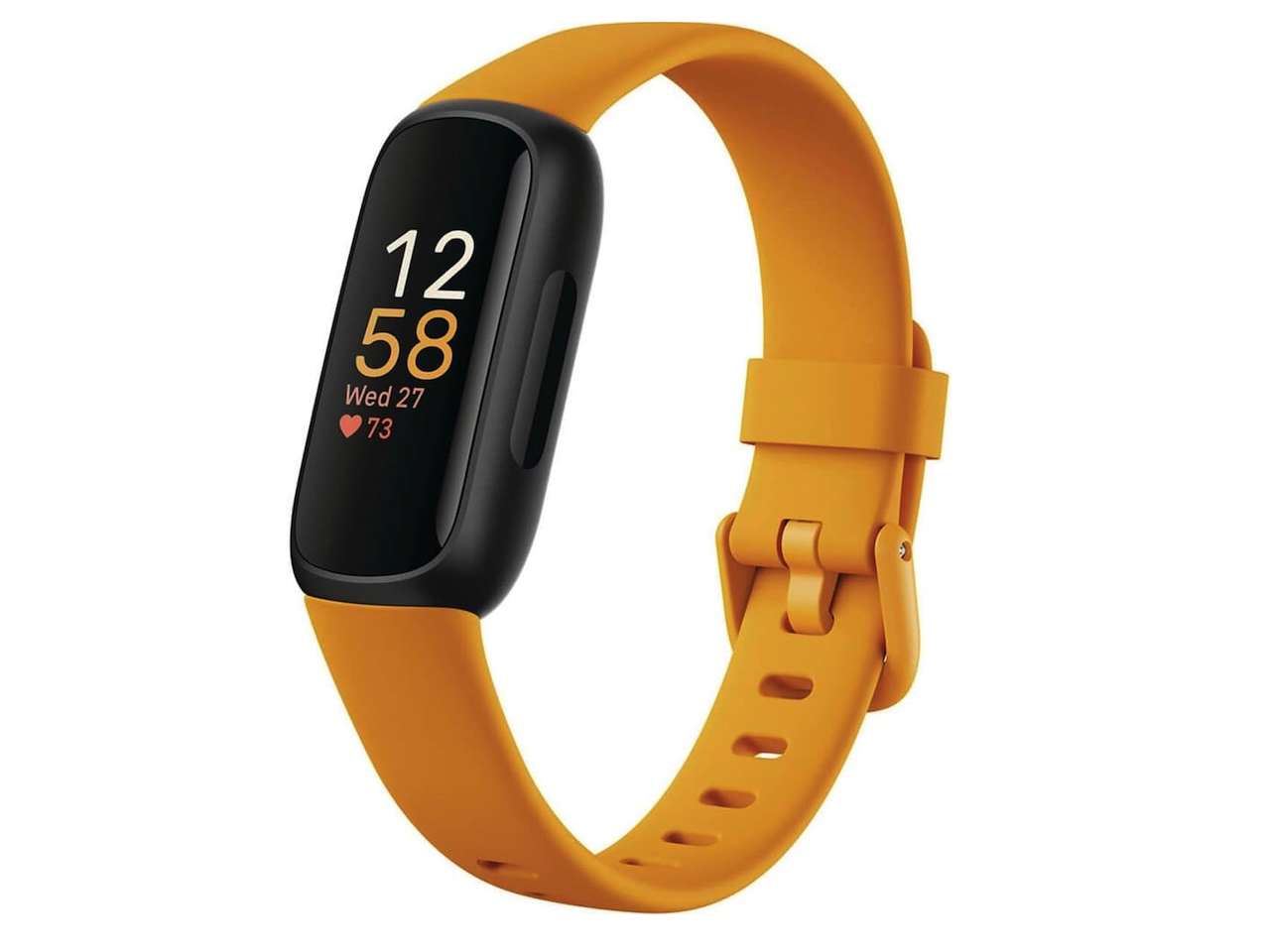
1. Fitbit Inspire 3: The entrenched default
Price: $99.95 MSRP, $80 street · Display: 0.76″ AMOLED · Battery: 10 days · GPS: connected · Water: 50 m
Price: $93
Where to Buy: Amazon
The Inspire 3 remains the default sub-$100 pick across most major publications. Daily Readiness Score (a recovery metric that used to sit behind Premium) is now free for Inspire 3 owners, which closes the biggest gap versus Garmin.
The HR sensor handles steady-state runs well but, like most wrist-based optical PPGs, can lag on HIIT spikes. The 0.76″ screen feels cramped, there’s no physical button, and no built-in GPS, so outdoor runs need a paired phone. (Fitbit product page)
What’s new in 2026: Google is folding Fitbit into Google Health, with the Fitbit Air taking the entry-level coaching-band slot. The Inspire 3 stays as the screen-on option, and street price has settled at $80.
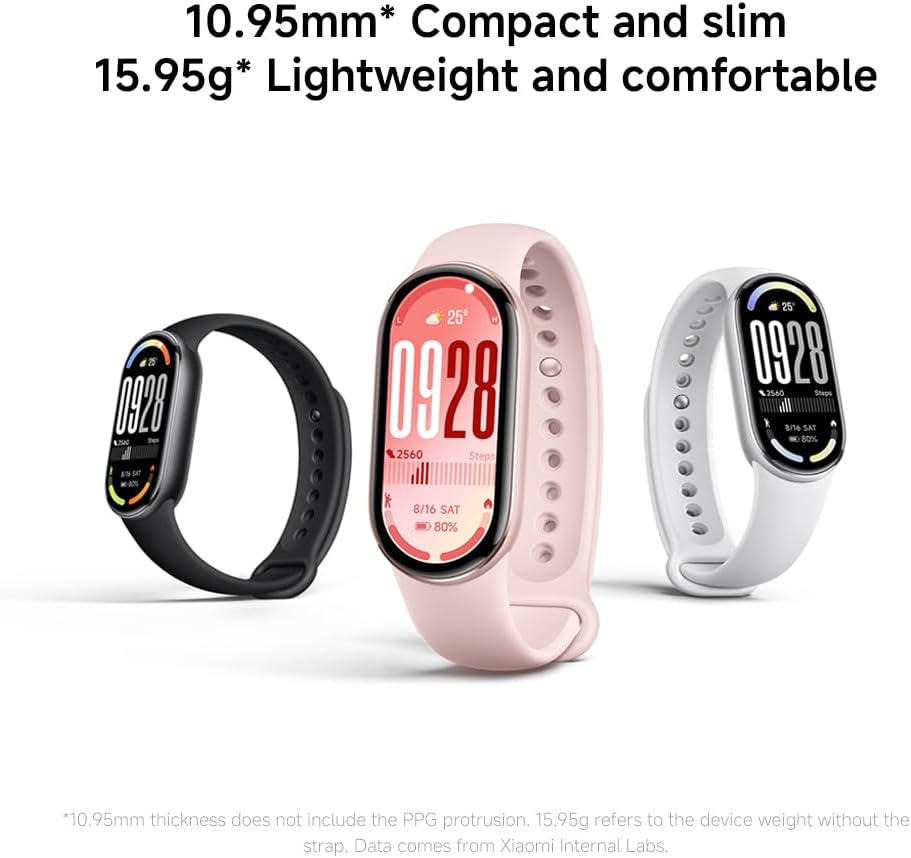
2. Xiaomi Smart Band 10: The global benchmark at $50
Price: ~$50 · Display: 1.72″ AMOLED · Battery: 21 days · GPS: connected · Water: 5 ATM
Price: $52.50
Where to Buy: Amazon
The Smart Band 10 went global in late 2025 and now sets the spec floor at the bottom of the market. At $50, it carries a bigger screen than the Inspire 3 (1.72″ vs 0.76″), longer battery (21 days), and the new Vitality Score, a 7-day activity rollup of the kind usually found on $200 watches.
2026 additions: 10 built-in running courses with real-time pace guidance, and Bluetooth HR broadcast to compatible gym equipment and apps.
What’s missing: App polish (Mi Fitness is busier than Fitbit’s), Fitbit-level sleep dashboards, and NFC payments on the global SKU (China-only).
3. Amazfit Bip 6: budget GPS goes multi-band
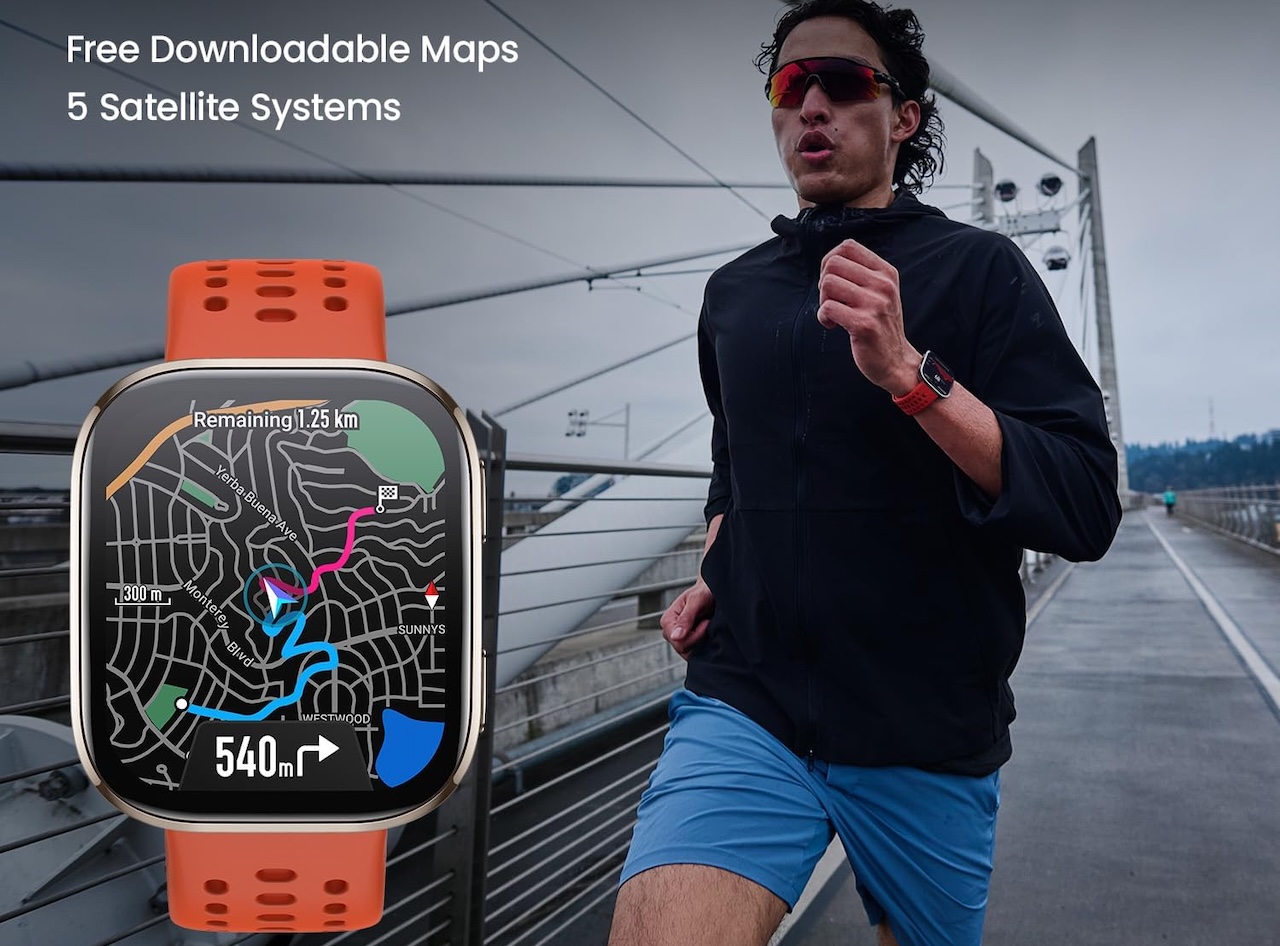
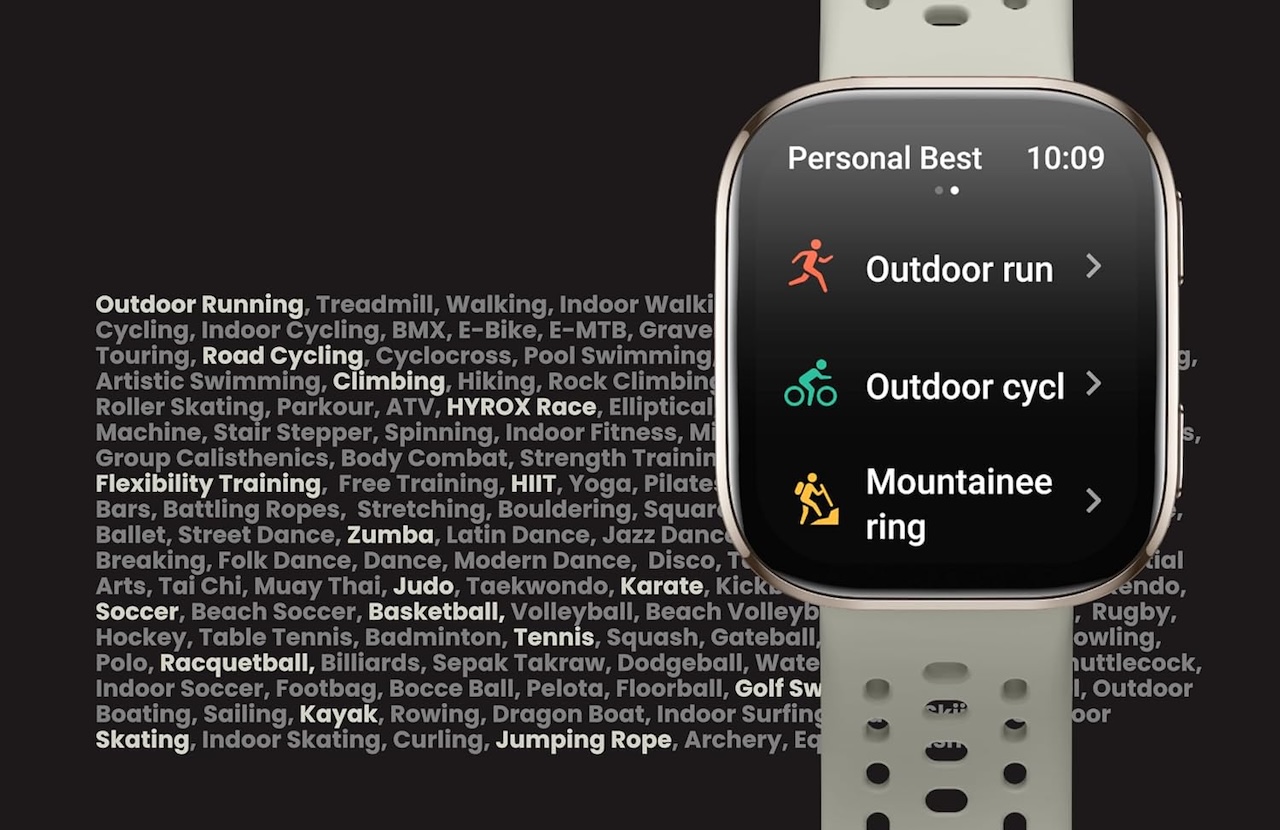
Price: $79.99 · Display: 1.97″ AMOLED, 46mm · Battery: 14 days (26 in power saver) · GPS: built-in, 5-system · Water: 5 ATM · Workouts: 140+
Price: $79.99
Where to Buy: Amazon
Amazfit launched the Bip 6 in March 2025 at $79.99 and reset what sub-$100 GPS looks like. It carries 5-system multi-band GPS (GPS, GLONASS, Galileo, BeiDou, QZSS), offline maps, and Bluetooth calling. The BioTracker 6.0 sensor is the same one Amazfit ships in $200+ watches.
The 1.97″ AMOLED is the biggest screen on this list. Zepp Coach (Amazfit’s AI training planner) generates running and strength plans that adapt to performance, no subscription required.
Limitations: The 46mm case looks big on smaller wrists, the plastic frame doesn’t feel as premium, and heavy GPS use cuts battery to about a week.
4. Amazfit Band 7: The four-year-old that won’t quit
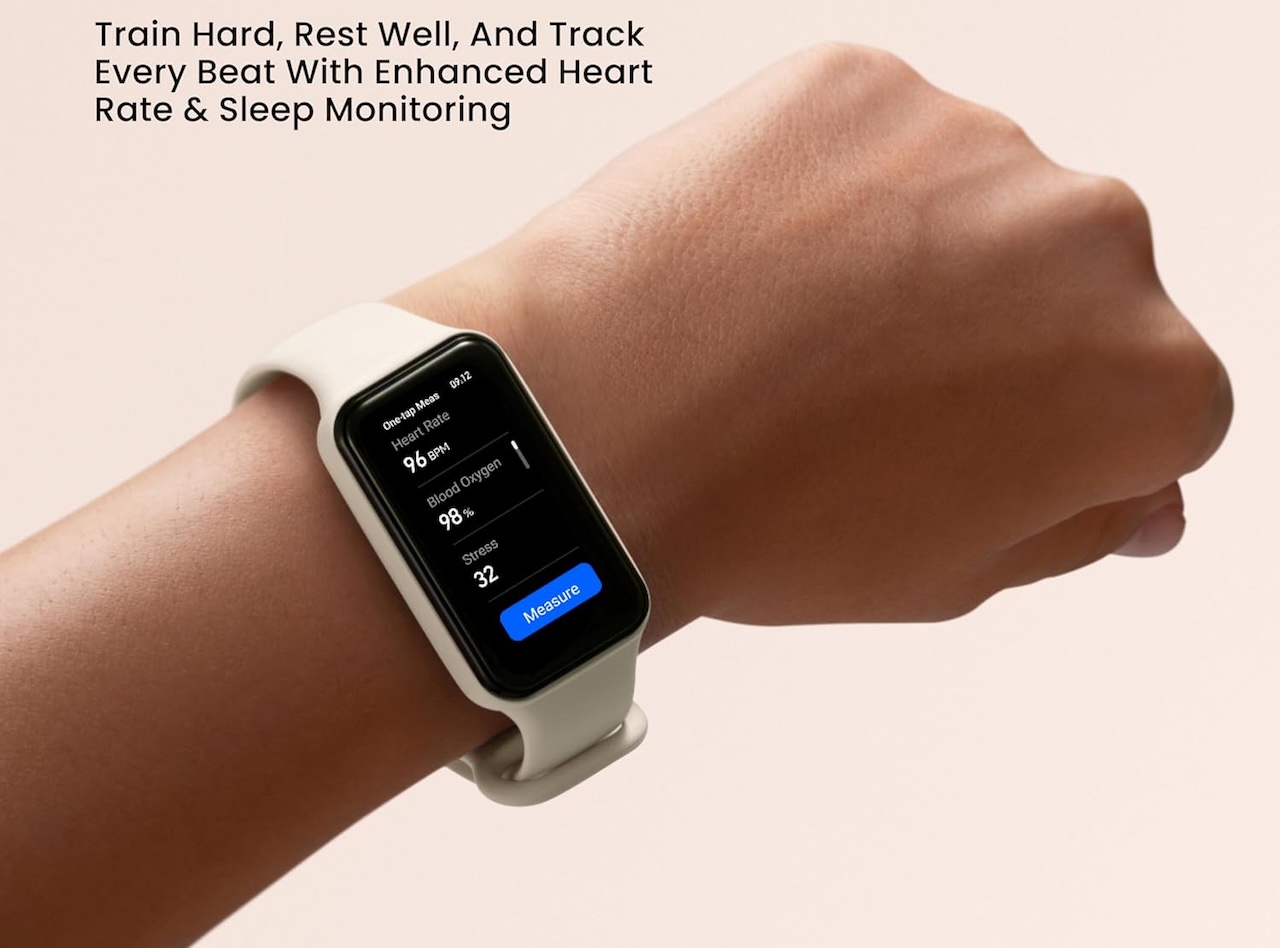
Price: $49.99 · Display: 1.47″ AMOLED · Battery: 18 days · GPS: connected · Water: 5 ATM · Workouts: 120+
Price: $49.99
Where to Buy: Amazon
The Band 7 launched in July 2022 and still holds at $49.99 retail, dropping to $40 during Amazon sale events. It carries Alexa, a 1.47″ AMOLED bright enough to read in direct sun, and 18-day battery.
It covers the daily wellness basics: steps, HR, sleep stages, SpO2, stress, and 120 workout modes.
Where it falls short: optical HR accuracy slips on HIIT spikes (true of every band at this price), connected GPS depends on phone signal, and firmware refreshes have slowed. An Amazfit Band 8 launch this year would age this device fast.
5. Garmin Vivosmart 5: Clearance economics
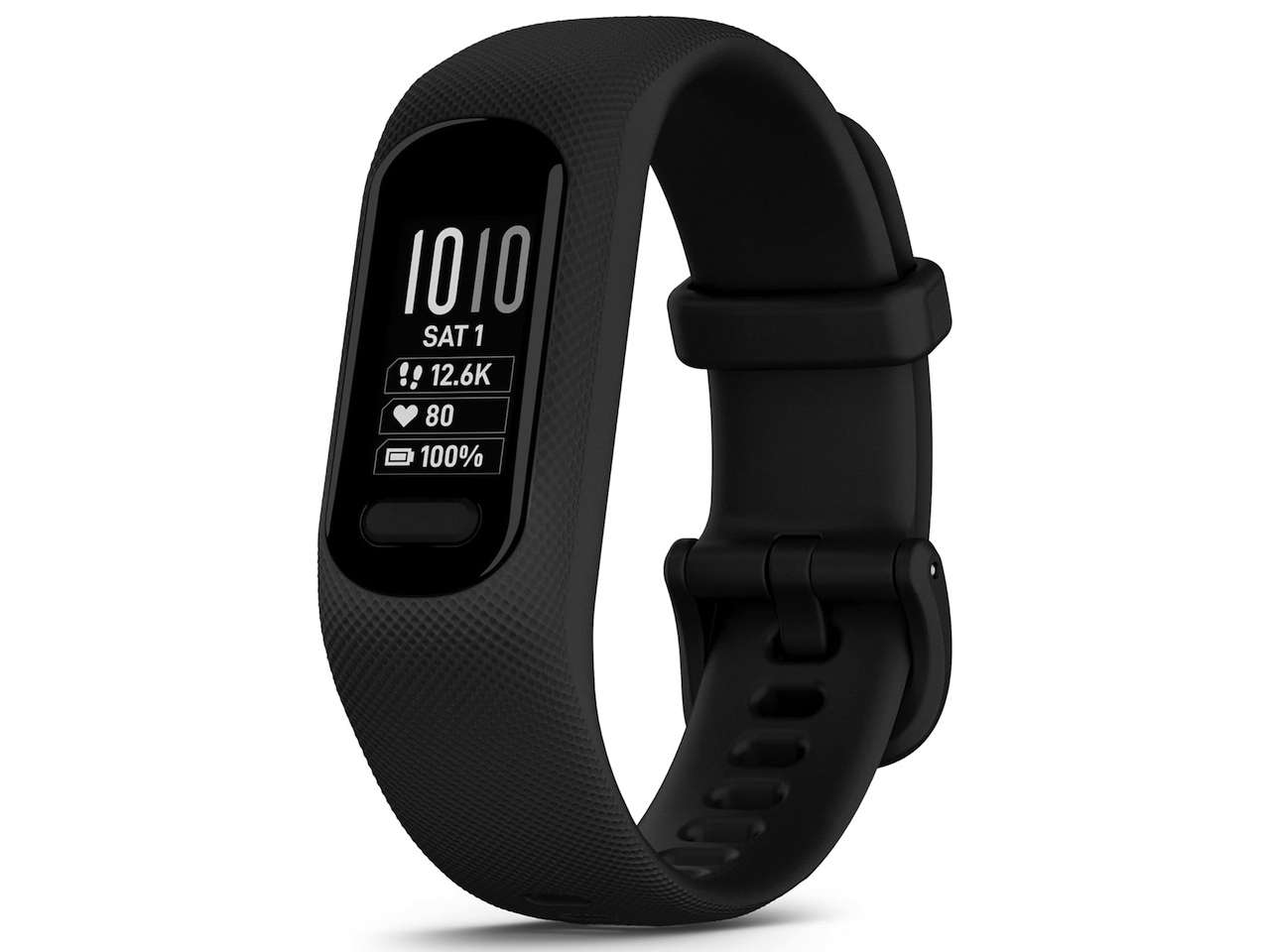
Price: $149 typical, drops to $99 on deals (MSRP $149.99) · Display: 0.84″ OLED · Battery: 7 days · GPS: connected · Water: 5 ATM
Price: $99 (On Sale)
Where to Buy: Amazon
Garmin’s Vivosmart 5 (April 2022 launch) holds at its $149.99 MSRP day-to-day but drops to $99 on Amazon and Best Buy sale events as Garmin clears stock ahead of an expected Vivosmart 6. The Vivosmart 5 only earns a place on this list at the sale price. At $99, the structural difference versus Fitbit is no subscription, ever. Body Battery, sleep score, stress, Pulse Ox, and cycle tracking are all free in Garmin Connect.
That contrasts with Fitbit, where Premium gates the deepest analytics.
Limitations: 7-day battery is the shortest here, the 0.84″ display is small for the price, and there’s no onboard music storage.
What’s still missing at $100
ECG, fall detection with cellular SOS, and the polished apps of Apple Watch or Garmin’s flagships are still not on the table.
Built-in GPS remains rare. Only the Bip 6 carries it. The other four rely on connected GPS through a paired phone, with identical accuracy but a phone-dependency tradeoff.
Battery divides the field. A 21-day Smart Band 10 fits a different habit than a 7-day Vivosmart 5. Subscriptions divide it further: Garmin Connect is fully free, Fitbit Premium is $9.99/mo, Amazfit Zepp is mostly free with optional AI coaching.
What we’re watching next
Apple Watch SE 3 ($249 MSRP) sits outside this price band. Samsung’s Galaxy Fit3 ($59.99 at Samsung.com, $69.99 at Best Buy as of June 2026) is the closest US-available sub-$100 alternative not in the picks above. Smart rings (Oura Ring 4, RingConn Gen 3, launched May 2026) sit in a different category. The Fitbit Air at $99.99 is a screenless coaching band that warrants separate coverage.
The next 12 months: Xiaomi Smart Band 10 Pro global rollout, a likely Amazfit Band 8 launch, Garmin’s Vivosmart 6, and how Google’s Fitbit-into-Google-Health transition affects the Inspire 3’s default-pick status.
Outlook
The 2026 sub-$100 wearable tier isn’t about which device has the best specs. It’s about which compromises matter most for a given buyer. The market reset isn’t finished. By Q4 2026, the Smart Band 10 Pro, Band 8, and Vivosmart 6 will likely have changed the field again. For now, the five trackers above define what $100 actually buys.