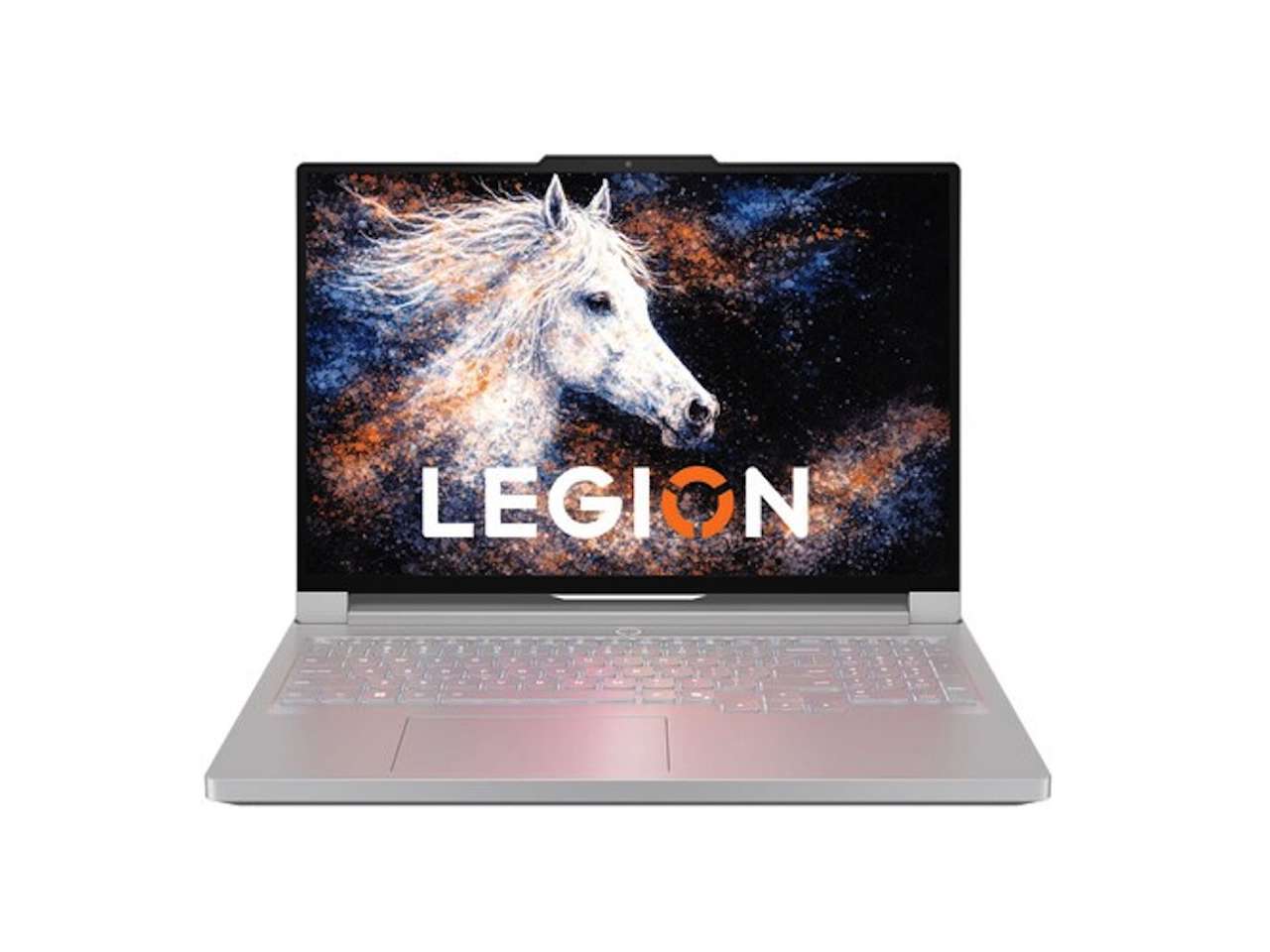
Lenovo has released the Legion R9000P, and the headline feature isn’t the processor or the graphics card. It’s the screen, which Lenovo and TCL CSOT say is the first laptop display built on TCL CSOT’s inkjet-printed OLED technology. The announcement went out on July 16, 2026, from Shenzhen, and framed the panel as the reason this model matters.
That distinction sounds small until you see how OLED panels normally get made. Most OLED laptop screens today are built with a vacuum process and fine metal masks, and this panel skips the metal masks and prints those layers instead. Lenovo and its display partner are using the R9000P to prove that a new production line can move out of the lab and into a real, finished laptop.
So the R9000P isn’t interesting because it’s fast. It’s interesting because it’s the first finished laptop to carry a panel made this new way, a process TCL CSOT pitches as cheaper to produce. That’s the part worth watching.
What the Panel Actually Does
The launch details center on the 16-inch display. It runs at a 240Hz refresh rate, and it covers more than 99% of the DCI-P3 color gamut. TCL CSOT says color accuracy holds steady across brightness levels instead of drifting as the screen dims, which helps for color work as much as for games.
The panel also uses a Real RGB Stripe subpixel layout, which puts the red, green, and blue subpixels in a straight row instead of the triangular grouping found on many OLED screens. TCL CSOT says that switch sharpens fine text and trims the color fringing those triangular layouts can leave along edges. Put together, the confirmed picture is a 16-inch inkjet-printed OLED panel from TCL CSOT running at 240Hz with more than 99% DCI-P3 coverage.
Why Inkjet Printing Changes the Cost Math
Traditional OLED production uses vacuum thermal evaporation, which needs expensive equipment and fine metal masks to pattern the pixels. Inkjet-printed OLED forms the light-emitting layers by printing them instead. Lenovo and TCL CSOT say that approach removes both the costly evaporation equipment and the metal masks from the process.
Inkjet printing also tends to use material more efficiently than evaporation, since it places the organic layers where they’re needed rather than coating a whole surface. Less specialized equipment and less wasted material both point the same way, which is a lower cost per panel once production volume climbs.
That’s the promise here, and it helps explain why the debut landed on a high-volume gaming laptop rather than a halo flagship. A company proving out a new panel process tends to place it where it can ship in real numbers, not in a low-volume trophy model.
TCL CSOT’s move into printed panels isn’t brand new. The company says it’s spent more than a decade developing the technology, which reached medium-sized medical displays before this laptop. Its 5.5-generation inkjet-printed OLED line in Wuhan, known as t12, reached mass production in November 2024 and delivered its first product, which built the supply base that a laptop like this one needs.
What Printed OLED Could Mean for Prices
The bigger story sits outside this one laptop. TCL CSOT has already announced a larger 8.6-generation printed OLED line, which points toward bigger panels and higher volumes, not just laptop screens. If printed panels really do cost less to make at scale, the savings could reach monitors, tablets, and other laptops over the next couple of years, not just one gaming machine.
For now, that’s a forecast rather than a fact. Lenovo hasn’t shared a panel cost or any manufacturing figure, so the savings stay a projection until more products ship on the same technology.
The Numbers Lenovo Didn’t Give
The catch sits in the omissions. Lenovo’s announcement is a display story, and it mostly stops there. The company hasn’t confirmed the processor, graphics, memory, or storage for this specific release.
Peak brightness is missing too, and that matters for an OLED that leans on HDR content. Earlier R9000P models ran AMD Ryzen chips and RTX graphics, but treating those as confirmed for this unit would be a guess.
That silence is a problem, because a gaming laptop lives or dies on its silicon as much as its screen. Until Lenovo posts a full spec sheet, the R9000P reads as a standout panel wrapped around a machine we can’t fully judge yet.
Where It Fits Against Other Gaming Laptops
High-refresh OLED isn’t new to gaming laptops, and 240Hz panels with wide color coverage already sit inside plenty of premium models. Lenovo has stayed busy across the Legion line lately, including the recent Legion C700 cloud gaming handheld, so the R9000P arrives as one more piece of a fast-moving lineup. On raw numbers alone, the R9000P’s screen sits in familiar territory rather than breaking new ground for buyers.
The real difference is how the panel got made, not what it scores on a spec sheet. If the printing process holds up in daily use and hands-on testing confirms the color and motion claims, the R9000P turns into an early look at where a lot of screens are heading. If it doesn’t, it’s still a capable 16-inch OLED laptop that competes on the usual terms.
What’s Still Missing Before You Can Buy One
Price, full configs, and regional availability are the biggest blanks. Lenovo pitched the launch from China and hasn’t attached a retail cost or a ship date, so buyers in other markets don’t yet know when or whether they can order one.
A full spec sheet and hands-on time with the panel would settle the rest, showing whether the printed OLED holds up in daily use or only on a launch slide. If you want a Lenovo laptop you can buy today, our guide to the best Lenovo laptops under $1,000 is a better place to start than a laptop that still has no price or ship date.
Today, the R9000P sells a manufacturing first, not a finished spec sheet. Watch this one, but keep your wallet closed until Lenovo fills in the rest.