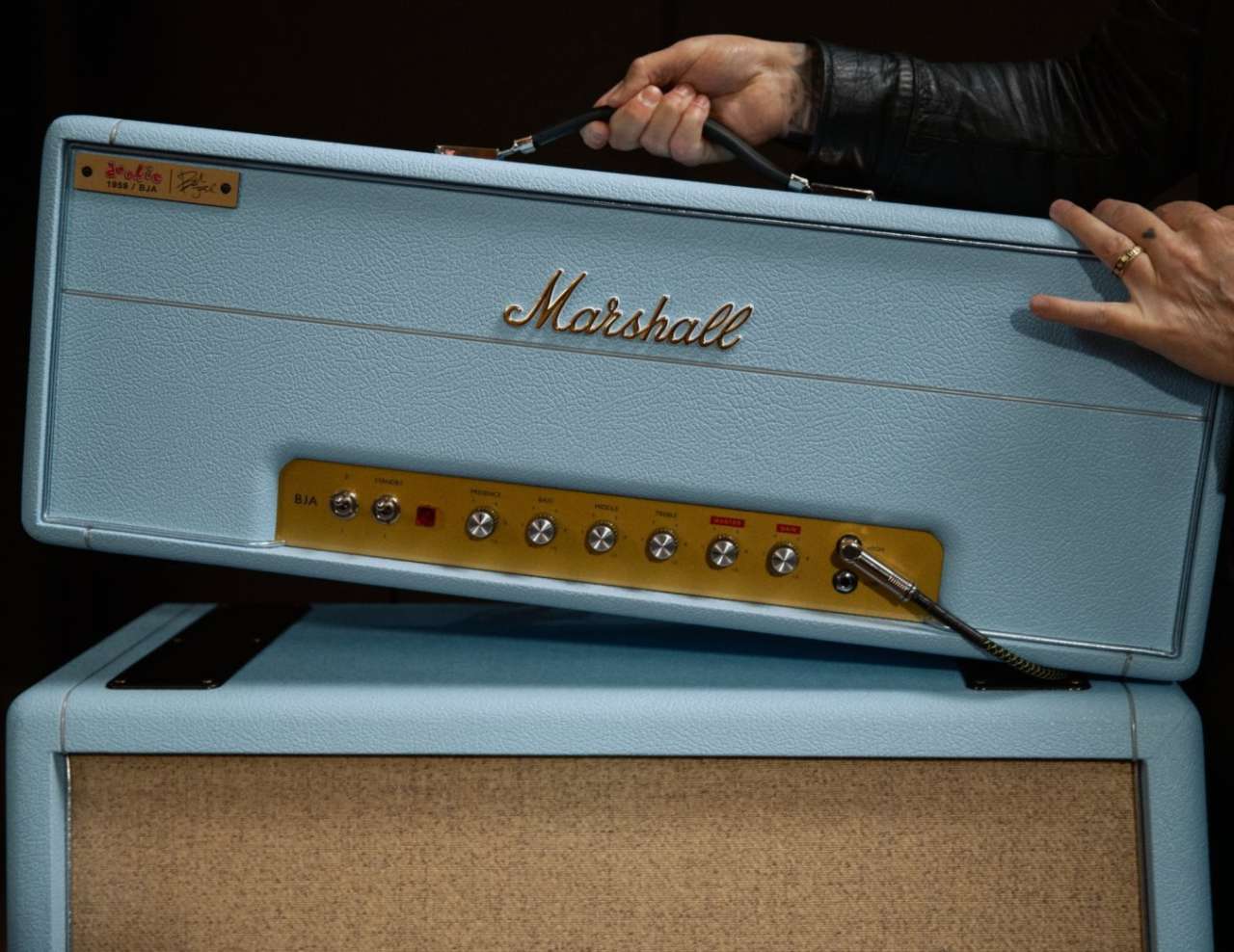
Marshall has pulled the wraps off the 1959BJA Billie Joe Armstrong Artist Signature, and it’s the company’s first artist signature amp in 14 years. The Green Day frontman worked with Marshall to bottle his punk rock tone in a handwired 100-watt head. It goes on sale July 21, 2026, and it’ll cost you $3,999.99.
Price: $3,999.99
Where to Buy: Marshall
Marshall has spent recent years pushing into lifestyle audio, from its Minor IV earbuds to the compact Bromley 450 party speaker, so a flagship guitar amp is a return to the gear that built the brand.
The Super Bowl Sighting That Started the Buzz
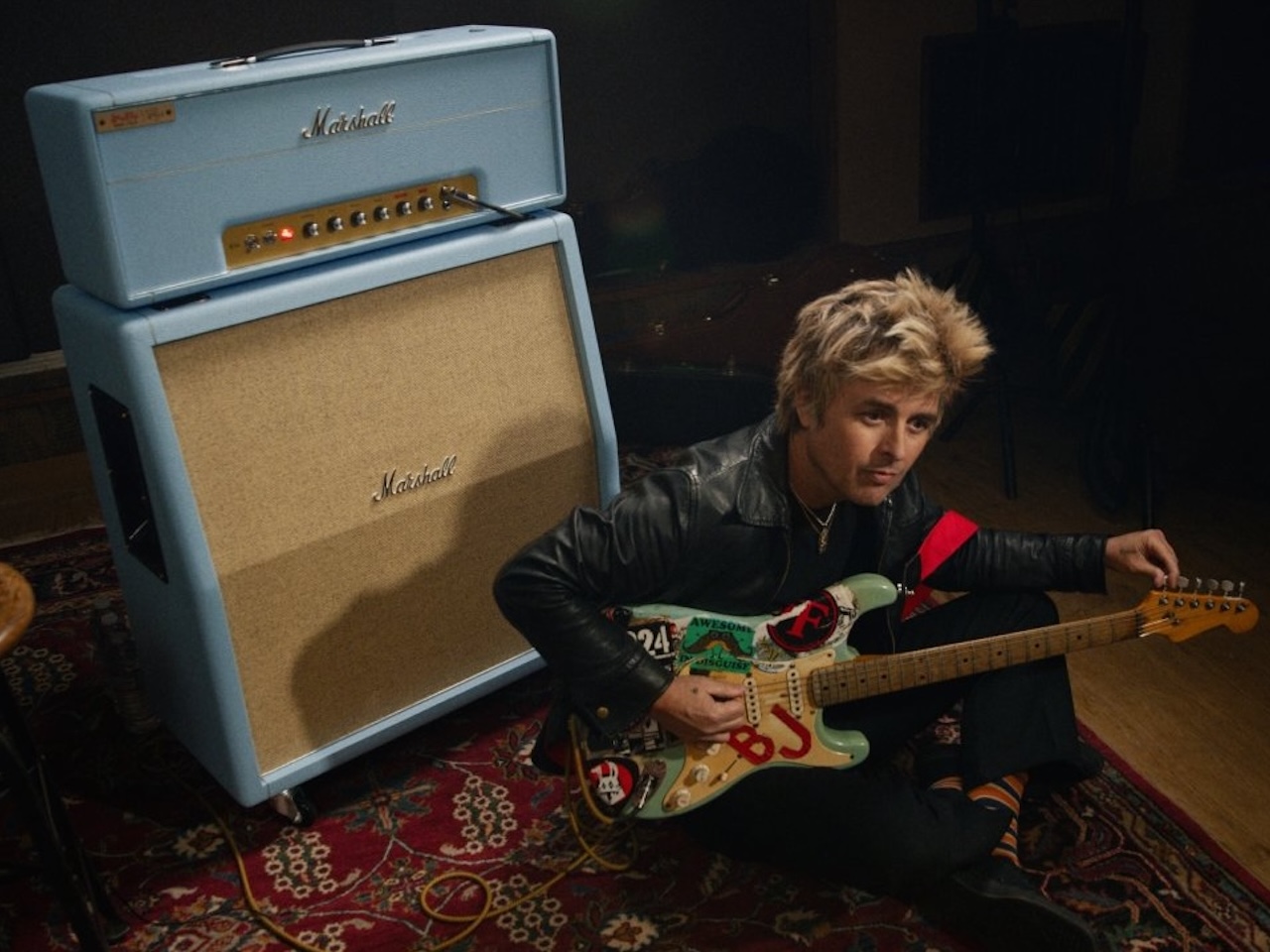
The story began in front of the biggest audience of the year. When Billie stepped onstage with Green Day at the 2026 Super Bowl, sharp-eyed fans spotted an unfamiliar baby-blue Marshall head behind him. Speculation about a signature amp spread fast across guitar forums and social feeds. Marshall stayed quiet until now, turning that mystery into a proper launch.
What Marshall Packed Into the 1959BJA
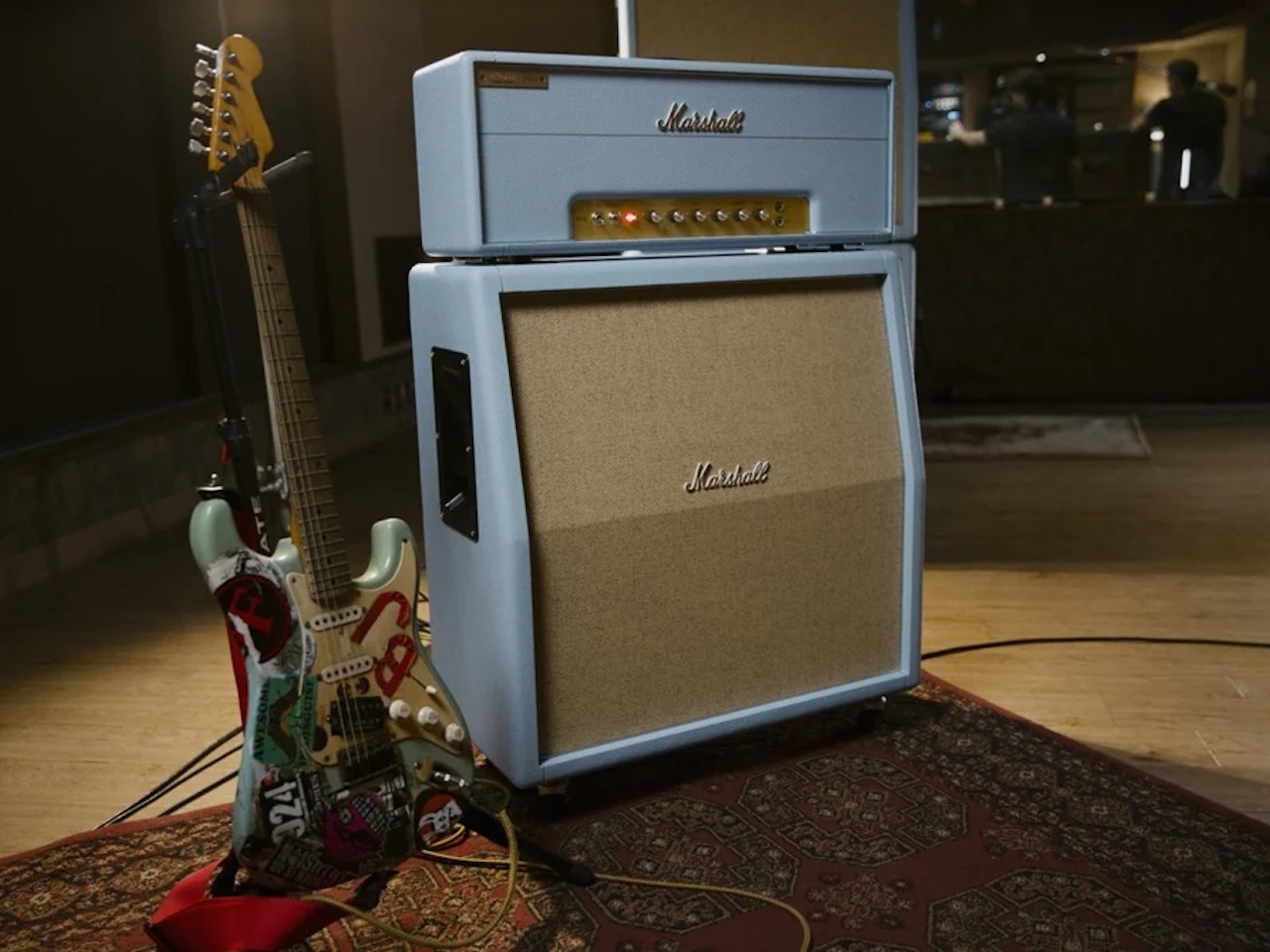
The 1959BJA builds on Marshall’s handwired 1959HW platform, the classic plexi circuit that’s been chased by tone hunters for decades. It runs three ECC83 preamp valves and four EL34 power valves, pushing a full 100 watts through a single channel. You get the familiar control set, with Presence, a three-band EQ, Master Volume, and Gain. It’s a head-only unit, so you can pair it with whatever cabinet you already trust.
The spec sheet fills in the rest of the picture. Marshall hand builds the 1959BJA in the UK, with two inputs for high and low sensitivity and dual speaker outputs backed by an impedance selector for 16, 8, and 4 ohm cabinets. It tips the scales at roughly 20 kilograms, or about 44 pounds, so it carries the heft you expect from a full plexi head. Marshall says the amp went through the same R&D and studio testing as the rest of its handwired line.
The “Dookie Mod” That Defines It
The centerpiece here is a custom “Dookie Mod.” Marshall traces it back to the sound Billie and producer Rob Cavallo dialed in while Green Day were breaking through in the early 90s. The tweak leans on more gain, tighter lows, and the saturated punch that made those records hit so hard. As Marshall puts it, it’s a classic plexi with modern flexibility built for the stage.
That tone has deep roots. Green Day tracked Dookie through a heavily modified Marshall 1959 Super Lead, and the amp’s aggressive crunch became a blueprint for a generation of punk and pop-punk records. The 1959BJA cascades the original plexi inputs and adds a master volume, so players can chase that saturation without running the amp wide open. It’s the modern, stage-friendly take on a sound Billie has leaned on for three decades.
A Baby-Blue Nod to “Blue”
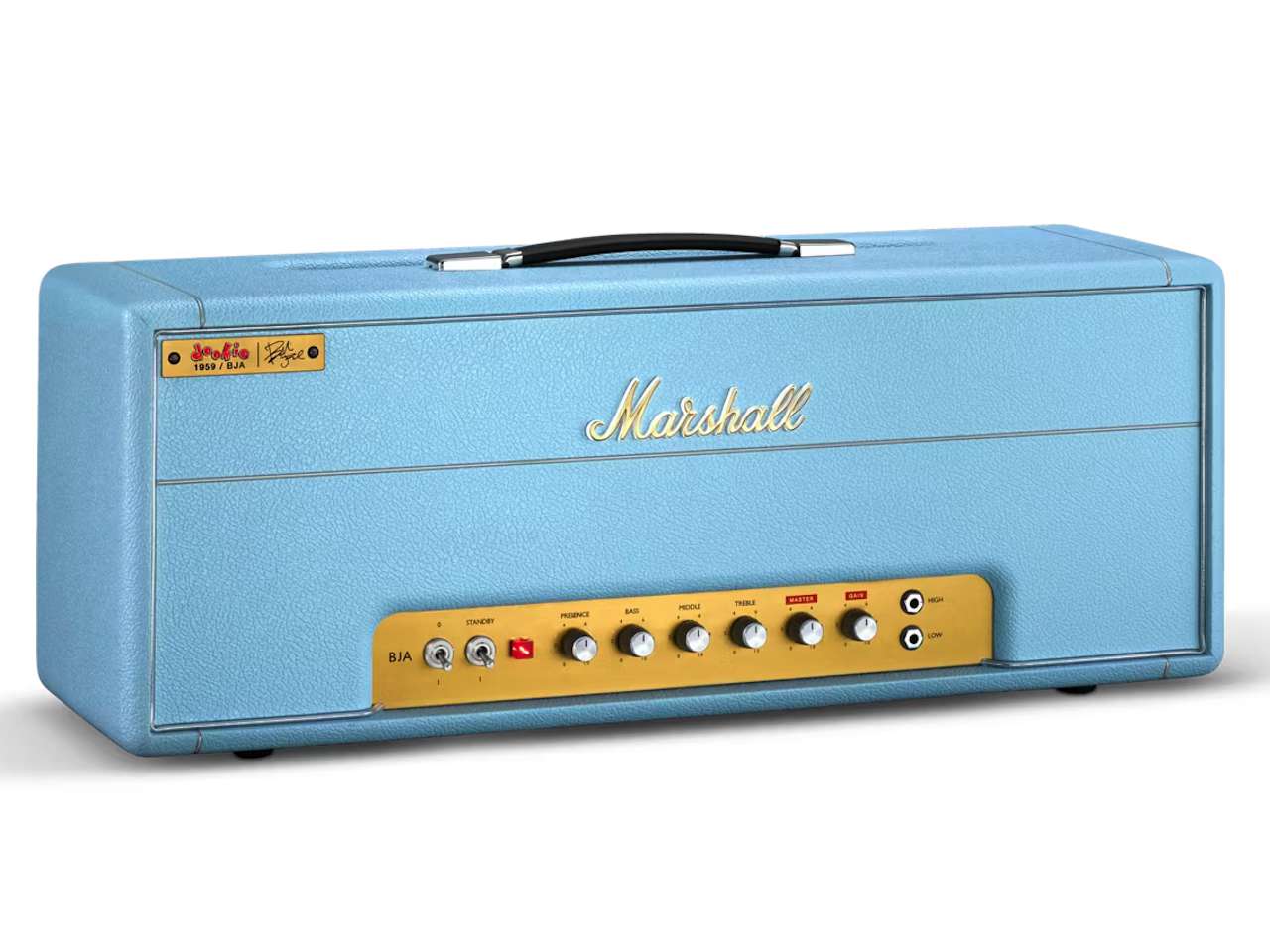
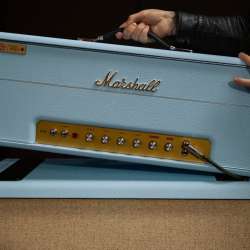
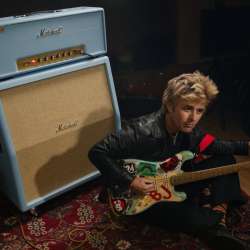
The look is a tribute to Billie’s first guitar, the one he named Blue. Marshall gave the head a pale baby-blue wrap, trimmed it with brass and silver hardware, and stamped both the front and rear panels with its own badging and Billie’s autograph. It’s a loud amp with an equally loud paint job.
Billie and Marshall Go Way Back
This is not a sudden pairing. Billie and Marshall have worked together for a while now, teaming up most recently on the Monitor III ANC headphones campaign in 2024. The 1959BJA turns that relationship into an official amplifier for the first time. Steph Carter, Marshall’s Culture Marketing Director, framed the collaboration around one unmistakable sound.
Carter put it plainly in the announcement. “Billie Joe’s guitar sound is instantly recognisable,” Carter said. “From the moment you hear those opening chords on Dookie, you know exactly who it is. Working with Billie to create an amp that captures that punch, aggression and clarity was an incredible project for our team.”
Price and Release Date
The 1959BJA sells for $3,999.99 in the US, with £3,099.99 / €3,699 elsewhere. It arrives July 21, 2026 through authorized Marshall retailers and marshall.com. Availability will vary by region, so it’s worth checking local stock on launch day. Marshall hasn’t confirmed an Amazon listing yet, so we’ll update this post if one goes live.
Where It Sits in Marshall’s Lineup
The price puts the 1959BJA at the top of Marshall’s handwired range. A standard handwired 1959HW head streets around $3,200 at major US retailers, so the signature model carries a clear premium for its custom circuit and finish. That gap reflects the extra work in the Dookie Mod and the one-off baby-blue cosmetics. It lands in familiar territory for artist signature gear, which usually sits above the stock versions it’s based on.
The Amplify Tie-In
Marshall’s using the launch to spotlight its Amplify loyalty program. The company commits an amount equal to 1 percent of member purchases on marshall.com to grassroots music, starting with independent venues. It’s a small cut, but it’s aimed at the rooms where bands like Green Day got their start.
Billie summed it up in typical fashion. “I’m so overjoyed to have my own signature Marshall amp,” he said. “These amps have been a part of my musical life, from my heroes down to little old me.”
Price: $3,999.99
Where to Buy: Marshall
Marshall launched Amplify back in March, naming the Paris venue Supersonic among its first partners. The support can take the form of backline gear, funded live events, and longer-term partnerships. In announcing the program, Marshall CEO Jeremy de Maillard called small venues the places “where the next generation of musicians turn first time listeners into lifelong fans.” Marshall has described Amplify as a long-term model to support the future of live music.