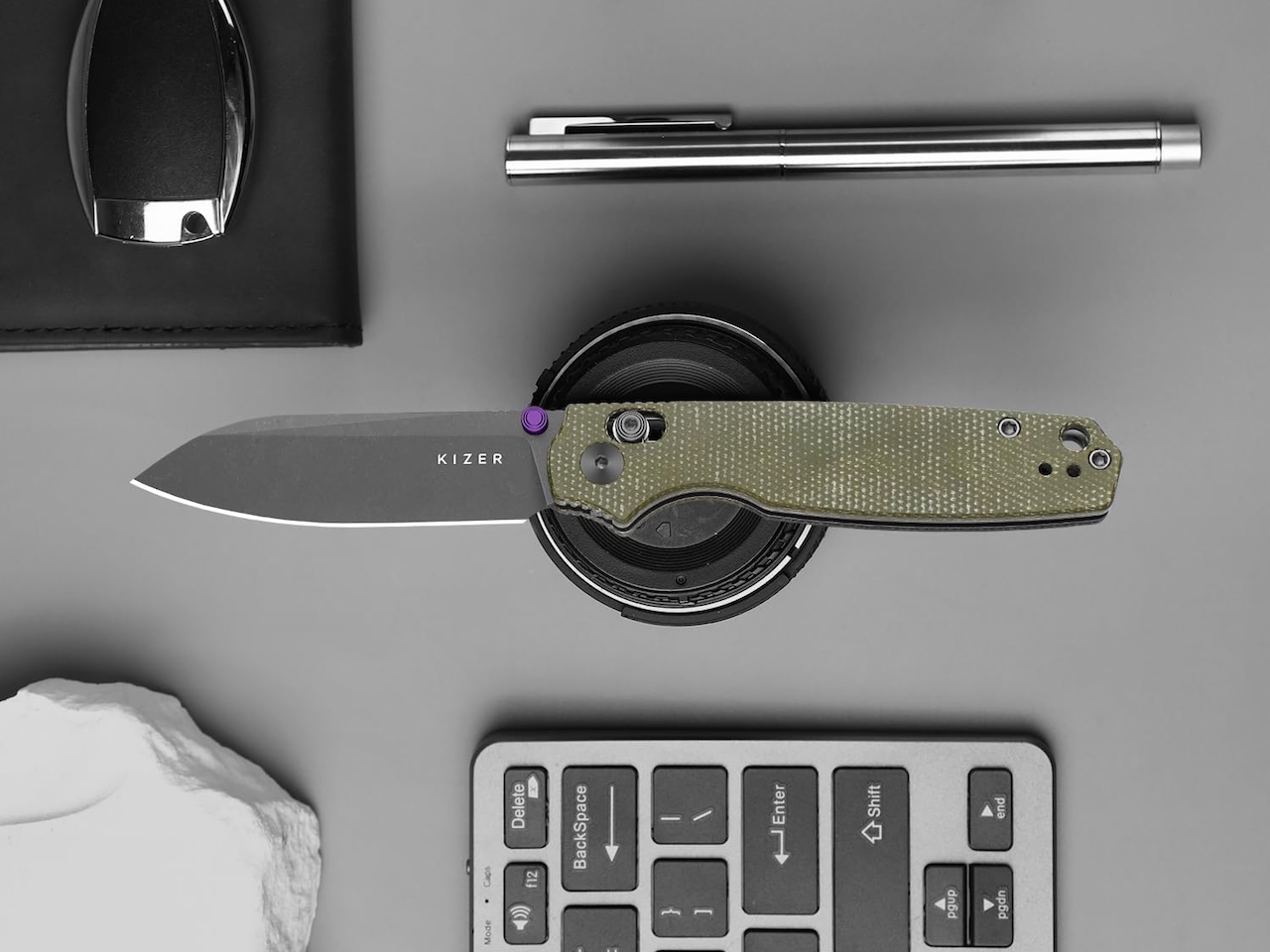
Some knives blow the whole budget on the blade and skimp on carry. The Kizer Pokiman CS flips that, pairing a slim, understated body with a sheepsfoot blade and Kizer’s smooth Clutch Lock.
Price: $35.99 (From $39.99)
Where to Buy: Amazon
Priced from around $40, it’s an easy one to like if you want a low-key daily cutter. The catch: the name hides three different builds, so the model number matters more than usual.
What the Pokiman CS actually is
Kizer splits the Pokiman into three blade shapes, and CS is the sheepsfoot version (CC runs a clip point, CD carries a drop point). Same platform, three personalities.
Blade length is friendly: a 3.16 inch edge on a knife that opens to 7.36 inches and folds to about 4.21 inches closed. Blade stock sits at a lean 2.8 mm, so it slices more than it pries. Compact, not a toy.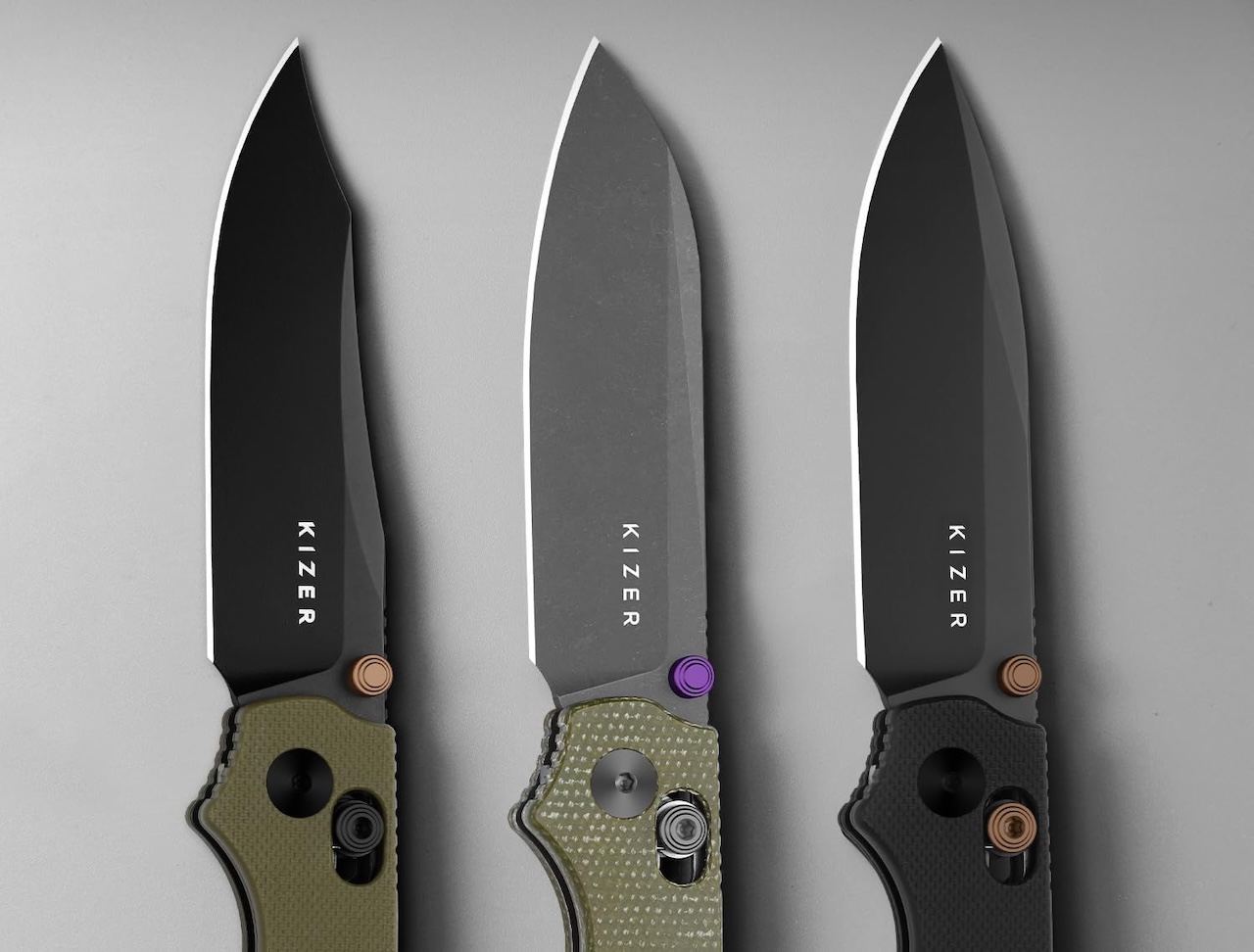
Three model numbers cover the range: V3789A5, V3789A6, and V3789M3. Each one changes the steel, handle, and price, which is why the letters after Pokiman matter as much as the name itself.
Key Specs
| Spec | Detail |
|---|---|
| Blade length | 3.16 in (80 mm) |
| Overall length | 7.36 in (187 mm) |
| Closed length | 4.21 in (107 mm) |
| Blade thickness | 0.11 in (2.8 mm) |
| Blade shape | Sheepsfoot, flat grind |
| Blade steel | AEB-L (Kizer direct) or D2 (Amazon Micarta) |
| Blade hardness | 58 to 60 HRC |
| Lock | Kizer Clutch Lock (crossbar) |
| Pivot | Bearings |
| Handle | Acrylic, aluminum, or Micarta |
| Weight | 2.57 oz (73 g) acrylic, 3.08 oz (87 g) aluminum |
| Clip | Reversible deep-carry, tip-up |
| Opener | Thumb stud |
| Origin | Made in China |
| Models | V3789A5, V3789A6, V3789M3 |
The sheepsfoot blade and who it suits
Sheepsfoot blades trade a piercing point for a straight, workhorse edge. The spine curves down to meet a blunt tip, which keeps the point out of trouble on controlled cuts. Think boxes, cordage, packaging, and desk-side food prep. Utility first.
That blunt profile is exactly why offices and warehouses lean sheepsfoot, since there’s little risk of an accidental puncture. Skip it if you want a dedicated piercer or a hunting shape, because the CC clip point and CD drop point handle those jobs better. For flat push cuts, the sheepsfoot is tough to beat, and the straight edge sharpens evenly with no belly to chase.
Blade steel and finish options
Read the model number before you buy, because the steel changes with it. The two Kizer-direct builds run AEB-L, a fine-grained stainless from the same family as razor stock, prized for clean edges and easy sharpening. Every build in the line is made in China.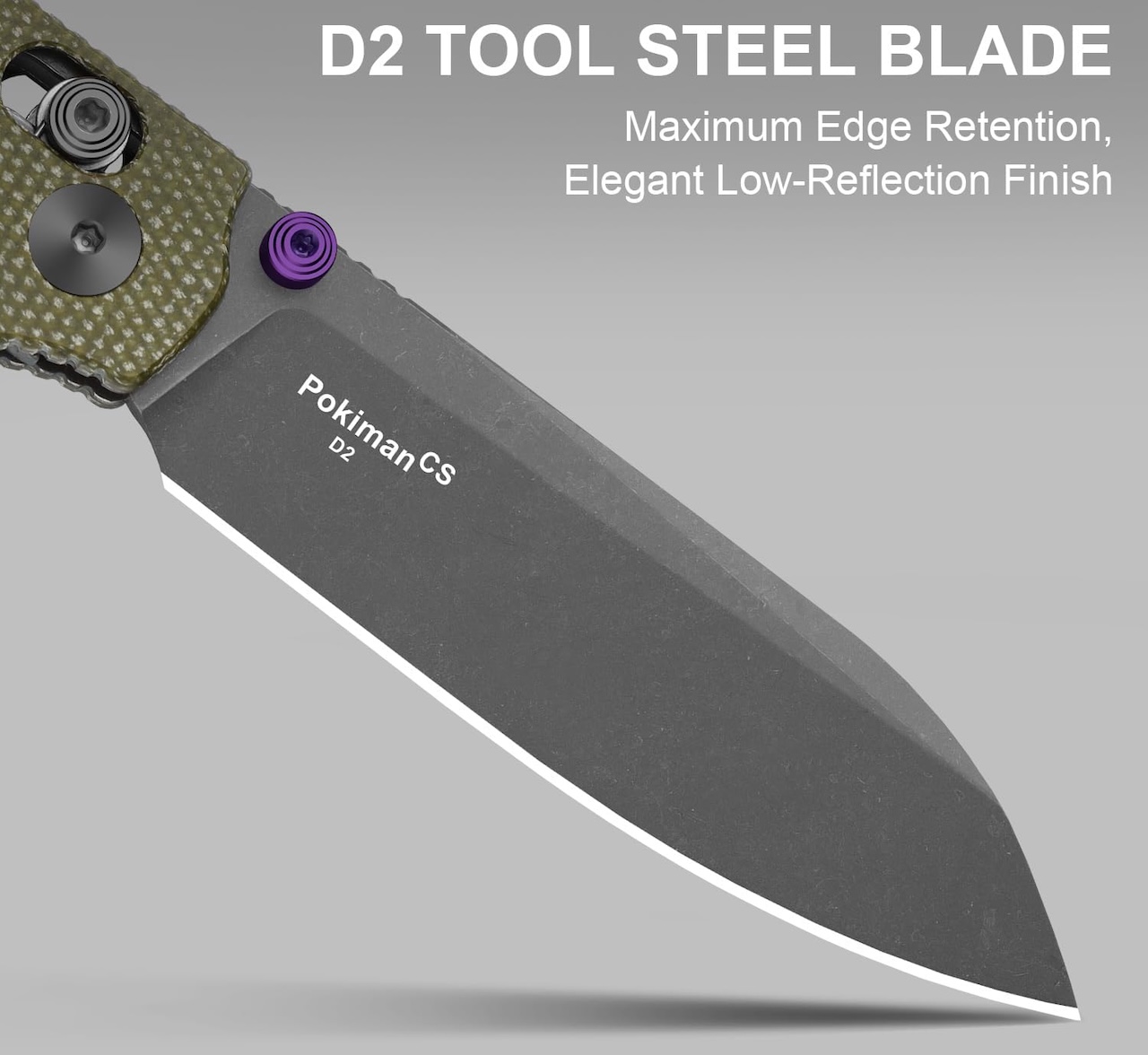
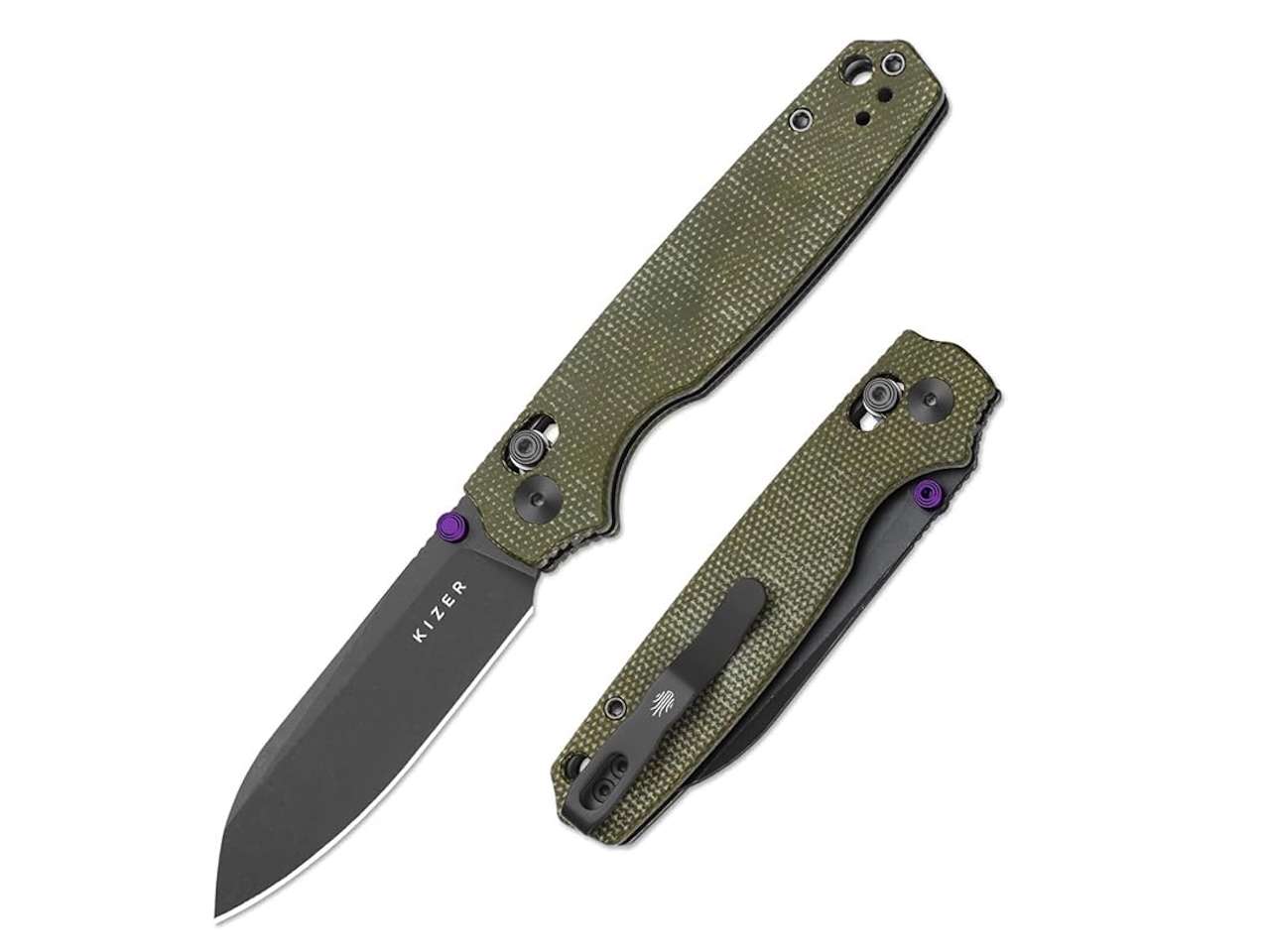
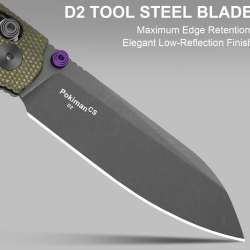
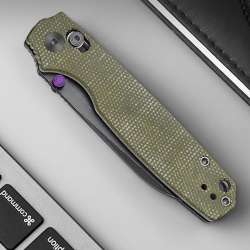
V3789M3, the olive Micarta version sold on Amazon, swaps in D2 tool steel. D2 holds an edge longer thanks to its high carbon and chromium mix, but it’s only semi-stainless, so it wants a wipe-down after wet work. It also fights back a little more on the stone.
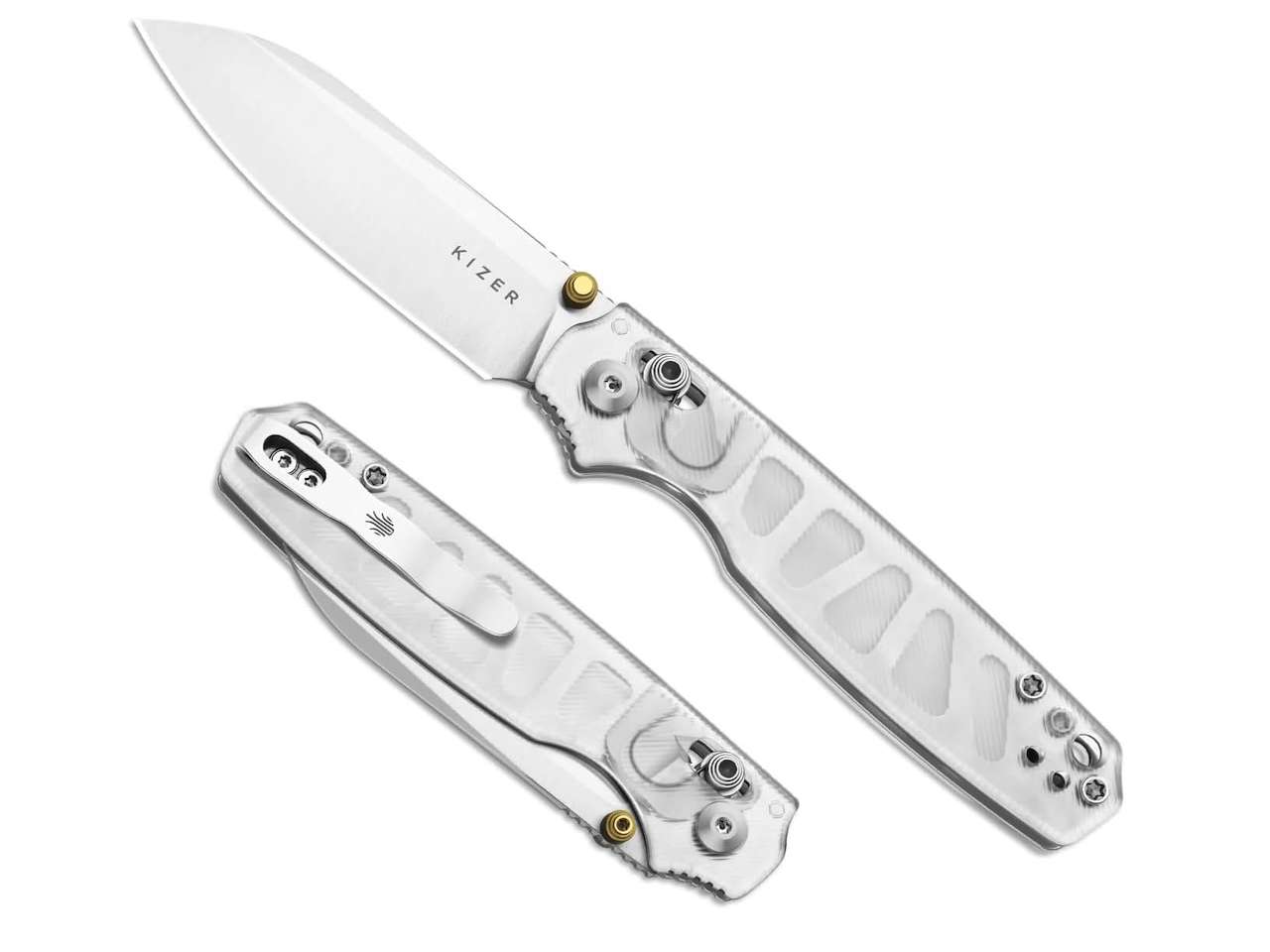
Finish tracks the handle as well. Clear acrylic wears a satin blade, the tan aluminum build gets a black PVD coat that hides scuffs, and the Micarta model carries a gray wash that masks patina. Hardness holds at 58 to 60 HRC across the line, so edge retention stays respectable for the money.
Handle, lock, and carry
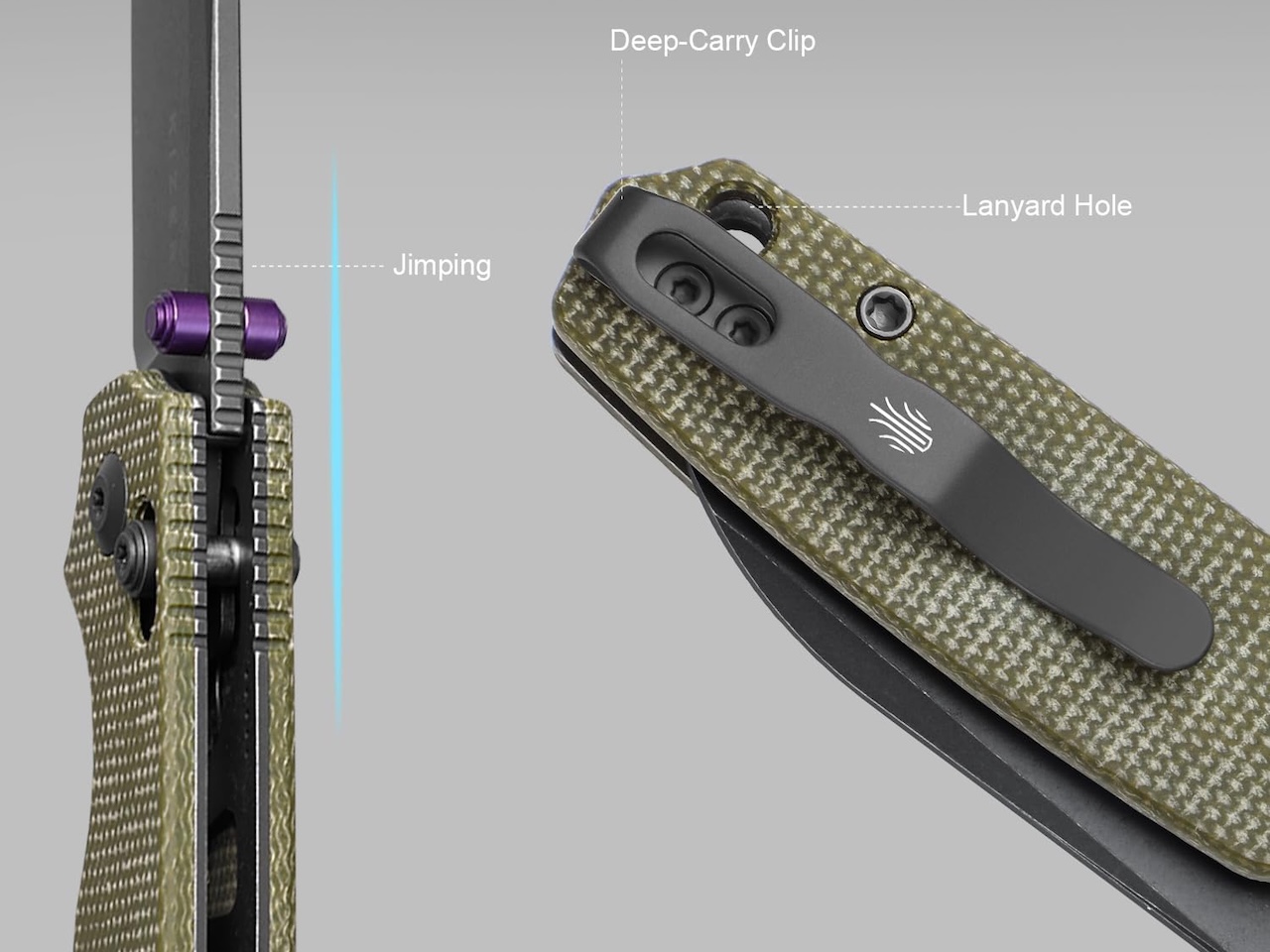
Handle options span clear acrylic, aluminum, and olive Micarta, and each gives the Pokiman its own character. The grip runs slim and fits four fingers for average hands, though the narrow profile can feel tight on larger ones. Acrylic feels light and glassy, aluminum adds solid heft, and Micarta warms up the longer you hold it.
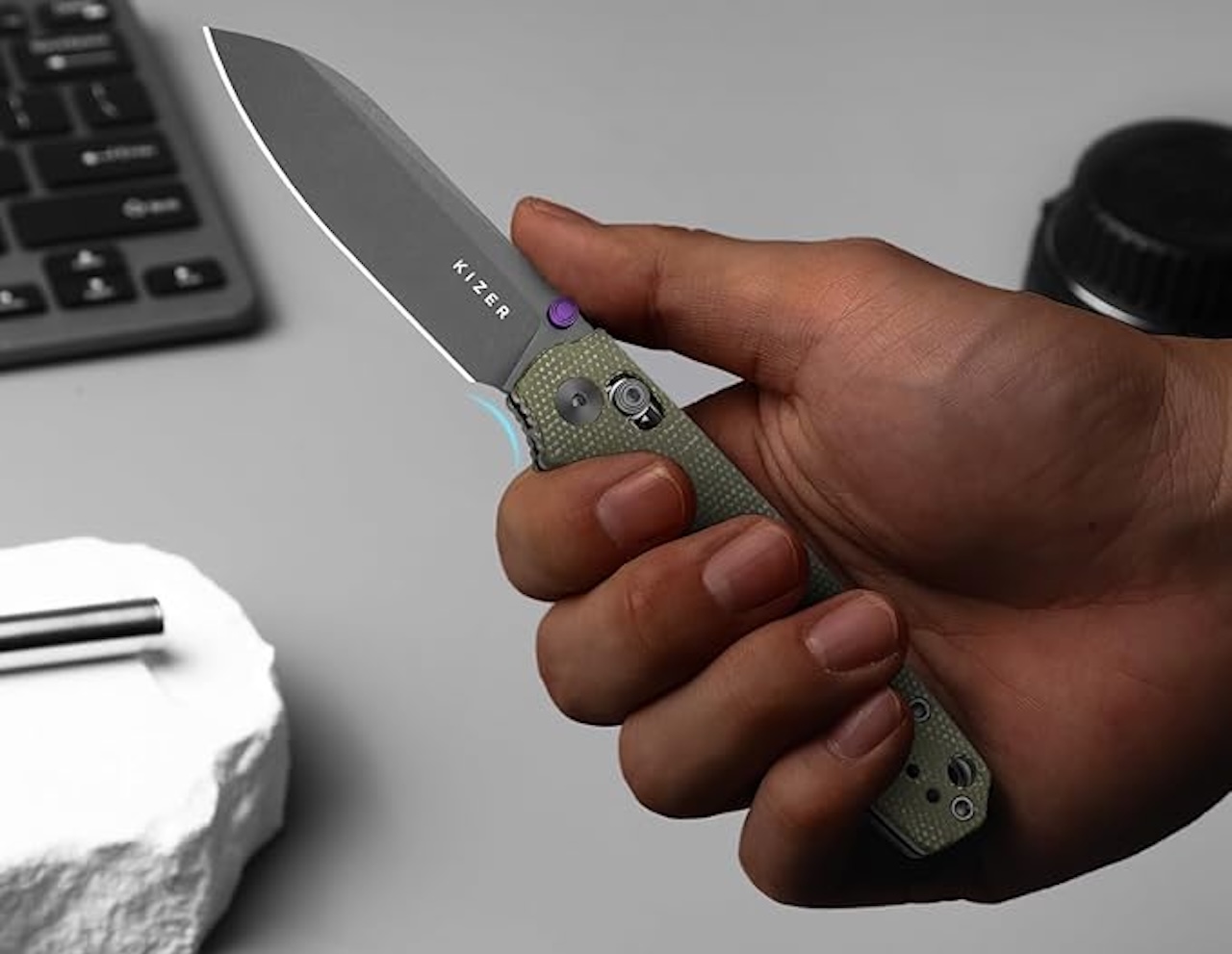
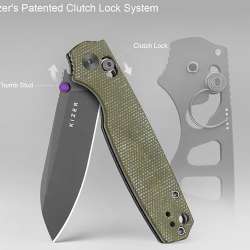
Kizer’s Clutch Lock is the real draw, a crossbar-style lock that stays smooth, fidget-friendly, and fully ambidextrous. Prefer a button lock at a similar price? Our look at the CRKT Squid XM button lock makes a useful cross-shop before you commit.
In the pocket
Slip it in a pocket and the Pokiman mostly disappears, which is the point of a slim EDC. A reversible deep-carry clip pulls it low, so only a sliver shows above the seam.
Draw it with a thumb, and the blade rolls out on bearings in one clean motion. Everyday cuts feel effortless: tape, twine, blister packs, an apple at lunch. Fast in, fast out.
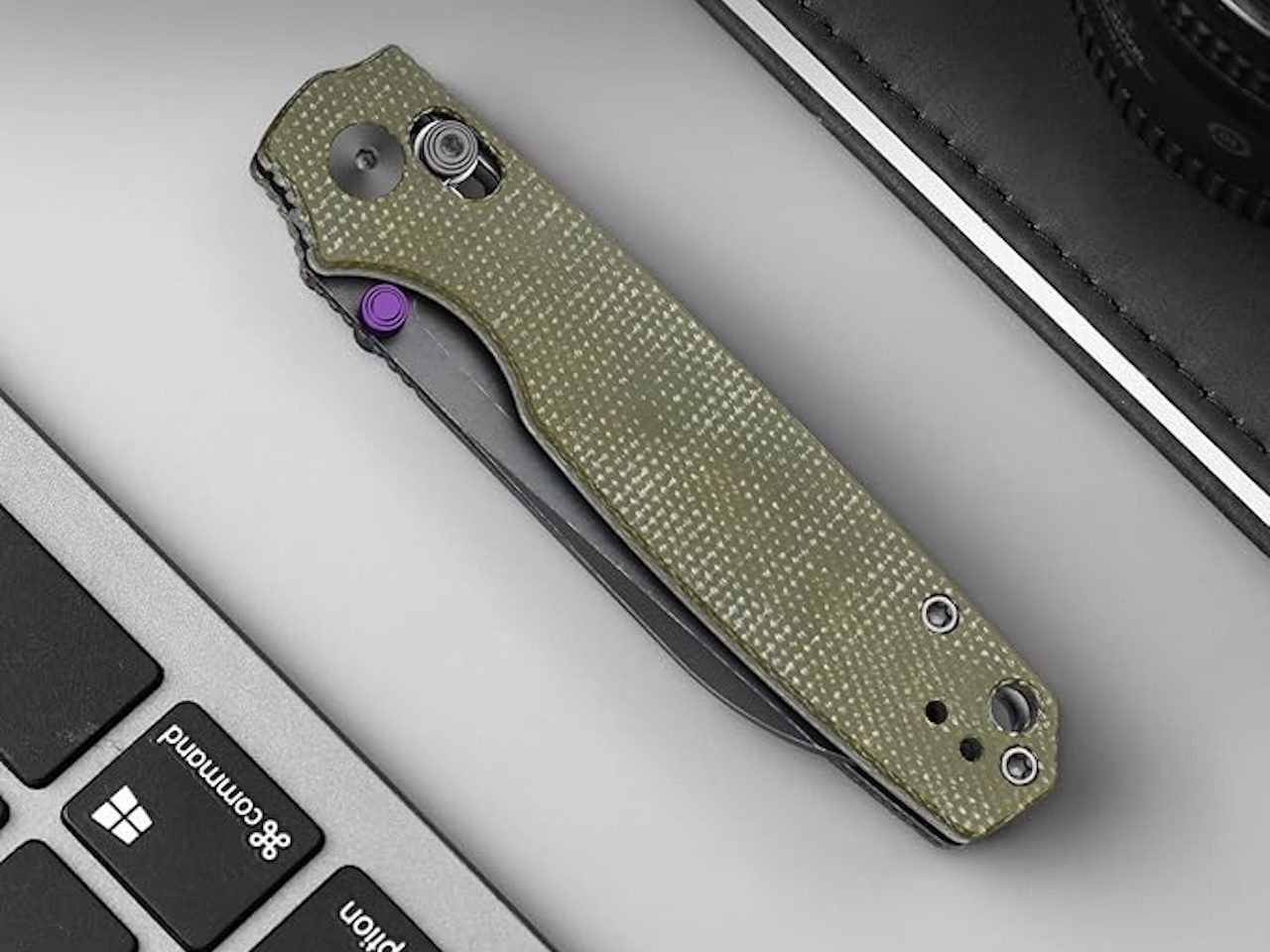
Closing feels every bit as smooth, since the crossbar spring drops the blade shut with a nudge of the bar. Left or right handed, the action stays identical. That symmetry is the quiet advantage of a crossbar lock.
Pros and cons
Clutch Lock action feels buttery, far pricier than the sticker suggests. The slim profile carries so well it practically vanishes. Steel choice is a real plus, AEB-L for easy upkeep or D2 for longer edges. Value stacks up fast.
Narrow handle is the main gripe, and it can feel thin during long cutting sessions. Because steel and finish shift by model, you have to check the number or risk a build you didn’t want.
Who should grab one
Light, well-mannered EDC that won’t tug at your pocket? That’s the Pokiman CS in a sentence. It’s an easy pick if you like a sheepsfoot blade and a smooth crossbar lock without spending big.
Matching the model to your priorities is the last call. Want the lightest, cleanest look? The acrylic V3789A5 in AEB-L is the featherweight of the trio.
Prefer grip and durability? Reach for the aluminum V3789A6. Chasing the best edge retention on a budget? The D2 Micarta V3789M3 on Amazon makes the most sense, as long as you don’t mind a quick wipe-down now and then.
Price: $35.99 (From $39.99)
Where to Buy: Amazon
Price and where to buy
Pricing stays friendly across the range. Kizer lists the clear acrylic model at $59.99 and the tan aluminum build at $69.99, while the D2 Micarta version carries a $60 MSRP but streets closer to $40 on Amazon, dipping as low as $36 in recent deals. In the lightweight value fight, that undercuts much of the field, including picks like the Kershaw Bel Air XL. Grab the olive Micarta D2 version on Amazon here: Kizer Pokiman CS on Amazon.