
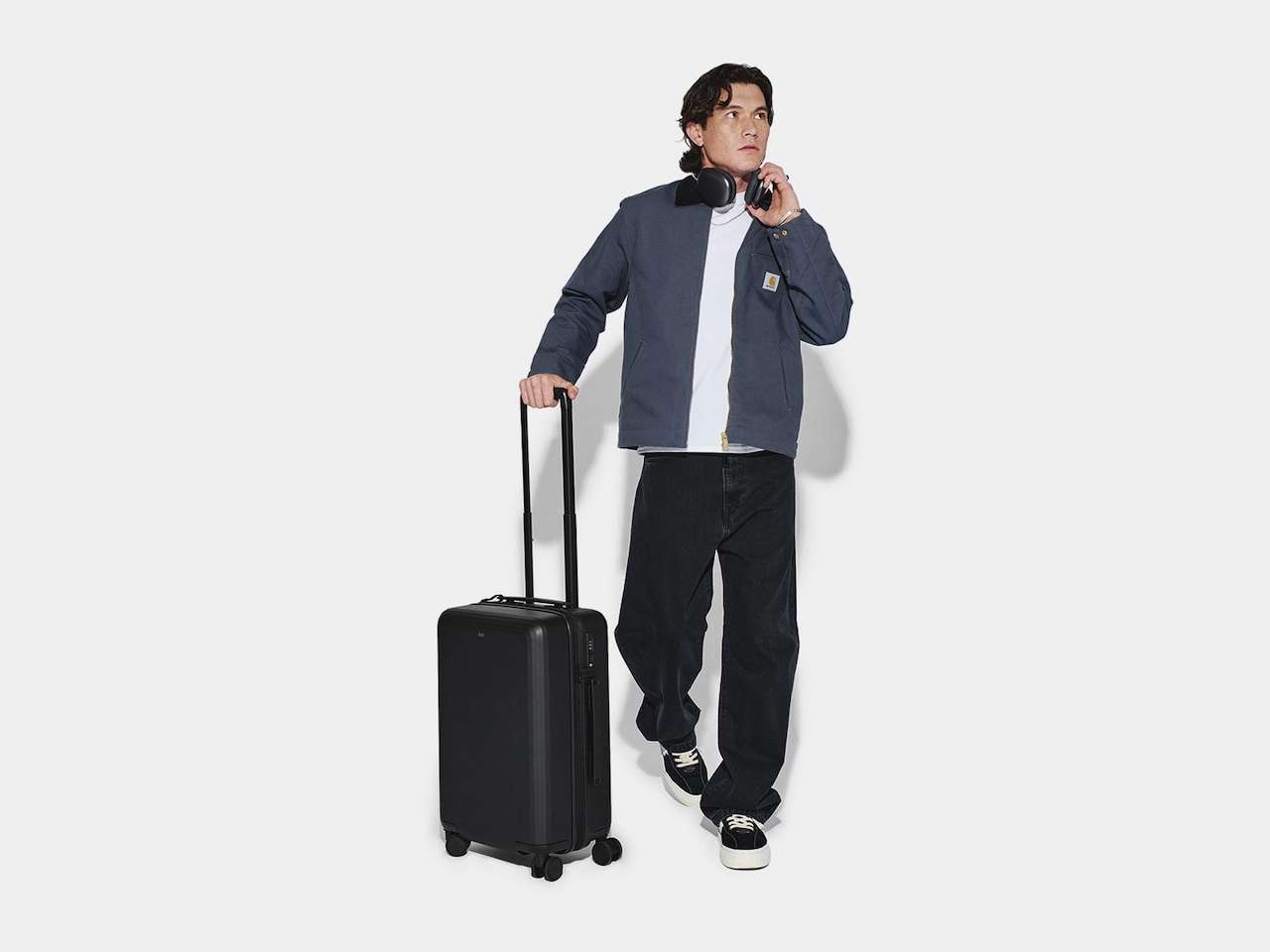
The 22 x 14 x 9-inch carry-on rule is not new. American, Delta, and United have all published the same dimensions for years, with wheels and handles included. What changed is the gate. United pulled physical bag sizers from boarding gates back in 2020, and American followed systemwide on October 6, 2025, handing gate agents more discretion in the process. The May 2026 wave of summer-travel coverage put the policy back in the headlines, and summer 2026 is when most travelers find out the hard way. The bag that “always fit” last year is the bag that costs you a checked-bag fee on United Basic Economy this year, plus a $25 gate handling charge if the agent pulls it at the gate post-April 2026.
For context, the US carriers converge on 22 x 14 x 9 inches. Ryanair and easyJet run smaller, with Ryanair’s Priority cabin bag at 55 x 40 x 20 cm (about 21.7 x 15.7 x 7.9 inches) per ryanair.com. That is not a rounding error. A 22-inch hardshell with a thick handle can fail a Ryanair sizer even if it fits an American bin. If you fly a mix of carriers, you are shopping for the smaller number, not the bigger one.
How we sorted the field
We sorted on four things: shell type, wheel quality, real-world dimensions, and airline compatibility. Hardshell polycarbonate takes a beating from baggage handlers; softshell bags flex around tight sizers; a bag that pulls to one side costs you time at every connection; and a bag that fails one carrier’s sizer fails the trip. Every model name, weight, and price in this article is flagged for verification. Treat the names as the shortlist, not the verdict.
1. Best carry-on for domestic flights: hardshell spinner
You are standing at the gate, the agent is holding the sizer, and your bag is going in or it isn’t. The domestic carry-on category in 2026 is a hardshell spinner between 21.5 and 22 inches tall, with a measured depth (wheels included) at or under 9 inches. The consensus pick is a polycarbonate shell with a YKK-coil zipper, four spinner wheels, and a TSA-approved combination lock.
Price: $310
Where to Buy: Amazon
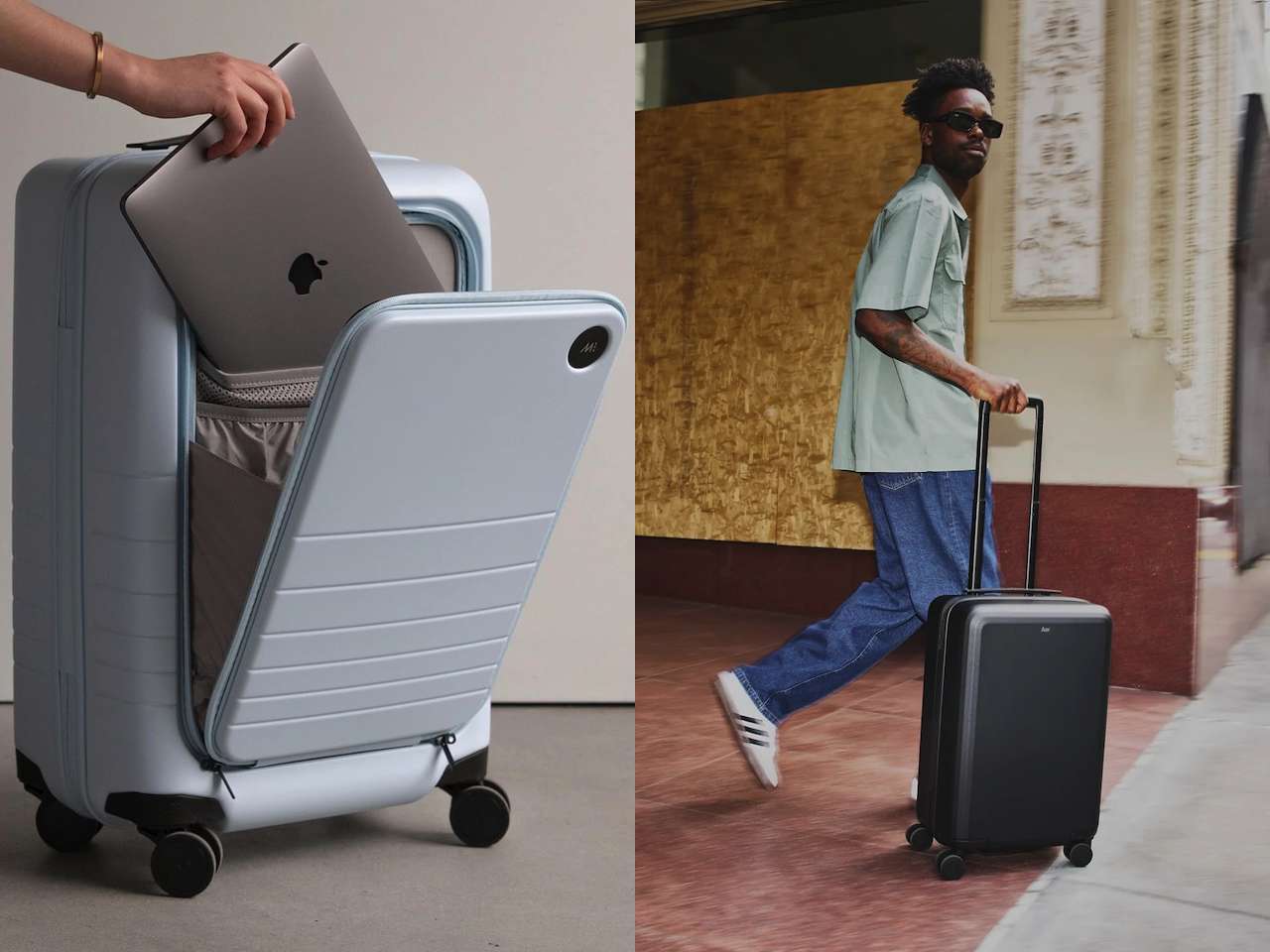
The two names that keep surfacing are the Monos Carry-On Pro and the Aer Carry-On. Both clear the 22 x 14 x 9 rule when measured with wheels, and they run around 36 liters (Monos Carry-On Pro) to 41 liters (Aer Carry-On) of internal capacity. The Monos has a front-access laptop pocket on the shell exterior plus a clamshell interior, and the Aer runs a minimalist hardshell with an integrated wheel-lock brake. Pick by the secondary feature you care about: front-pocket tech organization (Monos) or capacity plus wheel control (Aer).
2. Best international carry-on: The smaller pick that clears EU and Asian carriers
International is where the 22-inch US rule stops helping. Ryanair, easyJet, Lufthansa, and most Asian carriers run tighter limits, and a 22-inch hardshell that clears American can fail a Lufthansa sizer by half an inch. The international pick is a 20 to 21-inch softshell or hybrid, around 30 to 35 liters, with an external handle that compresses when the sizer closes.
Price: $160
Where to Buy: Amazon
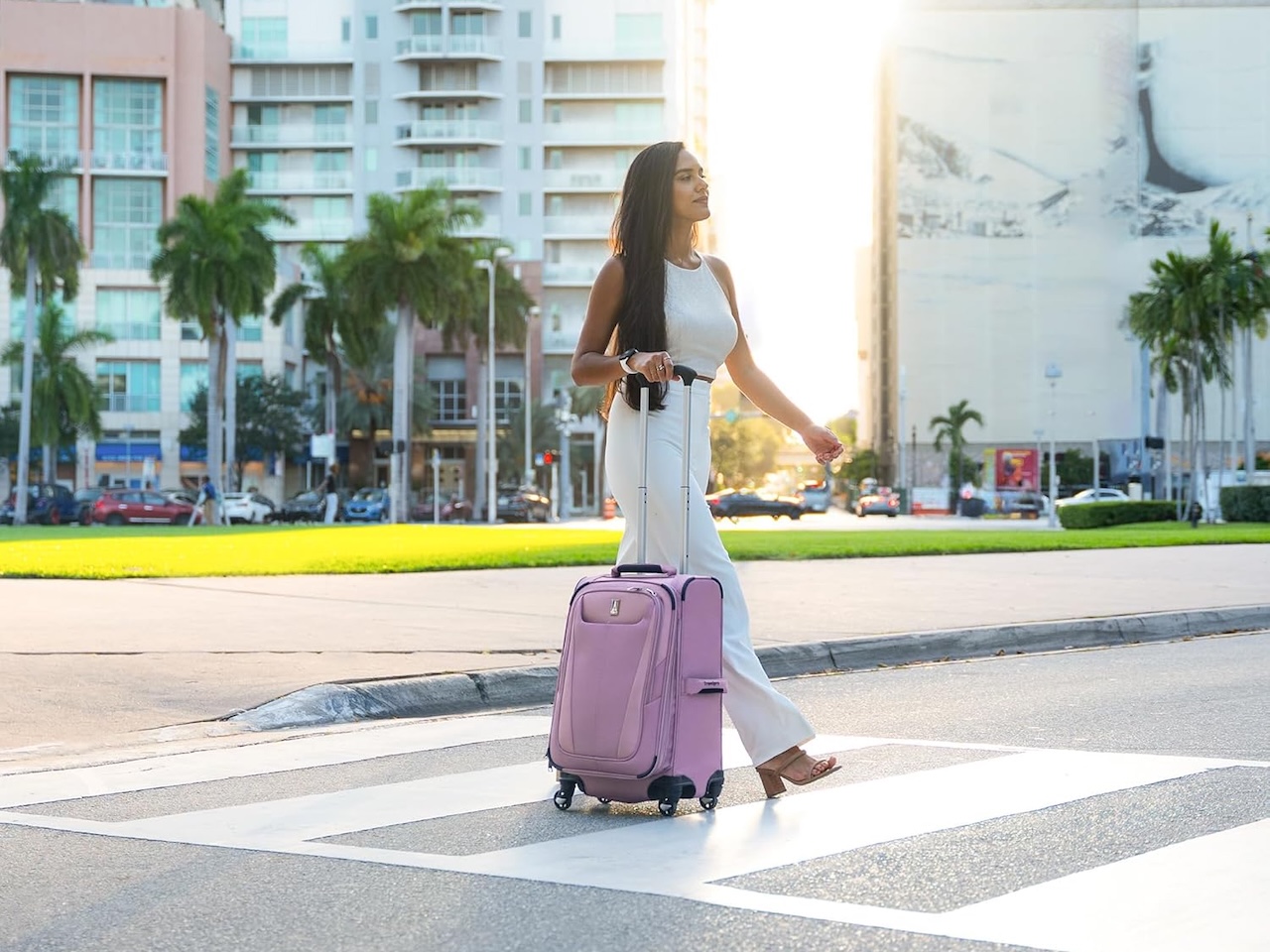
The consensus 2026 names here are smaller-format versions of the brands above, plus the Travelpro Maxlite 5 21-inch carry-on. Softshell wins this category because it flexes inside a sizer. The Foldie is one soft option we have tested that holds up at this size. Hardshell has the durability, but it also has the exact dimensions, and exact is the word that gets you gate-checked. If you fly mostly transatlantic, get the softshell. If you mostly fly US domestic and one international trip a year, the hardshell in section 1 still works.
3. Best checked bag: Durable without the oversize fee
Most checked bags fail the same way. The shell cracks at a corner, the wheel shears off, and the handle retracts one inch shorter than it should. The 2026 checked-bag pick is a 28 to 29-inch hardside spinner with a reinforced corner guard, in-line skate wheels, and a lifetime or near-lifetime warranty against airline damage. A 29-inch size stays under the 62 linear-inch airline cap (the industry standard across American, Delta, and United for checked bags), so you do not get hit with the oversize fee at $200 or more per direction.
Price: $485
Where to Buy: Amazon
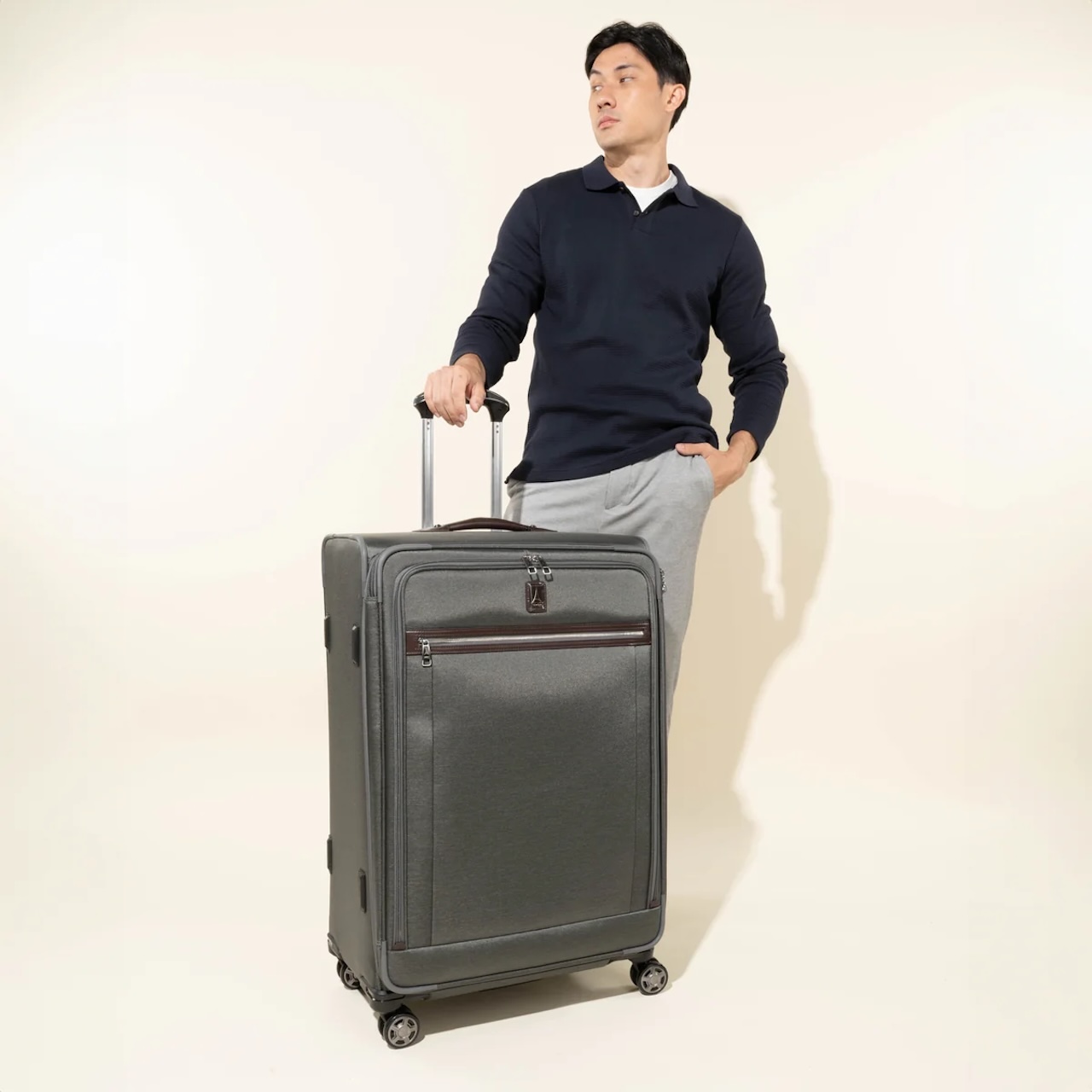
The consensus pick is the Travelpro Platinum Elite 29-inch, which Travelpro backs with a Built for a Lifetime Limited Warranty that covers wheels, zippers, handles, and airline-caused damage. Wirecutter, Outdoor Gear Lab, and CN Traveler all list it in their 2026 top picks, with a softside version available for travelers who want capacity over shell rigidity. If you want a TG-tested checked bag at premium pricing, the Roam Expedition Expandable is the alternative we have spent time with; the build quality is the standout, the capacity is generous at 121 liters, and the weight stays around 10.6 pounds.
4. Best budget pick: Sub-$150 luggage that still meets the rule
Sub-$150 is where the 2026 enforcement hits hardest, because most bags in this tier are sold as “carry-on” with manufacturer dimensions measured without wheels. The budget pick is a hardshell spinner in the 20 to 22-inch range, polycarbonate or ABS, four wheels, and a printed dimension spec that includes the wheels.
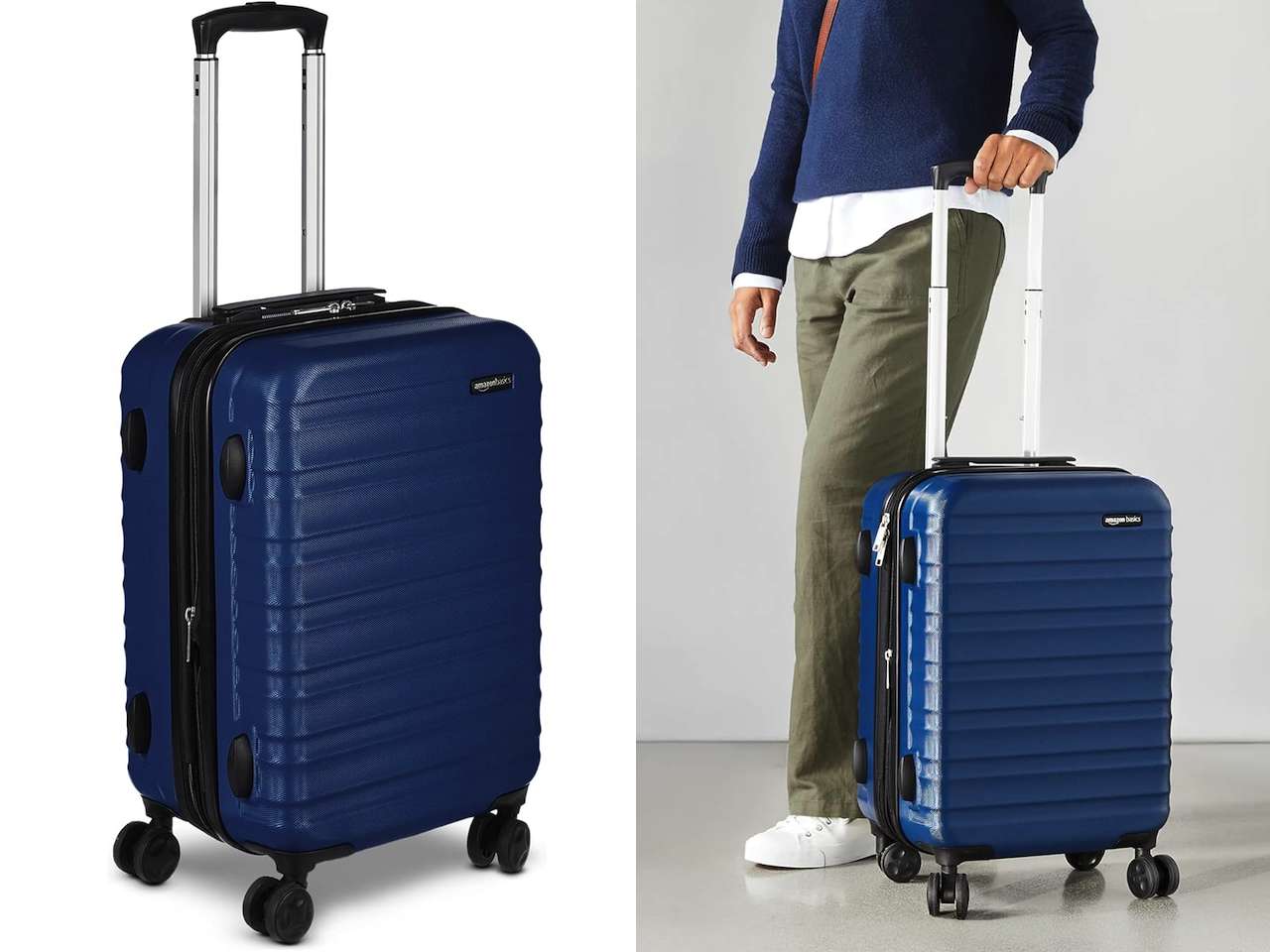
Price: $60.75
Where to Buy: Amazon
The 2026 consensus names are the Travelpro Maxlite 5 21-inch, the Samsonite Freeform Spinner, and the Amazon Basics hardside spinner. All three clear the 22 x 14 x 9 rule on paper, and all three are listed in Forbes Vetted and Travel + Leisure as 2026 budget winners. The Amazon Basics is the cheapest and the lightest; the Samsonite Freeform is the most widely available; the Travelpro Maxlite 5 is the most repairable. If you fly once or twice a year and want the bag to survive, the Maxlite 5 is the safest call.
A note on smart luggage
Built-in batteries and GPS trackers are why some bags get pulled at the gate. The FAA’s PackSafe rule says baggage equipped with lithium batteries must be carried as carry-on unless the battery is removed before check-in. American Airlines goes further: bags with non-removable batteries won’t be accepted as carry-on or checked at all. Delta and Southwest match that policy.
The fix is straightforward. Buy a bag without the battery and add an AirTag or a Tile in the main compartment. You get 90% of the tracking benefit and zero of the gate-check risk. The AirTag and Tile both run on user-replaceable coin cells, which keeps them on the allowed side of the lithium battery rule for carry-on and checked.
If you already own a smart bag with a removable battery, take the battery out before you fly and carry it on with you. The bag flies as a normal bag; the battery flies as a spare. That is the only configuration the major US carriers will accept in 2026.
The bottom line
Skip the brand and pick the rule. If you fly mostly US domestic on American, Delta, or United, get a 22-inch hardshell spinner (section 1) and measure it with the wheels before you leave the house. If you fly a mix of US and international, get the smaller 20 to 21-inch softshell (section 2) and accept the flex over the rigidity. If you check a bag, get the 29-inch Travelpro (section 3) and register the warranty. If you fly once a year, get the sub-$150 budget pick (section 4) and skip the smart-luggage feature (see the smart-luggage note above). Skip the brand loyalty and buy to the sizer. The 2026 enforcement will not get looser.
Auto Amazon Links: No products found.

Gadgeteer Comment Policy - Please read before commenting
Travelpro Maxlite 5 21-inch carry-on exterior dimensions don’t appear to fit the 22 x 14 x 9 inch requirement of many airlines. The overall dimensions from the Travelpro website (includes wheels and handles): 23 x 14.5″ x 9 in. The airlines sizers do not measure for interior measurements.