
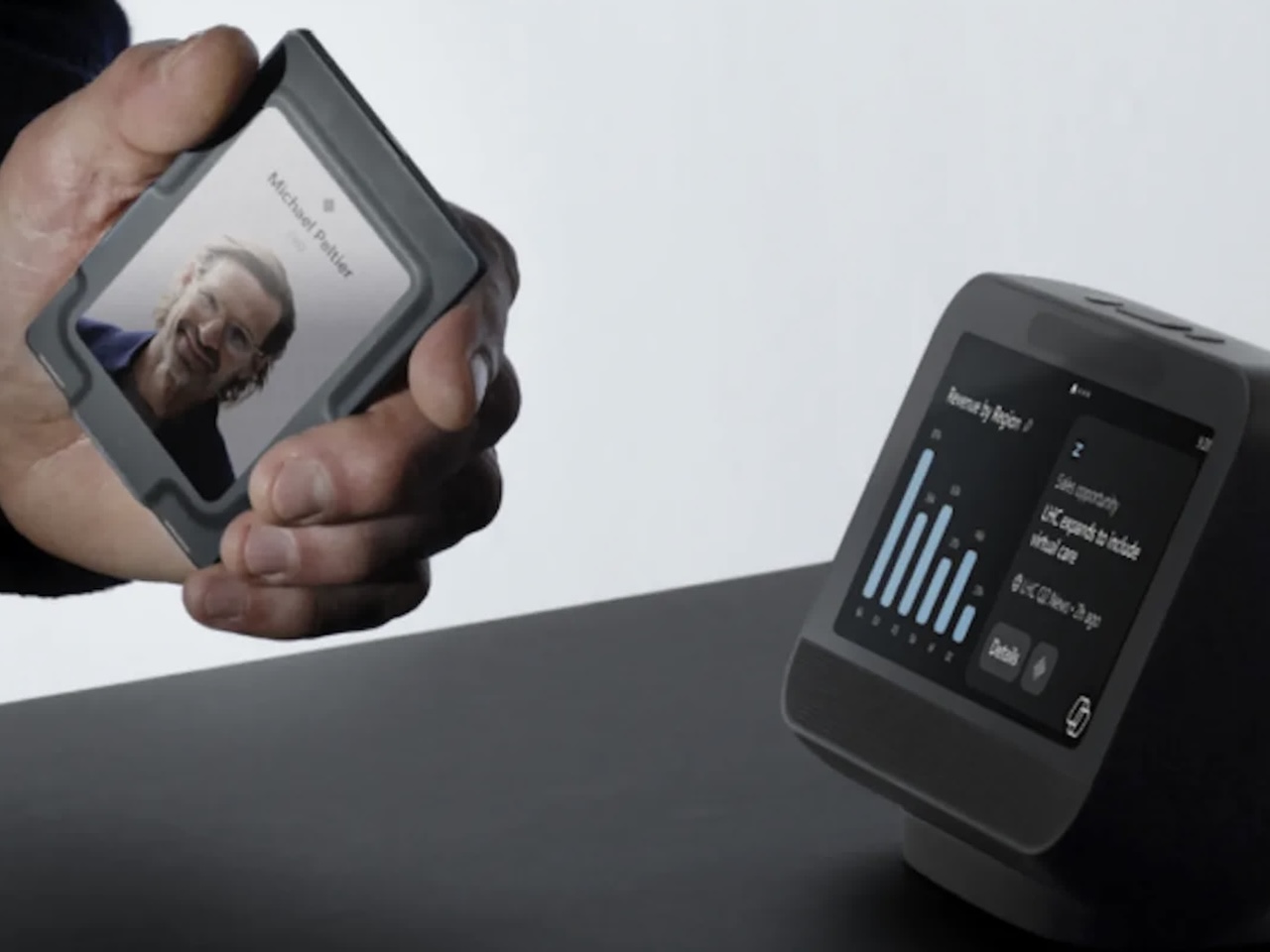
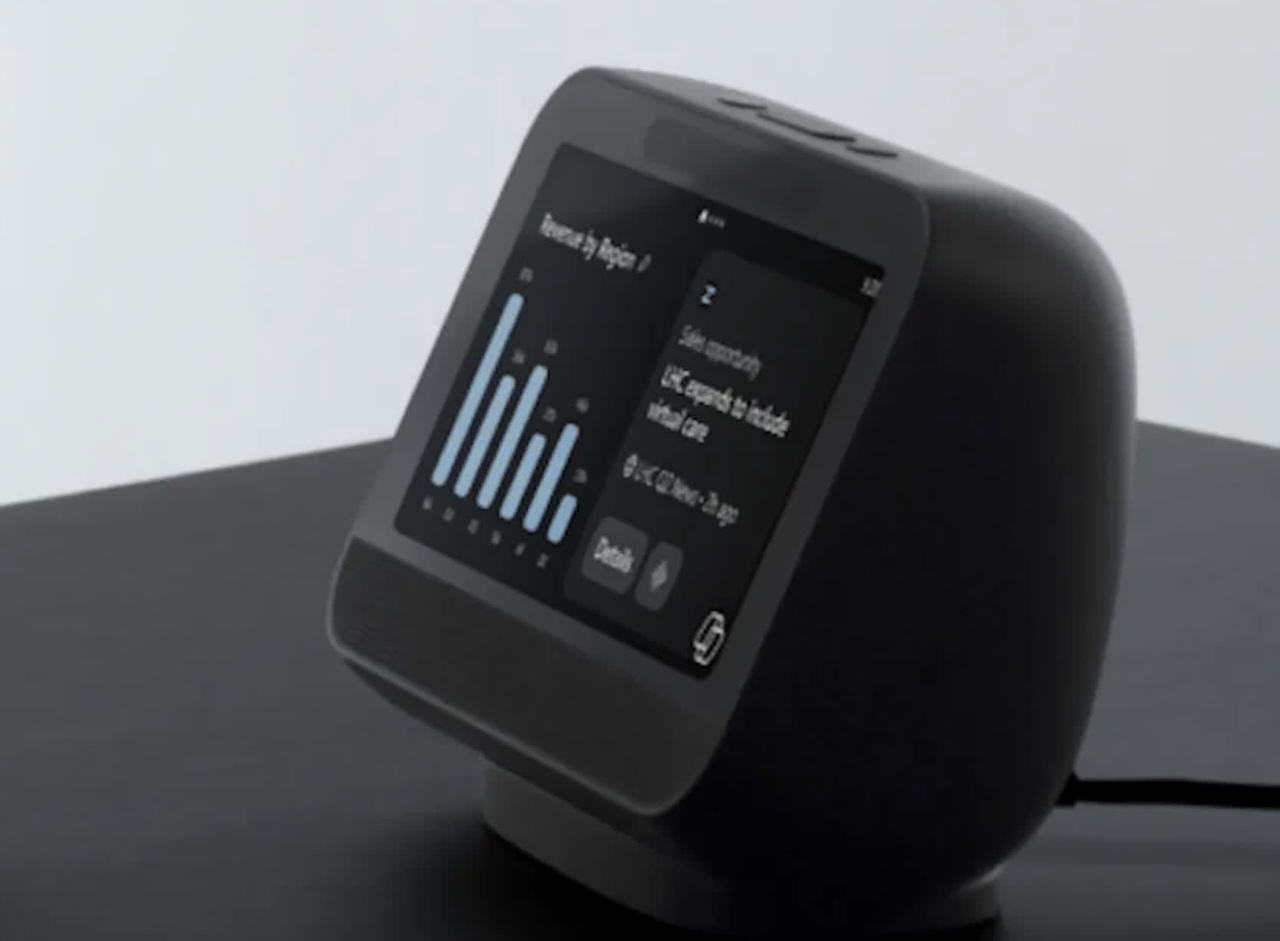
Microsoft has been quietly experimenting with what an AI assistant looks like when it stops living inside a laptop, and the latest answer is a wearable you clip to your shirt. At its annual developer conference, the company pulled the curtain back on two early hardware concepts built around its AI agents. One is a desktop cube you control by voice or by tapping its screen. The other, and the one stealing the spotlight, is a wearable badge with a fingerprint sensor and a tiny built-in camera.
A badge, not a phone, not a watch
Microsoft executive Steven Bathiche described the wearable as “a wearable access badge,” which is a fitting label. It clips onto clothing or hangs around the neck like a conference lanyard, but instead of just identifying you, it acts as a constant on-ramp to your AI agent. Think less smartwatch, more hands-free assistant living on your chest.
CEO Satya Nadella framed the prototype as part of a broader rethink of what computing should look like, calling it a “new form factor.” Read between the lines and the message is clear: Microsoft doesn’t want AI trapped inside Edge, Copilot, or a Surface. It wants AI as a thing: something you reach for, glance at, or speak to without unlocking a phone first.
What the fingerprint sensor and camera actually do
The badge is activated with a fingerprint, which is a smart choice for a device that’s basically always in arm’s reach of strangers. The bigger story, though, is the camera.
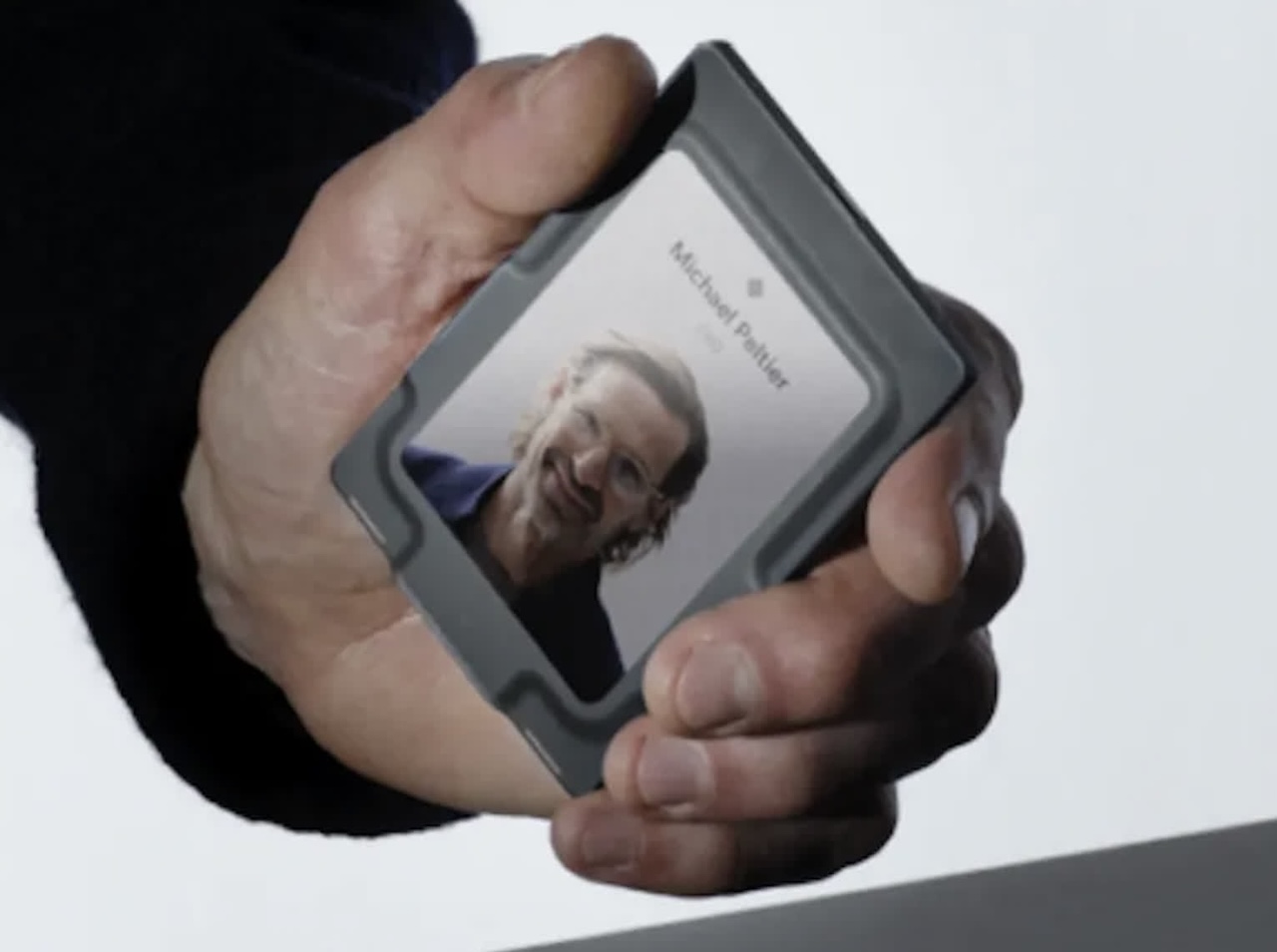
Bathiche says the lens isn’t for casual photos. Its job is to feed the AI agent visual context: awareness of whatever is happening around you. In a live demo, he aimed the badge at the audience, asked for a few shots, and, by his account, the system sent them his way. One beat, both the appeal and the controversy of the device.
That visual layer is what separates this concept from yet another voice-activated lapel pin. The badge isn’t waiting for you to describe your environment; it’s looking at it. In theory, that means it could read a meeting room, identify a whiteboard, or recognize a product you’re holding up, and respond accordingly.
The privacy problem hasn’t gone away
If “a wearable with a camera that can quietly take pictures” sounds familiar, that’s because Meta’s AI-equipped Ray-Bans got there first. Meta’s Ray-Bans already ship with a small recording LED, and even that has been criticized as too subtle to reliably alert bystanders. The TechSpot account doesn’t mention any recording indicator on Microsoft’s badge at all.
There’s also a credibility problem. Microsoft spent most of 2024 walking back Recall, the Copilot+ feature that quietly took rolling screenshots of your PC and alarmed security researchers. A clip-on camera feeding an AI agent lands in the same trust deficit. When is the badge recording? Where is footage stored? Who actually owns those frames once an agent has processed them?
The company isn’t pretending those questions don’t exist; it just isn’t answering them yet, because the badge isn’t a product. It’s a prototype, and a few hundred Microsoft staffers are currently living with it in-house. What they learn is meant to shape the next iteration, if there even is one.
Microsoft’s complicated wearable history
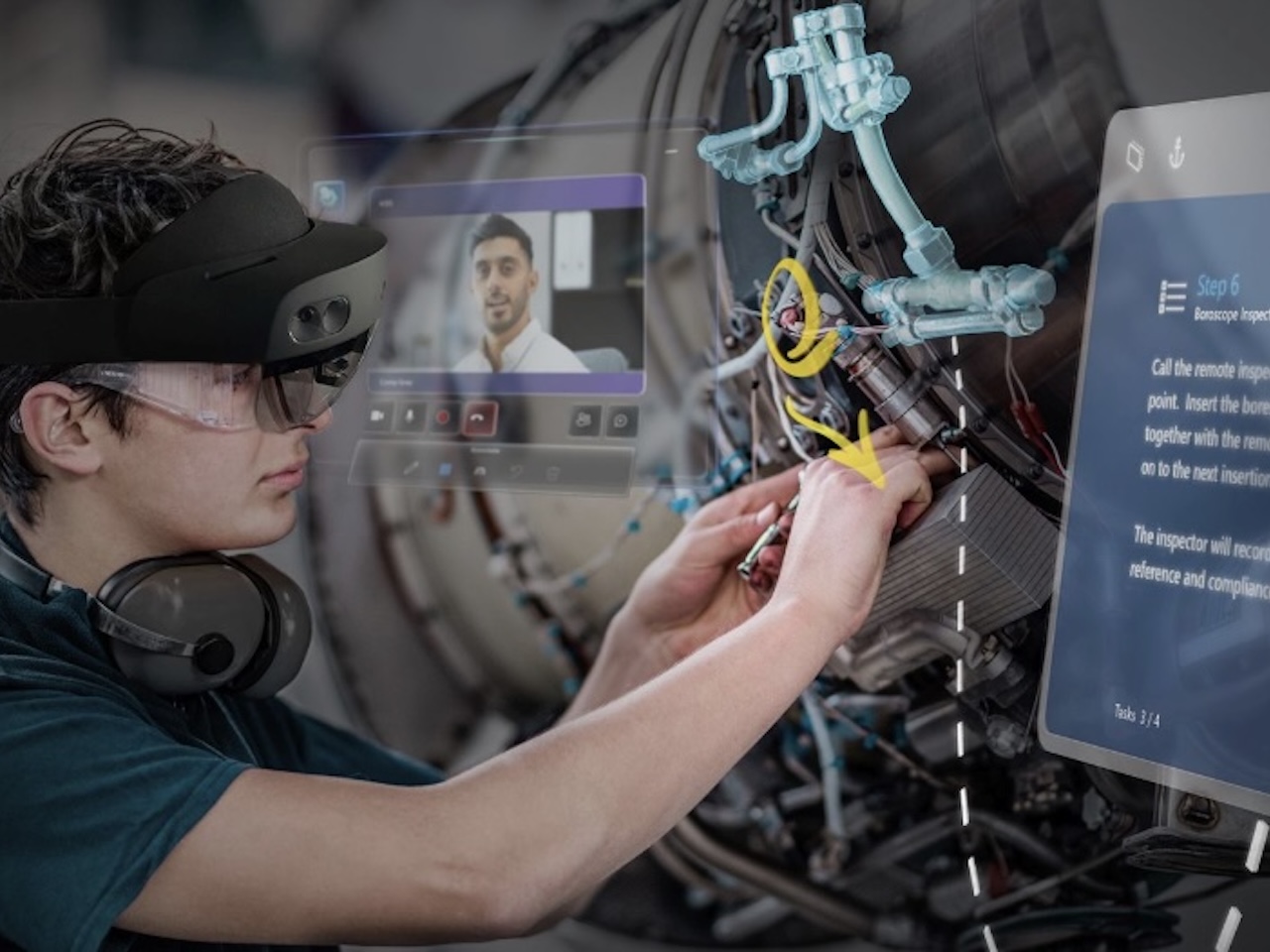
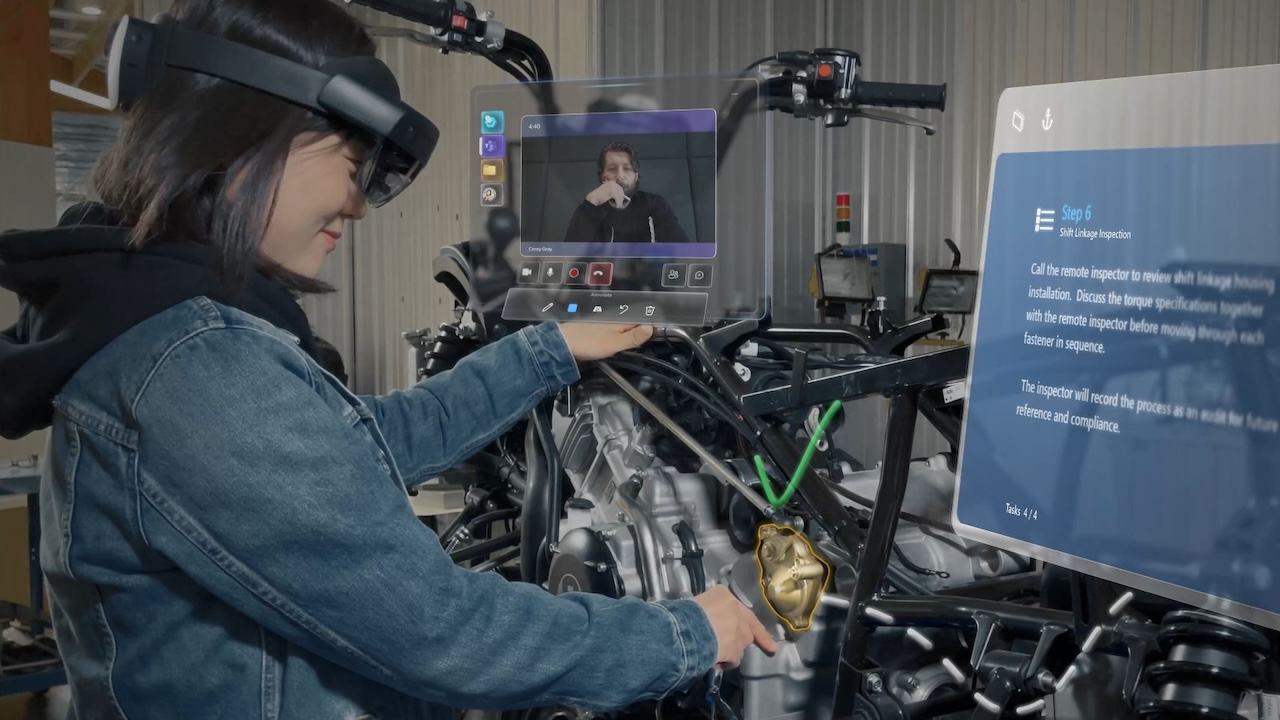 Microsoft has been here before, and it hasn’t always ended well. HoloLens was pitched as a mixed-reality breakthrough and landed a major US Army contract, but never broke out beyond enterprise. Microsoft confirmed in 2024 it would stop production.
So why try again? AI agents are genuinely more capable than a year ago, giving ambient, always-on hardware a real job. And Microsoft isn’t alone: Google is back at smart glasses more than a decade after Glass flopped, and a fresh crop of startups is racing to put generative AI on your face, wrist, or chest. If the next platform really is a wearable, nobody wants to sit this one out.
Why this matters for the rest of us
You probably can’t buy a Microsoft AI badge today. But the concept matters because of what it signals for the gadgets we will buy. If big platforms keep pushing AI into purpose-built hardware, expect more always-on mics, outward-facing cameras, biometric unlocks, and agents quietly handling small tasks in the background.
For now, Microsoft’s badge is a glimpse, not a launch. Two prototypes, a few hundred testers, and a pile of questions about privacy and whether anyone actually wants yet another device clipped to them all day. Still, it’s one of the clearest signals yet that Microsoft sees AI as more than software. It sees it as a product category in its own right, even if that category looks suspiciously like the conference lanyard you forgot to take off after work.
Would you wear an AI badge with a camera to work? Drop your take in the comments.



Gadgeteer Comment Policy - Please read before commenting
Ms. Padla,
We would like to know more about this device. We see it as a potential safety device for our workers who have to enter confined spaces as part of their job. Can you help me find out more about this product?
Hi Mark, these two are just early hardware concepts. Let’s wait for Microsoft to fully launch them. 🙂