
A gaming setup usually gets built for the eyes first. The monitor gets the budget, the GPU gets the attention, and audio ends up running through whatever speakers shipped in a box years ago. It’s the one part of the rig that stays frozen while everything around it gets faster and sharper.
Price: TBD
Where to Buy: ASUS ROG
Headphones fix part of that, but they lock you in and wear on your ears after a few hours. Desktop speakers open things up, though most of them sound thin the second a game asks for real low end. There’s a gap between those two, and it’s been sitting empty for a while.
So the real question is: can one bar under your monitor cover both without turning your desk into a home theater project? ASUS thinks so, and it’s putting its first soundbar behind that answer.
What ASUS Put Inside the Bar
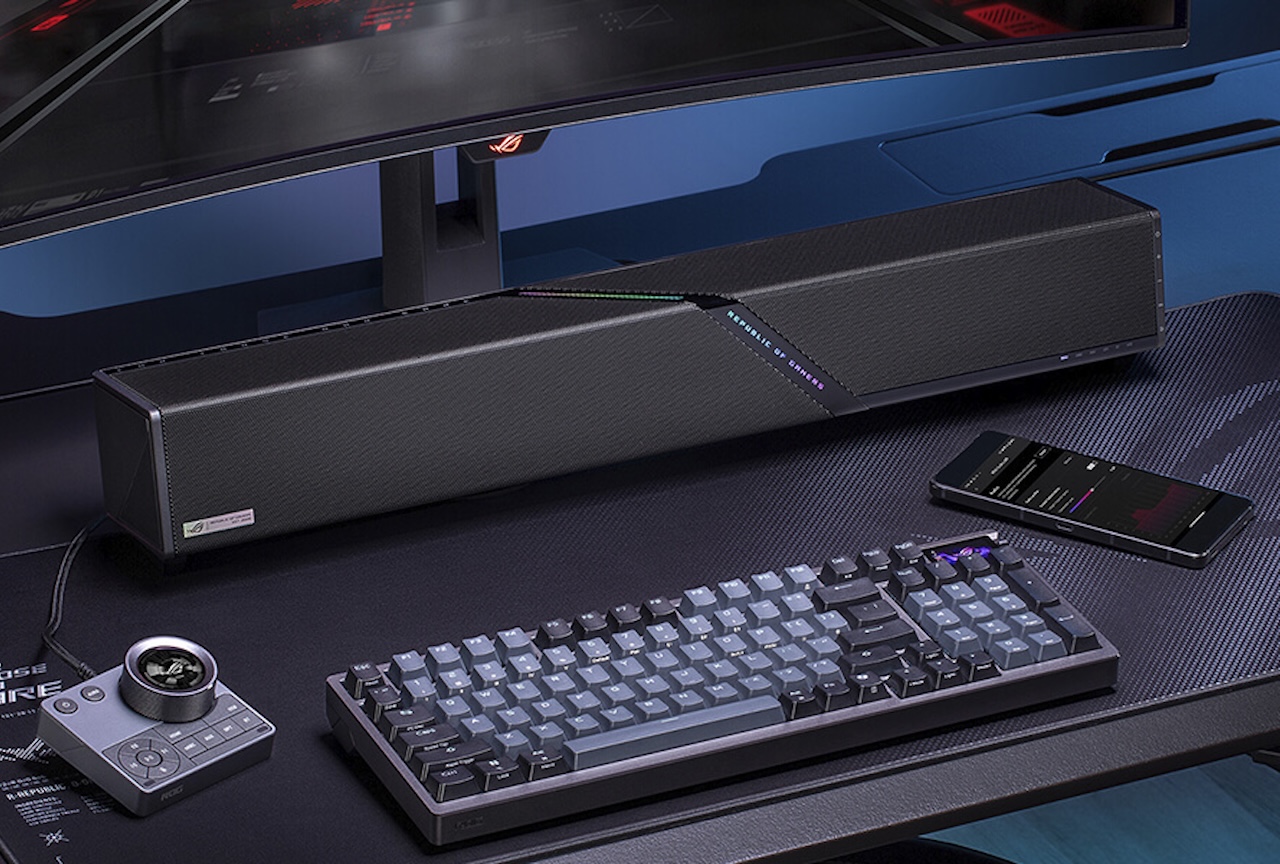
The ROG Gjallar is a compact 2.1.2 soundbar that ASUS announced on July 10, 2026, and it’s the first speaker system the brand has shipped under the ROG name. The name comes from Gjallarhorn in Norse mythology, and ASUS says to pronounce it “ga-lar” for anyone about to guess.
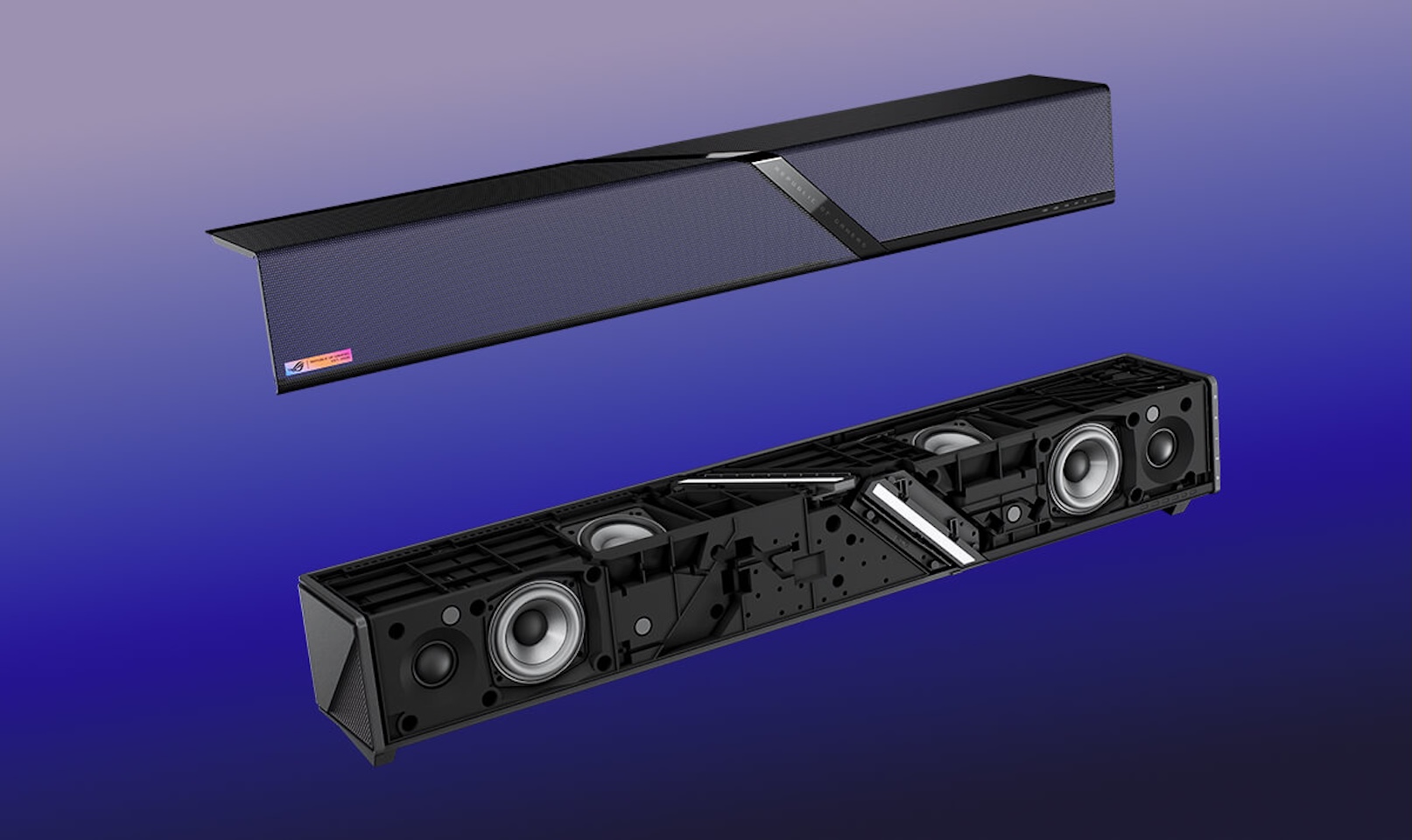 Inside the bar sit four 50mm full-range drivers and two 27mm tweeters, paired with up-firing channels for Dolby Atmos height effects. That’s what the 2.1.2 layout points to: stereo mains, one subwoofer, and two overhead channels. Frequency response runs from 50Hz to 20kHz per the spec sheet.
The Subwoofer and Control Hub Do the Heavy Lifting
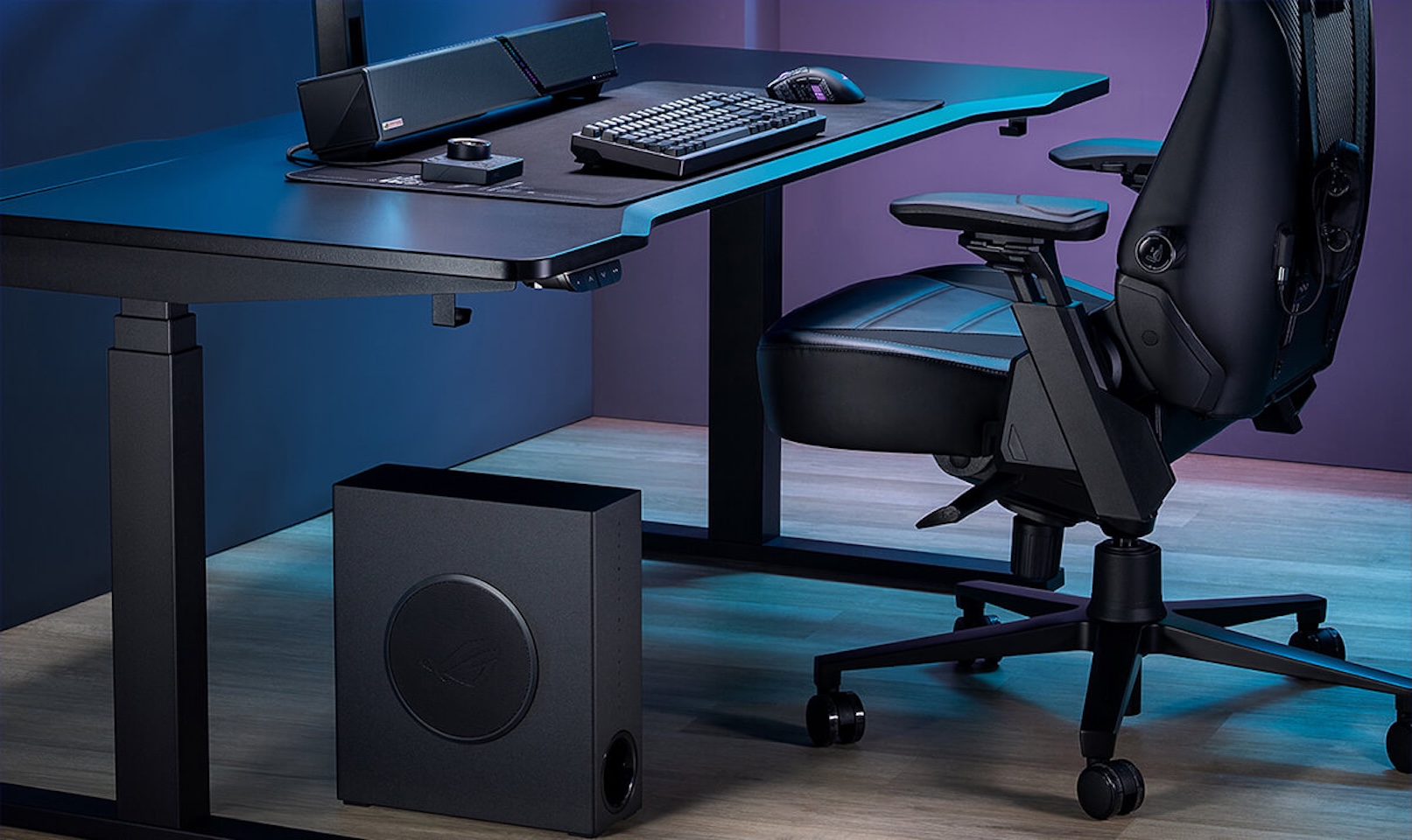
The subwoofer is where a lot of the pitch lives. It’s a wireless 65-watt unit with a 165mm (6.5 inch) driver, and ASUS runs it over a 5GHz wireless link to keep latency low, which counts when a footstep or an explosion needs to land on the frame. Its slim shape is meant to slide next to a desk instead of taking over the room.
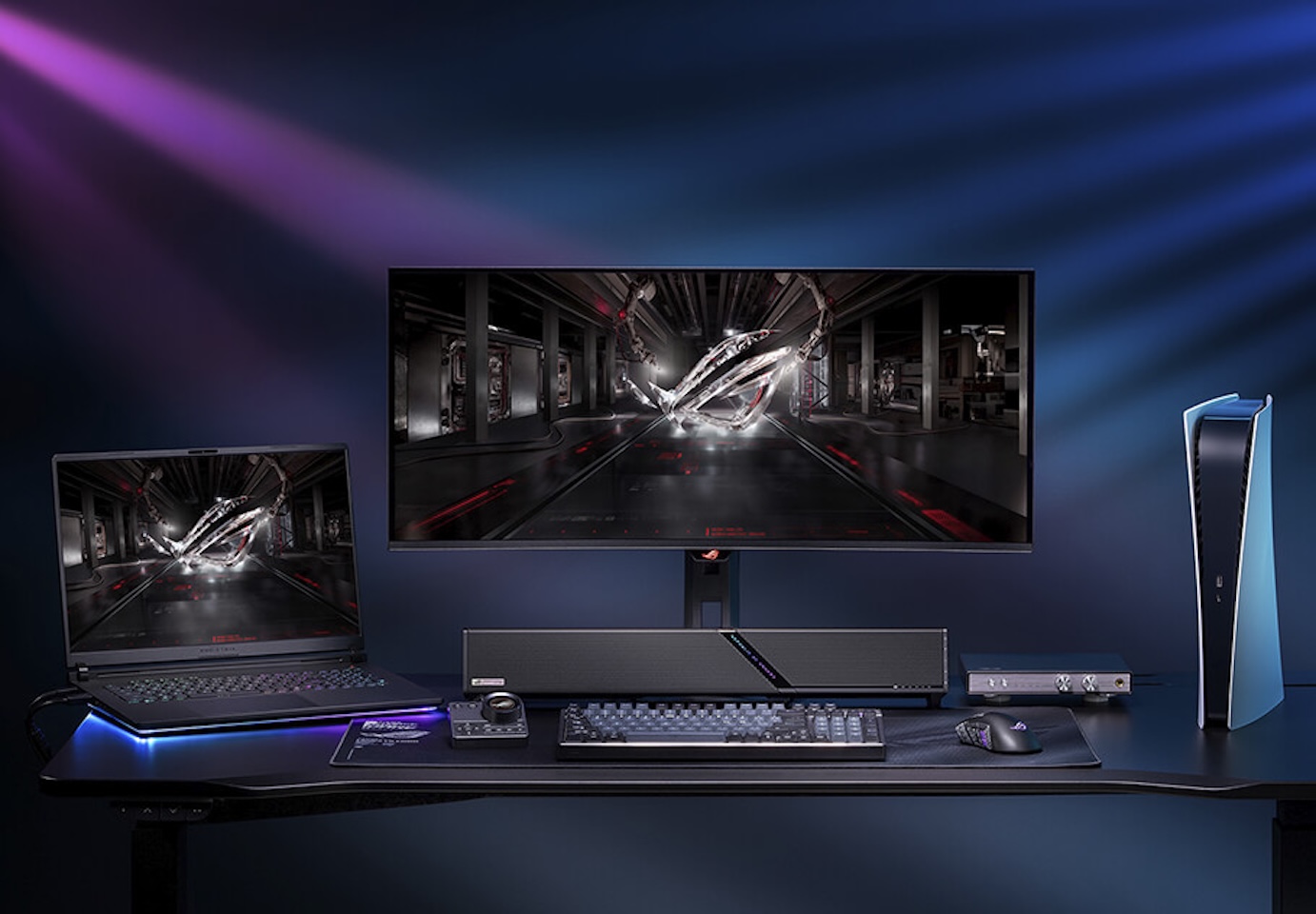
Then there’s the all-in-one control hub, a small puck that handles EQ, playback, input switching, and RGB without making you dig through menus. Built-in AEC microphones sit in the setup, using acoustic echo cancellation to strip game audio and teammate voices out of your mic feed so chat stays clean.
Connections for Everything on Your Desk
Connectivity is the quiet dealbreaker for a desk speaker, and the Gjallar covers most bases. You get USB-C, HDMI 2.1 with eARC and 4K 120Hz passthrough, optical, AUX, and Bluetooth 5.3, so a PC, a console, and a phone can all stay connected at once.
A built-in USB hub on the side adds two USB Type-A ports for whatever else crowds your desk. Tuning happens through Gear Link, a web tool or mobile app that adjusts EQ, lighting, and mic settings with no full install, and Aura RGB brings the usual 16.8 million colors across four preset effects.
If you like running your gear from one tactile spot, this lines up with how ASUS built the ROG Raikiri II Pro controller. And if you’ve been weighing a soundbar against a gaming headset, the Razer Hammerhead V3 X shows how far the wireless audio side has come.
Why Now
ASUS launching a soundbar at this moment says something about where gaming audio is going. Dolby Atmos has crept from living rooms onto desks, and consoles plus PCs now pass spatial audio cleanly over HDMI and USB-C.
There’s also a shift in what people want from a desk. A single bar that covers gaming, chat, and entertainment from one hub fits a time when nobody wants a tangle of boxes doing separate jobs.
Who Should Skip It
This one isn’t for everyone. If you already run a real 5.1 or larger speaker setup, a compact 2.1.2 bar is a sidestep, not a step up. Competitive players who live in headphones for positional accuracy won’t gain much here, and anyone on a strict budget will want to see the number before getting attached.
Price: TBD
Where to Buy: ASUS ROG



Price and Availability
Here’s the catch: ASUS hasn’t announced a price or a release date. The company confirmed the specs and the design, but it’s keeping pricing and regional availability quiet for now, which is how ROG tends to run launches until the last minute.