
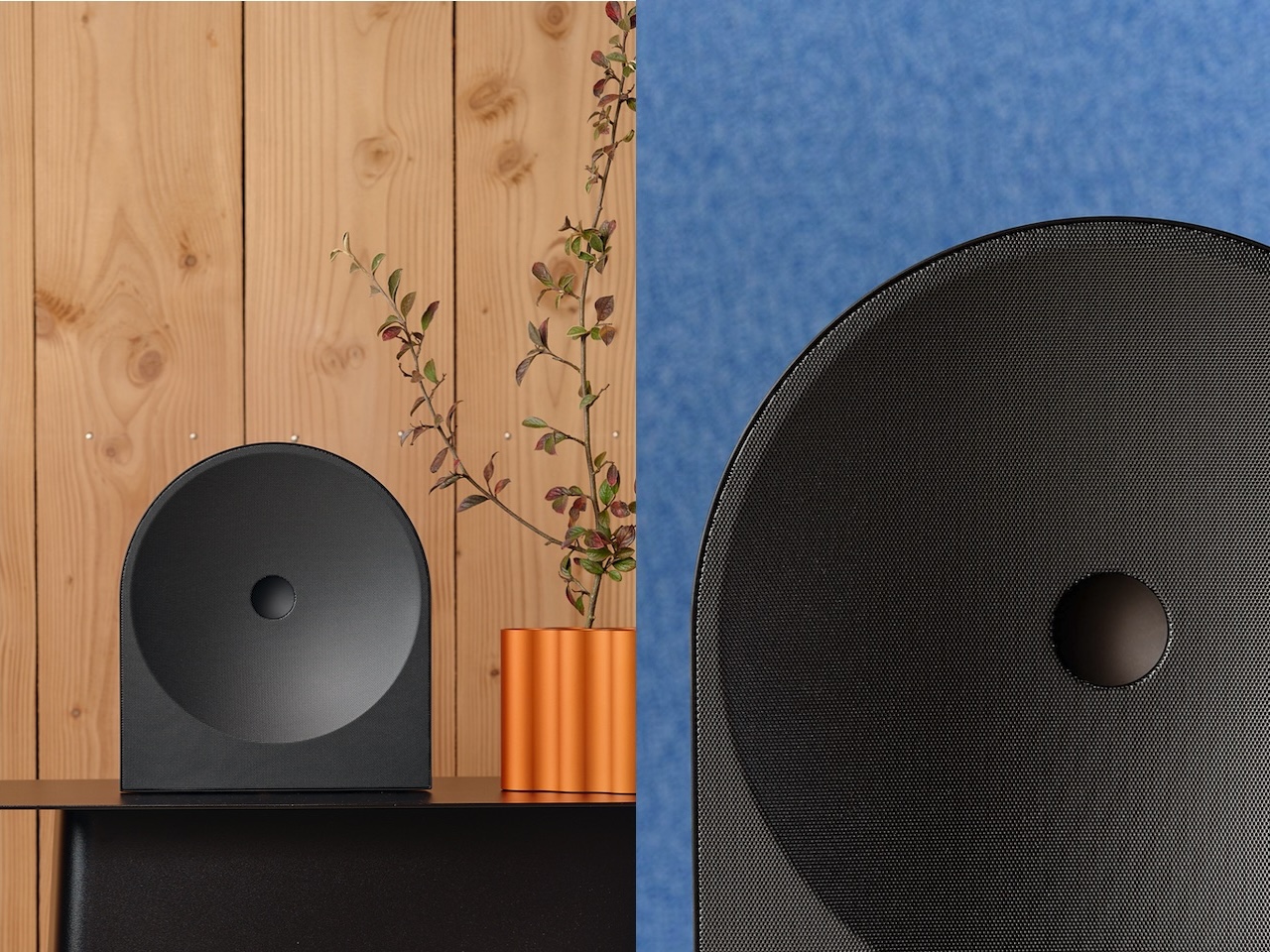
ARTICLE – Most wireless speakers still look like speakers. They sit on shelves, signal their function immediately, and fade into the background only because we’ve trained ourselves to ignore them. Samsung’s betting that the next generation of premium audio buyers doesn’t want to ignore anything they bring into their living rooms, and the new Music Studio 5 and Music Studio 7 aren’t trying to be invisible. They’re trying to be objects you’d place on a shelf even if they didn’t play sound. That’s a different kind of ambition, and it puts Samsung in direct competition with Sonos and Apple on design-first audio, a space where brand loyalty runs deep and switching costs are real.
Price: Music Studio 5: $249 | Music Studio 7: $499
Where to Buy: Samsung
Samsung’s been building toward this for years with The Frame TV, the Music Frame speaker, and Q-Symphony wireless sync. Now they’ve got French designer Erwan Bouroullec (who designed The Serif TV) shaping speakers around a “central dot” concept that reads as sculpture rather than tech. The Music Studio 5 is compact and cubic, the Music Studio 7 is rounder and larger, and both hide their drivers behind that central opening. It’s an aesthetic play that only works if the sound holds up, and Samsung’s leaning into hi-res audio, Dolby Atmos, and tight TV integration to make the case you’re not sacrificing performance. The real question is whether design alone can pull people from Sonos’ ecosystem or Apple’s device handoff, because once you’re in, switching means starting over.
So the real question is: can a speaker’s design language matter enough to make someone switch ecosystems, or is Samsung building this for people who haven’t committed yet?
Samsung’s Bet on Visible Audio
The premium wireless speaker market has been stable for a while. Sonos owns the multi-room category, Apple’s got the HomePod locked into its device ecosystem, and most challengers have either gone niche or stayed budget-focused. Samsung’s position is different because they’re not a pure audio brand, they’re a lifestyle hardware company with a massive TV install base and a smart home platform that’s already in millions of homes. That gives them distribution leverage, but it also means they need to justify why someone would buy Samsung speakers instead of just adding a soundbar to their Samsung TV. The Music Studio line answers that by positioning the speakers as decor-first objects that happen to sync with your TV, not the other way around. It’s a subtle shift in framing, but it opens up a different buyer: someone who cares about how their living room looks and is willing to pay for objects that don’t scream “electronics.”
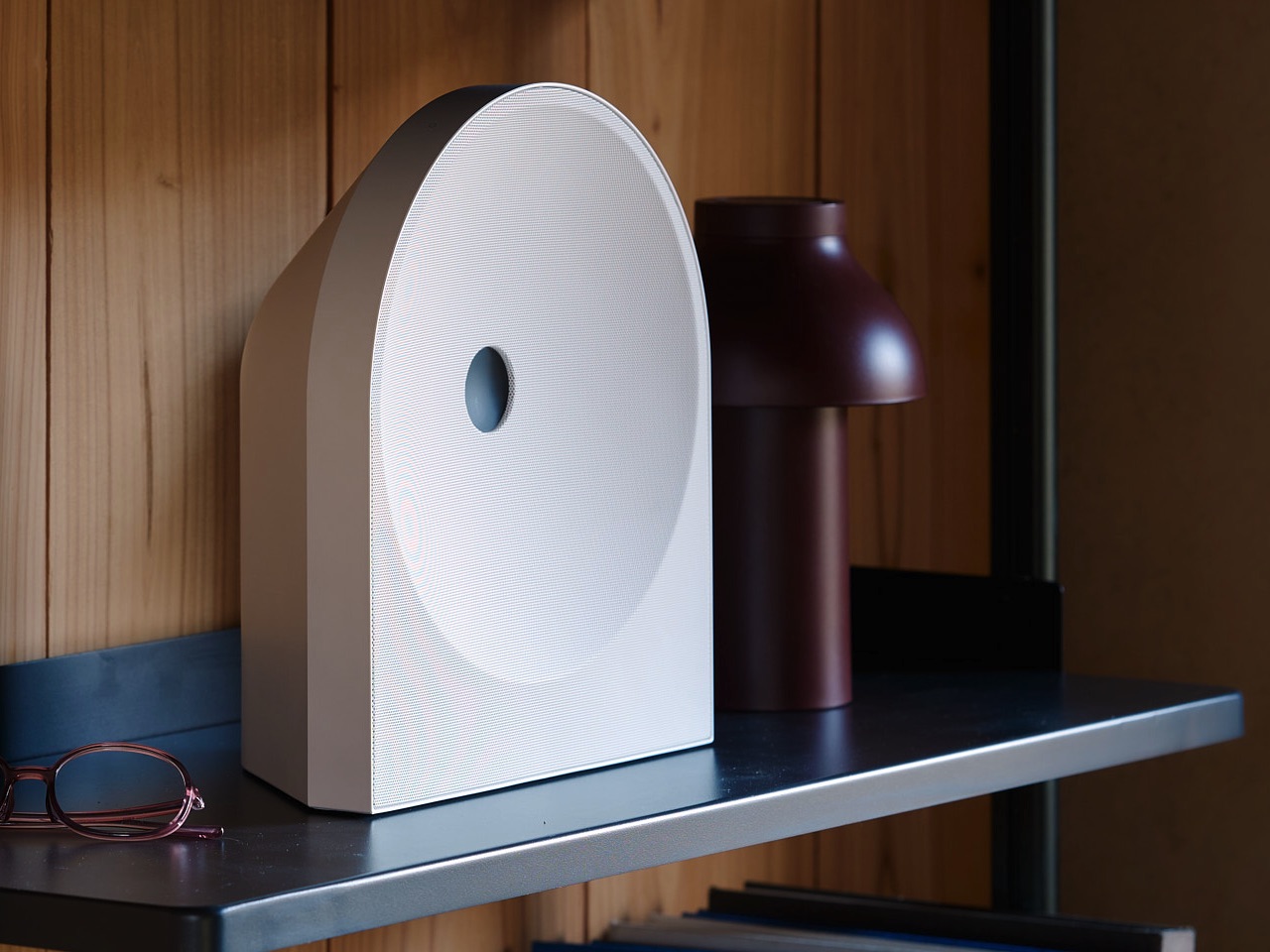
Erwan Bouroullec’s involvement signals that Samsung’s serious about this approach. Along with his brother Ronan, he designed The Serif TV for Samsung with the same minimal, sculptural quality that reads as understated rather than flashy. The “central dot” concept he’s applied here isn’t just aesthetic theory, it’s a practical constraint that forced Samsung to rethink driver placement and acoustic design. The main driver sits behind that central opening, with additional transducers on the sides and top, which means the speaker radiates sound differently than a traditional forward-firing design. That’s not inherently better or worse, but it does mean Samsung had to engineer around the form rather than optimizing form for function. It’s a risky move, and it only pays off if the sound is good enough that people don’t feel like they compromised.
The Q-Symphony Ecosystem Play
Samsung’s Q-Symphony ecosystem can now handle up to five audio devices at once, with the TV acting as hub to analyze room layout and distribute channels automatically. It’s Samsung’s answer to Sonos’ multi-room setup with spatial audio sync for home theater use. If you own a Samsung TV, the Music Studio line slots in without friction. If you don’t, you’re weighing whether Samsung’s ecosystem is worth entering when Sonos and Apple have broader compatibility and more third-party integrations.
The Music Frame speaker from 2024 was Samsung’s first test of this approach. It looked like a picture frame, paired with Samsung TVs for surround effects, and appealed to people who didn’t want visible speakers. The Music Studio line expands that with two form factors, stronger audio specs, and full multi-room capability. Samsung’s moving from experiment to product line, signaling traction with buyers who value design as much as sound.
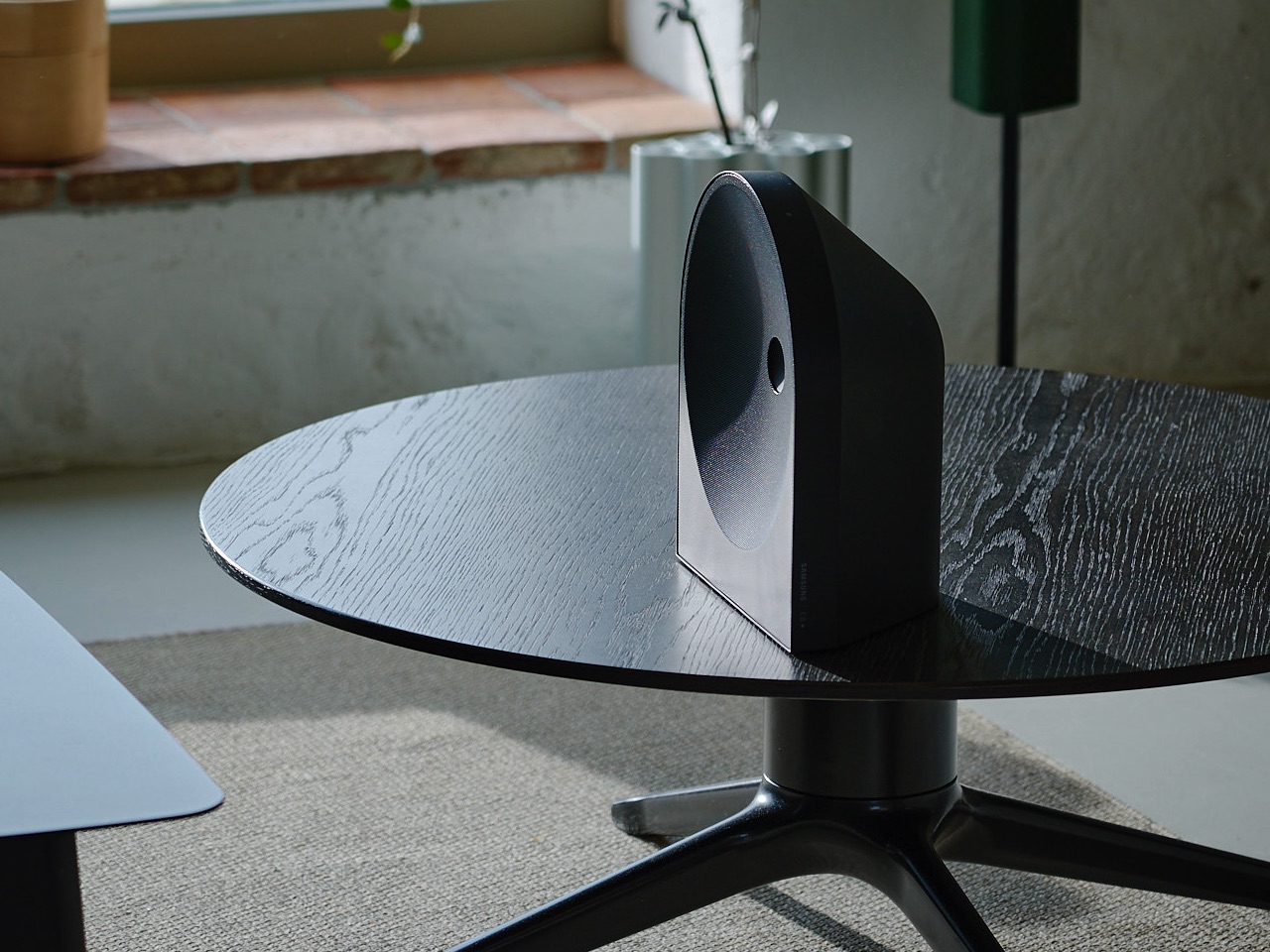
The real test isn’t whether these sound better than Sonos, it’s whether they make people reconsider what a speaker should look like at home. If Samsung shifts the conversation from sound quality alone to design as a primary feature, they’ve carved out space neither Sonos nor Apple currently owns.
Samsung Music Studio 5
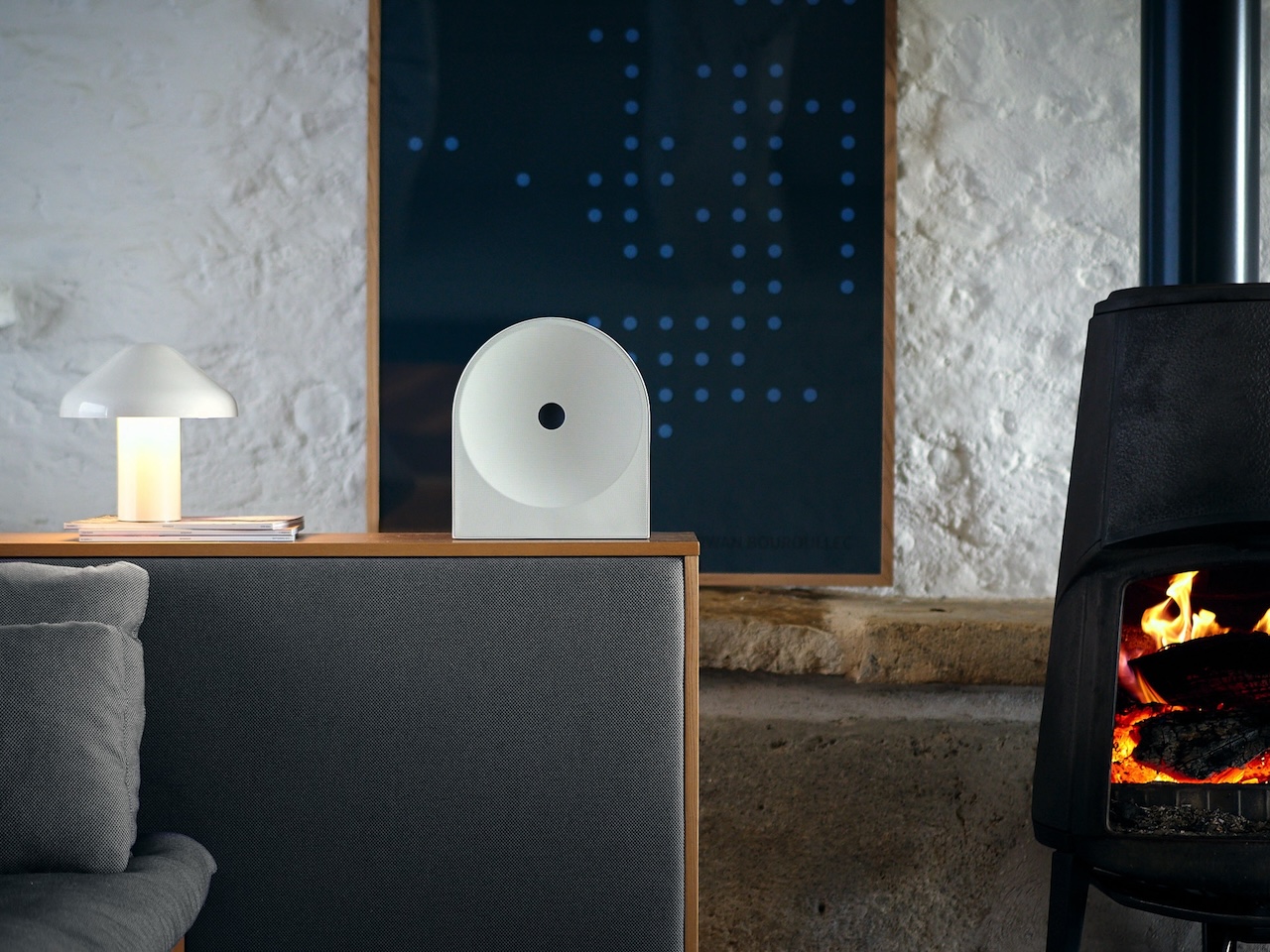 The Music Studio 5 is the smaller of the two, roughly cubic in shape, with a 2.1-channel setup that includes a 4-inch midbass driver and two tweeters. It supports hi-res audio up to 24-bit/96kHz when paired with a Samsung Galaxy device, and it’s got AI Dynamic Bass Control to prevent distortion at higher volumes. It’s Wi-Fi and Bluetooth compatible, works with AirPlay 2, Google Cast, Roon, Spotify Connect, and Tidal Connect, and integrates with Samsung’s SmartThings platform so it can act as a smart home hub. Samsung’s pricing this at $249, with availability expected in late Q1 or early Q2 2026.
The design is clean and minimal, available in black or white, and the central opening is the only visual cue that it’s a speaker. It’s aimed at people who want something compact and elegant that can sit on a shelf or desk without looking like tech. The form factor makes it flexible enough to work in tight spaces where larger speakers would feel intrusive, and that’s a smart call for the audience Samsung’s chasing here.
Samsung Music Studio 7
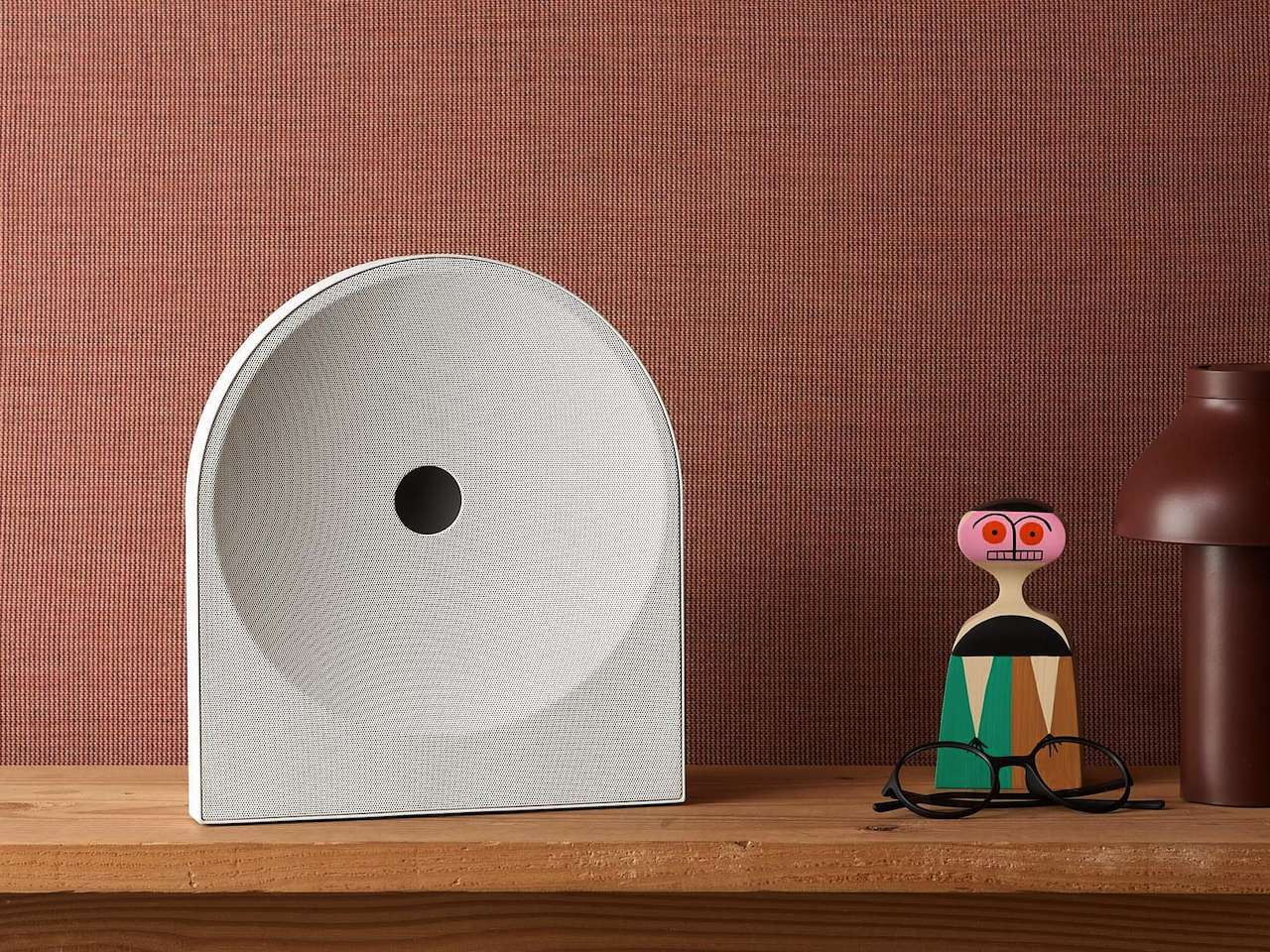
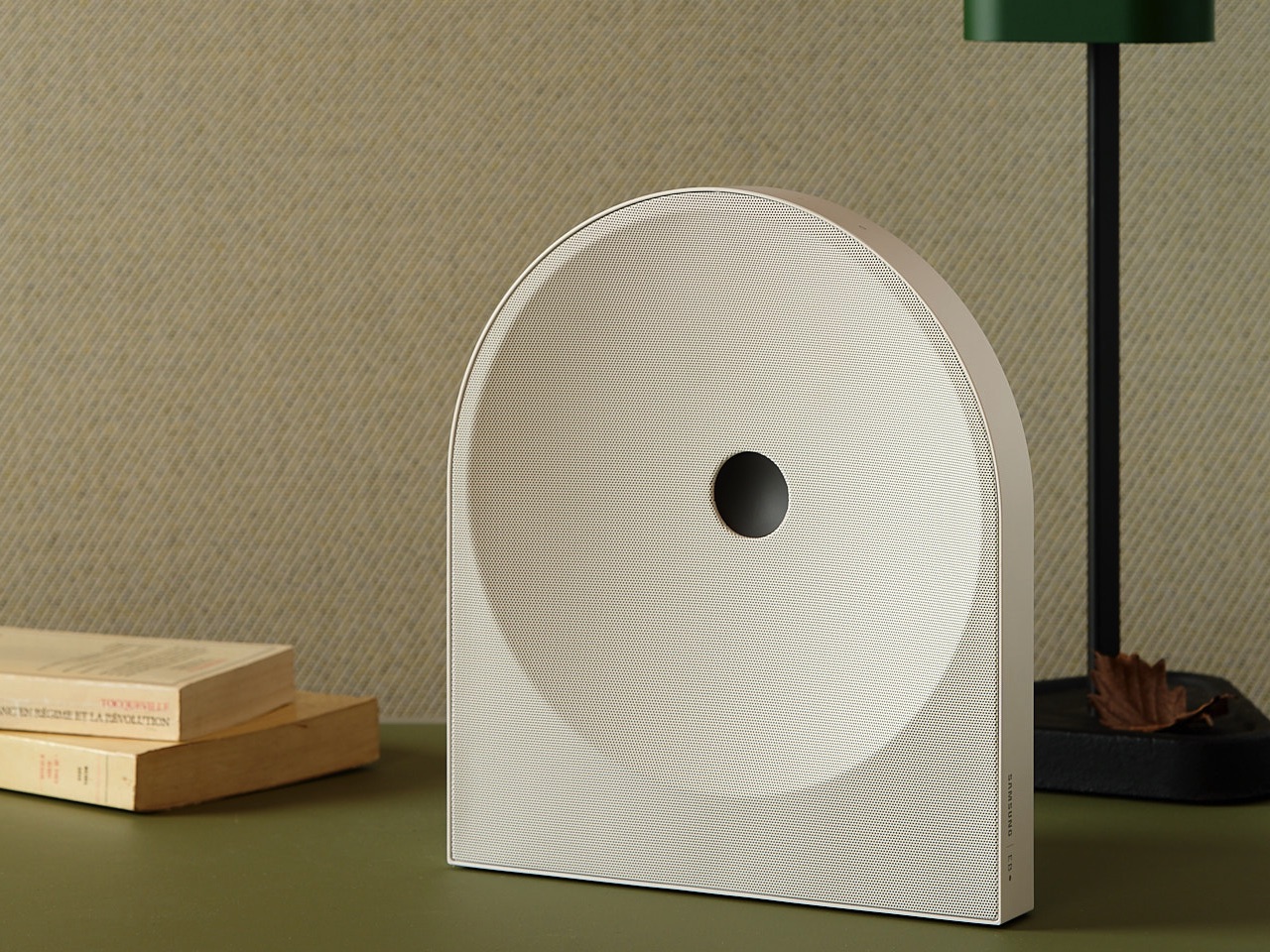
The Music Studio 7 is larger and more ambitious, with a 3.1.1-channel architecture that adds vertical diffusion for spatial audio. It supports Dolby Atmos and Eclipsa Audio (Google’s immersive format for YouTube), and it’s got a tweeter that reaches up to 35kHz, which is mostly symbolic but necessary for Hi-Res Audio certification. Samsung’s using Pattern Control Technology, developed by their California audio lab, to reduce inter-channel interference and keep the soundstage clear. This one’s priced at $499, also expected in late Q1 or early Q2 2026.
The Music Studio 7 is designed to work as a standalone speaker or as part of a multi-channel home theater setup when paired with a Samsung TV. It’s rounder and more sculptural than the Music Studio 5, with proportions that feel more intentional when placed in open spaces. The added height drivers mean this needs room to breathe, both literally for acoustic performance and visually to justify the premium positioning.
Price: Music Studio 5: $249 | Music Studio 7: $499
Where to Buy: Samsung
This is the option for people who want immersive audio without visible surround speakers, and Samsung’s betting that the sculptural form will make it feel less like a compromise. That’s a narrow target, but it’s also the segment willing to pay more for design that doesn’t announce itself as tech.

Zip Ties Assorted Sizes(4”+6”+8”+12”), 400 Pack, Black Cable Ties, UV Resistant Wire Ties by ANOSON
(as of March 14, 2026 18:43 GMT -05:00 - More infoProduct prices and availability are accurate as of the date/time indicated and are subject to change. Any price and availability information displayed on [relevant Amazon Site(s), as applicable] at the time of purchase will apply to the purchase of this product.)