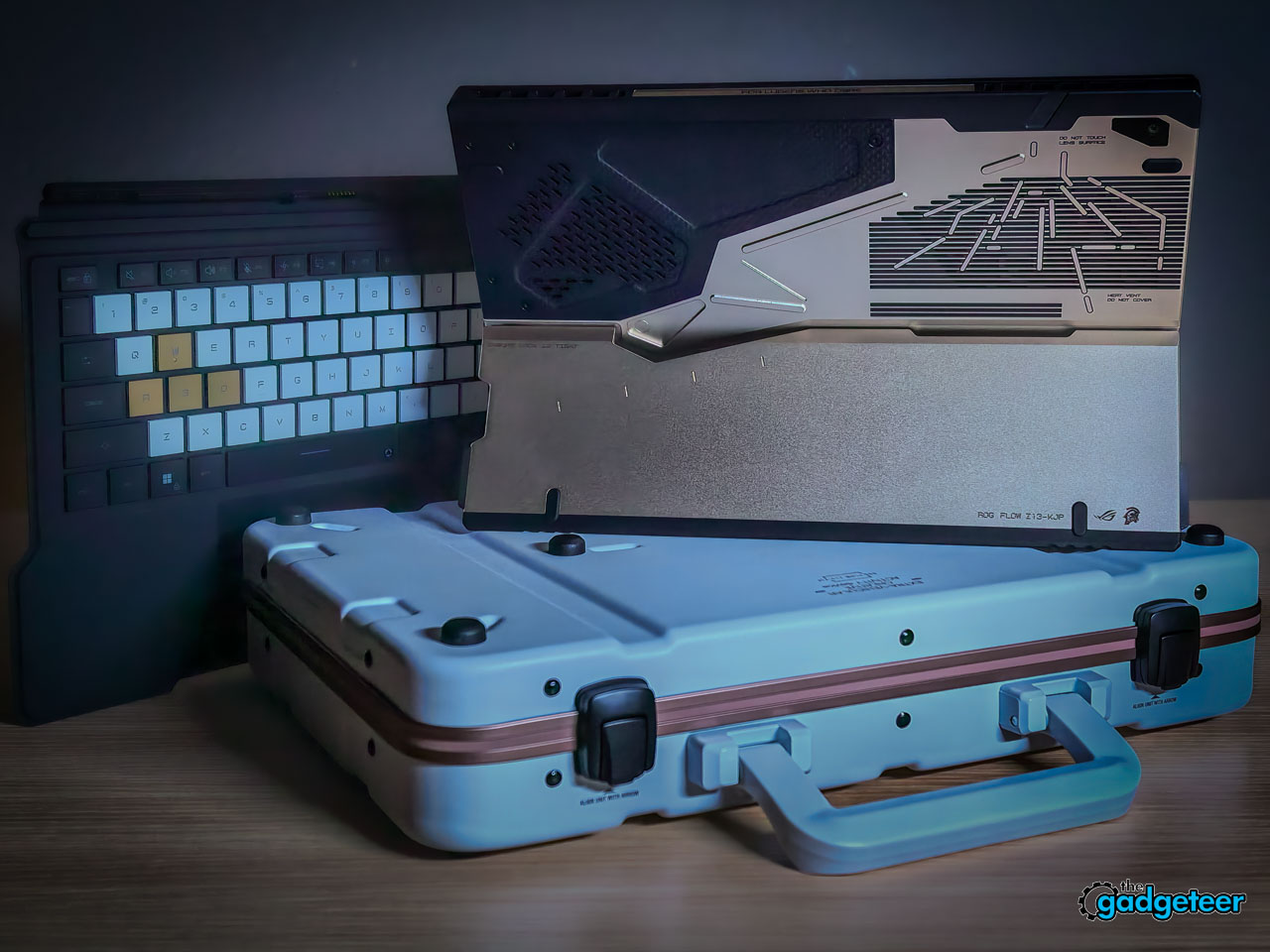
The ROG Flow Z13 Kojima Productions Edition is up for pre-order today, and it might be the most collectible piece of gaming hardware in years.
I’ve spent the last couple of weeks living with the ASUS ROG Flow Z13 Kojima Productions Edition, and it’s the first piece of tech hardware I haven’t wanted to send back. We previewed what this thing looks like when ASUS first showed it to us, so the question now is whether it holds up once you actually live with it. I’ve used it, carried it, propped it on my desk and rotated it under every light source in my office like an aluminum-obsessed gremlin. Here’s the real story.
This isn’t another limited edition with a logo slapped on it. Yoji Shinkawa, the artist behind every Metal Gear Solid and Death Stranding character you’ve ever loved, designed this thing from scratch, and you can feel it in your hands. At $3,699.99, the question is whether design alone can carry the price, and after weeks with it I think it can for the right buyer.
Price: $3,699.99 (ROG Flow Z13-KJP)
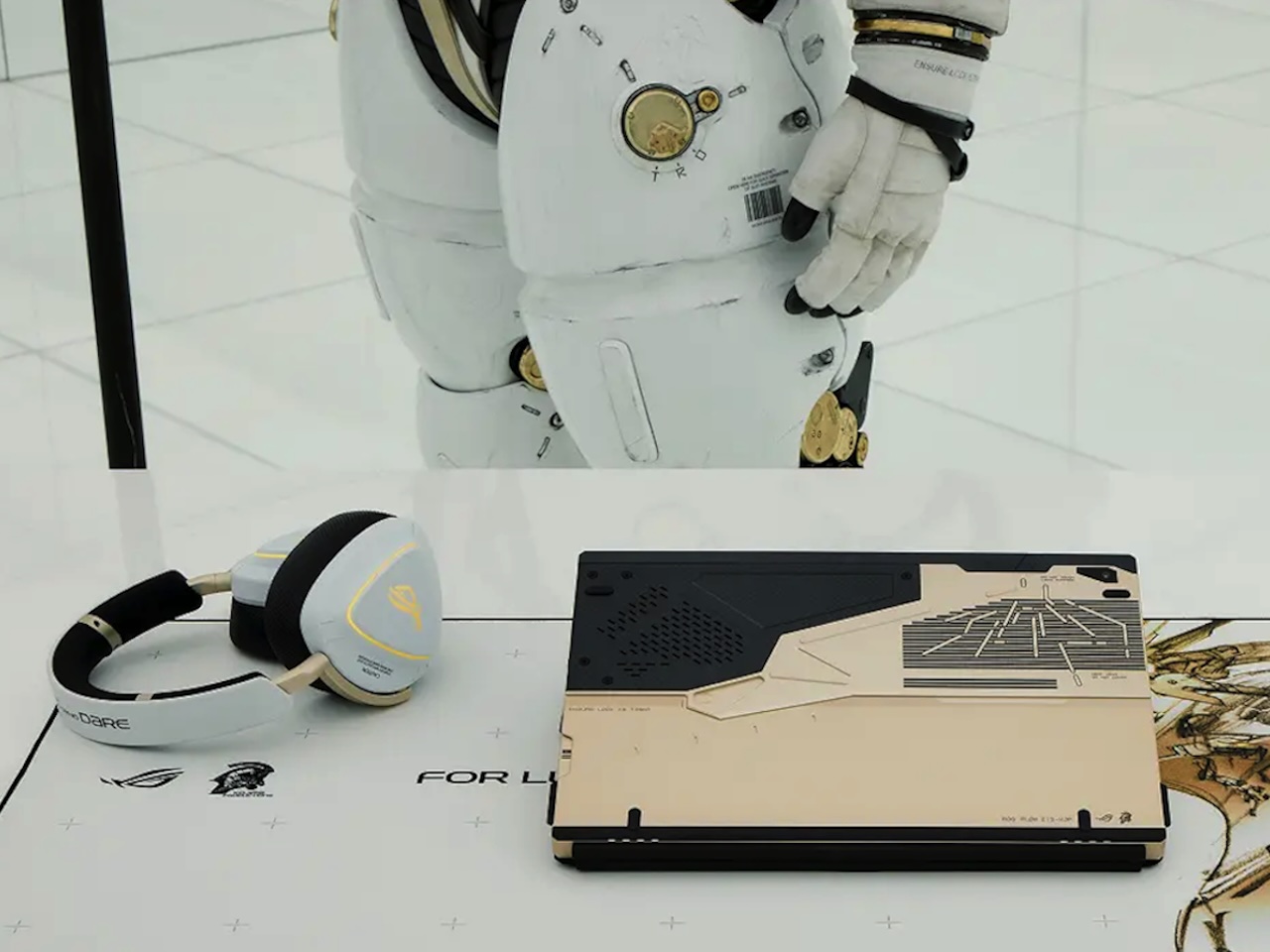
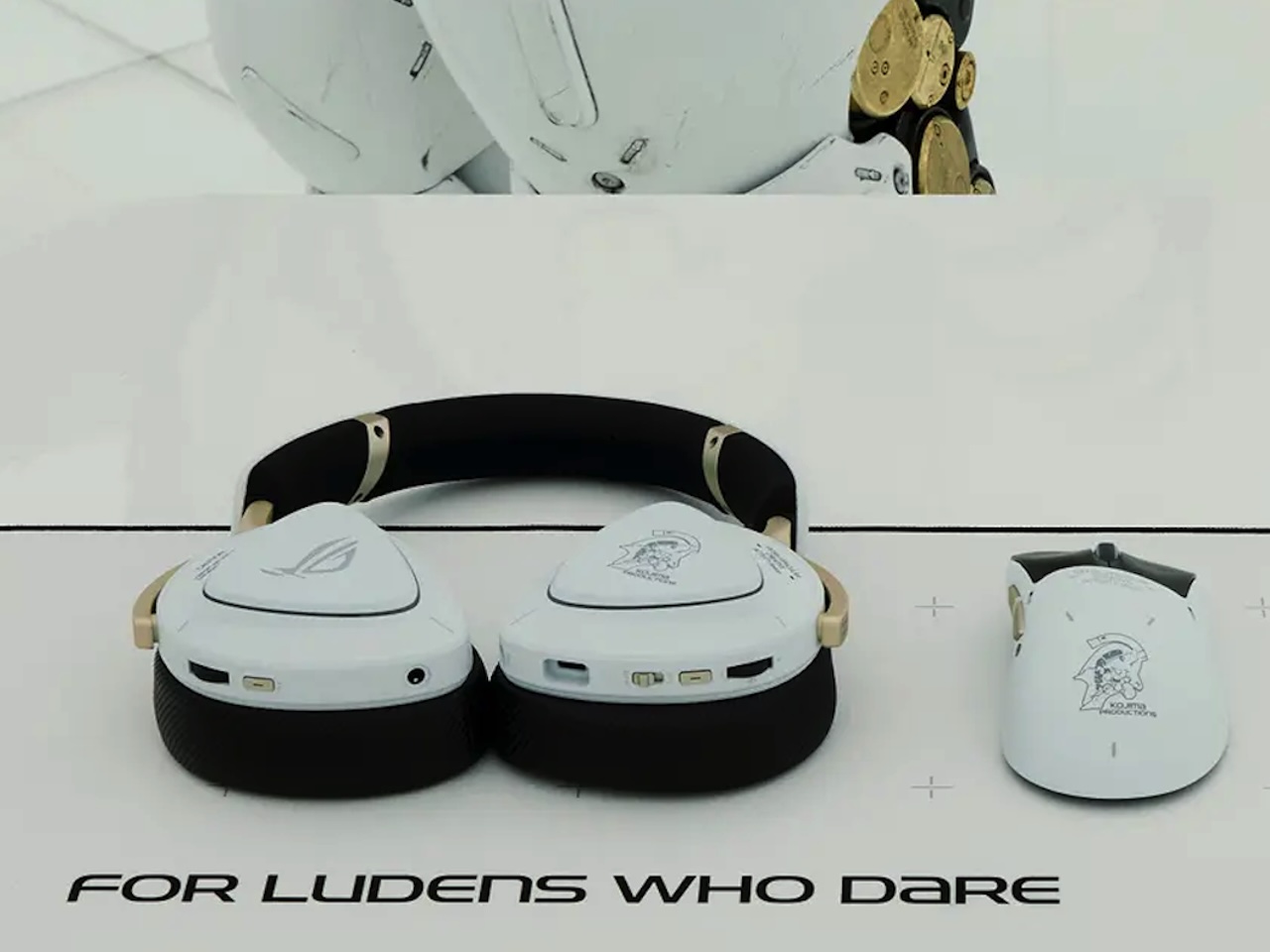
Matching Accessories (sold separately): ROG Delta II-KJP Headset ($269.99) | ROG Keris II Origin-KJP Mouse ($169.99) | ROG Scabbard II-KJP Mousepad ($69.99)
Pre-order now (Goes Live Feb 24, 6AM PST / 9AM EST):
ASUS Store | AntOnline | Best Buy | B&H | Abt
Here are 10 things that stand out after weeks with the actual hardware in my hands.
1. The Chassis Is Machined, Not Decorated
Most limited edition laptops take a standard chassis and add artwork, whether that’s stickers, prints or laser etching over the same body everyone else gets. The Z13 KJP doesn’t. The angular cutouts referencing Ludens’ armor plating are CNC-milled directly into the aluminum, and I ran my fingernail along the edges to confirm they’re machined channels with physical depth. The bead-blasted aluminum finish absorbs light rather than bouncing it, which gives the whole device a matte warmth that feels more like a precision tool than a gaming peripheral. Every time I pick it up, I notice details I missed the last time, and that only happens when something’s designed with intention instead of assembled from a branding checklist.
2. Decennium Gold Changes Everything About How Gaming Hardware Looks
ROG products live in a world of blacks, grays and aggressive reds, which is the visual vocabulary of almost every gaming brand, and Shinkawa went somewhere else entirely. The Decennium Gold colorway isn’t flashy. It reads as industrial warmth, like a well-used brass instrument or the aged alloy on professional equipment. Under the warm lighting in my office it deepens slightly without going brassy, and under the cooler overhead lights it holds its tone without washing out. I tested this deliberately by moving it between rooms and setting it on different surfaces, and it looks like the same device everywhere, which is rarer than it should be at this price.
Add The Gadgeteer as a preferred source to see more of our coverage on Google.
3. Real Carbon Fiber, Not the Printed Kind
I’ve reviewed enough products with “carbon fiber accents” to know the difference between the real thing and a printed pattern pretending to be it. The Z13 KJP uses actual carbon fiber with a visible, directional weave that shifts between matte absorption and a subtle reflection as you tilt it under angled light. The contrast is what makes it work as a design element, because woven composite sitting right next to CNC-milled aluminum sets organic texture against engineered precision. That’s pure Shinkawa. His art has always merged the mechanical with the biological, with armor that looks lived-in and machines that feel like they breathe. Touching both surfaces in quick succession is the closest you’ll ever get to feeling that aesthetic philosophy with your own fingertips.
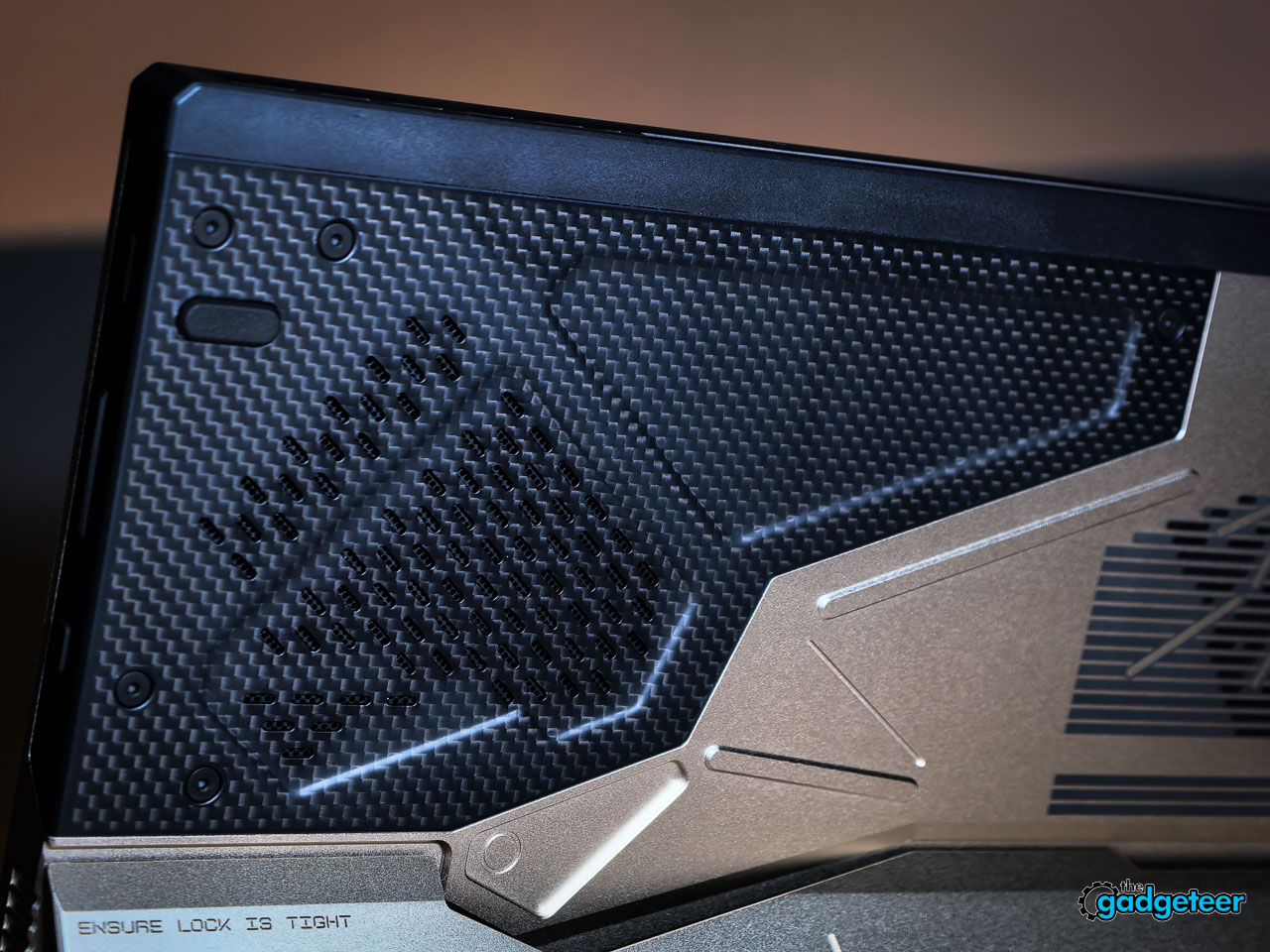
4. The Rear Panel Works as a Three-Layer Composition
This one took me a few days to fully appreciate. The rear panel isn’t just busy artwork, since it works in three distinct visual weights. Fine parallel lines create a base grid, medium strokes intersect at angles echoing Ludens’ armor, and deep black ventilation apertures anchor the whole thing as functional shadow fields. Some lines are laser-etched while others are machined recesses, and the vent perforations complete the art instead of interrupting it, radiating in controlled clusters that align with the printed striations above them. When I held it at different angles throughout the day, the composition shifted, because the CNC bevels redirect light differently depending on the angle. Flat artwork would lose definition under diffuse lighting, though this holds its contrast even when the room goes dim.
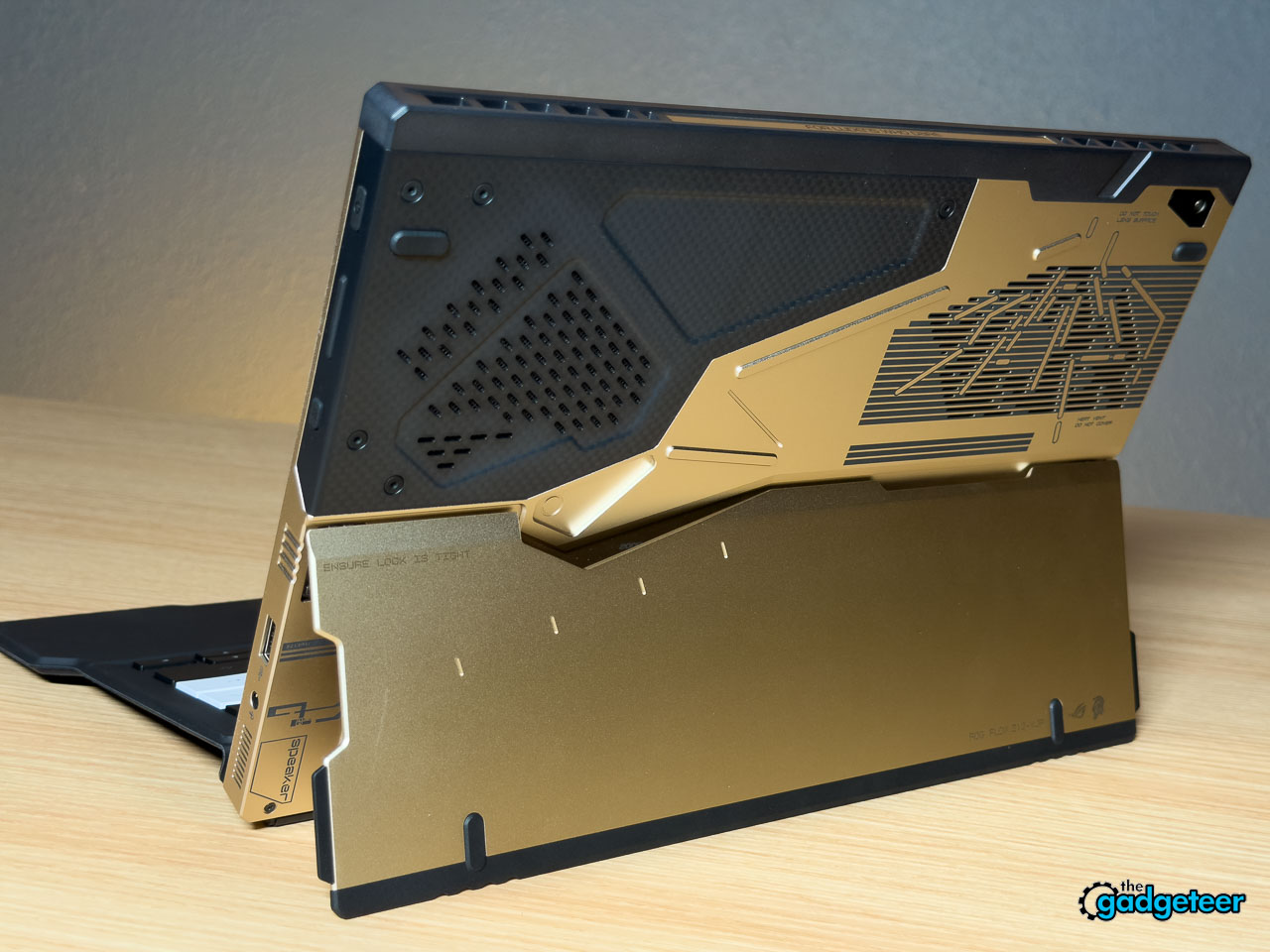
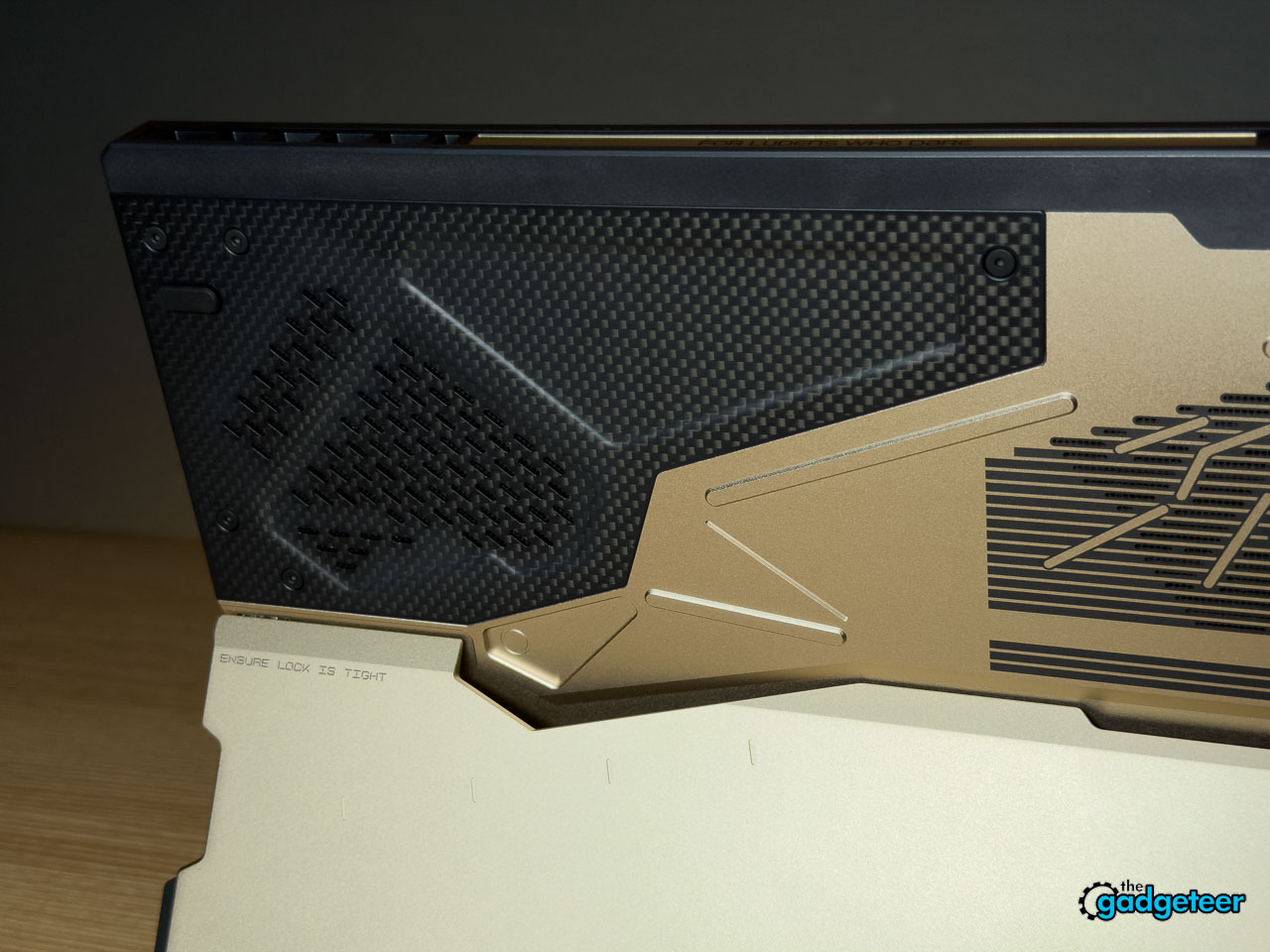
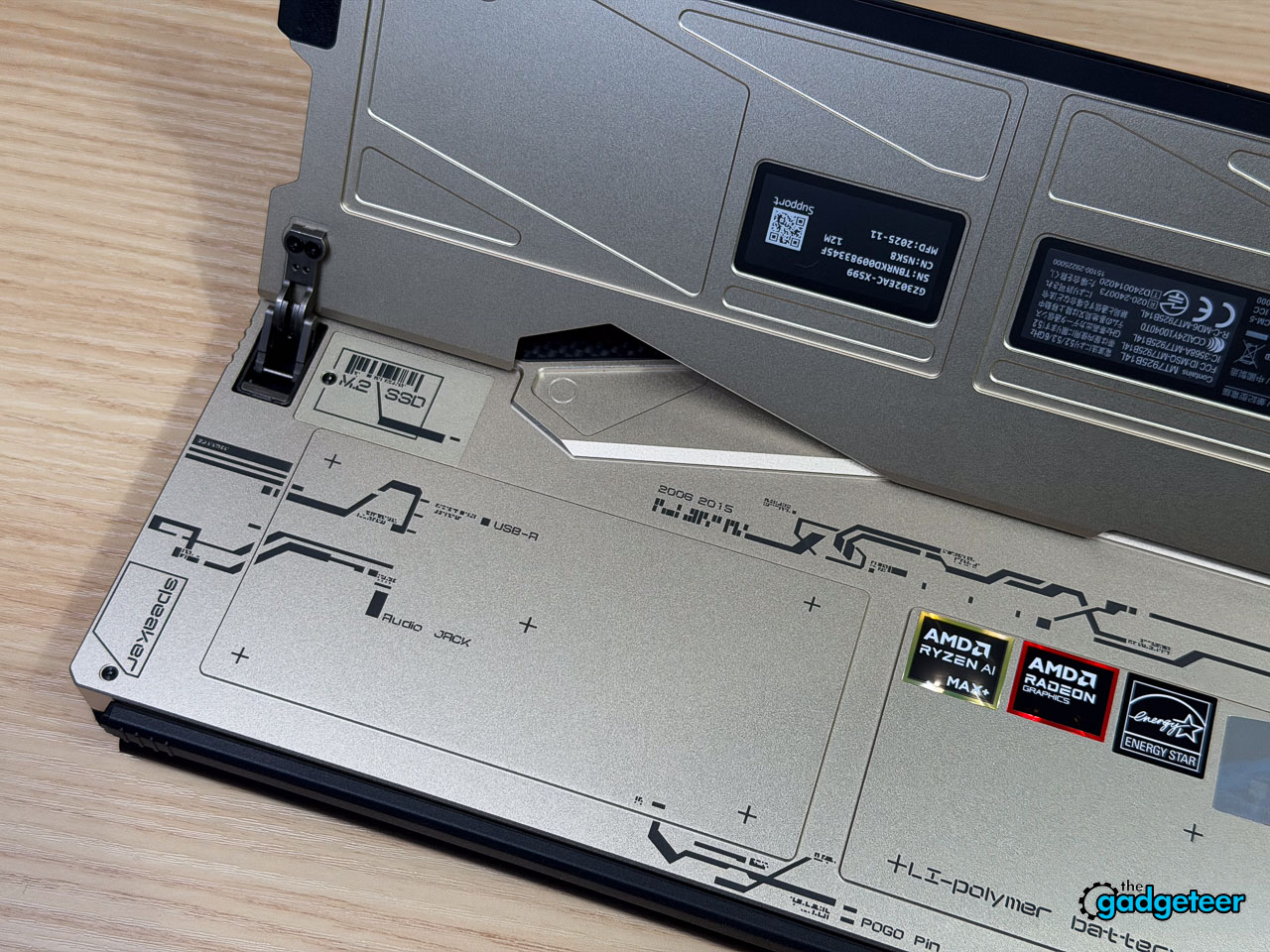
5. Micro Typography That Treats You Like a Pilot
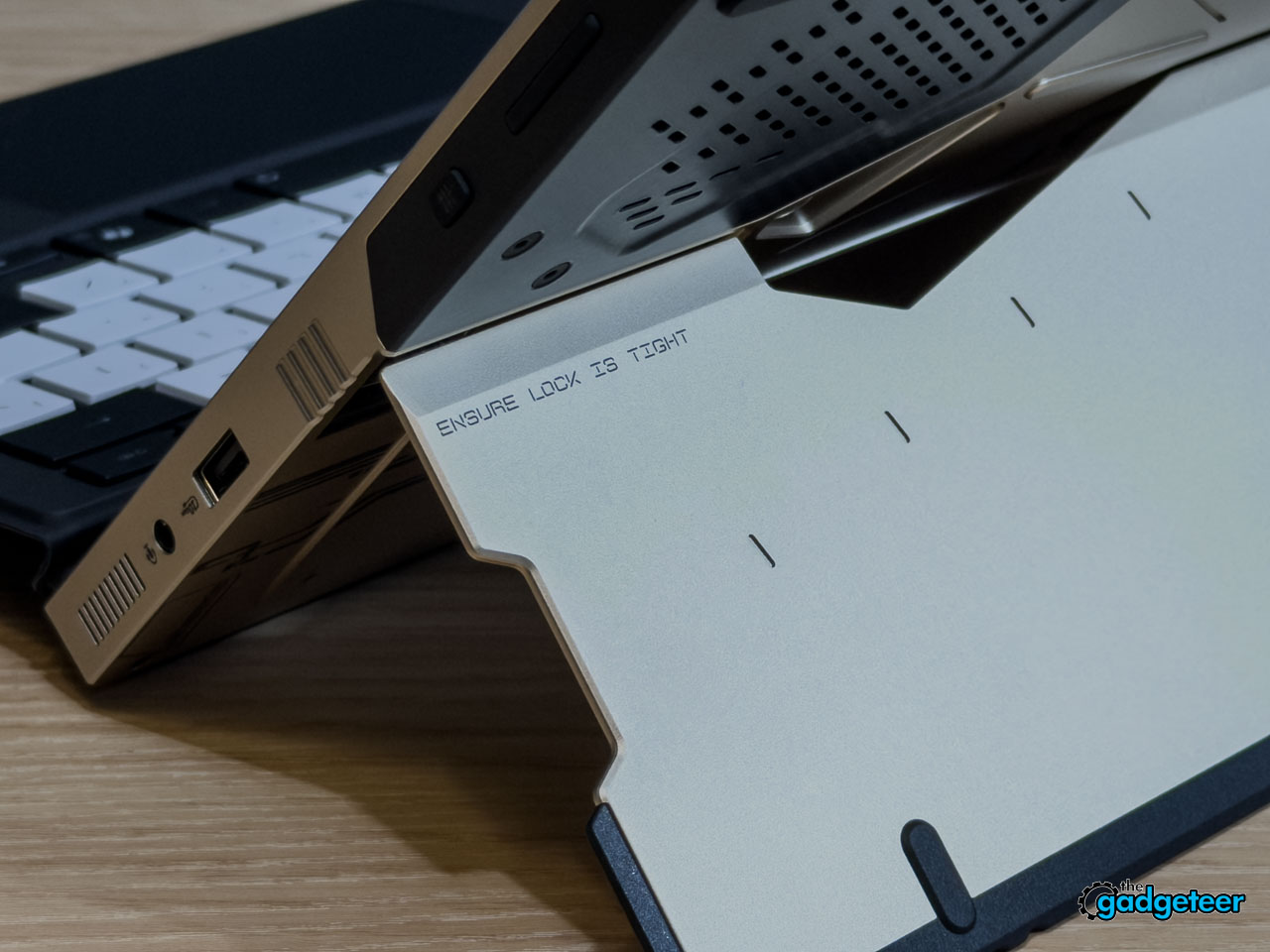
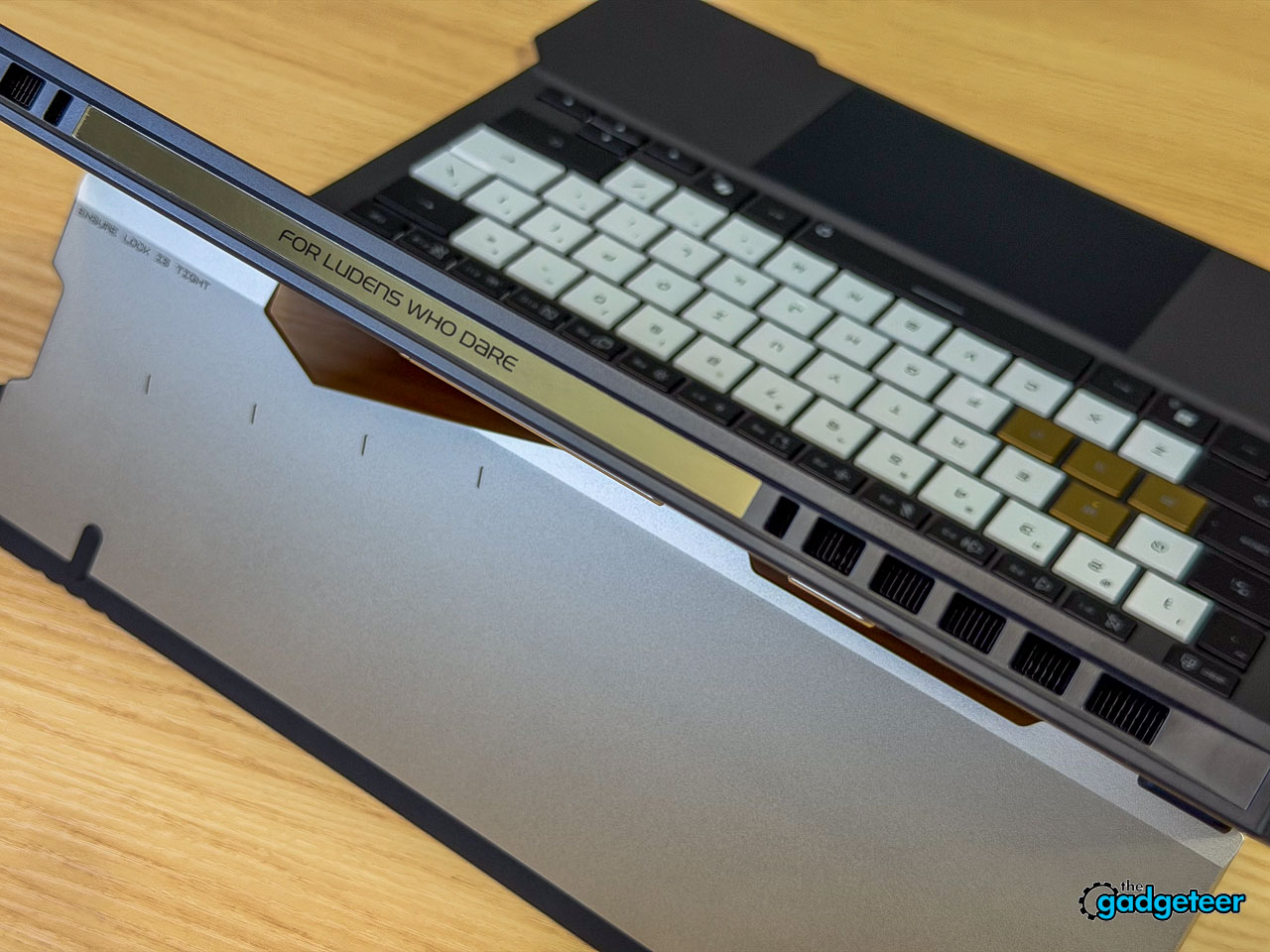
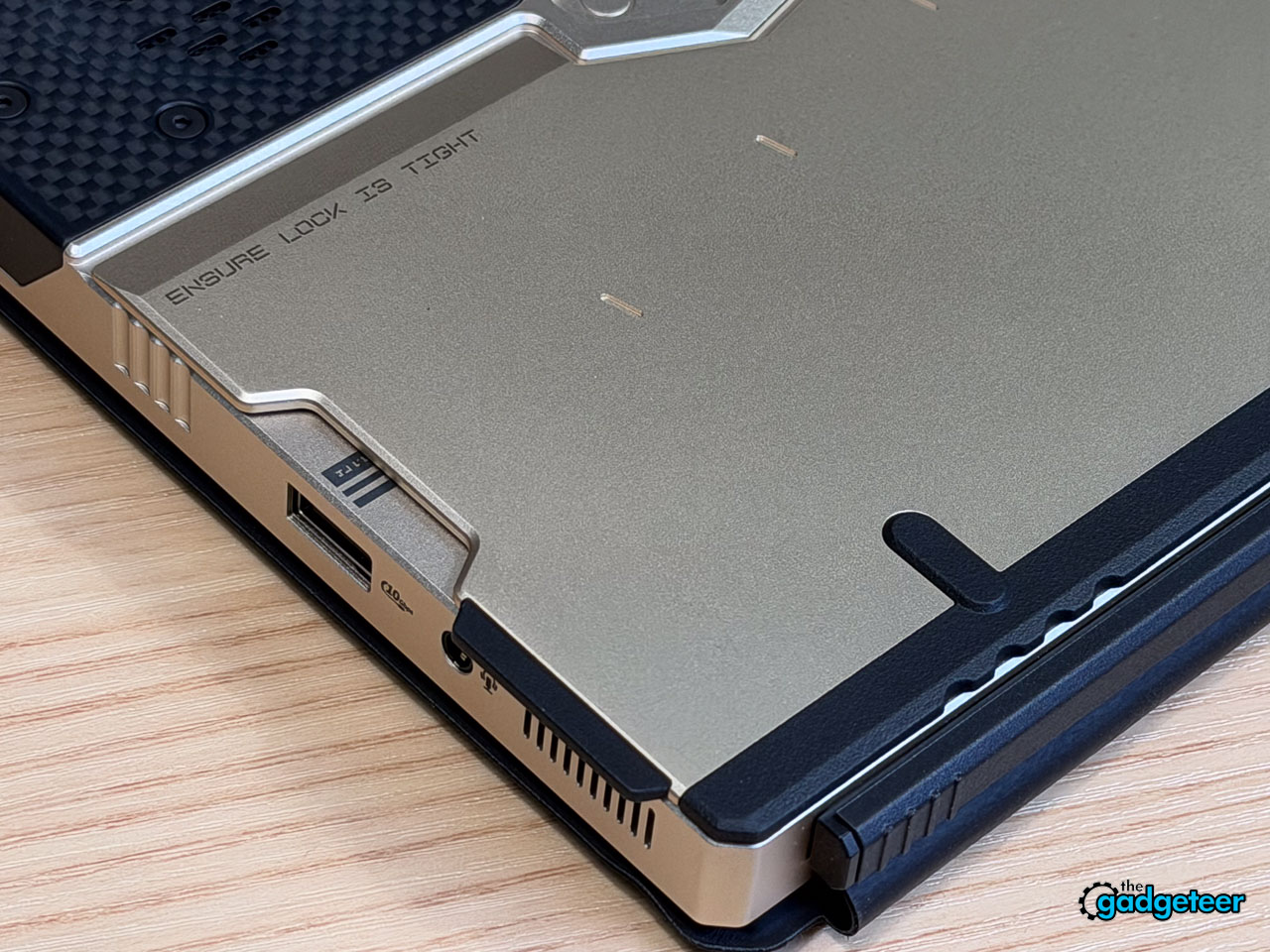
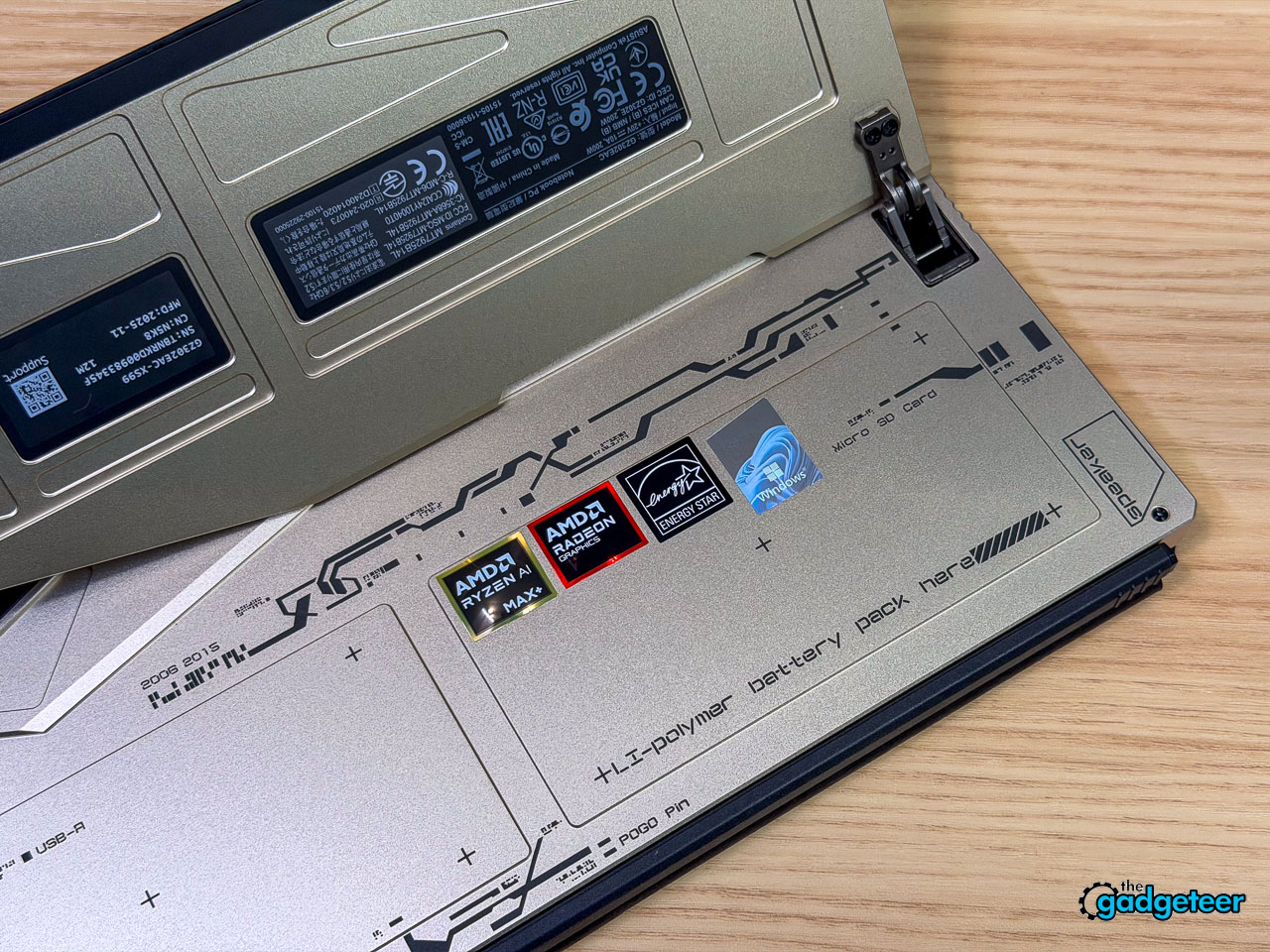
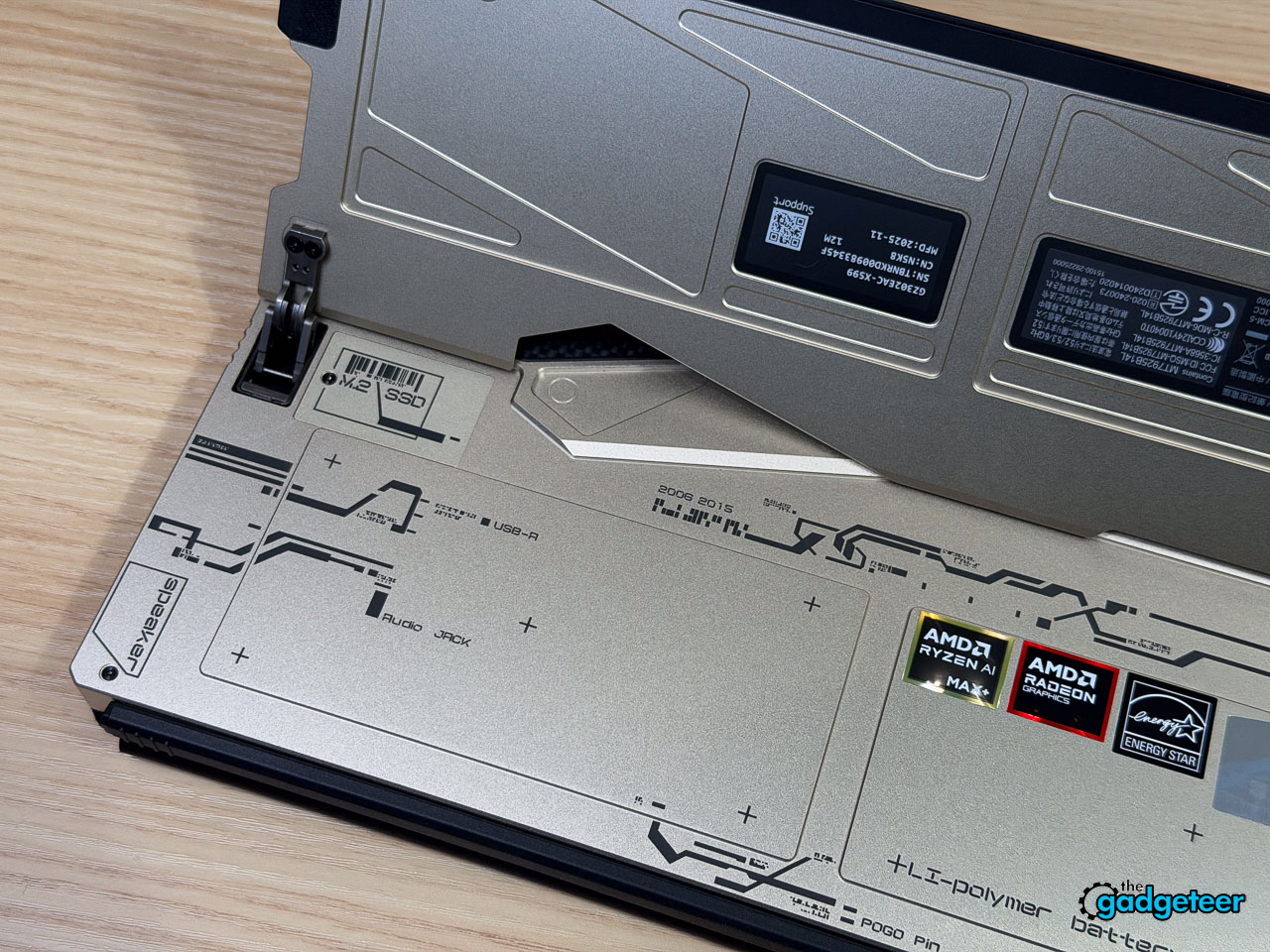
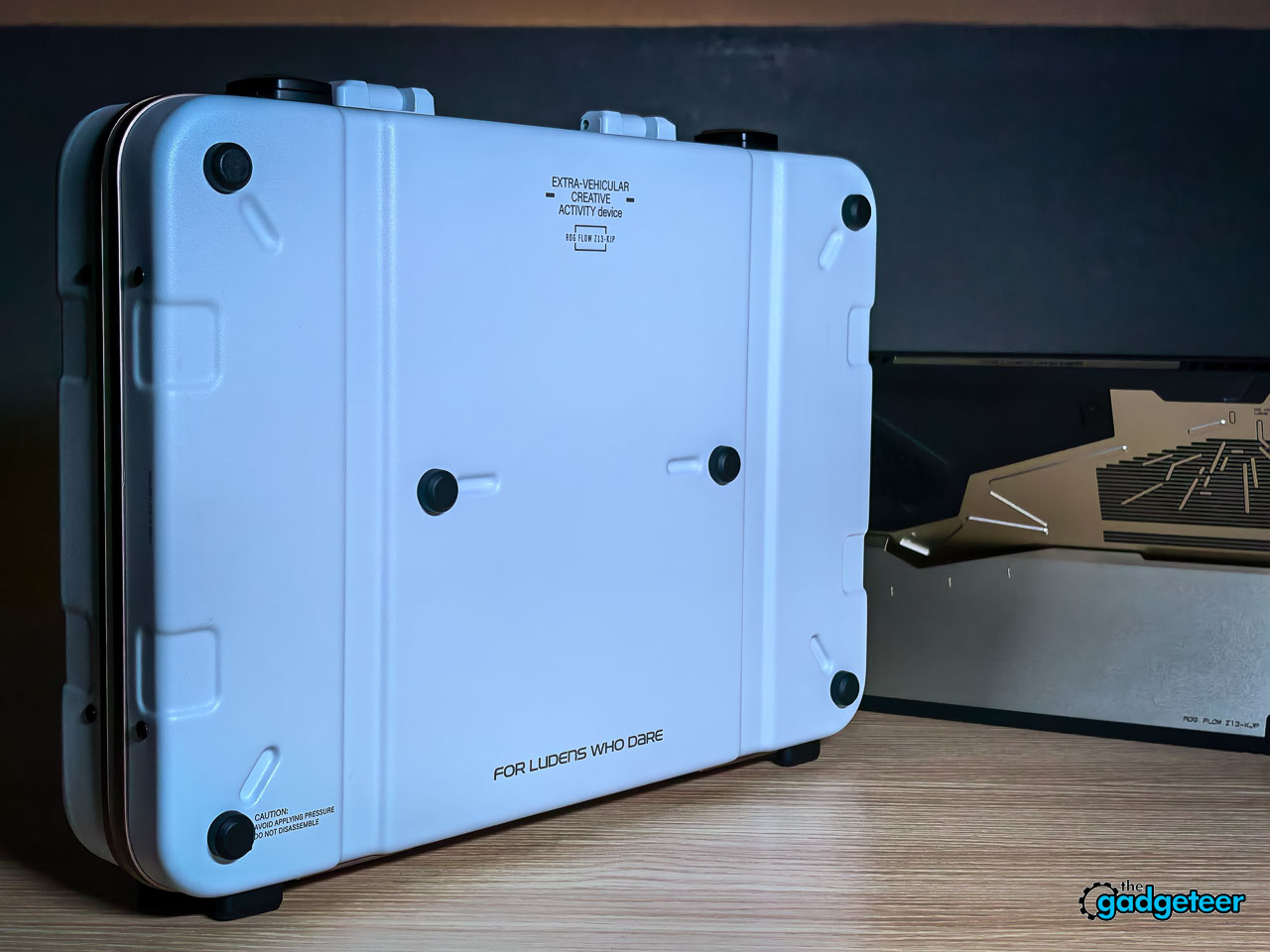
Tiny text scattered across the chassis reads like field equipment labeling. “Ensure lock is tight” sits near the kickstand mechanism, “Do not touch lens surface” frames the rear camera, and “Li polymer battery pack here” is printed as if this were an exposed prototype. None of it’s necessary, and all of it’s deliberate. The language adds a narrative layer without tipping into parody, so the Z13 KJP feels like gear you were issued for a mission rather than something you added to a cart. I’ve caught myself reading these labels more than once, and I keep finding new ones each time I look.
6. It Transforms Into Three Distinct Devices
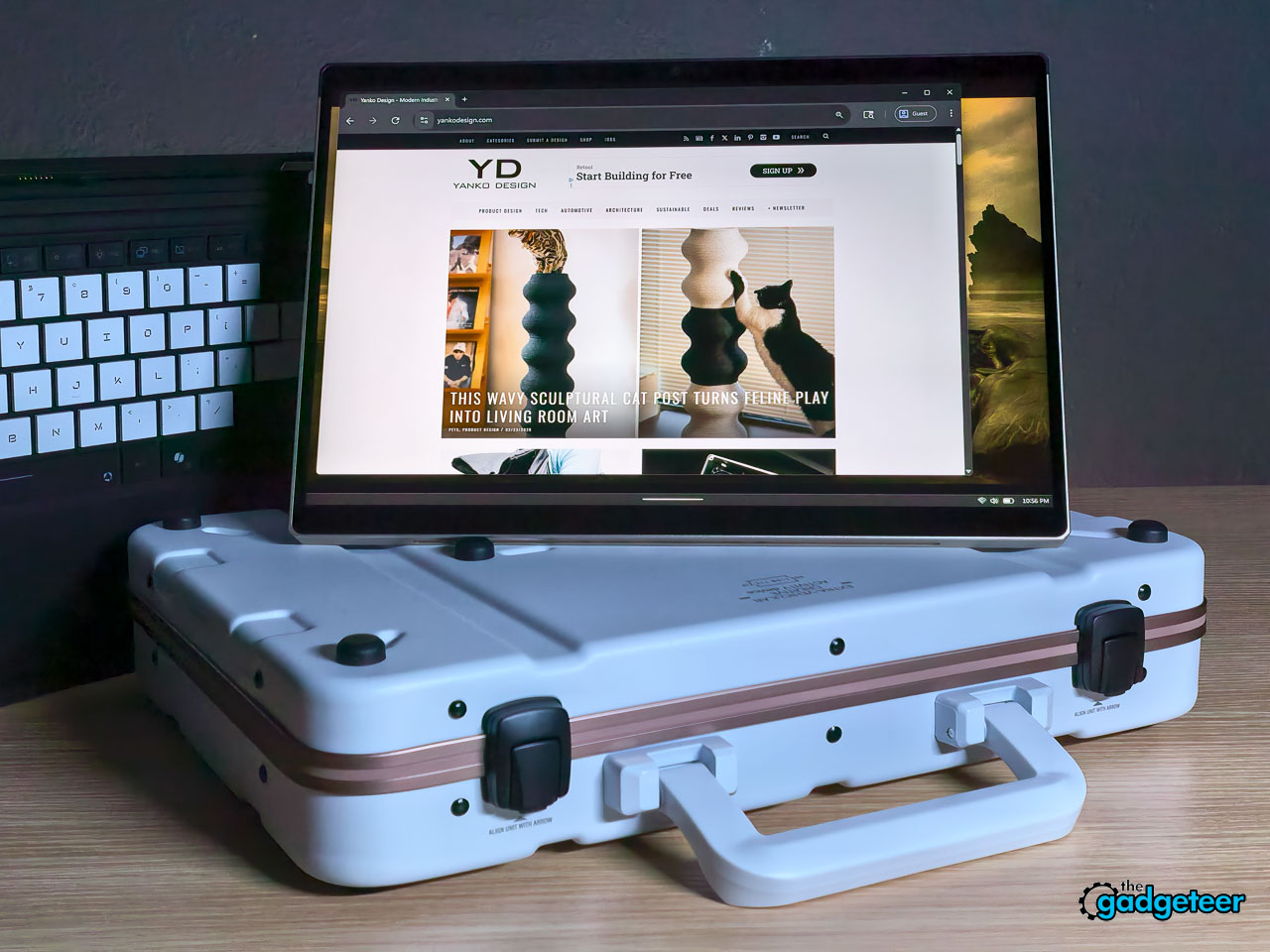
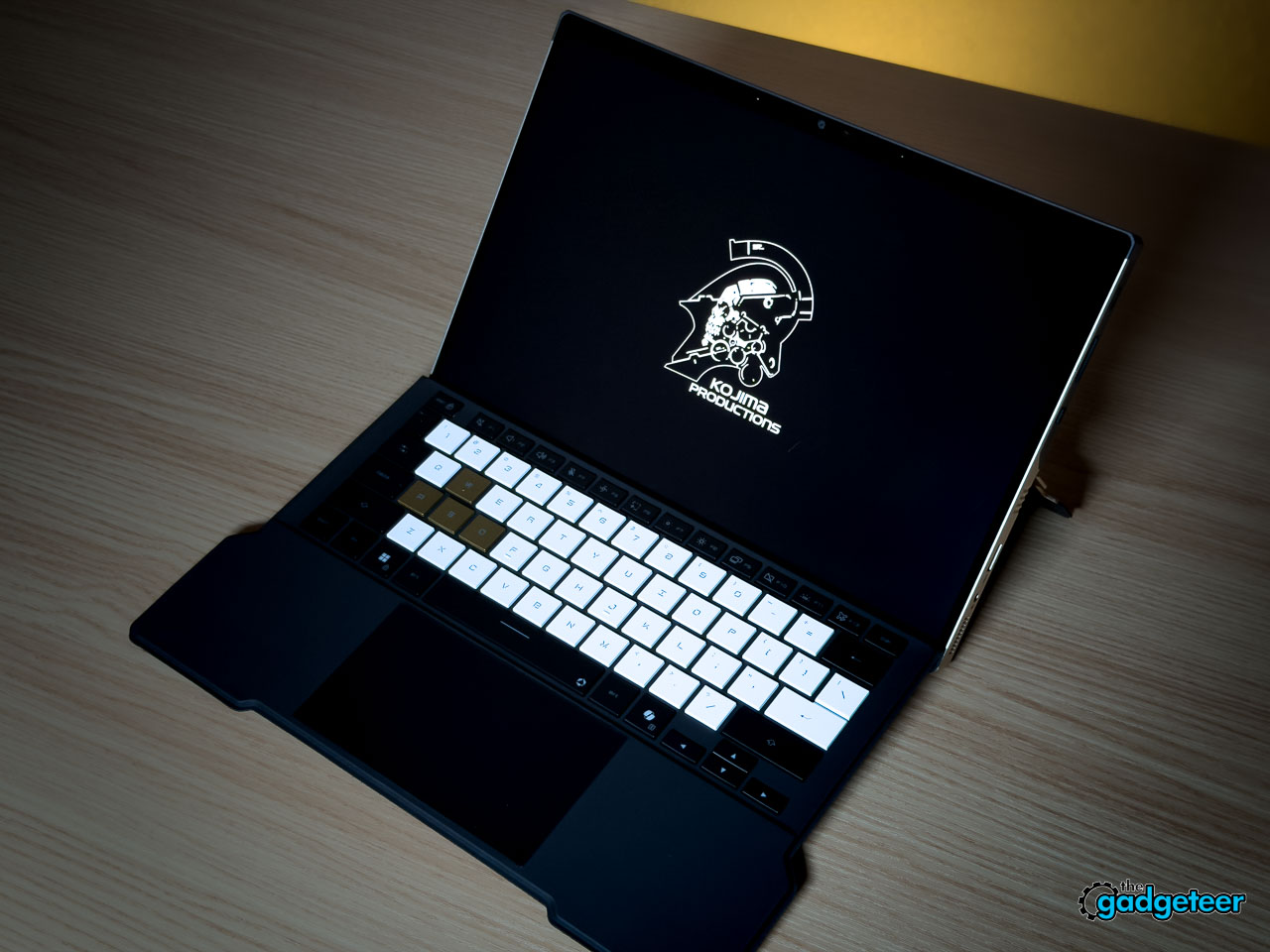
Most collector hardware gives you one hero surface, and you see it either open or closed. The Z13 KJP presents differently depending on how you configure it, and each setup puts a different surface first. As a tablet, the rear panel is the dominant visual, and propped on the kickstand, you see the chassis and the carbon fiber panel at the same time. With the keyboard attached, the custom KJP keycaps and their unique typography become the detail you interact with at arm’s length. I keep it on my desk in kickstand mode because that shows the most design detail at once, though I’ve also caught myself holding it as a slate and running my thumb along the machined edges. That tactile pull isn’t an accident.
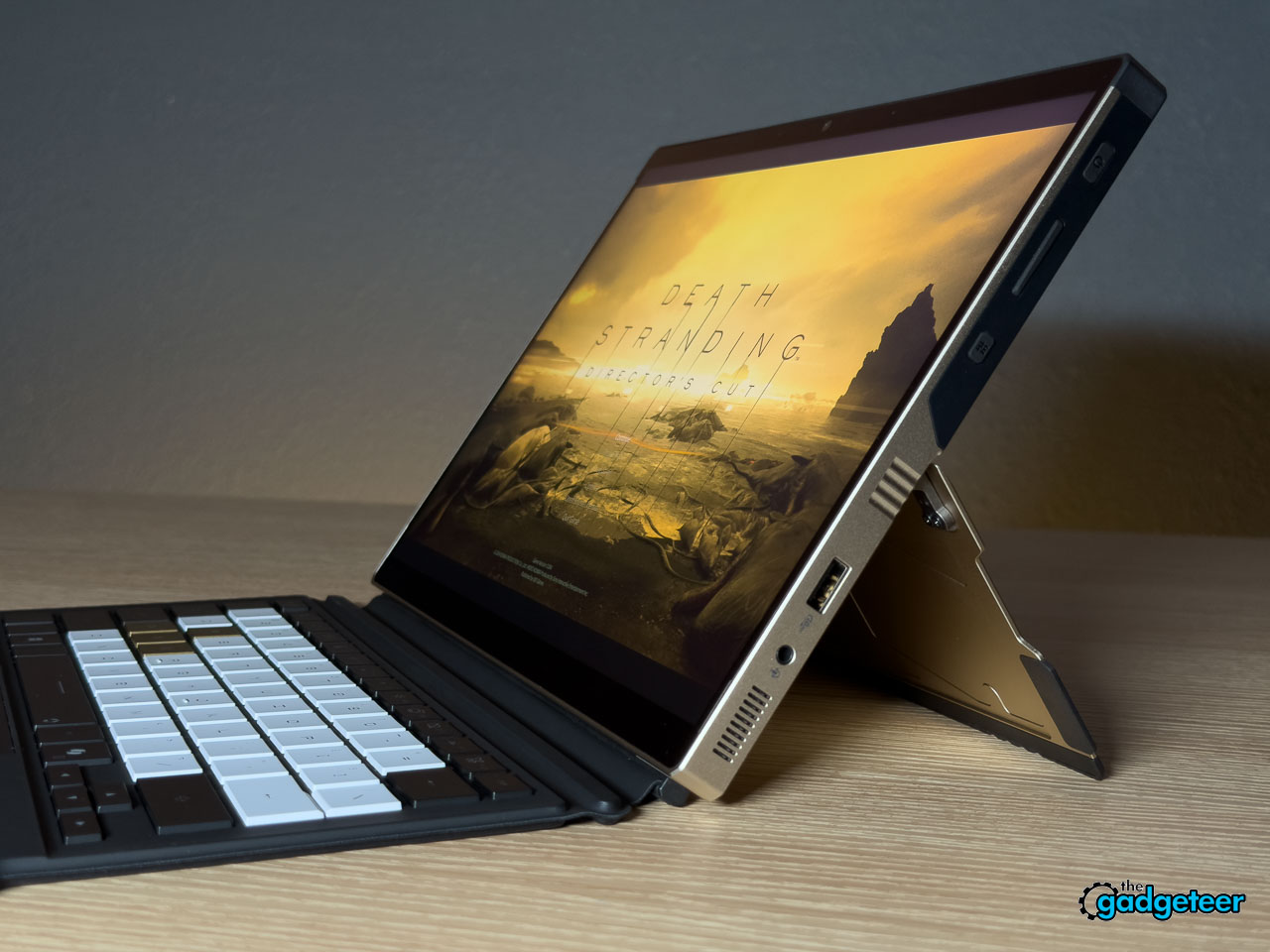
7. The Cooling System Hides Inside the Art
The diagonal vent cluster in the carbon fiber panel sits where thermal engineering demands it, and the horizontal vent array stretches across composition lines that Shinkawa’s etching already defines. In most gaming hardware, vents are the thing designers try to minimize or hide, and here they’re part of the visual rhythm. The Z13 KJP runs a vapor chamber with liquid metal inside a tablet-format chassis, which is a legitimate engineering challenge. Larger fans and a wider vapor chamber make up for the lack of a traditional hinge exhaust path, and an airflow channel under the display helps manage touchscreen surface temperatures. I can feel warm air exiting cleanly from the vents during sustained loads. The thermal sections never look like compromises.
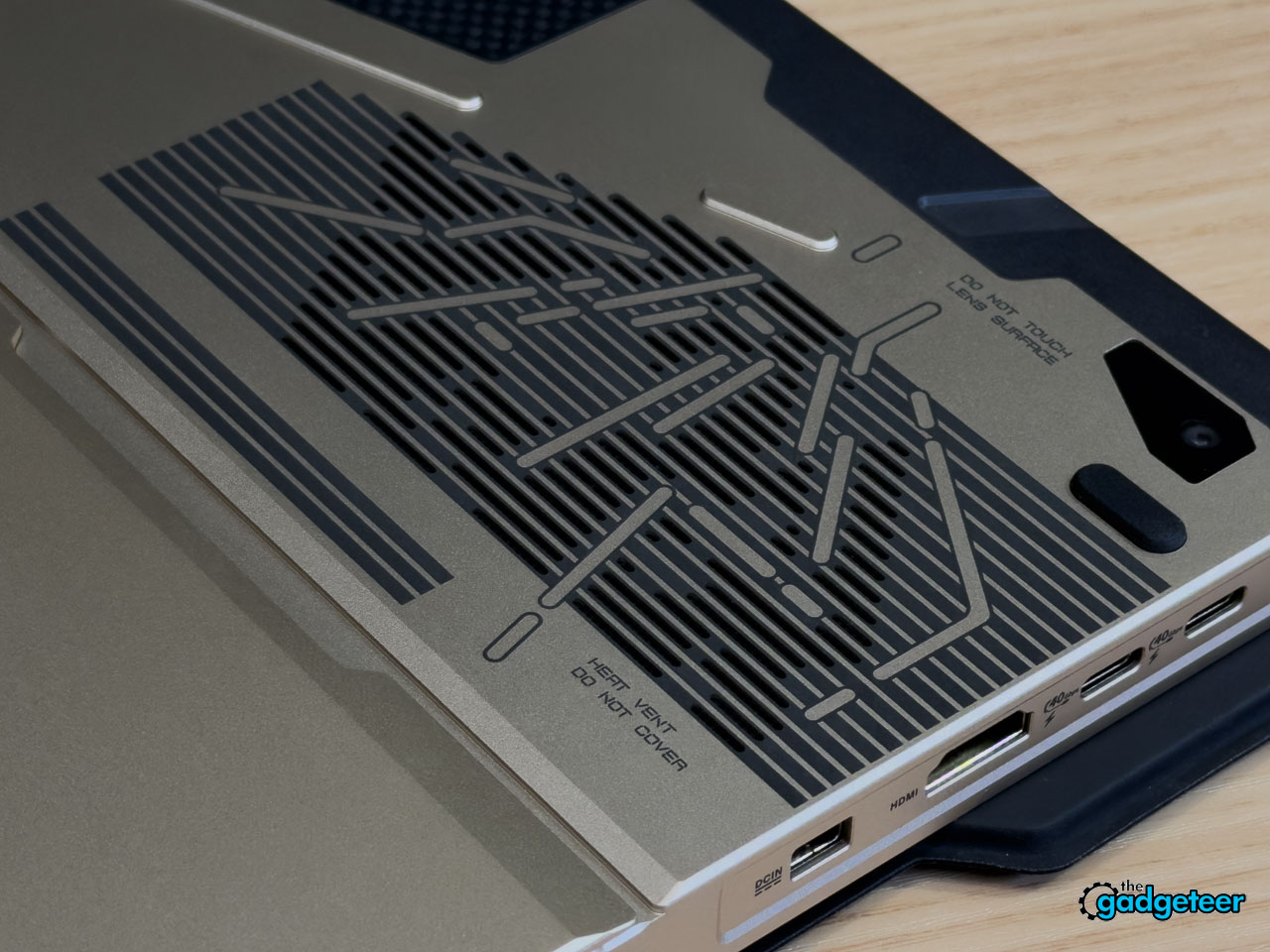
8. That 13.4-Inch Display Earns Its Keep
The ROG Nebula Display runs 2560 by 1600 at 180Hz with 500 nits of brightness and full DCI-P3 coverage, all on a 13.4-inch panel. Gorilla Glass DXC provides the glare-resistant top layer, which is a bigger deal than usual because in tablet mode this screen faces ambient light directly. What I like most is the restraint. Where the rear panel is dense with machined geometry, etched lines and layered art, the display side is smooth, unbroken optical neutrality with nothing competing for attention. The 16:10 aspect ratio gives you vertical room for document work without compromising a single-hand grip, and it works as a deliberate counterweight: one side expressive, the other quiet. Each surface does a job the other can’t.
9. The Unboxing Card Might Be the Most Valuable Item in the Box
The bundle includes a customized carrying case in matching Decennium Gold, a flight tag with dual ROG and KJP branding, and a sticker sheet with “For Ludens Who Dare” designs. All solid, though the thank-you card is the centerpiece. The front features Yoji Shinkawa’s original developmental sketches of the Z13 KJP, the early drawings that came before the final product rather than finished artwork. The back carries personal messages from Hideo Kojima and Yoji Shinkawa, both signed, which turns a packing insert into something you’ll want to protect. Original Shinkawa sketches of any kind command serious prices in the collector market, and while these are printed reproductions, they’re the closest most people will get to his process for this device. I’d keep that card in a toploader.
10. The Pre-Order Bundle Is Genuinely Generous
Pre-orders for the ROG Flow Z13 Kojima Productions Edition go live today, February 24, 2026, at $3,699.99, and the bundle sweetens the deal. Every purchase includes a free PC game code for Death Stranding 2: On The Beach, redeemable through Armoury Crate. The PC version of DS2 launches March 19, 2026, and the standard edition runs $69.99 on Steam, so that code carries real value out of the gate. You also get an exclusive Armoury Crate theme with a Ludens-inspired colorway and a custom loading animation. If you want the full ecosystem, ASUS sells matching Shinkawa-designed peripherals separately: the ROG Delta II-KJP headset ($269.99), ROG Keris II Origin-KJP mouse ($169.99) and ROG Scabbard II-KJP mousepad ($69.99). The game code alone is real money.
Where to Pre-Order
The ASUS ROG Flow Z13 Kojima Productions Edition (model GZ302EAC-XS99) is up for pre-order starting today at $3,699.99, with the Death Stranding 2 PC game code and the exclusive Armoury Crate theme included with every unit. The tradeoff runs both ways: you get design authorship you can feel in your hands, and you’re buying before I’ve finished the full performance and battery testing for our complete review. Buy it if you care about design, materials and the idea that gaming hardware can carry real artistic authorship. Skip it, or wait for that review, if frame rates and battery life decide your laptop. I’ve held it, used it and tilted it under every light in my office. It’s the real thing.

Price: $3,699.99 (ROG Flow Z13-KJP)
Matching Accessories (sold separately): ROG Delta II-KJP Headset ($269.99) | ROG Keris II Origin-KJP Mouse ($169.99) | ROG Scabbard II-KJP Mousepad ($69.99)
Pre-order now (Goes Live Feb 24, 6AM PST / 9AM EST):
ASUS Store | AntOnline | Best Buy | B&H | Abt